Buyer Fit Snapshot
| Best fit | choose custom shipping labels for packaging buyers comparing material specs, print proof, MOQ, unit cost, freight, and repeat-order risk where brand print, material, artwork control, and repeat-order consistency matter. |
|---|---|
| Quote inputs | Share finished size, material target, print colors, finish, packing count, annual reorder estimate, and delivery region. |
| Proofing check | Approve dieline scale, logo placement, barcode or warning zones, color tolerance, and any recyclable or compostable wording before bulk production. |
| Main risk | Vague material claims, crowded artwork, or missing packing details can create delays even when the unit price looks attractive. |
Fast answer: Choose Custom Shipping Labels: Material, Print, MOQ, and Cost should be specified like a repeatable production item. The safest quote includes material, print method, finish, artwork proof, carton packing, and reorder notes in one written spec.
What to confirm before approving the packaging proof
Check the product dimensions against the actual filled item, not only the sales mockup. Ask for tolerance on folds, seals, hang holes, label areas, and retail display edges. If the package carries a logo, QR code, warning copy, or legal claim, reserve that space before decorative graphics fill the panel.
How to compare quotes without losing quality
Compare board or film grade, print process, finish, sampling route, tooling charges, carton quantity, and freight assumptions side by side. A lower quote is only useful if the supplier can repeat the same color, closure quality, and packing count on the next order.
I watched two labels fight each other in a 38°C loading dock in Dongguan, and one lost us $11,400 in four weeks. Same 4x6 size. Same artwork. Almost the same supplier. That factory visit is still my favorite story for teaching how to choose custom shipping labels the smart way, because tiny spec choices decide whether your barcode scans in 0.4 seconds or your team spends 3 extra minutes per order reprinting and apologizing.
The surprise most brands miss is simple: label construction often matters more than outer carton graphics for real shipping performance. I love beautiful packaging design as much as anyone—I built a brand on it—but I’ve sat with 40-person fulfillment teams in New Jersey and Los Angeles, and they complain about edge lift, smeared thermal text, and carrier rejects. Not embossing. Not foil color. Scan failure rates above 2% quietly wreck fulfillment speed and customer trust.
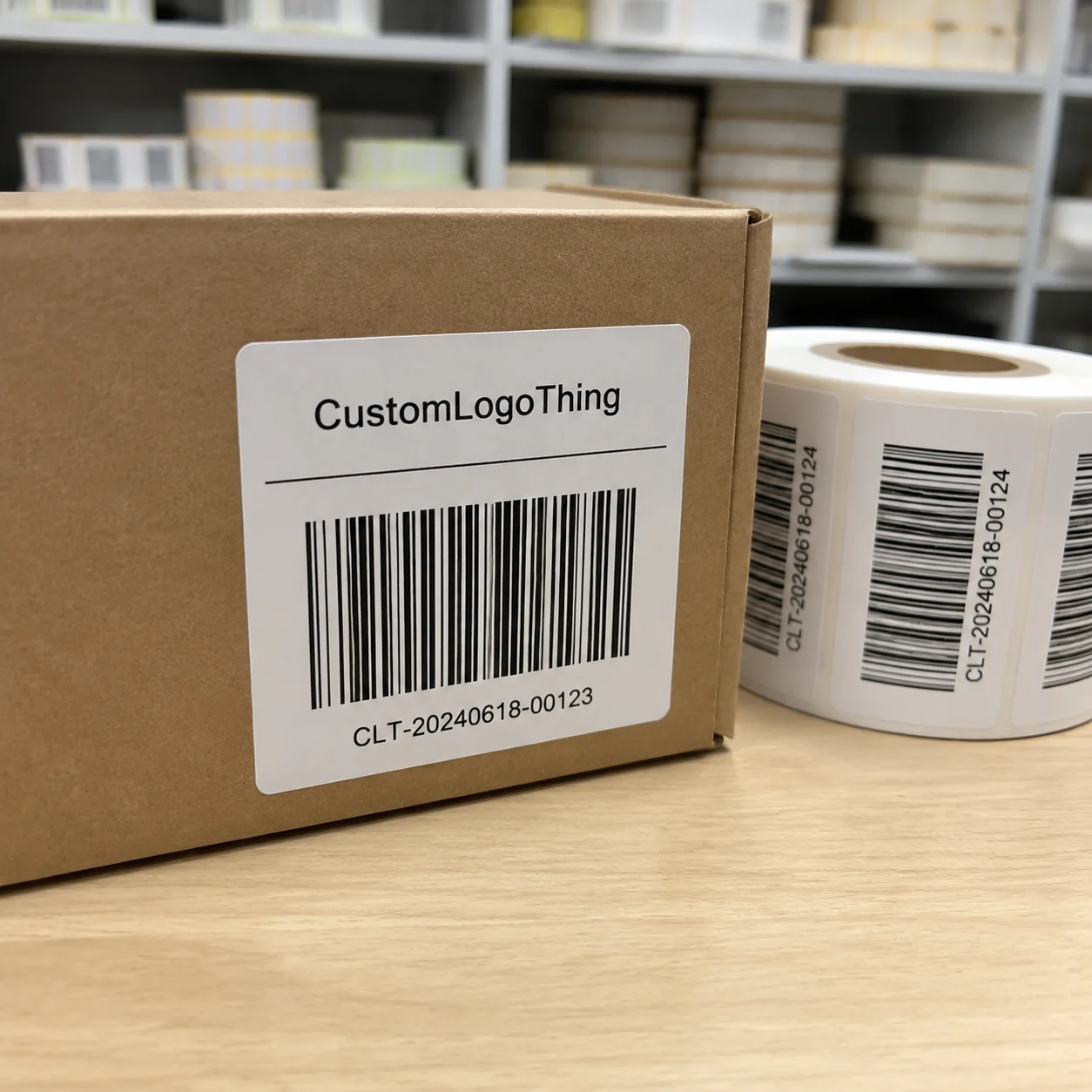
Custom shipping labels include more than a logo and address block. You’re choosing size (like 4x6 vs 4x8), facestock (paper, BOPP, polyester), adhesive type (permanent, removable, all-temp, freezer-grade), print method (direct thermal or thermal transfer), barcode readability specs (quiet zone, contrast, X-dimension), and any compliance data required by UPS, FedEx, USPS, DHL, or Amazon FBA workflows.
This applies across business models: ecommerce shipping for DTC brands, monthly subscription boxes, wholesale palletized shipments, and mixed-SKU 3PL operations. If you use Custom Shipping Boxes, Custom Poly Mailers, or both, your label has to perform on each surface and route condition. One “good enough” roll for every package type usually turns into expensive relabel labor by week two.
I’ll walk you through how labels behave in transit, which specs deserve your money, what to skip, and a process you can use this week to decide how to choose custom shipping labels without guessing.
What Most Brands Miss About How to Choose Custom Shipping Labels
Here’s the exact story. I was with a mid-sized skincare brand shipping about 18,000 orders per month from a 3PL in Nevada. They switched converters to save $0.012 per label on a 4x6 direct thermal roll. On paper, that was a “win” worth roughly $2,592 monthly. In reality, humidity spikes and trailer heat caused topcoat issues, barcode fade, and scanner retries. Their first-pass scan rate dropped from 98.7% to 93.9% in three weeks. Labor overtime and reships erased savings fast.
The “winning” label used a basic economy paper facestock with a standard permanent adhesive. The label That Actually Worked used a slightly upgraded thermal topcoat and higher-tack all-temp adhesive, costing $0.021 more per unit at 10,000-roll volume. That upgrade cut relabel events by 64% and brought scan success back above 98% within 10 days.
Most teams get one thing wrong about how to choose custom shipping labels: they compare unit price only. They don’t price failure. Failure includes:
- Reprint labor (often 1.5 to 3.0 minutes per failed label)
- Carrier exception handling fees ($12 to $25 depending on lane)
- Return-to-sender cycles
- Customer support time (typically $4 to $9 per ticket)
- Brand hit when branded packaging arrives damaged or relabeled
A custom shipping label is part of your product packaging system, not an isolated sticker. It has to cooperate with carton fibers, poly film, conveyor contact points, weather, and scanner hardware. If you run custom printed Boxes for Retail packaging and corrugate mailers for ecommerce shipping, one label build may not fit both.
I frame label decisions in three buckets: function first, cost second, aesthetics third. Include logo and package branding, of course. Never let design reduce scanner contrast or crowd quiet zones around barcodes. I once had a client insist on a pale sage background behind Code 128 bars because “it matches our unboxing vibe.” The vibe died at the first FedEx hub.
“If it doesn’t scan cleanly at 5:30 a.m. in a noisy warehouse, it’s not good design.” — what I tell every brand team before approving artwork
If you’re serious about how to choose custom shipping labels, start with reliability metrics: scan success rate, adhesion retention after 24/48/72 hours, and smudge resistance after abrasion testing. Pretty labels that fail are expensive decorations.
How Custom Shipping Labels Work in the Real Shipping Process
The workflow looks straightforward, yet each step has failure points. Order data from Shopify, NetSuite, ShipStation, or WMS flows into a label template. A printer renders variable data (address, barcode, route code). An operator applies the label to a box or poly mailer. Carriers scan at pickup, sort, linehaul, and delivery. Through that journey, packages face heat, cold, friction, stacking pressure, and occasional rain. Any weak link shows up as delays or exceptions.
Direct Thermal vs Thermal Transfer
Direct thermal uses heat-sensitive paper that darkens under the printhead. No ribbon needed. Fast. Lower cost. Great for short dwell times like 2 to 7 days and indoor storage. Typical cost for a 4x6 direct thermal paper label at 50,000+ volume can land around $0.028 to $0.043 per label depending on adhesive and topcoat.
Thermal transfer uses a ribbon to transfer ink-like material onto facestock (paper or synthetic). You get better resistance to heat, UV, abrasion, and long storage. It usually costs more once ribbon and slower throughput are included. Shipments that sit 30+ days, cross hot climates, or rub against conveyor rails often perform better with transfer.
Direct thermal usually fails in trailer heat above 45°C, prolonged sun exposure, or rough handling that scratches print. Thermal transfer failures typically trace back to a wrong ribbon-facestock match, poor darkness settings, or low-grade adhesive on rough corrugate.
Barcode Readability Basics That Actually Matter
Scanners need contrast and breathing room. Let logo elements invade quiet zones and scan retries climb fast. Run print darkness too low and bars fade. Use a topcoat that smears under condensation and reflectance drops.
- Quiet zones: keep at least 10x narrow bar width as clear margin
- Contrast: black on white still wins for consistency
- Print calibration: verify DPI settings (203, 300, or 600) by printer model
- Smudge test: 10-rub dry cloth test right off line
For standards, review carrier documentation and test methods from ISTA where transit simulation is relevant.
Where Labels Physically Fail
I’ve watched labels fail on curved bottle-shipper cartons, dusty recycled board, frosty cold-room boxes, and slick film mailers. Edge lift starts in the corners, then conveyors do the rest. If your operation uses both paperboard and Custom Poly Mailers, ask for adhesive tuned to low-surface-energy films or run separate constructions.
Carrier compatibility matters, too. UPS and FedEx both rely on predictable 4x6 orientation for many automated systems. USPS workflows vary by class and label software. Amazon FBA adds placement and scannability requirements that can clash with overdesigned branding blocks. Read specs before final art lock.
Understanding this process is core to how to choose custom shipping labels. Map real handling conditions first, and your specs get sharper while vendor conversations stop feeling vague.
Key Factors in How to Choose Custom Shipping Labels for Performance
Here’s the short version of how to choose custom shipping labels: match facestock + adhesive + print method to the ugliest condition your package sees, not the clean office desk where approvals happen.
Material Selection: Paper vs Synthetic
Paper labels are cost-effective and perfect for many DTC operations with short transit windows. Brands shipping beauty, supplements, pet products, or any category likely to hit humidity and friction usually see better outcomes with synthetic labels.
- Economy direct thermal paper: lowest cost, lowest durability
- Premium coated thermal paper: better smudge and moisture resistance
- BOPP (polypropylene): moisture-resistant, flexible, better for poly mailers
- Polyester: highest durability, often used for long-term or harsh routes
I moved one subscription coffee brand from economy paper to white BOPP thermal transfer for summer lanes through Florida and Texas. Cost increased by $0.017 per label. Complaints about unreadable labels dropped by 71% in six weeks.
Adhesive Logic by Surface Type
Adhesive is where most “cheap wins” die. Corrugate fibers, recycled board dust, and poly films all behave differently.
- Permanent acrylic: good baseline for clean corrugate
- Hot-melt permanent: stronger initial tack on rough surfaces
- All-temp adhesive: handles wider application and transit ranges
- Freezer-grade: for cold chain or sub-zero environments
- Removable: useful for internal routing, usually poor for last-mile shipping
One client shipping meal kits out of Ohio used standard permanent adhesive in a 2°C pack zone. Labels looked fine for an hour, then edges lifted in transit. Freezer-grade fixed it immediately. Same printer. Same size. Different adhesive.
Size, Format, and Workflow Speed
4x6 remains the safest default for US parcel carriers. Oversized labels wrinkle more on small cartons and slow operators who have to fold edges. Mini labels might save pennies, then shrink barcodes below reliable scan windows. I’ve timed pack lines where standardized 4x6 placement guides improved station throughput by 8% to 12% in two facilities.
Print and Finish Choices
Matte finishes generally reduce glare and improve scan reliability under varied light. Gloss can look sharp for branded packaging but may create reflective issues on some handheld scanners. Keep primary route and address data black. Add brand color in controlled zones away from barcodes.
Preprint + variable data workflows can work beautifully: static brand frame printed in bulk, variable address/barcode printed on demand. Verify registration tolerances and keep quiet zones clean.
Brand Consistency vs Function
Great package branding and strong scan performance can coexist. Put logo top-left or top-center, reserve 15% to 25% of label area for identity, and protect scanner-critical space. I like this hierarchy: Ship-to first, barcode second, routing marks third, logo fourth.
Sustainability Realities
Linerless options can cut waste and storage space. Recycled-content facestock can support sustainability goals. Testing still has to come first. I’ve seen recycled paper options absorb moisture faster and lose print sharpness in humid regions. Review certifications like FSC if chain-of-custody claims matter for your brand.
That balance—performance, cost, and sustainability—is the heart of how to choose custom shipping labels for real operations, not slide decks.
Cost and Pricing: What Custom Shipping Labels Really Cost
Let’s talk money, because bad decisions hide behind “great quotes.” The right question isn’t “What’s your price per roll?” Ask, “What is my total landed cost per successfully delivered package?”
Real cost components include facestock, adhesive, print method, setup fees, plate/cylinder fees (for flexo preprint), freight, waste allowance, and failure risk. A label that saves $0.01 but adds 1% scan failures probably costs you more overall.
| Label Tier | Typical Spec | Volume Band | Approx. Cost per Label | Notes |
|---|---|---|---|---|
| Economy Paper | Direct thermal paper + standard permanent adhesive | 10,000–50,000 | $0.038–$0.062 | Best for short domestic routes |
| Premium Paper | Top-coated thermal paper + all-temp adhesive | 10,000–50,000 | $0.049–$0.078 | Better humidity and smear resistance |
| Synthetic Mid-Tier | BOPP + thermal transfer ribbon system | 10,000–50,000 | $0.072–$0.128 | Great for friction and moisture |
| Synthetic High-Durability | Polyester + aggressive adhesive | 5,000–25,000 | $0.110–$0.195 | Harsh environments, long dwell |
MOQs vary. Trade printers may start around 5,000 labels per SKU for custom preprint jobs. Some digital converters will run lower quantities at higher unit pricing. Price breaks usually appear at 25,000, 50,000, and 100,000+ labels, especially for repeat specs.
I’ve negotiated with suppliers in Shenzhen, Suzhou, and California where a simple request for “alternate constructions at the same target peel strength” unlocked a cheaper build. One negotiation cut cost from $0.086 to $0.069 by switching facestock caliper and adhesive chemistry while maintaining performance on recycled corrugate.
Budget framework I recommend:
- Starter run: 2–4 weeks of supply for live validation
- Validation batch: run A/B with two constructions across climate lanes
- Scale order: 8–12 weeks once KPIs are stable
For brands expanding Custom Packaging Products, treat labels as part of a broader packaging P&L. If you’re investing in custom printed boxes and retail packaging upgrades, don’t underfund the one component every carrier scanner depends on.
Good procurement is central to how to choose custom shipping labels. Ask for landed-cost quotes, not ex-works only. Ask about mixed-SKU runs. Ask what changed if a reorder price drops suddenly. Sometimes that “discount” is a downgraded adhesive you didn’t approve.
Step-by-Step: How to Choose Custom Shipping Labels Without Guesswork
If your team needs a practical method for how to choose custom shipping labels, use this six-step flow. It works for startups shipping 500 orders weekly and multi-warehouse teams shipping 50,000+ monthly.
Step 1: Define Shipping Environment
Document actual conditions with numbers. Temperature range (example: -5°C to 42°C), humidity exposure, average dwell time (3 days vs 21 days), friction points (conveyor merges, sack sorting), and package types (corrugate, poly, recycled board). Skip this step and suppliers will fill assumptions for you—usually wrong ones.
Step 2: Confirm Printer and Format Constraints
List your printer fleet: Zebra ZT230, ZT411, Rollo, Sato, whatever you use. Record DPI, max roll OD, core size (1-inch or 3-inch), and thermal method. I’ve seen teams buy excellent labels that physically do not fit dispensers. Expensive and avoidable.
Step 3: Build a Non-Negotiable Spec Sheet
Your sheet should include:
- Label size (e.g., 4x6)
- Facestock (e.g., top-coated direct thermal paper or BOPP)
- Adhesive type (all-temp, permanent, freezer-grade)
- Liner type and roll direction
- Barcode symbology and minimum print grade target
- Branding rules (logo size cap, color zones)
- Required compliance fields by carrier
This document becomes the backbone of how to choose custom shipping labels consistently across reorders.
Step 4: Source 2–3 Qualified Suppliers
Request test rolls, technical data sheets, and recommendation notes. Ask each supplier to propose at least two constructions: one cost-optimized and one performance-optimized. Structured options beat vague promises every time.
Use vendors who can support your broader ecosystem too, including Custom Labels & Tags aligned with other product packaging formats.
Step 5: Run Live Tests, Not Desk Tests
Print 300 to 1,000 labels per construction. Apply them to real cartons and mailers. Send shipments across at least three lane profiles: local, cross-country, and high-humidity region. Track:
- First-pass scan success at packout
- Carrier scan success at handoff
- Peel/lift incidents at 24/48/72 hours
- Smudge/abrasion outcomes after transit
I once had a label pass every warehouse test and fail on a single Southeast route because pallets sat uncovered during transfer in summer storms. Live route data caught it before full rollout.
Step 6: Lock Construction and Replenishment Rules
After selecting the winner, freeze specs in writing. Include approved facestock code, adhesive code, liner, roll configuration, and print settings. Set reorder trigger levels, usually 3 to 4 weeks of buffer stock depending on lead time and freight reliability.
Typical timeline I use:
- Discovery and requirements: 3–5 business days
- Supplier sampling: 7–12 business days
- Live testing window: 10–21 days
- Production and freight: 12–18 business days
- Rollout and SOP update: 3–7 days
That full process is the practical answer to how to choose custom shipping labels without drama. Faster approvals are possible, but rushing usually costs more later.
Common Mistakes Brands Make When Choosing Custom Shipping Labels
Mistake #1: buying only on the lowest quote. I understand why margins push teams there. I’ve still audited too many programs where “cheap” labels created hidden costs 4x higher than the original savings. One apparel brand saved $1,900 on a quarterly order and spent $8,600 in relabel labor two months later.
Mistake #2: skipping live route testing. Desk adhesion tests aren’t enough. Warehouse floors are cleaner than trucks. Trucks are cleaner than sort hubs. Hubs are cleaner than weather. Real-world testing is non-negotiable if you care about how to choose custom shipping labels properly.
Mistake #3: overdesigning artwork. If your label looks like retail packaging, it may fail like retail packaging. Shipping labels are operational tools first. Keep strong contrast, simple structure, and protected barcode zones.
Mistake #4: using one construction for all SKUs and climates. Different surfaces need different adhesive behavior. A single label might work on kraft corrugate and fail on recycled white board or film mailers.
Mistake #5: ignoring timeline risk. Late dielines, delayed artwork approval, and unverified printer compatibility can force last-minute substitutions. I’ve seen teams accept off-spec stock because launch-date pressure was brutal. Predictable outcome: inconsistent quality and support tickets.
Mistake #6: not documenting final specs. If your PO says only “4x6 shipping label white,” you’re inviting drift. The next reorder might use a different topcoat or adhesive, and nobody notices until scan rates dip.
Client in a meeting, after three failed reorders: “I thought the vendor had our file.” My answer: “A file is not a specification.”
If your team is scaling ecommerce shipping and upgrading branded packaging, treat labels like controlled components. Lock specs. Audit batches. Track outcomes. That’s how to choose custom shipping labels in a way that survives growth.
Expert Tips and Next Steps for How to Choose Custom Shipping Labels
Here’s my operator-level advice from too many mornings in steel-toe boots:
- Keep artwork simple. Barcodes hate clutter.
- Standardize placement guides on every pack station.
- Train teams on surface prep for dusty corrugate.
- Calibrate printer darkness weekly, not only after complaints.
- Track failures by lane, not just top-line averages.
For the next 30 days, run this checklist:
- Audit current label specs and supplier SKUs.
- Pull 60 days of scan exceptions and relabel incidents.
- Request 2–3 sample constructions from qualified converters.
- Run A/B tests across at least three route profiles.
- Select winning construction based on KPI, not opinion.
- Lock documentation and reorder thresholds.
Supplier vetting checklist I use in procurement calls:
- Can you provide QA records by lot number?
- What is your normal lead time and rush capability?
- Do you keep safety stock for repeat programs?
- What is your change-control policy for raw materials?
- Can you quote landed cost to our DCs in Nevada and New Jersey?
Post-rollout KPIs worth monitoring weekly:
- First-pass scan success rate (target 98%+ for stable operations)
- Relabel incidents per 1,000 orders
- Average pack station cycle time
- Return-to-sender trend by carrier
- Customer tickets tagged “shipping label unreadable/damaged”
Most teams already know what “good” looks like. They need a process to prove it and suppliers who respect specs. Do that, and deciding how to choose custom shipping labels gets easier, faster, and far less expensive.
Start this week: document your current label construction, run one controlled A/B test, and make the decision with data. That’s the most reliable path for how to choose custom shipping labels That Actually Work at scale.
FAQs
How to Choose Custom Shipping Labels for Different Shipping Conditions?
To answer how to choose custom shipping labels quickly: match the label material and adhesive to the harshest route conditions, not average conditions. For heat, moisture, and friction, a synthetic shipping label (like BOPP or polyester) with all-temperature adhesive usually outperforms basic paper. For shorter, cleaner routes, top-coated direct thermal paper can be cost-efficient while maintaining barcode readability. Always validate with live shipments, because label durability on a lab bench and label durability in a truck lane are not the same thing.
How do I choose custom shipping labels for hot or humid climates?
Use synthetic facestock like BOPP or polyester with an all-temperature adhesive instead of basic paper. Run humidity and abrasion tests for at least 72 hours and confirm print stability after transit simulation. Verify printer settings and ribbon compatibility before full purchase.
What size should custom shipping labels be for carrier compliance?
Start with 4x6 for most parcel workflows unless your carrier setup requires another format. Preserve barcode quiet zones and avoid shrinking labels just to cut cost. Validate with live scans at pack stations and carrier handoff.
Are direct thermal or thermal transfer custom shipping labels better?
Direct thermal is usually lower cost and ideal for short transit windows. Thermal transfer performs better with long dwell time, heat exposure, and abrasion. Base the decision on environment and handling conditions, not habit.
How much do custom shipping labels cost per roll or per label?
Pricing depends on material, adhesive, size, print method, and order volume. Typical per-label costs range from about $0.038 for economy paper to $0.195 for high-durability synthetic constructions. Compare landed cost plus failure cost, not quote price alone.
How long does it take to order and launch custom shipping labels?
A realistic flow is 4 to 8 weeks total: spec definition, sampling, live testing, production, and rollout. Add buffer for artwork approvals, printer setup checks, and freight variability. Pilot first, then scale.