Custom craft labels can make a handmade garment feel retail-ready in a split second. That matters more than many makers expect. A buyer may not know your stitch count, your fabric sourcing, or your seam finishing, but they will notice whether the label feels deliberate or improvised. For small apparel brands, custom craft labels are often the first detail that turns “nice item” into “brand I remember.”
That tiny rectangle of woven, printed, or heat-applied material also shapes perception in a practical way. It sits at the overlap of garment comfort, production discipline, and brand presentation. If you think about it alongside package branding, retail packaging, and product packaging, the pattern becomes clear: small tactile details shape the buying experience faster than most marketing copy does.
What custom craft labels are—and why they change the feel of clothing
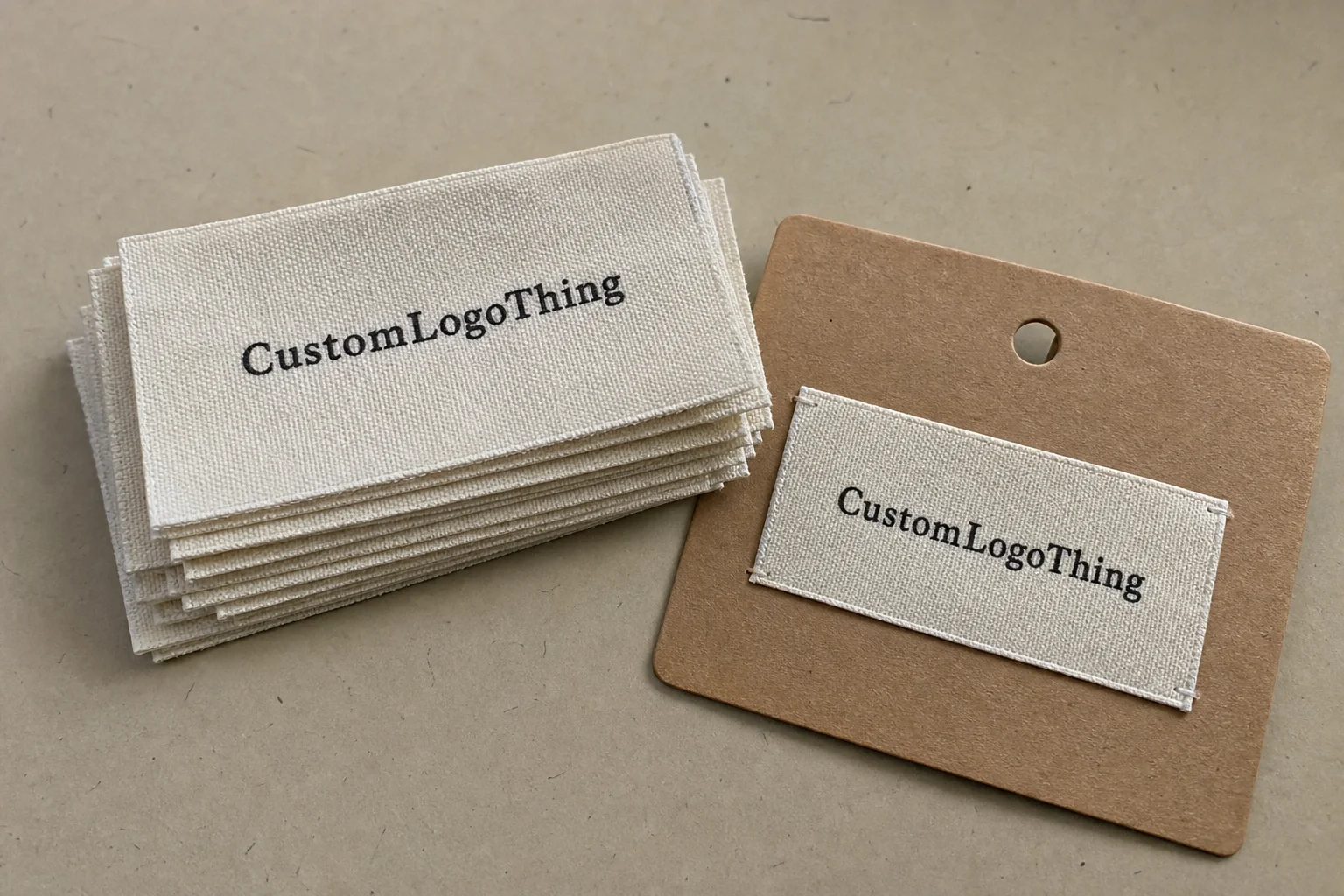
In apparel, custom craft labels are the brand, care, size, and story identifiers attached to a garment. They may be woven labels, printed satin labels, cotton labels, or heat-transfer labels designed for tagless garments. You will see them used as neck labels, hem tags, side seam labels, care labels, and sewn-in brand markers across everything from babywear to heavyweight workwear.
The difference between a real clothing label and a generic sticker is simple: one has to live on fabric, survive laundering, and feel acceptable against skin. That makes material choice and finishing a lot more important than many first-time buyers realize. A label can look excellent on a screen and still scratch, curl, or lose contrast after a few wash cycles.
Consumers judge quality quickly, sometimes within seconds. That first touch tells them whether a piece feels artisan, premium, budget, or careless. In practice, the label is a small but reliable signal of how the rest of the garment was handled.
“If the label feels wrong, the garment feels unfinished. People may not say it out loud, but they notice.”
For small brands, labels often do double duty. They identify the maker, but they also help build memory. The texture, fold style, and placement can become part of the brand signature, just like the box style in custom packaging or the structure of the outer mailer. That is why custom craft labels should be treated as part of the overall packaging system, not an afterthought.
How the label production process works from artwork to finished roll
The workflow is usually straightforward, but the details matter. You submit artwork, confirm dimensions, choose material and fold style, approve a proof, and then move into production. If the order is a woven label, the design is translated into thread structure. If it is printed, the artwork is prepared for print registration and color control. If it is a heat-transfer label, the artwork is adjusted for adhesion, edge definition, and garment compatibility.
Artwork preparation can change the final result more than buyers expect. Vector files are preferred because they preserve clean edges and scale without softening. Small text is a common problem. Type that looks readable on a monitor may become too tight at label size, especially once stitch margins, fold allowances, and trim space are added. Thin lines can disappear in weaving. Fine gradients often need simplification.
Common label types include:
- Woven labels for durability and a stitched-in look
- Printed labels for softer handfeel and high-detail artwork
- Heat-transfer labels for tagless comfort and activewear
- Cotton labels for a natural, craft-forward visual
Proofing is where many mistakes are caught. A digital mockup confirms layout, spelling, and approximate color, but it cannot fully predict texture, contrast, or wash performance. That is why buyers should treat the proof as a planning tool rather than a final substitute. If the logo is too intricate, if the care text is too dense, or if the fold direction is wrong, the issue should be corrected before the loom or press starts running.
Finishing choices also matter. A center fold works well for neck labels. An end fold is common for side seam branding. Straight cut labels suit sew-in applications. Adhesive backing can help during positioning, while cut-and-sew labels are used when the label becomes part of the garment construction itself. The right choice depends on the garment, the sewing process, and how visible you want the branding to feel.
Brands that already think carefully about Custom Labels & Tags usually find that label production becomes easier over time. Specs get tighter, reorders get faster, and results become more consistent.
Cost and pricing factors that change your quote fast
Label quotes move for predictable reasons. The biggest drivers are material type, label size, number of colors, design complexity, production method, and finishing style. Quantity matters too. A run of 10,000 pieces spreads setup costs much better than a run of 500, so unit pricing usually drops as volume rises.
For custom craft labels, small runs almost always land in a higher per-piece bracket because setup and waste are being divided across fewer units. In practical terms, a simple woven label might fall into a low per-piece range at volume, while a short run with specialty folds, extra colors, or highly detailed artwork can cost noticeably more. Exact pricing varies by supplier, but if a quote looks unusually low, check whether setup, shipping, proof revisions, and packaging were included.
MOQ, or minimum order quantity, is not there to frustrate buyers. It exists because factories need enough volume to cover machine setup, material waste, and operator time. Still, MOQ can sometimes be flexible. If you are testing a new line, a short-run label may be worth the higher unit cost, especially when the garment itself carries a stronger margin.
| Option | Typical use | Relative cost | Best fit |
|---|---|---|---|
| Woven label | Brand neck label, hem tag, side seam tag | Low to medium | Durability and a polished look |
| Printed satin label | Care info, soft-touch branding | Low to medium | Fine detail and smooth feel |
| Cotton label | Craft, eco, natural-feel collections | Medium | Organic or handmade positioning |
| Heat-transfer label | Tagless apparel, sportswear, babywear | Medium to higher | Comfort against skin |
There are hidden cost checks worth asking about: rush fees, artwork revisions, custom setup charges, shipping, and reorder pricing. If you are comparing suppliers, use the same specs across the board. Otherwise you are not comparing like with like; you are comparing different products.
A simple budgeting framework helps. Start with your garment price, then decide what percentage you can allocate to labeling without damaging margin. On lower-priced items, the label budget may need to stay very lean. On premium garments, the label can justify a more expensive finish because it supports the perceived value of the whole piece. The same logic applies in Custom Packaging Products: the packaging should support the product, not fight it.
Choosing materials, finishes, and sizing that fit your garments
Fabric type should drive your label choice. Delicate knits usually need softer finishes so the label does not irritate the wearer. Heavy canvas and outerwear can take a more structured woven label. Baby clothing often calls for tagless or very soft printed solutions. Stretch apparel needs label materials and application methods that move with the garment rather than resisting it.
Material tradeoffs are straightforward once they are tied to use. Woven polyester is durable and crisp. Cotton offers a natural, artisanal feel. Satin is smooth and low-friction, which makes it popular for neck labels and care information. Printed labels can hold fine artwork, but they do not always deliver the same textured brand presence as woven construction.
Size matters more than many buyers expect. A label that is too large competes with the garment. Too small, and the brand may disappear or the care instructions become unreadable. For many apparel applications, a neck label might sit around 1 x 2 inches, though that depends heavily on fold style and the amount of copy. If you need fiber content, care symbols, origin, and size marking, you need enough room for the text to breathe.
Finish choices affect both look and function:
- Matte feels understated and modern
- Glossy reads brighter and more reflective
- Soft-touch helps premium or baby garments feel gentler
- Structured finishes work better on thicker products or outerwear
Compliance also matters. Care symbols, fiber content, size marking, and origin information are not decorative extras when the label serves a functional clothing purpose. Buyers should also separate packaging claims from garment-label requirements. Transit guidance from groups like the International Safe Transit Association can help with shipping performance, while resources from the Environmental Protection Agency are useful when evaluating waste reduction or material-impact claims. Those references do not replace legal label review, but they do help brands ask better questions.
Match texture and visual weight to the story you want customers to feel. A rugged heritage hoodie does not need the same label language as a soft, minimal baby tee. The wrong finish can send mixed signals, even if the print itself is technically correct.
Step-by-step turnaround and lead time planning for a smooth order
A clean order process reduces surprises. The usual sequence is: choose specs, Request a Quote, submit artwork, approve proof, manufacture, inspect, and ship. That sounds obvious, but delays usually happen in two places: artwork approval and specification changes after the proof is already in motion.
Lead time varies by label type, quantity, and factory workload. In many production runs, design approval is the biggest variable, not the machine time. Once approval is locked, production may take roughly 12 to 20 business days for standard orders, though complex woven work, specialty finishes, or higher volumes can extend that timeline. Shipping adds its own clock. If you are planning a launch or seasonal drop, work backward from the date the labels must be in your sewing room or fulfillment area.
Helpful planning habits:
- Send vector artwork from the start.
- Confirm color expectations early.
- Answer proof questions quickly.
- Avoid changing size, fold, or copy after approval.
- Keep a buffer for production or transit delays.
Rush orders are sometimes possible. They are rarely free, and they can limit your choices. A factory may be able to accelerate a standard woven or printed label, but specialty materials or complex finishing may not fit an urgent window. If the timeline is tight, ask what can be produced reliably rather than assuming every option is available.
Staging also matters. Make sure you know the final label quantity, garment count, and whether you need extras for sampling, quality rework, or future micro-runs. A buffer of 5% to 10% is often sensible for small brands because it protects you against mis-sewn pieces and late-stage garment changes. That is simple risk control, not overbuying.
If you are building broader package branding around the line—labels, boxes, inserts, mailers—the timing should line up across all components. The label should not arrive after the launch boxes. That sounds basic. It still happens.
Common mistakes brands make when ordering clothing labels
The most common error is choosing a label style because it looks good online without considering how it feels against skin. A beautiful woven label can become a bad choice if it scratches the neck on a soft tee. The same issue appears in reverse too: a very soft label can look underpowered on a structured jacket or canvas tote.
Another frequent problem is tiny text. Thin lines, crowded logos, and dense care information often fail once translated into actual label size. Woven construction especially has limits. If your logo contains delicate details, simplify it before production. The label does not need to reproduce every pixel to do its job.
Color mismatch can also hurt clarity. Low-contrast branding disappears on dark fabric. Low-contrast care text becomes annoying. Because clothing labels are read at very close range, contrast matters more than people sometimes expect. A strong logo on the wrong background can look faded even when the print quality is fine.
Then there is the reorder problem. Brands order too few units, sell through faster than expected, and end up paying more for a small emergency run. That is an expensive habit. If the label is likely to be reused across multiple drops, it usually makes sense to order enough quantity to support at least one backup production cycle.
Placement and compliance mistakes are equally avoidable. If a label is sewn where it irritates the wearer, it becomes a customer complaint. If required care information is left out, it becomes a business issue. Proofing catches many of these errors, but only if someone checks the final trim size, spelling, fold direction, and positioning before approval.
The biggest mistake is rushing the last 5%. That is where most label failures are born.
Expert tips to make custom craft labels work harder for your brand
Test comfort on a sample garment before you commit to a full run, especially for babywear or next-to-skin pieces. A label that looks fine on a digital proof can still feel wrong once it is sewn into lightweight fabric. One sample can prevent a costly revision.
Use labels as a design asset, not just an information carrier. A recognizable texture, a consistent placement, and a good finish can reinforce brand recall the same way a box style does in packaging design. If your outer presentation uses a clean, minimal look, the label should support that language rather than contradict it.
Order buffer stock. It helps with damaged pieces, pop-up sales, small reorders, and replacement inventory. A buffer also keeps production moving if you run out of labels halfway through a sewing batch. For small brands, that interruption can cost more than the label itself.
Build one label system that scales. A brand label, size label, and care label should feel visually connected. They do not need to match exactly, but they should look like they belong to the same product family. That consistency matters whether you are selling T-shirts or outerwear. It also connects the product to the broader retail experience, from tissue to insert cards to the outer carton.
Know when subtle branding is better than bold branding. Artisanal and premium products often benefit from restraint. Utility-focused or playful lines can handle more contrast and graphic energy. The right answer depends on the garment, not on a trend report.
One more practical step: ask for a proof review that tests readability, contrast, and fit against the actual garment type. That one step catches a surprising amount of risk before the order is locked.
Next steps: how to brief your label order and request the right quote
If you want a sharper quote, give the supplier the information they need upfront. That usually means logo file, label dimensions, placement, fabric type, quantity, deadline, fold style, and whether the label is sewn in or heat applied. A one-page spec sheet saves time for everyone and reduces back-and-forth.
Compare at least two options using the same specs. Otherwise you may compare a woven label against a printed label, or a label price with shipping left out. That is not a real comparison. Ask about proof details, reorder policy, and production timeline in writing. If a supplier cannot explain those three items clearly, the order may be more complicated than it first appears.
If you are still refining the broader package, line your labels up with the rest of the presentation—boxes, inserts, and mailers—so the final product feels coherent rather than assembled from unrelated parts. Custom craft labels should support the garment and the brand story, not distract from them.
Final sequence: finalize artwork, confirm budget, select material, approve proof, and schedule production with a delivery buffer. Buy that way and you will spend less time fixing problems later, which is usually the quiet difference between a decent launch and a polished one.
What are custom craft labels for clothing used for?
They identify the brand, size, and care information while giving handmade or small-batch garments a polished, retail-ready finish. They can be sewn in, heat-applied, or attached as part of a tag system depending on the garment and brand style.
How do I choose the best material for custom craft labels?
Match the material to the garment: woven for durability, satin for softness, cotton for a natural look, and printed options for detailed artwork. Also consider skin contact, wash frequency, and how visible or subtle you want the branding to feel.
What affects the price of custom craft labels the most?
The biggest drivers are quantity, material, number of colors, design complexity, size, and finishing method. Rush production, artwork changes, and shipping can also raise the final cost.
How long does it take to produce custom craft labels?
Timeline depends on proof approval, order size, and production complexity, but design decisions are usually the biggest delay factor. Planning ahead and approving artwork quickly can shorten lead time significantly.
Can custom craft labels be made for small clothing runs?
Yes, but small runs often carry a higher unit price because setup and production costs are spread across fewer labels. If you need a short run, ask about MOQ flexibility, sample options, and whether a standard size or finish can lower costs.

