What custom dog stickers are, and why they work
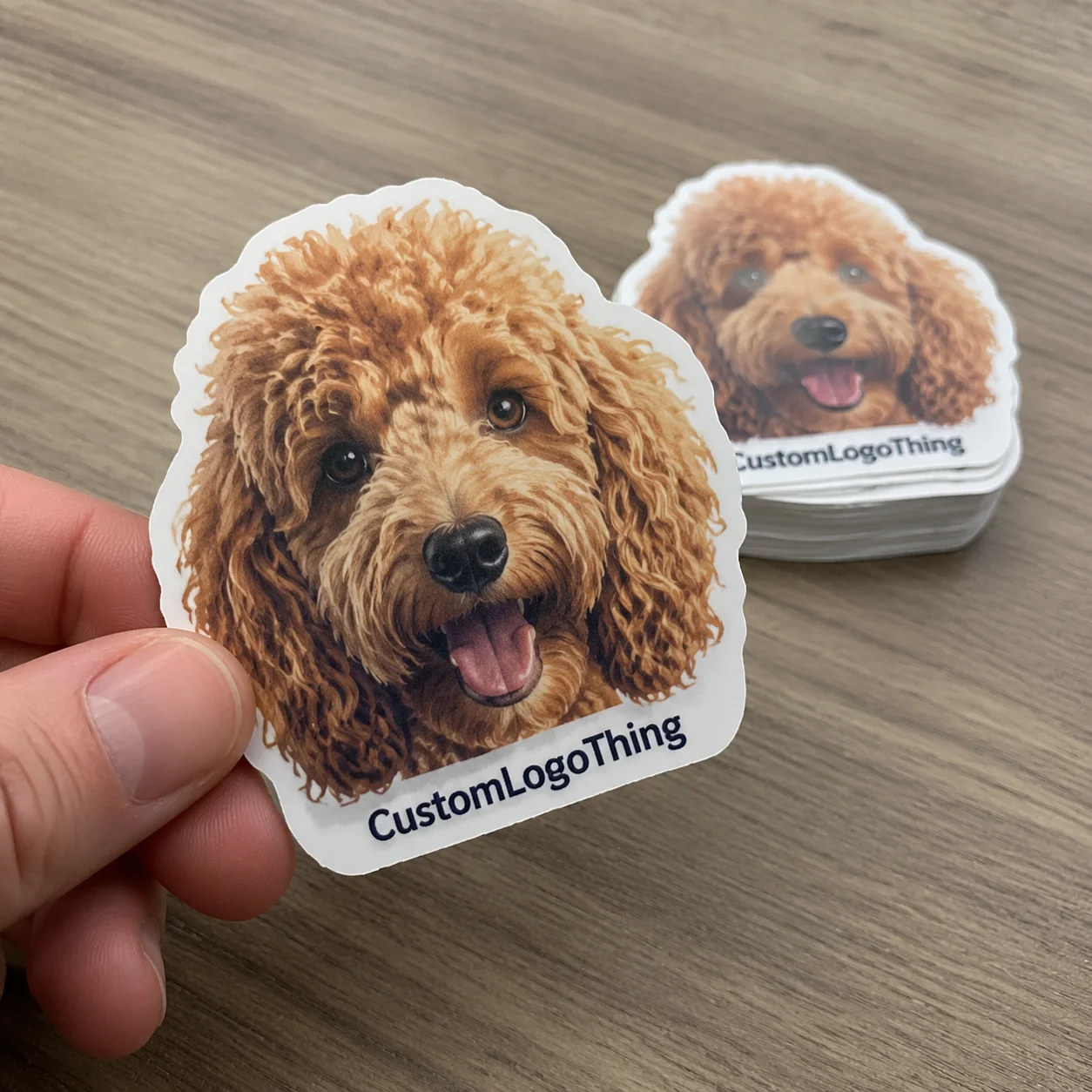
Custom Dog Stickers look straightforward, but the best ones do more than decorate a package or a laptop lid. They carry a brand impression in a format people actually keep, move around, and see again. That repeated visibility is what gives a small sticker outsized value, especially for pet brands, groomers, breeders, and businesses that rely on memorable packaging.
At the simplest level, these stickers are printed adhesive pieces made from a pet photo, breed illustration, logo, or mascot-style design. The style can be playful, polished, or retail-ready, but the goal stays the same: create a small printed item that feels intentional. When the cut is clean and the color holds up, the sticker supports the whole product presentation. When the finish looks cheap, people notice immediately.
The most common formats are easy to mix up, so it helps to separate them clearly:
- Die-cut: cut through both the sticker and backing to follow the exact outline of the artwork.
- Kiss-cut: cut only the top layer, leaving a larger backing shape around the sticker.
- Vinyl: tougher and better for bottles, shipping, or handling more frequently.
- Paper: lower cost and suited to dry indoor use, gift inserts, and light packaging.
- Matte: low glare, softer visually, and often a better match for illustrated pet art.
- Gloss: brighter and shinier, with more punch for color-heavy designs and photo work.
There is a practical reason custom stickers keep showing up in packaging work. They are quick to deploy, easy to reorder, and flexible enough to support a brand without forcing a full packaging rebuild. For small businesses, that matters. A well-made sticker can make a mailer feel complete, a box feel more giftable, and a product launch feel less improvised.
Use case matters more than most buyers expect. A sticker meant for a kraft box does not need the same construction as one meant for a water bottle. One that sits inside a shipping parcel has different durability demands than one that gets peeled, handled, and displayed on a laptop. Matching the sticker to the surface is where quality starts.
A sticker is a small piece of package branding, but it still gets judged like the rest of the package.
How the custom dog stickers process works
The production flow is familiar: prepare the artwork, review a proof, choose the material, print, cut, and pack. It sounds simple because the steps are simple, but every stage affects the next one. If the artwork is weak, the proof becomes a cleanup exercise. If the proof is rushed, the print run can lock in a mistake that should have been caught earlier.
When a sticker starts from a pet photo, the image often needs some cleanup before it can print well. That can include background removal, color correction, sharpening, and outlining the dog so the cut line makes sense. A clear image with strong contrast gives the designer room to work. A blurry screenshot pulled from a phone chat usually does not.
File quality matters more than many buyers realize. Vector files such as AI, EPS, or editable PDF are ideal for logos and line art because they scale without degrading. High-resolution PNGs and layered PSD files also work well for colorful pet illustrations. Low-resolution JPGs and screenshots can sometimes work at small sizes, but once the sticker gets larger, flaws in the source art become obvious.
Proofing is the point where expensive mistakes are prevented. This is where you catch spelling errors, odd cropping, border issues, and sizing problems before anything is printed. Good proofing is not about being picky; it is about making sure a dog’s ear does not disappear into the trim line or a web address does not shrink into unreadable text.
Cut style and finish are set during this stage too. A die-cut piece gives the design a custom silhouette. A kiss-cut sticker is easier to peel and often works better for sticker sheets or multi-pack mailers. Matte gives a quieter finish. Gloss brings out contrast. Same art, different behavior in the hand.
For buyers building out Custom Packaging Products, stickers are often the most practical starting point because they are faster to test than a full packaging system and less expensive to revise. That makes them useful both as a brand touch and as a low-risk production trial.
Custom dog stickers pricing, MOQ, and value drivers
Sticker pricing usually comes down to five variables: size, quantity, shape complexity, material, and finish. Artwork coverage also matters, especially if the design is dense with color or fine detail. A one-color logo sticker is easier to produce than a full-bleed pet portrait with tiny text and a custom contour cut, so the price reflects that difference.
For small runs, the unit cost is higher because setup work is spread across fewer pieces. A batch of 250 custom dog stickers might land around $0.30 to $0.75 per unit, depending on dimensions, cut style, and finish. At 1,000 pieces, the price often falls into the $0.12 to $0.28 per unit range. Larger orders can go lower still, especially if the format is standard and the material is common.
Minimum order quantities vary by supplier and by format. Sheet stickers often allow more flexibility, while individually cut vinyl pieces may have a higher minimum because of the finishing labor involved. Smaller orders make sense for event bags, seasonal promotions, and test runs. Larger runs work better for retail packaging, recurring mailers, and brands that know they will reorder.
| Order Type | Typical Use | Common Price Behavior | Best Fit |
|---|---|---|---|
| Small run | Giveaways, trials, seasonal promos | Higher unit cost, lower upfront spend | Testing a design or audience response |
| Mid run | Brand inserts, retail packaging, event kits | Better unit pricing, manageable inventory | Most small businesses |
| Large run | Retail sales, recurring shipments, campaigns | Lowest unit cost, higher commitment | Established brands with repeat demand |
Price should never be judged on its own. A lower quote can hide thin stock, weak adhesive, loose color control, or cut consistency problems. That is where buyers end up paying twice, once for the order and again for the replacements. For stickers that will touch moisture or get handled often, the right spec matters more than the lowest number on the page.
A useful rule of thumb: if the sticker is for short-term use or dry packaging, a lower-cost material may be enough. If it will sit on bottles, travel through mailers, or stay in circulation for weeks or months, vinyl and protective laminate are usually worth the extra spend. Budget should follow the actual use case, not the mockup.
Choose the right material, finish, and size
Material choice should start with the environment, not the artwork. Waterproof vinyl is the better fit for bottles, tumblers, outdoor events, and any surface that may get wiped or splashed. Paper is better for indoor use, gift boxes, inserts, and Product Packaging That will not be exposed to moisture. Laminated stock adds abrasion resistance and helps when stickers are mailed loose or handled repeatedly.
Finish changes the visual tone more than many buyers expect. Matte reduces glare and gives illustrated dogs, hand-drawn lines, and softer palettes a more restrained look. Gloss increases contrast and can make bright colors or photos feel more vivid. Neither one is automatically premium. A glossy sticker with poor source art still looks weak, while a matte sticker with strong artwork can feel refined and finished.
Size is another place where buyers either save money or create problems for themselves. A 1.5 to 2 inch sticker works well for seals, inserts, and tiny branding touches. A 3 inch format is common for laptops and packaging add-ons. Larger pieces, usually 4 inches or more, suit illustrated dogs, event swag, or merch packs where visibility matters.
Shape should support the artwork, not fight it. Round and square stickers are efficient and easy to stack. Contour-cut shapes follow the outline of the dog or illustration and feel more custom, but they need enough open space around the design so the cut does not clip ears, paws, or narrow tails. The tighter the outline, the more carefully the art needs to be prepared.
For branded packaging, the best move is usually to match the sticker to the surface first and the look second. A sticker for a kraft mailer has different requirements than one for a reusable bottle, and both differ from a label used on custom printed boxes. The same dog illustration can work across all three, but the material and finish should change with the job.
- Best for moisture: vinyl with a protective laminate.
- Best for dry packaging: paper or economy coated stock.
- Best for shelf appeal: matte for soft illustration, gloss for bright color and photo detail.
- Best for custom shape: die-cut when the outline is clean and the artwork has room.
That same logic applies across a larger packaging system. The sticker should look like part of the same visual language as the box, label, or mailer, not an unrelated add-on pasted over the top. Consistency matters more than spectacle.
Production steps, proofing, and turnaround expectations
Turnaround usually begins once the artwork is submitted and the proof is approved. For clean files, proofing can take one to two business days. Printing and cutting may add another few business days after approval, and packing and shipping fill out the rest. Many orders land in the 7 to 15 business day range from proof approval to delivery, though the exact window depends on order size, cutting complexity, and the shipping route.
Several things slow a job down. Missing source files. Vague crop instructions. Changes requested after the proof is already built. Late approvals. The usual one is the buyer who asks for a size change after production has started. That kind of edit can force a rework, and rework has a real cost attached to it.
Custom shapes and specialty finishes take longer because they need more specific setup. Standard sticker sheets and simple round or square formats tend to move faster. If the stickers are tied to a launch, event, or mailer campaign, buffer time is worth protecting. Rush production is possible in some cases, but it should be treated as a backup plan, not the default.
It helps to think like a packaging buyer rather than a casual shopper. If the stickers support a product launch, confirm the quantity, size, finish, and delivery window with the same care you would use for retail packaging. The details are not cosmetic. They determine whether the order actually fits the job.
If a supplier references testing or material standards, ask what those claims mean for the specific application. Abrasion resistance, adhesive performance, and shipping durability matter more than broad promises. Industry references such as ISTA can be useful when transit performance is part of the brief, and material guidance from FSC can help when sustainability is part of the packaging conversation. Not every sticker order needs technical language, but the production mindset should still be precise.
Common mistakes buyers make with pet sticker orders
The most common mistake is starting with a low-resolution pet photo and expecting print quality to fix it. It will not. Blur in the source file becomes blur in the sticker. Another frequent problem is choosing a size that is too small for the artwork, then discovering the dog’s face is hard to read from a normal viewing distance. Tiny text, detailed whiskers, and busy backgrounds are all risky at reduced scale.
Another issue is assuming every sticker is waterproof. That assumption causes trouble, especially when the order is for bottles, outdoor events, or shipping inserts that may sit in humid conditions. Paper has its place, but it is not the right choice for everything. The material should match the actual environment, not the hoped-for one.
Thin cut lines can also fail when the design is scaled down. Ears, paws, collars, and tails need enough room to survive trimming. If the artwork is crowded or overly detailed, the silhouette may lose clarity once it is cut. Good packaging design respects production limits. What looks great on a screen can weaken quickly when it becomes a 2-inch sticker.
Cheapest quote wins is usually a weak rule. A lower price can mean thinner stock, lighter adhesive, softer color control, or sloppy edge consistency. If the stickers are part of package branding, those problems show up fast because the whole presentation starts to feel uneven. That is especially true when the rest of the packaging is clean and deliberate.
A simple pre-order checklist prevents most of the avoidable mistakes:
- Use a high-resolution photo or vector file.
- Confirm the finished size in inches or millimeters.
- Match the material to the real surface, not just the mockup.
- Choose matte or gloss based on how the artwork should read in hand.
- Check spelling, URL text, and spacing on the proof.
- Ask whether the adhesive suits the intended surface and handling level.
If stickers will be reordered often, keep the artwork and specs organized with the rest of the packaging files. That avoids version drift, mismatched colors, and accidental changes in crop settings later on.
Expert tips and next steps for a better order
Start with one main design and one practical size. That keeps the order focused and gives you a real read on how people use the sticker. If the design performs well, it is easier to add a second size, a sheet format, or a related packaging piece later.
Ask for a proof at actual size. Not enlarged on a screen, actual size. That is the easiest way to see whether borders hold, tiny text stays readable, and the pet portrait still looks balanced after scaling. A design that looks strong at 6 inches can fall apart at 2.5 inches, and that gap is where a lot of sticker orders go wrong.
Test the surface before committing to volume. A sticker that behaves well on coated paper may act differently on textured kraft, flexible mailers, powder-coated bottles, or lightly textured cartons. Adhesion depends on the surface more than many people expect, and that is one of the reasons sample tests save money.
Keep one clean file set with the logo, pet art, approved colors, and final sticker specs. That makes reorders faster and helps maintain consistency across package branding. It also makes it easier to extend the same design into Custom Labels & Tags or into custom printed boxes without losing the visual thread.
For practical ordering, gather the art, choose the intended use, compare material options, and Request a Quote with the size and quantity spelled out clearly. That is the easiest way to get custom dog stickers that fit the job instead of just looking cute in a proof.
Good sticker buying is plain and disciplined: clear artwork, the right size, the right material, and no surprises in production.
FAQ
What makes custom dog stickers different from regular stickers?
They are usually built around pet photos, breed art, or dog-themed branding instead of generic graphics. The best versions are matched to the surface they will be used on, which means the material and finish are chosen for the job rather than for appearance alone.
Are custom dog stickers waterproof?
Only if they are made with water-resistant materials such as vinyl and a suitable laminate. Paper stickers are better for dry indoor use and packaging that will not face moisture or heavy handling.
How much do custom dog stickers cost per unit?
Pricing depends on quantity, size, shape, material, and finish. Smaller orders cost more per piece, while larger runs usually lower the unit cost. Specialty cuts and premium coatings can increase the price.
How long does it take to produce custom dog stickers?
Most timelines depend on how quickly the proof is approved, how complex the cut is, and how far the order needs to ship. Clean artwork and simple formats generally move faster than custom shapes or specialty finishes.
What artwork works best for custom dog stickers?
High-resolution pet photos, clean vector logos, and simple illustrations print more clearly than blurry screenshots. Strong contrast, clear outlines, and limited tiny text help the design hold up when the sticker is scaled down.


