Custom dress labels do more than identify a brand. They affect how a garment feels in hand, how it survives wash cycles, and whether the piece looks finished or oddly improvised once it hangs on a rack. If you are coordinating Custom Packaging Products or other branded packaging, the label should match that same level of control instead of feeling like an afterthought. That mismatch shows quickly.
From a buyer’s point of view, the job is straightforward: pick a label that reads clearly, feels right against the skin, and survives the handling your dresses actually get. Boutique pieces, bridesmaid runs, children’s wear, and wholesale programs all need different tradeoffs. There is no universal “best” label. There is only the version that fits the product and the margin.
The keyword here is fit. A label that looks elegant in a mockup can still fail once it is sewn into a curved seam, washed twice, or worn against bare skin. That gap between screen and reality is where most label mistakes happen.
Why dress labels matter more than the garment itself
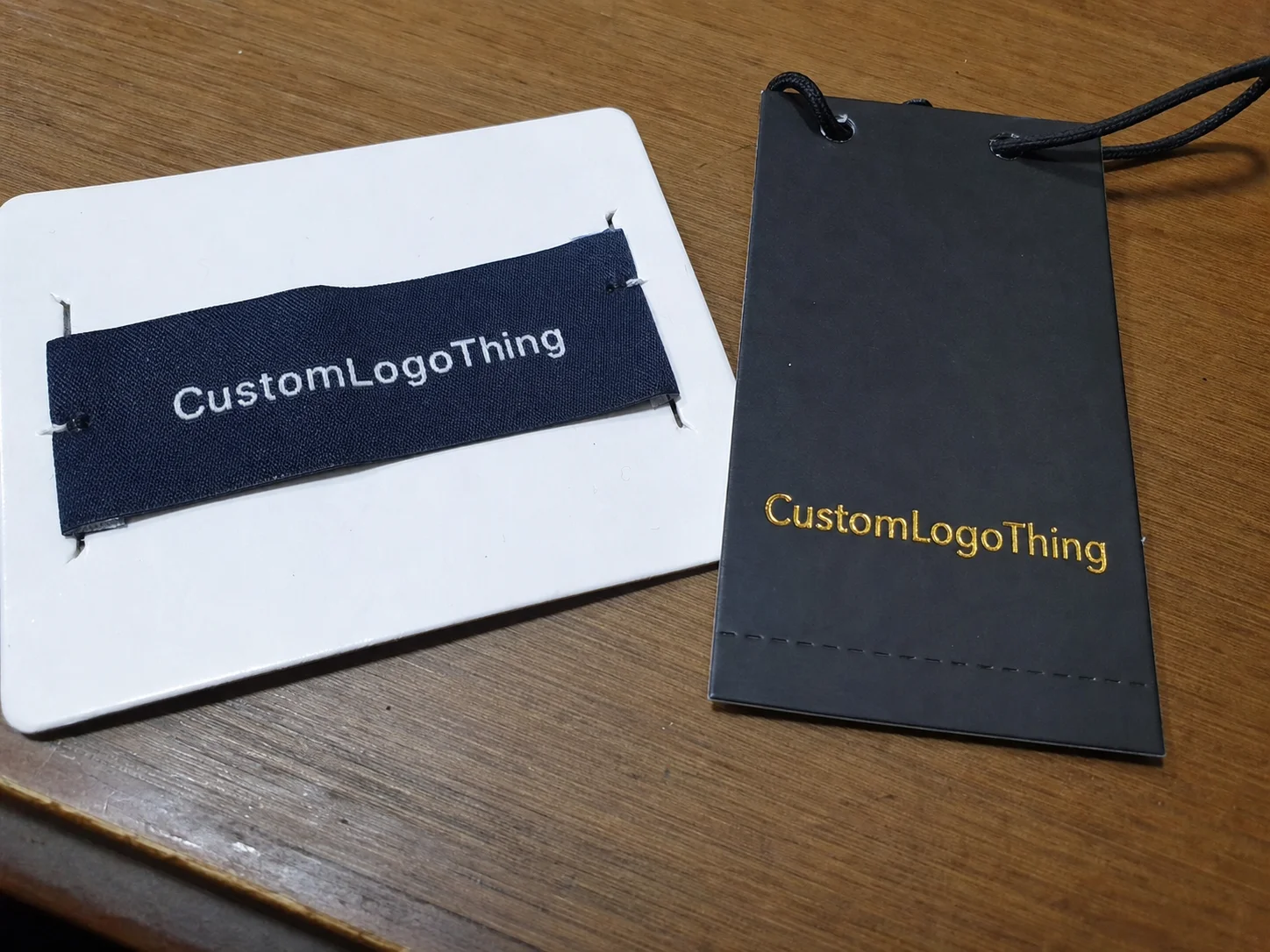
A dress can be well sewn and still feel unfinished if the label is crooked, scratchy, or impossible to read. Buyers notice that fast. So do customers, even if they never say it out loud. A clean label tells them the brand cared about the details, which is exactly how packaging design and product presentation shape perception before anyone studies the seam.
Custom dress labels also carry the boring but necessary information: brand name, size, care instructions, fiber content, and country of origin when required. That is not glamorous work. It is, however, the difference between a polished retail program and a pile of nice-looking clothes with no compliance discipline. If you sell into wholesale or larger retail accounts, the label format matters almost as much as the dress construction itself.
Match the label style to the line. A bridal or occasionwear brand usually wants something softer and more refined. Children’s wear needs comfort first, because nobody wants a scratchy neckline complaint on a tiny garment. Mass retail often needs durability, fast turnaround, and predictable color matching. A small label can shape perceived quality more than one extra stitch or a slightly better hang tag.
“If the label looks cheap, the whole garment inherits that problem. People rarely separate the two.”
That is why custom dress labels sit at the intersection of branding and utility. They are not just identifiers. They are a tiny piece of package branding, except they live on the garment instead of the carton. If you already care about retail packaging and branded packaging, the logic should be familiar: consistency beats decoration.
There is also a practical side that gets overlooked in the rush to make things look polished. Poor label planning can slow down packing, create sewing issues, and force a last-minute rework on finished goods. Those costs rarely appear on the initial quote.
Materials that actually hold up
Material choice decides whether the label feels premium or annoying. The main options are woven labels, printed satin, printed cotton, and heat-transfer labels. They all have a place. They also all fail in different ways if you pick the wrong one for the garment.
Woven labels are the standard choice for a premium look and long-term durability. They hold fine detail well, especially on logos with small typography or tight linework. Polyester woven labels are usually the most durable, and they handle repeated washing without the surface wear you get from some printed options. The tradeoff is texture: if the weave is too dense or the edge finish is rough, the label can feel stiff against the skin.
Printed satin labels are a strong option when comfort matters. They are smoother, softer, and usually better for detailed care text than a low-end woven label. They also work well when you need a more delicate visual treatment. The downside is obvious: if the print quality is weak or the fabric base is too glossy, the label can look more temporary than premium.
Printed Cotton Labels fit brands that want a natural, understated feel. They pair well with linen, organic cotton, or tactile fashion lines. The finish is less shiny and often reads more authentic. Just do not treat cotton as a fix for poor artwork. If the weave is loose or the ink coverage is thin, fine text can blur faster than you expect.
Heat-transfer labels remove seam bulk entirely, which is useful on fitted dresses, activewear-inspired silhouettes, or children’s garments where comfort is a priority. They can look very clean. They can also fail if the application process is sloppy or the garment fabric is not compatible with the transfer. That is why sample testing matters.
| Label type | Typical unit cost at 5,000 pcs | Best use | Main tradeoff |
|---|---|---|---|
| Woven polyester | $0.10-$0.28 | Premium dresses, long wear, detailed logos | Can feel textured if spec is too coarse |
| Printed satin | $0.08-$0.20 | Soft hand feel, readable care text | Less structured than woven options |
| Printed cotton | $0.12-$0.25 | Natural or artisanal branding | Fine details can soften over time |
| Heat-transfer | $0.06-$0.18 | No-seam-bulk applications | Application quality matters a lot |
Material selection should follow the garment itself. A silky slip dress does not want a heavy, scratchy seam label. A structured occasion dress can tolerate a more defined woven label if the placement is correct. Good buyers think about drape, touch, and wash performance together. That is where many rushed orders go sideways.
If you want a broader reference point for packaging materials and sustainability choices, the FSC standard is worth understanding for any paper components you pair with labels, inserts, or hang tags. It does not decide the garment label itself, but it does matter for the rest of the branded presentation.
One practical buying point: ask how the label edge is finished. Laser-cut, heat-cut, and folded labels do not behave the same way. A rough cut can scratch, while an oversealed edge can stiffen the label enough to show through lightweight fabrics.
Production process and turnaround: from file to finished label
Production starts with artwork, and this is where a lot of label orders waste time. The supplier needs a vector logo, exact label dimensions, fold style, color references, and the exact text you want printed or woven. If your file is vague, the quote will be vague too. That is not a supplier problem. That is a file problem.
For custom dress labels, the proof stage is not a formality. It is the checkpoint where size, spacing, spelling, and color translation get reviewed before production starts. A good proof will show the final label dimensions, the fold or cut style, and the placement of any care text. If a supplier skips that step, they are not saving you time. They are borrowing it from the future and charging interest.
Sampling is worth paying for when the line is premium or the typography is small. One unreadable wash instruction can turn into a batch of useless inventory. In practice, small text on woven labels can disappear if the weave is too loose or the color contrast is too weak. A sample lets you catch that before thousands of pieces are committed.
Turnaround depends on three things: material, quantity, and shipping method. A simple satin label order might move faster than a complex woven run with multiple thread colors and specialty folding. A realistic timeline is often 7-15 business days after proof approval for standard production, plus shipping. If you need a rush build, ask early. Last-minute label sourcing is where budgets get embarrassed.
For international or mixed-channel programs, build in buffer time for revisions, customs delays, and possible second samples. If your dress launch date is fixed, do not schedule the label approval for the same week you need the finished goods packed. That is how people create avoidable panic.
“The proof is cheaper than the mistake. Always.”
If your labels are part of a larger launch package, line up the label spec with Custom Labels & Tags and the rest of the garment presentation early. That includes hang tags, tissue, inserts, and carton markings. Packaging is a system. It falls apart when each piece is ordered in a separate vacuum.
For buyers who ship finished goods through distribution centers, the ISTA testing framework is useful context when packaging or transit conditions are a concern. It is not a label spec by itself, but it does help you think about abrasion, compression, and handling risk across the full order.
Before approving production, ask for a production-friendly proof rather than a pretty mockup. A good proof should show exact dimensions, stitching or fold orientation, color callouts, and any required legal copy. If you cannot read it at proof stage, it will not become clearer once sewn in.
Cost, pricing, and MOQ: what changes the unit cost
Unit cost usually falls as quantity rises. That part is predictable. What is less predictable is how fast storage, cash flow, and lead times become the real constraint. A 1,000-piece order might be easy to justify for a small capsule. A 20,000-piece order might price better on paper and still be the wrong decision if sell-through is uncertain.
The biggest price drivers are fairly boring: material, size, fold style, thread count, color count, and finishing. A simple one-color woven label is cheaper than a detailed multi-color label with a custom fold. A stitched-in care label is different from a heat-transfer mark. More complexity means more setup and more chance for waste. That is basic manufacturing, not mystery math.
MOQ matters because small runs are possible but often carry setup fees that make the per-piece cost look ugly. That is not a scam. That is the reality of screen setup, loom setup, and production handling. If you are ordering custom dress labels for a test run, ask whether the supplier can quote a pilot quantity separately from the full production run.
Ask for quotes that separate setup, sampling, production, and shipping. Otherwise you are comparing a headline number against a mystery box. That is how buyers end up choosing the wrong supplier and calling it “budget control.”
| Order size | Typical setup impact | Typical unit price behavior | Best for |
|---|---|---|---|
| 250-1,000 pcs | High relative setup cost | Highest per-piece pricing | Samples, small launches, limited editions |
| 2,000-5,000 pcs | Setup spread over more units | Moderate pricing | Most direct-to-consumer dress lines |
| 10,000+ pcs | Better absorption of setup and tooling | Lowest unit price | Wholesale and retail programs |
The cheapest label is not always the best buy if it fails wash tests, frays at the edge, or cheapens the garment. A label that costs a few cents more and survives the life of the dress is usually the better business decision. That is especially true for brands building repeat purchase behavior, because packaging cues are supposed to reinforce trust, not erode it.
There is another hidden cost: rework. If a label is too large, too itchy, or misprinted, removing and replacing it can consume labor and damage the garment. That cost can erase any savings from choosing the lowest bid.
How to choose the right size, placement, and finish
Size comes first. If the label is too large, it crowds the seam and looks clumsy. If it is too small, the text becomes a guessing game. The right size depends on the garment scale, seam allowance, and how much information you need to fit on the label without turning it into a tiny legal document.
Placement should follow the dress construction. Neck seam labels are standard for many styles, but side seam placement is better when comfort matters or when the neckline is delicate. Waist seam placement can work on some silhouettes, especially if you want the brand mark to stay visible without touching the skin directly. There is no universal answer. There is only what fits the pattern and the wearing experience.
Finish matters more than some people want to admit. Matte, soft-edge labels usually feel more boutique. Crisp woven labels feel more structured and traditional. A satin label with a soft edge can look elegant on occasionwear, while a high-density woven label can support a stronger brand mark on tailored pieces. The finish should match the tone of the garment, not fight it.
For legibility, use strong contrast, clean typography, and enough margin around the logo and care text. This is where packaging design thinking helps. White space is not wasted space. It gives the eye somewhere to land. The same principle applies to custom printed boxes and garment labels. Crowded layouts always look cheaper than they should.
- Keep small text to the essentials.
- Use a font weight that survives production, not just screen resolution.
- Test the label on the actual garment fabric, not only on a flat artwork proof.
- Check how the label sits after one wash and after a full wear cycle.
That last point matters. A label that looks balanced on screen can shift once it is sewn into a curved seam or placed against a stretchy fabric. Real garments move. Mockups are useful, but they are not the finish line.
For dresses with very light fabrics, consider the stitch count and backing. A dense label sewn with heavy thread can telegraph through the garment or distort drape. The cleanest label on paper is not always the cleanest label on a finished dress.
Common mistakes that make labels look cheap or fail fast
The fastest way to make a label look bad is to cram too much into it. Tiny text, narrow margins, and weak contrast create a label that nobody can read without squinting. If customers need a magnifier, the label failed. That is not a bold design choice. It is a bad layout.
Another common mistake is choosing a material that scratches the skin or curls after washing. Dresses are worn close to the body, so comfort matters more than it does for many other product categories. A label that irritates the wearer creates complaints faster than a weak logo ever will.
Skipping wash testing is reckless. A label should survive laundering, heat, and regular wear without fading, fraying, or peeling. If you are using heat-transfer labels, test them on the exact garment fabric and follow the supplier’s application instructions carefully. A transfer that holds on one fabric can fail on another with a different surface finish or stretch profile.
Leaving out care instructions or fiber content can create compliance headaches, especially for retail or wholesale orders. Even when the label itself is tiny, the information on it has real legal and operational weight. If the care copy is moving to a hang tag, make sure the garment still carries whatever is required for your market and channel.
Rushing the proof stage causes the dumbest errors: spelling mistakes, wrong size, wrong fold, and labels that look off-center once sewn in. These mistakes are avoidable. They usually come from speed pressure, not complexity. A supplier can only catch what the buyer actually confirms.
“Most label failures are not production failures. They are approval failures.”
One more thing: do not assume that a shiny finish equals premium. Sometimes it just means shiny. If the dress line is understated, overly glossy labels can look disconnected from the garment and from the rest of the packaging system. Consistency matters more than flash.
Another avoidable mistake is chasing the lowest quote without checking thread count, label density, or washing performance. A label can be cheap because it is underbuilt. That is not savings. It is a delayed problem.
Next steps before you request quotes
Before you ask for pricing, gather the basics: garment type, label placement, dimensions, artwork, quantity, and target launch date. If you do not know those details yet, you are not ready to compare suppliers. You are shopping for guesses.
Decide whether you need woven, printed, or care labels so suppliers are quoting the same product. Otherwise you will get apples-to-oranges nonsense, and that is a fast way to make the cheapest quote look better than it actually is. The real comparison should be spec-for-spec, not headline number versus headline number.
Ask for a digital proof or sample before production, especially if you are ordering custom dress labels for a premium line. If the supplier cannot provide a clear proof process, that is a sign to slow down. Good production starts with clean communication, not hope.
Then compare suppliers on unit cost, turnaround, and material quality together. A lower price is useful only if the label performs. That includes sewing cleanly, surviving washing, and matching the visual tone of your brand. If you are already thinking about broader package branding, keep the label aligned with the rest of the line, from inserts to Custom Packaging Products.
Once you have the quote, review the spec sheet line by line and confirm the final label text before approving production. That is the last clean chance to catch errors. After that, you are in manufacturing, and manufacturing is famously indifferent to regret. If you want a fast path to a clean order, start with Custom Labels & Tags and build from a complete spec, not a half-finished idea.
For most brands, the right custom dress labels are the ones that disappear into the garment experience while still doing their job: identifying the brand, surviving wear, and supporting the retail presentation. That is the balance worth paying for.
FAQ
What are custom dress labels usually made from?
Common options include woven polyester, printed satin, cotton, and heat-transfer materials. The right choice depends on comfort, wash durability, and how premium you want the garment to feel.
How much do custom dress labels cost per piece?
Price depends heavily on quantity, material, fold style, number of colors, and setup fees. Small runs cost more per label; larger orders usually improve unit cost but require more upfront cash.
How long does production usually take for dress labels?
Typical timing includes proof approval, production, and shipping, so plan for more than just manufacturing time. Rush orders may be possible, but they usually raise cost and reduce flexibility for revisions.
What information should go on custom dress labels?
Include brand name, size, care instructions, and any required fiber or country-of-origin details. Keep the layout readable and avoid overloading the label with text that belongs on a hang tag instead.
What is the best label type for high-end dresses?
Woven labels usually work well when the goal is a premium look and long-lasting detail. If softness matters more than texture, printed satin or heat-transfer labels may be a better fit.


