Custom Eggshell Stickers are a practical choice when a label needs to stay put, show visible tamper evidence, and still look clean on the package. They are commonly used as seals, warning labels, asset tags, and branded closures where a normal removable label would not do the job.
They are not a universal answer. Eggshell material is built for permanence and fracture-on-removal behavior, which makes it strong for security and weak for anything that needs repositioning, reuse, or frequent handling during setup.
For buyers, the real question is less about style and more about function: what surface is being labeled, how much information must fit, how many units are needed, and whether the label must resist removal or only identify a product.
What custom eggshell stickers actually do
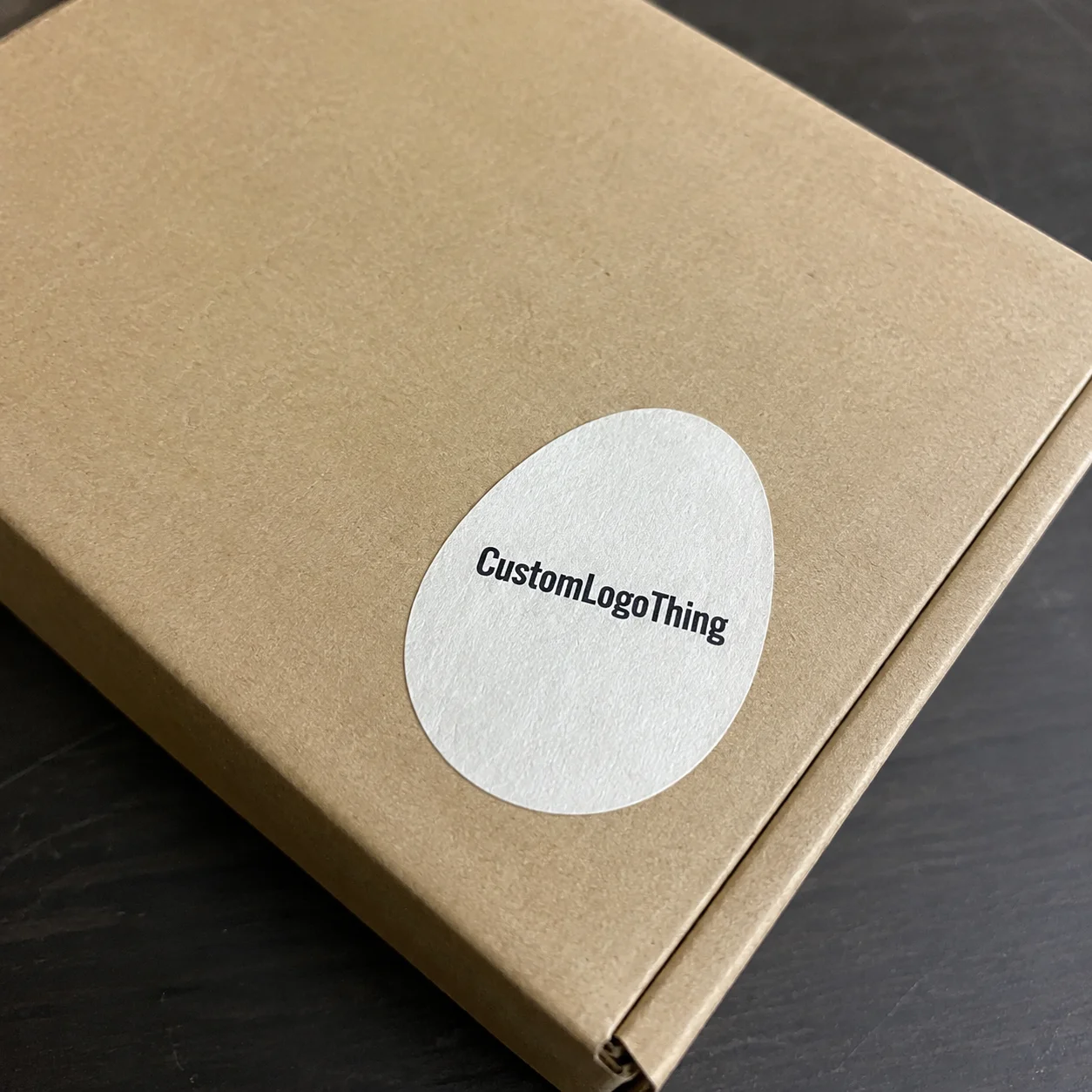
Eggshell labels use a brittle face stock that breaks into small fragments if someone tries to peel it off. That makes them useful anywhere visible tampering matters, because the label will not come away in one intact piece.
In packaging, they are often used on cartons, electronics, cosmetics, limited-edition items, and control seals. They can make a package look more deliberate while also helping protect the contents from quiet opening or label transfer.
That combination of appearance and function is why buyers choose them over standard paper labels or flexible vinyl in the first place. A normal label can be removed, swapped, or reused. An eggshell label is designed to fail during removal.
The limitation is just as important. If a label must be moved during setup, applied to a questionable surface, or reused later, eggshell is the wrong material. It performs best when the final position is known and the surface is ready for a permanent bond.
Practical rule: choose eggshell when the label must stay put or show tamper evidence. Choose a removable option when the surface, timing, or reuse requirement is still uncertain.
For packaging systems with multiple label types, eggshell usually handles seals and warning marks while other labels carry product details, barcodes, or variable data. That division keeps each component focused on one job and avoids overloading a single sticker.
How the material, adhesive, and print process work
A finished eggshell sticker is built from the printed face stock, adhesive, release liner, and finish. The face stock carries the artwork, the adhesive controls the bond, the liner protects the label before use, and the finish changes the final look and handling feel.
The adhesive is a major factor. A strong permanent adhesive helps the label bond to cardboard, glass, coated paper, and many plastics when the surface is clean and dry. It cannot compensate for dust, oil, condensation, or rough texture, so application conditions matter as much as the adhesive itself.
Printing choices depend on the artwork and the size of the run. Digital printing is common for short runs and full-color jobs. Spot color printing can help keep brand colors consistent. White ink is useful on darker stocks or whenever the artwork needs stronger contrast.
Finish affects both appearance and readability. Matte creates a subdued look and reduces glare. Gloss makes color appear brighter and more retail-friendly. If the label will be handled often, a protective laminate can help reduce scuffing, though it is not necessary for every job.
Format affects production efficiency. Roll format works well for higher-volume hand application and machine-fed labeling. Sheet format suits lower quantities and manual use. Kiss-cut layouts are easy to peel quickly, while die-cut shapes can look sharper but usually require more careful artwork preparation.
These are not cosmetic details. They affect labor time, waste, application speed, and how polished the final package looks when it reaches the customer.
If the label is part of a larger packaging system, it should coordinate with the box, insert, and other printed elements. A label that looks good on its own but clashes with the rest of the package weakens the overall presentation. For broader labeling needs, Custom Labels & Tags are often the companion category buyers compare alongside eggshell material.
For general packaging reference, the Packaging School / packaging.org library is useful for understanding structure, material behavior, and performance without relying on vague sales language.
Cost, pricing, MOQ, and quote factors
Pricing for eggshell stickers usually depends on quantity, size, shape, print coverage, finish, and packaging format. Larger runs lower the per-unit price because setup costs are spread across more pieces. Custom die-cuts, specialty inks, and premium finishes increase cost.
For planning, small orders often land around $0.35 to $0.75 per unit depending on size and complexity. Mid-size orders usually price lower, while higher-volume repeat runs can fall closer to $0.08 to $0.22 per unit for simpler specs. These are only planning ranges, but they are useful when comparing quotes.
MOQ varies by supplier and production method. Some digital jobs can start low if the artwork is simple and the schedule is flexible. Others require higher minimums to keep production efficient. A small order is useful for testing finish, adhesion, and visual balance, but it is not always the best route to the lowest unit price.
The hidden costs are usually the ones that matter most.
- Multiple artwork versions add proofing time and complexity.
- Rush production can carry meaningful fees if the schedule changes.
- Freight and packaging can outweigh savings on small orders.
- Repeated proof rounds slow delivery and may add prepress work.
- Special formats such as custom roll counts or individually cut sheets can raise labor and shipping costs.
Comparing quotes by unit price alone usually leads to the wrong decision. Total project cost matters more once shipping, proofing, format, and waste are included. A cheaper quote can become more expensive if it slows application or creates rework.
| Order Type | Typical Unit Cost | Lead Time Pressure | Best For |
|---|---|---|---|
| Small custom run | $0.35-$0.75 | Low to moderate | Testing, short campaigns, prototype packaging |
| Mid-size branded run | $0.15-$0.35 | Moderate | Seasonal promotions, product packaging, smaller SKUs |
| Higher-volume repeat order | $0.08-$0.22 | Lower per unit | Ongoing retail packaging, compliance labels, fulfillment use |
Process, timeline, and turnaround from proof to delivery
The usual workflow is straightforward: Request a Quote, confirm size and quantity, review a digital proof, approve the job, then print, finish, and ship. Most schedule problems happen before printing, not during production.
For simple jobs, lead times are often around 12 to 15 business days after proof approval. More complex shapes, heavy ink coverage, specialty finishes, or detailed artwork can stretch the schedule. Rush turnaround may be possible, but only when the specs are simple and the file is ready.
Proofing is where most avoidable mistakes are caught. A proper proof should confirm finished size, shape, cut line, bleed, safe margins, and copy. It should also catch small text problems, barcode readability issues, and any regulatory or batch information that cannot afford a typo.
Packaging teams often underestimate how much one missing detail can slow the order. If the logo is scaled too small, the text is too close to the trim, or the bleed is missing, the artwork may need another round before production starts. That time is much easier to spend during proofing than during a launch week.
If the stickers will face vibration, abrasion, or rough handling in transit, the package should be designed with shipping stress in mind. The ISTA standards are a useful reference when evaluating how packaging performs under transport conditions.
How to order the right eggshell label for your use case
Start with the job the label has to do. Is it a tamper-evident seal, a branding mark, a warning label, an inventory tag, or a control identifier? That answer drives size, finish, copy length, and whether roll or sheet format makes more sense.
Size should follow the surface, not the mockup. Small labels work for closures and short messages. Larger labels fit logos, product names, and longer copy without crowding the layout. If the design has to stretch to include everything, it usually looks less intentional.
Shape matters too. Circles and ovals are easy to place by hand and work well on small or curved surfaces. Rectangles are efficient for text-heavy uses. Custom die-cuts can improve brand character, but they should not make application slow or awkward.
Finish should match the packaging and the environment. Matte is a sensible choice for premium packaging and easy reading under bright light. Gloss gives more visual punch and can make color appear richer. If the label is mostly functional, restraint usually works better than decoration.
Artwork preparation should include bleed, safe margins, and font sizes that remain legible after trimming. Keep the message short unless the label has to carry regulatory copy. Print-ready files save time, reduce proof rounds, and make quoted turnaround more reliable.
Before placing the order, it helps to confirm a few basics.
- Decide whether the label must be tamper-evident or only decorative.
- Measure the exact application surface before requesting pricing.
- Choose between roll, sheet, or individually cut format.
- Match the finish to handling, readability, and brand presentation.
- Prepare artwork at actual size before asking for a fast turnaround.
Common mistakes that waste money
The most common mistake is trying to fit too much into a label that is too small. A logo, product details, batch code, legal text, and barcode may all be important, but they do not become readable just because they fit on the artboard. Crowded labels usually look worse and are harder to apply cleanly.
Another expensive mistake is choosing a shape that looks good in a mockup but slows production. If workers have to rotate the label, fight the liner, or stop to line up each piece, application time rises quickly. Sticker price matters less when labor cost climbs with every unit.
Surface prep gets overlooked often. Eggshell material can do a lot, but it cannot overcome dust, oil, condensation, or a poor substrate choice. The best adhesive still needs a clean, ready surface to bond properly.
Skipping proof review is another avoidable problem. Cut lines move, spellings get missed, and colors can shift from screen to print. The proof exists to catch those issues before inventory is made.
Choosing only the lowest quote can also backfire. Reorders, shipping, storage, and application speed all affect the final cost. A cheap label that causes rework is not a bargain.
Expert tips for better adhesion and cleaner branding
Use simple, confident artwork when the label needs to be read quickly or survive rough handling. Fine lines and tiny type can disappear once the label is applied to a curved or textured surface. Strong contrast and clear hierarchy usually produce a better result than trying to say too much.
Test on the real substrate before a full run whenever the surface is coated, glossy, curved, or unusually rough. Materials that look similar can behave differently in production. A carton, a bottle, a mailer, and a folded sleeve are not interchangeable just because they seem smooth in a sample photo.
For higher-stakes use, a sample kit or short proof run is worth the time. That is especially true for tamper-evident packaging, equipment labels, or anything tied to compliance. A small test can reveal whether the adhesive is strong enough, whether the finish reads correctly, and whether the artwork survives real handling.
Keep the message intentional. Eggshell stickers work best when they communicate one thing clearly: seal, warn, verify, or brand. They are not a good place for long explanations. Packaging should guide the eye quickly and do its job without making the customer decode it.
When requesting a quote, specify placement, quantity per roll or sheet, and any variable data. If you need serial numbers, batch codes, or several versions, say so early. That gives the production team a cleaner spec and reduces the chance of a quote that misses the real scope.
For buyers thinking about broader material sourcing and responsible packaging decisions, the FSC is useful when paper-based components are part of the packaging mix. It helps frame the conversation around certified materials and supply choices.
Next steps for a smarter order
Before ordering, check the package surface, the required message, and the application method. Decide whether the label is there to seal, warn, brand, or track. Then gather exact dimensions, quantity, artwork, and the date the labels need to be in hand. Lead Time Planning works best when it is based on the real schedule, not the optimistic one.
If the adhesive or finish is uncertain, ask for a sample or material recommendation before committing to the full run. That step can prevent reprints, wasted stock, and application problems. Quotes should be compared by total cost, turnaround, and format, not just by the lowest sticker price.
For a product launch or packaging refresh, the label should fit the rest of the system. A seal that works well on its own can still weaken the presentation if it clashes with the box, insert, or shipper. Custom eggshell stickers do their best work when they are specified with care, tested on the right surface, and chosen for a clear function instead of a vague hope that they will “just work.”
What are custom eggshell stickers used for on packaging?
They are commonly used for tamper-evident seals, branded closures, compliance labels, and inventory or asset marking. They work best when the label should look clean but become difficult to remove without visible damage.
Do eggshell stickers stick to cardboard, plastic, and glass?
Yes, they can bond well to many smooth surfaces, including cardboard, coated paper, plastic, and glass. Surface condition still matters, so dust, oil, moisture, and heavy texture can reduce performance.
Are custom eggshell stickers removable?
They are designed to resist clean removal, which is the point. If someone tries to peel them off, they typically fracture into small pieces and leave visible evidence.
How much do custom eggshell stickers usually cost?
Pricing depends on size, quantity, shape, print coverage, and finish. Higher quantities usually reduce unit cost, while small runs, custom die-cuts, and rush jobs raise the price.
What is the usual turnaround for custom eggshell stickers?
Turnaround depends on artwork readiness, proof approval, and production complexity. Simple orders can move quickly, but custom shapes or special finishes need more lead time.

