Custom Favor Boxes: How to Choose and Order the Right Fit
Custom favor boxes are judged before anyone opens them. That is not a dramatic statement; it is just how packaging works. If the size is off, the stock feels flimsy, or the print crowds the layout, the package reads as cheaper than the item inside. For weddings, retail giveaways, product launches, and small promotional kits, the box has to do two jobs at once: protect the contents and present them with intention.
The practical question is not whether the box looks nice in a mockup. It is whether it survives handling, stacks cleanly, and still looks deliberate after shipping, unpacking, and a few hands on the table. A broader packaging line can help here, and the Custom Packaging Products page is a useful reference for formats and finishes that are usually worth considering.
What Custom Favor Boxes Actually Do
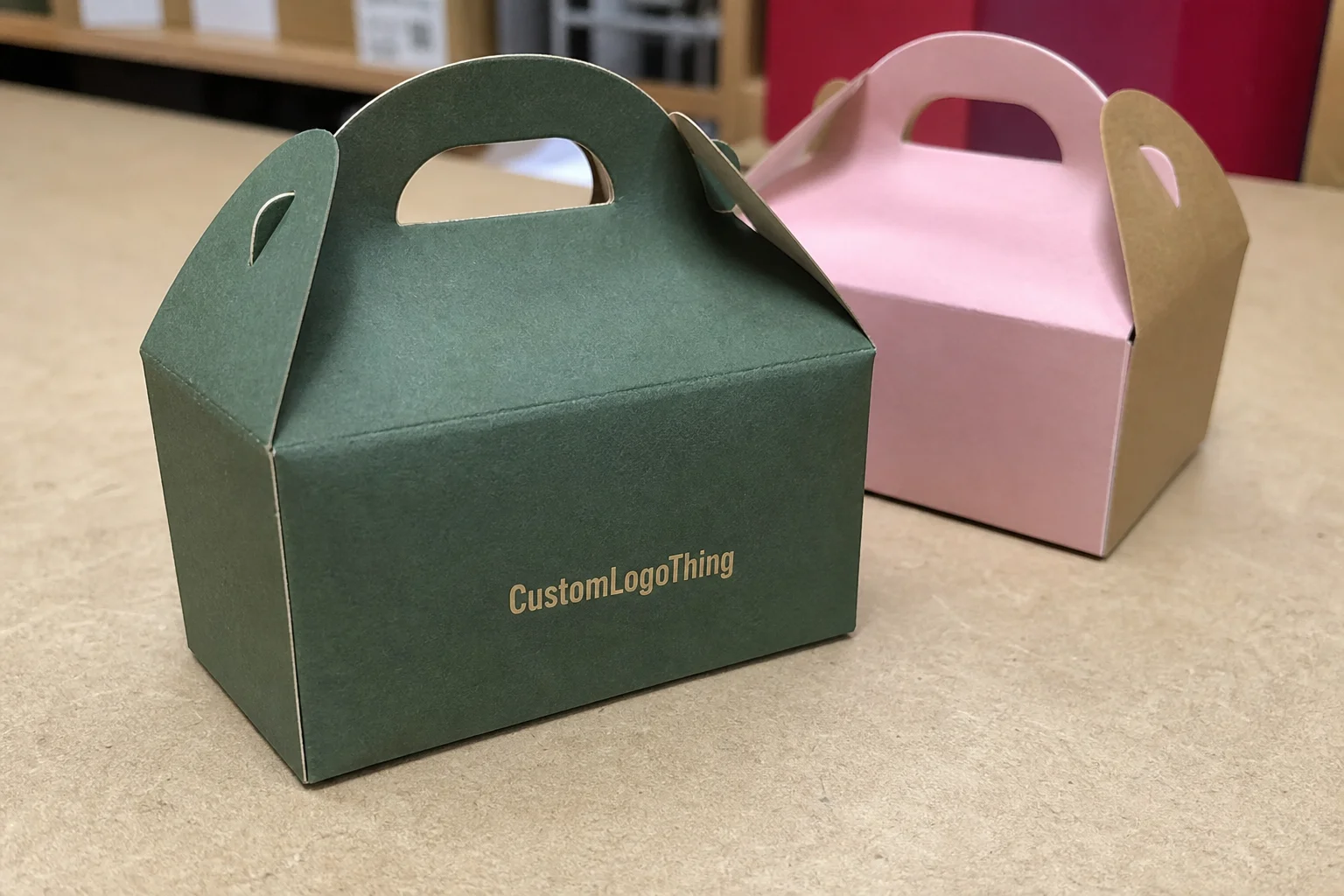
A favor box is not just a container. It is a small piece of packaging branding that sets a tone before the product is even handled. Buyers usually move to custom favor boxes because loose packaging looks improvised, and improvised packaging rarely feels premium. A well-specified box stacks better, travels cleaner, and gives a handout or retail display a more finished appearance.
The mistake is assuming the box is only decoration. It is also a protective structure. The right size reduces scuffing, crushing, and shifting, especially when the contents move through shipping cartons or are handled repeatedly at an event. A candle, soap, candy set, cosmetic kit, or small gift can look more valuable in a properly fit printed carton than it does in a bag or open tray.
From a buyer’s point of view, the job is simple: make the contents feel deliberate. That means choosing the right dimensions, the right board, and a print approach that fits the brand instead of fighting it. If the box is oversized, the item rattles and looks underfilled. If it is too tight, assembly becomes awkward and the product can be damaged during packing.
A favor box is judged on the table, not in the dieline file.
That is why custom favor boxes show up in weddings, event gifting, product launches, and retail packaging. They are small, but they carry a large share of the perception. When the packaging feels polished, the contents usually do too.
How Structure, Insert, and Print Work Together
Good packaging design starts with structure, not artwork. A box needs a dieline that folds cleanly, glue lines that hold, and a closure that works in real hands rather than only in a rendering. Simple tuck-end cartons are efficient and economical. Two-piece rigid boxes feel more substantial. Sleeve-and-tray formats are useful when the unboxing moment matters more than assembly speed.
Insert choice matters just as much as the outer shell. If the item moves, add a paperboard insert, a die-cut cradle, or a divider. That keeps the product from sliding during shipping and makes the presentation look controlled. For mixed sets, a divider can improve the result more than a larger logo ever will. People notice movement. They also notice when there is none.
Print should support the structure, not compete with it. Full-bleed graphics work well when the box has enough surface area and the brand wants a bolder look. Minimal logo placement can be cleaner for boutique gift packaging. A crowded layout makes small packaging hard to read quickly, and that problem gets worse as the box size drops. On a compact format, every millimeter of white space matters.
If you are ordering custom favor boxes for candy, soap, cosmetics, or a small gift set, build the spec around the actual use case. A retail shelf box needs different handling than a wedding favor handed out in a ballroom. One is about display and stacking. The other is about presentation in a single touch.
What the main parts usually include
- Dieline: the flat cut pattern that defines size, folds, and closure.
- Board or paper stock: the material that determines stiffness, weight, and print quality.
- Insert or divider: holds the product in place and helps the box look full.
- Closure style: tuck flaps, sleeves, magnets, ribbon ties, or friction-fit tabs.
- Print and finish: the visual layer that creates the brand impression.
Materials, Finishes, and Size Choices
Material choice decides how the box feels in the hand, how it prints, and how much abuse it can take. Lightweight paperboard is fine for short-handled giveaways and simple retail packaging. SBS or similar coated board tends to hold sharper print and cleaner color for more polished branded packaging. Recycled stocks can work well too, but they are not identical; some have a more natural surface and a softer print response, which is useful when a more understated look is the goal.
Finish changes perception fast. Matte lamination gives a cleaner, quieter look. Gloss makes color pop and can help with bright promotional graphics. Soft-touch feels more expensive, although it also shows handling marks more easily, so the tradeoff should be considered before it is approved. If the box is meant to feel giftable, finish is not a minor detail. It is part of the product.
Size is a design decision, not just a measurement. Too much empty space looks lazy. Too little room looks cramped and can crush the contents. For favor boxes, buyers usually get better results with a snug fit and a small allowance for packing. In many folded carton specs, a tolerance of about 1 to 3 mm per side is workable, but the correct allowance depends on the item, the insert, and the closure style. Rigid boxes and hand-packed sets often need a different tolerance than standard folding cartons.
Add-ons can move the box into a different cost tier quickly. Foil stamping, spot UV, embossing, window cutouts, ribbon pulls, and custom inserts all change the labor and setup. They can also improve the result when used with restraint. A single foil logo on a matte box often looks more expensive than a surface covered in competing effects.
If sustainability matters, ask what the board is certified for and whether the supplier can document it. FSC certification is a common signal for responsible sourcing, and it should be verified rather than assumed. For packing and shipping performance, the ISTA testing framework is useful when the box will travel in cartons or mailers and needs to survive real transit, not just a desktop photo shoot.
One caveat is worth keeping in mind: a recycled or uncoated stock can look premium, but it is not always the best choice for dark ink coverage or fine typography. Small type and dense solids expose uneven fibers quickly. If the design depends on crisp contrast, test the stock before placing the full order.
Cost, Pricing, and MOQ
Pricing usually moves with five things: quantity, size, stock thickness, print coverage, and finishing. Add a sixth if the box needs a custom dieline or insert, because that is where setup time starts to matter. On short runs, setup costs hit harder. On larger runs, the per-unit price drops because the press time and prepress work get spread across more pieces. That is manufacturing math, not a mystery.
For simple folded boxes, buyers often see a range around $0.18 to $0.45 per unit at higher quantities, depending on dimensions and print coverage. Add matte lamination, foil, or a custom insert, and the number can climb to $0.65 to $1.50 per unit. Premium rigid formats or multi-piece presentation boxes can land higher, especially on smaller orders. If a quote looks unusually low, check whether it excludes inserts, proofing, shipping, or finishing. Those costs tend to reappear later.
MOQ is usually set by production efficiency rather than some fixed rule. A supplier may need 500, 1,000, or more units to make the setup worthwhile. Specialty finishes and rigid builds often push the minimum higher. Short runs are possible, but they are rarely cheap. If the order is tied to a date, ask for minimums and price breaks at several quantities before deciding.
| Box Type | Best For | Typical Spec | Indicative Unit Cost |
|---|---|---|---|
| Basic folded carton | Small favors, candy, light retail giveaways | 300-350gsm board, 1-2 color print, no insert | $0.18-$0.45 |
| Printed folded box with finish | Boutique gifting, cosmetics, branded packaging | SBS board, CMYK print, matte or gloss lamination | $0.35-$0.95 |
| Box with insert or divider | Multi-piece kits, fragile items, set presentation | Printed carton plus die-cut insert | $0.55-$1.40 |
| Rigid presentation box | Premium event favors, luxury retail packaging | Rigid board, wrapped paper, specialty finish | $1.20-$3.50+ |
That table is a starting point, not a quote. Final pricing still depends on artwork, packing method, freight mode, and whether proof rounds are required. If you want to compare options cleanly, ask for two or three spec levels side by side. A good supplier will not mind the comparison; it reduces guesswork for both sides.
For general packaging terminology and buying standards, the Packaging School and industry resources are useful references, especially if a team needs to align on terms before requesting quotes.
Production Process and Turnaround
The workflow is usually straightforward. It starts with the brief, then the dieline, then artwork, then proof approval. After that comes production, finishing, packing, and shipping. Simple custom printed boxes can move quickly once the proof is approved. More complex jobs with foil, embossing, inserts, or unusual closure systems take longer because each extra step adds setup and inspection time.
Most delays happen for boring reasons. The client sends dimensions without accounting for the insert. The artwork file is low resolution. Someone changes the logo color after proofing. Or the approval sits in a mailbox for three days while the event date keeps moving. None of this is dramatic. It is just the usual way packaging schedules get squeezed.
For a simple run, a realistic production window is often 12 to 15 business days from proof approval. Add a few days for more complex finishes or inserts. Freight is separate, and that matters more than people want to admit. If the order is date-driven, build in buffer time for one revision round and transit. A box arriving two days late is not a packaging success.
Shipping method changes the risk. Air is faster and more expensive. Ocean or ground can work for larger runs, but only if the schedule allows it. If the boxes will move through distribution rather than being handed out locally, ask whether the outer cartons are being packed and tested for the route. That is where an ISTA-style approach helps, because transit damage is usually a system problem, not a print problem.
Quality control should not be limited to a visual check. A practical inspection should cover die-cut accuracy, glue integrity, color consistency, corner crush, scuff resistance, and whether the closure still behaves correctly after repeated opening. For favor boxes, one weak hinge or one loose insert can ruin the presentation faster than a minor color shift.
Common Mistakes That Make Favor Boxes Look Cheap
The fastest way to weaken the impression is to choose a box that is too large. Empty space makes the product look smaller and the whole package look less considered. If the item needs room, use an insert or divider instead of simply increasing the box size. A better fit almost always looks more expensive.
Overdesigned artwork is another common miss. Too many fonts, clashing colors, and busy graphics make small packaging hard to read. That is especially true on custom favor boxes, where the available surface area is limited. A clear logo, one strong accent color, and a restrained layout usually beat a crowded design that tries to say everything at once.
Material mistakes show up quickly. Thin stock, weak glue lines, or a coating that does not suit the intended use can make the box feel disposable. If the item is heavy, fragile, or food-related, the structure needs to match the job. Fancy print cannot rescue weak construction. People feel the difference immediately.
Function matters as much as appearance. A closure that pops open too easily, an insert that fails to hold the product, or a flap that tears after one handling all create the same problem: the package stops feeling trustworthy. The fix is usually simple. Test the fit with the real product, check the closure under handling, and ask for a sample if the design is new.
Practical fixes are not glamorous, but they work:
- Use a tighter dieline instead of upsizing the box.
- Reduce the number of fonts and colors.
- Match board thickness to the fill weight.
- Add an insert for loose or fragile contents.
- Request a printed sample when color or finish matters.
Food items deserve one more check. Some products need a coated interior or a food-safe liner, and that requirement changes both material choice and cost. Candle jars, glass vials, and similarly fragile items may need a stronger insert than the artwork suggests. The box should be designed around the actual handling path, not only the final shelf photo.
What to Prepare Before Requesting a Quote
If you want a useful quote, gather the basics first. You need the finished product dimensions, fill weight, quantity, deadline, and budget range. If the box is for a wedding, launch event, or retail promotion, include the context too. That helps the supplier understand whether the priority is presentation, shipping durability, or cost control.
Artwork files should be ready early, even if the design is still being refined. Brand assets, logo files, and any finish preferences should be shared before the quote is locked. A vendor can estimate from rough notes, but estimates based on guesses are where surprises live. If the box needs a custom insert, say so now, not after the first proof.
Ask for a sample or a flat proof whenever fit, color, or finish is important. That matters more for premium gifting and retail packaging than for throwaway promo cartons. If you are comparing options, request two or three spec levels instead of one vague concept. Better input usually leads to better pricing, and fewer back-and-forth emails is a welcome side effect.
For teams building out a wider packaging line, it is worth reviewing other custom printed boxes and matching the favor box spec to the rest of the brand. Consistency matters. A one-off box that feels disconnected from the rest of the product packaging can weaken the whole presentation.
There is a practical hierarchy to the brief. Dimensions come first, then structure, then print, then finish, then shipping. If those are not settled in that order, the quote often ends up vague. A clear brief does not just save time. It reduces the chance that the box arrives looking right on paper and wrong in hand.
In practice, custom favor boxes work best when the structure, material, print, and timeline all point in the same direction. Match the box to the item, the handling, and the budget, and the order becomes manageable instead of messy. That is the difference between packaging that simply exists and packaging that earns its place on the table.
How do I choose the right size for custom favor boxes?
Measure the finished product, not just the main item, so closures, inserts, and any padding are included. Leave enough room for packing without letting the item slide around or look undersized. If the box will hold multiple pieces, size it around the full set and ask for a sample fit check before production.
What affects the price of custom favor boxes the most?
Quantity is usually the biggest driver because setup costs get spread across more units at higher volumes. Material thickness, print coverage, and finishes like foil or spot UV can move the price quickly. Custom inserts, unusual structures, and tight timelines also add cost because they create extra setup or labor.
How long do custom favor boxes usually take to produce?
Simple runs can move faster, but proofing and artwork approval still control the calendar. More complex boxes with special finishes, inserts, or custom sizes usually need more production time. If the event date is fixed, build in shipping time and a buffer for revisions so the order is not riding on the final week.
Can custom favor boxes be made for food or fragile items?
Yes, but the structure has to match the product so it stays secure and presentable. Food items may need a coated or food-safe interior, while fragile items often need inserts or dividers. Ask for the box to be spec’d around the actual fill weight and handling method, not just the item dimensions.
What should I have ready before I request a quote for custom favor boxes?
Have dimensions, quantity, artwork, target budget, and the deadline ready so the quote is useful. Include any finish preferences, insert needs, and packaging environment details if the boxes will ship or be handed out. The better the brief, the fewer follow-up emails and the less room for cost surprises.


