Custom garment shipping Bags with Logo do more than add branding to an apparel parcel. They protect folded garments from dust, light moisture, and scuffing, while giving the packing team a repeatable outbound format. For most apparel shipments, the right bag is a functional shipping material first and a branding surface second.
That matters because soft goods expose weak packaging fast. A poorly specified bag may split at the side seal, turn semi-transparent when stretched, accept labels poorly, or slow down insertion at the pack station. A well-matched bag protects the order, scans cleanly, and still looks intentional at delivery.
Why custom garment shipping bags with logo matter in apparel shipping
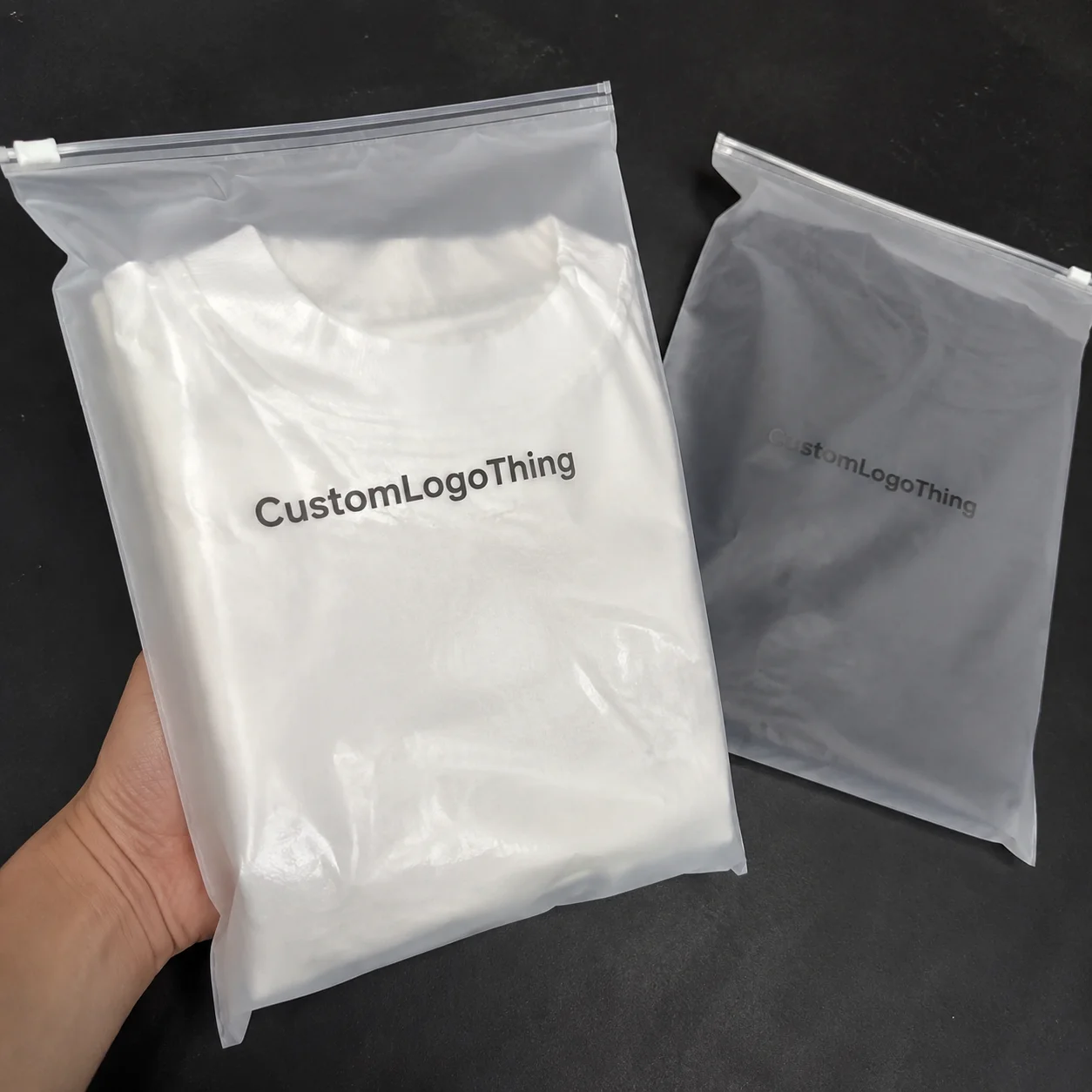
These bags are usually polyethylene mailers printed for parcel use, not retail carryout. They may include a logo, brand color, repeat pattern, handling text, return strip, or reserved label area. That makes them different from thin inner garment sleeves and from shopping bags meant for hand-carry use.
For apparel sellers, the benefits are practical:
- Brand visibility: the parcel looks planned rather than generic.
- Protection: film shields garments from dust, light rain exposure, and surface abrasion.
- Presentation: the order arrives cleaner and more consistent.
- Operational control: standardized bags support a repeatable packing method.
They are common for DTC clothing brands, school stores, team merchandise, event apparel, and subscription programs shipping tees, polos, fleece, and light outerwear. In many of those cases, they are a lower-cost alternative to Custom Shipping Boxes when rigid protection is not needed.
Problems usually come from treating the bag as a commodity. Typical failures include burst seals, poor opacity, labels placed over dark print, and openings too narrow for the folded pack. Buyers get better results when they plan the shipping side and the branding side together.
How custom garment shipping bags with logo work in the packing line
Most apparel fulfillment follows the same flow: fold the garment, optionally place it in an inner sleeve, insert it into the outbound bag, seal, label, and move it to staging. Bag design affects how fast that happens and how the parcel looks at the end.
Single tees and lightweight tops usually work in a flat bag with a standard peel-and-seal closure. Hoodies, fleece, bundled orders, or garments with more loft often need extra width, extra length, a bottom gusset, or heavier film so the pack slides in without catching on the side seals. If the bag is too tight, insertion slows and seals go crooked. If it is too large, the parcel looks loose and material cost rises.
Printing method also matters:
- Flexographic printing: common for medium to large runs with simple artwork and 1-4 spot colors.
- Rotogravure printing: better for larger volumes and more refined print coverage, but with higher setup cost.
- Digital printing: useful for shorter runs, seasonal designs, and launch quantities.
For closure styles, peel-and-seal adhesive strips remain the standard for e-commerce apparel because they are fast and easy to train around. Double-strip return closures can be worth the extra cost for brands with high return rates. Zip closures are less common for final-mile shipping but may help in internal packing workflows.
Film structure affects durability and appearance. Opaque co-extruded film is a common outer-mailer choice because it hides the garment and gives printed graphics stronger contrast. As a starting point, 2.0-2.5 mil often works for a single folded T-shirt. Hoodies, multi-item orders, and garments with zippers or trim usually need 2.5-3.5 mil.
If you are comparing formats, Custom Poly Mailers overlap heavily with garment shipping bags, but not every general mailer spec fits folded apparel well. Width, opening size, opacity, print layout, and label placement should match the garment and the pace of the line.
Key specs that affect performance, look, and cost
Most buying decisions come down to material, thickness, print approach, and size. Those four variables drive performance, appearance, and price.
Material choice
LDPE and LLDPE are the usual base materials. LDPE tends to feel softer, while LLDPE usually adds tensile strength and puncture resistance. Many shipping bags use a blend to balance softness, seal performance, durability, and cost.
Recycled-content film is also common, but buyers should verify the actual recycled percentage and whether the structure still seals and prints well at the target gauge. Darker films and heavier print coverage often mask resin variation better than bright white minimalist designs.
Opacity matters as much as resin type. A white exterior with a darker inner layer usually hides the garment better than translucent single-layer film and gives the logo stronger contrast.
Thickness and durability
Film thickness is usually listed in mils in the U.S. and microns elsewhere. As a rough conversion, 2.0 mil is about 50 microns and 3.0 mil is about 76 microns. Thicker film generally improves puncture resistance and seal durability, but also increases material cost, carton weight, and cube.
- 1.8-2.2 mil for lightweight tees and thin single garments
- 2.3-2.8 mil for polos, leggings, woven basics, and standard DTC orders
- 2.8-3.5 mil for hoodies, light outerwear, or multi-piece shipments
Gauge alone is not enough. Seal strength, puncture resistance, and how the film tears after a nick matter too. A well-made 2.5 mil bag can outperform a poor 3.0 mil bag. For handling expectations, many teams use ISTA guidance as a reference, even without formal testing on every run.
Print coverage and artwork complexity
A one-color logo on one side is usually the most economical format. Costs rise with flood coverage, more spot colors, large print areas, metallic effects, fine reverse text, or two-sided printing.
Plastic film does not behave like coated paperboard. Thin lines, tiny reversed copy, and soft gradients can break up or fill in during production. The strongest bag graphics usually use bold marks, clear contrast, and a dedicated label zone that does not compete with the carrier sticker.
Sizing for actual packed apparel
Bag size should be based on the folded and packed garment, not body measurements on a size chart. Width, length, flap, and any gusset need to match the parcel after folding, with enough room for smooth insertion and a dependable seal.
- Single folded T-shirt: about 10" x 13" to 12" x 15"
- Single hoodie: about 14" x 19" to 15" x 20"
- Light jacket: often 15" x 20" or larger
- Two- or three-item order: usually needs extra length, a gusset, or both
If your assortment varies widely, two or three tested bag sizes usually work better than trying to spec a unique size for every SKU.
Custom garment shipping bags with logo: cost, MOQ, and quote basics
Pricing is driven by resin blend, dimensions, gauge, print method, color count, closure style, and quantity. Volume usually has the biggest impact because setup and tooling costs are spread over more units.
For a basic printed bag, a realistic market range is often about $0.18 to $0.28 per unit at 5,000 pieces for a stock-style size, white opaque film, and simple 1-2 color printing. At 10,000-25,000 pieces, pricing may move closer to $0.11 to $0.20, depending on resin markets, freight terms, and print coverage. Heavier film, custom dimensions, dual adhesive strips, gussets, or premium graphics can push cost above that range.
Minimum order quantities for conventionally printed film commonly start around 3,000 to 5,000 units. Digital printing can support shorter runs, often at a higher unit cost, which makes sense for launches, tests, and seasonal drops.
| Specification Level | Typical MOQ | Typical Unit Range | Best Fit |
|---|---|---|---|
| Stock size, 1-color print, 2.0-2.5 mil | 3,000-5,000 | $0.18-$0.28 | Startups or simple branded programs |
| Stock size, 2-3 colors, opaque co-ex film | 5,000-10,000 | $0.16-$0.24 | Growing e-commerce apparel brands |
| Custom size, heavier film, gusset, larger print area | 10,000+ | $0.20-$0.35+ | Higher-volume DTC or multi-SKU programs |
| Short-run digitally printed bag | 500-2,000 | $0.30-$0.60+ | Tests, limited drops, seasonal artwork |
When reviewing quotes, check more than the unit price. Confirm whether the supplier included plate or cylinder charges, proofing fees, freight to the warehouse or 3PL, carton pack quantity, pallet count, recycled-content premiums, and any overrun or underrun allowance.
Overruns matter because printed bag orders may ship 5-10% over or under the stated quantity depending on method and tolerance. That affects landed cost, launch planning, and storage. If the project supports a specific release quantity, ask about tolerance before approval.
For smaller brands, a plain stock bag paired with a branded label can be a smarter early step than committing to a full printed run too soon. It lets you test size, gauge, insertion speed, and return handling first. If your overall program also includes inserts, retail packaging, and multiple mailer types, it can help to review the full mix under one Custom Packaging Products plan instead of buying each piece separately.
Practical buying rule: compare quotes only after every supplier is pricing the same width, length, flap, mil, print colors, closure type, and freight basis.
What size should custom garment shipping bags with logo be?
The right size depends on the packed garment, not the garment laid flat on a measurement table. Start with the item in its real shipping condition, including any inner sleeve, insert card, tissue, return slip, or packing slip. Measure the finished width, length, and thickness, then add enough room for smooth insertion and a proper seal.
For many single T-shirts, a bag around 10" x 13" to 12" x 15" is a common starting range. Hoodies often move into the 14" x 19" to 15" x 20" range. Multi-item orders may need more length, a gusset, or a heavier gauge if the stack creates sharper corners.
The goal is a bag that closes cleanly without stretching the film, distorting the logo, or leaving large empty pockets. If a program ships several SKU types, standardizing around two or three tested sizes is usually more efficient than chasing an exact size for every garment.
Production steps and timeline from artwork to delivery
The process is straightforward, but approval delays can easily push the schedule.
- Artwork submission: vector files such as AI, EPS, or print-ready PDF are usually preferred.
- Size and dieline confirmation: width, length, flap, and any gusset are finalized.
- Proof review: logo placement, print side, colors, and label area are checked.
- Approval: the buyer signs off on the proof and final spec.
- Printing: film is printed using the selected process.
- Converting: bags are cut, sealed, stacked, and packed.
- Shipping: cartons are palletized and sent to the warehouse or 3PL.
A stock-size printed bag with simple artwork often runs about 12-15 business days from proof approval. Fully custom sizes, heavier structures, more involved graphics, or larger schedules can stretch closer to 3-5 weeks.
Common delays are predictable: low-resolution logos that need rebuilding, missing PMS references, late changes to logo position or barcode-safe areas, and last-minute size changes that affect yield and carton planning.
Rush production may be possible, but usually only if the buyer accepts a stock size, simpler artwork, or fewer print colors. If recycled content claims matter, request documentation before production rather than after.
Common mistakes when ordering apparel shipping bags
Most ordering mistakes are preventable, but they become expensive after production.
Choosing size from garment dimensions instead of packed dimensions
Measure the real packed unit, not the garment spec sheet. Fold method, inserts, and paperwork change the parcel shape.
Going too light on film thickness
Saving a small amount per bag can backfire if seams split, corners puncture, or hardware cuts the film. Bulkier garments and bundled orders usually need more margin.
Using artwork that is too delicate for film printing
Hairline rules, tiny reverse copy, and low-contrast graphics often look worse on plastic than on screen. A production proof built for film is more useful than a polished mockup.
Ignoring the label zone
Carrier labels need a readable area with enough contrast for scanning. If artwork covers the whole face, the pack team may hide the logo or place labels over dark print.
Skipping transit checks
Even a simple internal drop, scuff, and abrasion review can reveal weak seals or poor opacity before a full run ships. Formal lab testing is not necessary for every apparel mailer, but some handling simulation is a smart safeguard.
Expert tips for better branding, efficiency, and next steps
Start with one real packed sample using the actual garment, fold method, insert set, sleeve, paperwork, and shipping label. That sample exposes most sizing mistakes faster than a spreadsheet.
Keep front-panel branding disciplined. One strong logo, controlled color, and enough open space usually outperform crowded graphics on a shipping bag. Also think about warehouse conditions: light opaque bags generally support label readability better, while dark bags often need a reserved white label block.
For mixed apparel assortments, standardizing around two or three bag sizes usually reduces storage complexity and packing errors. The best spec is rarely the most customized one. It is the one that protects the garment, closes quickly, scans cleanly, and is easy to reorder.
"The best apparel shipper protects the garment, closes quickly, scans cleanly, and still feels on-brand when it lands at the doorstep."
A clean buying process usually looks like this:
- Measure the folded, packed garment in its real shipping condition.
- Group SKUs into practical bag sizes instead of specifying one size for every item.
- Choose a target thickness based on garment weight, trim, and puncture risk.
- Prepare vector artwork and confirm PMS references.
- Reserve a shipping-label area in the design.
- Request proofs against the exact bag size and closure style being quoted.
- Compare landed cost, not just unit price.
FAQ
What size should custom garment shipping bags with logo be?
Size them around the folded, packed garment rather than the flat clothing dimensions. Include any inner sleeve, insert, tissue, or paperwork in the measurement. The bag should allow easy insertion and a clean seal without stretching the film or leaving excessive empty space.
What material is best for garment shipping bags?
LDPE and LLDPE are the most common choices because they balance flexibility, seal strength, puncture resistance, and printability. Many bags use a blend of the two. For heavier garments or shipments with higher puncture risk, a tougher structure or thicker gauge is usually the safer choice.
How much do custom printed garment mailers usually cost?
Cost depends on size, gauge, print colors, closure style, quantity, and freight terms. Basic printed bags often fall in the $0.18-$0.28 range at moderate volumes, while higher-volume runs can reduce the unit price. Proofing, setup charges, and overruns can change the true landed cost, so those should be reviewed with the quote.
How long does production usually take?
Many stock-size printed bags ship in roughly 12-15 business days after proof approval. Fully custom jobs, heavier structures, or more complex graphics often need 3-5 weeks. Artwork revisions and late spec changes are among the most common causes of delay.
Can I use custom garment shipping bags with logo for e-commerce fulfillment?
Yes. They are widely used for direct-to-consumer apparel orders because they combine protection, branding, and packing efficiency. The main checks are closure reliability, film durability, opacity, and whether the label area remains easy to scan in actual fulfillment conditions.

