Custom Label Printing looks minor until the garment is on a hanger, on a body, and finally in a customer’s hands. A scratchy neck label, a care line that fades too quickly, or a tab that feels cheap can pull down a premium product fast. Buyers usually notice the problem before they can explain it.
That is why labels belong in the same conversation as packaging, trim, and product presentation. They are handled, read, washed, and judged more than most brand assets. If the label feels out of step with the rest of the line, the customer reads the whole product as less finished than it could be.
The biggest mistake is treating labels as a tiny line item. In practice, they carry brand identity, size information, care instructions, and a good share of the product’s perceived quality. Those jobs are not interchangeable, and they do not all call for the same material or print method.
What Custom Label Printing Really Changes in a Product Line
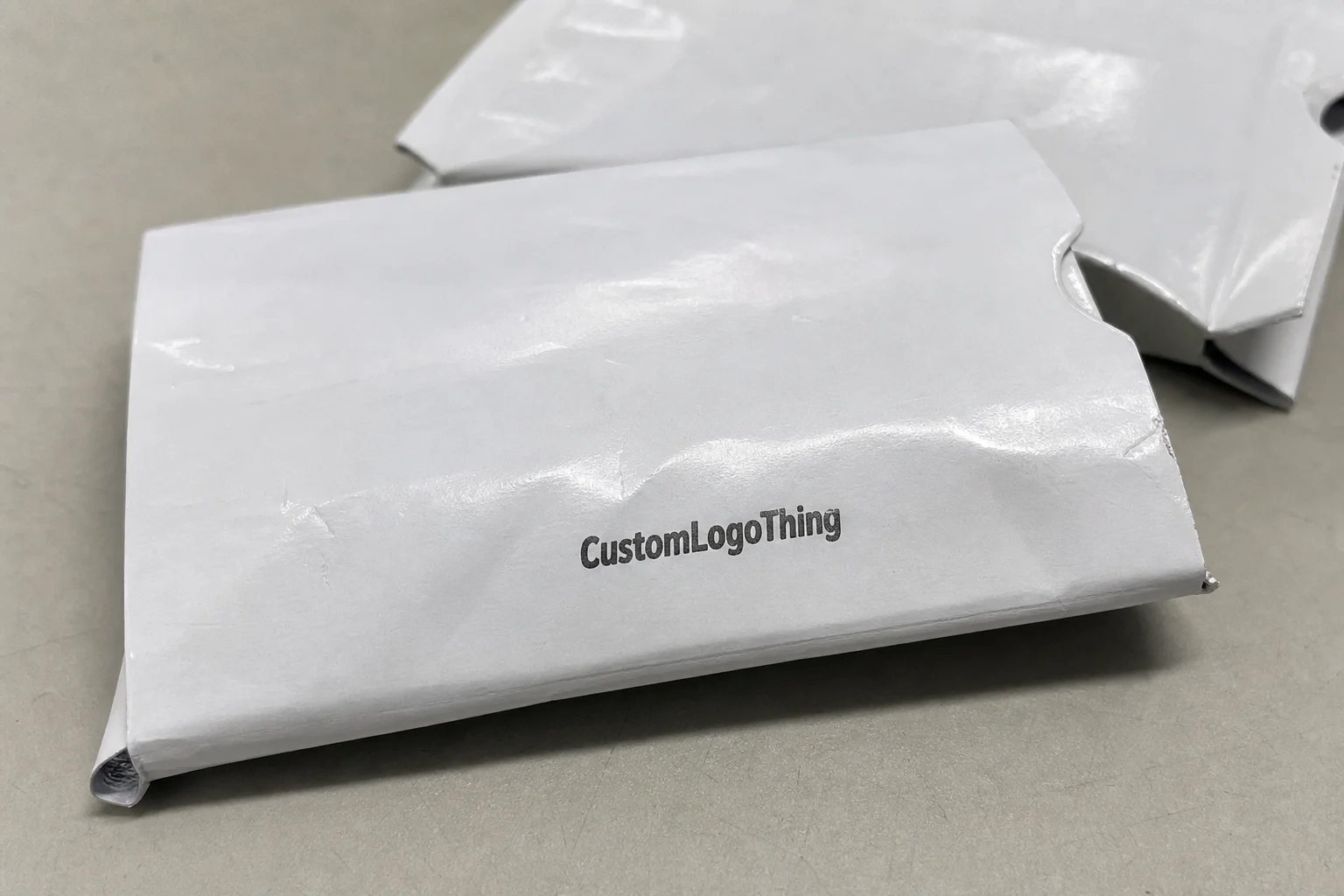
Custom Label Printing affects more than the inside of a garment. It changes how the product feels in hand, how it survives washing, and how well the brand holds together across a line. The label is one of the few components that gets touched at retail, checked by the buyer, and inspected again after purchase.
Different label types solve different problems. A neck label has to feel comfortable against skin. A care label has to stay readable after repeated washing. A size tab can be plain and functional. A hang tag can carry more visual weight and usually has more room for design, which is why larger runs often pair it with offset printing or high-volume digital work. Mixing those up creates avoidable cost and weak results.
From a buyer’s point of view, the useful questions are straightforward: What will touch the skin? What has to survive the wash? What needs to match the rest of the packaging system? That last point gets missed often. Labels, insert cards, mailers, and boxes do not need to be identical, but they do need to look like they belong to the same brand.
“If the label feels cheap, the product feels cheap. Customers do not separate the two as neatly as brands do.”
That is especially true for apparel sold through retail, where garments are handled more often and judged faster. A label that works for a limited DTC drop may not hold up to the same handling expectations as a wholesale line that gets opened, folded, and re-folded by store staff. The product context matters as much as the design.
There is also a practical cost to getting the label wrong. One bad spec can turn into returns, rework, or full reprints. If the care text is unreadable or the label scratches the wearer, the problem rarely stays isolated to the label itself.
The Printing Process: From File Check to Shipment
Most Custom Label Printing jobs follow the same sequence: artwork review, proofing, sampling if needed, production, finishing, inspection, and shipping. The order sounds simple. The delays usually come from small things that were never confirmed early enough.
The most common bottlenecks are predictable. A logo file arrives in low resolution. Tiny text looks fine on a screen but fails at actual size. The buyer changes dimensions after the proof is already approved. Or the team agrees that the label should be “simple” without deciding the fold style, attachment method, or whether the piece needs to sit flat against skin.
Timelines depend on order type and how many decisions are already locked. A straightforward reorder with approved specs may ship in about 7 to 12 business days after proof approval. First-time custom runs usually take longer, often 12 to 20 business days, especially if sampling is required or the material has to be sourced. When a job includes special finishing, multiple SKUs, or a new substrate, the schedule can stretch further. Rush work exists, but it narrows the room for revision and tends to raise cost.
It helps to divide the timeline into three parts:
- Pre-production: file prep, quote review, and proof approval. Most preventable delays happen here.
- Production: printing, weaving, cutting, folding, backing, or heat-transfer finishing. This is usually the most predictable stage.
- Post-production: inspection, packing, and freight. Transit time, customs, and warehouse receiving can move the finish line.
That planning matters most when the label supports a seasonal launch. The easiest mistake is counting only the production window and forgetting shipping, receiving, and any buffer for corrections. Build backward from the ship-to date, not from the day art is approved.
If labels are going into finished goods that will travel through rough distribution, it is worth asking how the goods will be tested before they leave. The ISTA methods are a useful reference for transport and handling, especially when packaging has to survive stacking, drops, and temperature shifts. For paper-based components, FSC standards can help verify sourcing claims where they apply.
Materials, Print Methods, and Wear Performance
Materials determine how the label feels and how it behaves after the first wash cycle. That is where many first-time buyers underestimate the decision. A label can look perfect in a mockup and still fail once it is stitched into a garment, stretched, pressed, or washed repeatedly.
Woven labels are still the default for brand marks, logos, and neck branding because they feel textile-first and hold up well. They work best when the design is simple enough to survive the weave. Fine gradients and tiny text are where woven construction starts to lose clarity. If the artwork is crowded, the result can look muddy rather than premium.
Printed satin labels are common for care labels and soft neck labels. They lie smoothly against the skin and can carry readable copy without bulk. The tradeoff is durability: the print system matters more than people expect, and wash performance varies depending on ink, substrate, and laundering conditions.
Cotton labels create a softer, more natural look. They suit heritage, handmade, or casual brands where a matte textile finish fits the product story. The caveat is longevity. Cotton can age less predictably than woven polyester on products that get heavy washing or hard wear.
Heat-transfer labels are useful when the brand wants a no-tag feel. They are common in activewear, lounge pieces, and some childrenswear because they remove sewn-in bulk. The finish can look very clean, but the application and fabric compatibility have to be right. Stretch, coating, and repeated laundering all affect how long the transfer remains legible.
Adhesive labels are more of a packaging tool than a permanent garment label. They are useful for temporary size marking, SKU handling, or packing support during fulfillment. They should not be confused with a wash-safe apparel label.
| Label Type | Best Use | Typical Feel | Wear Performance | Common Cost Range |
|---|---|---|---|---|
| Woven label | Brand marks, neck labels, side tabs | Textile, premium, structured | Strong for repeated wash cycles | $0.06-$0.25 per unit at volume; higher for low MOQ |
| Printed satin label | Care labels, soft neck labels | Smooth, light, flexible | Good if print system is matched to wash use | $0.05-$0.20 per unit depending on size and coverage |
| Cotton label | Natural or heritage branding | Soft, matte, casual | Moderate; depends on garment and laundering | $0.07-$0.24 per unit |
| Heat-transfer label | No-tag comfort, activewear, kidswear | Flat, minimal, barely felt | Good when applied correctly and tested | $0.08-$0.30 per unit |
Print method affects more than appearance. Digital printing is useful for shorter runs, variable graphics, and faster changes. Screen printing tends to hold solid blocks of color well and can be reliable for repeatable output. On larger supporting materials like hang tags, inserts, and some retail packaging pieces, offset printing still has an edge when the quantity is high and the design is fixed.
Finish choices should be practical, not decorative for their own sake. Matte usually reads as quieter and more controlled. Gloss has more punch, but it can look wrong on a brand that is trying to feel understated. Soft-touch coatings can be valuable on boxes or cards, though they are often unnecessary on labels unless the product line specifically calls for that feel. Fold style matters too. End fold, center fold, loop fold, and straight cut each affect comfort, sewing behavior, and the final visual.
For brands that need the label program to sit alongside Custom Labels & Tags and broader Custom Packaging Products, consistency matters more than adding more finishes. A clean label system will usually outperform a showy one that does not match the rest of the line.
Cost, Pricing, and MOQ: What Actually Moves the Quote
Price is shaped by a handful of variables, and buyers often underestimate how strongly they interact. Quantity, material, print complexity, color count, fold style, finishing, and packaging format all matter. Sampling, rush fees, and freight can move the final landed cost just as much as the unit price.
Unit pricing almost always drops as volume rises, but setup costs and minimum order quantities make very small runs feel expensive. That is not a pricing trick. A 300-piece test order can carry almost the same setup burden as a 3,000-piece order, so the per-unit cost looks steep until the fixed work is spread across more units.
A useful way to think about volume:
- Low MOQ: best for new launches, limited drops, and fit testing, but the unit cost is higher.
- Mid-volume: often the best balance for styles with stable sell-through.
- High-volume: lowest unit cost, but only makes sense if the design and sizing are unlikely to change.
Specialty materials, multiple SKUs, tighter color registration, and custom shapes all raise the quote. Exact color matching does too. If the label must align with a brand standard across labels, tags, and cartons, expect more proofing and a narrower approval window. That is normal and should be priced that way.
The cheapest quote is not always the cheapest order. Once sampling, revisions, rush production, and freight are added, the landed cost can look very different from the first number on the page. If a quote does not specify what is included, ask before comparing it against another supplier’s all-in number.
When comparing vendors, the specs have to be identical. Same size. Same material. Same fold. Same attachment. Same print method. Same quantity. Without that, the comparison is mostly noise. If the packaging program has to support multiple formats, review Manufacturing Capabilities before locking a label price that does not fit the rest of the line.
For broader brand packaging, labels are only one part of the budget. Inserts, seals, cartons, and custom printed boxes all affect the final cost picture. A low-cost label does not compensate for a weak packaging system. Customers tend to read the whole package as one experience.
Step-by-Step Ordering Workflow From File to Shipment
A tidy workflow saves time, but it also prevents the back-and-forth that happens when people use the same words and mean different things. “Standard size” is the classic example. It is a phrase that sounds useful and means almost nothing without dimensions.
- Define the label type. Decide whether the job needs woven, printed satin, cotton, heat-transfer, or adhesive. That choice affects comfort, price, and durability.
- Lock the specifications. Send dimensions, fold style, placement, garment type, wash expectations, and target quantity.
- Prepare artwork properly. Use vector files where possible, keep text large enough for the finished size, and confirm color expectations before proofing.
- Review the proof carefully. Check spelling, measurements, margins, and any fine type that could vanish at production scale.
- Approve sample or pre-production proof. If the garment is premium, dark, heavily washed, or worn close to the skin, sample approval is worth the extra time.
- Confirm quantity and ship date. Once the order is placed, changes are more expensive and slower.
- Inspect the shipment on arrival. Verify count, color, finish, and packing before the goods move deeper into the fulfillment process.
File prep deserves more attention than it usually gets. Vector artwork is safer than a flattened image because it holds edges cleanly at small sizes. If the label has cut edges or printed borders, bleed and safe area need to be built in properly. Tiny text should be checked at the actual finished size, not at 300 percent zoom on a monitor. A lot of bad labels look fine in the design file and fail the moment they are reduced to production size.
Approval is not a formality. A proof confirms dimensions, content, and often the assumed color tolerance. Screens do not show color faithfully, and fabric changes the way color reads anyway. If a label has to match a strict brand standard, ask for a physical sample or a production proof. That matters even more when the label will sit on black garments, heather knits, or textured fabrics that already distort the eye.
That workflow also helps keep the label aligned with the rest of the product packaging schedule. If the brand is managing labels, tags, mailers, and inserts together, one slow approval can push the entire launch.
Common Mistakes That Cause Reprints and Waste
The worst label errors are usually preventable, which is what makes them irritating. Most reprints happen because someone skipped a basic check that would have taken a few minutes.
Wrong dimensions are near the top of the list. A label that looks fine in a mockup can be unusable once it is sewn into the garment. If the copy is too dense for the size, it becomes unreadable. If the label is too large, it becomes a comfort issue.
Poor contrast is another common mistake. Light text on light fabric. Dark text on dark satin. It may look refined on screen and fail in store lighting. A label has to be readable at arm’s length and in normal retail conditions, not just in a design preview.
Choosing the wrong material causes problems that show up later. A label can look strong on day one and then soften, fray, or fade after several wash cycles. Brands often underestimate wash testing and seam placement until the first production run comes back.
Approval mistakes are expensive because they feel avoidable after the fact. People assume the proof reflects final color exactly. It usually does not. They miss a size change in the artwork. Or they approve a fold style that seems fine on paper but digs into skin once it is sewn in. The proof should be treated like an approval record, not a rough sketch.
MOQ mistakes usually happen when brands order too many variants too early. One label for every colorway, fit, and season sounds organized until the inventory sits dead in a box. It is usually smarter to start with one core style and one placement, then expand once sell-through data starts to tell the truth.
If the label program is part of a broader brand system, the same quality logic should apply to custom printed boxes, insert cards, and outer mailers. The customer does not experience them separately. They experience one brand.
One more practical point: small labels can create large losses. If 10,000 garments carry the wrong care text, the waste is not small. The same is true for a brand tab that peels too early or a neck label that irritates the wearer. A cheap component can become a costly error quickly.
Expert Tips for a Cleaner First Order
If the brand is new, start with one hero style, one placement, and one material. That keeps the order easier to read and lowers the odds of trying to solve too many design problems in one tiny piece. Once wear data exists, expand from there.
Request a physical sample or production proof when the garment is premium, the fabric is dark, the item will be washed hard, or the label sits directly against skin. In those cases, guesswork gets expensive quickly.
Compare quotes on identical specifications, not just on price. A lower number can hide smaller dimensions, thinner material, fewer stitches, or a finish that fails sooner. Buyers who compare like-for-like usually make cleaner decisions and fewer apologies later.
For a practical first order, this sequence tends to work best:
- Choose the label type based on garment use.
- Confirm dimensions, placement, and fold style.
- Prepare clean artwork and clear copy.
- Ask for a quote with all specs written down.
- Approve a sample if the garment warrants it.
- Lock the ship date against the launch calendar.
Keep the label system aligned with the rest of the packaging design. Labels, tags, cartons, and mailers should share the same tone. Not identical, just coherent. That is what makes a line feel intentional instead of assembled by committee.
For brands building out custom label printing alongside a larger packaging system, the smartest move is to lock the specs before shopping for price. That habit saves time, reduces waste, and usually gets a cleaner result on the first run.
What should I know before ordering custom label printing for clothing labels?
Choose the label type first: woven, printed, heat-transfer, or adhesive. Each one behaves differently on fabric. Then gather garment details, target quantity, and placement requirements before requesting quotes. If the label will sit against skin or must survive repeated washing, ask for sample options early.
How does custom label printing pricing usually work?
Pricing is driven mostly by quantity, material, print method, and finishing details. Low-MOQ orders usually cost more per unit because setup and production overhead are spread across fewer pieces. Specialty finishes, rush orders, and extra revisions can move the quote more than most buyers expect.
How long does custom label printing take from proof to shipment?
Simple reorders can move faster than first-time runs because the specs are already approved. Artwork issues, sampling, and specialty finishes are the main reasons timelines stretch. Plan around production time plus shipping time, not just the factory schedule.
Which file format is best for custom label printing artwork?
Vector files are usually the safest choice because they keep edges clean at small label sizes. Color expectations should be set before approval, especially if the brand needs exact Pantone matching. Tiny text should be checked at actual print size, not just at design file zoom levels.
Can I order a small MOQ for custom label printing on new clothing lines?
Yes, but the unit cost is usually higher and the material or finish options may be narrower. Small runs work best when the brand is testing fit, market response, or a limited seasonal drop. If you expect fast sell-through, starting small and reordering can be more practical than overcommitting.

