Buyer Fit Snapshot
| Best fit | Custom Labels Manufacturer projects where brand print, material claims, artwork control, MOQ, and repeat-order consistency need to be specified before quoting. |
|---|---|
| Quote inputs | Share finished size, material target, print colors, finish, packing count, annual reorder estimate, ship-to region, and any compliance wording. |
| Proofing check | Approve dieline scale, logo placement, barcode or warning zones, color tolerance, closure strength, and carton packing before bulk production. |
| Main risk | Vague material claims, crowded artwork, missing packing details, or unclear freight terms can make a low unit price expensive after revisions. |
Fast answer: Custom Labels Manufacturer: Artwork Proof, Packing Count, and Landed Cost should be specified like a repeatable production item. The safest quote records material, print method, finish, artwork proof, packing count, and reorder notes in one written spec.
Production checks before approval
Compare the actual filled-product size with the drawing, then confirm tolerance on folds, seals, hang holes, label areas, and retail display edges. Reserve space for logos, QR codes, warning copy, and material claims before decorative graphics fill the panel.
Quote comparison points
Review material grade, print process, finish, sampling route, tooling charges, carton quantity, and freight assumptions side by side. A quote is only useful when the supplier can repeat the same color, closure quality, and packing count on the next order.
If you’ve ever had a label curl off a bottle in a 38°F refrigerated warehouse in Newark, New Jersey, you already know why choosing the right custom labels manufacturer matters. I once watched a $0.04-per-label “savings” turn into a $3,800 reprint because the adhesive failed after 36 hours in cold storage. That’s the kind of math people only enjoy when they’re not paying the invoice. I still remember staring at the pallet and thinking, very politely, that the labels were acting like they had someplace better to be.
Hi, I’m Sarah Chen. I spent 12 years in custom printing, walked factory floors in Shenzhen and Dongguan, argued over adhesive charts in a New Jersey prepress room, and negotiated with suppliers who swore their “premium stock” was premium because the paper felt nice. Honestly, I think a good custom labels manufacturer does more than print stickers. They help you avoid label failure, compliance mistakes, and packaging delays that make your launch team age in dog years.
Custom labels sit at the intersection of packaging design, engineering, and production discipline. The right custom labels manufacturer understands all three. The wrong one gives you a pretty proof and a messy headache. I’ve seen both, and the second category is weirdly confident for how often it causes trouble. In a plant outside Charlotte, North Carolina, I watched a brand lose two days because the label looked beautiful on screen but failed a freezer test at -10°F. Design matters. Physics matters more.
What a Custom Labels Manufacturer Actually Does
A custom labels manufacturer produces labels built for a specific product, surface, and use case. That can mean product labels for 4-ounce jars, barcode labels for inventory bins, ingredient labels for food packs, tamper-evident seals for cosmetics, shipping labels for 3PL fulfillment, or branding stickers for retail packaging. The job sounds simple until a label has to survive a 34°F cooler, an oil-based serum, or a corrugated carton that gets scraped for six days straight. Labels have a habit of revealing every weak link in the chain, usually at the worst possible moment.
I still remember a plant visit in Milwaukee where a client wanted the cheapest paper labels for a refrigerated salsa line. The supplier promised a clean look and a low unit price of $0.06 per label on a 5,000-piece run. Two weeks later, the labels started lifting at the corners because condensation got under the adhesive. The “cheap” job turned into a second run, 18 hours of labor rework, and 14 pallets of angry phone calls. That’s why a custom labels manufacturer is really selling performance, not just print.
There’s also a big difference between a custom labels manufacturer, a broker, and a local print shop. A broker sells you access to someone else’s production, which can be useful, but they don’t always control the press schedule or the adhesive system. A print shop may do decent short runs, yet they may not have the material depth, die-cutting capability, or FDA-friendly food packaging options you need. A true custom labels manufacturer usually controls more of the process: material sourcing, print method, finishing, quality checks, and packaging. In practical terms, that often means one team in one facility, whether that facility is in Shenzhen, Long Beach, California, or Mississauga, Ontario.
That control matters. When a custom labels manufacturer owns the production flow, they can help with a label’s adhesive strength, finish, and substrate choice before you approve the job. When they don’t, you’re stuck with “That’s what the plant gave us.” Lovely phrase. Terrible outcome. It sounds almost innocent right up until your whole run is wrong, and you’re explaining it to a warehouse team at 6:15 a.m. with a pallet jack waiting behind you.
At a practical level, the final label performance depends on four things, and each one has a price attached to it:
- Materials — paper, BOPP, vinyl, polyester, thermal paper, or specialty films
- Adhesives — permanent, removable, freezer-grade, high-tack, or repositionable
- Finishes — matte, gloss, soft-touch, laminate, foil, or spot UV
- Print method — digital, flexographic, thermal transfer, or hybrid
So yes, a custom labels manufacturer prints labels. But the better ones help engineer the label so it survives the product’s real-life conditions. That’s the difference between branded packaging that looks polished on a shelf in Chicago and Product Packaging That falls apart in a 40°F back room in Houston. I have a strong opinion here: “looks good in the proof” is not the same thing as “works on the line.” Not even close.
“A label failure usually starts as a material choice problem, not a print problem.” — one of my production managers after we lost a whole run to freezer condensation
If you’re building retail packaging, this gets even more important. Labels do not live in a vacuum. They sit on bottles, jars, cartons, tubes, pouches, and sometimes custom printed boxes. The label has to work with the full package branding system, not fight it. I’ve seen a gorgeous label undermine a perfectly good carton because the finish and color temperature were fighting each other like two people in a too-small elevator. One was warm gold foil, the other was cool gray ink, and the shelf looked confused before the customer even touched it.
How Custom Labels Manufacturing Works from File to Roll
The typical workflow at a custom labels manufacturer starts with a quote request. You send the label size, shape, quantity, surface type, and intended use. A good supplier will ask follow-up Questions That Matter: Is it for glass, coated paperboard, PET, HDPE, or corrugated? Does it need to stay readable in a freezer? Is the barcode scanned at 12 inches or 36 inches? The more specific you are, the less chaos later. And yes, chaos is the default setting if nobody clarifies the basics. I’ve seen 2-inch labels quoted for 4-inch applicators, and the result is exactly as awkward as it sounds.
After quoting comes material selection. This is where a knowledgeable custom labels manufacturer earns their keep. They may recommend a white BOPP for moisture resistance, a semi-gloss paper for a dry retail product, or a thermal transfer label for variable data applications. A common spec is 350gsm C1S artboard for cartons, while labels on bottles may use 50 micron white BOPP with a permanent acrylic adhesive. I’ve seen buyers insist on paper because it was $0.02 cheaper per unit, then complain when the labels bled in condensation. That’s not a supplier problem. That’s a planning problem. Honestly, I think “cheap” is often the most expensive word in packaging.
Next is artwork review. Prepress checks bleed, dielines, resolution, font sizing, barcode placement, and color specifications. If you’ve ever sent a file with a 0.5 pt rule line and wondered why it disappeared on press, welcome to reality. A competent custom labels manufacturer will catch that before production. A weaker one prints it anyway and calls it “within tolerance.” Which is a phrase that has caused me actual stress hives in the past. For a typical label job, prepress may flag a 1.5 mm bleed requirement, a 300 dpi raster minimum, and a 2 mm quiet zone around the barcode.
Then comes proofing. Depending on the job, you may get a digital proof, a hard proof, or a press proof. For critical packaging design, I prefer a hard proof whenever the label is compliance-heavy or color-sensitive. Once I had a client approve a bright berry-red label from a monitor proof, only to discover the printed sample leaned orange under warehouse lighting in Atlanta. That $120 proof saved a $6,000 reprint. Worth every penny. Also, it saved me from having to explain to a very serious client why their “berry” looked like a traffic cone had opinions.
Production itself depends on the print method. A custom labels manufacturer usually chooses the method based on quantity, color complexity, and data needs. For a 5,000-piece run, digital printing may be the fastest route, with unit pricing around $0.11 to $0.18 depending on finish. Flexographic printing often becomes more economical at 20,000 pieces and up, especially for repeat orders in one plant, like a facility in Guangzhou or Kuala Lumpur.
| Print Method | Best For | Typical Strength | Common Tradeoff |
|---|---|---|---|
| Digital | Short runs, many SKUs, fast turnarounds | Good color flexibility and low setup cost | Higher unit price on larger quantities |
| Flexographic | Medium to large runs, consistent repeat jobs | Lower unit cost at scale | Plate/setup costs and longer prep |
| Thermal Transfer | Variable data, shipping, batch codes, barcodes | Strong for on-demand logistics use | Requires compatible ribbons and printers |
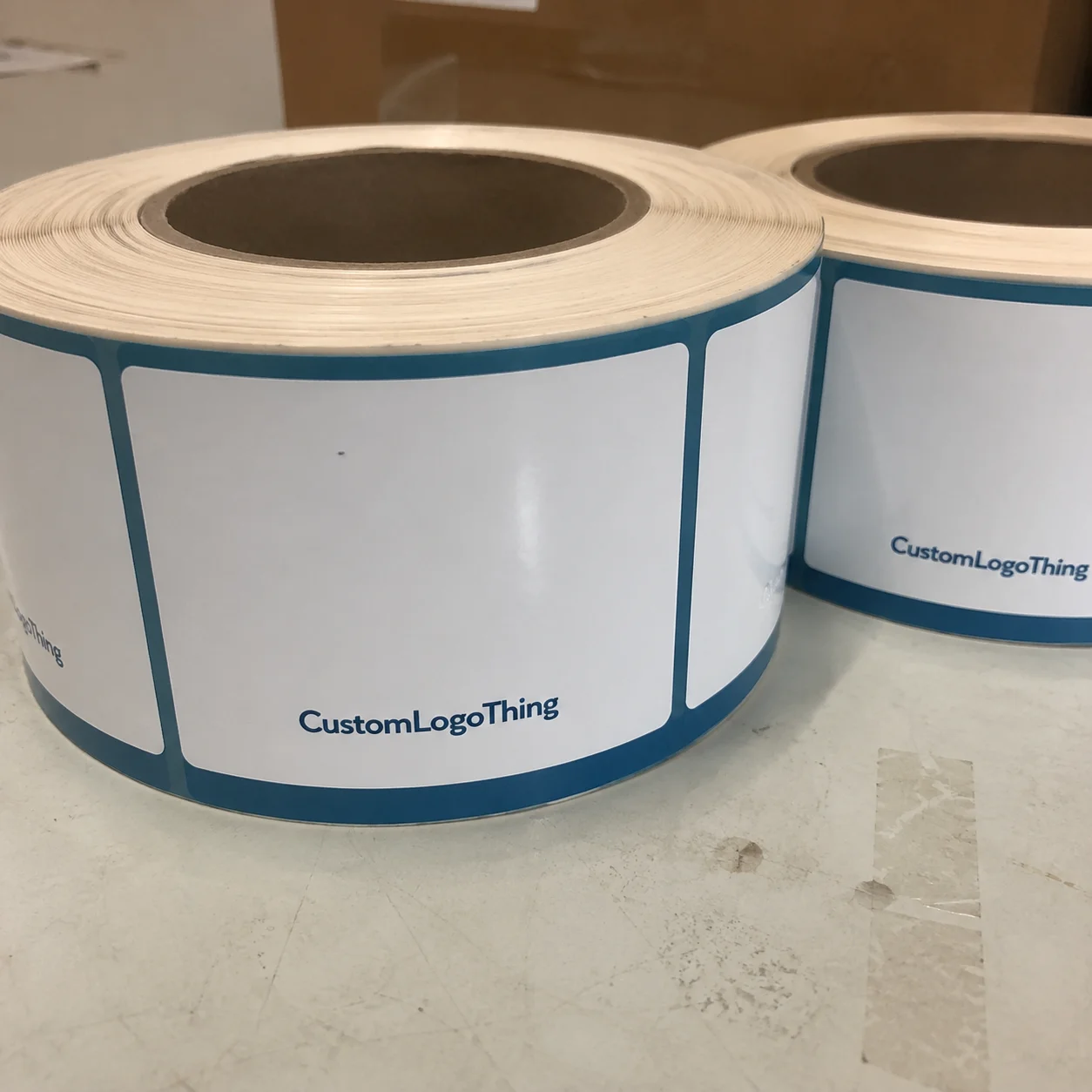
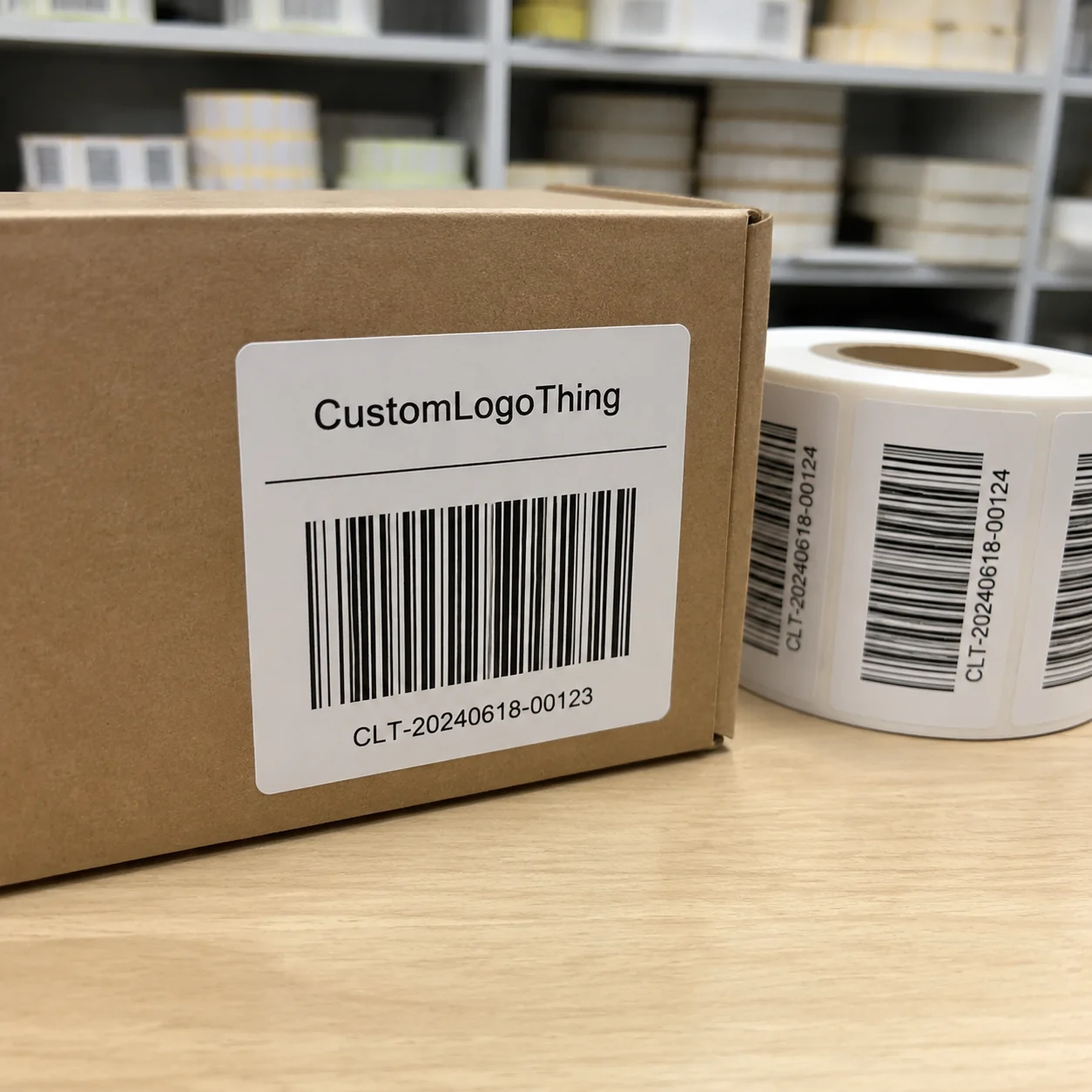
After printing, the labels may be finished with lamination, varnish, die-cutting, slitting, matrix removal, or special shaping. Then they’re packed as rolls, sheets, fanfold stacks, or individual cut labels. A custom labels manufacturer that ships labels in the wrong format can waste hours on your packing line. I’ve watched warehouse teams re-spool roll labels by hand because the supplier sent sheets for an automated applicator. That kind of mismatch burns labor fast, and nobody is in a cheerful mood while doing it. In one Ohio fulfillment center, the wrong winding direction alone cost 90 minutes of downtime.
Shipping and packing are the last steps, but not the least important. A good custom labels manufacturer protects rolls from edge crush, humidity, and dust. If labels arrive warped or contaminated, your line stops before it starts. Not glamorous. Very expensive. Extremely hard to defend in a budget review. Packaging in kraft cartons with corner protection and desiccant packs is common for sea freight from Shenzhen to Los Angeles, where a 14-day transit can be enough to expose a weak pack-out.
Here’s a rough timeline for many jobs, assuming proof approval happens on day 1:
- Quote and file review: 1–2 business days
- Proofing and revisions: 1–4 business days
- Production: typically 12–15 business days from proof approval for standard jobs
- Specialty materials or complex finishing: 15–20 business days or more
- Shipping: 1–5 business days depending on location and method
Delays usually happen in three places: artwork approval, material availability, and last-minute spec changes. That’s why a custom labels manufacturer with clear prepress discipline is worth far more than the cheapest quote in your inbox. If your supplier stocks 1,000 linear feet of white BOPP in Dallas and has to source the same stock from a converter in Toronto, the schedule changes fast.
For buyers working across Custom Labels & Tags and broader Custom Packaging Products, it helps to think of labels as one piece of a larger packaging system. The label should fit the bottle, carton, or pouch, and the package should support the brand story cleanly. I’ve seen brands spend three weeks obsessing over one label shade while the carton shape quietly sabotaged the whole product presentation. One mismatch in a 2.25-inch label panel can undo a $12,000 packaging project.
Key Factors That Affect Label Quality, Cost, and Performance
Price looks simple on paper. In reality, a custom labels manufacturer prices labels based on quantity, size, shape, substrate, finish, adhesive, and print complexity. If you want one clean answer, sorry. Labels are not a vending machine. They are more like a menu with surprising add-ons and one item that costs more because the corner radius is rude. A 2 x 4 inch rectangle on matte paper is not priced like a 1.75-inch oval in silver BOPP with foil accents.
Quantity changes everything. A run of 1,000 labels may cost $0.22 to $0.38 per unit, depending on size and material. The same design at 10,000 pieces may drop to $0.05 to $0.12 per unit because setup costs spread out. A custom labels manufacturer with real production experience will explain where the cost curve moves, not just hand you a number and disappear. I’ve seen a 25,000-piece reorder land at $0.07 per label once the die and plate costs were already paid, which is exactly why repeat orders matter.
Material choice is the next big lever. Matte paper labels usually cost less than waterproof synthetic labels. White BOPP, clear film, and polyester all behave differently, both on press and on the package. When I visited a beverage filler in St. Louis, the team had switched from paper to 60 micron BOPP and reduced scuffing by nearly 70% in the cold chain. That wasn’t just a print upgrade. It was a shelf-life decision for the label itself. I love that kind of data because it cuts through the fluff.
Size and shape matter too. A simple rectangle is usually cheaper than a custom die-cut shape with tight corners and multiple kiss-cut areas. The more intricate the die, the more labor and setup a custom labels manufacturer needs. A square label with a 0.125-inch corner radius is often easier to produce and apply than a starburst shape that looks fun in design software and miserable on an applicator. (Design software has a way of making everything look charming until production gets involved.)
Adhesive selection is where many buyers get surprised. Permanent adhesive sounds safe, but not every permanent adhesive behaves the same on glass, HDPE, corrugate, or textured surfaces. Removable adhesives can leave less residue, which is useful for promotional labeling or temporary branding. Freezer-grade adhesives are built for low temperatures, often down to -20°F, and high-tack adhesives help with rough or recycled packaging surfaces. A good custom labels manufacturer should recommend the right adhesive based on your actual use case, not whatever is in stock. I’ve had more than one rep try to “make it work” because a warehouse had an extra pallet of the wrong stock. Hard pass.
Pricing Examples That Make More Sense Than Vague Promises
Here are simplified examples, and yes, your specs can change the final price. These assume a standard 12-business-day production window after proof approval and shipping from a converter in Shenzhen, Chicago, or Guadalajara:
- 5,000 matte paper labels, 2 x 3 inches: around $0.08–$0.14/unit
- 5,000 white BOPP labels with gloss laminate: around $0.13–$0.22/unit
- 10,000 barcode labels on thermal stock: around $0.03–$0.07/unit
- 2,500 custom-shaped foil labels: often $0.28–$0.65/unit depending on setup and finishing
A custom labels manufacturer might quote lower or higher based on roll size, winding direction, core size, or whether your artwork needs plate changes. So compare specs line by line. Otherwise you’re comparing apples to a truckload of oranges. Or, frankly, apples to a spreadsheet someone filled in with optimism. I once saw a $0.15 per unit quote for 5,000 pieces turn into $0.19 because the buyer forgot to specify a 3-inch core and a gloss varnish. That’s a real-world difference of $200 on a single order.
Finishes also affect both cost and impact. Matte gives a softer, premium look for wellness and cosmetics. Gloss can pop on retail shelving. Soft-touch adds a tactile feel but costs more. Foil and embossing elevate shelf presence, though they should be used with restraint. I’ve seen labels where the finish did all the talking because the product copy did none of it. That’s usually a sign that branding got ahead of strategy. It can be pretty. It can also be a little exhausting.
Specialty finishing like spot UV, lamination, and foil stamping can add $0.03 to $0.20 per label, sometimes more on small quantities. A custom labels manufacturer should tell you exactly what each upgrade does: improve abrasion resistance, resist moisture, or simply make the package look more expensive. If the finish is only decorative, fine. Just don’t pretend it’s solving a performance problem. I’ve sat through enough “premiumization” conversations to know that a shiny label is not a substitute for a stable one. On a 10,000-piece run, a $0.04 upgrade is $400, which is either smart insurance or unnecessary sparkle depending on the use case.
Durability is where the budget decisions show up fast. Ask whether your label needs to handle:
- Moisture and condensation
- Oil or serum contact
- Cold storage or freezer exposure
- Sunlight or UV exposure
- Rubbing during shipping and shelving
- Frequent handling by customers or staff
For food and beverage, a custom labels manufacturer often recommends moisture-resistant film and adhesives tested for refrigerated storage at 34°F to 40°F. For cosmetics, oil resistance matters. For logistics, barcode contrast and scannability matter more than anything pretty. If you need regulatory references, packaging and labeling often intersect with standards from organizations like the ISTA and the EPA, especially when shipping conditions or sustainability claims come into play.
Substrate selection matters more than most buyers realize. A label that looks perfect on a sample bottle may fail on a textured surface, a curved tube, or a recycled corrugated carton. That’s why a seasoned custom labels manufacturer asks for packaging samples before final approval. They’re not being annoying. They’re saving you from yourself. I say that with affection, because I have absolutely been the person who thought “close enough” was enough. It was not. In a test I saw in Irvine, California, the same label passed on PET and failed on a slightly rough HDPE bottle within 24 hours.
In branded packaging, labels often do the heavy lifting. They can make simple product packaging feel premium, or make expensive packaging look cheap. I’ve seen a $2.80 jar with a bad label look like clearance stock. I’ve also seen a $0.70 label turn a plain bottle into something retailers actually noticed. That’s the power of package branding done well, especially when the label is printed on 50 micron BOPP with a matte varnish and a clean dieline.
How to Choose the Right Custom Labels Manufacturer
Choosing a custom labels manufacturer should start with capabilities, not promises. Ask what materials they stock, what print methods they run, and whether they can handle your quantity without farming it out to three different vendors. If you’re launching a product line with multiple SKUs, you want consistency across the set. You really do not want three versions of “almost the same label” floating around your team like a bad group project. I’ve seen brands in Austin, Texas, spend more time reconciling label differences than they spent approving the actual packaging.
Here’s the checklist I use with clients:
- Material range: paper, film, specialty stocks, sustainable options
- Adhesive options: permanent, removable, freezer-grade, high-tack
- Print flexibility: digital, flexographic, variable data
- Proofing process: digital proof, hard proof, barcode test, color approval
- Minimum order quantity: know it before you fall in love with the quote
- Turnaround times: standard and rush, both in writing
- Packaging format: rolls, sheets, fanfold, or cut pieces
A strong custom labels manufacturer will also be transparent about where the quote changes. Ask them directly: What drives the price up? Is it plate setup, die cost, foil, multiple varnishes, or a nonstandard roll width? I once negotiated with a supplier who shaved $260 off a quote simply by changing the roll core from 3 inches to 1 inch. That’s the kind of detail that saves money without wrecking production. On a 12,000-label order, that can be the difference between staying on budget and explaining a variance to finance.
Do not compare quotes unless the specs match. I’m serious. If one supplier quotes white BOPP with gloss laminate and another quotes paper with no laminate, that’s not comparison. That’s a trap. A good custom labels manufacturer should itemize the same components so you can see where the money goes. Ask for the substrate thickness in microns or gsm, the adhesive type, the print method, and the exact pack format.
Communication quality tells you a lot. If the sales rep answers in one sentence and never mentions your package surface, I’d be cautious. If the production team asks for photos of your bottle neck, carton texture, or applicator setup, that’s a better sign. A reliable custom labels manufacturer does not treat every job like a generic sticker order. They’ll want to know whether you’re labeling PET bottles in Miami, kraft cartons in Portland, or HDPE jugs in Phoenix.
I also recommend asking for samples. Better yet, ask for test samples on the same material and adhesive you plan to use. Then apply them to the actual package and leave them for 48–72 hours. If you can, store them under the same conditions your product will face. That’s how you catch corner lift, bubbling, and residue before your full run ships. For refrigerated goods, a 72-hour cold test at 38°F can tell you more than a polished sales call ever will.
If your project supports broader retail packaging, ask the supplier how labels coordinate with About Custom Logo Things style brand systems, cartons, and inserts. A label should feel like part of the same story as the box, not an afterthought glued on at the last minute. If your outer carton is 350gsm C1S artboard with aqueous coating and your label is high-gloss synthetic film, the contrast needs to be intentional, not accidental.
Timing matters too. If your launch date is fixed, ask the custom labels manufacturer for the actual calendar: proof approval, production window, finishing, freight, and arrival buffer. I’ve seen teams assume “seven business days” means seven days door-to-door. It usually doesn’t. Freight delays, revision cycles, and print queue congestion can eat two to five days without trying very hard. And then everyone acts surprised, which is always funny right before it becomes expensive. A supplier in Los Angeles may ship faster to the West Coast, while a plant in Toronto may be better for Eastern Canada delivery; the geography changes the math.
Common Mistakes Buyers Make with Custom Labels Manufacturers
The most expensive mistake is choosing appearance before function. Yes, the label should look good. But if the adhesive fails, the finish scuffs, or the barcode won’t scan, the pretty design becomes a costly embarrassment. A good custom labels manufacturer will push back if aesthetics are outranking performance. If they don’t, that’s a warning light, not a personality quirk. I’ve seen a label with metallic foil on a 6,000-piece run look great on day one and unreadable after a week of carton rub in a Phoenix warehouse.
Another common mistake is not confirming the application surface. Glass behaves differently from HDPE. Corrugated board behaves differently from coated cartons. Powder-coated metal is a different animal entirely. I saw one buyer specify a “premium look” and nothing else. The supplier used a gorgeous paper stock. It looked amazing until the labels hit a humid fill room in Tampa and started curling. “Premium” is not a specification. It’s a mood, and moods do not survive condensation.
Low-resolution artwork is another classic. If you send a 72 dpi logo and expect clean results, the print file will punish you. A custom labels manufacturer needs vector artwork for logos whenever possible, plus high-resolution images at print-ready size. Barcode files need even more care. Smudged lines or broken quiet zones can kill scan reliability, and that creates warehouse issues nobody wants. I’ve had clients call that a “small file issue.” Sure. And I’m six feet tall.
Compliance errors are serious. Ingredient panels, net weight, batch codes, warnings, barcode readability, and country-of-origin details all need careful placement. A custom labels manufacturer may help with layout, but they are not a legal substitute for your regulatory review. You still have to approve the copy. If your product falls under specific standards, check them early instead of fixing them after print. A wrong panel on a 15,000-piece label run can cost more than the original order if it forces a recall or relabel.
Ordering too few test labels is another avoidable mess. I’ve watched teams approve a label based on one sample sheet, then discover the applicator was peeling corners at production speed. Five or ten test pieces are not enough when you’re running 8,000 units. Your custom labels manufacturer should encourage a realistic test run before full production. A proper pilot might be 100 labels on the actual line, not a single sheet on someone’s desk in Brooklyn.
Then there’s the vague-spec problem. “Make it premium.” “Make it durable.” “Make it pop.” Useful to a designer, maybe. Useless to a production team. A custom labels manufacturer needs specifics: 2.5 x 4 inches, white BOPP, permanent adhesive, soft-touch matte, direct thermal compatible, wound out on a 3-inch core. Now we’re talking. Add the exact press tolerance, the pack count per roll, and whether the labels need to peel at 180 degrees or 90 degrees, and the quote becomes much more useful.
One more mistake: forgetting how labels interact with other packaging elements. If your bottle shape changes, your label panel changes. If you switch from a carton to a pouch, the label may need new proportions. That’s why product packaging decisions and label decisions should be made together. Labels are not separate from packaging design. They are part of it, especially when the carton is 350gsm C1S artboard and the label has to echo the same color family.
For buyers working in branded packaging, it helps to ask whether the label supports the whole system: custom printed boxes, cartons, cartons with windows, or secondary shipping labels. A custom labels manufacturer that understands package branding will think about the shelf as a whole, not just the sticker on top. That matters in stores from Dallas to Vancouver, where the package has maybe three seconds to do its job.
Expert Tips from a Custom Labels Manufacturer Perspective
If you want fewer surprises, start with a sample pack. A serious custom labels manufacturer should be able to show you substrates, adhesive types, and finish options. Then test the label on your actual packaging for 48–72 hours. That single step catches more problems than half the emails people send me asking why their labels “should have worked.” I wish I were exaggerating. I’m not. In practice, a $25 sample kit can prevent a $2,500 reprint.
Build a label spec sheet before you request quotes. Keep it simple, but specific:
- Label dimensions: width, height, shape, corner radius
- Substrate: paper, BOPP, vinyl, polyester, thermal stock
- Adhesive: permanent, removable, freezer-grade, high-tack
- Finish: matte, gloss, soft-touch, laminate, foil
- Application method: manual, semi-auto, or automatic
- Storage conditions: room temp, refrigerated, frozen, outdoor
A detailed spec sheet makes your custom labels manufacturer job easier and your quote cleaner. It also reduces those annoying back-and-forth questions that delay production by two days because someone forgot to mention the labels were going on a curved tube. That happens more than anyone wants to admit. I once saw a tube label spec omit the circumference entirely, which is a little like ordering curtains without measuring the window.
I also tell clients to plan a backup. If your formula changes, your bottle changes, or your carton finish changes, the label may need a second version. A smart custom labels manufacturer can help you prepare a small overrun or a backup SKU so you don’t get stuck waiting on art approval while pallets sit idle. In some facilities, a 2% overrun on a 10,000-piece label order is enough to absorb waste without triggering a new run.
Standardizing label sizes across product lines can save money too. If three products can share one die-cut size with different variable data, you may reduce tooling, simplify inventory, and shorten reorders. I’ve negotiated with suppliers where consolidating two sizes into one cut their setup spend by $180 to $400 per order. That’s not life-changing money for a giant brand. For a smaller one, it matters. For a small brand, it can be the difference between “fine” and “why are we suddenly out of cash?”
Negotiation does not have to be theatrical. Ask where the price jumps happen. Ask what can be simplified without hurting performance. A good custom labels manufacturer will often tell you that changing foil to metallic ink, or switching from a custom shape to a standard rectangle, drops cost fast. Sometimes the best savings come from removing one layer of complexity, not arguing over a nickel. I’d rather remove the drama than squeeze the ink dry over pennies. A label that costs $0.02 less but fails in transit is not a bargain; it is deferred pain.
One more thing: ask how they handle reorders. If the first order goes well but the second one takes forever because nobody retained your spec, that’s a sign the vendor is weak on account management. A reliable custom labels manufacturer keeps your approved specs, material notes, and press history organized. It should feel controlled, not improvised. Ideally, they can pull your last order from a 2023 job in Atlanta or a 2024 shipment in Seattle and reproduce it without guessing.
For more context on how labels connect with full product presentation, browse Custom Packaging Products. The better your packaging system works together, the easier it is for your label to do its job. That matters whether you’re shipping 500 units or 50,000.
Next Steps Before You Order from a Custom Labels Manufacturer
Before you place an order, gather the basics: packaging dimensions, surface material, quantity, artwork files, and the environment your label will face. If you skip those details, your custom labels manufacturer ends up guessing. Guessing is not a production strategy. It is a polite way to create reprints. I have seen that movie, and I do not recommend the sequel. A 2.75-inch label on a 3-inch bottle neck sounds close until the applicator starts flagging jams.
Request at least two or three quotes with identical specs. Same size. Same substrate. Same adhesive. Same finish. Same roll format. If one custom labels manufacturer includes gloss laminate and another does not, the price comparison means nothing. You want apples to apples, not apples to a mystery bin. Ask for the same core size, the same winding orientation, and the same pack count per roll so the numbers can actually be compared.
Ask for proofing. Ask for samples. If the job matters, ask for a short-run test before full production. I know some buyers think testing adds time. True. But a two-day delay is better than a two-week disaster. A decent custom labels manufacturer will respect that process because they know what happens when you don’t. In one case, a 50-label test in Philadelphia prevented a full 20,000-piece run from going out with the wrong barcode quiet zone.
Set a launch buffer. If your product absolutely must be on shelves by a specific date, don’t rely on rush service to save you from a late approval. Build time for revisions, printing, packing, and freight. A custom labels manufacturer can move fast, but they cannot bend physics, customs delays, or your internal approval chain. If they could, I’d have asked for that superpower years ago. For imported jobs from Shenzhen or Ho Chi Minh City, I’d recommend at least a 7-day shipping buffer, more if the cargo is going by sea.
And keep the big picture in mind. Labels are part of product packaging, retail packaging, and package branding. The right label should support the product, not just decorate it. If your supplier understands that, you’re in better shape than most first-time buyers. A label on a 350gsm C1S artboard carton, for example, should complement the board finish, not fight it with a clashing gloss level.
If you want a partner that thinks about the label, the bottle, the carton, and the brand story together, start with a custom labels manufacturer that asks good questions and gives practical answers. That’s usually the one worth paying for. In many cases, the better choice is the manufacturer that can quote a 5,000-piece test at $0.15 per unit, then scale the same spec to 25,000 pieces at a lower unit cost without changing the adhesive or finish.
For a broader overview of our packaging capabilities, visit About Custom Logo Things and review our Custom Labels & Tags. The right custom labels manufacturer should make your life easier, your packaging stronger, and your reorder process less annoying. Rare, I know. But possible.
And yes, the right custom labels manufacturer can save you more than money. They can save your launch schedule, your labor hours, and your sanity. Those are worth protecting. A single avoided reprint in Los Angeles or Atlanta can pay for months of careful specification work.
So here’s the practical takeaway: before you approve any label order, test the exact material on the actual package under the real storage conditions, and compare quotes only after every spec matches line by line. That one habit cuts out most of the expensive surprises.
What should you ask a custom labels manufacturer before ordering?
What does a custom labels manufacturer need from me to quote accurately?
At minimum, a custom labels manufacturer needs label size, shape, quantity, and application method. They should also know the substrate, finish, adhesive needs, and artwork file format. If the label has to survive water, oil, cold storage, or outdoor exposure, say that up front so the quote reflects the real job. A 2 x 3 inch paper label for room temperature storage is a very different order from a 2 x 3 inch white BOPP label with freezer adhesive for 10,000 units.
How long does a custom labels manufacturer usually take?
Simple digital label jobs can move quickly once artwork is approved, while specialty materials and custom shapes take longer. A custom labels manufacturer may also need extra time for proof revisions, barcode checks, or sample testing. Build in a cushion if the label is tied to a product launch or compliance-heavy packaging. In many standard cases, production is typically 12–15 business days from proof approval, plus 1–5 business days for shipping depending on whether the plant is in Chicago, Shenzhen, or Toronto.
Why do quotes from custom labels manufacturers vary so much?
Quotes vary because one custom labels manufacturer may include different materials, adhesives, or print methods than another. Setup costs, minimum order quantities, and finishing choices can also change the price fast. The cheapest quote often leaves something out, which is adorable right up until the labels fail. A quote at $0.08 per unit for 5,000 labels is not the same as $0.08 per unit with a gloss laminate, a custom die, and freezer-grade adhesive.
What should I ask a custom labels manufacturer before ordering?
Ask about material recommendations for your packaging surface and environment. Confirm proofing steps, turnaround time, minimum order quantity, and reorder handling. A strong custom labels manufacturer should also provide samples or testing guidance before full production starts. If your labels are going on 350gsm C1S artboard cartons, glass bottles, or HDPE containers, that should be part of the conversation from the first call.
Can a custom labels manufacturer help with compliance labels?
Yes, many can help with barcode placement, ingredient layouts, batch coding, and variable data. Still, you must provide accurate regulatory copy and review it carefully. A custom labels manufacturer can print what you approve, but they should not be the last line of legal review. If the label includes a country-of-origin statement, a lot code, or a nutrition panel, have your compliance team sign off before production starts.