Buyer Fit Snapshot
| Best fit | Custom Leatherette Boxes Wholesale projects where brand print, material claims, artwork control, MOQ, and repeat-order consistency need to be specified before quoting. |
|---|---|
| Quote inputs | Share finished size, material target, print colors, finish, packing count, annual reorder estimate, ship-to region, and any compliance wording. |
| Proofing check | Approve dieline scale, logo placement, barcode or warning zones, color tolerance, closure strength, and carton packing before bulk production. |
| Main risk | Vague material claims, crowded artwork, missing packing details, or unclear freight terms can make a low unit price expensive after revisions. |
Fast answer: Custom Leatherette Boxes Wholesale: Pricing, Specs, MOQ should be specified like a repeatable production item. The safest quote records material, print method, finish, artwork proof, packing count, and reorder notes in one written spec.
Production checks before approval
Compare the actual filled-product size with the drawing, then confirm tolerance on folds, seals, hang holes, label areas, and retail display edges. Reserve space for logos, QR codes, warning copy, and material claims before decorative graphics fill the panel.
Quote comparison points
Review material grade, print process, finish, sampling route, tooling charges, carton quantity, and freight assumptions side by side. A quote is only useful when the supplier can repeat the same color, closure quality, and packing count on the next order.
Custom Leatherette Boxes wholesale requests have a funny habit of exposing the real priorities of a brand. I remember standing in a sample room outside Shenzhen, watching a jewelry buyer spend 20 minutes debating the color of the box lining and 2 minutes looking at the product itself. That was not unusual. Honestly, I think it was the most honest packaging meeting I sat through all year. In premium gifting, custom leatherette boxes wholesale often shape perceived value more than the insert inside, which is exactly why serious buyers keep coming back to them for branded packaging, retail packaging, and product packaging that has to look expensive without behaving like it.
Many buyers make the same mistake. They treat Custom Leatherette Boxes wholesale as a decorative add-on, when the box is actually doing three jobs at once: protecting the item, signaling price point, and creating a repeatable brand experience across dozens or hundreds of SKUs. If you are buying for jewelry, watches, promotional kits, wedding favors, or corporate gifting, you are not buying cardboard with a pretty cover. You are buying package branding that gets handled, stacked, photographed, opened, and remembered. And if the corners arrive crushed after a 12-day sea transit from Ningbo or a 4-day air shipment from Hong Kong? Well, then the whole “premium” thing starts looking a little embarrassed.
At Custom Logo Things, I have seen brands move from plain paperboard to custom leatherette boxes wholesale and immediately change how buyers talk about their products. One retailer told me that once they switched to a leatherette finish with a gold foil logo, their wholesale accounts stopped asking for “the cheap version” and started asking for “the presentation version.” Same product. Different perception. That gap matters. I’d argue it matters more than most teams want to admit, especially when a 500-piece run can shift the unit price by 30% compared with a 5,000-piece order.
Custom leatherette boxes wholesale: why buyers choose them
Custom leatherette boxes wholesale are popular because they sit in a very efficient middle ground. They deliver the look of leather, the structure of a premium box, and the consistency buyers need when they order by the hundreds or thousands. The synthetic leatherette surface gives you a controlled grain, a uniform color tone, and a tactile finish that photographs well under retail lighting. Real leather would be expensive, inconsistent, and harder to scale. Paperboard can be efficient, but it rarely delivers the same premium impression on contact. A good leatherette wrap over 1200gsm grayboard can do that work with less drama and, in many factories in Dongguan or Shenzhen, with better repeatability from batch to batch.
I watched one corporate gifting client compare four samples on a factory floor: standard folding carton, velvet-wrapped rigid box, laminated rigid box, and leatherette wrapped rigid box. The folding carton was cheapest by a wide margin. The velvet sample looked rich but picked up lint during handling. The laminated rigid box was durable, but under warm lighting it read more like a tech accessory package than a luxury gift. The custom leatherette boxes wholesale sample won because it looked premium, felt substantial, and survived handling without showing fingerprints the way some glossy laminations do. The poor laminated sample, frankly, looked like it had already been through a bad day. The final choice came down to a structure built from 3mm rigid board and wrapped in a matte black leatherette that held its color under 3000K showroom lighting.
Wholesale Buyers Want repeatability. A boutique brand may need the same box across a ring line, a necklace line, and a seasonal gift set. That is where custom leatherette boxes wholesale make sense. The format can be standardized while the inserts, colors, logo placements, and dimensions shift from SKU to SKU. That makes replenishment simpler and keeps unit costs under control. It also means a 2.5 x 2.5 x 1.5 inch ring box and a 6 x 4 x 2 inch watch box can share the same visual language without forcing the same internal build.
Compared with common alternatives, the trade-offs are pretty clear:
- Paperboard boxes are lighter and cheaper, but they usually need stronger graphics to feel premium.
- Velvet boxes feel luxurious, yet they can trap dust and show wear faster in transit.
- Laminated rigid boxes offer structure and print flexibility, but the exterior finish often feels more commercial than tactile.
- Custom leatherette boxes wholesale combine structure, texture, and presentation in a way that supports both luxury perception and practical handling.
That last point is why custom leatherette boxes wholesale are common in jewelry, watch, promotional product, wedding favor, and high-end retail programs. They are not just about looking nice on a shelf. They are about creating a consistent buyer impression across different channels, from boutique counters in London to trade show displays in Las Vegas to corporate handoffs in Toronto. I’ve seen a box do more brand heavy lifting than the ad campaign behind it, which is irritating if you’re in marketing and oddly comforting if you’re in packaging.
For brands that need broader sourcing support, I often point them toward Custom Packaging Products and our Wholesale Programs when they want package families instead of one-off boxes. That matters when branding needs to hold together across multiple product launches, especially when one program includes 1,000 gift boxes and another needs 8,000 units for a Q4 retail rollout.
Product details: materials, structure, and branding options
Leatherette is not leather, and that distinction matters. It is typically a synthetic or coated surface engineered to resemble leather grain while keeping the finish more uniform from batch to batch. In custom leatherette boxes wholesale production, that consistency is a major advantage because buyers do not want natural variation from panel to panel. They want the box to look the same on order one and order six. Nobody wants to explain why the “matching” boxes have personality differences. In most production runs, the surface is wrapped over 2mm to 3mm rigid board or 1200gsm to 1500gsm grayboard, depending on the box size and product weight.
In my experience, the best results come when buyers understand the structure before they start discussing decoration. A leatherette surface can be wrapped over rigid board, compressed board, or specialty carton structures, depending on the product weight and intended use. The most common box formats I see are:
- Rigid setup boxes for premium presentation and stacking strength
- Magnetic closure boxes for a clean opening feel and secure closure
- Drawer boxes for accessories, gifts, and collectible items
- Hinged boxes for jewelry and watch sets
- Lift-off lid boxes for multi-piece presentation kits
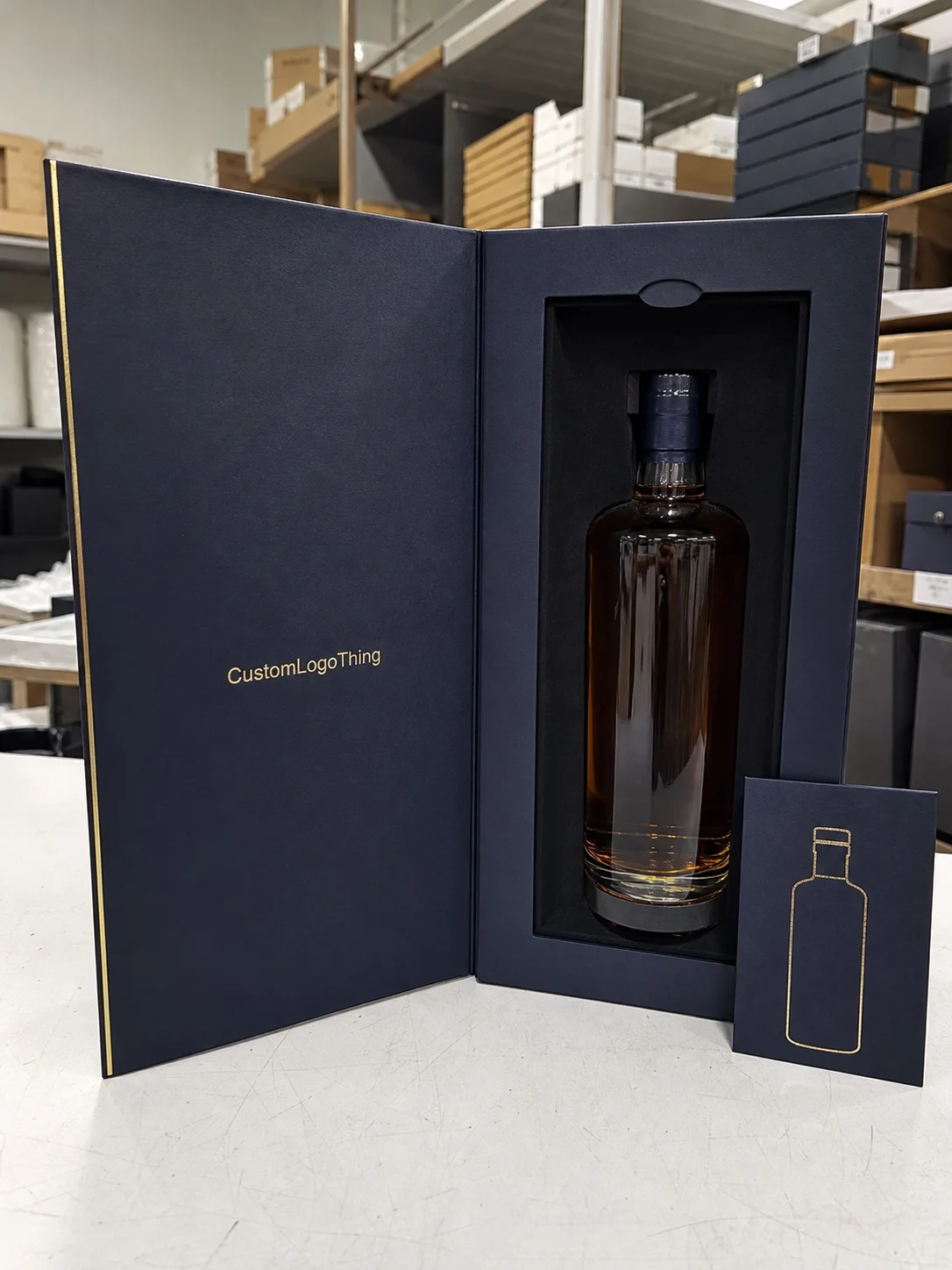
Branding is where custom leatherette boxes wholesale become very specific. A logo can be debossed into the surface, foil stamped in gold, silver, or black, screen printed for cleaner flat graphics, UV printed for sharper detail, or paired with textured interiors for a more elaborate reveal. One perfume accessory brand I advised chose a blind deboss on the lid and a printed logo inside the flap. The outside stayed restrained. The inside carried the message. That split created a stronger unboxing moment than a loud exterior ever would. I honestly prefer that kind of restraint; loud packaging can feel like it’s shouting because it’s nervous. For gold foil, the most common production method is hot stamping on a logo area between 15 mm and 45 mm wide, which keeps registration clean on a rigid lid.
Interior branding is often overlooked, which is a mistake. If the box opens onto a velvet or satin liner with a logo placement on the base, the product presentation feels deliberate rather than assembled. In custom leatherette boxes wholesale orders, interior presentation is especially valuable for watches, rings, cufflinks, medals, and corporate awards. The inside is part of the story, not just filler between the lid and the thing you’re actually trying to sell. A matte black outer shell paired with a cream satin interior can shift perceived value faster than a full-page brochure, and it does so in about 3 seconds of unboxing time.
In terms of lining and inserts, buyers usually choose between foam, EVA, velvet, satin, molded trays, or custom-cut inserts. Foam and EVA are the most practical for keeping items stable. Velvet and satin are stronger on presentation, but they can raise cost and add assembly steps. I have seen one seller insist on a velvet insert for a small USB gift set, only to discover the insert cost more than the packaging shell. That is the kind of detail that makes or breaks a quote in custom leatherette boxes wholesale. I remember the buyer staring at the revised quote like the spreadsheet had personally insulted them. A custom EVA insert cut to 20 mm depth would have solved the fit without adding the labor of wrapping each cavity in fabric.
Surface texture also matters more than many procurement teams expect. A fine-grain leatherette finish reads differently from a deep-grain one, especially under retail lighting. Scratch resistance, color consistency, and edge wrap quality all affect the final perception. If the corners are sloppy or the grain shifts from panel to panel, the box stops feeling premium. At that point, no amount of foil stamping saves it. Not even close. I’ve watched a beautiful logo get dragged down by a weak corner wrap, and it was painful in that very specific packaging-industry way. Under a 650-lux retail display, the defect can show up faster than a buyer can read the logo.
For brands that care about standardization, the technical side is part of packaging design, not an afterthought. You are selecting a material system, not a decoration layer. That is why custom leatherette boxes wholesale should always start with structure, then finish, then branding, then insert design. A clear stack-up might look like 3mm grayboard, 0.8 mm leatherette wrap, EVA insert, and foil logo in one pass. That kind of specification keeps the job repeatable in factories in Guangzhou, Shenzhen, or Ningbo.
| Box type | Typical perception | Strength | Best use case |
|---|---|---|---|
| Paperboard | Mid-range | Lightweight, economical | Subscription kits, light retail items |
| Velvet-wrapped rigid | High-end | Soft touch, visual richness | Jewelry, awards, presentation gifts |
| Laminated rigid | Premium commercial | Strong structure, broad print options | Electronics accessories, gift sets |
| Custom leatherette | Luxury, controlled | Premium look, stable finish, repeatability | Jewelry, watches, corporate gifting, branded packaging |
One of my favorite supplier negotiations involved a buyer who wanted “the feel of leather without any unpredictability.” That is exactly what custom leatherette boxes wholesale can do if the spec is written correctly. You trade natural variation for controlled presentation. For many brands, that is the right trade, especially when one distribution center in Dallas needs the same finish as another in Rotterdam.
Specifications for custom leatherette boxes wholesale orders
If you want accurate pricing on custom leatherette boxes wholesale, the specification sheet has to be specific. The most common mistake I see is a buyer sending a product photo and saying, “Can you quote this box?” That is not enough. You need internal dimensions, external dimensions, closure type, board thickness, insert style, artwork placement, and finish preferences. Without those details, the quote is just a guess dressed up as a number. A factory can’t price a box in Guangzhou with the same confidence it would price a box in Suzhou if it doesn’t know whether the insert is EVA or molded pulp, or whether the lid is magnetic or lift-off.
Here is the spec set I recommend every buyer confirm before requesting custom leatherette Boxes Wholesale Pricing:
- Internal dimensions in millimeters or inches, with product tolerances
- External dimensions so shipping and shelf fit can be checked
- Box structure such as magnetic, drawer, hinged, or lift-off lid
- Board thickness for the rigid shell
- Insert style including foam, EVA, velvet, satin, or molded tray
- Logo method such as embossing, debossing, foil, or printing
- Surface color with Pantone or visual reference
- Corner style and edge wrap preferences
Product size drives cost more than buyers expect. A ring box might use a compact shell and a simple insert, while a watch box needs more depth, a more substantial insert, and often a stronger closure. A gift set box for multiple accessories can require dividers, larger board surfaces, and more wrapping labor. In custom leatherette boxes wholesale, every increase in surface area, insert complexity, or structural rigidity affects material use and labor time. A 2.75 x 2.75 x 1.75 inch ring box may use less than half the board of a 6.5 x 5 x 2.5 inch presentation box, which is why size changes can shift the quote more than the logo method.
Finish tolerances also matter. Emboss depth, foil registration, and color matching should all be stated clearly. If the brand expects a deep logo impression, the die setup and board choice need to support that. If the design depends on precise foil stamping, the supplier needs to know the acceptable shift tolerance before production starts. I have seen buyers reject an otherwise excellent run because the gold foil sat 2 mm off from the centerline they imagined in the mockup. That is avoidable, but only if the spec is clear. I mean, 2 mm sounds tiny until you’re staring at 5,000 boxes and feeling your pulse in your temples. A tolerance note of plus or minus 1.5 mm would have prevented that meeting from becoming theatrical.
Shipping durability is another non-negotiable. A retail display box is not the same as a box built for direct shipment. If the order will be stacked in cartons, palletized, and moved through different climates, the shell and insert must be tested for compression, abrasion, and humidity stability. In industry terms, this is where standards like ISTA testing matter. For buyers who are handling branded packaging at scale, transit behavior is not a side issue. It is the issue. A box that survives 1-meter drop tests and 24 hours in 70% relative humidity is worth more than one that only looks good on the sample table.
Sample approval is the best protection against expensive mistakes. I always tell clients to approve a physical sample or a pre-production prototype before full release. A flat proof shows artwork. A sample shows reality. That difference saved one watch brand I worked with from a closure problem: the magnet strength was fine on paper, but the lid lift felt weak in hand. They adjusted the board thickness by 0.5 mm and solved the problem before the run began. That is what custom leatherette boxes wholesale should feel like: controlled, not improvised. A proof in 72 hours is useful; a production sample in 7 to 10 business days is better when the closure and insert are complicated.
Pricing and MOQ: what changes the wholesale cost
Pricing for custom leatherette boxes wholesale is not random, but it does move with several variables at once. Material grade, box size, structure, insert type, decoration method, and order quantity all affect the final unit cost. If a supplier gives you a price without asking these questions, I would be cautious. Either the quote is provisional, or the supplier is assuming a standard build that may not match your product. Either way, the number is only half a story. A quote for a 350gsm C1S artboard folding carton is not comparable to a rigid leatherette box wrapped in 0.8 mm textured material, and the difference can be dramatic even before inserts are added.
MOQ exists for practical reasons. Setting up a rigid box run takes labor, tooling, material cutting, wrapping, and inspection. A small run carries the same setup burden as a much larger one, so the unit price on low quantities is naturally higher. With custom leatherette boxes wholesale, the biggest cost lever is volume. The more units you order, the more setup cost gets spread across the run. A 500-piece run can be 2 to 3 times the setup burden per unit compared with a 5,000-piece order, which is why the volume step matters so much.
To make that visible, here is a pricing framework buyers can use as a starting point. These are working ranges, not promises, because exact costs depend on dimensions, insert complexity, and shipping terms:
| Order profile | Typical structure | Indicative unit cost | Notes |
|---|---|---|---|
| 1,000 pcs | Simple magnetic box, one-color logo, basic EVA insert | $0.92–$1.45/unit | Higher setup share, limited decoration |
| 3,000 pcs | Rigid leatherette box, foil logo, custom insert | $0.68–$1.08/unit | Better spread of tooling and labor |
| 5,000 pcs | Branded magnetic box, printed interior, EVA or velvet insert | $0.48–$0.89/unit | Common sweet spot for many wholesale buyers |
| 10,000 pcs+ | Fully customized structure with premium finish | $0.36–$0.72/unit | Lowest unit cost, highest planning discipline required |
Those numbers line up with what I have seen in actual quoting rounds. A simple one-color logo box at 5,000 pieces can be surprisingly economical. Add a full interior print, custom foam cutouts, and a metal badge, and the cost climbs fast. The buyer sees one package. The factory sees material, process time, and inspection points. That disconnect is normal, but it can still be annoying when a “small upgrade” turns into a budget meeting nobody wanted. For example, a $0.15 per unit increase on 5,000 pieces adds $750 to the project before freight is even discussed.
The hidden costs deserve attention too. Tooling for debossing or custom dies, sampling fees, export cartons, freight, rush charges, and overage allowances can all change the landed price. I have had clients compare two suppliers and choose the lower box price, only to discover the freight estimate and sample revisions erased the savings. That happens more often than people admit. I’ve watched otherwise calm buyers become deeply spiritual about shipping fees. A DDP quote out of Shenzhen can be easier to compare than FOB terms from Ningbo if the freight line is buried three pages down.
There is a simple rule I use in procurement calls: compare the landed cost, not just the unit quote. If one supplier is at $0.62/unit but charges heavily for inserts, proofing, and packaging cartons, while another is at $0.71/unit with those items included, the second offer may be the better buy. That is especially true in custom leatherette boxes wholesale, where presentation details often sit outside the headline number. A factory in Dongguan may quote the shell at $0.58, while another in Suzhou quotes $0.66 but includes the foam insert and one round of artwork correction. That second number can be the cheaper path in the real world.
Volume savings usually come from three places. First, decoration setup is spread across more units. Second, material purchasing becomes more efficient. Third, production line changeovers happen less often. That is why custom leatherette boxes wholesale pricing can improve meaningfully once you move above a small pilot run. The curve is not linear, and that is exactly why the MOQ discussion matters early. A buyer moving from 1,000 to 5,000 units may see the unit cost fall by $0.25 to $0.40, which is a big swing in packaging economics.
For buyers who want cleaner comparisons, I recommend asking each supplier the same five questions: what is included in the quote, what is the MOQ by structure, what is the sample cost, what is the lead time after approval, and what freight terms apply. Ask them in that order. You will see the real difference quickly.
How do custom leatherette boxes wholesale pricing and MOQ work?
Buyers usually ask this question after they have seen two quotes that look nothing alike. That is normal. Custom leatherette boxes wholesale pricing and MOQ move together because setup work is fixed while material and labor costs spread out as the order grows. A supplier may quote a smaller run with a higher per-unit price because the same tooling, cutting, wrapping, and inspection steps are still required. A larger run lowers that burden per box, which is why MOQ often feels like a hurdle on the front end and a savings opportunity on the back end.
There are three practical ways MOQ affects cost. First, low quantities increase the share of labor assigned to each unit. Second, special inserts and logo tooling have to be amortized across fewer boxes. Third, smaller runs usually leave less room for production optimization. That means a 1,000-piece order of custom leatherette boxes wholesale may need a more conservative price than a 5,000-piece reorder even if the design is identical. If a quote seems strangely flat across quantities, ask whether the supplier has included all setup and sampling charges.
In real terms, MOQ is not just a number. It is a signal about factory workflow. A magnetic rigid box with a foil logo and EVA insert may require one production method at 1,000 units and a different cost structure at 10,000 units. That is why the best quoting conversations start with the build spec, not the budget target. Once the supplier knows the board thickness, surface finish, insert type, and artwork complexity, the MOQ starts making sense. A buyer who understands that relationship can negotiate intelligently instead of just pushing for the lowest number in the room.
Process and timeline: from quote to delivery
The ordering process for custom leatherette boxes wholesale should feel structured, not mysterious. In a solid workflow, the buyer sends an inquiry, the supplier reviews the specification, a quote is prepared, a dieline or sample is created, artwork is approved, production begins, quality checks happen, and the goods are packed for shipping. Each stage has its own risk. Each stage can also be managed. A good factory will usually issue the first price response within 24 to 48 hours if the dimensions, quantity, and finish are clear.
What speeds up quoting? Three things: exact dimensions, box style, and artwork files. Quantity matters too, because 800 units and 8,000 units are not even in the same production conversation. If you send a logo in vector format, a target delivery date, and a clear insert requirement, the response is usually much faster and more accurate. If you send a low-resolution screenshot and no measurements, the process slows immediately. Every factory I’ve ever dealt with has an allergy to vague specs (and honestly, fair enough). A simple .AI or .PDF file can save two or three rounds of correction.
Sampling usually takes longer than buyers expect. That is the honest truth. A physical sample can require wrapping material selection, insert cutting, logo trial, and closure testing. Repeat orders move faster because the spec already exists and the artwork is usually approved. In custom leatherette boxes wholesale, a first order might need 12 to 15 business days from proof approval, while a repeat run can often move in 8 to 12 business days depending on quantity and seasonality. Shipping time is separate and depends on the route. Sea freight from Shenzhen to Los Angeles may add 18 to 24 days, while air freight can be 5 to 7 days once booked.
Here is where delays tend to appear:
- Artwork revisions after the first proof
- Missing product measurements or unclear tolerances
- Insert changes after the sample has already been built
- Approval bottlenecks when multiple stakeholders need sign-off
- Freight booking delays during busy export windows
I remember a client meeting where the marketing team wanted a foil logo, the operations team wanted a foam insert, and the sales team wanted a higher-end closure. Nobody had agreed on the product dimensions. We lost four days before we even got to sampling. That sort of delay is common in custom leatherette boxes wholesale projects because packaging decisions sit between marketing, operations, and procurement. The sooner those teams agree, the smoother the launch. One 15-minute alignment call can save a week of back-and-forth in Guangzhou or Qingdao.
Planning ahead is especially important for seasonal launches, corporate events, and wedding peaks. If your box has to arrive before a trade show or product reveal, build in margin. I usually advise buyers to allow extra time for sample approval, because the sample is the moment where the spec becomes real. A few millimeters can change the fit, and a tiny change in fit can change the whole experience. It’s slightly ridiculous how often that happens, but it does. For October event launches, I tell teams to lock specs 6 to 8 weeks ahead of the ship date if they want room for revisions.
For sustainability and compliance-minded buyers, material sourcing also matters. If recycled board content, FSC chain-of-custody documentation, or lower-impact inks are part of the brief, bring that up before production. The FSC organization sets clear expectations for responsible sourcing, and some retail programs now ask for it by name. That can affect both the quote and the documentation trail. A supplier in Shanghai or Dongguan can usually provide FSC paperwork faster if the request is made before the first sample rather than after approval.
Why choose us for custom leatherette boxes wholesale
Buyers do not come to Custom Logo Things just for a box. They come because they need packaging that reflects the product without adding chaos to the supply chain. Our focus is measurable: consistent quality control, packaging expertise, transparent specifications, and responsive quoting. Those sound like simple promises. They are not simple to deliver at wholesale scale. A quote that reflects 1,500 units, a 3mm rigid shell, and a magnetic closure is useful; a quote that ignores those details is not.
Manufacturing capability matters because it reduces handoff risk. Fewer middlemen means fewer misunderstandings about board thickness, logo positioning, insert height, or carton packing. When I visited a production line that handled custom leatherette boxes wholesale for jewelry clients, the best feature was not the machinery. It was the process control. Samples were checked against a spec card at three points, and every carton had a count sheet before export. That kind of discipline saves real money. In one line I saw in Dongguan, operators checked lid alignment at 100% of the run and logged deviations above 1 mm before packing.
Wholesale buyers also need support beyond the box itself. Dieline guidance, sample validation, artwork checks, and export-ready packing are not extras. They are part of the service. I have seen generic resellers quote a low price and then disappear when a buyer asks about emboss depth or carton loading. That is not a useful buying experience. It is just a low number, and a low number with nowhere to go. If a supplier can’t tell you whether the insert is 25 density foam or 35 density EVA, you are not getting expertise; you are getting guesswork.
With custom leatherette boxes wholesale, consistency across repeat orders is a major value point. If you launch three seasonal colors and need the same logo treatment on each, your supplier has to understand how to hold color, surface texture, and fit across production batches. That is where experienced packaging partners stand out. They think like operators, not just salespeople. A 2,000-piece reprint in navy leatherette should still match the prior run closely enough that a store manager in Chicago cannot spot the difference from six feet away.
“The cheapest quote is often the most expensive mistake.” I have heard that line from a procurement manager in one form or another more than once, and in packaging it is usually true when the box is part of the brand story.
We also understand that presentation and logistics have to work together. A beautiful custom leatherette box that arrives scuffed, crushed, or miscounted is a failed order. A practical box with the wrong finish can hurt brand perception just as fast. The right supplier should balance both. That is the standard we work to for custom leatherette boxes wholesale, especially in branded packaging programs where the box is part of the sale, not just the shipment. We can align on material specs, logo placement, and carton packing before the order reaches the line in Shenzhen or the export dock in Ningbo.
If you are comparing suppliers, ask for the proofing process, the QC checkpoints, the packaging method for export, and the exact materials used. A real partner will answer in specifics: board thickness, wrap material, insert density, and estimated lead time by order size. Vagueness is a warning sign. So is a quote that somehow solves everything before asking a single real question. A strong supplier should be able to state, for example, that the lid uses 1200gsm board, the wrap is matte PU leatherette, the insert is 25 density EVA, and the production timeline is 12 to 15 business days after proof approval.
Next steps for ordering custom leatherette boxes wholesale
If you are ready to request pricing on custom leatherette boxes wholesale, start with a simple spec sheet. Include product dimensions, box style, branding method, insert requirement, quantity, and target delivery date. Add a logo file in vector format if you have one. If you do not, send the best artwork available and state that you need help preparing print-ready files. That small bit of organization can save days. A buyer who sends full measurements and a Pantone reference will usually get a tighter quote than one who only sends a photo of a finished sample.
Here is the order prep checklist I recommend:
- Measure the product in three dimensions.
- Choose the box structure that fits the product weight.
- Select the branding method: emboss, deboss, foil, or print.
- Decide on the insert: foam, EVA, velvet, satin, or molded tray.
- Set the quantity target and a backup quantity if needed.
- Request a sample or prototype for fragile or high-value items.
If your product is fragile, launch-critical, or expensive, ask for a sample. I would not skip that step on watches, jewelry, glass accessories, or corporate presentation kits. A prototype reveals fit issues, closure tension, and finish quality in a way no email quote ever can. For custom leatherette boxes wholesale, that one sample can save an entire production run. I’ve seen it happen, and the relief on the buyer’s face was almost funny—almost. A $35 prototype can prevent a $7,500 mistake on a 5,000-piece order.
When comparing suppliers, do not fixate on unit price alone. Compare material details, MOQ, lead time, proofing process, and freight terms. Ask whether the quote includes inserts and export cartons. Ask what happens if artwork changes after approval. Ask about overage allowances. These questions sound tedious. They are what separate a clean procurement cycle from a messy one. If one supplier includes a corrugated outer carton and another charges separately at $0.12 per unit, the cheaper headline quote may not be cheaper at all.
I think the best results come when buyers treat custom leatherette boxes wholesale as a specification project, not a shopping task. The more exact your inputs, the better the output. That is true whether you are buying 500 presentation boxes for a boutique jewelry line or 10,000 Custom Printed Boxes for a corporate gift program. Precision pays. A quote built from a 3mm board spec, a 25 density EVA insert, and a 2-color foil logo is more likely to survive production than one built from wishful thinking.
If you want a tailored quote, send exact dimensions, branding goals, insert requirements, and your preferred finish. The more concrete the brief, the better the answer. For custom leatherette boxes wholesale, concrete always beats vague.
Custom leatherette boxes wholesale can raise the perceived value of a product without forcing you into oversized budgets or overly complicated packaging structures. When the specs are right, the MOQ is realistic, and the supplier understands branded packaging, the result is straightforward: cleaner presentation, more consistent product packaging, and a better buying experience. If you are planning your next run of custom leatherette boxes wholesale, start with exact dimensions and a clear branding goal, then ask for a quote that reflects the real build, not a guess. A supplier in Shenzhen, Dongguan, or Guangzhou should be able to price the job against your actual structure, not a generic sample image.
FAQs
What is the typical MOQ for custom leatherette boxes wholesale?
MOQ depends on box style, size, print method, and insert complexity. Simple branded versions can start lower, while rigid or heavily customized boxes usually require a higher minimum. Ask for MOQ by structure, not just by product category, because the same supplier may set different thresholds for magnetic boxes, drawer boxes, and hinged boxes. In many factories, 500 pieces is possible for a simple build, while 1,000 to 3,000 pieces is more common for fully customized rigid packaging.
How long does production take for custom leatherette boxes wholesale orders?
Lead time usually depends on sampling, artwork approval, and production volume. A prototype or sample approval adds time upfront, but it helps prevent costly mistakes. Repeat orders often move faster because the box spec and artwork are already approved and can go straight into the production schedule. For many orders, production is typically 12 to 15 business days from proof approval, then freight time depends on whether the shipment leaves by air from Hong Kong or by sea from Shenzhen.
Can I order custom leatherette boxes wholesale with my logo embossed or foil stamped?
Yes, logo branding is commonly done with embossing, debossing, foil stamping, or printing. The best method depends on the finish you want, your artwork, and the number of colors involved. Ask for a proof or sample to confirm logo placement and depth before full production. A gold foil stamp on matte black leatherette often reads more premium than a busy full-color print, especially on smaller 2 to 3 inch jewelry boxes.
What affects the price of custom leatherette boxes wholesale the most?
The biggest drivers are box size, material thickness, insert type, and decoration complexity. Higher quantities usually reduce the unit price because setup costs are spread across more boxes. Special finishes and custom interiors increase cost more than simple exterior branding. A 5,000-piece run with a basic EVA insert may land near $0.48 to $0.89 per unit, while a smaller 1,000-piece run with a premium interior can move well above $1.00 per unit.
Are custom leatherette boxes wholesale suitable for fragile products?
Yes, if the box includes the right insert and board structure for protection. Foam, EVA, or molded inserts help keep delicate products secure during handling and shipping. For fragile items, confirm both fit and transit durability before approving final production. A 3mm rigid shell with a custom-cut EVA insert is often a strong starting point for watches, glass accessories, and presentation gifts that need to survive both retail handling and export cartons.