Custom Lighter Boxes: Specs, Pricing, and Lead Times
Custom lighter boxes do quiet but important work in retail. A lighter is small, low-ticket, and easy to overlook, which means the packaging has to do more than contain it. The box needs to signal legitimacy, protect the product through handling and shipping, and present a clean face on shelf in the few seconds a shopper gives it.
That is why the best packaging is rarely the most elaborate one. It is usually the carton that balances structure, print quality, and unit cost without adding features that look good on a mockup but create problems in production. A good pack also respects the route to market. A carton that will sit in a counter display has different needs from one that will move through warehouse fulfillment or a gift channel. If you are comparing formats across a larger program, the Custom Packaging Products page is a useful place to sort through the options.
Custom Lighter Boxes and the Retail Job They Do
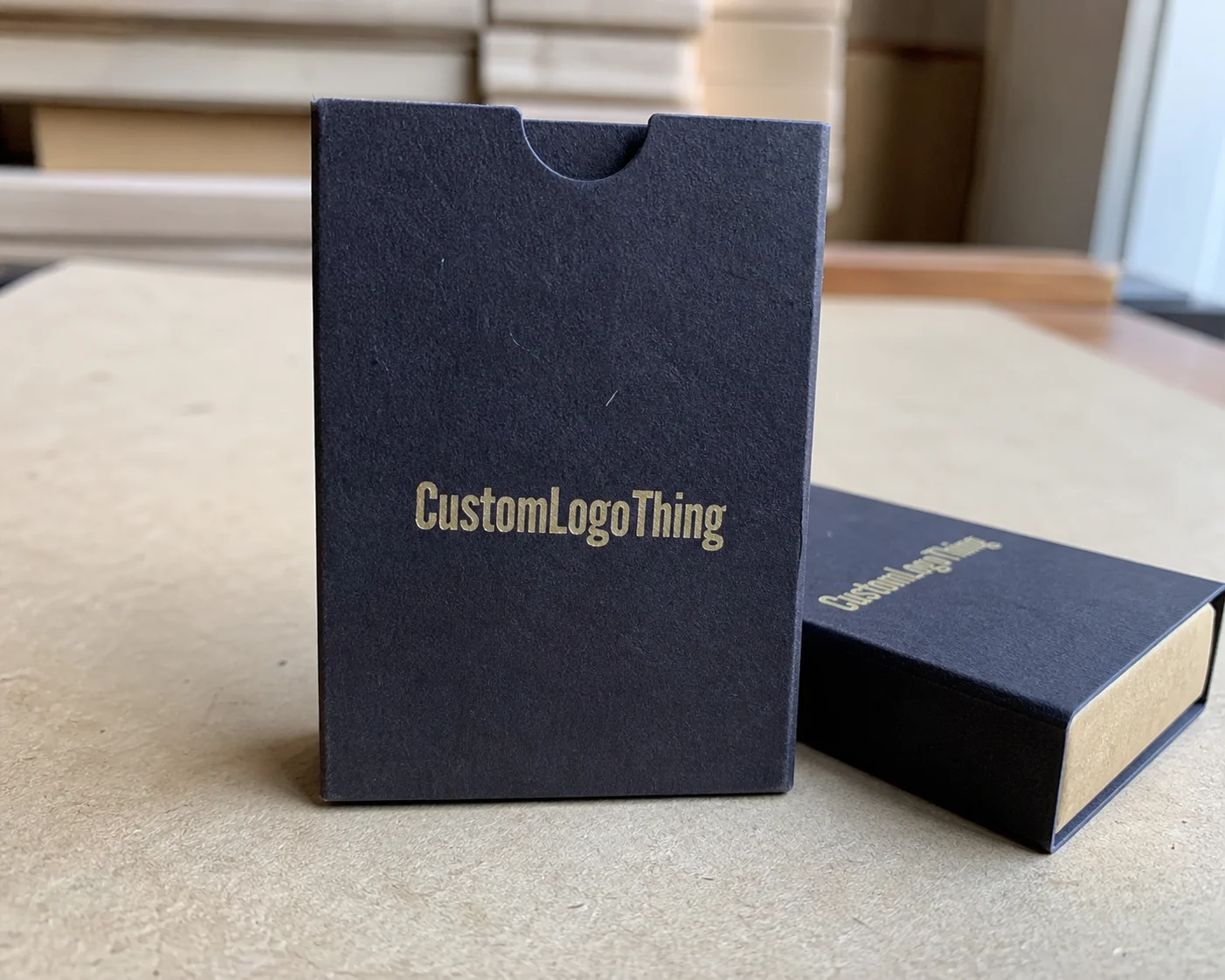
On the shelf, a lighter is a tiny object with an outsized packaging burden. The box has to make the product feel safe, new, and worth buying. It also has to survive stacking, packing, opening, and sometimes repeated handling before it reaches the end customer. That is the real job of custom lighter boxes: not decoration for its own sake, but packaging that supports trust and use.
Most packs in this category are folding cartons. Sleeve-and-tray builds show up in higher-end programs, and display-ready cartons are common when the product is sold near a checkout lane or on a peg. The structure should follow the channel. A counter display needs fast readability and easy merchandising. A premium gift pack needs a more deliberate opening experience. The same lighter can succeed in either format, but the box cannot be generic if it is going to do the work properly.
The first decision is usually not the artwork. It is the selling environment. Will the box be shipped in bulk to stores, packed into master cartons, or handed directly to consumers? Will it sit under bright retail lighting, or in a more controlled display? Will the retailer need quick barcode scanning and simple restocking? Those practical questions matter because they shape the carton size, board grade, and finishing choices.
Branding helps, but only when the structure already makes sense. A package can look refined on screen and still fail on the shelf if the typography is too small, the copy is crowded, or the box is awkward to assemble. Good package branding starts with a clean, usable format and then adds the visual layer that matches the product tier.
There is also a margin issue. A small cartoned item can only absorb so much packaging cost before the economics get tight. That means every decorative decision should earn its place. If the box does not help the product sell better, travel better, or open better, it is probably adding expense without enough return.
How Structure Affects Fit, Handling, and Shelf Readability
Structural choice is where packaging either earns its keep or becomes annoying. The most common options are tuck end cartons, sleeve packs, auto-lock bottoms, and display-style cartons. Each one changes how the box folds, how fast it can be packed, and how well it holds up in transit.
Tuck end cartons are usually the most economical starting point. They are efficient to produce, simple to assemble, and suitable when the product is lightweight and the fit is accurate. Sleeves can make the pack feel more polished, especially for premium or gift-oriented products, but they usually work best with an inner tray or fitted insert. Auto-lock bottoms add structural confidence and can speed up manual packing, which matters when the run volume is high.
The most overlooked detail is internal size. Buyers often focus on outer dimensions, but a difference of 1 to 2 mm inside the carton can determine whether the lighter sits securely or rattles around. Too much space makes the package feel loose and can increase corner crush during shipping. Too little space slows assembly, stresses the board, and creates a closure that does not feel clean. On small cartons, that is enough to change how premium the pack seems in hand.
Inserts can help, but they should solve a real problem. They add material, cost, and another step in packing. If the lighter is moving through a warehouse and reaching stores in bulk, a simple fold structure may be enough. If the pack is going into a display tray or needs the product centered for presentation, the insert can be justified. The same logic applies to windows and trays. They improve visibility or presentation only when that extra complexity matches the sales channel.
The opening experience matters more than many buyers expect. A carton that tears on the first open or collapses at the corners can make a product feel cheap even if the print is excellent. Clean folds, consistent creasing, and a lid that opens predictably are small details, but they shape the buyer's impression fast. For a compact item like a lighter, the package often carries most of the perceived value.
Buyers usually spot structural problems before they notice print nuance. A carton that holds its shape, opens cleanly, and fits correctly will outperform a prettier pack that rattles, crushes, or arrives scuffed.
Materials, Finishes, and Printing That Change the Budget
Material choice drives both appearance and cost. For custom lighter boxes, common board options include 14pt to 18pt SBS, along with 350gsm to 400gsm paperboard. C1S and C2S stocks are also used depending on print coverage, rigidity needs, and the kind of finish the design requires. Thicker board usually adds stiffness, but thicker is not always better. If the product is small and the carton is not load-bearing, extra caliper can raise cost without improving the pack enough to matter.
Finish changes the economics in a different way. Aqueous coating and matte varnish are practical choices when the goal is scuff resistance and a cleaner surface without a heavy visual effect. Soft-touch lamination creates a more tactile feel, but it adds cost and can show handling marks in some retail environments. Foil stamping, embossing, and spot UV can move the package into a more premium tier, although each effect increases setup complexity and may slow production.
The useful question is simple: does the finish help the box sell the product, or does it mainly make the sample look impressive? That distinction matters a lot for low-margin items. A convenience-store or high-volume retail program may perform better with a restrained, well-printed carton than with a decorative spec that eats into profit. A premium gift line is a different calculation, because the packaging is part of the product's value story.
Print coverage matters as well. Full-bleed color, metallic inks, dense black backgrounds, and fine reverse type generally cost more than a simple one- or two-color layout. Small text and thin lines also raise risk, especially if the pack carries legal copy or barcode information. Those elements should be checked on a press proof, not just on a screen, because retail lighting changes how legibility reads in the real world.
For buyers who need a supply-chain reference, FSC-certified paperboard can support documented sourcing. If sustainability claims matter to the project, verify them with a third-party source such as FSC rather than relying only on supplier language.
There is also a practical durability angle. If cartons will be stacked in a warehouse, shipped long distances, or exposed to humidity swings, a stable board and protective coating can be worth the extra spend. If they go straight from pack-out to shelf, the spec can often stay lighter. That is one of the most effective ways to keep custom lighter boxes commercially sensible without making them look unfinished.
Pricing, MOQ, and the Variables That Actually Shift Quotes
Pricing for custom lighter boxes is shaped by a small set of variables that appear in almost every quote: dimensions, quantity, board grade, print count, coating, inserts, windows, and finishing. Quantity is the strongest lever. A 5,000-piece run and a 25,000-piece run can land at very different unit costs because the same setup is spread across a much larger volume.
MOQ, or minimum order quantity, is not just a supplier preference. It reflects the point at which a production run becomes economical. Smaller runs are possible, but the unit price usually rises because press setup, finishing setup, and prepress work do not shrink in step with the order. That is why comparing base unit price alone can be misleading. The real comparison is landed cost, including freight, proofing, tooling, and packing assumptions.
The table below gives a planning view, not a formal quote. It assumes standard folding cartons without unusual tooling.
| Specification | Typical Build | Indicative Unit Cost | What Changes the Price |
|---|---|---|---|
| Basic retail carton | 14pt SBS, 1-2 colors, aqueous coat | $0.18-$0.28 at 5,000 units | Artwork coverage, carton size, shipping weight |
| Mid-tier branded packaging | 16pt board, 4-color print, matte finish | $0.26-$0.42 at 5,000 units | Coating choice, board grade, tighter tolerances |
| Premium presentation pack | Thicker board, soft-touch, foil or spot UV | $0.45-$0.85 at 5,000 units | Decoration complexity, extra finishing passes, inserts |
Those ranges move quickly if the order includes windows, custom inserts, or specialty die cuts. Freight can also change the picture. A quote that looks lower on paper may become more expensive once shipping, proof charges, or extra finishing passes are included. Ask whether tooling, samples, and packing are part of the price. If they are not, the comparison is incomplete.
A useful rule: the cheapest quote is not always the lowest total cost. If the lower price increases damage, causes a reprint, or delays a launch, the real cost climbs fast. That matters in retail packaging because timing is often tied to seasonal resets, promotions, or limited shelf space.
Compare quotes line by line. The missing line item is often where the surprise lives.
For broader sourcing comparisons, the Custom Packaging Products page can help you evaluate structure and finish options before you lock the spec.
Production Workflow and Lead Time Realities
Production usually follows a familiar sequence: brief, dieline, artwork prep, proofing, sampling, printing, finishing, converting, packing, and freight. On paper that looks linear. In practice, the slowest step is often artwork correction or proof revision, especially when the carton needs exact fit or has small legal text, barcodes, or warning copy.
For a simple build, production after approval can often run in about 12 to 15 business days, plus shipping. Specialty finishes, inserts, and structural changes add time. If the job requires new tooling or a custom die, the schedule can stretch before production even starts. Buyers often underestimate this front-end lead time because the design phase feels like progress even when the box is not yet ready to make.
Sampling deserves more attention than it usually gets. A digital proof confirms layout, color intent, and copy placement, but it will not tell you whether the board creases cleanly or whether the closure is too tight. If the product needs an exact fit, a physical prototype or plain white sample is the safer check. It reveals the things a PDF cannot: fit, fold behavior, and how the carton feels in hand.
Print approval is another common bottleneck. The quickest projects are the ones where the buyer has already locked the final artwork, finished copy, barcode placement, and version control before the quote stage. Once the artwork is still changing, the timeline becomes a moving target. That is true for almost every packaging project, but it is especially obvious on a compact carton where even a small copy adjustment can force another round of proofing.
Transit testing also matters if the carton will travel far or be stored under less controlled conditions. Standards from ISTA are useful because they frame packaging performance around shipping reality instead of assumptions. Not every project needs a full test program, but the method is a reminder that the box has to work after it leaves the press, not just during approval.
The safest way to plan is backward from the launch date. Count back for proof approval, sample review, artwork sign-off, and a buffer for revisions. If the pack supports a promotion, leave more room than feels necessary. Launch schedules slip most often at the end, not at the beginning.
Specification Mistakes That Create Cost and Waste
The most expensive mistake is usually size. Oversized custom lighter boxes waste board, raise freight cost, and make the product shift inside the pack. That loose fit can make the carton feel cheap before the customer even opens it. Undersized cartons create a different problem. They slow packing, stress the board, and may deform the closure. Measure the product, then determine the smallest clearance that still allows a clean fit and assembly.
Overdesign is another common issue. A buyer may specify foil, embossing, thick lamination, and a custom insert for a product that sells at a low price point. The box looks impressive, but the margin disappears. That level of finishing can make sense for a collector line or premium gift pack. It usually does not make sense for a simple retail item competing on convenience and volume.
Skipping a physical sample is risky because it asks too many questions at once. Does the size fit? Does the closure hold? Does the print still read well under retail lighting? A PDF cannot answer those questions with enough confidence. Even when the artwork is approved, the sample stage still matters because structure and print are not the same thing.
Compliance should not be treated as an afterthought. Even a small retail carton may need barcode placement, safety copy, country-of-origin information, or age-related messaging depending on the market. Store teams need to scan and stock the pack without confusion. Strong branding helps, but it cannot replace operational clarity.
Sustainability claims deserve the same discipline. A carton with extra laminate, oversized dimensions, and unnecessary inserts can look premium while creating more material waste than needed. Better design often means reducing board and simplifying the structure without weakening the brand story. That is a packaging improvement, not a compromise.
Version control is the last quiet trap. Once the dieline is approved, keep it locked. Confirm the final artwork file, the final barcode, and the final legal copy before production starts. On small cartons, even one stray revision can multiply into reproofing and waste because there is so little room for error.
Buyer Checklist for a Clean Launch
If you want cleaner quotes, send a cleaner brief. Start with actual product dimensions, not estimates. Add quantity, artwork status, finish preferences, insert requirements, and delivery location. If the box must fit a display tray, support a retail peg, or meet a compliance rule, state that early. More complete information gives suppliers a chance to price the real job instead of a placeholder version of it.
A practical buyer checklist is short and specific:
- Measure the lighter and confirm internal carton dimensions.
- Choose the sales channel: counter display, gift, ecommerce, or mixed retail.
- Set the quantity target and the acceptable MOQ range.
- Decide whether the box needs an insert, window, sleeve, or simple tuck structure.
- Choose the finish based on margin and shelf environment, not habit.
- Request a sample or prototype when fit, opening behavior, or print accuracy matters.
- Confirm whether the quote includes proofing, tooling, packing, and freight.
That list prevents one of the most common sources of waste: comparing different builds as if they were the same item. A buyer may think they are reviewing one carton, while suppliers are quoting three different specs. The result is confusion, not savings.
If the lighter is part of a premium line, ask for a prototype early. If the pack is moving through distribution, test the structure against handling and transit assumptions. If the box is part of a larger branded packaging system, keep typography, color rules, and substrate choices consistent across the line so the shelf presence feels deliberate rather than patched together.
The best custom lighter boxes do not try to do everything. They make one clear promise and keep it. They protect the product, fit the channel, and stay within the budget line that matters. That is the standard that matters in practice, and it is usually the one that holds up after launch.
For most buyers, the sensible sequence is straightforward: finalize the structure, settle the finish level, and lock the timeline before the order goes in. That is how the box stays useful, sellable, and cost-controlled without forcing tradeoffs later.
What size should custom lighter boxes be for a standard lighter?
Start with the actual product measurements, then add only the clearance needed for fit, closure, and any insert or display feature. A few millimeters can change how secure the carton feels, so do not guess from catalog dimensions.
How much do custom lighter boxes usually cost per unit?
Unit cost depends on quantity, board choice, print coverage, and any specialty finish or insert. The most useful comparison is a full landed quote, not just the base print price, because setup and freight can change the real total.
What is the usual turnaround for custom lighter boxes?
Simple builds can move quickly after artwork approval, but specialty finishes, structural changes, and proofs add time. Plan backward from your launch date and leave room for revisions, sampling, and shipping.
Do custom lighter boxes need a specific material or coating?
Choose the material based on how the box will be handled, displayed, and stored, not just on appearance. A coating can improve scuff resistance and print quality, but it should match the budget and the retail environment.
What information should I send to get an accurate quote for custom lighter boxes?
Provide dimensions, quantity, artwork status, finish preferences, insert needs, and delivery location. If the product has compliance or display requirements, include those early so the quote reflects the real build, not a placeholder.


