Custom Made Corrugated Boxes: How to Order the Right Fit
custom made corrugated boxes are one of the few packaging choices that can lower cost and raise protection at the same time, but only if the spec is disciplined. A box that is too large burns cube, invites movement, and can push parcel charges higher. A box that is too tight creates its own problems: crushed corners, slow packout, and damaged goods that looked safe on paper.
Most buyers start with appearance, especially for branded packaging that has to do some of the selling before the product is even opened. That matters. Still, the carton’s first job is physical: hold the product still, protect the weak points, and survive the route from pack line to customer or pallet. If the structure fails, the graphics cannot recover the shipment.
That is why custom made corrugated boxes are usually a tradeoff conversation, not a design exercise alone. You are balancing protection, unit cost, freight cube, handling speed, and how polished the finished package feels in the hand. Get the balance right and the box does more than contain a product. It improves the whole workflow around it.
What Custom Made Corrugated Boxes Actually Change
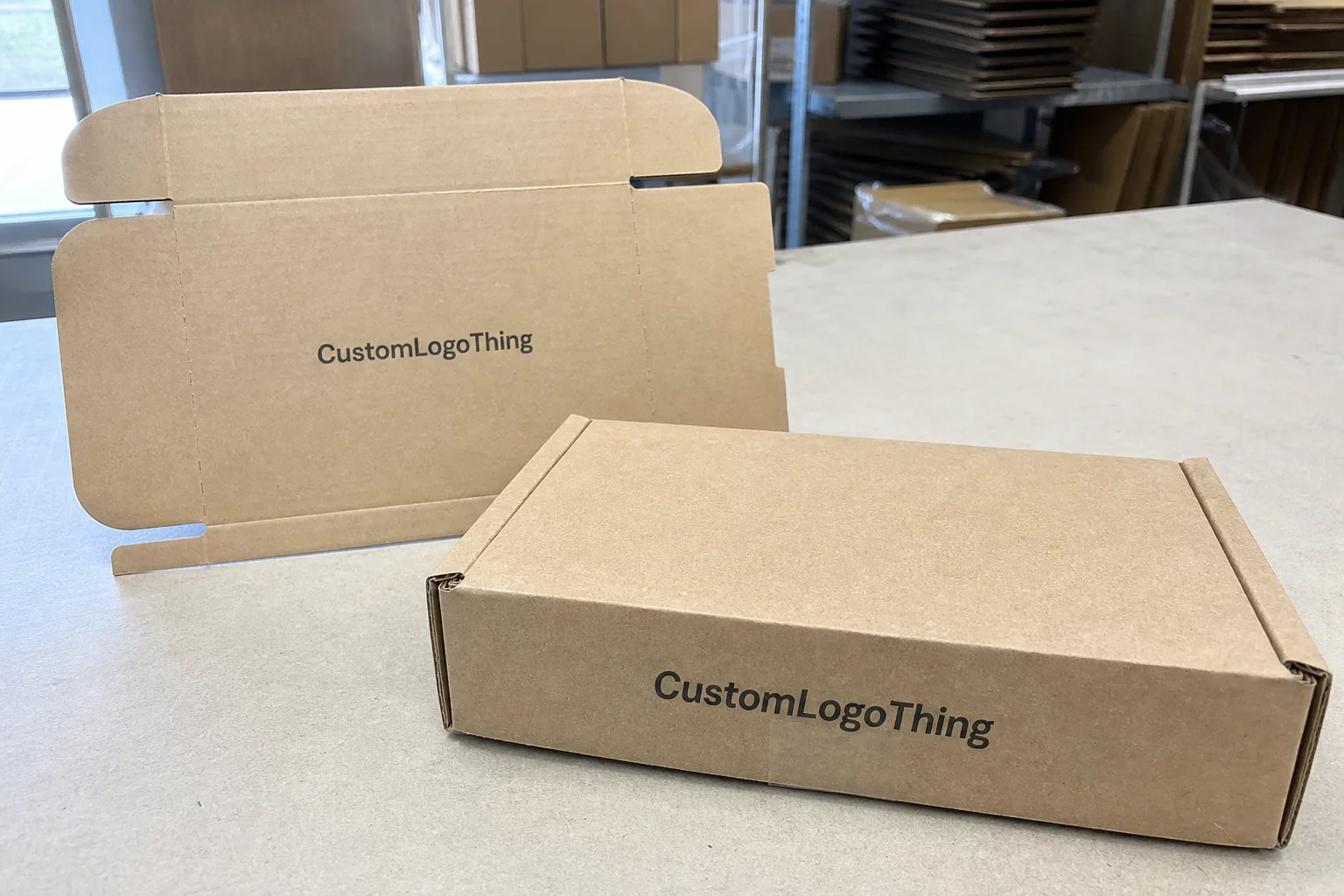
A stock carton can work for simple shipments, but it often forces the product to adapt to the box rather than the other way around. That is where waste starts. Add enough void fill to stop movement and the package grows. On parcel networks, a small increase in three dimensions can trigger a dimensional weight jump, which means you pay for air instead of product.
With custom made corrugated boxes, the goal is to size the container around the packed item, not around a generic catalog dimension. That matters for awkward shapes, fragile goods, multi-packs, retail sets, and products that need partitions or inserts. A tighter fit reduces movement, keeps the load centered, and usually makes palletizing cleaner because the cases stack in a more predictable pattern.
Buyers sometimes treat the carton as a print surface first and a structural component second. That is backwards. The structural decisions usually do more work than the graphics. A sensible dieline, a board grade matched to the route, and an interior size that actually fits the packed product often reduce claims more effectively than a premium finish. If the box bows, crushes, or opens too easily, it will not read as premium, no matter how good the artwork looks.
That point matters in e-commerce and subscription programs, where the same carton has to look clean, pack quickly, and travel safely. Many teams end up with a small family of sizes rather than one oversized master box. That usually gives better control over cube, protection, and fulfillment speed. One carton can be a compromise. A well-chosen set of cartons is an operating system.
A cheaper-looking unit price can still cost more overall if the carton ships with excess void, produces more damage, or lowers pallet density.
If you are comparing broader packaging options, it helps to look at a supplier’s Custom Packaging Products alongside the shipping carton spec. The right answer is often practical rather than flashy: the correct board, a closure that fits the workflow, and print that does not interfere with production.
How the Box Is Built From Board to Finished Carton
Corrugated board is easier to understand once it is broken into layers. There is an outer linerboard, an inner linerboard, and a fluted medium in between. Those flutes create a small arch structure that helps the sheet resist crush and flex. The flute profile changes how the board behaves. E-flute is thinner and prints well. B-flute is a common middle ground. C-flute adds a little more cushion and stacking strength. Double-wall construction adds another fluted layer and makes sense for heavier loads or harsher shipping conditions.
The format matters too. A regular slotted carton is the familiar workhorse for many shipping jobs. Die-cut mailers are more common for subscription kits, retail packaging, and products that need a tighter presentation or a more precise fit. Partitions and dividers come into play when glass, bottles, jars, or multiple components need separation inside the case. The format is not only about how the box looks. It affects how the product is packed, sealed, opened, and sometimes re-used.
Design usually starts with the product dimensions and the packed configuration. Then a dieline gets built, scored, and tested. After that come cutting, folding, printing, labeling, and any finishing step such as aqueous coating or varnish. Structural decisions come first because the box has to hold the product before it can market it. That sounds obvious, but many projects lose time because artwork is approved before the structure is proven.
For projects with a sustainability requirement, some buyers ask about recycled fiber content or certification. That is sensible, but the claims should be checked carefully. Ask for documentation, not just a marketing line. The Forest Stewardship Council publishes background on responsible sourcing here: FSC. For transit testing, the International Safe Transit Association publishes widely used methods for package performance: ISTA.
A good carton is a system, not a single sheet of board. The liner, flute, score depth, glue line, print coverage, and closure method all affect the final result. Miss one of them and the box may still look right in a mockup while failing in the line or in transit.
Cost, Pricing, MOQ, and Quote Variables
Pricing for custom made corrugated boxes comes down to a few predictable variables: board grade, size, print coverage, quantity, finishing, and tooling. If a die-cut shape is required, there is usually a one-time tooling charge. If the job needs multiple print colors, tighter registration, or coatings, the price moves again. Quotes are difficult to compare unless everyone is pricing the same dimensions, flute, print method, and shipping terms.
Minimum order quantity changes the math quickly. A lower run can still make sense, but the per-box price is often higher because setup costs are spread across fewer units. For planning only, a plain kraft shipper at 5,000 units might land around $0.30 to $0.65 per box depending on size and board. A printed die-cut mailer or a box with inserts can move into the $0.85 to $2.25 range. Those are not quotes. They are practical planning bands that show why the spec matters more than the headline number.
| Option | Typical Use | Setup Burden | Unit Cost Pressure |
|---|---|---|---|
| Stock carton with label | Simple shipments, low visual demand | Low | Lowest for very small runs, but fit is limited |
| Custom RSC shipper | E-commerce, general product packaging | Moderate | Good balance when dimensions are tight |
| Die-cut mailer | Subscription kits, retail packaging, premium unboxing | Higher | Often better presentation, often higher tooling cost |
| Double-wall custom shipper | Heavier goods, stacked storage, rough transit | Moderate to high | Higher board cost, better load performance |
The cleanest way to control cost is not to weaken the box. Tighten the dimensions so you are not paying for unused cube. Simplify print if the brand can tolerate fewer ink colors. Choose the lightest board that still meets the shipping requirement, then validate it against the actual route instead of a generic spec sheet. If you need a broader mix of formats, a supplier can often pair the carton with Custom Shipping Boxes that fit your fulfillment method better than a one-size-fits-all option.
Freight terms can hide real cost differences. A supplier with a lower unit price but higher freight, longer lead time, or extra pallet charges may not be the better buy. A serious comparison separates board, print, tooling, freight, and lead time so the landed cost is visible.
Spec Choices That Affect Strength, Fit, and Pallet Density
Inside dimensions matter more than outside dimensions because the product lives inside the box. If you are fitting a bottle, device, bundle, or insert set, the interior size must account for board thickness, closure style, and any clearance needed for packing. A carton can look right on paper and still fail in practice if the usable space becomes too tight after the scores and walls are counted.
Strength is another place where buyers overcorrect. Single-wall board is enough for many consumer goods, especially when the carton is not carrying a very heavy load or sitting in tall stacks. Double-wall has a place for heavier contents or longer storage, but stronger is not automatically better. Extra board adds cost, weight, and sometimes stiffness that makes the carton harder to fold and pack. The right answer depends on the product and the route.
Two specs come up constantly: ECT and burst strength. ECT, or edge crush test, indicates stacking performance. Burst strength measures resistance to puncture and rupture. In modern shipping programs, many buyers focus on ECT because compression and stack failure are often the real problems in warehousing and palletized freight. That said, there is no universal rule. A bottle pack moving through rough parcel handling may need a different balance than a dry-goods case sitting on a warehouse rack.
Good box spec also improves pallet density. A tighter carton often means less void fill, more efficient case packing, and cleaner pallet patterns. That affects trailer space, warehouse handling, and the number of cartons you can fit on a pallet without overhang. In practical terms, a well-designed carton often does more for the shipping budget than a decorative finish ever will.
If the project also needs shelf impact, the structure and the graphic panel should support the same story. That is where retail packaging and package engineering meet. The box should look intentional, but it also has to survive the chain from packout to display.
Production Steps, Lead Time, and Approval Milestones
The sequence is straightforward, but every handoff matters. First comes requirements gathering: product dimensions, weight, packing method, shipping environment, and any special handling concerns. Then the structural design is drafted, followed by artwork proofing and, if needed, a sample or prototype. Once the design is approved, production starts, then finishing, then quality check, and finally shipment.
Lead time usually stretches for a few predictable reasons. Dieline changes are one. Complex print setups are another. Specialty coatings, unusual board combinations, or rush scheduling can also add time. The other common delay is not production at all. It is waiting on approval. If the proof sits for days while teams argue about artwork details, the manufacturing slot slips and the shipment moves with it.
That is why proof accuracy matters. A good proof should show barcode placement, bleed areas, fold lines, logo scale, and the actual board thickness if the presentation depends on it. If the sample is only a flat graphic and not a real structural reference, it can miss a fit issue that only appears once the carton is folded. More than one project gets stuck because a logo sits too close to a fold and has to be moved after the structural sample exposes the problem.
For many standard jobs, a proof-to-production window of about 12 to 15 business days is common after final approval, though some runs move faster and some take longer. A simple unprinted shipper can be quicker. A custom printed box with inserts, special coatings, or a new die may need more time. The practical move is to set revision limits and sign-off dates early, then treat them as part of the schedule rather than an afterthought.
Teams that order custom made corrugated boxes on a recurring basis usually build a repeatable workflow: spec sheet, photo reference, sample approval, final sign-off, release to production. That process protects both sides. It reduces surprises, and it gives the supplier enough detail to make the right box the first time.
Common Ordering Mistakes That Create Damage or Delays
The most common mistake is measuring the product itself instead of the packed product. A box sized to the exterior of the item can be too small once you add a bag, insert, sleeve, tissue, closure flap, or protective wrap. That is how a carton becomes unusable even though the numbers looked right in the first conversation.
The next mistake is forgetting the parts that change the interior space. Inserts, dividers, closure tabs, coatings, and even the way a product is loaded can alter the real fit. A bottle pack with a corrugated divider needs more room than the bottles alone. A folding carton with a locking flap needs a different allowance than a plain tuck style. Those details sound small, but they decide whether the box runs cleanly on the line.
Another frequent problem is approving graphics before the structure is locked. A logo can look balanced on a render and still land too close to a score line on the actual carton. If the dimensions change later, the art may need to move too. That means extra proof cycles, extra time, and sometimes extra cost. Packaging design works best when structure and graphics are developed together, not one after the other in isolation.
Freight mistakes are easy to miss because the unit price looks fine. A box that is slightly larger than necessary can reduce pallet density, increase dimensional weight, and create more air in the shipper. The unit cost may be lower on paper, but the landed cost goes up. That is one reason a project should be reviewed as product packaging plus shipping economics, not just carton price.
Measure the packed item, not just the product. That one habit prevents a surprising number of costly redesigns.
If you are working with a supplier on custom made corrugated boxes, ask for the internal dimensions, the board spec, the closure style, and the final packed orientation. Those four details eliminate most confusion before production starts.
Next Steps for a Clean Quote and Faster Launch
The fastest way to get a useful quote is to send complete information the first time. Start with the product’s exact dimensions, actual weight, pack count, and any inserts, dividers, or closures you need. Add shipping method, warehouse conditions, and whether the box will be palletized, parcel shipped, or both. If the item is unusual, a photo or simple hand sketch helps the supplier spot fit issues before a dieline gets finalized.
Ask for the quote in pieces: board spec, print method, tooling, freight, and lead time. That structure makes comparison much easier, and it keeps the conversation focused on what actually changes the final number. If two quotes look different but one includes a die charge, a coating, and home-delivery freight, the lower figure is not really lower at all.
A prototype is usually worth the time, especially for new packaging programs. Review it carefully. Check closure behavior, logo placement, panel alignment, and how the box feels once the product is inside. If the sample is off by even a small amount, fix it before production. A little extra review at the front end is cheaper than a pallet of cartons that do not pack correctly.
For teams building out a broader line, custom printed packaging can be rolled into a repeatable family of sizes so the brand stays consistent without forcing every SKU into the same carton. That is usually the sweet spot: controlled structure, predictable packout, and a presentation that feels deliberate rather than improvised.
If you want custom made corrugated boxes to do their job well, the better approach is simple: collect the right measurements, match the board to the route, keep the artwork honest to the structure, and approve the sample before you release the order. That is the cleanest path to boxes that protect the product, pack efficiently, and still support the brand.
What details do I need to quote custom made corrugated boxes accurately?
Provide the packed product’s inside dimensions, weight, pack count, and whether you need inserts, dividers, or special closures. Include print requirements, quantity, shipping destination, and any stacking or warehouse constraints so the quote reflects the real job rather than a generic box size.
How do I know if single-wall corrugated is strong enough?
Start with the product weight, how it ships, and whether cartons will be stacked during storage or transit. Ask for the recommended ECT or burst spec, then test a sample under real packing conditions if the product is fragile, heavy, or prone to corner damage.
Can custom made corrugated boxes lower shipping costs?
Yes. A tighter fit can reduce dimensional weight, cut void fill, and improve pallet density. The savings depend on the carrier method, box size, and how much unused space the current packout leaves behind.
What usually slows down corrugated box production?
Late artwork, repeated proof changes, unclear measurements, and special finishing requests are the most common delays. The fastest jobs are the ones that reach approval with final dimensions, final print, and a clear approval deadline.
Are custom made corrugated boxes worth it for smaller runs?
They can be, especially when product protection or presentation matters more than the lowest unit price. For smaller runs, ask about MOQ options, digital print, and designs that avoid expensive tooling unless the performance gain justifies it.

