A low-cost poly mailer can become expensive fast if seals split, the flap fails, or the film turns translucent around the product. Buyers searching custom mailing bags wholesale price are usually not buying film alone. They are trying to protect delivery performance, control packaging cost, and make sure the parcel still looks acceptable when it arrives.
The main sourcing problem is the gap between the headline quote and the real delivered value. A very low number often hides a weaker spec: thinner film, poor opacity, soft adhesive, loose print registration, broad tolerance, or inefficient carton packing that raises freight later. Useful pricing starts only after the specification is clear.
The cheap bag that gets expensive after one failed delivery
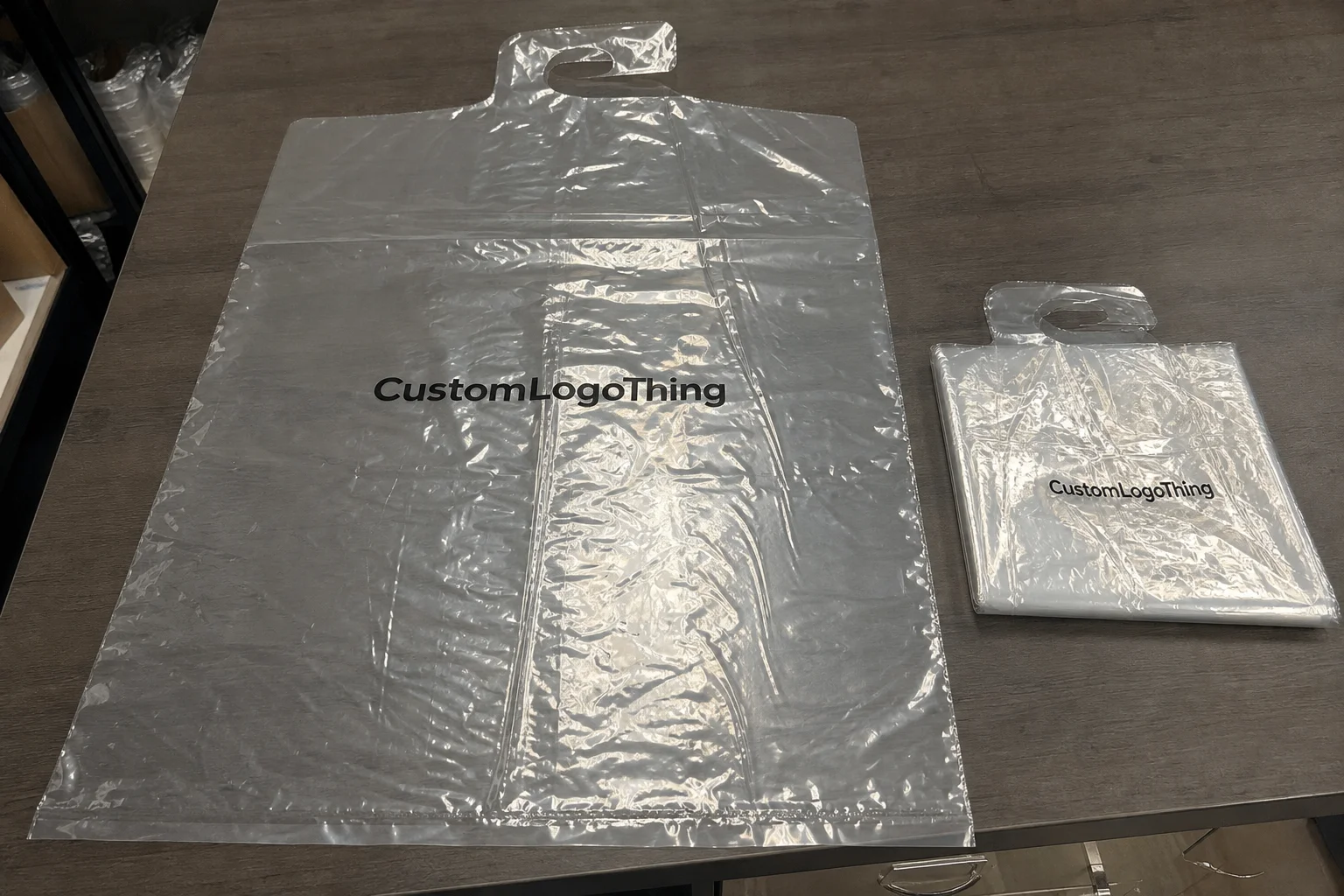
Mailing bags are often treated like simple commodity items, but parcel handling is rough. Bags are dragged across conveyors, compressed in sacks, pinched at transfer points, stretched around overfilled contents, and left in rain or humidity after delivery. A weak seam or light film that looks acceptable on paper can create expensive failures once a few thousand units are in use.
That is why a difference of $0.01 to $0.04 per bag rarely tells the whole story. A lightweight printed mailer may land around $0.08-$0.11 each at moderate volume, while a stronger ecommerce-grade build may sit closer to $0.12-$0.18, depending on size and print. The gap matters less when one failed shipment can trigger a reship cost of $6-$15 before product cost is counted.
The better buying question is not “Which bag is cheapest?” It is “Which spec gives us the lowest cost per successful delivery?” Two suppliers can quote the same dimensions and still supply very different bags. One may include stable co-ex film, better opacity, and a permanent closure that holds under strain. Another may rely on lighter film, weaker adhesive, or loose packing assumptions.
A dependable quote should state:
- Material strength for puncture and tear resistance
- Seal quality on side seams and flap closure
- Opacity for privacy and appearance
- Print registration so artwork stays aligned
- Carton packing efficiency to control freight and handling
- Production tolerance for consistent size and thickness
What custom mailing bags actually need to do in real shipping conditions
Most custom mailing bags are made from polyethylene film and used where a corrugated box would add unnecessary bulk and cost. They work best for apparel, folded textiles, documents, soft accessories, and products that already have inner product packaging. They reduce dimensional weight and dead space, but they are not the right choice for every shipment.
The basic job is to keep out moisture, hide the contents, tolerate normal parcel handling, and present the brand cleanly. Those goals pull the spec in different directions. Thinner film may lower resin cost but feel weak in hand. A larger bag may make packing easier but waste film and reduce carton efficiency. Heavy print coverage may improve appearance while raising setup cost and defect visibility.
Good use cases usually include:
- Apparel and fashion accessories
- Home textiles and linens
- Documents and flat promotional kits
- Beauty items with inner support or protective wrap
- Outer shipping over existing product packaging
Basic poly mailers are a poor fit for sharp corners, dense hardware, fragile goods, crush-sensitive electronics, or premium gift formats that need structure. In those cases, inserts, corrugated protection, or a different ship pack may be necessary.
Common styles include standard courier mailers, co-extruded mailers for better toughness and opacity, return mailers with two adhesive strips, and tamper-evident versions. Most buyers start with size, logo, color, and matte or gloss finish, but actual shipping performance comes from film structure, seal quality, and how closely the size matches the packed product. Oversizing quietly increases waste, weakens presentation, and inflates inbound freight volume.
Material, thickness, print, and sealing specs that change quote quality
Accurate pricing starts with the specifications that change the build. At minimum, a supplier needs the finished size, opening direction, thickness or gauge, material structure, print details, and order quantity. If those are missing, the quote is based on assumptions and will often move later.
Material choices in plain English
LDPE is common because it stays flexible and has a softer feel. Co-extruded film combines layers to improve opacity and toughness, which is why it is common in ecommerce mailers. Recycled-content options are widely available, but buyers should ask for the percentage used and whether it affects color consistency, feel, or price.
If environmental claims matter, ask what standard supports them rather than relying on printed symbols. Paper components in broader packaging programs may connect to standards such as FSC, while poly mailer claims more often relate to recycled content and disposal guidance referenced by organizations such as the EPA.
Thickness ranges and tradeoffs
Many Custom Poly Mailers fall in the 50-80 micron range, with lighter applications below that and heavier-duty courier builds above it. Thinner film usually lowers cost but also lowers puncture resistance and can make the bag feel insubstantial when packed. Thicker film improves opacity, stiffness, and resistance to handling abuse, but raises resin use and may increase freight weight at scale.
Soft apparel often works well in a mid-range spec. Bundled garments, irregular shapes, boxed cosmetics, or items with firmer edges usually benefit from more thickness or a stronger co-ex structure. That decision is hard to make without knowing what is going inside.
Print and closure details buyers often skip
A one-color logo is usually the simplest and most economical print choice. Multi-color layouts, flood coverage, interior print, barcode zones, warning text, writable panels, or tight registration requirements all affect setup and running cost. Full-bleed graphics can look strong for more polished retail packaging presentation, but they add ink, increase waste risk, and make defects easier to see.
Closure details matter just as much:
- Permanent adhesive strip for standard dispatch
- Dual adhesive for return programs
- Tear line or easy-open notch for customer opening
- Tamper-evident construction where access control matters
Carton packing also changes landed cost. Ask for bags per carton, carton dimensions, gross weight, and pallet details if palletization matters. Two similar unit quotes can produce different freight results because one supplier packs more efficiently or uses more realistic carton counts.
Practical move: build a one-page spec sheet before requesting prices. If each supplier is quoting different assumptions, you are comparing guesses, not suppliers.
Custom mailing bags wholesale price: what drives cost, MOQ, and unit economics
Custom mailing bags wholesale price is usually shaped by six cost buckets: raw material, print setup, labor, waste allowance, packing, and freight.
Raw material is often the largest driver. Bigger bags use more film, but cost does not rise in a perfectly straight line because side-seal allowance, machine yield, and scrap all affect the result. Larger formats can also reduce packing density in cartons, so the freight effect may be bigger than the resin effect.
Printing adds both setup and running cost. A simple logo with limited coverage usually prices well. Flood color, multiple spot colors, or artwork with tight registration expectations takes more setup and creates more waste on press.
MOQ matters because printed bags require setup. Suppliers need enough volume to spread plate or cylinder cost, labor, changeover time, and scrap. Many custom jobs start around 1,000-5,000 pieces, but the better economics often appear at 5,000, 10,000, or 20,000+ units.
Below is a rough market pattern for simple Custom Printed Mailers:
| Spec Example | Quantity | Typical Unit Range | Main Cost Notes |
|---|---|---|---|
| Small mailer, 1-color print, mid-weight film | 5,000 pcs | $0.10-$0.18 | Basic ecommerce use, simple artwork |
| Medium mailer, 1-2 colors, stronger co-ex film | 5,000 pcs | $0.14-$0.24 | Better opacity and handling performance |
| Medium to large mailer, heavy print coverage | 10,000 pcs | $0.18-$0.32 | More ink, more setup complexity, more waste |
| Return mailer with dual adhesive | 10,000 pcs | $0.20-$0.36 | Extra converting steps and adhesive materials |
These are screening ranges, not fixed offers. Resin markets move, recycled content can shift pricing, and freight terms, region, and final dimensions all matter. If a quote falls well below the normal band, review it line by line.
Common cost gaps include:
- Plate or cylinder charges
- Sample costs
- Carton packing details
- Freight exclusions or ex-works-only terms
- Duties or destination charges where relevant
- Over/under production tolerance, often around ±10% on custom work
A useful test is to request the same bag in one thinner and one thicker option, then compare both with the actual packed product. A bag that is $0.015 cheaper but noticeably weaker is rarely the better buy if it increases failure risk, slows packing, or reduces privacy because the contents show through when stretched.
Production process and lead time from artwork approval to packed cartons
The production path is simple: inquiry, spec review, quotation, artwork check, sample if needed, order confirmation, production scheduling, printing, converting, inspection, packing, and shipment. Most delays happen before production starts.
Missing dimensions, low-resolution artwork, no Pantone reference, late thickness changes, and slow internal approval can all add days. Buyers often blame manufacturing lead time for delays that started in briefing.
Sample types and what they are for
A digital mockup is useful for checking layout and copy, but it does not tell you much about film feel, opacity, seam finish, adhesive hold, or actual fit. A pre-production sample is the better checkpoint for size, material feel, print placement, and closure performance.
Typical lead time windows
Many custom poly mailer orders run around 12-20 business days from final approval into production. Sampling, heavy print coverage, seasonal congestion, or large quantities can extend that. Freight then adds its own timeline, with air moving faster and ocean lowering transport cost.
QC points that matter
Quality control should cover:
- Finished dimensions against approved tolerance
- Film thickness verification
- Adhesive performance
- Seal strength checks
- Print color and registration
- Random carton inspection before shipment
If shipping performance is a concern, ask whether the supplier can discuss handling conditions in concrete terms or reference recognized transit frameworks such as those from ISTA.
How to compare suppliers without falling for the lowest number on the page
A strong supplier explains exactly what the price covers and where the tradeoffs are. Start with spec accuracy, response quality, proofing process, material transparency, packing detail, and whether technical questions get answered directly.
Two mailers can look nearly identical in a photo and behave very differently in use. Film blend affects opacity, feel, and puncture resistance. Seal quality depends on converting control. Nominal dimensions may match while actual tolerances differ enough to affect fit and pack-out speed.
If you cannot review in person, ask for close-up photos of print, seam finish, flap adhesive area, and packed cartons. Ask how many bags go into each carton, what the gross carton weight will be, and whether thin line art or flood color creates print risk.
Useful buying signals include:
- Consistent quote formatting across revisions
- Clear tolerances for size, thickness, and quantity
- Lead times that sound realistic rather than flattering
- Direct answers to technical questions
- Specific disclosure on film structure and recycled content
If a supplier will not clarify thickness, seal type, print assumptions, or packing details, the low quote is not efficient. It is incomplete.
Send these specs first to get a faster quote and cleaner first sample
The fastest way to get a reliable price is to stop making the supplier guess. A short, complete brief cuts revision time and usually improves the first sample.
Your quote request should include:
- Bag type: standard courier, co-ex, return mailer, tamper-evident
- Finished dimensions: width x length, plus flap if relevant
- Thickness: target in microns or gauge
- Color: outside and inside if important
- Print details: number of colors, coverage, artwork file
- Estimated quantity: ideally with several volume breaks
- Product packed inside: weight, shape, and any sharp points or corners
- Ship-to destination: country or final freight point
- Target delivery window: required in-hand date
A photo of the packed product and current ship pack can be more useful than a long paragraph because it shows fill level, stress points, and likely sizing waste.
Before placing the order, confirm production tolerance, sample policy, payment terms, freight terms, estimated carton count, gross weight, and reorder lead time.
FAQ
How is custom mailing bags wholesale price calculated?
It is usually based on size, thickness, material structure, print coverage, quantity, and packing method. Setup charges for printing plates or cylinders may be separate from the unit rate. Freight can change true landed cost more than many buyers expect because mailers are light but still consume carton space.
What MOQ is typical for custom printed mailing bags?
MOQ depends on bag size, print complexity, and setup requirements. Smaller runs may be available, but unit pricing usually climbs because fixed setup costs are spread across fewer pieces. Many buyers ask for breaks at 1,000, 5,000, 10,000, and 20,000 pieces to see where the economics improve.
What specs do I need before requesting a custom mailing bags wholesale quote?
Provide finished width and length, target thickness, material type, print file, number of print colors, and quantity. Include the product going inside so the supplier can flag weak film, undersized format, or unnecessary excess space. If timing matters, include the ship-to location and required in-hand date.
How long does production take for custom poly mailing bags?
Lead time varies with quantity, artwork readiness, sample approval, and production capacity. A common production window is around 12-20 business days after final approval, with additional time for sampling and shipping. Artwork revisions and unclear specs usually cause more delay than manufacturing itself.
Can I lower mailing bag unit cost without hurting shipping performance?
Yes, but the safer cuts are usually in bag dimensions and print coverage rather than film thickness alone. Tightening the size to the actual packed product often saves material and improves presentation. Comparing two realistic specs against the packed item is still the best way to reduce cost without increasing transit failures.

