Custom Makeup Bags carry more weight than they look like they should. They hold brushes, compacts, lip products, and the small leaks that happen anyway. They also do something less obvious: they turn a loose collection of items into a kit that feels planned. That shift matters in retail, in gifting, and in any packaging program where presentation affects perceived value.
There is a practical reason brands keep returning to them. A pouch is lighter than a rigid box, easier to reuse, and more visible after the first unboxing moment. If a customer moves it from handbag to suitcase to vanity drawer, the logo keeps moving with them. That kind of repeat exposure is hard to buy through one-time packaging alone.
Why Custom Makeup Bags Stand Out in Real-World Use
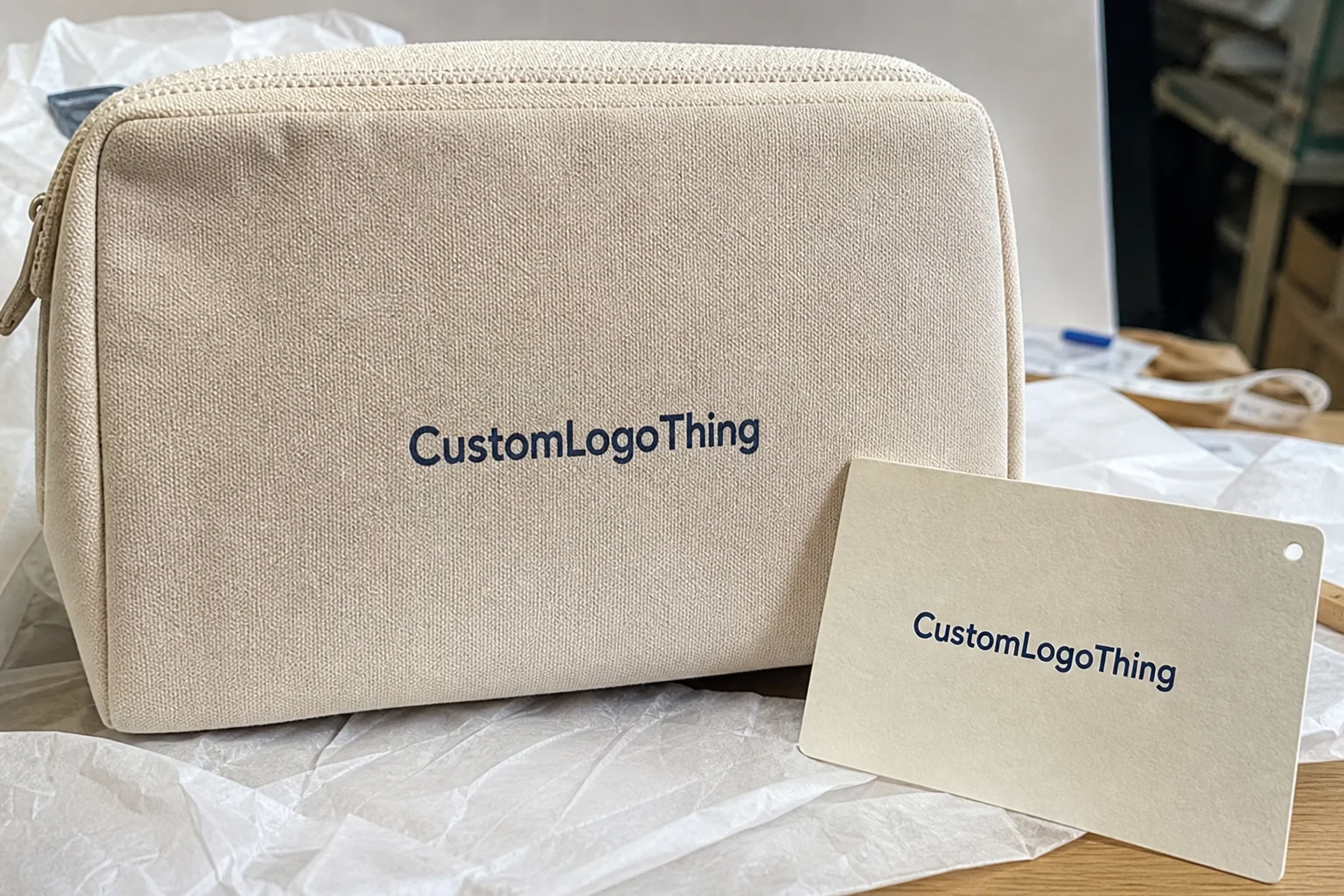
On paper, a cosmetic pouch looks simple. In use, it has to do a few jobs at once. It needs to protect fragile items from scuffs, contain spills, stay readable in a crowded bag, and survive being opened and shut far more often than an outer carton ever will. A mascara tube leaking inside a tote is an inconvenience; leaking inside a well-made pouch is a nuisance contained.
That is why custom makeup bags often outperform generic pouches when presentation matters. A plain bag carries product. A branded bag extends the packaging system. The distinction is not cosmetic in the shallow sense. It changes how the kit is perceived, how likely it is to be kept, and how often the brand mark is seen again.
They also compare favorably with custom printed boxes in certain programs. Boxes are stronger at shelf impact and stacking, but they are also more rigid, more freight-intensive, and usually less useful after opening. A pouch can travel, compress, and reuse itself. That makes it useful in subscription inserts, salon retail, influencer kits, employee welcome packs, and travel sets where utility is part of the value equation.
A makeup bag earns its keep only if it survives the second week of use, not the first day unboxed.
The real test is not whether the mockup looks polished. It is whether the bag still behaves after a zipper has been pulled a hundred times, a foundation cap has loosened in transit, or the bag has been stuffed into an overpacked carry-on. That is where construction, closure choice, and material behavior stop being abstract and start affecting returns, complaints, and repeat use.
Materials, Closures, and Print Methods That Affect Performance
Custom makeup bags are usually built from a small set of materials, each with a different balance of cost, appearance, and cleanup. PVC is easy to wipe down and makes product visibility easy. PU leather gives a more polished look. Canvas feels casual and durable. Polyester and nylon are lightweight, flexible, and common in travel-oriented styles.
Cleaning behavior should not be an afterthought. If the bag is likely to touch lipstick residue, foundation, lotion, or sunscreen, coated polyester and PVC usually hold up better than untreated fabric. That said, not every coated finish ages well. Some surfaces cloud, scratch, or crack faster than buyers expect, especially in bright light or with repeated friction against keys and brush handles.
The closure matters just as much. Zippers remain the standard for daily carry because they protect contents and keep everything inside when the bag is jostled. Drawstrings are faster and lighter, but they work best for low-risk items or gift packaging. Snap flaps and fold-over closures can look clean in display-led kits, though they are less forgiving when the pouch is overfilled.
Interior structure changes the user experience quickly. A single-compartment pouch is simple and inexpensive. Add a gusseted base, brush slots, or a transparent window, and the bag becomes more useful but also more complex to produce. That extra complexity can affect sewing time, alignment, and defect rates. A gusset that adds only a few millimeters can be the difference between a pouch that stands on a counter and one that collapses flat in a tote.
Decoration method also changes the result. Screen printing works well for flat areas and bold logos. Heat transfer can handle more color variation and detail. Embossing and debossing suit PU leather and give a quieter premium effect. Woven labels are useful when the surface is textured or when a tactile finish is part of the brand language.
One detail that gets missed often: color behavior changes with substrate. A logo that looks clean on white canvas may soften on translucent PVC or shift slightly on textured polyester. If color accuracy matters, ask for a physical sample or strike-off rather than trusting a screen proof alone. Digital proofs are directional. They are not the final material.
For sourcing teams that care about documentation, ask for material composition, finish details, and any claims tied to recycled content or packaging recovery. If paper inserts or cartons are part of the system, FSC documentation may matter. The EPA’s sustainable materials management guidance is a useful reference if waste reduction or end-of-life behavior is part of the brief.
| Material | Typical Strengths | Tradeoffs | Best Use |
|---|---|---|---|
| PVC | Easy cleaning, product visibility | Can feel less premium, may yellow over time | Travel kits, clear promo pouches |
| PU leather | Higher perceived value, smooth branding surface | Finish quality matters, can show abrasion | Gift sets, salon retail |
| Canvas | Durable, casual, strong print visibility | Not ideal for spills unless coated | Retail packaging, event giveaways |
| Polyester / nylon | Lightweight, versatile, cost-efficient | Appearance depends heavily on construction | Bulk promotions, travel storage |
How the Ordering Process and Timeline Usually Work
The process is fairly consistent. It starts with an inquiry and quote, moves into artwork review, then sample approval, production, inspection, and shipping. The speed depends less on the words in the brief than on whether the buyer has already locked dimensions, artwork, and material preferences. Missing one of those can push the timeline back several days.
Before asking for a price, gather the essentials: target quantity, dimensions, closure type, material preference, logo file, color references, and intended use. A pouch meant for a salon retail shelf should not be spec’d the same way as one built for a trade show giveaway. The more exact the brief, the more accurate the quote and the fewer rounds of correction later.
Sampling should be treated as a control point, not an optional extra. A prototype can reveal zipper drag, seam distortion, weak stitching, or a logo that disappears against the selected base color. In production, those problems get more expensive, not less. A sample usually costs less than reworking a full run.
Timelines vary, but there are useful planning benchmarks. A simple sample may be ready in roughly a week. Standard production for a straightforward run can land in the 2 to 4 week range after approval, while structured bags, molded hardware, or specialty finishes can take longer. Freight then adds its own clock. Air shipping moves quickly and costs more; ocean freight lowers unit logistics cost but requires patience.
If the bags are tied to a product launch or seasonal program, leave room for revision. A one-week slip in approval can become a two-week slip once transit is included. The safest projects are the ones built with buffer, not the ones that rely on every step going perfectly.
For transit durability, ask whether the supplier does any carton-level drop or compression testing, or at least understands basic ISTA-style handling expectations. The ISTA resource library is useful if you want to understand how packaging is evaluated under vibration, impact, and handling stress. Cosmetic bags do not need laboratory theater, but they do need to survive the route they are actually taking.
Cost, Pricing, MOQ, and Unit Cost Factors
Price is driven by a small group of variables: material grade, bag size, print complexity, closure style, and any specialty finish. Add lining, a metal zipper pull, embossed branding, a gusset, or a transparent panel, and the cost moves. Sometimes the cheap-looking option is the expensive one, because it creates damage, complaints, or a higher reject rate.
MOQ, or minimum order quantity, is one of the strongest pricing levers. Small runs carry more setup cost per piece because print screens, dies, machine adjustments, and inspection are spread across fewer units. Larger runs usually lower unit cost, but only if the inventory risk makes sense. If a brand cannot realistically use the stock, the discount does not matter much.
Typical planning ranges look something like this:
| Order Style | Indicative Unit Cost | What Usually Changes | Buyer Fit |
|---|---|---|---|
| Simple clear PVC pouch, 5,000+ pcs | $0.18-$0.28 | Low decoration, standard zipper, basic packing | Promotions, travel sets |
| Printed polyester or nylon pouch, 3,000+ pcs | $0.35-$0.70 | More print coverage, stronger stitching, optional lining | Retail packaging, events |
| PU leather or structured pouch, 1,000+ pcs | $0.80-$2.00+ | Premium finish, hardware, embossing or debossing | Gift sets, premium branding |
Those ranges are not promises. They are planning numbers. Final pricing depends on setup, artwork complexity, packing configuration, and freight. Individual polybags, inserts, hang tags, carton marks, and special protective wrapping can all shift the total. Sampling fees may apply if a physical prototype or tooling adjustment is needed.
Freight deserves its own line in the budget. A pouch that looks inexpensive at the factory can become expensive once air shipping, rushed production, or last-minute changes are added. Buyers usually get the clearest picture by comparing landed cost rather than just unit price. That is the number that actually reaches the warehouse.
For custom makeup bags, the best value is rarely the absolute lowest quote. A zipper that works cleanly, a print that stays sharp, and stitching that holds under use are worth more than shaving a few cents off a piece. On a 20,000-unit run, a five-cent difference is $1,000. If the lower-cost version triggers even a modest defect rate, the savings disappear quickly.
Step-by-Step Guide to Specifying the Right Bag
Start with the use case. Is the pouch for retail resale, a free gift, travel storage, a salon kit, or a promotional insert? The answer determines the spec. A giveaway can stay simple. A retail item needs enough polish to sit comfortably beside the rest of the retail packaging program.
Then size it around the contents, not around a guess. Measure the largest item first, then allow enough room for the zipper, seam allowance, and a little real-world variance. A pouch that is technically large enough but hard to close will still fail in use. In production, a few millimeters matter more than the mockup suggests.
Choose the structure with the use case in mind
Clear PVC makes sense when visibility is useful or when the contents need to be identified quickly. Coated polyester is a strong middle ground for cosmetics because it balances price, wipeability, and decoration options. Structured PU leather works when the bag needs to feel more like a premium accessory and less like disposable packaging.
Lock down branding details early
Decide where the logo lives before the pattern is finalized. Front center, corner hit, zipper pull tag, and woven side label all tell a slightly different story. Confirm line weight, number of ink colors, and whether the artwork should be simplified for cost control. A logo that reads cleanly at 7 inches wide may fail at 4 inches if the details are too fine.
Ask for a written spec sheet that confirms size, thickness, material, print method, closure type, packing configuration, and carton count. That sounds basic, but it prevents a large share of ordering mistakes. If the spec only lives in email fragments, it will eventually be interpreted more than once.
Finally, compare the options as working systems, not as mockups. Judge durability, appearance, turnaround, and landed cost together. A bag that costs slightly more but survives daily use is often the cheaper choice in the long run.
Common Mistakes That Make Custom Makeup Bags Underperform
The first mistake is overbranding. Too much copy, too many logos, too many colors, and too many decisions on one small surface. On a pouch, clutter reads as noise. Clean branding usually performs better because it looks more intentional and gives the material room to do its job.
The second mistake is trusting a mockup too much. Glossy surfaces can scratch. Soft-touch coatings can show wear. Transparent PVC can look clear on screen and slightly cloudy in hand. Sample testing is where the real behavior shows up. A good buyer treats the sample as evidence, not decoration.
Zippers and seams deserve more attention than they usually get. If a zipper binds or a seam opens after a few trips, the brand owns that failure. Reusable items create more touchpoints than outer cartons, which means the weak point will be noticed faster. A single failed bag can do more reputational damage than a stack of mediocre ones because the customer uses it repeatedly.
Color mismatch is another quiet problem. A print can look right in the art file and still land differently on textured fabric or translucent film. If brand color fidelity matters, ask for a physical reference, not just a digital proof. That is especially useful for campaign items where a small shift in tone is enough to make the packaging feel off.
The last mistake is not testing with the real contents. A pouch that fits a dummy layout may fail with actual compacts, bottles, or brushes. Pack it, zip it, shake it, and open it again. That simple check catches more problems than most teams expect.
If the pouch is one piece of a wider launch system, coordinate it with cartons, inserts, and labels. A bag that clashes with the rest of the set can weaken the overall effect. Packaging works best as a system. The bag is not standing alone.
Expert Tips, Specs to Request, and Next Steps
Ask for a complete spec sheet before approving production. At minimum, it should confirm dimensions, material thickness, closure style, print method, packing configuration, and carton count. If a supplier cannot define those points clearly, that is usually a sign to slow down rather than push ahead.
Request a sample whenever the order is tied to retail, gifting, or any launch with presentation risk. A prototype can reveal issues that are cheap to fix early and expensive to fix late. If you are choosing between two versions, order one practical build and one premium build. Compare them in hand, not just on a screen.
For buyers building custom makeup bags into a larger packaging line, think in terms of use cycles. Will the pouch be reused five times or fifty? Will it sit on a vanity or travel through luggage? Does it need to resist spills, or is it mostly a presentation piece? Those answers shape the right material, the right closure, and the right finish.
If the order will face shipping stress or be packed with hard-edged products, ask whether the supplier can align with basic ISTA-style handling expectations. If sustainability is part of the brief, ask for material declarations and packaging documentation rather than broad claims. Specific information is more useful than recycled-sounding language.
- Define the use case first.
- Measure the contents, not the guess.
- Choose material and closure for the environment.
- Confirm artwork, color, and logo placement.
- Review the sample before approving mass production.
For a practical starting point, gather the quantity, artwork, target size, and material preference, then request a prototype if the bag has to look good in front of customers. That sequence keeps the project grounded in real constraints instead of assumption. It also produces a quote that means something.
The strongest custom makeup bags are the ones people keep using. They protect the contents, support the brand, and hold up long enough to matter. That is the benchmark: useful first, polished second, and priced in a way that still makes sense at scale.
FAQ
What should I consider when buying custom makeup bags for giveaways?
Choose a lightweight material, simple branding, and a size that fits common cosmetics without feeling oversized. If the bag may be reused after the event, check the zipper and print method for everyday handling, not just display value.
Which material is best for custom makeup bags if I want easy cleaning?
PVC, coated polyester, and some PU finishes are the easiest to wipe down after cosmetic spills. The right choice depends on how often the pouch will contact liquid products, brushes, or powder residue.
How do MOQ and unit cost affect custom makeup bag orders?
Higher MOQ usually lowers unit cost because setup and tooling are spread across more pieces. Smaller orders are still possible, but they often cost more per bag and may limit finish options.
How long does the production timeline usually take for custom makeup bags?
A simple sample may take about a week, while full production often runs a few weeks after approval. Complex construction, specialty hardware, or slower freight can extend that timeline.
What information do I need before requesting a quote for custom makeup bags?
Prepare target quantity, dimensions, material preference, logo files, color references, and intended use. A tighter brief usually produces a more accurate quote and a more realistic delivery schedule.


