The cheapest pouch is often the most expensive one after sampling, freight, and rework. With Custom Makeup Bags with logo, you are buying shelf presence, product protection, and the part of the package customers handle first.
That is why small defects matter. A weak seam, a zipper that drags, or print that shifts off-center can make the whole set feel lower value. Buyers should judge the pouch as packaging, not decoration.
What Custom Makeup Bags with Logo Actually Solve
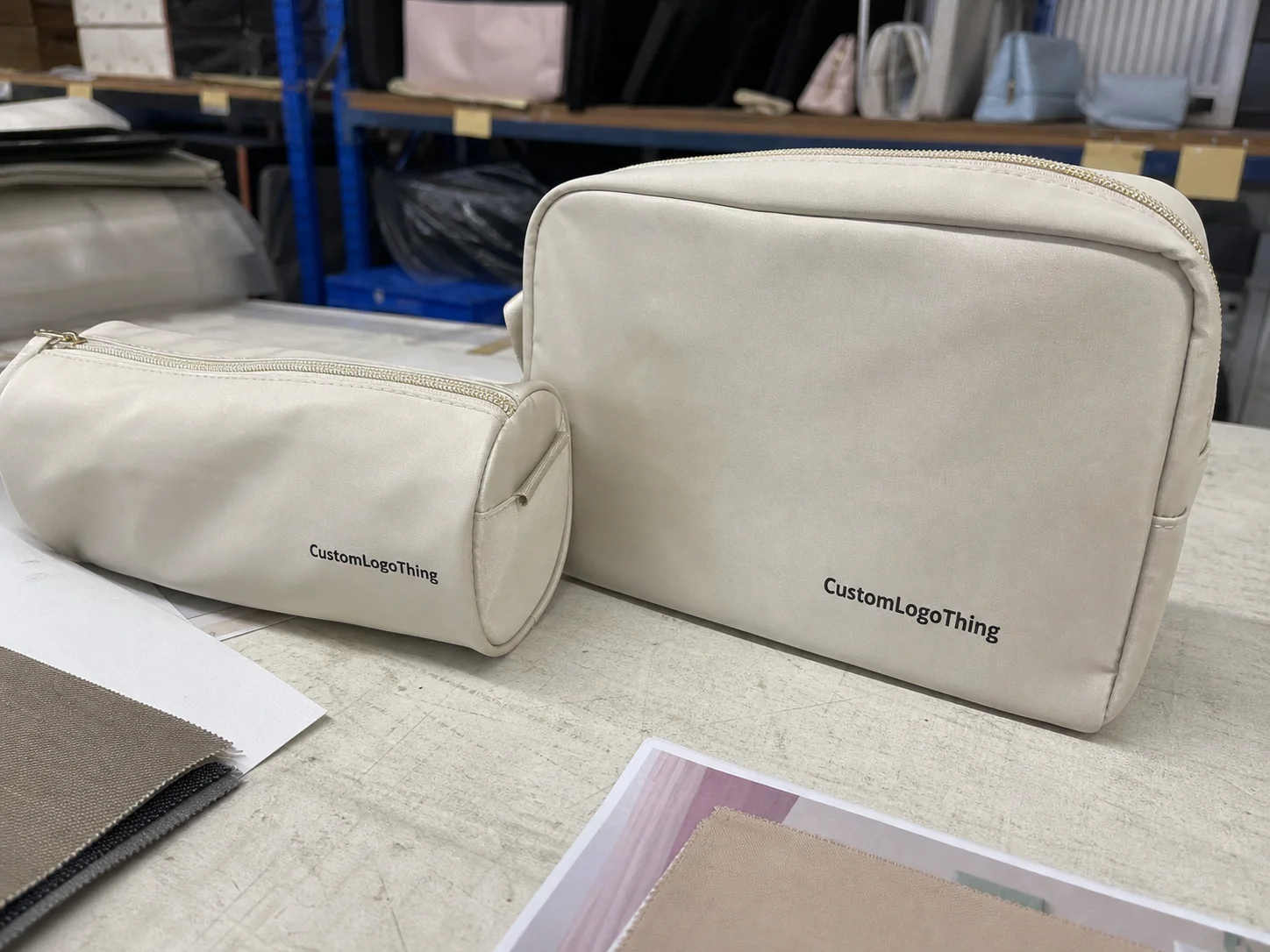
A branded cosmetic pouch solves a practical problem: it holds product, carries the logo, and stays useful after the first use. That sounds simple until the sample arrives and the finish looks wrong, the closure feels cheap, or the material fogs up in storage. The pouch has to perform in transit and still look intentional on shelf.
Custom makeup Bags with Logo are common in retail sets, influencer mailers, hotel amenities, subscription bundles, and event giveaways because they sit between low-cost promo item and premium packaging. They can feel more substantial than a carton and still stay affordable when the spec is controlled.
The real decisions are usually technical, not creative: material, gauge, size, closure, seam style, and print method. Clear PVC reads differently from frosted EVA. PEVA behaves differently from a structured case. If the pouch needs to match other packaging in the kit, the finish should support that system instead of clashing with it. In larger package builds, it helps to coordinate with inserts or secondary packaging from Custom Packaging Products.
If the pouch feels flimsy in hand, buyers assume the rest of the set was built to the same standard.
Practical checks matter more than rendering polish. Odor can be an issue with PVC. Rough edge sealing can make the piece look unfinished. Transparency matters if contents should be visible. Fit matters more than artwork if the bag is meant to be used, not just photographed.
Process and Timeline: From Brief to Delivery
A clean order starts with a usable brief. The supplier needs size, material, thickness, closure type, print area, quantity, target ship date, and whether the pouch is for retail packaging or promotional use. Those are not cosmetic details. They change the quote and the production method.
The normal flow is straightforward: artwork review, digital proof, sample or pre-production check if needed, approval, then mass production. Changing specifications after proof approval slows the job and usually adds cost. Most delays come from avoidable issues such as missing vector files, conflicting color references, or size changes after sampling.
Typical timing looks like this:
- Sample or mockup stage: 3-10 business days, depending on complexity and whether a physical sample is required.
- Production: usually 12-18 business days for simpler runs, longer for custom shapes, heavier print coverage, or larger quantities.
- Shipping: separate from production, and often the slowest part if the order crosses borders.
A digital mockup catches layout issues. A physical sample catches the things a screen cannot show: zipper drag, panel clarity, seam quality, odor, and how the pouch behaves once filled. Empty bags can look fine and still fail in use.
If the bags are being shipped inside mailers or export cartons, the outer packout matters too. Packaging standards like ISTA are useful because a pouch that survives production but not transit is still a failed order.
Pricing, MOQ, and Unit Cost Drivers
Pricing for custom makeup Bags with Logo is mostly a function of size, material, thickness, closure type, print method, color count, and whether the shape needs custom tooling. The biggest mistake is comparing quotes that are not actually the same product.
MOQ is not arbitrary. It spreads setup cost across the run. Lower quantities carry a higher unit price because the factory still has to prep materials, calibrate equipment, and confirm quality. Bigger runs usually reduce overhead per unit, but only if the spec stays consistent.
| Build Type | Typical MOQ | Unit Cost at 1,000 | Unit Cost at 5,000 | Best For |
|---|---|---|---|---|
| Clear PVC pouch, one-color logo | 300-500 | $0.75-$1.60 | $0.28-$0.65 | Retail visibility and simple promo sets |
| Frosted EVA pouch, printed logo | 500-1,000 | $0.90-$2.20 | $0.38-$0.90 | Cleaner look, slightly softer feel |
| PEVA gusseted travel bag, multi-color print | 1,000+ | $1.10-$2.80 | $0.45-$1.10 | Travel kits, gift sets, and heavier use |
Ask early about costs that often appear late: screen or plate fees, sample charges, freight, customs, carton labeling, and special packing requirements. If the order includes FSC-certified paper inserts or hang tags, mention that at the start so the whole run is planned together. The FSC system matters more when the pouch is one part of a broader branded set.
Compare quotes only when the dimensions, thickness, zipper, print coverage, packaging, and shipping terms match. A lower number that quietly changes material or closure is not a better deal. It is a different product.
Hidden cost drivers include embossing, debossing, foil stamping, zipper pull upgrades, custom lining, and extra internal pockets. Even a small seam change can trigger a different machine setup. Clean specs keep these surprises under control.
Materials, Sizes, and Print Options That Affect Retail Value
Material choice changes how the pouch reads before anyone opens it. Clear PVC gives the strongest see-through effect, so it is useful when contents should be visible on shelf. Frosted EVA softens the look and hides fingerprints better. PEVA usually sits between lightweight flexibility and a more refined feel.
Thickness matters just as much. Thin film can work for giveaways, but it wrinkles, scuffs, and feels light. Heavier gauges cost more but usually hold shape better and survive handling more cleanly. That difference shows up once the bag is filled, zipped, shipped, and touched several times.
Size should be tied to the actual contents. A flat 6 x 4 inch pouch works for compact items or sample sets. A gusseted 8 x 6 inch pouch with a 1.5 inch base carries more and feels more generous. Larger travel bags, around 9 x 7 inches or more, make sense for brushes, minis, or multi-piece kits. If the contents rattle or buckle, the pouch does not feel premium.
Closures and construction should match the use case. Standard zippers are fine for lightweight promo use. Reinforced seams and molded zippers improve durability and perceived value for retail kits. Heat sealing is often better than stitched edges for plastic-based materials, especially if moisture resistance matters. If the bag will be reused, confirm that the zipper pull and seam reinforcement can handle daily handling.
Print selection should stay simple unless the substrate can support more. Screen print is usually the cleanest choice for one- or two-color logos. UV or digital print can handle detail or color variation, but only if the surface and process control are right. Hot stamping works well for metallic accents when the brand wants a sharper finish. Full-color artwork on the wrong material tends to look muddy.
- PVC: best for visibility and crisp structure.
- EVA: better for a softer, more refined appearance.
- PEVA: useful when flexibility and lighter weight matter.
- Screen print: ideal for simple logos and stable color matching.
- UV or digital print: better for more detailed artwork, if the surface supports it.
A good sample review should cover more than color. Check corner alignment, logo position relative to the zipper line, clarity of transparent panels after folding, odor, and whether the bag stays flat or warps when stacked. Those details separate a usable pouch from one that only looks good in a photo.
Step-by-Step Buying Checklist for Branded Pouches
The safest way to buy branded pouches is to treat the order like a spec project. When the sequence is right, the quote is easier to trust and the proof is easier to approve.
-
Define the use case.
Retail, travel, event giveaway, and subscription bundle all point to different materials, sizes, and finishes. A pouch for shelf display needs a different spec than one meant to disappear inside a mailer.
-
Set quantity and budget first.
If the run size is not fixed, every supplier will quote a different assumption. Decide the target quantity, then ask for three pricing breaks so you can see where the unit cost actually improves.
-
Prepare artwork properly.
Send vector files, brand colors, and placement notes. If the logo needs to sit a specific distance from the zipper or seam, write that down. The proof stage should refine the design, not rescue it.
-
Review a sample or mockup with a real checklist.
Check fit, zipper action, logo clarity, seam finish, and how the bag looks when filled. Empty bags are misleading.
-
Confirm production and shipping details in writing.
Lead time, carton count, ship-to address, carton dimensions, and delivery method should all be documented before approval. If the pouch is part of a larger kit, coordinate it with inserts from Custom Packaging Products so the full package stays coherent.
If speed matters, simplify the build. Fewer colors, standard sizing, and a common zipper style usually reduce risk and shorten lead time. That also makes it easier to keep custom makeup Bags with Logo consistent across a larger run.
For brands with strict standards, ask for tolerance notes on color and placement. You do not need lab language. You do need to know whether the factory accepts a 2 mm shift and how it handles zipper pull symmetry or panel cut accuracy.
Common Mistakes That Cause Requotes or Reprints
Most reprints come from preventable mistakes. Low-resolution artwork is a classic one. A logo that looks fine on a screen can still print fuzzy or low-contrast on plastic. Once that happens, the proof phase becomes damage control.
Another common issue is comparing quotes that are not the same spec. One vendor may quote thinner material. Another may use a different zipper. A third may include sample approval and carton labeling while others do not. The lowest quote can look attractive until the missing pieces are visible.
Skipping sample approval is a risk, not a shortcut. It turns a mental image into a production dispute. For high-visibility retail packaging, a physical sample is usually worth the delay because it exposes problems before the full run is printed.
Buyers also choose sizes that fit the marketing idea but not the actual product. When contents rattle, buckle, or sit awkwardly, the pouch loses the premium feel. The same issue appears in Custom Printed Boxes, which is why fit should be decided before graphics.
The bag can be inexpensive. The reprint never is.
Another mistake is assuming one pouch works for every channel. A promo bag can tolerate lighter construction. A retail set usually cannot. A travel pouch needs more closure strength and better abrasion resistance. The spec should follow the real use, not the nicest version of the concept.
Color drift across reorders is also common. If brand color matters, keep the original proof, production notes, and reference sample on file. Plastic surfaces can change how ink reads depending on finish, thickness, and production temperature. That is normal. Ignoring it is not.
Expert Tips and Next Steps for a Clean Quote
The fastest way to get a clean quote is to send one complete brief instead of a chain of follow-up answers. Size, material, thickness, closure type, logo file, print area, quantity, destination, and target delivery date should all be included up front. That removes most back-and-forth.
Ask for pricing at three quantity breaks, such as 500, 1,000, and 5,000 units. That shows where the economics change and whether it makes sense to move into a higher tier. One price point only tells part of the story.
Request a sample photo, digital mockup, or physical sample depending on how strict the brand standards are. If the pouch is part of a larger packaging system, check it against the rest of the kit, not in isolation. Color, finish, and size need to work with the other packaging components.
For tighter deadlines, simplify the build: one or two print colors, standard dimensions, and a common zipper style. That is the easiest way to keep custom makeup Bags with Logo on schedule without sacrificing consistency.
If the bags are shipping inside cartons or mailers, ask whether the packout has been considered for transit stress. Testing aligned with ISTA methods can prevent failures after dispatch. Packaging only works if it survives the trip.
The best orders usually have the same traits: a specific brief, a material choice matched to the use, ready artwork, and a proof reviewed by someone who understands packaging. That is how a pouch ships without drama and lands at the expected cost.
Keep the spec tight, the proof honest, and the material choice tied to the actual use case. That is the shortest path to custom makeup Bags with Logo that look right, cost what they should, and arrive ready for launch.
What material works best for branded makeup pouches if I want a clear retail look?
Clear PVC gives the strongest see-through effect, so it is usually the first choice for shelf visibility. EVA softens the appearance if you want something less hard-edged, while PEVA can keep the bag lighter and a little more flexible. The right answer depends on how premium the pouch should feel and how much transparency you want.
What is a practical MOQ for custom cosmetic bags with logo?
MOQ depends on the material, print complexity, and whether the bag is a stock shape or a custom size. Simple pouch styles can sometimes start in the low hundreds, while more customized builds usually need a higher run to keep unit pricing reasonable.
How long does production usually take after proof approval?
Standard production often lands in the 12-18 business day range after proof approval, but that changes with material, print method, and quantity. Add shipping separately. Transit can stretch the total timeline more than the factory run itself.
Can I print a full-color logo on a plastic makeup bag?
Yes, but the best method depends on the material and the artwork detail. If the logo has fine lines or a lot of color, ask whether UV, digital, or screen printing is the better fit for that specific pouch. The wrong method can make a sharp logo look muddy.
What should I send for an accurate quote on custom makeup bags?
Send size, material, thickness, closure type, logo file, print area, quantity, ship-to location, and target delivery date. The more complete the brief, the fewer surprises you get in pricing, proofing, and turnaround. That is true for custom makeup Bags with Logo and most other packaging orders worth getting right.


