Custom Medical Labels: How to Spec, Price, and Order
Learn how custom medical labels are specified, priced, and produced, plus the material, adhesive, and compliance details buyers should verify before reordering.
Custom medical labels look simple from a distance, but they are one of the most failure-sensitive parts of product packaging. A weak adhesive, an unreadable barcode, or a smeared lot code can trigger relabeling, shipping delays, and traceability problems that cost far more than the label itself.
That is why buyers should treat the label as a spec-driven component, not a branding afterthought. The real decisions are practical: material, adhesive, print method, compliance fields, test conditions, and reorder discipline. Everything else flows from those choices.
For handling and transit expectations, the ISTA testing standards are a useful reference point, especially if labels move through multiple touchpoints before use.
What custom medical labels do beyond identification
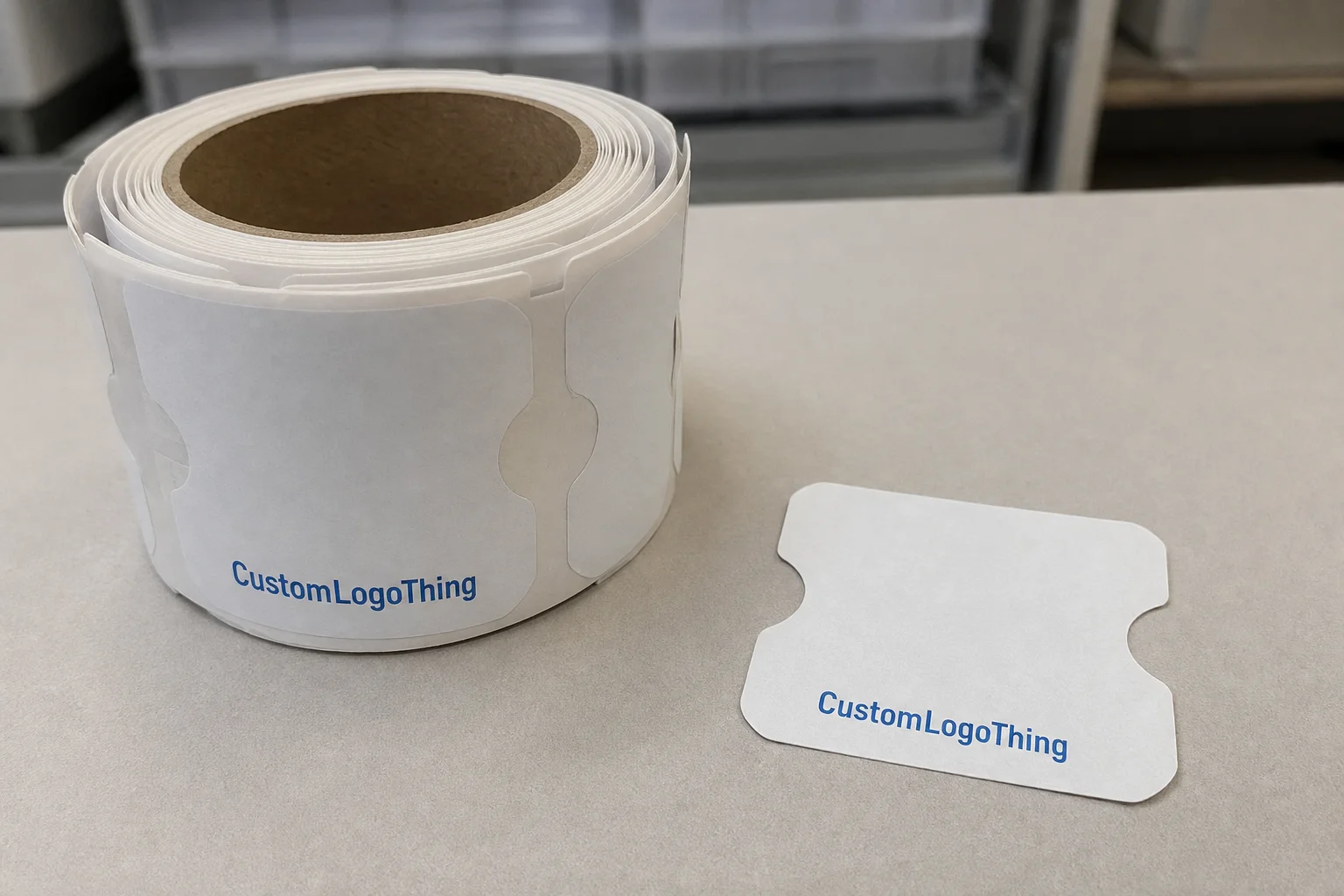
A label in healthcare is not just a nameplate. It is a control point. On a vial, it may carry lot data, barcodes, concentration, and expiry information. On a carton, it supports shelf identification and scanability. On a pouch or tray, it may need to survive sterilization, handling, and storage without lifting at the corners or clouding the printed information.
That is the real job of custom medical labels: they have to bond to glass, plastic, coated board, or film, stay legible under abrasion and routine chemical exposure, and preserve enough contrast and quiet space for scanners to read reliably. They also have to do all of that without slowing production or distribution.
From a buyer’s point of view, the label is part of packaging discipline. If the spec is loose, every reorder becomes a guess. If the spec is tight, the label behaves like a repeatable component of package branding and compliance, not a recurring exception.
Material and adhesive choices that survive real conditions
Material choice is where many label failures begin. Paper can work for dry, short-life applications on cartons or outer packs. Polypropylene is a stronger fit when moisture, wipe-downs, or moderate friction are normal. Polyester usually makes sense when durability, chemical resistance, or dimensional stability matter, especially on small labels that cannot distort. For cold-chain applications, specialty films often outperform paper because they resist curling and softening.
Adhesive selection matters just as much. Permanent adhesive is the default for many medical labels because a lot code or identifier should not lift off a vial or tray. Removable adhesive has a narrower role and should be chosen carefully, usually for temporary process labels or internal handling. Freezer-grade adhesive is built for low-temperature application and storage. High-tack adhesive helps on difficult surfaces, while low-temperature adhesive is designed to bond when the substrate is cold or condensation is likely.
The weak point is often the surface, not the label itself. Plastic vials, coated cartons, glass, and curved containers all behave differently. Surface energy affects how quickly the adhesive wets out and builds bond strength. A label that holds on a flat carton may fail on a small-radius vial because edge stress is higher and the contact area is smaller. That is why surface testing matters.
Finish and print method also affect performance. Matte finishes reduce glare and help reading under bright lights. Gloss can improve appearance, but it can be less forgiving if barcodes need rapid handheld scanning. Thermal transfer printing is common when text and barcodes need to survive variable-data workflows. If labels will be wiped with alcohol or exposed to sanitizing agents, ask for rub resistance testing rather than assuming the ink will hold.
Paper stocks that carry FSC certification can fit some programs, especially where procurement teams care about responsible sourcing. If that matters to your organization, review the chain-of-custody requirements at fsc.org and confirm what the printer can document.
Material and adhesive fit at a glance
| Option | Best fit | Typical strengths | Watch-outs |
|---|---|---|---|
| Paper + permanent adhesive | Dry cartons, outer packs, short-life labels | Low cost, easy printability, good for high-volume basics | Less resistant to moisture, friction, and cold storage |
| Polypropylene + permanent adhesive | General medical packaging, moderate moisture exposure | Better durability, good clarity, decent chemical resistance | May need testing on curved or low-energy surfaces |
| Polyester + high-performance adhesive | Durable labels, chemical exposure, small components | Strong dimensional stability, good rub resistance | Higher cost, more spec discipline required |
| Freezer-grade film + low-temperature adhesive | Cold chain, refrigerated inventory, condensation-heavy use | Better initial bond in cold conditions | Must be tested on the actual container and temperature range |
If you also buy Custom Labels & Tags for adjacent SKUs, align materials across programs where possible. That simplifies reordering and reduces the chance that two nearly identical labels behave differently in the field.
Cost, pricing, and MOQ: what drives the quote
Pricing for custom medical labels is mostly a function of labor, setup, material, and risk. Size matters. Quantity matters. So do color count, variable data, finishing, and whether you need special adhesives or validation tests. If you add serialization, batch coding, or multiple versions, the quote becomes more complex because the press run and inspection steps get more demanding.
MOQ, or minimum order quantity, is where many buyers get surprised. Short runs usually cost more per unit because the printer has to recover setup, proofing, file prep, and press changeover across fewer labels. That does not make short runs a bad choice. It means the economics are different. A 1,000-piece order may be right for a pilot launch, while a 20,000-piece order can push unit cost down sharply if the spec is stable.
Digital and flexographic production behave differently. Digital is often the better fit for smaller batches, frequent artwork changes, and variable data. Flexo tends to win as volume rises, especially when the design is stable and the artwork will not change every reorder. Neither is universally better. The correct choice depends on the run size, the amount of variable content, and the durability requirement.
| Production method | Best for | Typical setup | Indicative unit cost | Notes |
|---|---|---|---|---|
| Digital print | Short runs, pilots, multiple SKUs | $75-$250 | $0.12-$0.45 | Flexible and fast, especially when artwork changes often |
| Flexographic print | Stable designs, higher volumes | $250-$900 | $0.03-$0.14 | Better economics at scale, but setup is heavier |
| Thermal transfer converted labels | Variable data, shipping, and traceability use | $50-$150 | $0.05-$0.20 | Useful for barcodes and lot changes, not always ideal for premium appearance |
Ask for an itemized quote. Setup, tooling, materials, production, finishing, inspection, and freight should appear as separate lines. If one supplier quotes a lower total but hides test work or reprint risk inside a vague line item, the comparison is not real. In label buying, the cheapest quote can become the most expensive decision if adhesion fails or a barcode cannot be read.
For teams that buy across multiple packaging categories, it helps to compare labels alongside Custom Packaging Products. That keeps label pricing in context instead of treating it as a one-off expense.
Production process and turnaround: from proof to shipment
The workflow is straightforward, but each handoff can slow things down. It usually starts with specs and artwork intake, followed by prepress review, a digital proof, sample approval if needed, production, finishing, inspection, and shipment. Each stage can move quickly or crawl depending on how complete the initial brief is.
The biggest delays usually come from missing artwork files, vague compliance text, unavailable stock, and approvals that sit in someone’s inbox for days. If the printer does not have the exact size, material, adhesive, surface type, temperature range, and barcode requirements, they have to chase answers before production can begin.
Turnaround depends on the print method and the complexity of the job. A simple repeat order with stable artwork may move in a few business days after approval. A custom run with variable data, special finishing, or low-temperature testing may take longer. If you need die cutting, lamination, or a verification step for scannability, expect the schedule to stretch.
Build time for a sample run if the label is tied to a launch date or a replenishment window. A short correction cycle is cheaper than discovering an issue after full production. If a label has to fit a curved syringe barrel or survive refrigerated storage, test the sample on that exact container before approval. Real-world use reveals problems that a PDF proof never will.
A proof tells you what the label looks like. A sample tells you whether it behaves like a medical label should.
Packaging teams already understand this logic in other categories. They would not approve custom printed boxes without checking dimensions, print registration, and transit performance. Labels deserve the same discipline.
Common mistakes in artwork, compliance, and testing
The most common visual mistake is simple: too much copy in too little space. That creates tiny type, poor contrast, and barcode zones that are too tight for reliable scanning. On a small label, every millimeter matters. If the layout feels crowded on screen, it will be worse on press.
The next mistake is approving a proof that has never been tested on the actual container. A flat proof on coated stock does not tell you how the label will behave on a chilled bottle, a rounded vial, or a pouch that flexes under handling. Adhesion can look perfect for the first hour and fail after refrigeration or wipe-downs. That is a specification problem as much as a print problem.
Compliance errors are expensive because they trigger reprints. Missing lot fields, inconsistent SKUs, unclear symbols, or outdated regulatory language can all create trouble. If the label has to carry internal traceability, fix the numbering logic before the first run. Version drift is another silent issue. One department updates copy, another keeps the old file, and suddenly two almost identical labels are in circulation.
Application method is easy to overlook. A label applied by hand behaves differently from one applied on a line. Speed, pressure, angle, and surface cleanliness all affect bond performance. The first production run is not the place to discover that a corner lifts on a refrigerated pouch or the ink smears after wiping.
Good practice is to anchor testing to known methods where possible. For packaging transit, ISTA procedures help establish a repeatable baseline. For abrasion or adhesion, many teams use ASTM-based methods such as peel and shear evaluation to understand how the label behaves after application and handling. You do not need to turn every order into a lab project, but you do need a repeatable standard for what good means.
Expert specs that reduce reorders and waste
The fastest way to reduce waste is to stop treating the label as a loose graphic file. Build a one-page spec sheet and keep it current. It should list dimensions, substrate, adhesive, service temperature, print method, finish, quantity, application surface, and any barcode or serialization rules. That one page prevents more mistakes than another round of email ever will.
Variable data deserves its own definition. If the label needs batch numbers, UDI-style elements, expiration dates, or serialized codes, spell out the format before quoting. Do not let that detail drift until proof stage. A lot of schedule pain comes from discovering that the data field is not aligned with the printer’s workflow or the buyer’s internal database.
Sample testing should be practical, not theatrical. Check adhesion after the label has had time to set. Rub the printed area. Expose the sample to refrigeration or humidity if that is part of the real use case. Scan the barcode under the actual lighting and device conditions your operators will use. If the label needs to survive alcohol wipes, test that too.
Version control is the hidden efficiency gain. One master approval record, one current art file, one documented spec, and one owner for reorders. That structure matters even more if multiple product lines, facilities, or departments use nearly identical labels with small content differences. It is easy to waste money on duplicates when the process is unmanaged.
Next steps: build a better label spec before ordering
Start by auditing where labels fail today. Are they peeling, smudging, applying too slowly, scanning badly, or getting mixed up between similar SKUs? That diagnosis tells you whether the fix is Material, Adhesive, Artwork, or process. Buying a different label without identifying the failure mode just moves the problem around.
Then gather the minimum quote inputs in one place: dimensions, quantity, surface type, environment, temperature range, artwork, and any variable data fields. Add the application method and any compliance language that must appear. If the label will face transport stress, ask the supplier how they test for it. If the label has to survive a wipe step, say so plainly.
Request samples or a short test run before committing to a full order. Apply them under real conditions, not just on a desk. If the label will live on a chilled container, refrigerate it. If it will be used in a packaging line, test it at production speed.
Set one internal owner for approvals, reorders, and version control. Without that role, the process tends to drift into email threads and memory. With it, custom medical labels become a repeatable asset instead of a recurring fire drill.
What materials work best for custom medical labels?
Polypropylene and polyester are strong choices when moisture, friction, or chemicals are part of the use case. Paper can work for dry, short-life applications, but it is less forgiving in refrigeration or frequent handling. The best material is the one matched to the container surface and storage environment, not the one that looks cheapest on paper.
How much do custom medical labels usually cost?
Price depends on quantity, size, color count, material, adhesive, finishing, and whether variable data is required. Unit cost usually drops as volume rises because setup and prep are spread over more labels. Ask for a quote that separates setup and production so you can compare suppliers on the same terms.
What lead time should I expect for custom medical labels?
Lead time is usually driven by proof approval speed, stock availability, print method, and finishing requirements. Simple repeat orders move faster than jobs that need testing, variable data, or custom tooling. The fastest way to shorten turnaround is to provide final artwork and complete specs up front.
Can custom medical labels handle refrigeration or freezing?
Yes, if the adhesive and face stock are specified for low-temperature use from the start. Freezer-grade labels should be tested for condensation, bond strength, and readability after chill exposure. Not every label that sticks at room temperature will stay put in cold storage, so real-world testing matters.
What should I send to get an accurate quote for custom medical labels?
Send the label size, quantity, substrate preference, adhesive needs, application surface, and temperature range. Include artwork files, barcode or serialization requirements, and any compliance text that must appear on the label. If the label must survive wiping, refrigeration, or transport, mention that clearly so the quote reflects the true spec.

