Custom mirror stickers do something ordinary paper labels cannot: they borrow light from the room and throw it back at the buyer. A small chrome seal on a box, bottle, mailer, laptop, or event kit can behave less like a sticker and more like miniature signage.
That sounds dramatic. It is also a plain packaging fact. Reflective surfaces create contrast without changing the structure of the box, jar, or pouch underneath. A matte black cosmetic carton with a 1.5-inch mirror-finish logo seal can look more expensive even when the carton is still standard paperboard. The catch is specification. Mirror materials reward clean design and punish vague production notes.
What Custom Mirror Stickers Are and Why They Catch the Eye
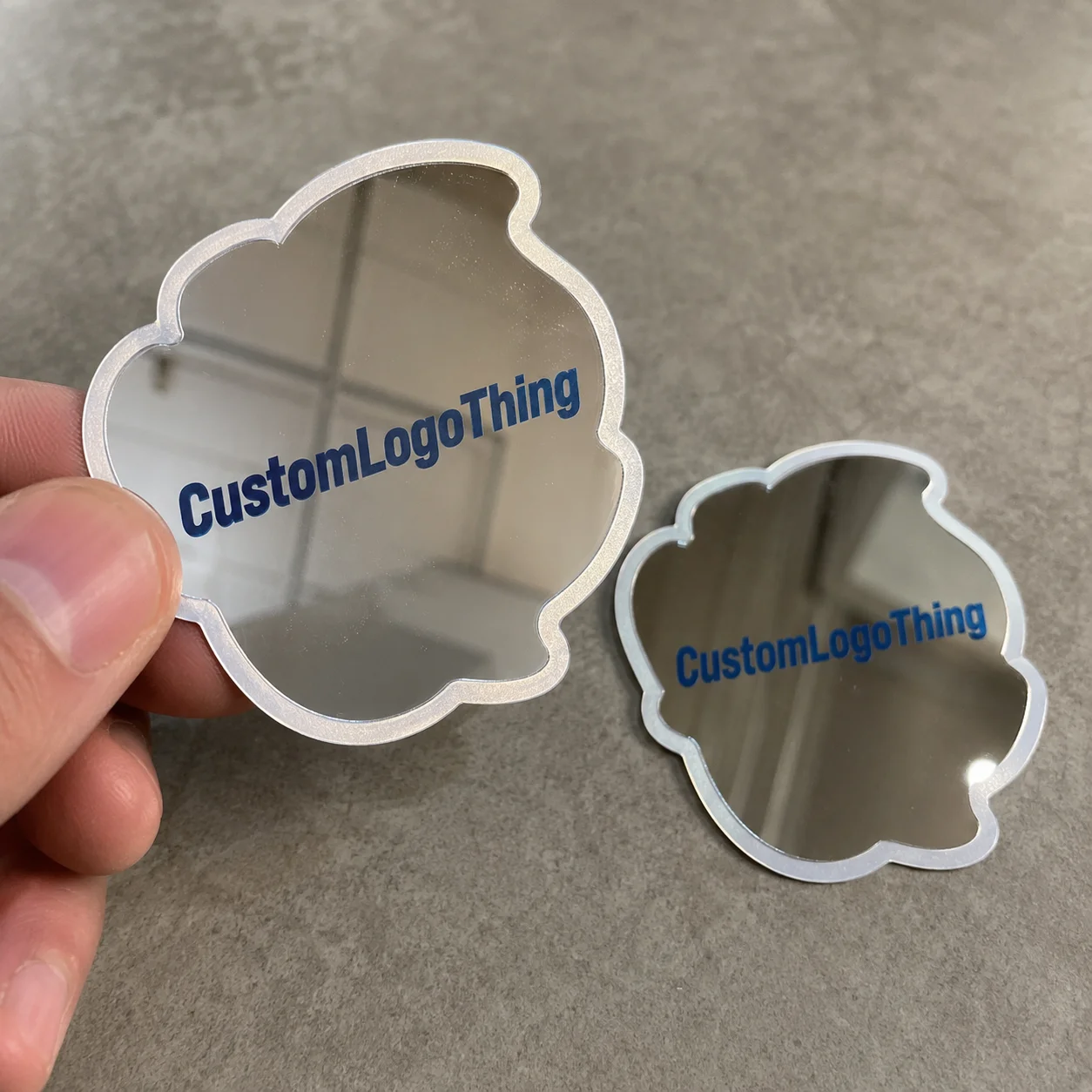
Custom mirror stickers are decals made with reflective, metallic, chrome, foil-look, holographic, or mirror-effect face materials. They may be printed, contour cut, laminated, sheeted, rolled, or individually packed for packaging, events, retail displays, promotional giveaways, safety messages, décor, and product branding.
Buyers often group every shiny sticker into one category. That is where many bad orders begin. True mirror vinyl has a polished chrome-like reflection. Metallic foil-look stickers create a softer silver or gold sheen. Holographic films shift color as the viewing angle changes. Reflective safety-grade vinyl bounces light back toward the source, which is why it appears on warning labels, helmets, vehicles, and outdoor equipment.
The commercial reason is simple: shine buys attention. On crowded retail packaging, a reflective decal can make a small logo, seal, batch marker, or limited-edition badge look larger than it is. In product photography, it catches highlights. On promotional kits, it makes a laptop sticker or water bottle decal feel closer to a collectible than a disposable insert.
Common uses include product packaging, printed boxes, event giveaways, retail displays, car decals, subscription box inserts, candle jars, cosmetic lids, supplement tubs, metal tins, and limited-run package branding. A 2-inch chrome logo sticker may cost less than changing an entire carton print run, especially if a brand wants to test a seasonal design before committing to thousands of printed boxes.
Packaging buyer reality: mirror effects make strong artwork look premium, but they also expose weak files, rough cut lines, fingerprints, dust, and poor adhesive choices faster than matte white vinyl.
That is why these decals are less forgiving than they look. Tiny type can disappear. Pale colors can wash out. A scratched chrome surface looks worn immediately. The upside is strong shelf presence; the penalty for guessing is higher than usual.
How Mirror-Effect Sticker Materials Actually Work
Most mirror-effect decals have four basic layers: a reflective face film, an adhesive layer, a release liner, and, when needed, a printed or laminated top layer. Simple stack. Complicated consequences. Each layer changes cost, durability, application, and appearance.
Chrome polyester is popular for sharp, bright mirror effects because polyester films hold dimensional stability well. Metallic vinyl is more flexible and better suited to some curved surfaces, although the reflection may be less crisp. Silver foil films create a premium label look for branded packaging. Holographic films add movement and color shift. Engineering-grade reflective vinyl is designed for visibility first, not luxury, and can be thicker or stiffer than decorative films.
Printing changes the mirror effect more than many first-time buyers expect. Opaque white ink blocks reflectivity and helps brand colors print accurately. Transparent inks allow the metallic surface to show through, creating tinted chrome effects. Heavy full-color coverage can reduce shine because the printed ink becomes the dominant visual layer.
- Gloss laminate: preserves maximum shine and can improve scuff resistance.
- Matte laminate: softens glare but reduces the mirror punch.
- UV coating: can add surface protection, depending on the film and ink system.
- No laminate: may suit short-term handouts but is riskier for premium product packaging.
Adhesive selection deserves equal attention. Permanent adhesive suits many coated cartons and plastic jars. Removable adhesive works for temporary promotions. Repositionable adhesive helps during hand application. Freezer-grade adhesive is used for cold-chain products. Outdoor-rated adhesive needs to handle UV exposure, moisture, and temperature swings. Low-tack adhesive may be needed for delicate surfaces that cannot tear, stain, or hold residue.
Cut style changes the user experience. Kiss-cut stickers stay on a backing sheet and are easy to peel. Die-cut stickers follow the artwork shape. Rolls suit application lines, especially if core size, roll direction, gap, and unwind direction are specified. Sheet formats work well for handouts. Intricate contour cuts look impressive, but they can slow finishing and increase waste.
For related packaging components, Custom Logo Things also offers Custom Labels & Tags, which can be useful when a project needs both standard labels and reflective accent decals in one package branding system.
Key Specs That Decide Look, Durability, and Fit
Start with size and shape. Mirror stickers often look most expensive when the design is simple, the cut is clean, and the reflective area has room to breathe. A 1-inch chrome icon can work beautifully. A 1-inch chrome icon crowded with six words, a QR code, and a gradient usually looks cramped.
Artwork should be supplied as vector files whenever possible: AI, EPS, or editable PDF for logos, cut paths, and white ink layers. Raster files should generally be 300 dpi at final print size, but resolution alone does not solve production problems. Bleed is commonly 0.0625 to 0.125 inch, depending on the printer and cut method. Safe zones should keep critical text away from the edge. Very fine strokes, especially below roughly 0.25 point, can break up or look jagged on reflective materials.
Color strategy is the quiet difference between premium and messy. Black, white, and one or two bold colors usually perform better over mirror film than low-contrast gradients. White ink underprinting is useful when a red logo must remain red rather than metallic burgundy. Without white ink, colors become more translucent and the silver base shifts the tone.
Surface compatibility is not theoretical. Glass, coated paperboard, plastic jars, metal tins, kraft boxes, textured tubes, and powder-coated containers all behave differently. A sticker that bonds well to a smooth PP jar may lift on textured kraft. Curved cosmetic tubes can create edge tension. Candle jars may encounter oils. Refrigerated beverage labels face condensation.
Durability depends on the full environment: sunlight, moisture, abrasion, temperature swings, and cleaning chemicals. Outdoor decals need more than a shiny face film. They need compatible inks, adhesive, and often a laminate. For shipping and handling performance, packaging teams sometimes reference test methods from groups such as ISTA, especially when stickers are part of a finished retail pack or e-commerce kit.
Regulated categories add another layer. Food, cosmetics, cannabis, supplements, and children’s products may have label placement rules, warning requirements, batch codes, ingredient panels, or tamper-evidence needs. A decorative mirror sticker should not obscure mandatory information. If the sticker touches primary packaging, ask about material suitability and migration concerns. Standards such as ASTM test methods may also enter the conversation for adhesion, abrasion, or environmental exposure.
Handling matters, too. Mirror surfaces show fingerprints and dust. For Premium Retail Packaging, protective liners, tissue interleaving, sheet packing, or careful application procedures can be worth the small added cost.
Pricing, MOQ, and Unit Cost Factors to Know
Mirror sticker pricing is driven by material, size, quantity, print complexity, cut complexity, finish, adhesive type, and packing format. Specialty films cost more than standard paper labels or white vinyl. White ink adds a production layer. Laminates add material and process time. Intricate cuts increase finishing labor and spoilage risk.
MOQ means minimum order quantity. Some digital vendors can run short batches of custom mirror stickers for launches, samples, or event kits. Other suppliers require higher minimums because specialty films are purchased in rolls, dies must be made, or roll-label setup is not economical at tiny quantities.
Here is a realistic pricing view for planning, not a universal quote. Actual costs depend on the supplier, artwork, material market, and finishing requirements.
| Order Scenario | Typical Format | Likely Cost Drivers | Planning Range |
|---|---|---|---|
| Small promo batch | Sheeted kiss-cut decals | Digital setup, specialty film, proofing | Often $0.45-$1.20 each for 250-500 pieces |
| Retail packaging seal | Roll or sheet format | Size, adhesive, white ink, laminate | Often $0.18-$0.40 each for 2,500-5,000 pieces |
| High-volume carton accent | Roll labels | Roll direction, press setup, waste allowance | Often $0.06-$0.18 each for 25,000+ pieces |
| Outdoor reflective decal | Die cut singles or rolls | Engineering-grade film, laminate, adhesive | Often higher than decorative chrome films |
Quantity curves are real. A 300-piece order carries setup cost across a small run. A 10,000-piece order spreads setup across many units, but it also requires better demand planning so unused stickers do not sit in inventory after a design change.
Format changes cost as much as material sometimes. Rolls can be efficient for application lines. Sheets are practical for handouts and kitting. Individually cut singles cost more because of extra finishing, counting, and packing. Rush production, artwork cleanup, extra proofing rounds, custom dies, split shipments, and premium packing can all move the quote.
Before asking for a price, prepare the essentials: final size, quantity, material preference, indoor or outdoor use, adhesive needs, artwork file, print colors, finish, packing format, and delivery deadline. Do not judge quotes only by unit cost. A cheap sticker that scratches, lifts, or looks dull can make the whole product packaging program feel underbuilt.
Process and Timeline from Artwork to Finished Stickers
A typical order path is direct: define the use case, confirm size and material, submit artwork, receive a proof, approve the proof, produce, finish, quality check, pack, and ship. The slowdowns usually hide in artwork and approvals, not in the physical size of the sticker.
During artwork review, the production team checks resolution, bleed, cut lines, white ink layers, color expectations, and tiny detail risks. If a logo has hairline elements or small reversed-out text, the proofing stage should flag it. Better to fix a 0.4-inch wordmark before production than discover after 5,000 pieces that it fills in under reflected glare.
Digital proofs show layout, scale, and cut path. They do not fully show mirror behavior. Physical samples are smarter when exact reflectivity, adhesive performance, color interaction, or surface feel matters. For premium launches, a short sample run can prevent expensive disappointment.
Production may include printing, curing or drying, laminating, die cutting or digital cutting, weeding, sheeting or rolling, counting, inspection, and packing. Simple digital jobs can move faster. Custom dies, specialty adhesives, high quantities, physical samples, and rush-season capacity can add time. Straightforward projects may fall in the range of several business days after proof approval. More complex packaging orders can require two or more weeks, with shipping time added after production.
Approvals are a common bottleneck. If a proof sits unanswered for three days, the production clock usually has not started. That delay can affect box packing, launch photography, fulfillment schedules, and trade show freight.
Shipping also deserves planning. Mirror surfaces may need protective packing to reduce scuffs. Sheets should stay flat. Rolls should avoid excessive tension that can mark the face film. If the stickers are feeding into an application line, roll specs should be confirmed before production, not after the cartons are waiting.
For broader branded packaging programs, it can be useful to coordinate stickers with Custom Packaging Products so the decal size, box finish, and unboxing sequence feel intentional rather than patched on late.
Common Mistakes That Make Reflective Decals Look Cheap
The most common mistake is overloading the artwork. Reflective stock already creates visual movement. Add tiny text, thin outlines, dense gradients, and six colors, and the sticker starts fighting itself. Simple marks win more often.
Contrast is the second trap. Light gray, pale yellow, soft pink, and other low-contrast colors can disappear on silver mirror film, especially under bright retail lighting. Product photos can make the issue worse because studio lights create hotspots on reflective areas.
Skipping white ink is another costly shortcut. If accurate brand color matters, white underprinting should be specified under selected areas. If the design goal is a metallic tint, skip white ink in those zones and let the mirror show through. Many strong designs use both approaches in one decal.
Adhesive mismatch causes less visible drama at first, then bigger problems later. Standard permanent adhesive may fail on textured kraft, curved cosmetic tubes, cold storage packaging, or removable promotional surfaces. For actual packaging lines, machine-applied labels need roll direction, gap, core size, label orientation, and unwind direction documented. Hand-applied stickers need an easy peel format and enough backing area for operators to handle cleanly.
Finish selection can also backfire. Gloss maximizes shine but shows scratches and fingerprints. Matte reduces glare but weakens the mirror effect. A protective laminate may add cost, yet it can protect the brand impression during shipping, retail stocking, and customer handling.
Sizing is easy to underestimate. Too small, and the mirror effect never has enough area to register. Too large, and the sticker may wrinkle on curved panels or dominate the package. A 1.25- to 2.5-inch range often works for seals and box accents, but the right answer depends on panel size, surface curve, and viewing distance.
Screen-only approvals are risky if reflectivity drives the decision. Monitors cannot accurately show chrome behavior, holographic color shift, or how black ink sits over a silver base. If the sticker is central to a premium retail packaging launch, pay for a sample.
Smart Next Steps Before You Place an Order
Before ordering custom mirror stickers, define where the decal will go, how long it must last, and what surface it will touch. Then ask tougher questions. Will it face moisture? Sunlight? Refrigeration? Repeated handling? Cleaning chemicals? A sticker on a trade show giveaway has a different job than one sealing a skincare jar in a humid bathroom.
Narrow the design to one primary purpose: brand mark, seal, instruction, decoration, warning, giveaway, or limited-edition signal. Reflective material can make one message memorable. It rarely makes five messages clearer.
If the color decision is uncertain, prepare two artwork versions. One can use white ink support for accurate colors. The other can let the mirror material show through for a metallic effect. Comparing both on the real material is far better than debating mockups on a screen.
- Gather the final package sample, not just a photo.
- Confirm the target quantity and expected reorder timing.
- Decide whether sheets, rolls, or singles fit application and packing.
- Request swatches or a short sample run for premium launches.
- Test adhesion on the actual surface, including curves and coatings.
- Document the final size, shape, material, adhesive, finish, file version, and delivery location.
Sustainability claims should be handled carefully. Metallic and laminated constructions may affect recyclability depending on the package and local recovery stream. For packaging sustainability context, the EPA recycling resources are a useful reference point, and paper-based packaging programs may also consider chain-of-custody standards from FSC.
Plain advice: gather the package sample, artwork file, target quantity, application method, and launch date before requesting a quote. With those details, a supplier can price accurately, flag production risks early, and help the finished decal look sharp instead of merely shiny.
FAQ
Are custom mirror stickers waterproof?
Many mirror vinyl or polyester stickers can resist water when paired with the right adhesive and finish, but waterproof performance depends on material, laminate, edge exposure, and application surface. For bottles, jars, bathroom products, or outdoor use, ask for water-resistant or outdoor-rated construction and test samples before ordering in bulk.
Can mirror stickers be printed in full color?
Yes. Full-color printing is possible, but colors may look metallic, darker, or less predictable unless white ink is printed underneath selected areas. Use transparent color effects when you want the mirror shine to show through, and use white ink backing when brand color accuracy matters.
What file type is best for custom chrome or mirror decals?
Vector files such as AI, EPS, or editable PDF are usually best for logos, cut lines, and sharp edges. High-resolution PNG or TIFF files may work for raster artwork, but the cut path and white ink areas should be clearly supplied or approved during proofing.
Do custom mirror stickers scratch easily?
Mirror finishes can show scuffs, fingerprints, and fine scratches more visibly than matte or white stickers. A protective laminate, careful packing, and clean application process can reduce damage, especially for premium packaging or retail-ready decals.
How do I lower the cost of reflective sticker orders?
Choose a standard size, simplify the cut shape, reduce unnecessary print layers, order higher quantities when demand is predictable, and avoid rush timelines. Share complete specs with the supplier upfront so the quote includes the right material, adhesive, finish, and packing format without costly revisions.


