Custom monogram tote bags are a small-format branding decision with an outsized effect. The monogram itself is rarely the expensive part. The real variables are the bag substrate, print method, quantity, and whether the mark can survive production without looking stretched, washed out, or off-center. That is where the budget gets made or broken.
Buyers often treat totes like a simple add-on. In practice, they sit at the intersection of packaging, merchandising, and logistics. A tote used for boutique packaging has different demands than one handed out at an event or packed into a client kit. The wrong spec looks cheap fast. The right one can make a basic purchase feel considered.
Why Custom Monogram Tote Bags Sell Better Than Plain Swag
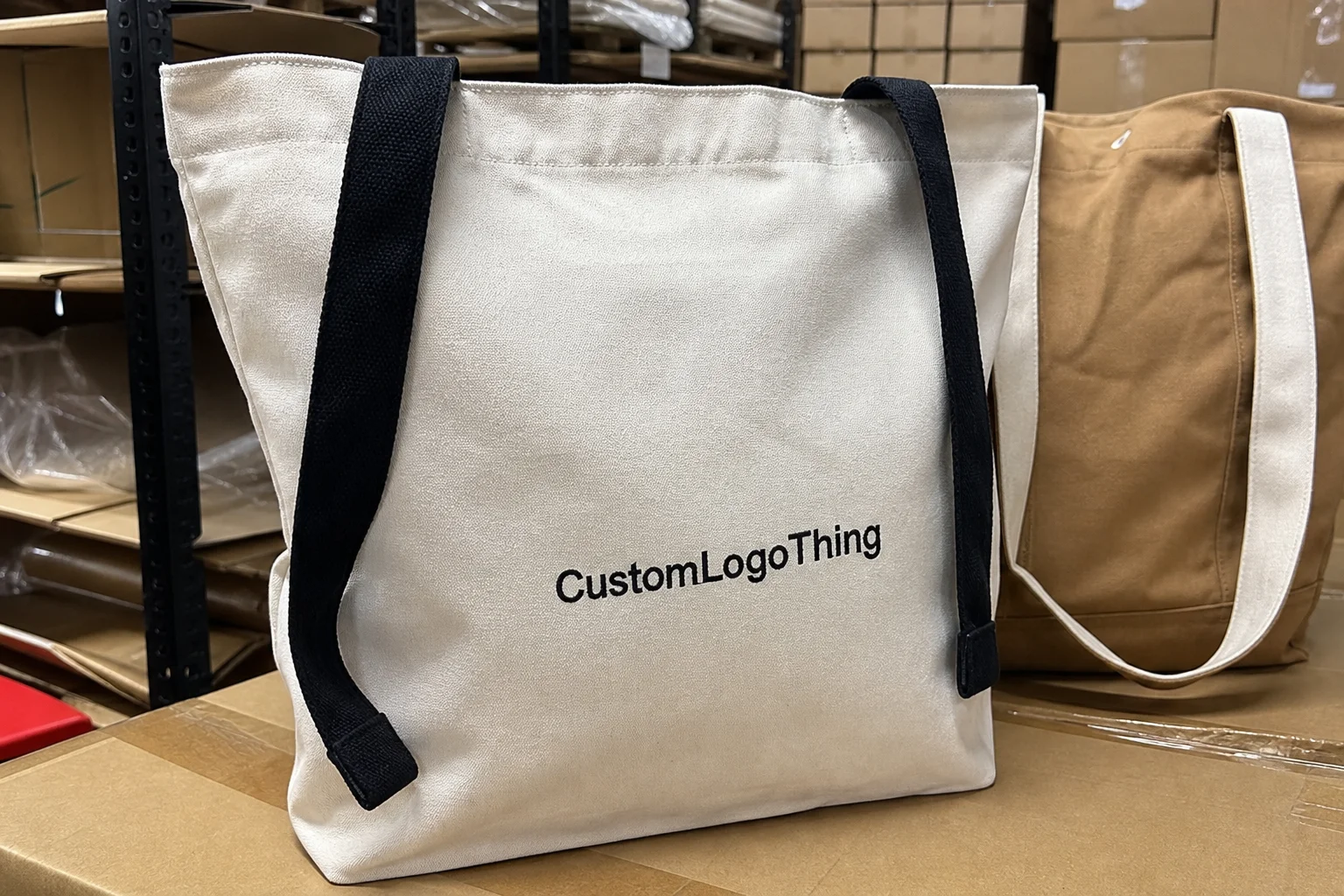
People keep monogrammed totes because the bag feels intentional. A plain carry bag solves transport. A monogrammed tote does that and signals taste, brand control, or occasion. That difference is subtle on paper and obvious in hand. It is one reason these bags show up everywhere from retail counters to wedding parties to conference kits.
The appeal is not complicated. A monogram is compact, recognizable, and easy to place on a bag without crowding the surface. It can look premium with surprisingly little decoration. That matters because a tote does not need to do too much to do its job. In fact, the opposite is usually safer. One clean mark on a good bag will outperform a busy layout on a weak one.
From a buyer’s standpoint, the tote is really a material and production decision disguised as a branding decision. The logo is visible. The substrate is what determines whether the bag keeps its shape, prints cleanly, and survives actual use. A crisp monogram on a flimsy bag still reads flimsy. A modest design on a dense, well-constructed tote tends to age better and get reused more often.
That reuse is not an abstract marketing point. Reuse extends the impression beyond the original transaction. A bag that stays in circulation keeps carrying the brand, while a disposable one disappears the same day. For that reason, the most effective orders usually match the bag to the use case rather than trying to make one spec solve every situation.
If the tote is part of a larger packaging program, keep the visual language consistent with the rest of the system. A monogrammed bag should not feel disconnected from inserts, cartons, or tissue. If the packaging line includes Custom Packaging Products, the tote should look like it belongs in the same family.
How the Decoration Process Works From Artwork to Proof
The process starts with a short list of essentials: artwork, dimensions, quantity, target delivery date, and the bag style. If the monogram is supplied as vector art, production has a much easier time keeping edges sharp and spacing correct. AI, EPS, and clean PDF files are ideal. A low-resolution JPEG can sometimes be used for reference, but it is not a real production file.
For custom monogram tote bags, the decoration method depends on the surface. Screen printing is common for one-color or limited-color marks on flat or lightly textured bags. Hot stamping can work on smoother materials when the design is minimal and a metallic or glossy finish is part of the look. Label application is useful when the bag material itself does not tolerate direct printing well, or when the order volume is low and setup needs to stay lean.
Proofing is where most problems show up early enough to fix. The supplier checks print area, placement, contrast, and whether the strokes in the monogram are thick enough for the chosen substrate. Thin lettering that looks elegant on a computer screen can disappear on a flexible bag. A proof should answer practical questions, not just aesthetic ones: Does the mark clear the seam? Does it sit too close to the handle? Will the contrast hold on the actual bag color?
Simple designs usually win on cost and reliability because they need fewer setup variables. Fewer colors means less preparation. Less preparation usually means lower cost, faster turnaround, and fewer chances for error. That is one reason a restrained one-color monogram often looks more premium than a more elaborate logo that has been forced into a poor format.
If the order also includes branded packaging options such as inserts, sleeves, or cartons, the same artwork system should be used across the set. Inconsistent line weights or color choices across packaging pieces can make the whole order feel assembled rather than designed.
Cost, MOQ, and Unit Price: What Actually Moves the Number
Unit price is shaped by more than the monogram. Material, size, thickness, print coverage, number of colors, handle construction, and finishing all feed into the quote. A simple one-color monogram on a stock bag is a different job from a reinforced tote with custom dimensions and full-face decoration. They should not be priced like the same thing, and usually they are not.
MOQ, or minimum order quantity, exists because setup costs have to be recovered somewhere. Screens, plates, die work, color matching, and machine setup all take time before the first usable bag comes off the line. On a small run, that setup is spread across fewer units, so the unit cost is higher. On a larger run, the same setup gets diluted. That is why 300 pieces can feel disproportionately expensive compared with 1,000.
Buyers usually see meaningful price drops at quantity tiers rather than in a smooth line. A quote for 500 may not be proportionally close to a quote for 1,000, and 5,000 can open a different price bracket altogether. The only way to see the real cost curve is to ask for multiple tiers. A single quantity tells you less than it appears to.
| Bag Option | Typical Look | Approx. Unit Price at 1,000 pcs | Best Use |
|---|---|---|---|
| Thin polyethylene tote | Light, minimal, budget-focused | $0.14-$0.22 | Short-term giveaways, basic retail carryout |
| Heavy-gauge polyethylene tote | Cleaner shape, better hand feel | $0.22-$0.38 | Boutiques, event bags, branded packaging |
| Woven polypropylene tote | Structured, durable, reusable | $0.55-$1.10 | Retail packaging, welcome kits, repeat use |
| Laminated nonwoven tote | Polished, more substantial presentation | $0.70-$1.40 | Premium promos, client gifts, retail bags |
Those figures move with freight, print coverage, packaging configuration, and rush requirements. Bulkier products cost more to move. If the order needs custom cartons, inserts, or sleeves, freight can become a real line item rather than a rounding error. That is especially true when the totes are packed in a way that increases carton count.
Artwork cleanup is another cost that people underestimate. If the monogram needs redraw work, spacing corrections, or color separation, that time usually appears before production starts. It is common for buyers to focus on the per-piece bag cost and overlook the labor around the file. The file is part of the order whether anyone budgets for it or not.
If sustainability documentation matters, separate material claims from packaging claims. FSC certification applies to paper-based packaging, not plastic tote material. For paper inserts, cartons, or sleeves, that standard may be relevant. For transit packaging, ask whether testing follows recognized protocols such as ISTA methods. For film specs, ask for measurable properties rather than vague adjectives. Useful references are available at packaging.org and fsc.org.
Production Steps and Timeline: From Quote to Delivery
The workflow is straightforward, even if the email thread is not. It usually runs through inquiry, spec review, quote, artwork cleanup, proofing, approval, setup, printing, curing or drying, inspection, packing, and freight. Each step is simple in isolation. Together they determine whether the order lands on time or arrives with someone apologizing in the tracking notes.
For custom monogram tote bags, proofing can move fast when the artwork is clean and the bag spec is standard. Production timing depends more heavily on print method, quantity, and whether the factory already has the base material in stock. A one-color job can be quick. A multi-color or heavily finished run usually needs more time, even before shipping enters the picture.
Typical lead time is often a few business days for proof approval, followed by one to three weeks for production, depending on volume and complexity. Freight adds its own schedule. If the bags are tied to a store opening, event date, or seasonal launch, give the actual delivery ZIP code and the hard deadline early. “Need it soon” is not a scheduling instruction.
The most common delays are not mysterious. Late artwork changes, revised copy after proof approval, internal decision-making that drags on, and shipping problems account for a large share of missed timelines. Machines run on schedules. Teams slow them down.
If the order is urgent, say so before the quote is accepted. A supplier can often prioritize a run, reserve material, or explain that the deadline is not realistic. What helps most is a clear sequence: required in-hands date, delivery location, quantity, and approval timing. That is enough to determine whether the order is feasible.
Proofing is not a formality. Placement, scale, and contrast should be checked on the actual bag color before approval. Fixing those issues after setup is slower and more expensive.
Choosing the Right Material, Size, and Handle Style
Material influences perception more than many buyers expect. Thin film bags are inexpensive and light, but they flatten the visual impact and can feel disposable at first touch. Heavier polyethylene, woven polypropylene, and laminated nonwoven options hold their shape better. That makes the monogram easier to read and gives the bag more presence in hand.
Size has the same problem in reverse. A monogram that reads perfectly on a small gift bag can look underpowered on a larger tote if the artwork is not scaled properly. Bigger surface area does not automatically improve visibility. The mark has to be proportioned to the bag and placed where the eye naturally lands. Otherwise it looks like it was dropped in the middle as an afterthought.
Handle style changes both durability and perceived value. Die-cut handles are common for lightweight retail carryout. Loop handles feel sturdier and are more likely to be reused. Patch handles and reinforced seams add strength and make the bag feel more finished. Those details matter because the handle is one of the first things a customer touches.
The right spec depends on use. A giveaway bag for a trade show does not need the same build as a retail bag that will carry product home and then get reused later. A wedding favor may need a softer visual finish. A boutique purchase may need a bag that survives multiple trips. A client gift usually needs to feel polished rather than merely functional.
Think about the full carry path, not just the first moment. If the bag is folded into a carton, stored in backroom inventory, then handed over with the product, the structure has to survive each step. If the order also includes custom printed boxes, the tote should not compete with the box. The best packaging systems work because each piece knows its role.
Common Mistakes That Blow the Budget or Ruin the Look
The first mistake is overcomplicated artwork. Fine lines, small text, gradients, and excessive detail are hard to control on flexible bag surfaces. They can distort, fill in, or disappear at the edges. A monogram should read from a few feet away without effort. If the design needs close inspection to work, it is too delicate for the medium.
The second mistake is choosing the lowest-cost bag without testing the feel. A flimsy tote can drag down the entire presentation. If the bag collapses in the hand, the brand inherits that impression. Sometimes a small increase in material thickness does more for perceived value than any extra print detail ever could.
The third mistake is requesting only one price point. Without tiered pricing, you cannot see where the useful breaks are. A 500-piece quote may be acceptable, but 1,000 pieces might move the unit cost enough to justify a different buying decision. Asking for more than one tier gives you a real comparison rather than a guess disguised as a quote.
The fourth mistake is proof approval without checking contrast and scale on the correct bag color. A white monogram on a pale background can vanish. A dark mark on a dark bag can do the same thing. The proof should show how the logo performs on the actual substrate, not only on a neat digital mockup.
There is also the quiet mistake of ignoring the end use. A retail tote needs to survive traffic, handling, and repeat carry. An event bag can be lighter. A gift bag should look polished. The spec should reflect the job, not the idealized version of the job.
Expert Tips and Next Steps for a Faster Quote
If you want a fast, accurate quote, send six things up front: quantity, target delivery date, bag dimensions, material preference, print colors, artwork file, and delivery ZIP code. That is enough information for a useful estimate. Anything less forces the supplier to make assumptions, and assumptions are where Pricing and Timelines drift.
Ask for tiered pricing at two or three quantities. On orders for custom monogram tote bags, the setup cost is often fixed, so the break between volumes can be more informative than the quote itself. A small increase in quantity sometimes cuts the unit price enough to change the decision entirely.
Request a digital proof before approval. If the run is large enough or the surface is tricky, ask for a pre-production sample or photo of the actual output. That matters on textured or flexible materials, where the visual result can shift even when the artwork is technically correct. The proof should answer the only question that matters: will the finished tote look right in use?
If the tote is part of a larger packaging system, align it with the same type treatment, color discipline, and logo handling used in the rest of the brand packaging. This does not mean every piece must match exactly. It means the pieces should feel related. A tote, insert, and carton can each serve a different function while still belonging to one system.
The practical rule is simple: compare proof, material, and timeline together. Do not choose a lower price if the substrate is wrong for the use case or the schedule is too tight to absorb a correction. A quote is only useful if the order arrives on time and looks right when it does.
For retail, event, or gifting programs, the strongest orders usually come from tight artwork, realistic spec choices, and a clear deadline. That combination reduces production friction and makes the monogram look like a deliberate brand element rather than an afterthought.
FAQ
What artwork is best for custom monogram tote bags?
Vector artwork is the safest choice because it stays sharp at different sizes. Simple, high-contrast designs print more reliably than thin detail, especially on flexible plastic or textured materials.
How much do custom monogram tote bags usually cost?
There is no honest flat price. Cost depends on material, size, print colors, finish, and quantity. Unit price usually falls as volume rises because setup costs are spread across more bags.
What is a normal MOQ for monogram tote bag orders?
MOQ varies by bag type and decoration method. Smaller runs usually cost more per piece. Asking for tiered pricing is the best way to see where the real break point lands.
How long does production take for custom monogram tote bags?
Proofing can be quick if the file is ready, but production depends on setup, stock availability, and print method. Freight is separate, so lead time should always include the delivery destination and in-hands date.
Which bag material gives the cleanest monogram look?
Heavier polyethylene, woven polypropylene, and laminated nonwoven bags usually hold their shape better, which helps the monogram read cleanly. Thin bags can distort the artwork and weaken the overall presentation.
Do monogram tote bags work for retail packaging?
Yes, if the bag is sturdy enough for actual handling and the design is sized correctly. For retail packaging, the tote should feel like part of the brand system, not just a separate promotional item.


