Custom OnlyFans stickers are a low-cost way to brand plain packaging, add a freebie to merch, or place a QR code somewhere that may outlast the original mailer. For creators shipping fan mail, subscription bundles, apparel, or promo kits, stickers add visibility without much space, weight, or packaging redesign.
They are especially useful when the rest of the pack-out uses standard materials such as kraft mailers, plain boxes, cello sleeves, or stock cards. A well-sized sticker can make those separate parts look intentional instead of pieced together.
Custom OnlyFans Stickers: What They Are and Why They Work
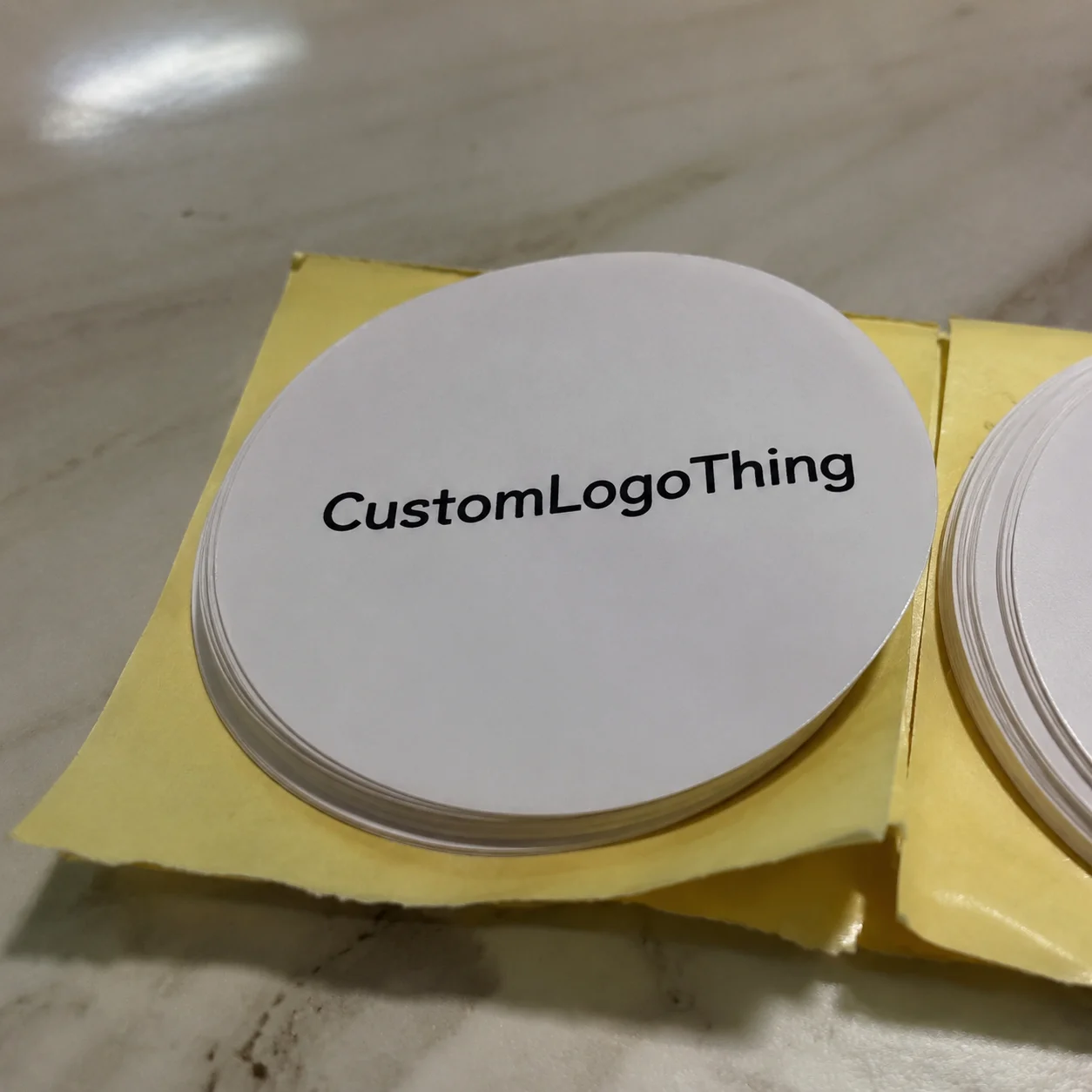
Custom OnlyFans stickers are printed adhesive pieces built around a creator’s brand. Common uses include logo seals, stage-name stickers, QR code pieces, illustrated freebies, and small branded accents on cards or outer packaging.
They work because they repeat the same visual across multiple touchpoints. If a customer sees the same mark on a mailer, on a card, and again on a sticker they keep, the brand feels more consistent. That is why stickers pair well with Custom Packaging Products and Custom Labels & Tags: they bridge the gaps between larger packaging components.
A good sticker does not need to dominate the package. It just needs to keep the brand visible after the shipment is opened.
They are also flexible. One core design can often be resized into an envelope seal, a medium insert, and a larger die-cut extra. That gives buyers visual consistency without commissioning separate artwork for every use.
Still, not every sticker adds value. If the design is crowded, the stock is too weak, or the adhesive does not suit the surface, it quickly becomes filler. The best way to spec a sticker is to decide its job first, then choose size, material, finish, and cut style around that use.
How Custom OnlyFans Stickers Are Produced
Production usually follows the same path: file prep, proofing, printing, cutting, finishing, inspection, and packing. Each step affects the result. Strong color will not save a poor cut path, and a good design can still fail if the stock is wrong for the environment.
Digital printing handles most short and mid-size runs because setup is lower and versioning is easier. It is a practical choice for test quantities, a few hundred pieces, or multiple designs. Offset starts to make more sense at larger volumes when color consistency across a long run matters enough to justify higher setup.
Material choice is the biggest performance decision. Paper is the economical option for indoor use, thank-you card inserts, envelope seals, and other low-wear applications. It prints cleanly and keeps costs down when the sticker only needs to last through the unboxing experience.
Vinyl costs more but holds up better against moisture, friction, and repeated handling. It is usually the safer option if the sticker may end up on a laptop, water bottle, mirror, storage case, or travel mug. Vinyl also makes sense when stickers are packed with apparel or accessories, where bending and surface rub are more likely during fulfillment and transit.
Finish changes both look and function. Matte hides fingerprints and glare better, which helps on dark designs or QR layouts. Gloss boosts color and contrast but can reflect light more aggressively. Laminate adds another protective layer. For a simple insert, laminate may be unnecessary; for a sticker meant to be kept and used, it is often worth the added cost.
Cut style matters too. Kiss-cut sheets are efficient for sets, easier to count, and useful when multiple stickers go into one order. Die-cut stickers feel more finished as freebies and tend to photograph better in merch bundles. But very complex outlines create avoidable problems. Thin points, narrow borders, and deep internal corners are where cuts, peeling, and stacking issues show up first.
Proofing is where most preventable errors should be caught. Buyers Should Check trim, bleed, safe area, scaling, line weight, and small text before focusing on minor aesthetic details. Fine lines disappear easily, pale colors can print weak, and rich black areas may need proper build values to avoid looking dull.
For buyers evaluating material claims, it helps to ask for the exact stock specification rather than relying on broad descriptions. Some suppliers can offer FSC-certified paper or papers with recycled content. For baseline references on responsible paper sourcing and packaging materials, the FSC and PMMI/Packaging Association are useful starting points.
Cost, MOQ, and Unit Price Factors
Pricing usually comes down to six variables: quantity, size, shape, material, finish, and packing method. Many quote comparisons go wrong because buyers are not pricing the same product. A paper circle for sealing envelopes is not comparable to a laminated vinyl die-cut meant as merch.
MOQ matters because setup costs have to be spread across the run. Short runs often feel expensive per piece, while 500 or 1,000 units can become much more efficient. That is normal sticker math, not necessarily overpricing.
Here is a realistic range for common orders:
| Sticker Type | Typical Quantity | Approx. Unit Price | Best Use |
|---|---|---|---|
| Simple paper sticker | 100-500 | $0.12-$0.30 | Envelope seals, inserts, low-wear promo use |
| Die-cut paper sticker | 500-1,000 | $0.08-$0.18 | Giveaways, bundle inserts, basic branding |
| Vinyl sticker with laminate | 500-2,000 | $0.18-$0.45 | Moisture, handling, shipping and merch use |
| Specialty shape or finish | 1,000+ | $0.25-$0.60+ | Premium promos, higher-end brand presentation |
These are working ranges, not fixed market prices. Freight, stock changes, and labor can move the landed cost. If a quote falls well outside these bands, check what is included before judging it.
Common add-on costs include custom die setup, white ink on clear or dark stock, individual polybagging, multiple versions, variable QR codes, split shipments, and rush handling. These details often explain why one quote is meaningfully higher than another.
If budget has to stretch, the smartest place to spend is usually durability. Upgrading from paper to vinyl with laminate makes sense when the sticker must survive water, rubbing, repeated handling, or longer-term use. If it only sits inside the package, paper is often sufficient.
Process and Timeline: From File Upload to Delivery
The ordering path is usually simple: upload artwork, review a proof, approve it, then move into printing, cutting, inspection, packing, and shipping. Most delays happen before production starts. A weak file or slow proof approval can cost more time than the actual printing.
A standard production window is often about 7-15 business days after proof approval. Short runs with common materials may move faster. Larger orders, unusual shapes, special laminates, or retail-style packing can extend the timeline.
Artwork quality affects schedule and output. Low-resolution images print soft, missing bleed creates trim risk, incorrect color mode can shift the result, and fonts that are not outlined can substitute unexpectedly. A file built for social media is not automatically print-ready.
Shipping time should always be treated separately from production time. Even an on-schedule job can arrive late due to transit slowdowns, weather, or courier handoff issues. If the stickers support a launch, event, or subscriber drop, build in buffer time.
Buyers should also think about fulfillment format before ordering. Loose die-cuts, kiss-cut sheets, or counted stacks each behave differently during packing. A sticker that looks fine in a quote can slow down assembly if it does not fit the actual workflow.
For buyers reviewing abrasion and transport concerns for stickers used on outer packaging, the ISTA standards are useful reference points. They help frame questions about transit handling if the sticker must stay clean and intact through shipping.
Design Specs That Make the Sticker Actually Useful
The best sticker designs are built around use. A small closure seal for a folded mailer does not need the same layout as a freebie meant for a water bottle. Size should follow function. Trying to force a logo, handle, phrase, and QR code into a tiny format usually makes every element worse.
Readability is the main filter. Short text beats paragraphs, bold shapes beat fine detail, and clear contrast beats decorative complexity. If a design only works while zoomed in on a screen, it is probably too crowded for print.
QR code layouts need practical space. The code should have quiet area around it, enough physical size to scan consistently, and strong contrast between foreground and background. Gloss can interfere under hard light, and textured or dark backgrounds can reduce scan reliability. Testing a proof at actual size is safer than assuming the source file will scan perfectly once printed.
Brand alignment should be obvious but not forced. The sticker should look like it belongs with the rest of the packaging through matching colors, logo use, or repeated graphic cues. It does not need every brand element crammed into one small piece.
Durability specs should also match reality. If the sticker goes on shipping materials, apparel bags, or frequently handled surfaces, ask about adhesive strength, scratch resistance, and laminate type. A low-cost indoor paper stock can look great in a proof and fail quickly in use.
As a basic rule, tiny legal copy, very fine linework, and critical details placed near the trim edge are poor choices for small sticker formats. Review artwork at actual printed size, not just as a digital mockup.
Common Ordering Mistakes Buyers Make
The most common mistake is ordering volume before testing fit on the real package. A sticker can look perfect as a flat proof and awkward on a box flap, bubble mailer, or card corner. A short first run is cheaper than dead inventory.
Finish choice is another frequent issue. Gloss can add punch, but it also shows glare, fingerprints, and scratches more easily. Matte tends to feel cleaner in hand, though it can soften bright colors slightly. The right finish depends on handling and lighting, not just preference.
Bad files still cause avoidable delays: missing bleed, weak resolution, wrong dimensions, flattened low-quality JPGs, and unoutlined fonts. Printers flag these because they create real production problems.
Overly complex die lines also cost more than they return. If the special shape is central to the design, it may be worth it. If it is mainly novelty, a cleaner outline usually cuts better, packs better, and reduces risk.
Finally, proof approval gets rushed too often. Typos, incorrect quantities, weak QR codes, and sizing errors are much cheaper to catch before print than after delivery.
- Test first: use a smaller batch for a new design or stock.
- Match stock to use: paper for protected inserts, vinyl for moisture and heavy handling.
- Keep the layout clean: small formats reward restraint.
- Check the proof carefully: once printed, the mistake becomes inventory.
Expert Tips for Better Results and Smarter Reorders
A short test run reveals whether color, cut precision, adhesive feel, and surface performance are actually right. Even 100-250 pieces can tell you more than a digital mockup.
One strong design system usually works better than several unrelated concepts. Adapting one visual direction into two or three sizes keeps packaging consistent and simplifies reorders.
Once a version works, save the full spec: final size, stock, finish, cut style, adhesive notes, and packing count. Reorders are smoother when the exact configuration is documented instead of reconstructed from memory.
Track real usage before placing a large repeat order. If stickers go into every outgoing package, measure actual consumption. If they are tied to a short campaign or evolving brand look, avoid overbuying stock that may age out quickly.
Inspect the order as soon as it arrives. Check for color drift, inconsistent cuts, edge lifting, poor registration, scratches, and adhesive issues. Test a few pieces on the materials you use most so problems are caught before fulfillment starts.
Next Steps: How to Order Custom OnlyFans Stickers Without Guesswork
Start with the use case: envelope seal, thank-you card accent, merch extra, or QR code piece. That single decision determines most of the spec, including size, stock, finish, and whether paper or vinyl is the better fit.
Before requesting quotes, lock the basics: dimensions, material, shape, finish, quantity, and packing method. Without those details, price comparisons are not reliable.
Prepare the artwork correctly. Use bleed, keep important elements inside the safe area, and export high-resolution files. Vector artwork is usually best for logos and clean graphic shapes, but illustration-heavy designs can work if they hold detail at final print size.
Read the quote beyond the headline number. Confirm whether it includes setup, die charges, laminate, white ink, packing details, and shipping terms. Low pricing may be legitimate; vague pricing is the bigger risk.
When the first order arrives, inspect it like a packaging buyer. Check color, cut accuracy, finish, adhesive performance, and how it behaves on the actual surfaces you use. Then scale up only after the format proves itself.
Handled this way, custom OnlyFans stickers are one of the most efficient branding upgrades available: affordable, easy to store, and useful across multiple packaging steps.
What should you know before ordering custom OnlyFans stickers?
Start with the intended use, because that determines size, stock, finish, and cut style. Paper is often enough for inserts or envelope seals. For merch, shipping materials, water bottles, or other high-contact uses, vinyl with laminate is usually the better option. You should also confirm bleed, safe area, resolution, proof details, and delivery timing before approval.
What are custom OnlyFans stickers usually used for?
They are commonly used for package seals, thank-you cards, fan mail, promo bundles, merch inserts, and branded giveaways. They are useful for upgrading standard packaging without adding much cost or weight.
How much do custom OnlyFans stickers cost per unit?
Unit cost depends on size, material, finish, shape, quantity, and packing method. Small runs have a higher per-piece cost because setup is spread across fewer units, while larger orders are usually more efficient.
What file format is best for custom OnlyFans stickers?
Vector files are usually best for logos, text, and clean graphic shapes. High-resolution PDF files also work well. PNG files can be acceptable for some artwork, but only if they are built at final size with proper resolution and bleed.
How long does production usually take?
Many orders fall into a production window of about 7-15 business days after proof approval. Quantity, specialty finishes, stock availability, and file corrections can all affect the schedule, and shipping time should be counted separately.
Should I choose vinyl or paper custom OnlyFans stickers?
Paper is usually the lower-cost option and works well for inserts, envelope seals, and indoor applications. Vinyl is a better fit for moisture, frequent handling, shipping surfaces, and stickers meant to last beyond the initial package.