Custom Size Drawer Boxes: Specs Buyers Should Check
A rigid box that is 3 mm too tight turns every unboxing into a small wrestling match. Nobody enjoys that. Custom size drawer boxes exist so the product, tray, insert, sleeve, and retail presentation fit by design instead of being forced into whichever stock size is closest.
Simple idea. Less simple execution.
Drawer box sizing touches structure, board thickness, wrap paper, insert tolerance, print placement, freight cartons, and the tiny clearance needed for the tray to slide without sticking. Miss one of those details and the package can still look beautiful while being annoying, fragile, expensive, or all three.
What Custom Size Drawer Boxes Actually Solve
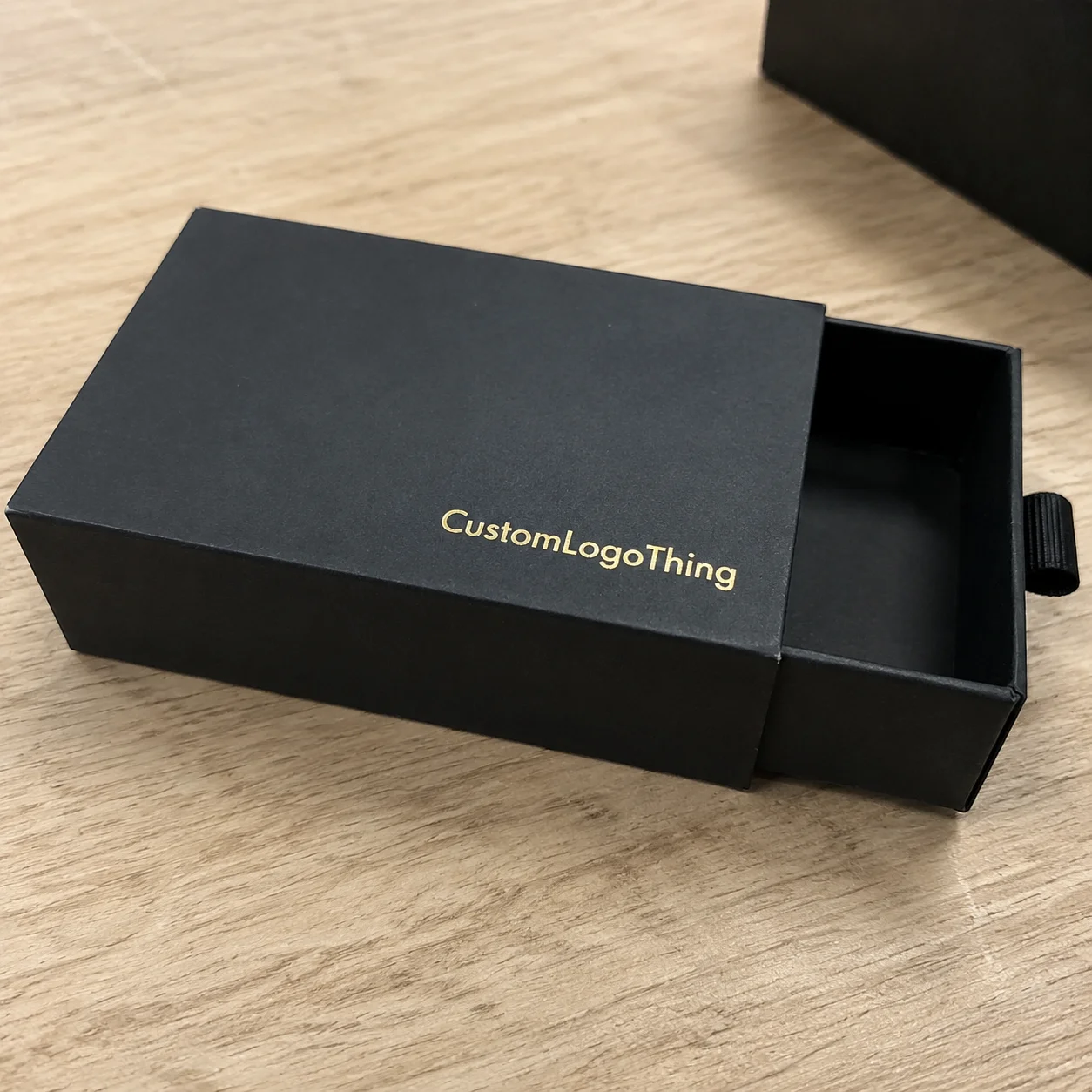
Drawer boxes are two-piece slide-out packages built around a specific product or product set. The basic structure is an outer sleeve and an inner tray. Depending on the design, the tray may use a thumb notch, ribbon pull, paperboard platform, EVA foam insert, molded pulp insert, PET tray, or no insert at all. The outside can be wrapped with printed paper, specialty paper, kraft paper, soft-touch lamination, foil, embossing, debossing, or other decorative finishes.
The real job is fit. Not vague “premium branding” language. Fit.
A well-specified drawer box holds the product cleanly, opens smoothly, reduces filler, protects edges, and creates a controlled reveal. That matters for cosmetics, jewelry, candles, tech accessories, stationery sets, samples, subscription kits, and gift packaging. If the box is too large, the product rattles and looks cheap. If it is too tight, the customer fights the tray. Neither result supports a premium price.
From a buyer’s perspective, the main advantage is control. You can decide how the product sits, how much of it shows when the tray opens, whether accessories sit underneath, and whether the insert is built for protection, presentation, or both. That is why drawer boxes are common in branded packaging for higher-margin items. The structure usually gives a stronger hand feel than a folding carton and a cleaner reveal than a standard tuck box.
Custom sizing is not just length, width, and height. It includes board caliper, wrap thickness, adhesive allowance, tray-to-sleeve clearance, insert compression, and packing direction. A 1.5 mm rigid board behaves differently from a 2.5 mm board. A textured wrap can create more friction than a laminated paper wrap. Foam can compress slightly; molded pulp usually cannot. Small details. Large consequences.
Buyer rule: custom does not automatically mean expensive, but it does mean decisions need to be made before quoting. “Something premium, cheap, and rushed” is not a specification. It is a warning sign.
If you are comparing drawer styles with other Custom Packaging Products, start with product value, shipping risk, and customer expectation. A $12 item usually does not need a heavy rigid drawer box with foil on every panel. A $95 skincare set or jewelry piece often benefits from the stronger structure and presentation.
How Drawer Box Sizing Works From Product to Fit
Buyers mix up internal and external dimensions constantly, then wonder why the product does not fit. Internal dimensions are the usable space inside the tray after board, wrap, and insert are accounted for. External dimensions are the finished outside size of the assembled box. If your product is 120 mm long and you approve a 120 mm external box length, you have not created a snug fit. You have created a tiny coffin.
The correct measurement order starts with the finished product: length, width, and height. Then add anything that ships inside the package, such as a booklet, cable, cap, dropper, refill, tissue wrap, warranty card, seal, or protective padding. If the item has a soft pouch, fabric sleeve, or irregular shape, measure the largest real-world version after production, not the tidy CAD drawing from six months ago.
Most rigid drawer boxes need functional clearance so the tray slides smoothly. A common starting range is about 1.5 mm to 3 mm, depending on box size, board thickness, wrap texture, and finish. Very small boxes may need less. Large rigid boxes may need more because longer sleeves can bind if the board bows slightly or the wrap creates friction. Treat that range as a starting point, not a universal rule carved into greyboard.
Insert choice changes the final size quickly. A paperboard insert may add only a small height allowance. EVA foam can add 3 mm to 10 mm depending on thickness and product depth. Molded pulp needs draft angles and wall thickness. PET trays need flange space. No insert saves cost and space, but it only works if the product can be held with tissue, a belly band, a tray lip, or a snug cavity.
- Flat rectangular products: usually need the least allowance because the shape is predictable.
- Fragile items: need cushioning space, edge protection, or a deeper insert cavity.
- Fabric-wrapped items: need extra tolerance because fabric shifts, bunches, and compresses unevenly.
- Irregular products: need a physical sample before final sizing unless you are comfortable paying for avoidable revisions.
Orientation matters too. A product can be laid flat, stacked, nested, or displayed at an angle. A candle set might look better with three pieces aligned horizontally. A tech kit may need the device on top and the cable below. A necklace may need a shallow tray with a card insert, not a deep foam block that hides the product like evidence.
For product packaging sold in stores, also check shelf direction. Will the sleeve face the customer? Does the drawer open from the short side or the long side? Will the barcode sit on the bottom, back, or sleeve end? These decisions belong before the dieline is locked, not after artwork is finished.
Materials, Printing, and Finish Choices That Change the Box
Drawer boxes are usually built from rigid greyboard wrapped with printed or specialty paper. Common rigid board thicknesses range from about 1.2 mm to 2.5 mm. Small cosmetic boxes may use 1.5 mm to 1.8 mm board. Larger gift sets often move toward 2.0 mm to 2.5 mm for better stiffness. Folding paperboard versions can use SBS or kraft board, often in the 300 gsm to 450 gsm range, but they do not have the same heavy gift-box feel.
Rigid board feels premium and protects better. It also costs more, ships with more volume, and often has a higher minimum order quantity. Folding paperboard is lighter and cheaper, especially for retail runs where the package needs to look clean but not ceremonial. Many brands overbuild. If the product price is low and shipping weight matters, a folding carton with a smart insert may outperform a rigid drawer box financially.
Print method depends on quantity and artwork. Offset printing is common for larger runs with rich graphics, tighter brand color control, and consistent coverage. Digital printing works for short runs, prototypes, and some samples, though color may vary from final offset production. Foil stamping adds a premium accent, especially for logos or limited copy. Spot UV creates contrast on matte surfaces. Embossing and debossing add texture, but they need enough paper area and board support to look crisp.
Finishes are not just decoration. Matte lamination reduces glare but can show scuffs. Gloss lamination gives stronger color pop but catches fingerprints. Soft-touch coating feels expensive and photographs well, yet it can mark during transit if cartons are packed poorly. Textured paper gives a boutique feel but may limit fine print detail. Ribbon pulls look elegant until they are placed badly and snag on the sleeve. Yes, that happens.
| Option | Typical Use | Buyer Tradeoff |
|---|---|---|
| Rigid greyboard, 1.5-2.5 mm | Premium cosmetics, jewelry, gifts, tech kits | Strong hand feel and protection, but higher unit cost and freight volume |
| SBS paperboard, 300-450 gsm | Light retail packaging and lower-cost slide trays | Cheaper and lighter, but less giftable than rigid board |
| EVA foam insert | Fragile or high-value items needing a tight hold | Clean presentation, but adds cost and may conflict with plastic-reduction goals |
| Molded pulp insert | Sustainability-focused kits and protective packaging | Plastic-free appearance, but bulkier and less precise for tiny parts |
| Foil stamping | Logo marks, premium accents, limited copy | Strong shine, but large foil areas increase cost and defect risk |
Sustainability choices need a sober conversation. Recycled board, FSC-certified paper, soy-based inks, plastic-free inserts, and water-based coatings can all help. The Forest Stewardship Council is a useful reference for paper sourcing claims, and the EPA sustainable materials management guidance is a practical starting point for broader material decisions. Still, every eco-minded option affects cost, durability, texture, availability, or lead time. Anyone promising greener, cheaper, stronger, and faster on every spec is selling fairy dust.
Choose finishes after size and structure are locked. Pretty details cannot rescue a box that does not fit. In smart packaging design, structure comes first, artwork second, decoration third. Reverse that order and you get expensive cleanup work.
Cost, Pricing, and MOQ Factors Buyers Should Expect
Pricing for custom size drawer boxes depends on size, board thickness, order quantity, print coverage, insert type, finish, labor, freight volume, sampling, and inspection requirements. Small rigid drawer boxes at moderate volume may land around $1.20 to $3.50 per unit before freight, depending on specs. Larger premium boxes with inserts, foil, ribbon, and specialty paper can move into the $4.00 to $9.00+ range quickly. Very high volumes can reduce unit cost, but luxury rigid boxes do not become pocket change. Physics and labor are rude like that.
Unit cost drops with quantity because setup costs spread across more pieces. Printing plates, die cutting tools, foil dies, sample setup, material purchasing, and line labor all have fixed or semi-fixed costs. A 500-piece run carries those costs heavily. A 5,000-piece run spreads them out. Quoting only one quantity is a mistake. Ask for at least three tiers, such as 1,000, 3,000, and 5,000 pieces, or 2,500, 5,000, and 10,000 pieces if you already have sales volume.
MOQ means minimum order quantity. For rigid drawer boxes, MOQs are often higher than simple folding cartons because setup, wrapping, drying, and assembly take more labor. Some suppliers may quote 500 pieces for a short run, but the unit price can sting. More efficient ranges often sit around 1,000 to 3,000 pieces, depending on size and finish. Specialty paper, foil stamping, ribbon pulls, and custom inserts can push the practical MOQ higher.
Before requesting a quote, prepare the inputs that matter: internal dimensions, target quantity, board preference, print colors, finish, insert needs, delivery location, shipping method, and launch date. Add reference photos if you have them. If brand colors are already set, provide Pantone references or CMYK values. “Match our website” is not color control. It is a future argument.
Hidden cost traps are common. Oversized shipping cartons can raise freight charges because carriers bill by dimensional weight. Air freight can save a late launch but wreck the budget. Complex inserts add tooling and assembly time. Full-panel foil looks impressive until defect rates climb. Changing dimensions after sampling can require new dielines, revised inserts, and updated artwork. Compare quotes by full landed cost, not just unit price, because freight has a habit of arriving like an uninvited invoice.
For brands comparing Custom Printed Boxes across formats, the cheapest unit price is not always the cheapest decision. A better-fitting drawer box can reduce damages, returns, filler, and customer complaints. But if the product does not need a premium reveal, put that money into better print, stronger shipping protection, or healthier margin. Packaging should earn its keep.
Process and Timeline From Quote to Delivery
The normal path is specs first, quote second. Then the supplier creates a dieline, artwork is placed, a sample is made, revisions are approved, mass production starts, quality checks happen, cartons are packed, and the order ships. Skip steps and the project does not become faster. It becomes messier.
Quoting often takes 2 to 4 business days when the buyer provides clean specs. Dieline creation and artwork review can take another 2 to 5 business days. Sampling often takes 7 to 14 business days depending on complexity. Mass production commonly takes 20 to 35 business days after approval for many rigid box runs, although large orders, custom inserts, imported paper, or multiple finishes can extend that. Shipping is separate. Ocean freight is cheaper but slower. Air freight is faster and painful. Choose deliberately.
There are three sample types buyers should understand. A white sample checks structure, size, and slide feel without final print. It is useful early and usually cheaper. A digital printed sample shows approximate artwork and color, but it may not match offset production exactly. A production sample uses final materials and processes as closely as possible, which makes it the best approval tool before mass production. It also takes more time and costs more. Accuracy usually does.
Approval bottlenecks usually come from unclear artwork, missing Pantone references, late compliance labels, undecided insert layouts, and leadership wanting one more tiny change. Classic. If your box needs supplement facts, cosmetics ingredients, warning copy, barcode placement, or country-of-origin labeling, finalize that before sample approval. Regulatory copy added at the end can break the artwork layout and force reproofing.
Quality expectations should be set early. For shipping performance, many brands reference ISTA test procedures, especially if the product is fragile or sold online. Not every drawer box needs formal transit testing, but glass, electronics, and expensive kits need a drop-test mindset. Ask how the supplier checks glue marks, corner crush, sleeve tightness, color variation, insert fit, foil defects, odor, and carton packing.
Split shipments can help when timing is tight. A brand may air freight the first 500 or 1,000 units for launch, then send the balance by ocean or ground freight. That costs more than one slow shipment, but less than air freighting the entire order. Build a buffer into launch planning instead of treating packaging production like a pizza delivery app.
Step-by-Step Ordering Guide for a Clean First Run
A clean first run starts before artwork. Designers may not love that sentence. Structure first keeps the project sane.
- Gather physical product samples. Measure the largest finished dimensions, including caps, seals, cords, chargers, tissue, sleeves, refill pieces, and accessory cards. If the product varies by batch, measure several units.
- Choose the drawer details. Decide sleeve direction, tray depth, ribbon pull or thumb notch, insert material, and reveal style. A 20 mm partial reveal feels different from a full pull-out tray.
- Set practical goals. Define budget range, target quantity, delivery deadline, sustainability requirements, and whether the package is for retail display, e-commerce shipping, gifting, or all three.
- Request a dieline. Confirm whether the dimensions are internal or external before artwork begins. Ask the supplier to label bleed, safe zones, fold areas, wrap areas, and glue zones clearly.
- Design with production limits. Keep text away from edges, allow 3 mm bleed where required, place barcodes on flat readable panels, and keep foil away from tight folds unless the supplier confirms it works.
- Approve the sample carefully. Check slide feel, product fit, color, finish, insert hold, corner quality, ribbon placement, glue marks, odor, and how the box packs into shipping cartons.
- Confirm the purchase order. Lock final dimensions, quantity, unit price, carton specs, inspection requirements, production timeline, shipping method, and delivery address before mass production begins.
That last point matters. A purchase order should not be a loose promise with half the specs missing. If the final size, finish, insert, and shipping terms are not written down, expect confusion later. Packaging rewards boring paperwork. Very glamorous, yes.
If you are sourcing through a broader packaging program, keep drawer boxes aligned with your other Custom Packaging Products. Matching paper stocks, logo treatments, and color targets across bags, cartons, labels, and rigid boxes makes package branding look intentional instead of stitched together from five vendor decks.
Common Mistakes Before You Request a Quote
The biggest mistakes are predictable: using external dimensions as internal dimensions, ignoring board thickness, skipping the sample, overbuilding the insert, choosing fragile finishes, and ordering too close to launch. None of these mistakes are interesting. They are just expensive.
Tiny dimension changes matter. A few millimeters can affect the dieline, insert cavity, sleeve fit, carton packing, and freight cost. Increase box height by 5 mm across 10,000 units and you may need larger master cartons. Larger cartons may reduce pallet efficiency. Lower pallet efficiency can raise freight. That “tiny” change now has a transportation bill attached. Packaging is petty like that.
Do not design final artwork before the structure is confirmed. Resizing finished packaging art is not a creative exercise. It is cleanup work. Foil dies may shift, safe zones may disappear, barcode placement may fail, and the logo may land too close to a fold. Get the dieline first, then design. Radical idea: measure before decorating.
Check the customer journey with a real sample. How does the box open? Does the tray slide too fast? Does the product shift if the box is tilted? Can the customer repack it? Does the presentation match the price point? A premium product should not arrive in a drawer that scrapes, squeaks, or needs two hands and a prayer.
Ask suppliers direct questions before quoting drawer packaging:
- What tolerance do you build into the tray and sleeve?
- Are you quoting internal or external dimensions?
- What type of sample is included, and how close is it to production?
- What is the MOQ for this structure, finish, and insert?
- Which finishes affect lead time or defect rates?
- How are defects inspected, reported, credited, or replaced?
Prepare a practical request package before asking for pricing: product measurements, target quantity, desired launch date, reference photos, brand colors, insert needs, shipping destination, budget range, and any retail or compliance requirements. If you have existing custom printed boxes, send photos or specs so the new drawer box can match the broader system.
Use Custom Packaging Products as a starting point if you are still comparing structures. A drawer box is excellent for controlled reveal and premium handling, but it is not the right answer for every SKU. Request custom sizing only after you know the product fit, presentation goal, budget ceiling, and timeline, because guessing is not a sourcing strategy.
FAQ
What dimensions do I need for custom drawer boxes?
Provide internal length, width, and height based on the actual finished product, not just catalog specs. Include extra space for inserts, tissue, booklets, cables, caps, seals, or protective padding. Confirm whether the supplier is quoting internal or external dimensions before approving the dieline, because that one mix-up can ruin the entire fit.
How much do custom size slide-out boxes usually cost?
Cost depends on size, quantity, material, print method, insert type, finish, and freight. Small rigid drawer boxes may land around $1.20 to $3.50 per unit at moderate volume, while larger premium boxes with inserts and foil can run $4.00 to $9.00+ before freight. Ask for multiple quantity breaks so you can see where the unit cost starts making sense.
What is the typical MOQ for custom rigid drawer boxes?
MOQs vary by factory, structure, and finish, but rigid boxes usually require higher minimums than stock boxes or simple folding cartons. Some short runs may start around 500 pieces, but efficient pricing often begins closer to 1,000 to 3,000 pieces. Specialty paper, foil, ribbon, or custom inserts can raise the MOQ.
How long does production take for custom size drawer packaging?
Plan for quoting, dieline setup, artwork review, sampling, production, inspection, and shipping. Sampling often takes 7 to 14 business days, while full production commonly takes 20 to 35 business days after approval. Air freight can shorten delivery time, but it can also wreck a budget faster than a bad dieline.
Do custom drawer boxes need inserts?
Use inserts when the product is fragile, small, irregular, premium, or needs a controlled reveal. Skip inserts when the product fits snugly, is durable, or can be held with tissue or a simple paper wrap. Choose paperboard, EVA foam, molded pulp, or PET based on protection, sustainability goals, appearance, and unit cost.