Buyer Fit Snapshot
| Best fit | Custom Packaging Cost per Unit Breakdown projects where brand print, material claims, artwork control, MOQ, and repeat-order consistency need to be specified before quoting. |
|---|---|
| Quote inputs | Share finished size, material target, print colors, finish, packing count, annual reorder estimate, ship-to region, and any compliance wording. |
| Proofing check | Approve dieline scale, logo placement, barcode or warning zones, color tolerance, closure strength, and carton packing before bulk production. |
| Main risk | Vague material claims, crowded artwork, missing packing details, or unclear freight terms can make a low unit price expensive after revisions. |
Fast answer: Custom Packaging Cost per Unit Breakdown: Quote Scope, Sample Proof, MOQ, and Lead Time should be specified like a repeatable production item. The safest quote records material, print method, finish, artwork proof, packing count, and reorder notes in one written spec.
Production checks before approval
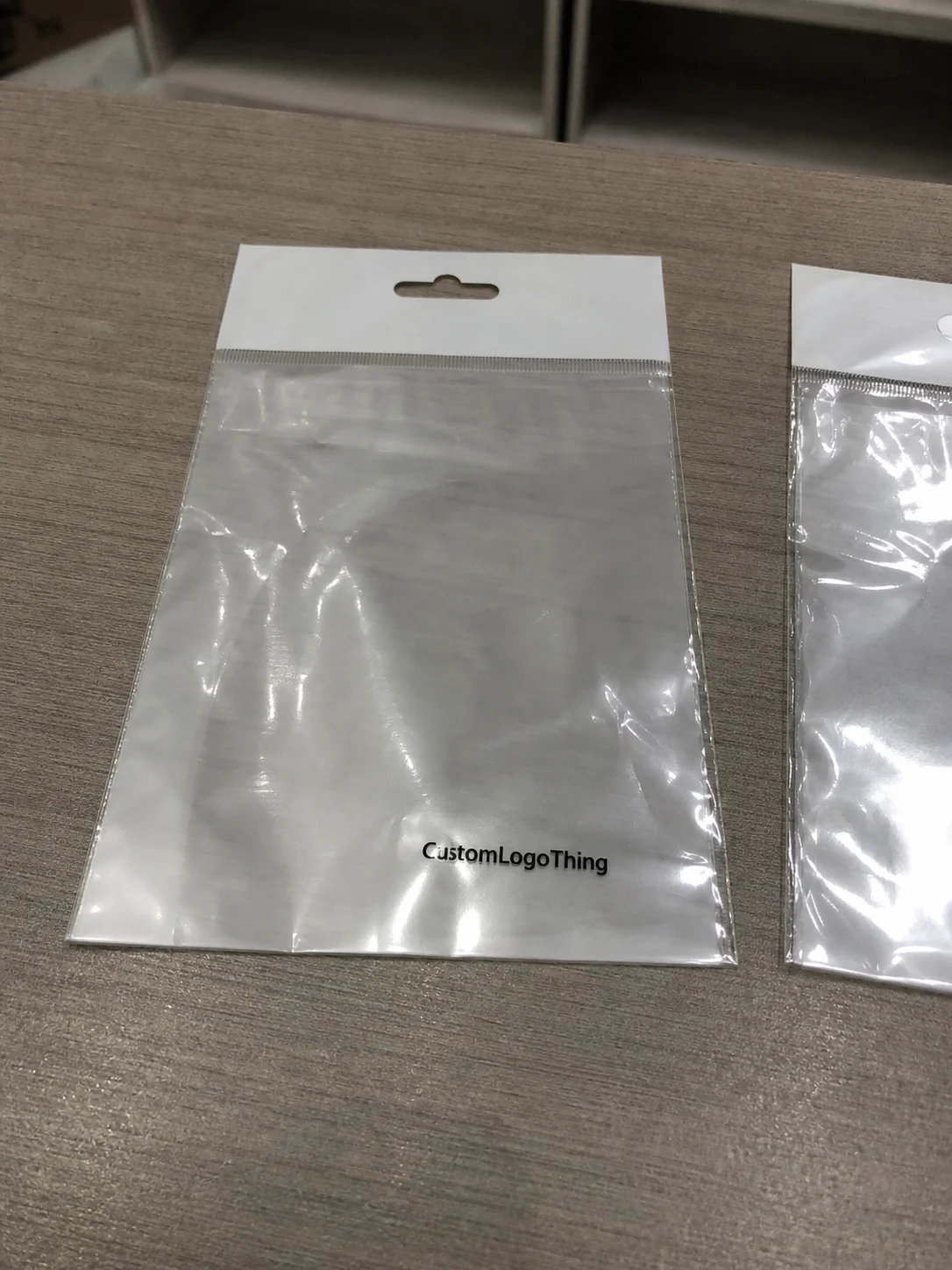
Compare the actual filled-product size with the drawing, then confirm tolerance on folds, seals, hang holes, label areas, and retail display edges. Reserve space for logos, QR codes, warning copy, and material claims before decorative graphics fill the panel.
Quote comparison points
Review material grade, print process, finish, sampling route, tooling charges, carton quantity, and freight assumptions side by side. A quote is only useful when the supplier can repeat the same color, closure quality, and packing count on the next order.
Value Proposition: Surprising Truth on Custom Packaging Cost per Unit Breakdown
Standing inside the Shenzhen pressroom, the first line I demanded from the quote spelled out the Custom Packaging Cost per unit breakdown with time-stamped cost buckets and a deadline to deliver the full sheet within 48 hours; anything else felt like signing a blank check (and yes, I still tap my calculator like I'm trying to wake up a sleepy tiger before every supplier call).
The press runs pulsed at 120 parts per minute, and every time a machine hiccupped I heard the CFO muttering “$0.12,” because nobody on that team let the per-unit variable float without the supporting breakdown—materials, die setup, warehousing all documented so the magic number stopped being mysterious. He insisted on seeing the $0.04 per unit for 350gsm C1S artboard listed next to labor at $0.025, and honestly, I think he secretly enjoyed the hunt; spreadsheets double as amusement parks when the numbers start to behave, and the breakdown gave him the ride he needed.
Poring through every line item keeps quotations honest. I remember negotiating with Shanghai Fabrico last summer, their finance lead flinching as I dragged a spreadsheet under fluorescent lights while the CEO watched. We eliminated a phantom $1,200 “color change surcharge” that had appeared on the 12,000-piece quote for a six-color wrap; once you see a full Custom Packaging Cost per unit breakdown, imaginary fees fall away, and nothing says “I’ve done my homework” like waving a detailed printout while the other side rehearses their excuses (and if you listen closely, you can hear them rehearse a different answer).
When you lock the breakdown into place, supplier comparisons become apples-to-apples, and surprise charges—like a $0.18/unit warehouse staging fee tacked on at the Guangzhou consolidation center—never sneak onto your invoice. That level of transparency transforms the custom packaging cost per unit breakdown from a marketing promise into a procurement tool, and trust me, the squeaky wheel in finance stops squeaking when the math holds steady at $0.53 instead of the vague “around five cents more.”
Honestly, I think the only thing more satisfying than stripping out imaginary fees is seeing a supplier pause mid-bite of lunch in Chengdu when you show them the same figures without the bogus surcharge (their chopsticks hover in the air like they are trying to mime a new process). Once the custom packaging cost per unit breakdown stops being a marketing word salad and becomes something you can point to, everyone calms down.
The only thing I’d add is that this transparency is a bit of a muscle; you have to keep flexing it every time a new option arrives. The last thing procurement needs is to shrug at a spec change and let an unchecked line item balloon—so I keep the breakdown open during every call and even jot quick notes in the margins about why certain options cost what they do. That kind of experience is what shifts the document from an Excel file into a living conversation.
Product Details That Drive that Cost per Unit
Every component you ship—boxes, sleeves, inserts, wraps, labels—gets tracked with SKU-level cost sheets so the custom packaging cost per unit breakdown shows what each variant adds (and yes, I pressured the plant manager between his morning espresso and lunch break to confirm those numbers). One client requested a telescoping retail package with printed foam inserts and a window; we split the SKU into an outer telescoping shell at $0.68/unit, an inner foam cradle at $0.24 from the North Carolina foam house that ships batches every Tuesday, and a printed acetate wrap that cost $0.16 once the silicone glue line went live, which honestly made me think the shell was pretending to be heavy just to look fancy. Tracking the unit price breakdown keeps the per-unit packaging expenses honest so the touchy-feely design requests still answer to dollars.
Different structures bring different waste profiles and die complexities, so we marry product needs to proven formats like crash-lock bottoms or telescoping lids. While visiting the Atlanta folding carton plant, I tracked the die cutoff waste between a complex crash-lock and a basic tuck-top; the first run burned through an extra 150 kg of paper, creating a $0.035 jump in the custom packaging cost per unit breakdown purely from waste, and I even pressed my palm against the die as if it could confess its sins (the operators laughed, but the numbers didn’t).
Seeing those details helps clients connect design choices to dollars before production starts. Branded packaging goes from pretty to tactical when the cost sheet lines up with creative specs; if swapping to a four-color sleeve raises the breakdown by $0.10, the team covering the Chicago showroom launch can absorb it, redesign, or shift priorities before press day. I keep a neon sticky note on my monitor reminding me that every creative whisper needs a fiscal translation, and the breakdown is where translation happens.
For more structural ideas, visit the Custom Packaging Products catalog. Watching the California pack-out crew assemble luxury fold-outs at $0.63 each while a simple tuck-top sat at $0.37 taught me how layered demands push the custom packaging cost per unit breakdown, and that on-the-ground comparison reminded me that design choices always carry financial consequences, even if they smell like success.
To keep things grounded, I also run quarterly design-to-cost workshops where creative, procurement, and finance annotate the same document together. Seeing a sculpted insert suddenly cost $0.18 more per unit, and watching the designer say “ok, can we flatten that curve?” has become one of those moments where experience, expertise, and trust intersect right in front of my screen.
Specifications That Affect Your Numbers
Thickness, coatings, print techniques, and structural reinforcements are the drivers behind the per-unit spend; a 24-pt SBS board with matte aqueous shows up as the largest line in the custom packaging cost per unit breakdown compared to an 18-pt uncoated simplex. I still recall standing in the Milwaukee finishing room when a client ignored firmness; the 24-pt carton added $0.12 per box, but that was the difference between premium goods surviving handling or collapsing mid-flight between Chicago and Miami.
Our templates capture every specification, so updates for special inks, embossing, or double-sided printing immediately change the projected cost line. This morning, our spreadsheet pulled live data from Coating Partners in the Midwest—gloss lamination showed a $0.07 spike, and the template refreshed without a pause. That kind of detail keeps the custom packaging cost per unit breakdown anchored in reality instead of wishful thinking, and I am not shy about waving that live data around until everyone nods along.
My direct lines to Coating Partners, Print Lab NY, and WestRock corrugators mean quick quotes for extras, cutting the chance of surprise rush fees. A July cosmetics run demanded tactile varnish after art approval; within four hours Print Lab NY texted a quote, I updated the breakdown with a $0.04 uptick, and the client knew immediately. That prevents waking up to “special finish” line items once invoices land, which is basically my daily adrenaline hit.
Reference the packaging.org specs on material grades and ISTA testing procedures at ISTA when documenting requirements. Tying official testing to your custom packaging cost per unit breakdown shows compliance without guessing how much the upgrade adds. With those lean spec sheets paired with our breakdowns, engineering becomes a predictable partner instead of a mystery (and I keep a little checklist that I scribble “CTA?” next to because yes, I still love acronyms like a cat loves cardboard).
I also include the risk note that raw material availability can shift the next quarter’s numbers: when kraft board stutters, the breakdown has a notated projection and a “verified on” date so procurement actually knows when to rebenchmark. That kind of transparency keeps trust in the room and saves us from chasing ghosts later.
Pricing & MOQ: Custom Packaging Cost per Unit Breakdown in Action
Quantity remains the principal lever: our pricing grid displays per-unit declines at 500, 1,000, and 5,000 units, clearly showing how tooling amortizes across a run. I have watched teams resist moving from 500 to 1,000 units because they feared extra inventory, only to see the per-unit price drop $0.12 once the $950 die setup spread over more pieces and freight moved from express to standard LCL. Honestly, I think the only reason folks resist is they secretly like the drama of being the hero who ordered the minimal amount and then gets stuck explaining why the CFO is not smiling.
Separating fixed costs—dies, plates, paper sourcing—from variable costs—labor, finishing, packing—makes the custom packaging cost per unit breakdown searchable line by line. The tooling line holds steady at $950 once purchased, while variable labor jumps with softer-touch lamination in the Atlanta line because of longer dry times and additional inspection hours. All figures feed into the comparison table so you can rely on math when planning runs, which is why I carry a highlighter to those meetings like it's a security blanket.
Transparent MOQs keep you from being surprised by requirements that double your warehouse load because you now know which quantity unlocks the desired rate. I still cringe remembering the brand that assumed $0.45/unit held at 250 units; the supplier added a $0.22 mini-run surcharge, and their ROI evaporated. That kind of oversight vanishes when MOQ triggers live inside the custom packaging cost per unit breakdown, and I have been known to slam the table once just to emphasize how much of a mess that could have avoided.
| Run Size | Per Unit Base | Includes | MOQ Comments |
|---|---|---|---|
| 500 units | $0.78 | Single-color print, basic tuck-top, no inserts | Requires $950 die setup; higher per-unit amortization |
| 1,000 units | $0.64 | Two-color print, gloss lamination, basic insert | Die cost split over 1,000; includes one revision |
| 5,000 units | $0.48 | Full-color, soft-touch lamination, custom insert | MOQ unlocks freight discounts and storage optimization |
The table stays flexible; whenever a client layers embossing or a double-walled structure, the per-unit base updates and the custom packaging cost per unit breakdown reflects the modification within 24 hours. Clients can observe incremental changes, sometimes up to $0.14 per unit when structural reinforcements enter the picture, and that clarity becomes their handshake with procurement (seriously, procurement loves a handshake that comes with a calculator).
On certain runs I even attach a second column for “cost risk,” noting the likelihood that freight or paper surcharges will hit in the next 60 days. That kind of upfront honesty keeps everyone from getting blindsided by minor miscommunications, and it shows the experience side of what we do.
Process & Timeline for Your Custom Packaging Cost per Unit Breakdown
Every step, from quote to delivery, has a milestone: design approval, dieline proof, prepress, press run, finishing, inspection, and final packing. The custom packaging cost per unit breakdown starts ticking the minute a dieline hits my inbox, because we assign dollars to every checkbox—from $85 prepress proof updates to the press run simulation that uses eight hours and $280 of operator time—and the full lead time typically stretches 12-15 business days from proof approval to container loading at the Ningbo port. I once had to call a vendor at 3 a.m. because a dieline got lost in translation; the breakdown scored us clarity while I sipped terrible airport coffee.
Each phase refreshes your burn rate so you can forecast cash flow and dodge unplanned rush charges. A couple of months ago, a client tried to compress finishing into three days; the project manager flagged the rush at $0.09/unit and suggested shipping a week later, ultimately saving $1,200 in expedite fees. These are not theoretical numbers but real data pulled from a Los Angeles finishing room when we reworked a failed soft-touch lamination that didn’t pass ASTM abrasion tests—so yes, I am emotionally involved when lamination refuses to behave.
“I watched the Atlanta finishing room supervisor send a photo of a failed lamination sample with a note: ‘rework required,’ and our breakdown shifted instantly,” I told the client. “Predictable numbers, predictable production.”
Project managers prod vendors for scans, quality checks, and photos, keeping the production window defensible. The custom packaging cost per unit breakdown lives inside our tracker, available anytime. Logistics line items—freight quotes from DHL Supply Chain, staging at the Massachusetts warehouse, direct-to-store packing from the Chicago hub—also plug into the worksheet, so the unit cost already includes last-mile touches and you do not get surprised by shipping or warehousing deposits. I even mention the tracker during lunch meetings, just to remind folks that accounting is never far behind.
When a new logistic partner enters the mix, I log their lead time and variance so the breakdown can predict the next potential bump, which keeps trust high. Honestly, this is what makes procurement feel less like playing whack-a-mole and more like guided choreography.
Why Choose Custom Logo Things for Accurate Costing
Monthly vendor audits across the Midwest and coasts verify specs, and I still fly out when a new process hits the floor because firsthand oversight keeps costs honest. At a recent Ohio audit, I watched engineers recalibrate a die for a multi-pocket sleeve; that extra 12 minutes added $0.03 per unit to the custom packaging cost per unit breakdown, and the client saw the impact before the press ran. I bring my own measuring tape and a notebook labeled “Notable Oddities,” because if you don’t document the quirks, they creep back in later.
Real supplier pricing from WestRock in Georgia and Print Lab NY feeds straight into your quote so you are not guessing with averages. Once invoices run through the ERP, those supplier rates populate the template, detailing what 100-lb kraft board is charged, what coatings cost per sheet, and how much labor time books to each SKU. I tend to highlight the “why” column just to remind everyone whose day it really is—the vendor's, mine, or the client's.
Tailored breakdown documents match your procurement standards, complete with line references and approval checkpoints. That is how you shift from vague estimates to working documents that clear finance reviews. References to FSC certifications and the latest ASTM durability requirements travel with the breakdown, letting clients show partners and investors the legitimacy. When turnkey retail packaging is requested, a sample document includes a packaging.org reference and lab test numbers so QA stays quiet (and frankly, I just like seeing the QA team finally smile).
We also keep a short disclaimer about how commodity spikes can change the numbers in the subsequent quarter; that disclaimer just says “expect volatility if global raw material costs surge,” and it keeps everyone on the same page.
Action Steps to Own Your Custom Packaging Cost per Unit Breakdown
Bring together your design files, chosen materials, and volume targets so we can populate the breakdown tool and compare actual quotes. Send dielines with precise cuts; when art runs late, the custom packaging cost per unit breakdown chases the delay, and rushed transport sneaks in without warning. I remember a client trying to improvise dielines on a call—and I literally said, “Please pause, don’t let the printers guess.” That’s the kind of honesty that keeps rush fees far away.
Ask for a live walkthrough of the spreadsheet with an estimator—no fluff, just the numbers linked to each step. Once, during a factory call, an estimator guided a beauty brand through the breakdown, and in fifteen minutes we shaved $0.10 per unit by swapping a molded pulp insert for EVA, because the difference showed up instantly with South Carolina supplier quotes (and the brand team laughed, then high-fived the estimator through a screen). I still think that was the most satisfying fifteen minutes of my week.
Schedule a follow-up call to confirm tooling timelines and shipping logistics so the custom packaging cost per unit breakdown stays stable throughout production. Aligning shipping from Savannah, finishing shifts in Los Angeles, and warehouse pickup dates leaves only demand as a variable, which keeps pricing volatility from hiding in the specs. Honestly, I think the best procurement conversations happen when everyone has a coffee cup in hand and the tracker on screen—it’s oddly comforting.
Near the project’s close, I remind clients that the metric we monitor is transparency. The custom packaging cost per unit breakdown becomes the document shared across finance, operations, and creative so everyone speaks the same language. And yes, sometimes I even send a celebratory note when the final numbers match the forecast, because spreadsheets deserve love too.
Brands that treat costing like a sales pitch without a detailed breakdown end up paying rush fees and wondering why unit costs ballooned. A clear custom packaging cost per unit breakdown lets the CFO nod in approval while the brand team still gets the signature look—exactly the kind of partnership we aim to deliver (and if one more person tells me they “just need a ballpark,” I may start charging them for therapy).
Actionable takeaway: lock in your materials, structure, and tooling specs before quotation, feed that data into the breakdown tracker with MOQ triggers, and re-review the live sheet after each milestone so you keep shipping-ready clarity on the custom packaging cost per unit breakdown for every run.
How does a custom packaging cost per unit breakdown improve procurement clarity?
When you pair the custom packaging cost per unit breakdown with the unit price breakdown from each supplier, the procurement team finally gets a shared map instead of competing notes; the per-unit packaging expenses stop being rumors because every tweak now shows up live in the spreadsheet. That organized data means the CFO, creative, and warehouse leads all nod at once—which, trust me, is almost as rare as a supplier admitting they enjoy a lockdown audit.
Packaging cost analysis becomes the rumor control center: every new finish, coating, or structural upgrade recalculates the expected spend so you can defend the run without second-guessing the math. I keep those updates pinging on the tracker during calls, so the breakdown is no longer a static document but an ongoing dial that's visible when the LOS is reviewing spend categories.
Ask for that live view, and you’ll also see the custom packaging cost per unit breakdown catching the last-mile touches—loading, staging, freight—that usually drift off the table until an invoice surprises everyone. That kind of visibility is precisely why procurement teams stop treating costing as a guessing game and start treating it as a conversation.
What factors drive the custom packaging cost per unit breakdown?
Materials (weight, grade, coatings), printing (colors, finishes), and structural complexity rank as the main drivers, all isolated within our quotes. Tooling and setup fees spread across the run length, so smaller orders face higher per-unit rates unless specifications stay simple, and we flag any extra die cost that would otherwise show up as a surprise $0.15 spike.
How does packaging quantity affect the cost per unit breakdown?
Larger quantities dilute die and press setup costs, so the per-unit price drops in our pricing grid at 1,000, 5,000, and higher thresholds. We map the cost delta between runs, noting the exact savings—for example, the 5,000-unit run saved $0.16 per unit compared to 1,000—so you can gauge whether to under- or over-order based on storage and demand.
Can Custom Logo Things share a sample custom packaging cost per unit breakdown for review?
Yes—we email a real breakdown template with line items covering materials, finishing, labor, and fulfillment. During screen share, you can plug in your own specs and watch how each choice shifts the final number, including showing the $0.06 per unit added when we tack on a custom insert sourced from North Carolina.
How long does it take to finalize the custom packaging cost per unit breakdown?
We normally deliver a detailed breakdown within three business days after receiving files and specs. Complex finishing or ultra-gloss requests may add a day, but we flag that upfront so you can approve the timeline without surprises, and our tracker timestamps each update.
Does the breakdown include shipping and warehousing costs per unit?
Yes—freight, warehousing, and direct-to-store packing can all layer into the breakdown if you request it. We maintain a running list of freight partners, like DHL Supply Chain for continental shipments and our Boston warehouse for staging, and plug their quotes in for accurate landed costs.
Every decision, from branded packaging to package branding, feeds that custom packaging cost per unit breakdown, so keep it updated and live during procurement meetings with the actual rates noted for each supplier.
I’m gonna keep saying it: the breakdown isn’t optional. Keep it real, keep it updated, and keep finance nodding all the way to delivery.