Buyer Fit Snapshot
| Best fit | Custom Packaging for Direct to Consumer Brands projects where brand print, material claims, artwork control, MOQ, and repeat-order consistency need to be specified before quoting. |
|---|---|
| Quote inputs | Share finished size, material target, print colors, finish, packing count, annual reorder estimate, ship-to region, and any compliance wording. |
| Proofing check | Approve dieline scale, logo placement, barcode or warning zones, color tolerance, closure strength, and carton packing before bulk production. |
| Main risk | Vague material claims, crowded artwork, missing packing details, or unclear freight terms can make a low unit price expensive after revisions. |
Fast answer: Custom Packaging for Direct to Consumer Brands: Quote Scope, Sample Proof, MOQ, and Lead Time should be specified like a repeatable production item. The safest quote records material, print method, finish, artwork proof, packing count, and reorder notes in one written spec.
Production checks before approval
Compare the actual filled-product size with the drawing, then confirm tolerance on folds, seals, hang holes, label areas, and retail display edges. Reserve space for logos, QR codes, warning copy, and material claims before decorative graphics fill the panel.
Quote comparison points
Review material grade, print process, finish, sampling route, tooling charges, carton quantity, and freight assumptions side by side. A quote is only useful when the supplier can repeat the same color, closure quality, and packing count on the next order.
Custom Packaging for Direct to consumer brands is not a vanity exercise. It is often the first physical proof that a brand exists outside a screen, and in many cases it is the only thing a customer touches before deciding whether to reorder. I’ve seen a $0.12 change in box construction alter complaint volume inside 30 days, and I’ve seen branded packaging turn a routine delivery into a social post that reached more than 8,000 views. That is not magic. It is product packaging doing its job.
At Custom Logo Things, I’ve spent enough time around carton lines in Dongguan, corrugated plants in Shenzhen, and fulfillment tables in Los Angeles to know one thing for sure: custom packaging for direct to consumer brands has to do more than look pretty. It has to protect, fit, ship, and sell. If it fails any one of those jobs, the brand pays for it later in refunds, damaged goods, slower pick-and-pack, or a customer who quietly never buys again. Brutal? Yes. True? Also yes.
This piece is about the practical side of custom packaging for direct to consumer brands: how it works, what drives cost, how long it takes, and where brands usually get tripped up. No fluff. Just the decisions that actually affect launch timing, unit economics, and customer perception. Because nobody needs another polished slide deck that ignores basic physics and a $0.38 freight surcharge.
Custom Packaging for Direct to Consumer Brands: Why It Matters
The simplest definition of custom packaging for direct to consumer brands is packaging made for a specific product, a specific shipping flow, and a specific brand identity. That can mean a corrugated mailer sized to a 10 oz candle, a folding carton for a 1.7 oz serum bottle, or a rigid box for a three-piece gift set. It is not generic packaging with a logo slapped on later. It is packaging design built around the real dimensions, breakpoints, and customer journey of the item, down to board thickness and insert depth.
Here’s what most people miss: the box is not just protection. It is the brand’s first tactile impression. I remember standing on a factory floor in Shenzhen while a client switched from a loose stock mailer to a right-sized custom printed box with 32ECT corrugated board and a simple one-color interior message. Returns did not fall to zero, because nobody gets to live in a fantasy spreadsheet, but customer comments changed almost immediately. Instead of “arrived battered,” they started saying “felt premium” and “looked intentional.” Same product. Different perception. That’s the power of custom packaging for direct to consumer brands.
Stock packaging can be fast and cheap, but it usually fits somewhere between “good enough” and “we’ll fix it later.” The problem is that “later” often arrives as higher shipping costs, more void fill, a louder unboxing experience than you wanted, and more breakage in transit. Custom packaging for direct to consumer brands gives you control over dimensions, graphics, inserts, and the way the product opens. That control affects perceived value, damage rates, and shipping efficiency in ways that are easy to underestimate. People love to act surprised when the box they skimped on becomes the reason margins wobble.
Strategically, custom packaging for direct to consumer brands plays four jobs at once: it protects the product, reinforces the brand, supports repeat purchase behavior, and standardizes fulfillment. I’ve seen brands use branded packaging to create a cleaner subscription experience, and I’ve seen small teams reduce pick time by 18 to 25 seconds per order simply because the box and insert system stopped fighting the warehouse process. That may sound tiny until you multiply it by 6,000 orders a month and a warehouse crew that is already sick of tape guns.
“We thought the box was just packaging. After the redesign, customer support tickets about damage dropped, and our team stopped taping every package twice.” — a skincare founder I worked with after a late-night packaging review
That kind of change is why custom packaging for direct to consumer brands deserves real attention. It is not a decorative layer. It is operational infrastructure with a marketing surface attached. The annoying part is that it has to be both at the same time.
How Custom Packaging for Direct to Consumer Brands Works
The workflow usually starts with the product itself. Before anybody talks about foil stamping or soft-touch lamination, you need exact measurements: length, width, height, weight, fragility, and any special handling needs. A 2.8-ounce glass bottle has different needs than a 14-ounce jar, and both behave differently in transit depending on the carrier, the void fill, and the compression strength of the box. Custom packaging for direct to consumer brands works best when those basics are captured early, not after someone has already “basically finalized” the art. I put that in quotes because “basically finalized” is usually where trouble begins.
From there, the packaging team creates a dieline. That’s the structural template that shows where the folds, cuts, glue areas, and print zones will sit. In my experience, the best launch teams treat the dieline as a working document, not a decoration. The structural design and print design have to be developed together. If you finalize artwork before the insert depth is settled, you can end up with a beautiful box that crushes corners or leaves the product rattling around inside. Which is a fun way to spend a launch budget, apparently.
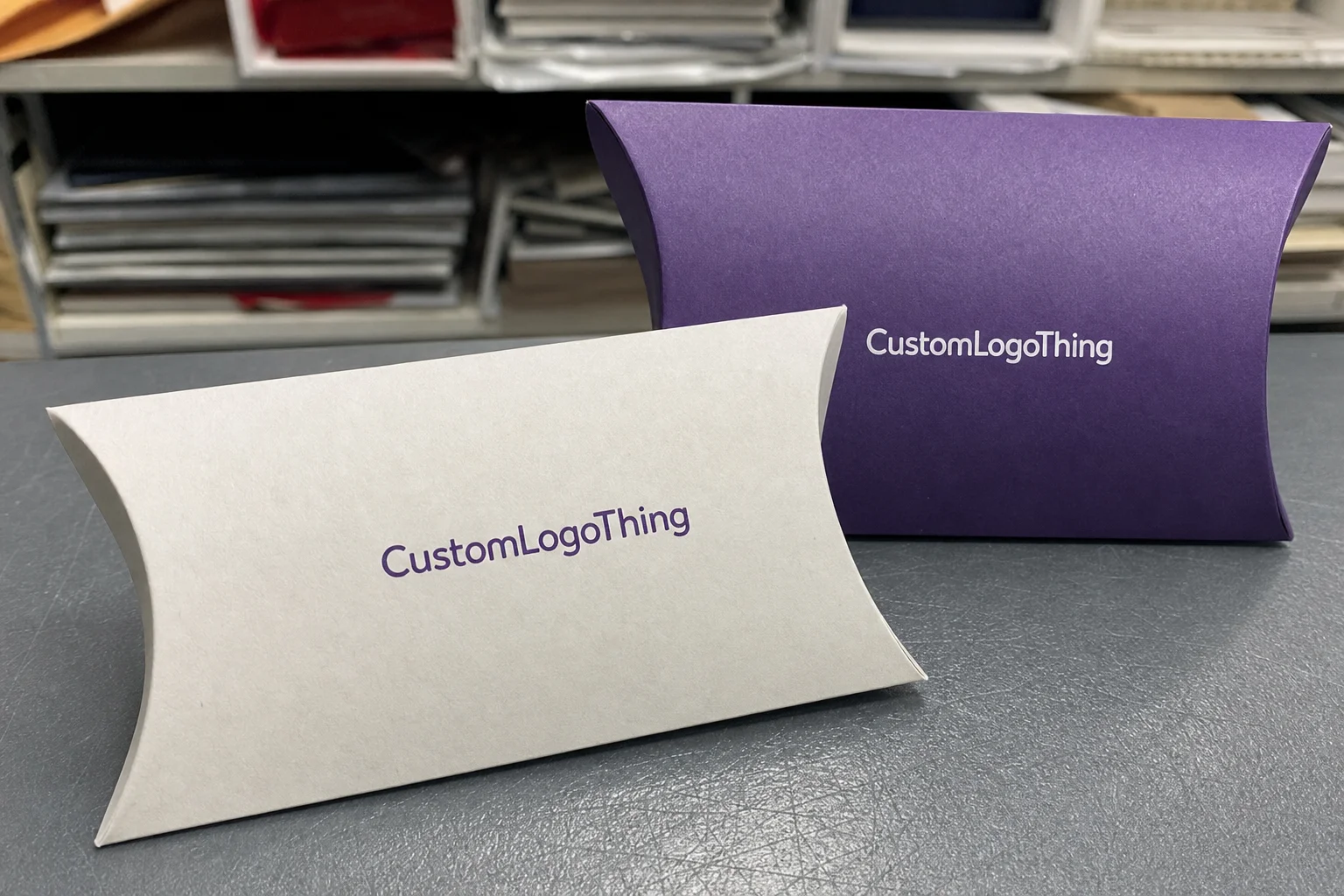
The common packaging types used in custom packaging for direct to consumer brands include folding cartons, mailer boxes, rigid boxes, labels, inserts, and protective components like molded pulp or die-cut corrugated trays. Each one serves a different role. Folding cartons are efficient for lightweight cosmetics, supplements, and accessories, often using 350gsm C1S artboard for retail-facing shelves. Mailer boxes are popular for ecommerce because they combine presentation and shipping strength. Rigid boxes create a premium feel, but they usually cost more and take up more warehouse space. Inserts keep fragile items centered, which matters more than people think when a parcel is traveling through three sorting hubs and one impatient van route.
Fulfillment matters too. I’ve stood beside pick-and-pack teams in Commerce, California and Louisville, Kentucky who could lose 30 minutes a day because a box required extra folding steps or a lid style that slowed insertion. Custom packaging for direct to consumer brands should fit the warehouse rhythm. If it takes two extra hand motions per order and you ship 8,000 units a month, the labor cost is not trivial anymore. It becomes a line item, and a real one, not the kind that hides in a spreadsheet tab nobody opens until Friday afternoon.
Here is a simple comparison that helps brands choose a structure before they overcommit:
| Packaging Type | Typical Use | Approx. Unit Cost Range | Strength | Brand Experience |
|---|---|---|---|---|
| Folding carton | Lightweight product packaging | $0.18–$0.45 at 5,000 pieces | Moderate | Clean, retail-ready |
| Mailer box | Shipping and unboxing | $0.55–$1.20 at 5,000 pieces | Good to high | Strong unboxing presence |
| Rigid box | Premium kit or gift set | $1.80–$4.50 at 3,000 pieces | High | Luxury feel |
| Custom insert system | Fragile or multi-item orders | $0.14–$0.90 depending on material | Depends on substrate | Functional, hidden value |
Those numbers are not universal, and they should not be treated as gospel. Print method, board grade, shipping lane, and order volume can push pricing in either direction. But they do show how custom packaging for direct to consumer brands spans a wide range. A brand launching a candle line does not need the same structure as a skincare subscription box or a nutrition product with compliance labels.
Some brands start with semi-custom or modular packaging before moving to fully custom packaging for direct to consumer brands. That is not a compromise; it is often smart cash management. A modular box size with a branded label or insert can buy time while product-market fit is still being proven. I’ve watched founders save themselves from 10,000 units of dead inventory by starting with a flexible structure and refining after the second sales cycle. Which, frankly, is a lot less painful than explaining to finance why the warehouse is full of “almost right” boxes.
If you want to see how different structures and finishes are handled in practice, our Custom Packaging Products page is a useful starting point. It helps connect the abstract idea of branded packaging to real formats, not just mood-board language.
Key Factors in Custom Packaging for Direct to Consumer Brands
Material choice is where many packaging decisions begin to earn their keep. Corrugated board is the workhorse for ecommerce because it handles stacking, scuffing, and carrier abuse better than thin paperboard. A 32ECT or 44ECT board might be the right call depending on weight and route, while kraft paperboard can work well for lighter, cleaner looking product packaging. For premium beauty or supplements, 350gsm C1S artboard with an aqueous coating is a common spec for outer cartons. Rigid board is thicker and more premium, but it adds cost, weight, and space requirements. Custom packaging for direct to consumer brands should match the product’s actual shipping reality, not the aesthetic mood of the moment. The shipping lane does not care about your mood board. It cares about crush strength.
Sizing matters just as much. Oversize boxes create wasted cubic inches, which can increase dimensional weight charges. Undersize boxes can compress products, reduce insert effectiveness, or require extra packing labor. I once reviewed a beauty brand’s parcel data in Newark, New Jersey and found that changing the box depth by 8 millimeters reduced internal movement enough to cut damage claims by roughly 11% across a six-week test. That kind of outcome is why custom packaging for direct to consumer brands is a numbers game as much as a design exercise.
What drives packaging cost
Pricing for custom packaging for direct to consumer brands usually comes down to six variables: material, print complexity, finish, volume, setup, and freight. A one-color kraft mailer with no insert can be quite different from a four-color custom printed box with matte lamination, embossing, and a die-cut insert. Plate setup and tooling can also matter, especially on shorter runs. If a supplier quotes only the unit price and hides the setup fees, ask for a line-item breakdown. Politely, if you can manage it. I try, but I have definitely had moments where my tone said, “Nice try.”
For example, a 5,000-piece run of a standard mailer box might land around $0.68/unit in one region and $0.92/unit in another depending on board grade, print coverage, and packaging logistics. In Guangzhou, I’ve seen a 4-color mailer with water-based ink and basic matte varnish come in at $0.15 per unit for 5,000 pieces on a very simple spec, while a similar box with a custom insert and foil details jumped to $1.14/unit. Add a custom insert and that number can climb by $0.20 to $0.60 each. For low-volume launches, the setup burden can make the first run look expensive even if future runs improve. That is normal. It is also why budgeting for custom packaging for direct to consumer brands should include both the first order and the repeat order. Too many teams budget for the dream version of the quote and then act shocked when freight, tooling, and sampling show up with opinions.
Branding choices that actually matter
Color accuracy is not a luxury detail. It affects package branding more than founders expect. A warm beige box printed with a muddy gray can make an otherwise premium brand feel cheap. Tactile finishes matter too. Soft-touch lamination, spot UV, and matte varnish each create different cues under store lighting and on a smartphone camera. Good packaging design does not shout from every panel. It uses hierarchy. The logo, opening message, and product story should work in sequence instead of competing for attention.
Honestly, I think overbranding is one of the most common mistakes in custom packaging for direct to consumer brands. If every panel has copy, icons, claims, and badges, the box starts to feel like a brochure that happens to contain a product. White space can be powerful. So can restraint. A calm layout often reads as more premium than a crowded one. Also, nobody wants to feel ambushed by twelve marketing claims before they even open the box.
Sustainability and real-world performance
Eco claims need evidence. Recycled content, FSC-certified paper, right-sized formats, and reduced void fill all matter, but they only count if the packaging still performs. I’ve seen brands switch to thinner board to improve sustainability messaging, only to raise breakage by 7% because the structure could not handle parcel sorting. That is not a win. It is just a different cost center. If sustainability is part of the brand promise, the package has to support it with actual performance, ideally with a 24 to 48 hour transit test and a 1-meter drop check.
For standards and broader packaging industry context, two useful references are the Institute of Packaging Professionals and the EPA recycling guidance. I also recommend checking FSC certification information at fsc.org when paper sourcing is part of the conversation. These are not branding props; they help ground custom packaging for direct to consumer brands in real procurement standards.
Compliance can get overlooked too. Supplement labels, cosmetics warnings, transport marks, and carrier handling notes all have to fit somewhere. If the package is being used for retail packaging as well as shipping, the information architecture gets more complicated. That is why custom packaging for direct to consumer brands is rarely just about print. It is about information design under operational pressure.
Process and Timeline: From Concept to Delivery
The most reliable packaging projects follow a sequence. First comes discovery: product measurements, target quantities, budget range, and shipping method. Then the design brief: what the package must do, how the brand should feel, and what the unboxing should communicate in the first 10 seconds. After that comes dieline creation, structural sampling, artwork, revisions, production approval, and shipping. Custom packaging for direct to consumer brands works best when each stage is closed before the next one opens. Rushing the order because “we need it now” usually means paying later in reprints or rushed freight. Fantastic trade, obviously.
In practical terms, a straightforward project might take 12 to 15 business days from proof approval to sample delivery, then another 15 to 25 business days for production depending on the factory and print method. If the line is running in Yiwu or Dongguan during peak season, add a few days for queue time. A more complex rigid box or insert system can take longer, especially if there are multiple revision rounds. I’ve seen launches slip by three weeks because a team waited until inventory was already on the water before approving box dimensions. That is a costly way to learn sequencing. It is also a great way to annoy everyone from operations to the founder’s inbox.
Here’s the bottleneck I see most often: product specs are “close enough” for too long. The bottle is supposed to be 58 mm wide, then it turns out to be 59.6 mm after final tooling. Or the jar lid changes by 1.2 mm. That tiny shift can invalidate the insert. Custom packaging for direct to consumer brands is unforgiving in that way. The line between fit and failure can be smaller than a fingernail.
Sampling is where the truth comes out. A digital mockup may look perfect, but a physical prototype reveals compression, print contrast, opening friction, and scuff risk. I remember a client meeting in Los Angeles where the PDF looked elegant, but the real carton creased awkwardly because the brand color was too dark at the fold line. The fix was not dramatic; we adjusted the panel coverage by 6% and moved one graphic element 4 mm. But without a physical sample, that flaw would have shipped to every customer. And then the support team would have had a lovely little week, I’m sure.
Timing also depends on order volume and factory capacity. A 1,000-piece test run and a 25,000-piece production run live in different universes. Custom packaging for direct to consumer brands should be locked before inventory arrives, not after. If the product is ready and the box is not, fulfillment stalls. If the box is ready and the product dimensions are wrong, the warehouse gets creative in the worst possible way. I have seen packing tables become chaos because one millimeter was “probably fine.” It was not.
If you want examples of packaging work that solved both branding and operational problems, our Case Studies page shows how different categories handle custom packaging for direct to consumer brands in real deployments.
Common Mistakes DTC Brands Make with Custom Packaging
The first mistake is obvious once you’ve watched enough launches: choosing packaging for the render, not the route. A beautiful box that crushes at the depot is not premium. It is fragile theater. Custom packaging for direct to consumer brands has to survive carrier handling, warehouse stacking, and last-mile delivery before anyone gets to admire the unboxing. I’ve had people argue with me about finish samples like we were picking paint for a yacht. Meanwhile the parcel still has to make it through Memphis.
The second mistake is ordering too early. I’ve seen founders commit to 20,000 units before the final product mold was signed off. When the bottle changed by a few millimeters, half the inventory became inconvenient at best and unusable at worst. If there is any uncertainty around dimensions, finish, or product weight, wait. It is cheaper to miss one reorder window than to eat an entire packaging run. The warehouse can forgive a delayed launch. It does not forgive pallets of useless cartons.
Another common error is overdesign. Too many logos. Too many badges. Too many claims. The box starts to feel busy, and premium positioning disappears under visual noise. The strongest custom packaging for direct to consumer brands usually has a clear focal point and one or two supporting messages. A package does not need to say everything. It needs to say the right thing in the right order.
Cost surprises are also frequent. Special finishes, insert tooling, foil, embossing, and low minimum order quantities can change the math fast. A client once asked for a “simple” rigid presentation box and was shocked when the insert alone added $0.78/unit because of nesting complexity and hand assembly. That is why packaging budgets should include not only the box but the whole system. Custom packaging for direct to consumer brands rarely stops at the outer shell. If it touches the product, the shelf, and the shipping label, it belongs in the budget.
Finally, many brands skip live shipping tests. They approve a sample under ideal conditions and never send it through actual carrier lanes. That is a problem. A box that looks fine on a desk can fail after vibration, humidity, compression, and repeated drops. If your product is fragile, test against ISTA-style handling expectations and compare results against real transit abuse. The International Safe Transit Association has useful testing resources at ista.org, and those protocols are not just for large manufacturers.
“The sample passed our conference-room test. It failed the real-world test in Memphis.” — fulfillment manager after a damage review
That sentence still makes me smile a little, because it sums up a bigger truth: custom packaging for direct to consumer brands must be judged by actual transit conditions, not just aesthetics or office approval.
Expert Tips to Improve Custom Packaging for Direct to Consumer Brands
Design for the journey first. Shelf appeal matters if you also sell through retail packaging channels, but DTC parcels travel farther and get handled more aggressively than most founders expect. A product may leave a fulfillment center in Dallas, sit in a van, pass through two hubs, and then get dropped at a doorstep in the rain. Custom packaging for direct to consumer brands should be engineered for that path, not just the photo moment.
Use packaging as a conversion tool. A small insert that explains the reorder flow, a QR code that points to an onboarding video, or a short note about care and use can increase engagement without adding much cost. I’ve seen a $0.04 printed insert improve repeat purchase behavior because it reduced uncertainty after first use. That is not fluff. That is package branding with measurable business value.
Build a packaging system instead of a one-off box. The strongest custom packaging for direct to consumer brands usually includes a family of sizes, inserts, and labels that can scale across SKUs. That way, the skincare line, gift set, and subscription refill all share the same logic, even if the dimensions vary. A system also simplifies replenishment because the team is not reinventing the carton every time a new SKU launches.
Supplier comparison should go beyond unit price. Ask for sample quality, communication speed, structural recommendations, and transparency around setup costs. I care less about the lowest quote and more about whether a vendor notices the 2 mm issue before I do. Good suppliers save you from your own assumptions. That matters a lot in custom packaging for direct to consumer brands, where a tiny mistake can become a big customer-facing problem.
Test like a skeptic. Ship prototypes to three addresses: one local, one regional, one cross-country. Open them at different times of day. Look for crush, scuff, insert shift, and opening friction. Track whether the box feels satisfying or awkward. If possible, compare customer feedback and return reasons before and after the change. That gives you a cleaner read on whether the packaging improved the experience or just looked better in a presentation.
One more thing: simplicity often signals sophistication because the complexity is hidden behind the scenes. The Best Custom Packaging for Direct to consumer brands does not look difficult. It looks inevitable. That only happens after someone has solved board thickness, print coverage, assembly steps, and shipping behavior in the background.
Here is a practical checklist I use with clients before they approve a run:
- Confirm exact product dimensions with finished goods in hand, not just CAD drawings.
- Verify board grade and insert material against product weight and transit route.
- Review artwork on the dieline with folds and glue tabs marked clearly.
- Request a physical sample and test it through a real shipment.
- Compare the full landed cost including freight, storage, and assembly time.
Next Steps for Launching Custom Packaging for Direct to Consumer Brands
If you are starting from scratch, begin with three actions. Measure your product accurately. Set a budget range that includes materials, setup, and freight. Write down what the packaging must accomplish: protection, premium feel, easy fulfillment, or all three. That simple brief will save time later because custom packaging for direct to consumer brands gets messy when goals are implied instead of documented. And yes, “we’ll know it when we see it” is not a spec.
Next, prepare a supplier checklist. Include dimensions, product weight, shipping method, target order volume, desired finish, sustainability preference, and launch date. I’d also add one operational question: how many seconds should this packaging add to pick-and-pack? That question forces the team to think beyond visuals and into labor cost, which is exactly where many packaging budgets get blindsided.
Request structural samples and pricing tiers before you commit to a full run. A supplier should be able to show how the price changes at 1,000, 5,000, and 10,000 units. If they cannot, ask again. Custom packaging for direct to consumer brands is easiest to manage when you understand the cost ladder early. I like to see the ugly truth upfront; it saves everyone from a painful surprise later.
Map the packaging workflow against your inventory schedule. Artwork approval should not be happening while the product is already waiting in a warehouse. Production should not be racing your launch date by a few days. That overlap is where mistakes multiply. A two-week buffer can feel excessive during planning, then look tiny when a proof correction comes back with one incorrect dimension and one missing compliance line.
Finally, compare your current packaging against a right-sized custom option. Note where shipping cost, damage, labor, or brand experience could improve. If your current box is oversized by even 10%, there may be room to cut void fill, reduce dimensional weight, and improve the unboxing sequence at the same time. That is the kind of practical gain custom packaging for direct to consumer brands should deliver.
In my experience, the brands that do best with custom packaging for direct to consumer brands are the ones that treat it as part of the product, not an afterthought. The box is not separate from the customer experience. It is the opening chapter. Start by getting the fit right, then the structure, then the finish. If those three pieces line up, the packaging will do its job without drama. And honestly, that’s the goal.
FAQ
What is custom packaging for direct to consumer brands, exactly?
It is packaging designed specifically for a DTC brand’s products, shipping method, and customer experience. It usually combines the right structure, graphics, and materials to protect the product while reinforcing the brand’s visual identity. A typical example might be a 9 x 6 x 3 inch mailer with 32ECT corrugated board and a custom insert for a 12 oz bottle.
How much does custom packaging for direct to consumer brands cost?
Cost depends on size, material, print method, finishes, quantity, and whether inserts or special structural features are included. For reference, a simple mailer box can start around $0.55 to $0.75 per unit at 5,000 pieces, while a rigid box can run $1.80 to $4.50 at 3,000 pieces. Larger orders usually lower per-unit cost, but setup and design complexity can still raise the total budget.
How long does the custom packaging process usually take?
Timelines vary by sample rounds, artwork approval, and production complexity. A straightforward project typically takes 12 to 15 business days from proof approval to sample delivery, then another 15 to 25 business days for production. Brands should allow time for measurements, prototyping, revisions, and manufacturing before inventory arrives.
What packaging type works best for direct to consumer brands?
The best option depends on product fragility, shipping distance, brand positioning, and budget. Many brands use corrugated mailers, folding cartons, or custom inserts to balance protection and presentation. For a lightweight skincare product, a 350gsm C1S carton may work well; for a glass bottle shipped nationwide, a corrugated mailer with a die-cut insert is usually a safer call.
How can a DTC brand reduce packaging costs without losing quality?
Use right-sized packaging, simplify finishes, standardize box sizes, and test whether inserts are truly necessary. Review shipping weights, void fill, and damage rates together so savings do not create hidden costs later. Even a 5% reduction in box footprint can lower dimensional weight charges enough to offset a small upgrade in board grade.