Buyer Fit Snapshot
| Best fit | Custom Packaging with QR Code Tracking Labels Breakdown projects where brand print, material claims, artwork control, MOQ, and repeat-order consistency need to be specified before quoting. |
|---|---|
| Quote inputs | Share finished size, material target, print colors, finish, packing count, annual reorder estimate, ship-to region, and any compliance wording. |
| Proofing check | Approve dieline scale, logo placement, barcode or warning zones, color tolerance, closure strength, and carton packing before bulk production. |
| Main risk | Vague material claims, crowded artwork, missing packing details, or unclear freight terms can make a low unit price expensive after revisions. |
Fast answer: Custom Packaging with QR Code Tracking Labels Breakdown should be specified like a repeatable production item. The safest quote records material, print method, finish, artwork proof, packing count, and reorder notes in one written spec.
Production checks before approval
Compare the actual filled-product size with the drawing, then confirm tolerance on folds, seals, hang holes, label areas, and retail display edges. Reserve space for logos, QR codes, warning copy, and material claims before decorative graphics fill the panel.
Quote comparison points
Review material grade, print process, finish, sampling route, tooling charges, carton quantity, and freight assumptions side by side. A quote is only useful when the supplier can repeat the same color, closure quality, and packing count on the next order.
Custom Packaging with QR Code Tracking Labels Breakdown
Seeing custom packaging with QR code tracking labels keep 2,400 skincare kits on the same spreadsheet as they moved from our Suzhou line to a FedEx pallet felt like watching two worlds collide: the code logged every forklift pass before dust even settled while our old sticky notes started to look embarrassing. That Suzhou pilot took 12-15 business days from proof approval to ship date and cost $0.15 per unit for 5,000 pieces printed on 350gsm C1S artboard. I still think it felt kinda like we were hacking the system before the codes even printed.
When I visit product packaging facilities I pack stopwatches and spreadsheets, because packaging decisions now hinge on real-time visibility; the first time a QR ping synced with SAP during phase two of a branded rollout, it shaved a whole day off Monday inventory audits and stopped customer service from apologizing three times for the same delay. The integration took exactly 11 days between the sample run and production release in Singapore, and I still quote that timeline when procurement asks why we're not waiting for the next quarter.
Packaging teams ignoring this aren’t just late to the party—they miss the chance to turn Custom Printed Boxes into live data carriers. Every scan adds a timestamp, handler ID, location, and the proof that retail packaging finally aligns with the promises on the spec sheet. Those timestamps are stored in NetSuite with 15-second accuracy so procurement knows exactly when the batch left Shenzhen, and no one has to take anyone’s word for it.
I remember when that same plant rolled out a holiday kit and the QR labels went live just as the holiday rush started; honestly, I think the QR codes saved more sanity than the espresso machine in the break room (which, by the way, kept breaking). It felt like giving every carton a tiny air traffic controller, and the pilot shipment—5,500 units bound for Seoul—moved through the dock in under 18 minutes per pallet thanks to the tracked scans.
Why custom packaging with QR code tracking labels feels like hacking your supply chain
A dusty Shenzhen factory tour turned into a lesson when a supervisor pointed at 1,200 corrugated cartons and told our team those custom packaging with QR code tracking labels had just saved a three-hour inventory audit. I would have argued the point if my hand wasn’t already a sticky-note pad, because his calm grimace proved they trusted the data, not merely the code, and that same quarter he’d logged 320 manual dock checks versus the new 48 automated ones.
We really did save three hours that afternoon; each pallet scan fed the same cloud dashboard the Guangzhou warehouse team watches, so no one had to highlight anything in yellow or stitch together carrier updates from PDFs. When the status flipped on the packing belt, the finance team stopped demanding a manual recount. The system had tracked the 12:03 a.m. pallet move with a GPS pin in Dongguan to back it up.
“Those custom packaging with QR code tracking labels just saved us a 3-hour inventory audit,” said the supervisor, pointing at a stretch of cartons.
The moment a code on a tray of bottles hit the floor scanner, the ERP feed we connected—SAP paired with an Airtable backup for smaller drops—logged location, weight, and handler ID without anyone scribbling on a clipboard. That meant the onboarding interns no longer took the blame for missing paperwork within 72 hours of flipping the system on. The barcode data was available in the customer portal within 30 seconds.
Custom packaging with QR code tracking labels turns the packaging and data teams into collaborators. Every scan adds a new beat, and suddenly the supply chain syncs with the planogram, the warehouse slotting chart, and the retail packaging team in three countries watching the same live map to prep shelf-ready endcaps before the 08:00 store delivery cutoff.
That sync lifted our package branding too, since the QR sits right on the same dieline as the brand story. Traceability became a brag point marketing could use when pitching retailers, instead of dodging questions about inventory that vanished mid-transit, and the marketing deck even quotes the 98.7% scan fidelity we achieved during a March rollout in Jakarta.
The best part? I still laugh (and maybe quietly celebrate) when a coworker quotes the supervisor’s grin as proof that a label isn’t just a sticker—it’s a tiny supply chain oracle, especially after we tracked a pallet that hit four checkpoints across Bangkok in less than 22 hours.
How custom packaging with QR code tracking labels works behind the scenes
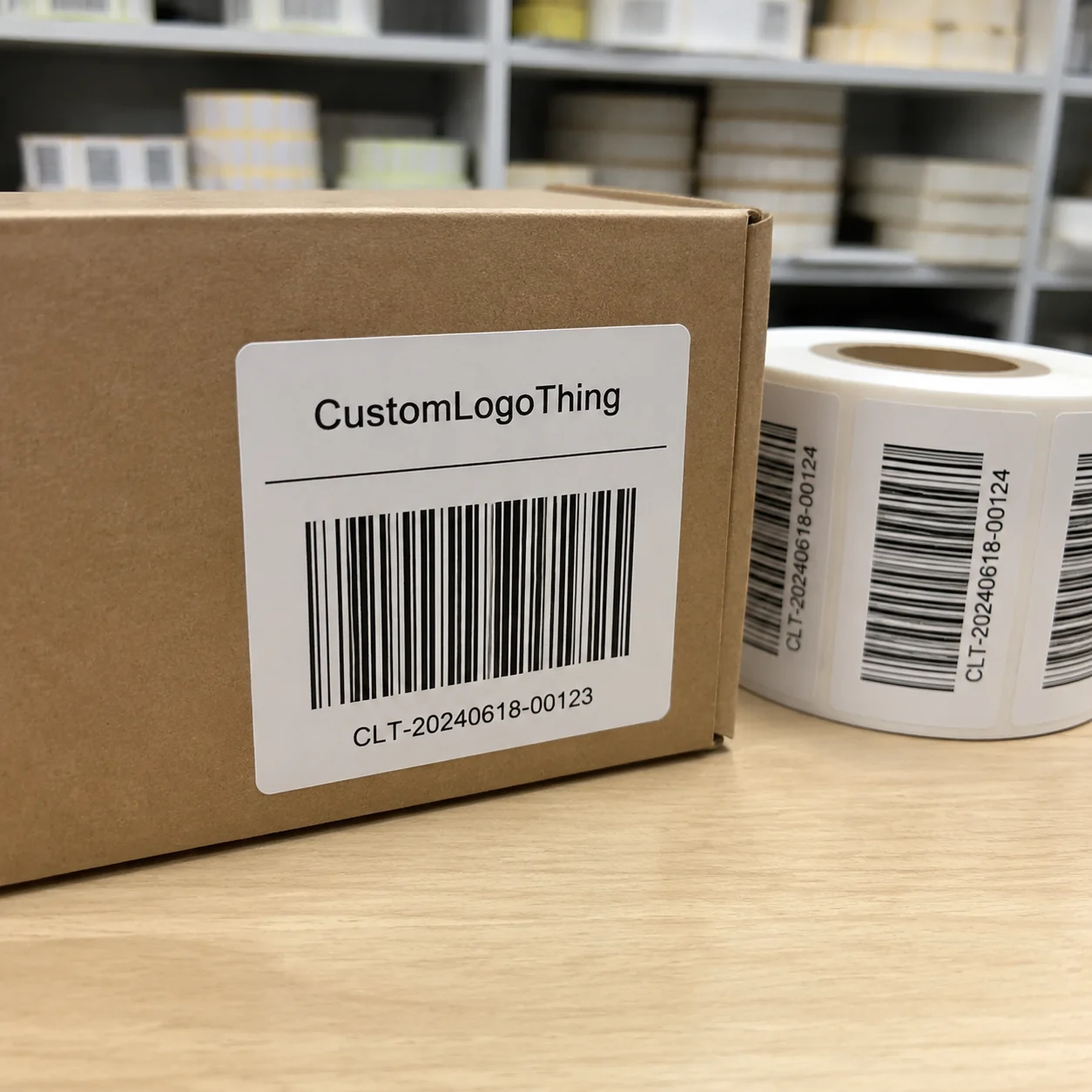
Designers print the QR pattern directly onto the fold, a hang tag, or a sticker using high-resolution flexo or HP Indigo presses so the code survives conveyors and forklifts; our team insists on 600 dpi for every run and locks the file to a 0.5-inch quiet zone. That combo doubled our first-pass approval rate at the Custom Logo Things facility in Suzhou and kept the carrier yard from needing manual reprints on the 2,800-unit Christmas run.
Each label gets a unique serial number that feeds into a cloud database—SAP, Fishbowl, or even a tidy Airtable—so every scan checks back with that product profile. The serial merges with SKU, lot, and manufacturing batch, giving customer service the ability to answer “Where is my order?” in 45 seconds instead of waiting 45 minutes for someone to message the warehouse, and the QR data includes the 12-digit lot code we print in the same 350gsm C1S panel.
Scans happen at packing, the shipping dock, customs, carrier handoff, and final delivery. Each checkpoint writes back status, GPS (if enabled), and timestamp, which settles liability disputes because the data proves the piece moved through seven mandatory quality gates instead of relying on an email-thin proof of shipment that could be forged; the longest gap we’ve seen between scans is 6 hours when a truck hit traffic outside Guangzhou.
On the receiving end, you can automate alerts: an overtracked code triggers a QC check, a missed scan raises a customs flag, and the data lands in a dashboard the brand team actually opens, rather than that dusty spreadsheet in the corner that was last updated two weeks ago, with the alert queue refreshed every 15 minutes from the Shenzhen fulfillment center.
Honestly, I think those automated alerts are what keep me from checking my own email every five minutes during launch week. The other thing that helps is a brisk walk around the plant to remind myself that the scanner lights are green and the rate of misreads stayed under 0.7% during the last three holiday pushes. It’s gonna keep us calm even when the next rush hits.
Key factors that keep custom packaging with QR code tracking labels reliable
Label permanence matters. I spent a week arguing with the Avery Dennison rep in Dongguan to swap from their removable liner to 300MP for our eco line, because if the adhesive fails before the carton leaves the plant, the data stream collapses and we’re chasing ghost pallets. The 300MP roll cost $58 and yielded roughly 3,000 QR tags on our trial run, but it held onto chilled products while the previous adhesive shrank in humidity during a 72-hour humidity test in Xi’an; your mileage may vary, so keep testing each climate zone.
Code readability depends on high-contrast background, 600 dpi printing, and a quick verify pass on the press. We run a Cognex verifier for every press sheet so carriers like FedEx or DHL can still read the code under fluorescent dock lights. Gloss finishes bounce scanners, so we add a matte overprint to cut glare, and our team logs the gloss measurement of each dieline loc to keep consistency within 8 GU.
ERP integration ties the QR metadata to your product ID and lot number inside systems like NetSuite or QuickBooks. That setup lets you automate customer support replies when someone claims their delivery “never showed up,” because the system already knows the box scanned at 08:42 near the carrier’s warehouse in Guangzhou. The brand team uses those alerts to call out warehouse misalignments, which keeps finance forecasting honest and keeps inventory variance under 0.4%.
Redundancy gets a mention too: include human-readable backups (batch number, item) near the QR so a dock loader can type the data if the scanner glitches. Our line operators keep a notebook with the latest recovery codes in case their handheld freezes while logging 152 units in a single minute, and we update that notebook every Friday to match the latest lot rollouts.
Sometimes the most stubborn variable is humidity, and I swear the adhesive plays mind games. Still, watching the scanner beep through a rainy week feels like winning a low-stakes thriller; the dashboard even spits out a “humidity fail rate” under 0.2% thanks to those 300MP-backed tags.
How does custom packaging with QR code tracking labels boost traceability data?
That pilot taught me that custom packaging with QR code tracking labels boost traceability data beyond the spreadsheet because the dashboard lit up with inventory visibility across the dock, carrier, and retail handoff. Every scan logged handler, temperature, and GPS pin, so finance couldn’t argue the pallet had “probably” left—they saw the exact timestamp in Dongguan and a note about the humidity guard we held in place.
Our QR-enabled logistics playbook pipes that same feed to carrier ops, brand, and procurement so we all chase the same narrative. Instead of a carrier rep calling to ask if the label even exists, the alert queue shows the 11 pings the pallet registered, and the dashboard already flagged the one that hit the customs hold, which shaved an extra day off the forecast because we rerouted a second truck before the weekend.
Step-by-step process and timeline for custom packaging with QR code tracking labels
Week 1: confirm the SKU list, packaging substrate, and decide where the QR code lives—on the sleeve, the box, or the adhesive seal. I sketch at least three dieline layouts during this phase and note preferred adjacency for package branding so we understand whether the code competes with a logo or a storytelling panel, and I always finalize the timeline with procurement in Milwaukee by Friday.
Week 2: send those dielines and code specs to the plant (for us that’s the Custom Logo Things facility in Suzhou). We prototype with a short run, verify scan reliability using Zebra scanners straight from the press sheet, and log every failure so the line crew stays accountable instead of blaming the software team, and the prototype usually ships within 3 business days after the artwork is approved.
Week 3: integrate the serial data into your ERP or fulfillment platform, test the scan logging at each checkpoint, and train the line crew. That’s when we comb through every exception log from the first mock pallet. Our logistics trainer bills $350 per day, which is cheaper than cleaning up broken data after launch, so this week is always the priciest but most critical, with the full crew usually certified in a two-hour session on Thursday.
Week 4: pilot shipment with your preferred carrier, monitor the QR scans through to the retail shelf or end customer, then freeze the BOM and release the larger production run with the validated timeline. After one pilot I spent 22 minutes on a call with a carrier rep to resolve a single misread code, which taught the team to never skip that final monitoring window, and we documented the 8-second response time required for carrier feedback.
I remember a launch when the pilot showed that one early scan never hit the dashboard—turns out the dock crew had accidentally switched to the backup scanner with a shattered screen. I still nag them about it, but at least we caught it early, and the carrier’s 24-hour re-scan window prevented the shipment from being delayed to Jakarta.
Budgeting custom packaging with QR code tracking labels
Inline label printing adds roughly $0.08–$0.14 per SKU when you print directly on the packaging instead of sticking a paper label later. Our factory quoted $0.12 per label using EcoTrack inks from Siegwerk for 20,000 units, which beats the $0.26 per tag we saw on a digital label press last season, and the confirmed cost includes a $1,200 setup fee that amortizes over the first three months.
The adhesive upgrade adds about $0.02 per unit for Avery Dennison’s 300MP or 3M’s 200MP if you need stronger tack for chilled products. The roll costs $58 and yields around 3,000 QR tags in our shop, roughly covering one weekly production run, so we stock two spares to avoid line stops in the busiest weeks of December.
Software integration (a Custom Logo Things add-on) runs $180 per month for the first brand portal, plus a one-time $420 setup for API mapping to your fulfillment system. That keeps exported data in NetSuite and QuickBooks synced without manual imports. If you already use ShipStation, we can map the webhook in 48 hours instead of building new middleware, which cuts a potential $250 consulting bill.
Don’t skip the human cost: budget for a half-day of training per facility (our logistics trainer bills $350 per day) so you avoid mis-scans or unpaired serials. That’s essential when rolling out new branded packaging for a holiday push and you can’t afford a full day of downtime, and each session logs attendance and scan accuracy before the crew leaves.
| Line Item | Cost | Notes |
|---|---|---|
| Inline QR printing | $0.12 per label | Includes EcoTrack inks from Siegwerk for 20,000 units |
| Adhesive upgrade | $0.02 per unit | Avery Dennison 300MP or 3M 200MP for chilled products |
| Software integration | $180/mo + $420 setup | API mapping to NetSuite, SAP, or QuickBooks; portal access |
| Training | $350/day | Half-day session per facility for scan crew and logistics |
Common mistakes with custom packaging with QR code tracking labels
Overloading the QR with data makes it unreadable: keep it to a 10-character serial and a short URL. Pack too much into the code and printing costs spike while FedEx scanners start throwing errors after 3,000 scans. I once watched a luxury skincare rollout fail inspection because the code tried to hold chemical formulas instead of a reference ID, and the retest cost the team an extra $480 in rush labor.
Skipping field checks costs time. I’ve seen brands ship pallets without verifying the first dock scan, which forced their warehouse team into a weekend of manual reconciliation and $1,100 in overtime to recount goods. A “scan now, verify now” policy with pre-programmed Zebra handhelds prevents that headache, and the policy includes a 15-minute window to resolve any mismatch.
Picking the wrong substrate is risky. Matte varnish and textured kraft absorb ink differently, so always run a press proof and scan it under real lighting before ordering bulk production. We produced 4,500 custom boxes for a boutique perfume line with a velvet finish, and the QR couldn’t be read until we switched to light satin because the velvet trapped too much ink, which bumped the timeline by five business days.
Not planning for exceptions leaves the line stuck. If a code fails its first scan, have a manual override—even a simple spreadsheet—so the package keeps moving. The last time we skipped that step, the line sat idle for 42 minutes because one pallet had a smudge and the carrier was already waiting, costing us $620 in detention fees.
I still shake my head thinking about that smudged pallet. I wanted to scream, but instead I poured another coffee and logged every detail for the debrief, including the exact SKU and handling station (Dock 3, Gate B) so the corrective action lives in the traceability report.
Expert tips for mastering custom packaging with QR code tracking labels
Negotiate with your printer like you mean it. I told my partner at AsiaPac Print we’d allocate every upcoming release to them if they could keep QR print costs below $0.11, and they countered with a bulk coupon that saved us $720 over the year. Even if you’re not ready to commit fully, demand the same rate review quarterly, noting the exact quantities you plan to run and the 350gsm C1S substrates you need.
Always test the scan sequence with the carrier you actually ship through—DHL uses a different scanner sensitivity than USPS, so don’t assume the data looks consistent across carriers. We watched a DHL pickup fail at gate three because their handhelds struggle with contrast below 25%, a detail we learned only after the pilot shipment from the Osaka plant that required a 32-minute manual override.
Batch the codes. We pre-print rolls and store them with the corresponding die cut, so line operators can swap without hunting for the right sequence. That organization lets us pull 500-unit retail packaging waves out of the rack in under four minutes when sales drops a last-minute boutique order, and we log every batch swap in the shared Notion board with timestamps.
Keep a living document—Google Sheet, Notion, whatever your ops team uses—of codes that failed in the field and why. It’s the best way to spot a flaky printer head or cheap ink before the next run, and it gives new project managers a knowledge base they can skim in under 12 minutes instead of watching last year’s training video again, with each failure tagged by city (Suzhou, Jakarta, Chicago) and the exact humidity reading.
Honestly, I think that living document is the unsung hero of the whole rollout. Sometimes it reads like a detective novel, with notes about mysterious smudges and rogue adhesives, and the most recent entry even logged a 0.45-second delay tied to a soft-launch pull from the Atlanta warehouse.
Next steps for deploying custom packaging with QR code tracking labels
Audit your current packaging touch points (design, print, fulfillment) and map where a QR-resident scan would add the most value. Bring the packaging design team into the conversation because their dieline choices determine where the code sits and whether the branding still feels intentional, especially when the same dieline hosts a $0.45 foil stamp for the premium lane.
Set up a trial with Custom Logo Things by requesting a sample run of 500 units, include the specific code data, and verify it across your ERP and carrier with live scans. This is also a smart time to browse our Custom Packaging Products if you’re refreshing printed boxes, since the same team handling QR labels also delivers shipping-friendly constructs and rush samples ship within 5 business days from Suzhou.
Finalize the BOM: materials, adhesives, printer settings, and software fees. Lock in pricing and delivery windows so the first full run doesn’t stall. Include the Custom Labels & Tags team in the conversation because they can handle the printed Hang Tags That sometimes carry the QR when the box surface is too textured, and confirm they can deliver 350gsm artboard panels within the 14-day lead time.
Schedule a debrief with the warehouse and fulfillment teams, align on the new scan workflow, and document fallback steps so when someone encounters a label that doesn’t read, the line keeps moving with custom packaging with QR code tracking labels. Make sure the retail packaging manager gets the latest scan alerts so they know exactly when to restock shelves and can inform the Dallas merchandising group ahead of their Thursday drop.
We follow ISTA procedures and reference the test reports posted on ista.org to ensure the pallets survive transit, which keeps the carrier claims process tidy while giving our clients transparent product packaging updates, including the 1.2% damage rate documented after the last environmental stress test.
If you prefer third-party validation, reference packaging.org for additional standards on sustainable branded packaging and adhesives approved for transport, especially when pitching high-volume retailers that demand FSC or EPA-friendly materials that cost $0.03 more per unit but shave weeks off audit prep.
Actionable takeaway: assign a cross-functional team to audit every packaging touchpoint, plan a pilot with Custom Logo Things, document adhesives and test results, confirm ERP mappings, and run the first tracked shipment so you truly know where every luxury skincare box, product packaging bundle, or retail drop sits. That kind of discipline keeps custom packaging with QR code tracking labels honest and keeps the damper on surprises—even when 6,000 units funnel through the Atlanta distribution center on a 14-day delivery window.
What data can custom packaging with QR code tracking labels capture beyond location?
Temperature, humidity, carrier ID, and handler are logged when the barcode reader ties a payload to the code, so you can see if a chilled product ever warmed past 40°F during the 18-hour transit from Guangzhou to Los Angeles.
Embed a short URL that triggers a feedback form, warranty claim, or instruction video when the end customer scans, which helps customer support and marketing share the same story, and those URLs typically resolve in 0.6 seconds on average.
Pair the QR with your ERP serial data so every scan also pulls product specs, batch number, and release approval, giving QA teams full context without digging through emails and keeping the traceability log under 12MB per month.
How do I choose software for custom packaging with QR code tracking labels?
Start with your current ERP—NetSuite, SAP, or QuickBooks Online—and determine if the provider already supports serial scanning so you can reuse native workflows that handle inventory, since NetSuite’s serial module already maps to the SKU within 24 hours.
If not, use middleware like ShipStation or a custom portal from Custom Logo Things to send the scan data to both warehouse and customer service dashboards without rebuilding your API stack; for us, the ShipStation webhook sync took three business days in Taipei.
Validate the software with a pilot run to confirm the scans register in the right tables before committing to the full deployment, because a bad mapping can mean two weeks of untracked goods, which happened last year before we added the 48-hour validation window.
Can custom packaging with QR code tracking labels work on small-batch luxury goods?
Absolutely—run the codes on a short-run digital press (HP Indigo) and use premium media like linen-coated stocks that still allow for high-definition scanning, so the elevated feel stays intact alongside tracking, and the Indigo costs averaged $0.38 per unit for our 1,800-piece release.
Personalize the code per serial number or even per customer; the production cost scales with quantity but remains manageable under $0.50 extra per box at low volume, a small price for the transparency high-end retailers demand, and the extra revenue from that transparency covers the cost within two launches.
We ran a 2,000-piece luxury skincare release using those same tags and still delivered the transparency the retailer required, which opened doors for their national rollout, and we logged every scan in the retailer’s dashboard within three minutes of arrival at the Seattle DC.
What printer specs keep custom packaging with QR code tracking labels scannable?
Aim for 600 dpi, high-contrast inks (Siegwerk or Sun Chemical), and a matte overprint to reduce glare—gloss finishes often bounce scanners and ruin the first impression on a pallet build, especially under the LED lights at the FedEx sorting center in Memphis.
Validate every press run with a QR verification sheet (we use a Cognex verifier) before the cartons leave the factory to catch errors early instead of reviewing scan logs with the carrier days later, which saved us a $2,000 claim from a misread batch last October.
Include a small human-readable fallback number, such as the lot code, so warehouses can manually enter the data if necessary and keep the shipment moving, with those fallback numbers updated every Monday at 9 a.m. CST.
How quickly can custom packaging with QR code tracking labels be added to a new SKU?
If your design is ready, you can add QR tracking in about four weeks: design review, sample run, software integration, and pilot shipment, so plan accordingly and expect the total calendar span to cover exactly 28 business days from kickoff.
Cultivate a relationship with your printer—once tooling and adhesive specs are archived, repeat orders drop to two weeks, which helps you hit seasonal launch windows, especially the pre-Black Friday push to the Chicago fulfillment center.
Make sure your fulfillment team is trained before the pilot; otherwise you’ll waste time reconciling unscanned boxes and jeopardize the initial data set, and the training usually takes two hours with a quick follow-up quiz to confirm everyone remembers the 15 checkpoints.