Custom photo address labels are not just cute extras. A well-made label keeps clothing, bags, and school items identifiable in places where things get mixed up fast: laundry bins, daycare cubbies, travel totes, sports kits, and shared closets. The value is practical first. If the right person can recognize an item at a glance, you save time, avoid replacement costs, and reduce the usual scramble that comes with unmarked belongings.
Why custom photo address labels are not just cute extras
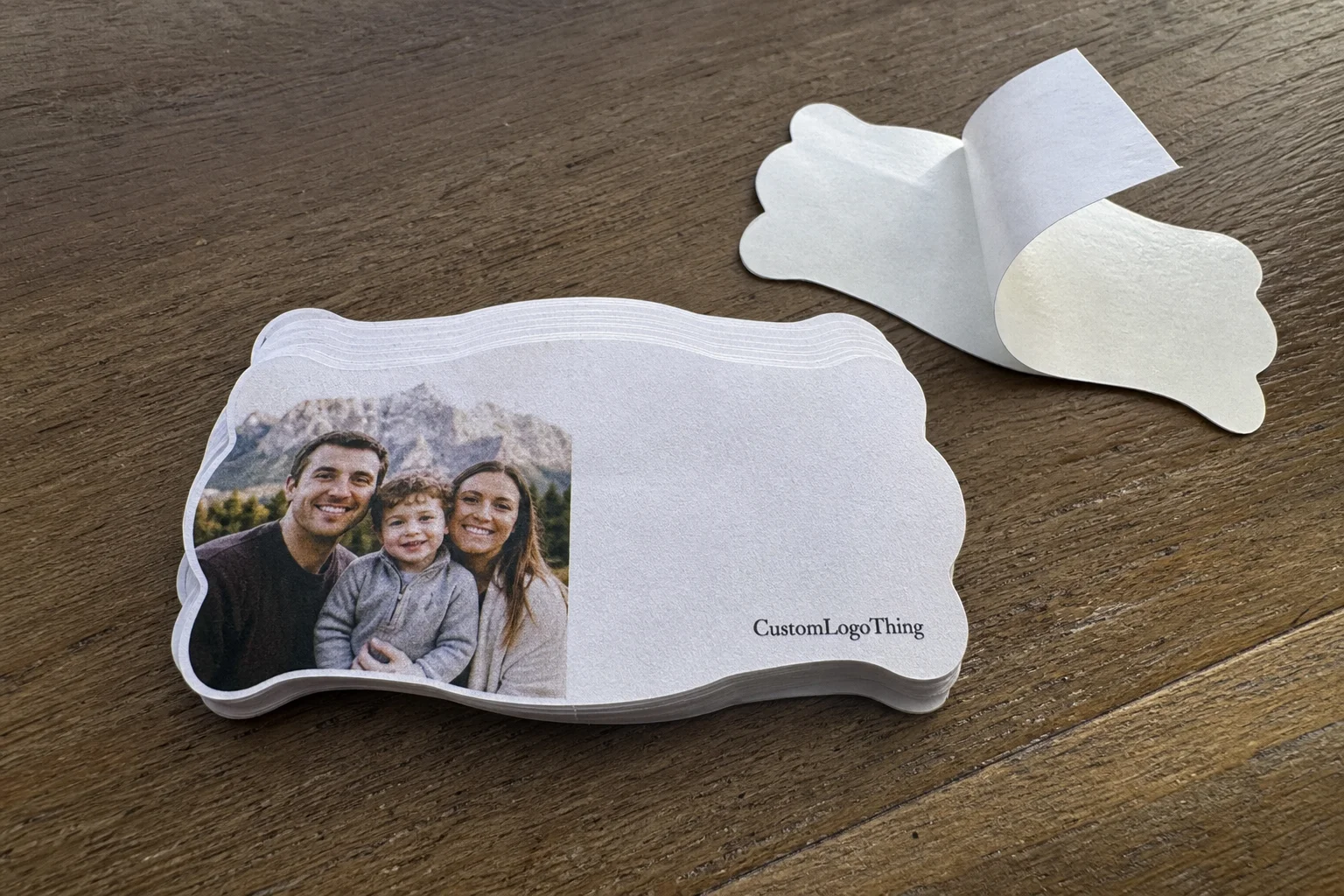
From a buyer’s point of view, the useful label is the one that solves a problem cleanly. A photo-based format does that better than plain text alone because the image gives the eye an immediate cue, while the name and address or phone number fill in the details. That matters in homes, schools, and care settings where someone may need to identify an item quickly without reading a long block of copy.
The same logic applies across a lot of identification work. If the goal is recognition, the design should favor legibility and speed. If the goal is presentation, you are closer to branding and packaging. Those are related jobs, but they are not the same one.
That distinction matters because not every item needs the same label. A backpack, a jacket lining, a lunch bag, and a cotton tee all behave differently. A label that works well on a smooth coated surface may fail on fleece, rib knit, or a highly textured fabric. When buyers skip that compatibility check, the label does not necessarily have a defect; it was simply spec’d for the wrong surface.
There is also a budget angle. Replacing misplaced clothing, uniforms, or gear often costs more than the label itself, especially once you factor in shipping, time, and the duplicate purchase that happens after the original item disappears into the wrong bin. For families with more than one child, caregivers managing multiple sets of belongings, or retailers putting together identification kits, the label is a small part with an outsized impact.
Useful labels also tend to sit alongside other identification tools, such as name tapes, size markers, and broader Custom Labels & Tags. That layered approach is often more reliable than asking one format to handle every job. A photo label can help with recognition, while a separate tag can carry a larger address block or brand mark if needed.
How custom photo address labels work on clothing and fabric
Most custom photo address labels share three parts: the printed face, the bonding layer, and, on some versions, a protective coating or laminate. The printed face carries the photo, name, and contact details. The bonding layer determines how the label attaches. The protective finish helps the print survive rubbing, handling, moisture, and repeated wear.
That structure sounds simple, but the materials behind it are what determine whether the label performs well or peels away early. Paper-based labels are fine for short-term use, inserts, and low-wear applications. For clothing and gear that are handled often, polyester, vinyl, or fabric-safe transfer materials usually hold up better. The right choice depends on where the label will live and how often it will be washed, rubbed, folded, or carried.
Image quality matters more than many buyers expect. A sharp photo that looks fine on a phone can become muddy once it is cropped to label size and combined with text. Low-resolution files and busy backgrounds are the main culprits. At small format, the printer cannot create detail that is not already in the source file, so a clean image with decent contrast gives the best result.
Placement is just as important as the label itself. On clothing, the safest areas are usually care tags, interior seams, or smooth inner surfaces where the label will not rub against skin or get hit by direct abrasion. On backpacks, lunch kits, and jacket shells, flat areas are easier. On knits, fleece, or anything that stretches a lot, test first. That is not extra caution for the sake of caution; it is standard production sense.
If the item will be washed frequently, choose a label meant for repeated laundering rather than a general-purpose sticker.
Artwork setup also affects the final result. Safe margins, readable type size, and a short contact block are not decorative choices. They determine whether the label works when someone is standing over a pile of belongings and trying to identify one item in a hurry. Good label design uses the same discipline as packaging design: start with the use case, then choose the substrate, then place the content so it can be read quickly.
If you already manage branded packaging or Custom Packaging Products, the process will feel familiar. Function comes first, then appearance. A nice-looking label that fails after two washes is not a better product than a plain one that stays readable.
Key specs that affect durability, readability, and feel
Four specifications drive most of the outcome: material, finish, adhesive, and size. Buyers often focus on the photo and forget that the printed design is only one piece of the result. If the material is wrong or the label is too small to read, the best artwork in the world will not rescue it.
Material determines how much wear the label can take. Paper stock is the lowest-cost option and can work for low-wear, short-life uses, but it is not the right answer for repeated washing. Polyester and vinyl are common for smoother surfaces and better abrasion resistance. Fabric-safe transfer labels are often the better choice for clothing that goes through the wash regularly.
If sustainability is part of the brief, ask sensible questions rather than assuming a greener look equals a greener product. Paper options can be FSC-certified where paper is appropriate, but the liner, adhesive system, and print waste still matter. Buyers who care about environmental claims should ask what part of the construction is actually certified and what part is simply decorative language.
Finish changes both appearance and readability. Matte is usually easier to read under indoor light and produces fewer reflections. Gloss can make a photo appear sharper or more vivid, but it also shows fingerprints and can glare under bright light. For labels that need to carry both a face and contact information, matte is often the safer default because legibility matters more than shine.
Size is where many designs run into trouble. Small labels stay discreet, but photo plus name plus phone number can become cramped fast. Medium sizes tend to be the most usable for clothing. Larger labels improve readability, though they can feel bulky on small garments or delicate items. If one format cannot do both discreet and high-visibility well, it is usually better to create two versions than to force one compromise design.
Adhesive or bond type should match the material it is going onto. Cotton, polyester, nylon, coated synthetics, and stretch fabrics all behave differently. If a supplier can provide adhesion data or test references, that is far more useful than a vague promise that the label “sticks well.” For buyers who want a more technical comparison, ask for the test method used for adhesion or wash resistance rather than just a marketing description.
Comfort matters too. On children’s clothing especially, a label that is bulky, stiff, or rough at the edge often gets picked at or removed. A product that irritates the wearer will not last, no matter how good the print looks on approval. The best label is the one that survives use without being noticed too much.
Pricing, MOQ, and unit cost: what you actually pay for
Pricing for custom photo address labels usually comes down to size, print method, quantity, material, and any finishing step beyond basic print-and-cut. A highly detailed full-color label on fabric-safe stock will cost more than a simple adhesive tag with minimal artwork. That is normal. The bigger issue is understanding which part of the quote is paying for durability, and which part is just adding visual polish.
For small household or family orders, unit price tends to be higher because setup and proofing costs are spread over fewer labels. Larger orders bring the unit price down, but the upfront spend rises. That is why buyers should avoid chasing the lowest per-label number without checking how many labels they will actually use. A cheap quote can become expensive if it leaves you with more stock than the household or program will consume.
| Option | Best use | Typical quantity | Typical unit cost | Main tradeoff |
|---|---|---|---|---|
| Paper adhesive label sheet | Short-term use, bag inserts, low-wash items | 100-500 labels | $0.08-$0.18 | Lowest cost, weakest wear resistance |
| Polyester or vinyl adhesive label | Jacket tags, backpacks, smoother surfaces | 250-2,000 labels | $0.15-$0.32 | Better durability, slightly higher cost |
| Fabric-safe heat-transfer label | Clothing that gets washed often | 100-1,000 labels | $0.25-$0.55 | Best wear resistance, more application steps |
| Laminated premium label | High-handling gear, repeated use, gift kits | 250-5,000 labels | $0.20-$0.45 | Good visual quality, slightly thicker feel |
Minimum order quantities vary. Digital print setups can sometimes support small runs because they do not require heavy plate-making or long press setup, while specialty materials, custom die-cuts, or extra finishing often push the MOQ higher. If a quote includes an artwork setup fee, it is commonly in the $15-$75 range. Rush service can add another $20-$60 depending on schedule pressure and order complexity.
Compare quotes on equal specs only. Otherwise you are comparing one label to another label that only looks similar on paper. If one supplier includes proofing, stronger adhesive, tighter cutting tolerances, and more stable material while another simply quotes a lower number on thinner stock, the lower quote is not automatically better. It may just be missing the parts that keep the label usable.
The same logic applies when labels are part of a wider product system. If the order sits inside branded packaging or a seasonal kit, the label should fit the visual and functional standards of the other components. Buyers who already plan custom printed boxes or other packaging pieces should keep the label consistent with the rest of the program, rather than treating it as an isolated add-on.
Production process, timeline, and turnaround from proof to delivery
The ordering process is usually straightforward: Request a Quote, submit artwork, review a proof, approve revisions, produce the labels, then ship. In practice, the slowest part is often the back-and-forth before production begins. Missing photo files, overly dense copy, unclear placement notes, and delayed approvals are the usual reasons an order slips.
For simple digital runs, production often takes about 3-7 business days after proof approval. Specialty materials, larger volumes, or additional finishing can push that to 10-15 business days or longer. Shipping is separate from production, which means a quick turnaround does not guarantee a quick arrival. Buyers often mix up production time with total lead time, and that is where deadlines get missed.
If the labels are going into school kits, gift sets, or retail packaging, transit protection matters too. Packages should be packed well enough to avoid bent edges, scuffed faces, or curled sheets during shipping. General transport testing guidance from ISTA is useful here because it reminds buyers that the product must survive the journey, not just the press.
Rush service makes sense when the deadline is fixed and real, such as a school start date, trip, or event. It makes less sense when the order was delayed by indecision and the buyer is hoping the production schedule can absorb the delay. Rush fees exist because they move the job ahead of other work. That is a practical cost, not a penalty.
The safest habit is to order earlier than you think you need to. That creates room for proof revisions, rechecks, and transit. It also gives you time to test a sample if you are changing materials or trying a new label format. In custom work, a little extra buffer often saves more money than a low price ever does.
Step-by-step: how to order labels without screwing it up
- Choose the item first. Decide whether the label will go on clothing, a bag, a jacket lining, or a smooth outer surface. The substrate tells you what kind of label is actually appropriate.
- Pick the label type and size. Start with the use case, then choose a size that keeps the photo and contact details easy to read.
- Prepare the image properly. Use a high-resolution photo, crop with safe margins, and avoid busy backgrounds if you can. A simple image usually prints better at small scale.
- Keep the text short. Name first. Contact next. If an address is truly needed, keep it concise. Dense copy makes the label harder to use.
- Request the proof and check it carefully. Verify spelling, crop, contrast, and placement. Also check whether the label is still readable at the actual size you plan to order.
- Test one label before placing the full order. Apply it to the intended fabric or surface, wait through any recommended cure time, and then wash or handle it the way the item will be used.
This is the part many buyers skip because it feels slow. It is not slow. It is cheaper than reprinting an entire batch because the phone number was cut off, the image was too dark, or the adhesive failed on a textured fabric. One test label gives you more useful information than a stack of assumptions.
If the labels are part of a broader identification plan, consider whether one format should do everything. In many cases, a better system includes photo labels for quick recognition, size markers for sorting, and more general identifiers from Custom Labels & Tags. That mix is usually more dependable than trying to make a single design cover every situation.
Common mistakes buyers make with custom photo address labels
- Overcrowding the design. Too much text turns a label into a tiny poster that is hard to read in real use.
- Picking the wrong application method. Adhesives meant for smooth surfaces will not behave the same way on stretchy or fuzzy fabrics.
- Uploading a low-resolution photo. A supplier cannot manufacture detail that was never in the source image.
- Ignoring wash instructions. If the label needs cure time or a specific washing window, skipping that step shortens its life.
- Ordering in bulk before testing. A small pilot run is far cheaper than a large batch built on the wrong spec.
- Not double-checking contact details. A wrong phone number or address is embarrassing, expensive, and avoidable.
Another mistake shows up among buyers who already think carefully about packaging design: they assume custom means visually loud. That is not always the right answer. For clothing identification, strong contrast and fast readability usually beat clever layouts. A simple design with one good photo often performs better than a crowded label that tries to look like retail packaging.
The same applies to finish and scale. Gloss is not automatically better. Bigger is not automatically better. More information is not automatically better. The right label is the one that still does its job after handling, laundering, and daily use.
Expert tips and next steps for a better order
Start with one use case. Everyday school clothes need a different spec than travel gear or sports bags. A label for jacket linings can tolerate a different feel than one meant for soft inner seams. If you try to build one universal format, you usually end up with a compromise that does nothing especially well.
Keep the design simple. One clear photo, strong contrast, and a short contact block usually outperform a busy layout. The fastest-read labels are the ones that do not make the eye work. That rule holds in packaging, on shelf, and in a laundry basket.
Ask for samples or a small pilot run if you are testing a new material, finish, or supplier. Compare quotes only after the specs match. A cheaper number is not useful if it describes a different construction. This is where buyers get burned most often: the quote looks similar until the details are lined up.
Plan reorders before you run out. Consistent artwork, the same size, and the same proof history make future orders easier to manage. That matters if you are coordinating across seasons or across multiple children, but it also matters in broader packaging programs where multiple printed pieces need to stay consistent. If the rest of the system includes package branding or custom printed boxes, the label should fit that visual structure instead of fighting it.
For buyers who want the simplest path to a strong order, the basic formula is straightforward: Choose the Right material for the item, keep the artwork legible, approve the proof only after checking placement and readability, and allow enough time for production plus transit. Custom photo address labels work best when the spec matches the surface and the timeline is realistic.
How do custom photo address labels stay on clothing after washing?
Durability depends on the backing type, the fabric surface, and whether the label is intended for repeated laundering. Labels last best when applied to clean, dry fabric and given the recommended set or cure time before the first wash. For frequent washing, ask for fabric-safe, wash-resistant options rather than general-purpose adhesive labels.
What size is best for custom photo address labels on kids' clothing?
Small sizes can work for tag areas and discreet placement, but the text still has to remain readable at a glance. Medium sizes are usually the most practical for combining a photo with name and contact details. If the garment has limited space, prioritize legibility over packing in more information.
Are custom photo address labels better than printed name tags?
They are better when you need fast visual identification with a photo and contact information in one place. Printed name tags can be simpler and, in some cases, more durable for very heavy-wash items. The better choice depends on how much information you need and how often the item will be cleaned.
What affects the price of custom photo address labels the most?
Quantity, size, print method, and material usually drive pricing the most. Special finishes, rush production, and artwork setup can add to the total. Unit cost normally drops as quantity rises, but only order more than you need if you will actually use the extra labels.
How fast can I get custom photo address labels made?
Simple orders can move quickly after proof approval, while specialty materials or larger runs take longer. The biggest timeline variables are proof revisions, production method, and shipping speed. If you need them for a trip, school season, or event, build in extra time for approval and transit.

