Custom Plastic Garment Bags Print Method Comparison: What Actually Changes the Result
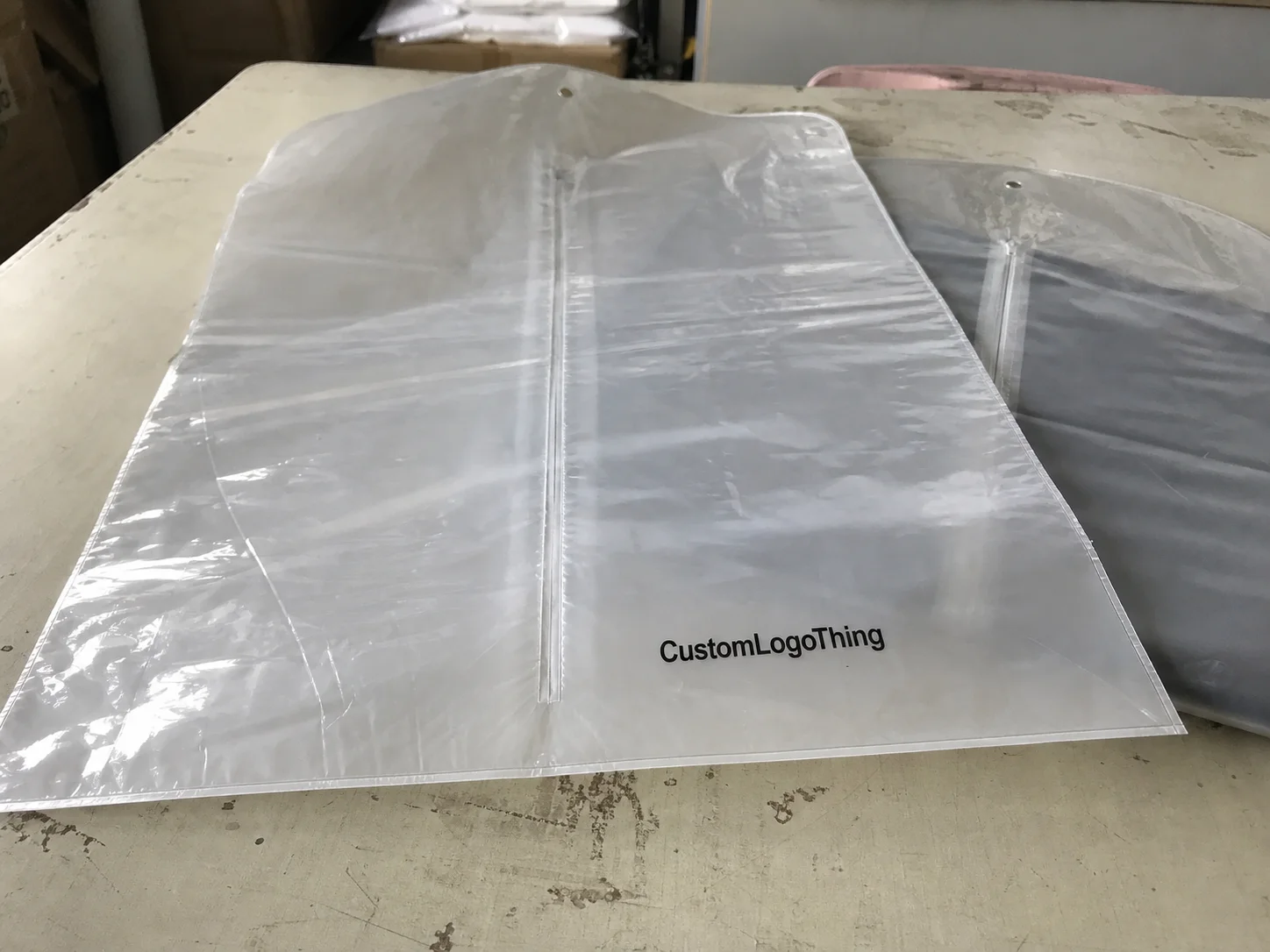
Two garment bags can share the same size, thickness, and headline price but perform very differently once printed. One arrives crisp and durable enough for packing, shipping, and store handling. The other shows weak white ink, fuzzy small text, or logos that scuff before use.
That is why print method should be decided early. It affects setup cost, MOQ, usable print area, color consistency, lead time, and how stable the bag will be on reorders.
For apparel packaging, buyers usually compare four formats:
- Flat poly bags for folded apparel
- Resealable apparel bags with adhesive strip or zipper
- Die-cut handle bags for retail takeaway
- Long garment covers for suits, uniforms, and dry-cleaning use
Those formats do not share the same print limits. Zipper tracks, vent holes, side seals, and die-cut handles all reduce safe artwork space. A design that looks balanced on a flat proof can shift once the bag is converted.
The main methods are flexographic printing, gravure printing, digital printing, and screen printing. The right choice depends on artwork complexity, film type, order size, color count, finish, and schedule. Buyers comparing items across broader Custom Packaging Products lines usually get better results when they treat print method as a sourcing decision, not a styling detail.
How Common Printing Methods Work on Plastic Garment Bags
Flexographic printing is the most common method for printed plastic packaging. It uses flexible relief plates to print on moving film, usually before the bag is cut and sealed. For standard apparel bags with simple branding, flexo is often the practical middle ground: moderate setup cost, repeatable production, and good performance on one- to four-color spot artwork.
Flexo works best with clean artwork. Bold logos, warning copy, and uncomplicated layouts usually reproduce well. It is less forgiving with tiny reversed text, very thin strokes, or large solids that need perfectly even coverage.
Gravure printing uses engraved cylinders instead of plates. It is often chosen for long runs that need stronger consistency, smoother solids, and finer detail. Buyers with large repeat programs and tighter image expectations often compare gravure against flexo.
The tradeoff is setup cost and lead time. Cylinder charges often run about $250 to $600 or more per color, per size, and first orders usually take longer because cylinders must be prepared before production.
Digital printing removes plates and cylinders from the process. That makes it useful for short runs, multi-SKU programs, pilot orders, and artwork that changes often. It also shortens prepress and reduces upfront cost.
Digital still has limits. Print quality, adhesion, white opacity, and rub resistance depend heavily on the press, primer, and substrate. A digital sample on the actual film matters more than a generic printed swatch.
Screen printing covers a narrower range of garment bag work but can solve specific problems well. It is often used for simple prints on finished bags, unusual placement, or thicker ink deposits where roll printing is not practical.
In general:
- Flexo: best for simple art and repeat volume
- Gravure: best for high volume and tighter visual control
- Digital: best for short runs and changing artwork
- Screen printing: best for specialty placement on finished bags
What Buyers Should Compare Before Choosing a Print Method
Artwork complexity narrows the field first. A one-color wordmark is easy. Tiny legal text, gradients, fine reversed elements, and layered logos are not. As a rule of thumb, lines below about 0.25 to 0.30 mm and very small knockout text need extra review, especially on soft film or basic flexo setups.
Film type matters as much as print method. LDPE is common for apparel bags because it is soft and familiar in production. HDPE has a crisper feel and different surface texture. PP often looks glossier and more retail-ready but can show scratches differently. Recycled-content and other alternative resin blends can change ink adhesion and consistency.
Surface finish changes appearance as well. Clear film shows the garment but can weaken color unless white underprint is used. Frosted film often looks better at retail but can mute logos built for a bright white background. Matte can look premium but may show abrasion more easily than gloss.
Print placement is another common problem area. A centered logo on a flat panel is simple. A back panel carrying warning copy, vent holes, zipper exclusions, and seal tolerances is not. Printable area almost always shrinks after construction is finalized.
Durability expectations should be defined early. A bag used once at retail needs less than one that will be packed, master-cartoned, cross-docked, and shipped through e-commerce channels. Ink adhesion, blocking resistance, and scuff resistance matter more as handling increases.
Color control also separates methods quickly. If the brand expects close Pantone matching across reorders, ask how the supplier approves color, what variation is acceptable, and how white opacity is checked. “Close enough” is not a useful standard.
Compliance content takes up real space. Suffocation warnings, recycle marks, country-of-origin statements, barcodes, size identifiers, and retailer labels can force changes to both layout and print method.
Buyers managing other branded items in their Custom Packaging Products range should keep the same visual standards across garment bags, mailers, and inserts. A final checkpoint: ask how the supplier controls film treatment, registration, and ink adhesion. Those details often explain the difference between a bag that ships cleanly and one that becomes a complaint.
Cost, MOQ, and Unit Economics by Print Method
The real cost logic usually sits in setup structure, not just unit price. One quote may look cheap but rely on high tooling charges or an MOQ that forces overbuying. Another may look higher at first and still produce lower annual cost because the run size, reorder pattern, and inventory risk fit the program better.
The basic tradeoff is consistent: traditional methods cost more to set up and less to run; digital costs less to start and more per piece. Volume changes the answer quickly.
For a straightforward apparel bag around 10" x 14" with one-side branding, indicative market ranges often look like this:
| Print Method | Typical MOQ | Setup Range | Unit Cost at 5,000 | Unit Cost at 50,000 | Best Fit |
|---|---|---|---|---|---|
| Flexographic | 5,000-10,000 | $150-$500 per color | $0.09-$0.18 | $0.04-$0.09 | Simple repeat programs |
| Gravure | 20,000-50,000 | $250-$600+ per color | $0.14-$0.24 | $0.035-$0.08 | High-volume premium runs |
| Digital printing | 500-3,000 | $0-$150 | $0.18-$0.35 | $0.12-$0.24 | Short runs, multiple SKUs |
| Screen printing | 1,000-5,000 | $80-$300 per screen | $0.16-$0.30 | $0.10-$0.22 | Finished-bag specialty printing |
These numbers are directional. Material, gauge, zipper versus adhesive strip, vent holes, die-cut handles, white underprint, print coverage, and packing method all move the quote.
Thickness often falls in the 1.5 to 3.0 mil range for common garment bag applications, though lighter or heavier constructions exist. Thickness affects both material cost and print behavior; thinner, softer film is less forgiving on large solids and fine detail.
Sampling usually saves money by exposing risk early:
- Digital mockups: useful for layout only
- Press proofs: better for checking print behavior
- Pre-production samples: best for judging print and bag construction together
A low unit cost on a large gravure run is not a bargain if the artwork changes before inventory is used. The best comparison includes tooling, unit price by quantity break, sample charges, repeat-order savings, waste allowance, freight impact, and inventory exposure.
Process and Timeline: From Artwork to Delivered Bags
The usual path is artwork review, dieline confirmation, method approval, proofing, tooling if needed, film sourcing, printing, conversion, inspection, packing, and shipping. The sequence is standard; timing is not.
Digital printing is usually fastest in prepress because there are no plates or cylinders. A simple short-run job may move from approved artwork to production in about 7 to 12 business days if the bag style is standard and film is in stock.
Flexographic projects often run about 12 to 18 business days after proof approval for a first order. Gravure often takes 18 to 30 business days because cylinder preparation adds time. Screen printing varies more depending on whether the work is manual and whether printing happens before or after bag conversion.
The main delay points are predictable:
- Raster art instead of editable vector files
- Bag size or thickness left undecided
- Color changes after proof approval
- Late additions to warnings or barcodes
- Material substitutions caused by film availability
- Unclear placement around closures or vent holes
Repeat orders usually move faster if tooling is still usable and specifications have not changed. Buyers should still confirm how long plates or cylinders are stored and whether repeat orders can stay on the same process.
Freight can break a launch schedule even when production stays on time. Ocean transit, customs clearance, domestic consolidation, and peak-season booking all need buffer. For imported first orders, adding one to two weeks of schedule cushion is usually prudent.
Where disposal guidance or durability claims matter, teams may also review public information from the EPA and distribution benchmarks from ISTA.
How to Match the Right Print Method to Your Bag Program
Start with realistic order quantity, not optimistic annual demand. That usually removes at least one method immediately.
Then review the artwork honestly. Count spot colors, flag small reversed text, confirm line weights, and decide where white opacity matters. If the design includes several versions by size, season, or campaign, digital may rise quickly.
Next, lock the bag construction before debating decoration:
- Dimensions
- Film type and thickness
- Closure style
- Vent holes or hang hole
- Warning copy requirements
- Clear, frosted, matte, or gloss finish
Once those basics are fixed, the match is usually clearer:
- Short promotional run with several versions: digital is often the best fit
- Standard retail apparel polybag with simple repeat branding: flexo is usually the practical choice
- Large ongoing program with tighter appearance demands: gravure may justify the setup cost
- Simple logo on a finished bag with unusual placement needs: screen printing can solve the problem
A useful RFQ should include quantity tiers, dimensions, thickness, material, closure style, print area, artwork files, ship-to destination, and required in-hand date. If suppliers quote from different assumptions, the comparison is not valid.
Practical checkpoint: ask for samples printed on the same film family and similar bag format, not just the same logo on unrelated packaging.
For brands managing multiple formats, this is also the point to align standards across garment bags and other Custom Packaging Products.
Common Print Method Mistakes That Create Bad Bags and Worse Reorders
The most common mistake is choosing by visible unit price alone. That ignores tooling, MOQ fit, likely waste, and durability. A bag that saves a few cents each can cost more if it forces overbuying or arrives with scuffed branding.
Another routine failure is approving artwork on screen and assuming it will translate directly to film. Clear and frosted substrates change contrast, white opacity, and final logo appearance.
Overly delicate artwork also creates preventable problems. Hairline strokes, tiny reversed text, and decorative details often fail because the method was mismatched to the design, not because production was poor.
Layout interference is another common issue: logos too close to side seals, warning copy crowding zipper tracks, vent holes cutting through icons, or hang holes interrupting the wordmark.
Reorder planning matters too. A method that works for the first PO can create drift later if repeat quantities force a switch to another process. That is one reason to define the likely reorder path before launch.
Quality control should also be measurable. If no one defines acceptable tolerances for placement, color shift, opacity, seal strength, and rub resistance, disputes after delivery become subjective.
A short pre-production checklist helps:
- Artwork: vector files with outlined fonts and marked spot colors
- Material: confirmed film type, gauge, and finish
- Construction: final dimensions, closure details, venting, and handles
- Compliance: approved warning copy, barcode zones, and required marks
- Quality standard: agreed tolerances for placement, color, opacity, and rub resistance
- Planning: realistic quantity and reorder path
Practical Next Steps for Comparing Suppliers
Build one RFQ packet and send the same information to every supplier: artwork, bag dimensions, material, thickness, print areas, quantity breaks, ship-to destination, and required in-hand date. If the inputs change, the quotes will not be comparable.
Ask each supplier the same questions:
- Which print method do you recommend for this artwork and volume, and why?
- What placement and color tolerances should be expected?
- What are the tooling charges, and what savings apply on repeat orders?
- How long do first orders and repeat orders take?
- What inspection standard or acceptable quality level is used?
- Can you show similar work on the same film type and finish?
If appearance matters, request side-by-side samples. A flexo sample next to a gravure or digital sample can answer more than a quote sheet can. The best process is usually simple: narrow the field to one or two viable methods, compare matched samples, verify schedule against the real launch date, and place the order with clear written specifications.
FAQ
Which custom plastic garment bags print method is best for small orders?
Digital printing is often the best fit for small orders because setup cost is low and version changes are easier to manage. If the artwork is simple and the supplier has an efficient setup, flexographic printing can also work, but small custom quantities usually favor digital first.
Is flexographic or gravure printing better for custom garment bag packaging?
Flexographic printing usually fits simple spot-color branding at moderate to high volumes. Gravure is often stronger for large repeat programs that need smoother solids, tighter consistency, and finer detail. If the order volume cannot absorb cylinder cost, gravure can be unnecessary overhead.
How much does custom printing on plastic garment bags usually cost?
Cost depends on bag size, film type, thickness, color count, print coverage, tooling, and quantity. For many standard apparel bags, unit pricing may range from roughly $0.04 to $0.35 per bag depending on method and run size, with separate setup costs for plates, cylinders, or screens where applicable.
What artwork works best for printed plastic garment bags?
Vector artwork with outlined fonts, controlled line weights, and clearly identified spot colors usually produces the most reliable result. Bold logos and readable text are safer than intricate decorative details, especially on soft or frosted film. White underprint needs to be planned from the start, not added as a last-minute fix.
How long is the lead time for custom plastic garment bags with logo printing?
Lead time depends on print method, tooling requirements, material availability, sampling, and shipping mode. Short digital runs may move in about 7 to 12 business days after approval, while first-order flexo and gravure programs often take longer. Buyers should always ask for both production lead time and realistic in-hand delivery timing.

