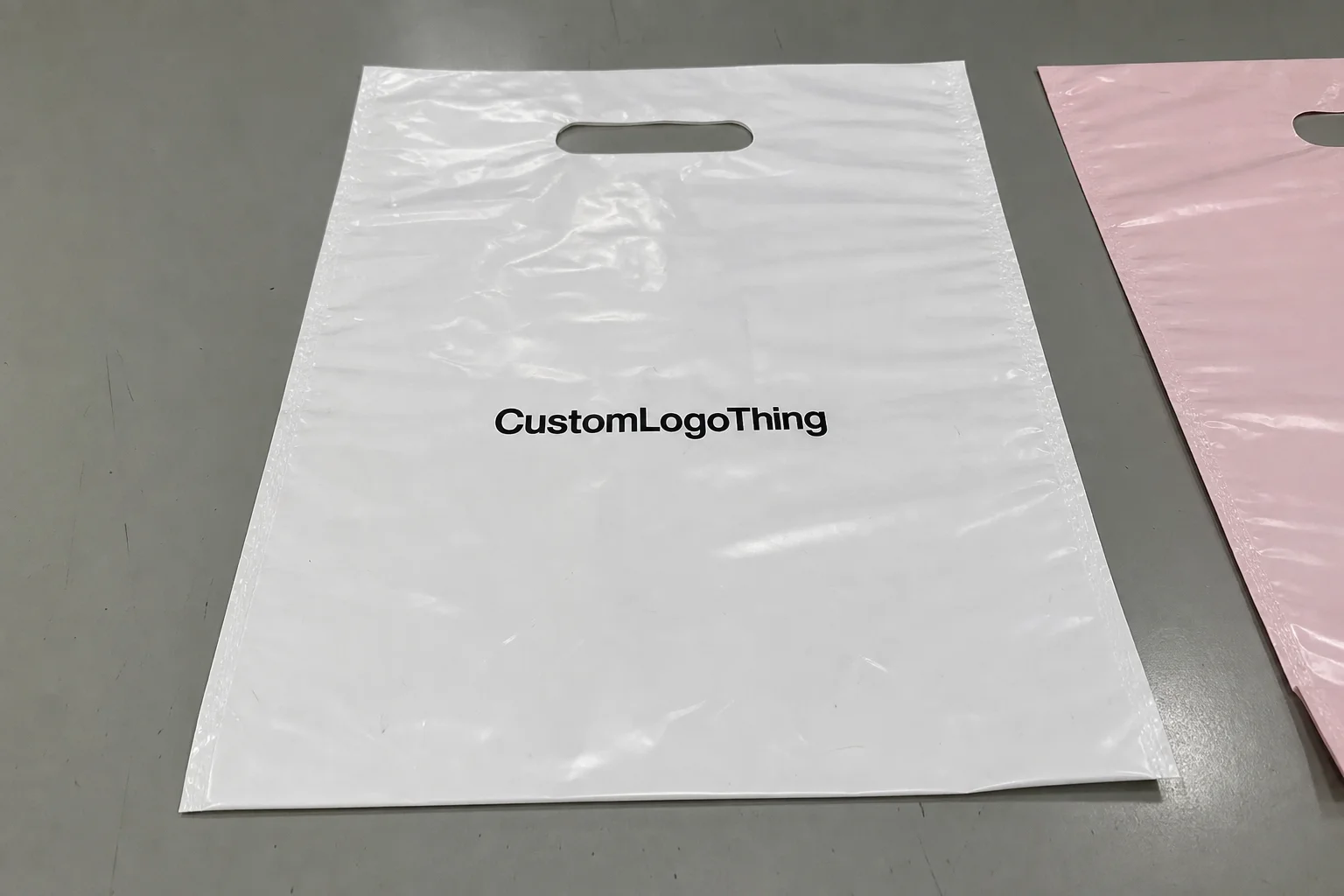
Thin garment covers fail faster than many buyers expect. When sourcing heavy duty printed garment bags with a logo, the issue is usually practical: torn seams, split hanger openings, wrinkled uniforms, damaged suits, or weak presentation during storage and handoff. A stronger bag is not just branded packaging. It has to protect fabric, handle repeated movement, and still look clean from warehouse rack to customer delivery.
For apparel brands, dry cleaners, uniform suppliers, event teams, and distributors, the right bag can reduce re-bagging, replacements, and prep work. That depends on matching the material, thickness, dimensions, and print method to the actual use. Buyers who start with logo placement and treat performance as secondary often end up with a bag that looks fine in a proof but fails in the field.
When Thin Cover Bags Fail in Real Shipping and Storage

Lightweight poly covers work for dust protection and short retail transfer. Problems start when bags see friction, heavier garments, frequent rack movement, or repeated handling. Thin film may tear at the side seal, stretch around the hanger slot, or fail near a zipper track. Then the garment catches, wrinkles, or drags.
Heavy Duty Garment Bags matter most in these situations:
- Suit and formalwear transport where presentation matters
- Uniform storage for hospitality, healthcare, transit, and facility programs
- Retail transfer between production, finishing, and store delivery
- Dry-cleaning and laundry programs that need stronger reuse cycles
- Event and show logistics with fast movement between racks, trucks, and setup areas
A heavier polyethylene bag with better seams and a properly sized hanger opening resists punctures and handles more cleanly through those steps. In many operations, the main savings come from less secondary labor rather than fewer damage claims. Packing is faster when the opening stays shaped, the closure aligns, and the garment slides in without snagging.
Practical takeaway: If the bag must survive shipping, repeated hanging, or premium presentation, specify it as a functional packaging component rather than a basic cover.
Custom Heavy Duty Garment Bag Options That Hold Up
Construction drives performance. A bag can have the right logo and still fail at stress points if the build is wrong.
Common material and construction choices
LDPE is the most common base film because it offers flexibility, clarity, and reliable sealing. Buyers needing more puncture resistance often move to co-extruded film or heavier PE blends. Film can be clear, frosted, semi-opaque, or fully opaque depending on presentation and privacy needs.
Common construction options include:
- Side-weld or bottom-gusset designs for different loading styles
- Reinforced seams to reduce split failures
- Gussets for coats, uniforms, and bulkier garments
- Zipper closures for repeated opening and closing
- Hook-and-loop closures for reusable formats
- Die-cut hanger openings sized to the hanger type
Flat bags may be enough for shirts or lighter uniforms. For jackets, dresses, or outerwear, gusset depth matters more. A 3-inch to 5-inch gusset often improves loading and reduces compression. Hanger openings also need balance: too tight slows packing, too loose lets the garment shift.
Sizing by garment type
Size should be based on the largest garment in the pack plan, not the average piece. Typical ranges:
- Shirts and blouses: about 24 x 36 inches
- Uniform sets: about 24 x 40 or 26 x 42 inches
- Suits and jackets: about 24 x 40 to 24 x 54 inches
- Dresses and coats: about 26 x 54 to 30 x 60 inches
- Long outerwear: 30 x 65 inches and up, often with gussets
Width affects shoulder fit, length affects hem protection, and depth affects how naturally the garment hangs. These dimensions should be reviewed together, especially if bags are later packed into cartons.
Print methods and visibility
For most custom runs, flexographic printing is the standard choice. It works well for volume production and usually supports 1-color to 4-color branding. Common logo positions include the chest area, lower corner, or a vertical panel. Flexible film prints cleanly, but very fine lines, tiny reverse text, and heavy flood coverage can be harder than on rigid packaging.
Optional features that add function:
- Transparent inspection window
- Vent holes where breathability is needed
- Hang tabs for display support
- Warning language or care instructions
- Barcode or SKU area
- Matte or opaque finish for a more premium look
When comparing suppliers, ask how they define heavy duty. A 1.5 mil bag and a 3.0 mil bag are entirely different products even if the dimensions and print are the same.
Printed Heavy Duty Garment Bag Options: Material Specs Buyers Should Check
Thickness is one of the clearest drivers of feel and performance. Buyers usually describe film in mil, where 1 mil equals 0.001 inch. Common garment bag ranges run from about 1.25 mil to 4.0 mil, depending on garment weight and reuse needs.
- 1.25 to 1.5 mil: light protection and short handling cycles
- 1.75 to 2.25 mil: stronger daily-use range for uniforms and standard transport
- 2.5 to 3.0 mil: heavy duty performance for repeated handling
- 3.5 mil and above: specialty reusable applications with higher cost and freight weight
Thicker film generally improves tear resistance and hand feel, but resin quality also matters. A good 2.5 mil co-ex film can outperform a lower-grade 3.0 mil film.
For a useful quote, confirm these specs:
- Film type: LDPE, HDPE blend, or co-extruded PE
- Thickness: target mil or acceptable range
- Finished dimensions: width x length x gusset depth if needed
- Closure style: open top, zipper, hook-and-loop, or flap
- Print coverage: one side, two side, logo only, or panel print
- Ink count: usually 1 to 4 colors
- Packing format: loose packed, bundled, or carton counted
Durability depends on more than film thickness. Seam strength is critical, especially around side welds and zipper insertion. Loading method matters too. Sharp hanger ends, metal clips, and overfilled garments create concentrated stress that can break even decent film.
If your program has sustainability requirements, ask about recycled content and reuse expectations. For broader packaging guidance, review the EPA sustainable packaging resources. If your garment bags are packed with certified paperboard inserts or cartons, FSC certification may also matter.
Also confirm print limits before proofing. Large dark flood backgrounds, tiny legal copy, or tight registration across wide panels may increase waste or setup time.
Cost, Pricing, MOQ, and What Drives Your Quote
Pricing is mainly driven by size, thickness, print colors, print area, closure hardware, and order quantity. A stock-size bag with a 1-color logo prices very differently from a gusseted zipper bag with multi-color print.
Typical custom pricing ranges for planning:
| Bag Type | Typical Specs | Estimated MOQ | Estimated Unit Price |
|---|---|---|---|
| Basic printed garment bag | 24 x 40 in, 1.5 mil LDPE, 1-color print, open top | 5,000 pcs | $0.18-$0.28 |
| Mid-grade heavy duty bag | 24 x 54 in, 2.0 mil PE, 2-color print, die-cut hanger opening | 3,000-5,000 pcs | $0.32-$0.55 |
| Premium reusable garment bag | 26 x 60 in, 2.5-3.0 mil co-ex film, zipper, 2-color print | 2,000-3,000 pcs | $0.65-$1.20 |
| Large gusseted outerwear bag | 30 x 65 in with 4 in gusset, 3.0 mil, custom print | 2,000-5,000 pcs | $0.95-$1.60 |
These numbers are directional only. Resin prices, freight, and print complexity shift the final result.
MOQ logic is straightforward. Printing plates, film setup, and machine time carry fixed costs, so larger runs usually lower the unit price. Many custom programs start at 3,000 to 5,000 pieces. Wide bags, gussets, and zipper conversion often raise setup requirements.
To get an accurate quote quickly, send:
- Finished dimensions
- Target film type and thickness
- Closure style and hanger opening details
- Artwork file, ideally vector AI or PDF
- Print colors and Pantone targets if needed
- Total quantity and ship-to zip code
- Required in-house date
Some of the easiest cost reducers are operational, not material-based. Finalized art avoids revision loops. Standard sizes can reduce setup complexity. Simpler print coverage can improve both price and lead time.
Production Steps and Lead Time from Art to Delivery
A custom order usually follows this workflow:
- Quote review based on dimensions, film, print, and quantity
- Artwork setup for logo placement and ink count
- Proof approval for size, print position, and color targets
- Film production using the selected resin and thickness
- Printing through flexographic plates
- Conversion into finished bags with seals, cuts, holes, or zipper addition
- Packing and count verification
- Shipment by parcel, LTL, or pallet freight
Most delays start early: missing dimensions, low-resolution logo files, unclear Pantone references, or slow proof approval. A short proof delay can push the order into the next production slot.
Typical lead times:
- Stock-based print program: often 10-15 business days after proof approval
- Fully custom film and print: often 15-25 business days after proof approval
- Complex zipper or specialty converted bag: often 20-30 business days
Shipping details matter too. Confirm whether bags will be loose in cartons, packed in counted bundles, or palletized. If your receiving team works by carton count or has strict delivery windows, define that before production.
For broader transport testing references, ISTA provides useful distribution-performance guidance.
What Makes a Reliable Custom Packaging Supplier Worth Reordering From
A competitive quote means little if reorders vary. Buyers need consistency in film feel, thickness, print alignment, and seal quality.
Check for:
- Thickness control close to the agreed mil target
- Print registration that keeps logos aligned and readable
- Shade matching close to approved brand colors
- Seal and seam quality without weak corners or burn-through
- Spec retention for reorders so prior builds can be repeated accurately
Communication matters as much as production. Samples should be identified by full spec, and proofs should clearly show orientation, opening side, and print placement. Reorders should reference the prior construction and artwork version.
A good supplier also helps trim unnecessary cost. In some cases, reducing print colors or adjusting the hanger opening solves the real issue better than simply increasing film thickness.
Custom Logo Things supports buyers who need durable packaging specs, responsive quoting, and dependable production follow-through. If you need help with sizing, artwork placement, or material selection, use the Contact Us page to start the quote process.
Next Steps to Get an Accurate Printed Bag Quote
Useful pricing starts with clear specs. Gather these details before requesting quotes so suppliers are pricing the same build:
- Use case: retail handoff, dry-cleaning, warehouse storage, shipping, or uniforms
- Garment type: shirt, jacket, suit, dress, coat, or mixed pack
- Dimensions: width, length, and gusset if needed
- Material preference: LDPE, co-ex film, clear or opaque finish
- Thickness target: for example 2.0 mil or 3.0 mil
- Closure style: open top, zipper, flap, or hook-and-loop
- Quantity: trial run, first run, or annual volume
- Logo file: vector art is best
- Delivery location: zip code or receiving details
Then set your main priority: protection, presentation, cost, or a balance of all three. A reusable 3.0 mil zipper bag performs very differently from a 1.5 mil transfer bag, and the quote should reflect that.
If the bags will support premium apparel or visible retail presentation, ask for a sample or detailed spec review before production. You can also use the Contact Us page to send dimensions, artwork, and timeline for review.
The best buying approach is to compare performance, price, and lead time together. A cheaper bag that tears during handling usually costs more once rework is included.
How do I request a printed heavy duty garment bags with logo quote?
Send the finished dimensions, material preference, closure style, logo artwork, quantity, and shipping zip code. Include the actual use case, such as retail, storage, shipping, or dry-cleaning, so the quote matches the application.
What thickness is best for heavy duty printed garment bags?
It depends on garment weight, handling frequency, and whether the bag will be reused. As a working range, 1.75 to 2.25 mil often fits daily-use uniform or apparel protection, while 2.5 to 3.0 mil is a stronger choice for repeated handling or premium presentation.
What is the usual MOQ for custom printed garment bags?
MOQ varies with bag size, film type, and print setup, but many custom printed runs begin around 3,000 to 5,000 pieces. Specialty constructions may start lower or require more volume. Larger orders usually reduce the per-unit cost.
How long does production usually take after artwork approval?
Stock-based programs often run about 10 to 15 business days after proof approval. Fully custom bags often take 15 to 25 business days, and specialty builds with zipper conversion or added features may take longer.
Can I get samples before placing a full order?
Yes. Sampling or spec confirmation is a good idea if fit, finish, closure performance, or print placement matters. Ask for a sample, pre-production proof, or detailed construction review before full production.