Custom Plastic Tote bags can look inexpensive on a quote and expensive in practice. The difference usually shows up in the handle strength, the film gauge, and whether the print survives real use instead of just a mockup. If the bag is going to carry retail purchases, event handouts, or boxed goods, the spec matters more than the logo.
Most buyers start with artwork. That is the wrong order. A sharp logo on a weak bag is still a weak bag, and a bag that splits at the seal creates a complaint faster than any branding detail can fix. If you are coordinating cartons, inserts, or other packaging around the same campaign, it helps to align the full order through Custom Packaging Products rather than treating each item as a separate purchase.
What Buyers Miss About Custom Plastic Tote Bags
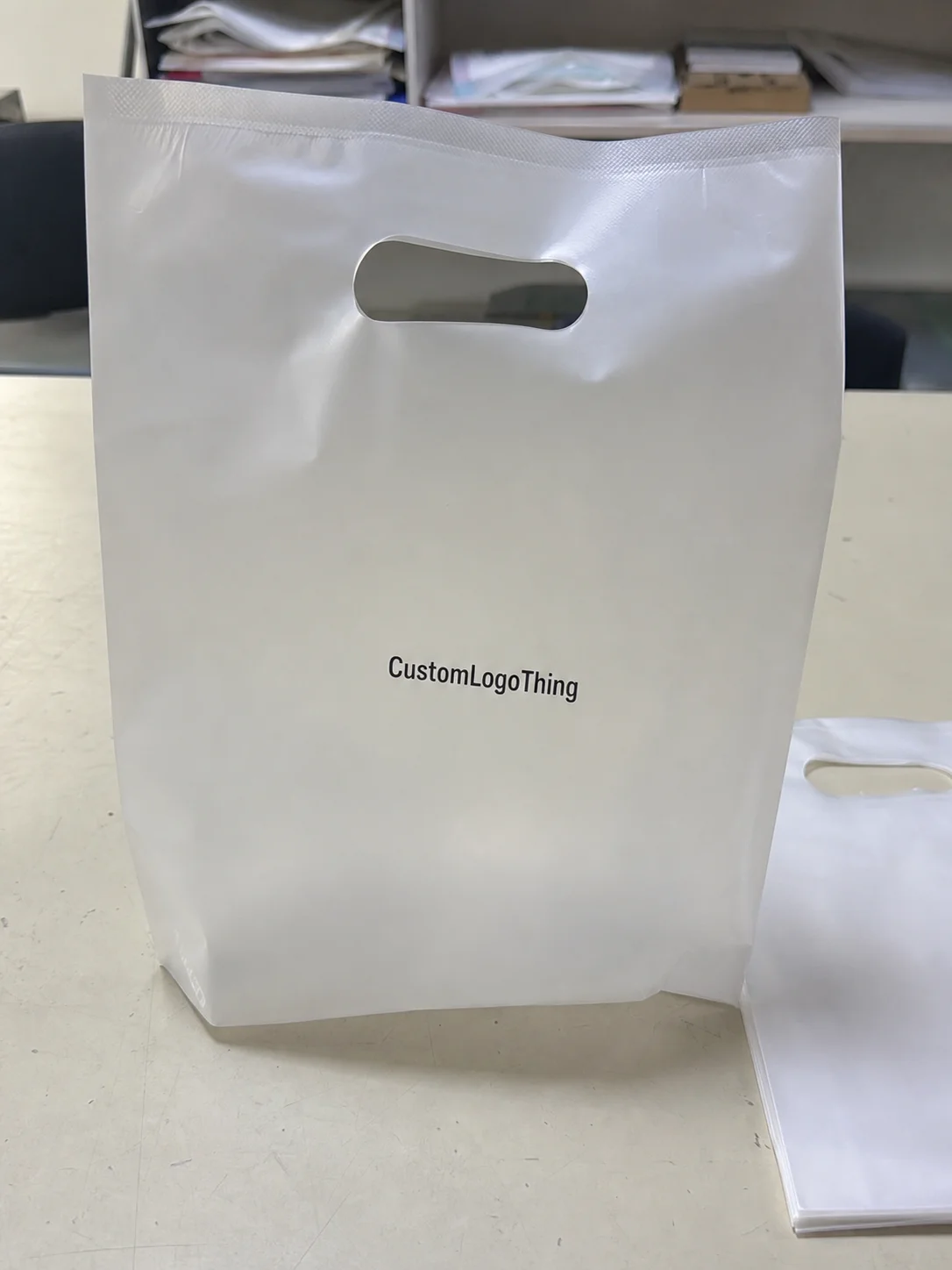
The common mistake is treating the print as the product. It is not. In practice, custom plastic tote bags usually fail first at the handles, seams, or side welds, not because the logo fades. That matters because the bag has a real job: carrying groceries, supporting a store purchase, or handing off a promo kit without feeling disposable the second it leaves the counter.
Start with use, not appearance. A grocery carryout bag needs a different structure than a boutique bag handed out with apparel, and both differ from a trade show tote packed with brochures, samples, and a bottle of water. If the bag only needs to survive one trip, a lighter film and simpler print can make sense. If you want repeat use, gauge, reinforcement, and seam construction stop being details and become the whole story.
Buyers usually have one of three goals hiding under the same request:
- Lowest cost, usually for high-volume giveaways or short-life carryout.
- Best shelf appeal, which means cleaner print, better color contrast, and a bag that looks deliberate.
- Longer circulation, where the bag becomes a walking ad and the extra material cost has to earn its keep.
From a packaging perspective, the bag should match the brand promise. A luxury boutique with a thin, crinkly film bag sends one message. A sturdy matte tote with a reinforced handle sends another. That is why buyers compare custom plastic tote bags with custom printed boxes and other branded packaging options. Customers do not separate those pieces. They notice whether the whole package feels coherent.
The cheapest bag is often the one that costs the most later. Reprints, complaints, and weak brand presentation do not disappear just because they show up after delivery.
If you need a practical reference point, ask whether the bag should be treated like disposable packaging or a reusable carrier. That one answer shapes the rest of the order: film thickness, print method, handle style, carton count, and even freight method. For transit-heavy programs, some buyers also check packaging handling standards through the ISTA framework so finished goods arrive looking the way they did on press.
How Custom Plastic Tote Bags Are Built
There are four core variables in the build: size, film thickness, handle style, and print method. Miss one and the bag can look fine in a proof while performing badly in the hand. That is the expensive lesson buyers usually learn after the first run.
Most tote-style bags use polyethylene film, usually LDPE, LLDPE, or a blend chosen for flexibility and tear resistance. Thinner films are cheaper and lighter. Heavier gauges feel more substantial and resist punctures better. A common retail carryout spec may sit around 1.25 to 2 mil, while a more durable reusable bag often moves into the 2.5 to 4 mil range. Those numbers are not magic. They just describe the tradeoff between cost, hand feel, and strength.
Printing is usually done by flexographic or screen methods, depending on the design and the run size. Flexo works well for longer runs and repeatable spot colors. Screen printing can lay down heavier ink and often suits bold logos on darker film. If the artwork is messy, too thin, or overloaded with tiny type, the press will expose that immediately. Clean vector art prints cleanly. Muddy files print like mud.
Here is the short version of how print complexity changes results:
- One-color print: lowest setup complexity, fastest approval path, usually the cheapest way to brand a bag.
- Two to three colors: still manageable, but registration and setup begin to matter more.
- Full-coverage or process-heavy graphics: strongest visual impact, highest cost, and more room for failure if the art file is not prepared properly.
Construction changes perceived value too. A die-cut handle feels different from a loop handle. A reinforced patch changes how the bag hangs when someone carries it by the top. Side gussets increase capacity and improve stacking. Bottom gussets help the bag open more naturally. None of that is glamorous. All of it affects whether the bag feels like product packaging or just a cheap carrier with a logo applied after the fact.
Finish matters as well. Gloss film tends to look louder. Matte or frosted film feels more restrained and often more premium. Opaque white film can improve color accuracy, while clear film creates a lighter look but gives you less control over how the logo reads against the contents. That is where packaging design earns its keep. A decent spec can make a basic logo look intentional.
There are also quality-control checks that matter more than buyers realize. A serious supplier should verify seal strength, print registration, color consistency, and gauge tolerance before packing the run. If the order is going to a retailer or a distribution center, carton count and pack-out matter too. A bag that is technically correct but packed loosely can arrive scuffed, wrinkled, or short by a surprising number of pieces.
Cost, Pricing, MOQ, and Unit Cost Drivers
Unit cost is driven mostly by quantity, bag size, film gauge, print colors, and setup work. Buyers often overrate the logo and underrate the physics. Bigger bags use more material. Heavier film uses more resin. More colors mean more setup and more chances to slow the run. Lower quantities spread fixed costs across fewer pieces, which is why a small order can feel annoyingly expensive per bag.
For a practical benchmark, here is how pricing often behaves on custom plastic tote bags. These are working ranges, not promises, because resin pricing, vendor location, freight, and seasonality move the numbers around.
| Build Tier | Typical Spec | Common Quantity | Approx. Unit Price | What You Get |
|---|---|---|---|---|
| Economy | Light gauge, one-color print, simple handle | 5,000 to 10,000 | $0.18 to $0.35 | Basic branded carrier for high-volume, short-life use |
| Midrange | Heavier film, one to two colors, reinforced handle or gusset | 5,000 to 20,000 | $0.35 to $0.75 | Better hand feel, stronger structure, cleaner retail presentation |
| Premium | Thicker gauge, multi-color print, special finish, reinforced construction | 10,000+ | $0.75 to $1.50+ | Reusable feel, stronger shelf appeal, more brand presence |
Setup charges are the line item that surprises new buyers. Plates or screens may run anywhere from about $40 to $150 per color, depending on the supplier and print method. Proofs are sometimes free, sometimes charged modestly, especially if the artwork needs cleanup. Freight can become material on bulky orders, and rush fees are not rare; they can add 10 percent to 25 percent if the schedule gets tight.
Minimum order quantity matters because the factory has to set up the press, align the film, and calibrate the run no matter whether you buy 2,500 or 25,000 pieces. That is why a low-MOQ order often has a higher unit price. It is not a trick. It is how fixed production cost gets allocated. If the order is small but the design is simple, the right vendor can still keep the number reasonable. If the order is small and the artwork is complicated, the economics get ugly fast.
For comparison shopping, ask for pricing broken out as item cost, setup, and freight. That makes it easier to compare vendors honestly. If one quote looks dramatically lower, check whether the other bidder included color matching, proofs, or carton counts. Apples-to-apples quoting is rarer than it should be. A clean spec sheet helps. So does requesting other Custom Packaging Products on the same quote if you are bundling a larger packaging program.
Two more cost realities are worth stating plainly. First, bigger bags are not only more expensive because of the material; they also take up more freight volume, which can affect carton packing and pallet efficiency. Second, short-run reorders usually cost more per unit than the first run if the supplier has to remake plates or screens, even when the artwork does not change. Buyers planning a recurring campaign should think in terms of annual volume, not just the first purchase order.
Process, Timeline, and Lead Time From Proof to Delivery
The production path is straightforward, but the delays hide in the handoffs. Artwork gets reviewed first. Then the supplier prepares a proof. After proof approval, plates or screens are made, the press is set, the bags are printed, and the run is packed for shipment. The actual print time may be short. The total timeline usually is not.
A realistic schedule for standard custom plastic tote bags often looks like this:
- Artwork intake and file check: 1 to 2 business days if the files are clean.
- Proofing: 1 to 3 business days, longer if revisions are needed.
- Production: often 10 to 15 business days after proof approval for standard runs.
- Transit: 2 to 7 business days depending on distance and freight method.
That means a “two-week” order can easily become a three-week delivery if proof approval drags or shipping is not local. Buyers often confuse production time with delivery time. Those are not the same number. A fast press run does not matter if the artwork approval sits in someone’s inbox for four days.
There are three usual delay points:
- Artwork revisions that keep changing after the first proof.
- Complex print builds with multiple colors, white underprints, or full-coverage graphics.
- Factory queue time, which stays invisible until the supplier says the line is already booked.
Rush service is worth paying for only if the bottleneck is actually the production slot. If the issue is your own file changes, rush fees are just expensive theater. The same is true with freight. Paying more for faster shipment does not solve a late approval. It only makes the final number larger.
For goods that will be carton-packed and shipped across long distances, some teams also ask whether the outer packaging should be reviewed against an EPA recycling guidance workflow if environmental claims are part of the sales pitch. If you claim recyclability, the claim needs to match the actual local recycling path, not a hopeful reading of the packaging copy.
One practical buyer habit helps more than people expect: approve the proof in the same lighting and against the same substrate color you expect in the finished bag. Screen brightness can hide contrast problems. A proof that looks fine on a monitor can disappear once it is printed on translucent film or a tinted base.
Choosing the Right Material, Gauge, and Handle Style
The right material depends on what the bag has to survive. Lightweight carryout bags can use thinner film because the load is modest and the trip is short. Retail bags that leave the store with shoes, boxed accessories, or bundled apparel need more structure. Reusable promotional bags need the kind of gauge and reinforcement that makes people keep them instead of tossing them in the trunk and forgetting them.
Gauge is where buyers can save money, but it is also where they can accidentally make the bag feel cheap. Thin film folds easily and costs less, but it wrinkles more and can tear under sharp corners. Heavier film costs more, but it carries weight better and usually prints with a more premium hand feel. If the goal is shelf appeal, the bag has to feel intentional when someone lifts it. That first impression is part of package branding.
Handle style changes comfort and appearance more than most people expect. A die-cut handle is simple and budget friendly. Loop handles feel more substantial and are often better for repeated use. Reinforced handles make sense when the bag is meant to carry heavier items or when the customer experience needs to feel less disposable. If the bag will be loaded with boxed goods, ask for a handle width and attachment strength that does not dig into the hand.
There is also a practical relationship between handle choice and bag geometry. A taller bag with a narrow gusset may look elegant but can wobble when carried. A wider gusset gives better volume but can make the bag feel boxy. Bottom seams and side seals need to be balanced against the intended load. A bag that hangs straight and opens easily usually performs better in retail than one that looks clever in a mockup.
Common material and construction choices include:
- LDPE for flexibility and a smoother feel.
- LLDPE blends for extra stretch and puncture resistance.
- Die-cut handles for low-cost carryout and event use.
- Loop or reinforced handles for reusable retail packaging and heavier items.
If sustainability is part of the brief, be careful with vague claims. Some plastic films are recyclable in specific store-drop-off programs, but not every municipality accepts them curbside. That is why accurate claims matter more than green-looking artwork. If the bag is meant to last, it can also reduce waste by being reused, which is a more honest outcome than printing a hollow eco badge and calling it a strategy.
Material choice also affects print behavior. Some films hold ink more crisply than others, and translucent stock can make lighter ink colors wash out. A good supplier should tell you when a design needs a white underprint, an opaque ink, or a darker base to preserve legibility. That sort of guidance is more useful than a generic promise that the artwork will “pop.”
Common Ordering Mistakes That Cause Reprints
The most expensive mistakes are usually boring. Low-resolution art. Wrong size. Bad color contrast. Missing copy. Those errors are dull, but they still burn time and money. A reprint on custom plastic tote bags is especially frustrating because the product is already tied to a production slot, freight window, and often a promotion date that cannot move.
Here are the problems that show up most often:
- Artwork that is too small or too thin, which breaks once the file reaches press.
- Approving a proof without checking color contrast against the actual film color.
- Picking size from memory instead of measuring the real packed item.
- Forgetting compliance copy, recycling symbols, or required legal marks.
Artwork should be supplied as vector when possible. If the file is raster-based, it needs enough resolution for the print size. Thin linework is risky because it can disappear on film, especially if the bag color is busy or the ink lays down unevenly. White ink over dark film can help, but it adds cost and requires tighter setup discipline.
Color contrast is another trap. A logo that looks crisp on a white screen can vanish on a translucent or tinted bag. Buyers should always check the proof against the actual substrate color, not just the mockup. That sounds obvious. People still miss it constantly.
Compliance text deserves real attention too. Some packaging programs need country of origin marks, recycling symbols, or state-specific messaging. If you ignore it until the last proof, the job can stall while the supplier reworks the art. That delay is avoidable. A cleaner spec sheet and one decision maker reduce the odds of last-minute churn, which is usually how a simple order turns into a week of unnecessary email traffic.
For related packaging work, this is the point where buyers often compare the bag program against custom packaging products such as inserts, mailers, or custom printed boxes. The cheaper option is not always the simpler one if it creates extra handling steps later.
One more mistake deserves its own mention: approving a sample without testing the actual load. A bag can look right and still fail when the product shifts inside it. If the contents have sharp corners, irregular edges, or high point loads, the bag needs extra margin in both gauge and handle strength. That is especially true for boxed goods, promotional kits, and apparel bundles with rigid tags or hangers.
Next Steps for a Cleaner Quote and Faster Order
If you want cleaner pricing, give vendors a complete spec before asking for numbers. That means size, gauge, handle style, color count, print placement, quantity, and target ship date. If any of those fields are missing, the quote is guesswork dressed up as certainty. Buyers hate that later, then act surprised when the final invoice does not match the fantasy version.
A good one-page spec sheet should include:
- Exact dimensions in width, gusset, and height.
- Material and gauge preference, if known.
- Handle style and whether reinforcement is needed.
- Print details: number of colors, one side or two sides, and any special finish.
- Quantity, ship-to ZIP code, and required in-hand date.
Request the same spec from each vendor. Not a similar spec. The same one. Otherwise the quotes are useless because you are comparing different bags under the same name. Ask whether the proof is digital or physical, whether plates are included, whether freight is estimated or fixed, and how many production days are actually guaranteed. Those details separate a serious quote from a teaser.
If the bag is part of a larger branding push, coordinate it with the rest of the packaging system. That means the bag, the carton, the insert, and any printed collateral should feel like they belong together. Good package branding is not about making every surface loud. It is about making the whole kit feel deliberate. That is true whether you are buying retail packaging for a store launch or a simple promotional carrier for a weekend event.
My practical advice is simple: lock artwork early, choose one decision maker for approvals, and avoid changing the structure after the proof has been issued. Once the spec freezes, the order moves faster and the quote stays honest. For most buyers, that is the real win. Custom plastic tote bags are not complicated if you treat them like a manufacturing purchase instead of a design afterthought.
FAQ
How do I choose the right size for custom plastic tote bags?
Measure the actual product bundle, not the box it came in, then add room for loading and a clean finish. Match width, gusset, and height to the item shape so the bag does not bulge, fold awkwardly, or leave too much dead space. For retail use, size the bag to handle both presentation and the real weight customers carry.
What affects custom plastic tote bags pricing the most?
The biggest price drivers are bag size, film thickness, print colors, and total quantity. Setup charges, plates, freight, and rush fees can matter a lot on smaller runs. A simple spec sheet is the fastest way to get an honest apples-to-apples quote.
What is a realistic lead time for custom plastic tote bags?
Lead time depends on proof approval, production queue, and shipping distance, so ask for each piece separately. Simple runs move faster than jobs with multiple colors, special finishes, or artwork revisions. Do not treat production time as delivery time, because transit can still add several days.
Can custom plastic tote bags be printed on both sides?
Yes, but double-sided printing increases setup complexity and usually raises the price. Both sides should be checked for alignment, readability, and ink contrast against the bag color. Double-sided print can improve brand visibility when the bag is carried in public.
What should I send to get an accurate quote for custom plastic tote bags?
Send final bag dimensions, quantity, material preference, handle style, and color count. Include artwork files plus notes on print placement, bleed, and any required text. Add the target ship date and destination ZIP so the vendor can quote realistic timing and freight.

