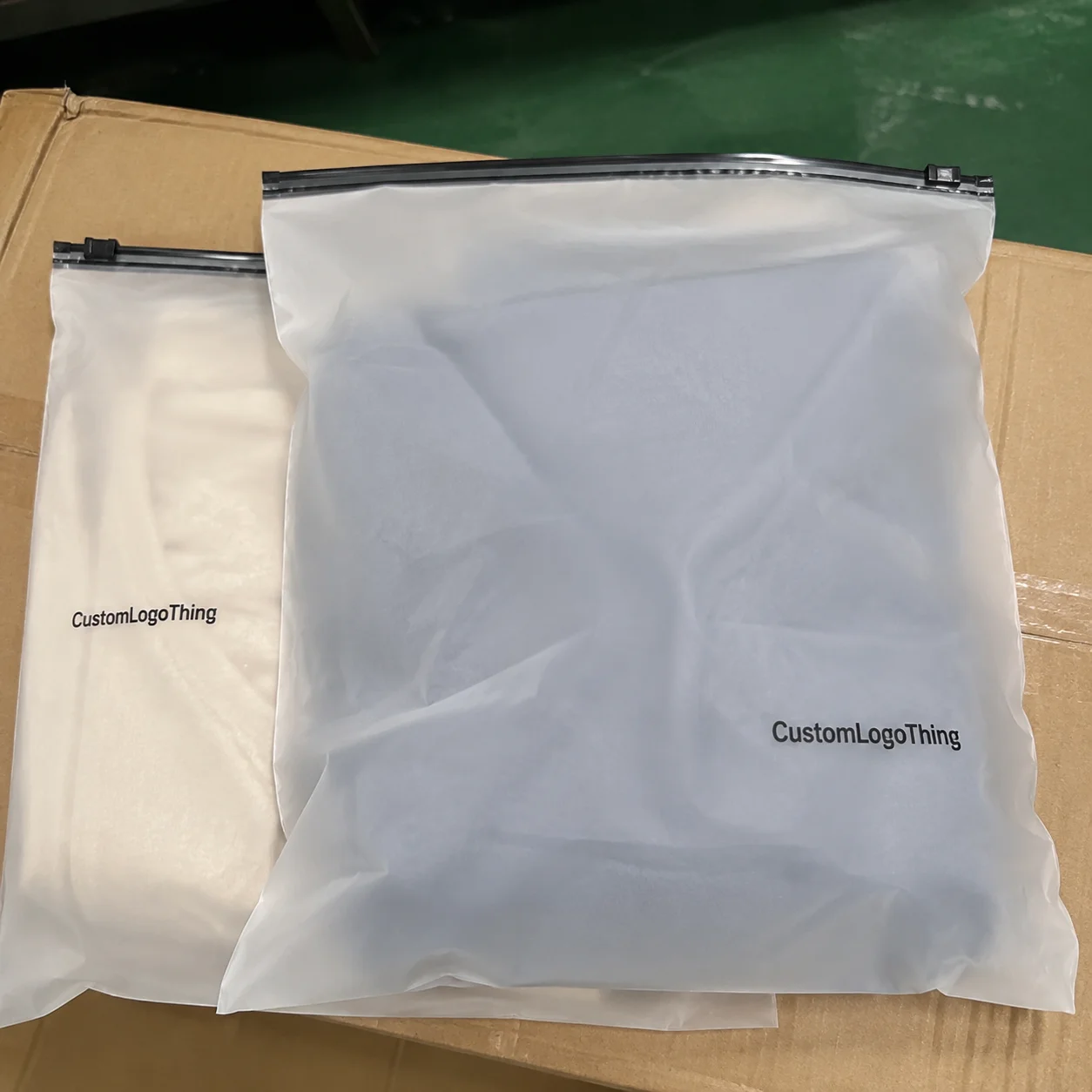
Buyer Fit Snapshot
| Best fit | Custom Poly Bags Manufacturer projects where brand print, material claims, artwork control, MOQ, and repeat-order consistency need to be specified before quoting. |
|---|---|
| Quote inputs | Share finished size, material target, print colors, finish, packing count, annual reorder estimate, ship-to region, and any compliance wording. |
| Proofing check | Approve dieline scale, logo placement, barcode or warning zones, color tolerance, closure strength, and carton packing before bulk production. |
| Main risk | Vague material claims, crowded artwork, missing packing details, or unclear freight terms can make a low unit price expensive after revisions. |
Fast answer: Custom Poly Bags Manufacturer: Production Spec, Color Control, and Delivery Risk should be specified like a repeatable production item. The safest quote records material, print method, finish, artwork proof, packing count, and reorder notes in one written spec.
Production checks before approval
Compare the actual filled-product size with the drawing, then confirm tolerance on folds, seals, hang holes, label areas, and retail display edges. Reserve space for logos, QR codes, warning copy, and material claims before decorative graphics fill the panel.
Quote comparison points
Review material grade, print process, finish, sampling route, tooling charges, carton quantity, and freight assumptions side by side. A quote is only useful when the supplier can repeat the same color, closure quality, and packing count on the next order.
The first time I stood beside a blown-film line in a small Shenzhen plant in Longhua District, a supervisor tapped a roll of 2 mil LDPE and told me, “That half-mil change looks tiny until your seal starts splitting at the corner.” He was right. I still remember the sound of that line humming at about 180 meters per minute and the smell of warm plastic hanging in the air. Not glamorous, but packaging rarely is. That is exactly why choosing a Custom Poly Bags manufacturer is never as simple as comparing a printed logo and a unit price. One shift in film gauge, seal width, or ink coverage can change how a bag performs in shipping, on a retail shelf, or inside a fulfillment center with 40,000 picks a day.
I’ve spent more than two decades around bag conversion lines in Shenzhen, Dongguan, and a few very honest factories in Ohio where buyers came in thinking “it’s just a bag,” then left after seeing a seal test fail because the gusset was 3/8 inch too shallow or the artwork pushed too close to the edge. Honestly, that moment never gets old. A little frustrating? Sure. Mostly because it could have been avoided with one better question. A good Custom Poly Bags manufacturer does much more than print a logo. They select film, manage ink, cut and seal, inspect, pack, and help you avoid the kind of mistakes that show up only after 10,000 units are already in your warehouse.
If you also work with Custom Packaging Products, you already know how often the right material spec saves money later. Poly bags are no different. They can support product packaging, retail packaging, and warehouse efficiency, but only if the bag is built for the actual use case, not just the mockup. I’ve seen too many teams fall in love with a pretty proof and then panic when the real bags arrive and nobody can fold them without wrinkling the seal on a 1,000-piece pilot run from a plant in Dongguan.
Custom Poly Bags Manufacturer: What They Do and Why It Matters
A Custom Poly Bags manufacturer takes raw film or resin-based material and turns it into a bag that matches your size, print, closure, and performance targets. That process sounds straightforward, but on the factory floor in places like Shenzhen, Suzhou, or Foshan it can involve film extrusion, corona treatment, flexographic printing, slitting, folding, sealing, punching, and final packing, all before the cartons ever touch a pallet jack. If you’ve ever watched a stack of bags go from a neat roll to a finished product in about twelve different steps, you know why I don’t call this “simple” with a straight face.
Many buyers assume branded poly bags are just plain bags with a logo, yet I’ve seen a 1-inch change in seal placement turn a clean retail hang bag into a weak package that split at the top after one rough conveyor transfer in a Chicago fulfillment center. Honestly, I think the best custom poly bags manufacturer is part printer, part engineer, and part problem-solver. They should ask what product goes inside, how heavy it is, whether it has corners or sharp edges, and whether the bag is for shelf display, e-commerce fulfillment, or protective storage. If they skip those questions, I start wondering whether they’re selling bags or just hoping for the best.
There are three common categories people mix up. Stock poly bags are plain, off-the-shelf items with fixed dimensions and no branding. Branded custom poly bags add printed artwork, a logo, or product info, but still use standard bag construction. Fully engineered bags go further, with custom thickness, gussets, closures, and sometimes anti-static or UV-resistant additives for real-world performance. That last category is where a strong custom poly bags manufacturer earns their keep, because the bag is being designed for a job, not just a shelf photo.
On materials, the most common films are LDPE for softness and flexibility, HDPE for a crisper feel and lower cost in lighter applications, coextruded films for layered performance, recycled-content blends for sustainability goals, and specialty additive films for clarity, slip resistance, or moisture control. I’ve watched buyers overpay for a heavier gauge when a well-constructed 1.25 mil coex film would have delivered the same result with less resin. Material choice is where packaging design becomes actual economics. And yes, “actual economics” is the boring phrase that saves your budget.
The right manufacturer also understands that package branding is not only about ink on plastic. It includes how the bag opens, how it feels in hand, how clearly the print lands on translucent film, and whether the bag supports the rest of the customer experience. If your brand uses Custom Poly Mailers, for example, you already know that the package itself becomes part of the product story the moment it leaves the warehouse.
I’ve seen this play out in a Midwest fulfillment center in Columbus where a client switched from a plain 1.5 mil bag to a branded 2 mil bag with a slightly wider side seal. Their returns dropped because the tear points moved away from the loaded corners, and their staff actually liked packing them more because the bags opened cleaner on the line at about 600 units per hour. That is the kind of outcome a seasoned custom poly bags manufacturer should help create. Not magic. Just solid engineering and fewer “why is this tearing again?” conversations.
“The cheapest bag is rarely the cheapest package. If it fails on the line or in transit, you pay for it twice.” — something I’ve heard more than once from plant managers and buyers who had to replace a bad run
For buyers comparing suppliers, I always recommend checking whether the company explains material data sheets, seal testing, and print limits in plain language. If they can only talk about price per thousand, that is a warning sign. If they can explain why a 2.5 mil film with a 0.5 inch seal is safer for a sharp-edged kit than a 1.75 mil alternative, you’re dealing with a custom poly bags manufacturer that understands the job, not just the artwork. I trust that kind of clarity a lot more than slick sales language.
Helpful industry references can also keep your internal team aligned. The Association for Packaging and Processing Technologies offers good industry context, while the ISTA testing standards are useful when you need to think about transit damage rather than just shelf appearance. If you are planning a launch in Atlanta, Dallas, or Rotterdam, that testing language matters before anyone books freight.
How a Custom Poly Bags Manufacturer Turns Specs Into Bags
A reliable custom poly bags manufacturer usually starts with quoting and spec review, not production. The buyer sends dimensions, artwork, quantity, and any special requirements like food-contact use, recycled content, or hang holes. Then the supplier checks film options, print method, tooling, and minimum order quantities before giving you a realistic number and timeline. I wish every buyer saw how much bad quoting gets avoided in this step. It’s the least flashy part of the job, which is probably why it matters so much. For a straightforward 5,000-piece run in Guangdong, a simple one-color quote might come back at $0.12 to $0.18 per unit; add a zipper and you’re in a very different conversation.
From there, the production path usually follows a sequence I’ve seen in plants from Dongguan to Ohio: artwork setup, prepress review, material sourcing, printing plates or cylinder prep, film extrusion or incoming roll procurement, printing, curing if needed, cutting, sealing, inspection, and boxing. A good custom poly bags manufacturer keeps each step documented so a buyer can trace where a problem began if a run doesn’t match the approved sample. That paper trail is not glamorous, but when something goes sideways, it becomes your best friend.
Printing methods matter more than people think. Flexographic printing is common for medium to high volumes because it handles efficient repeat production and multiple colors well once the plates are made. Rotogravure printing can deliver fine detail and strong color consistency on long runs, but tooling costs are higher, often by several hundred dollars to a few thousand depending on cylinder count. Blown film extrusion is used when the plant makes its own film; bag converting then turns that film into finished bags with the chosen seal style, perforation, or zipper feature. Not every custom poly bags manufacturer does all of these in-house, and that affects both timeline and control.
One supplier meeting still sticks with me. A brand wanted a 4-color process print on a translucent bag, but the artwork contained thin white text and a pale blue background. On a press check in a Guangzhou factory, the text vanished unless the ink laydown was adjusted and the film was swapped from thinner LDPE to a slightly less glossy blend. That is the sort of detail a production team sees immediately, while a design team may not notice until the first sample arrives. I remember the designer staring at the sample like it had personally offended him.
The physical bag format also changes the workflow. Flat bags are straightforward and economical. Gusseted bags need accurate folding and side-wall control. Resealable zipper bags require line precision so the closure tracks correctly. Header bags and hang-hole bags need special punch placement and often tighter tolerance checks, usually within +/- 1/8 inch on critical features. A capable custom poly bags manufacturer should tell you whether your chosen style affects throughput or waste. If they pretend every format is the same, they either haven’t run the machine or they don’t care. Neither is great.
Here’s a practical timeline I often use when advising buyers, though it depends on complexity and current material availability:
| Project Step | Typical Time | What Can Slow It Down |
|---|---|---|
| Artwork review and quote confirmation | 1-3 business days | Missing dieline, unclear print colors, final quantity changes |
| Proof or digital sample approval | 2-5 business days | Multiple revisions, color matching questions, logo cleanup |
| Tooling, plates, or cylinders | 3-10 business days | New artwork, complex multi-color print, supplier backlog |
| Production run | 4-12 business days | Large quantities, thicker films, curing time, line changeovers |
| Packing and freight booking | 1-4 business days | Custom carton labeling, palletizing, international shipping windows |
For many orders, the real lead time lands around 12-20 business days after proof approval, and for simpler repeat work I’ve seen it closer to 12-15 business days from proof approval. That is not always the case. A custom poly bags manufacturer with film already in stock and simple one-color printing can move faster, while a specialty additive film or a 6-color run can take longer. Buyers who set launch dates before confirming tooling and freight are usually the ones calling in a panic later. I’ve gotten those calls. They never begin with “good news.”
I always tell clients to ask whether the plant is running its own film line, buying film from outside, or outsourcing printing. That answer affects cost, quality control, and flexibility. A vertically integrated custom poly bags manufacturer may adjust faster when your dimensions shift by 1/8 inch; a brokered supply chain may need a fresh round of coordination before anyone touches the press. In places like Shenzhen or Foshan, that difference can mean one extra day or one extra week.
If your team is also evaluating packaging strategy across multiple formats, compare how poly bags interact with custom printed boxes and outer mailers. A coordinated packaging design plan can reduce void fill, simplify kitting, and make the whole unboxing experience feel intentional rather than patched together. Which, frankly, is the difference between “nice brand” and “somebody ordered random packaging on a Tuesday.”
What Is a Custom Poly Bags Manufacturer and How Do They Work?
A custom poly bags manufacturer is a supplier that produces bags to your exact specifications instead of selling a standard off-the-shelf size. That means custom dimensions, custom print, specific film thickness, and the right closure or format for the product. The better ones also help with material selection, testing, and production planning so the finished bag does what you need it to do. Which sounds obvious, but after a few factory visits, I can tell you obvious is not as common as you’d hope.
How do they work? Usually in a sequence: review your brief, confirm the structure, create a proof, approve artwork, prepare tooling, run the film or bring in raw rolls, print, convert, inspect, pack, and ship. A strong custom poly bags manufacturer watches the handoff between each stage so the quote, the sample, and the final run match. That’s the difference between a supplier and a supplier who only looks good in email.
The real value is not just the machine. It’s the people watching the machine. A good operator sees a seal drifting, a print register slipping, or a film batch behaving differently before that problem becomes 10,000 bad bags. That’s why I keep coming back to the same point: a capable custom poly bags manufacturer is part production partner, part quality filter, and part translator between design and reality. Packaging loves to punish people who ignore reality.
Key Factors to Compare When Choosing a Custom Poly Bags Manufacturer
When buyers compare a custom poly bags manufacturer, they often start with unit price and stop there. That is a mistake. The smarter comparison is a combination of material performance, print quality, bag construction, compliance, and total landed cost. A bag that saves $0.01 per unit but fails one out of every 200 fills is not really cheaper. It’s just cheaper until it isn’t.
Material choice should come first. A 1.5 mil LDPE bag might be perfect for light apparel, but a kit with plastic parts, metal edges, or a heavier product could need 2.0 mil or 2.5 mil film. If moisture protection matters, look at film structure and sealing quality. If the package will be displayed in a retail setting, clarity and gloss become more important. A dependable custom poly bags manufacturer should explain how thickness, puncture resistance, and film formulation relate to your actual product. If they can’t explain that without sounding like they swallowed a brochure, keep looking.
Print quality is the next filter. On translucent film, colors can shift by 10-20 percent visually depending on ink density and background opacity. Thin linework, small QR codes, and barcodes demand better control than a large logo. I once saw a cosmetics client approve artwork on paper proof only to discover that a dark gray logo looked muddy on the actual bag because the film was softer and more hazy than expected. A better custom poly bags manufacturer would have flagged that before the press run. Honestly, that was one of those meetings where everyone suddenly became very interested in “film behavior.”
Bag format matters too. Flat bags are efficient for basic use. Gusseted bags expand for bulkier items. Resealable zipper bags are preferred for repeat opening and closing. Header bags can support hang merchandising. Mailer-style bags work well for fulfillment when you want low weight and branded packaging in the same format. If you are balancing multiple channels, your custom poly bags manufacturer should help you decide whether one bag can serve retail and shipping or whether you need separate formats.
Here is a practical comparison I use with buyers who want a quick, grounded view:
| Bag Type | Typical Use | Strength Level | Price Impact |
|---|---|---|---|
| Flat poly bag | Apparel, lightweight parts | Low to medium | Lowest setup and material cost |
| Gusseted bag | Bulkier items, boxed kits | Medium | Slightly higher due to extra material and forming |
| Resealable zipper bag | Consumables, retail kits, samples | Medium to high | Higher because of closure tooling and assembly |
| Header bag | Merchandising and hanging display | Medium | Higher due to header formation and punch placement |
| Mailer-style poly bag | E-commerce fulfillment | Medium to high | Higher, especially with tear strips or dual adhesive |
Now let’s talk pricing drivers in plain numbers. For a simple 1-color custom flat bag in a 5,000-piece run, I’ve seen pricing around $0.10 to $0.18 per unit depending on size, film grade, and freight zone. Add a second color, and you may see another $0.02 to $0.05. Step up to a zipper closure, and the bag can move into the $0.20 to $0.40 range or higher, especially if the film is thicker or the order is small. Every custom poly bags manufacturer has a different cost structure, but these are the levers that usually move the quote.
Minimum order quantities also matter. Some plants want 10,000 pieces to make a run economical, while others will do 2,500 if the artwork is simple and the bag size fits standard tooling. Setup costs for plates, cylinders, and color matching can run from $150 to $1,200 depending on print complexity and the number of colors. I’ve watched buyers ignore setup fees, only to discover that a “cheap” quote became expensive once freight, cartons, and inspection rework were added. That is why a transparent custom poly bags manufacturer should itemize the quote clearly.
Quality control is another place where differences show up fast. Ask whether the supplier performs seal testing, dimensional checks, and visual inspection against an approved sample. For regulated industries, ask for food-contact documentation, recycled-content declarations, or batch traceability if needed. When a supplier can speak confidently about ASTM checks, food safety requirements, or traceability records, you usually have a better partner on the other end. For sustainability-related materials, the FSC site is a good reference point when you are evaluating broader packaging claims tied to paper components or mixed packaging programs.
One last thing: compare communication quality. I’ve walked out of factory meetings where the sample was good, but the sales team could not explain the seal tolerance or the reprint policy. That gap usually becomes a problem later. A trustworthy custom poly bags manufacturer answers technical questions without hiding behind vague promises. That alone can save you a headache or three.
Step-by-Step: Ordering from a Custom Poly Bags Manufacturer
The ordering process becomes much easier once you treat it like a packaging project instead of a simple purchase order. Start with the product itself. Measure its length, width, depth, and any irregular parts, then decide whether the bag needs to fit tightly, allow extra room, or support a display presentation. A capable custom poly bags manufacturer will usually ask for the filled product, not just the empty item, because compression and load behavior change the fit. That question alone tells you a lot about whether they know what they’re doing.
Here is the spec checklist I recommend sending before you request quotes:
- Bag width, length, and gusset depth if needed
- Film thickness in mil or micron
- Material type, such as LDPE, HDPE, or coextruded film
- Closure style, including open-top, zipper, adhesive strip, or header
- Print colors and whether the art is one-sided or two-sided
- Quantity, plus any expected repeat order volume
- Shipping method, carton count, and delivery window
- Storage conditions, especially for heat, humidity, or long warehouse dwell time
Samples are where many projects get saved. I always tell buyers to test the sample with the actual filled product, not a substitute. An empty bag might feel fine in hand, but once loaded with 18 ounces of metal components or a boxed kit with sharp corners, the corner stress changes immediately. A good custom poly bags manufacturer will understand that sample testing is about fit, friction, seal integrity, and presentation, not just “does it look close.”
Artwork prep matters just as much as bag construction. Use a dieline, set bleed properly, and keep important copy inside the safe zone. If your logo needs exact color matching, send Pantone references, not just an RGB file from a website. High-resolution vector artwork helps, and barcodes should be checked for readability on translucent or glossy film. I’ve seen an otherwise excellent package fail because the barcode was 0.5 mm too close to a fold and scanners misread it. A disciplined custom poly bags manufacturer should catch that during proofing.
Many buyers also forget that the bag must work with the rest of the packing line. If operators are sealing 600 units per hour, a sticky film or a zipper that resists closing can slow the whole line. If the bag will hang on a retail peg, hole placement and top seal strength matter more than a beautiful logo. That is where branded packaging meets actual operations, and where a thoughtful custom poly bags manufacturer can save real labor minutes every shift. And yes, when the line backs up, everyone suddenly remembers how important “small details” were.
For teams managing broader packaging programs, it helps to compare the bag project against other formats like labels, mailers, and custom printed boxes. Often the best answer is not “make everything on one package,” but rather “Choose the Right package for each stage of the journey.” That is why I like to keep a one-page packaging spec sheet in the file, along with links to About Custom Logo Things so the team knows who owns the process internally.
Here is the decision path I use with buyers:
- Choose a standard custom poly bag if the product is light, the branding is simple, and the timeline is tight.
- Upgrade to a thicker or coextruded film if the product has sharp edges, heavier weight, or longer transit exposure.
- Request a prototype or pilot run if the bag is new, the artwork is sensitive, or the package supports a launch with no room for error.
That last step matters more than people think. A pilot run of 250 to 500 pieces can reveal a poor seal line, weak closure, or color mismatch before you commit to 10,000 bags. A serious custom poly bags manufacturer should be willing to discuss that option, even if it adds a little time upfront. Personally, I’d rather spend an extra day on sample approval than spend a week apologizing for a warehouse full of bad bags.
Common Mistakes Buyers Make with Custom Poly Bags Manufacturer Orders
The biggest mistake I see is buying on thickness alone. A 2 mil bag is not automatically better than a 1.5 mil bag, because the film structure, seal design, and product shape all matter. I once worked with a client who insisted on heavier film for a lightweight apparel insert. The result was unnecessary cost, a stiffer hand feel, and no real performance gain. The right custom poly bags manufacturer should explain that gauge is only one part of the equation. Otherwise, you’re just paying for more plastic and a better story.
Another frequent error is approving artwork without checking how the colors behave on clear or translucent film. A dark logo can look excellent on screen and muddy on the actual package. Thin type may disappear against white product inserts. Barcodes can lose contrast. I’ve seen buyer teams approve a design in a conference room, only to discover in production that the print needed a heavier ink laydown or a different bag opacity. A seasoned custom poly bags manufacturer will push for a real proof, not just a digital mockup. Digital mockups are great for arguing in meetings. Not so great for actual production.
Closure and bag geometry are commonly under-specified too. If the bag is gusseted, how wide should the fold be? If it has a zipper, should it be press-to-close or slider? If it hangs on a peg, where should the hole land relative to the top seal? These small details can affect line speed, retail display, and end-user satisfaction. Once the tool is made, changing them is not cheap. I’ve had people ask for “just a small tweak” after approval, which is packaging code for “please remake the whole thing without charging me.”
Rushed timing creates another layer of problems. Buyers sometimes lock in a launch date before confirming tooling lead time, proof approvals, and freight booking. Then they discover the print plates take 5 days, the artwork needs a second revision, and the ship date slips. A dependable custom poly bags manufacturer should be candid about those dependencies from the start, even if the answer is not what you hoped to hear.
Comparing only unit price is another classic trap. If Manufacturer A quotes $0.14 and Manufacturer B quotes $0.16, but A charges more for freight, has looser inspection, and ships 3% defective product, the cheaper quote is not cheaper. Total landed cost includes sampling, setup, freight, customs if relevant, warehousing, and the cost of defect risk. That is where real buyer discipline shows up.
Here are the problems I see most often on the floor:
- Wrong gauge chosen for the product weight
- Artwork too close to the seal or fold line
- Barcode placed on a curved or reflective area
- Gusset or zipper detail missed in the initial brief
- Launch date set before proof approval
- Unit price compared without freight or defect allowance
These are not theoretical issues. I’ve had clients call from distribution centers in New Jersey because bags were sticking together in humid conditions, or because a header hole tore when the product was hung on the wrong fixture. The right custom poly bags manufacturer helps you anticipate those issues before the first pallet leaves the dock. That’s the whole point, really: fewer surprises, fewer fire drills, fewer “why is this happening now?” emails.
Expert Tips from a Custom Poly Bags Manufacturer Floor
If I could sit every buyer down beside a converting line for 20 minutes, I’d start with one rule: always test the bag with the actual filled product. Not a sample box. Not an empty mockup. The real thing, with the same weight, corners, and surface texture. That one habit has saved more projects than any fancy spec sheet I’ve ever seen from a custom poly bags manufacturer.
Ask for material data sheets and seal-test details before you approve the run. You want to know whether the film has the right slip properties, whether the seal strength is documented, and whether the print method matches your color expectations. If the bag will touch food, cosmetics, or regulated goods, ask for the right documentation early. I’d rather spend 30 minutes reviewing paperwork than 3 weeks solving a problem after production. That trade feels pretty obvious once you’ve lived through one bad run.
Plan a small overrun or backup stock if the bags feed a fast-moving fulfillment operation. A difference of 3% to 5% in usable inventory can matter when a packaging line is running five days a week. In one apparel project, we kept 1,000 extra units on hand, and that buffer prevented a costly rush reorder when the client’s online demand jumped by 18% in one month. Good custom poly bags manufacturer partners are usually comfortable discussing reasonable overage planning.
You can also save money without hurting performance. Recycled-content films may work well for non-display applications. Downgauging by 0.25 mil can be safe if the product is light and the seal is strong. Better bag sizing can cut air space and reduce freight. I’ve seen a 9 x 12 bag replaced with an 8.5 x 11.5 version after a sample fit test, and the client saved both resin and carton cube. That is smart packaging design, not just cost cutting. And yes, I love when a tiny spec change saves real money. It’s one of the few joys in procurement.
For repeat orders, keep everything organized. Save the approved final art files, the sample that was signed off, the dimensional drawing, and the color notes from the last run. If you work with the same custom poly bags manufacturer next quarter, that file discipline cuts rework and avoids the “which version was approved?” headache that wastes time in every plant I’ve ever visited.
Honestly, the best packaging programs I’ve seen are the ones where purchasing, operations, and design all respect the same spec sheet. A bag that fits the product, supports the brand, and runs cleanly on the line is usually the result of a supplier relationship, not a one-time transaction. That is especially true when the supplier is a custom poly bags manufacturer with real process control in Shenzhen, Dongguan, or a similarly capable production hub.
What to Do Next After Choosing a Custom Poly Bags Manufacturer
Once you’ve narrowed the field, move quickly but carefully. Measure the product, define the use case, collect artwork, and request quotes from at least two qualified suppliers. A good custom poly bags manufacturer will respond with more than a price; they should give you material options, a realistic timeline, and questions that show they understand the job. If all you get back is a number and a cheerful “please confirm,” that is not a process. That’s a coin toss.
Compare the candidates on sample quality, communication, process transparency, and how clearly they explain pricing. If one supplier answers in vague generalities while another can tell you why a 2-color print on opaque LDPE will behave differently from a 1-color print on clear film, that tells you a lot. I trust the manufacturer who is honest about tradeoffs, even when the answer is “we can do it, but here is what it will cost and why.”
Create a one-page packaging spec sheet for your team. Include dimensions, material, thickness, closure, print colors, quantity, shipping method, and approval status. Add notes about brand color references, shelf requirements, and any line-speed constraints. That single page keeps internal reviews from drifting and makes the conversation with your custom poly bags manufacturer much easier. If your spec sheet cannot fit on one page, you probably still have some decisions to make.
Before launch, request a prototype or at least a confirmed pre-production sample if the run is complex. Then confirm the delivery window, not just the ship date, because freight can turn a perfect production run into a late arrival if nobody booked transport early enough. For a shipment leaving Shenzhen or Ningbo, a few days matter. If your program is tied to a retail launch or a fulfillment expansion, a late bag order has a funny way of becoming everyone’s emergency.
My honest advice is simple: choose the partner who helps validate your specs, reduce waste, and make the bag work in the real world. That is what a strong custom poly bags manufacturer should do. If you want packaging that supports the product, reinforces the brand, and keeps the operation moving, the right supplier matters more than a low quote by a few cents.
And if you’re still shaping the broader package system, keep your eye on the whole stack, not just the bag. A coordinated set of branded packaging, product inserts, custom printed boxes, and outer mailers can make the entire experience feel intentional. The right custom poly bags manufacturer is one part of that bigger picture, but a very important one.
FAQ
What does a custom poly bags manufacturer need to quote accurately?
At minimum, a custom poly bags manufacturer needs bag dimensions, film thickness, material type, closure style, print colors, and quantity. If you need samples, expedited production, recycled content, or food-contact compliance, include that too. Clear artwork files and a filled-product description usually tighten the quote and reduce surprises. A bag for a 12-ounce apparel insert in Shenzhen needs a very different spec from a kit packed in Columbus.
How long does it usually take a custom poly bags manufacturer to produce an order?
Lead time depends on tooling, artwork complexity, material availability, and order size. A simple run may move in about 12-15 business days after proof approval, while more complex orders take longer. A good custom poly bags manufacturer will separate proofing, tooling, production, and freight so you know where time is being spent. If the order is headed by sea freight from southern China to the U.S. West Coast, add transit time on top of production.
Why do custom poly bag prices vary so much between manufacturers?
Pricing changes with volume, material grade, print setup, number of colors, closure features, testing requirements, and freight distance. A lower unit price can still cost more overall if it creates defects, weak seals, or higher shipping charges. That is why a careful buyer looks at total landed cost, not just the quote line. For example, $0.15 per unit for 5,000 pieces can be a strong price on a 2-color bag, while $0.11 with weak inspection and higher freight is not a win.
How do I choose the right material from a custom poly bags manufacturer?
Match the film to the product’s weight, shape, sharp edges, moisture exposure, and presentation needs. Ask the custom poly bags manufacturer for LDPE, HDPE, or coextruded options, then review samples filled with the actual product. If the bag needs extra clarity, puncture resistance, or recycled content, say that early so the supplier can narrow the choices. For sharp-edged products, 2.5 mil coex film with a 0.5 inch seal is often a safer starting point than a thinner stock bag.
Can a custom poly bags manufacturer help with branding and artwork setup?
Yes, many can review dielines, suggest print-safe layouts, and advise on color limits and legibility. Bring clean vector art, exact color references, and approval notes so the final bags come off press the way you expect. A strong custom poly bags manufacturer should treat branding as part of the engineering, not an afterthought. If they have a press team in Dongguan or Guangzhou, even better — they can usually catch problems before you burn money on a bad run.