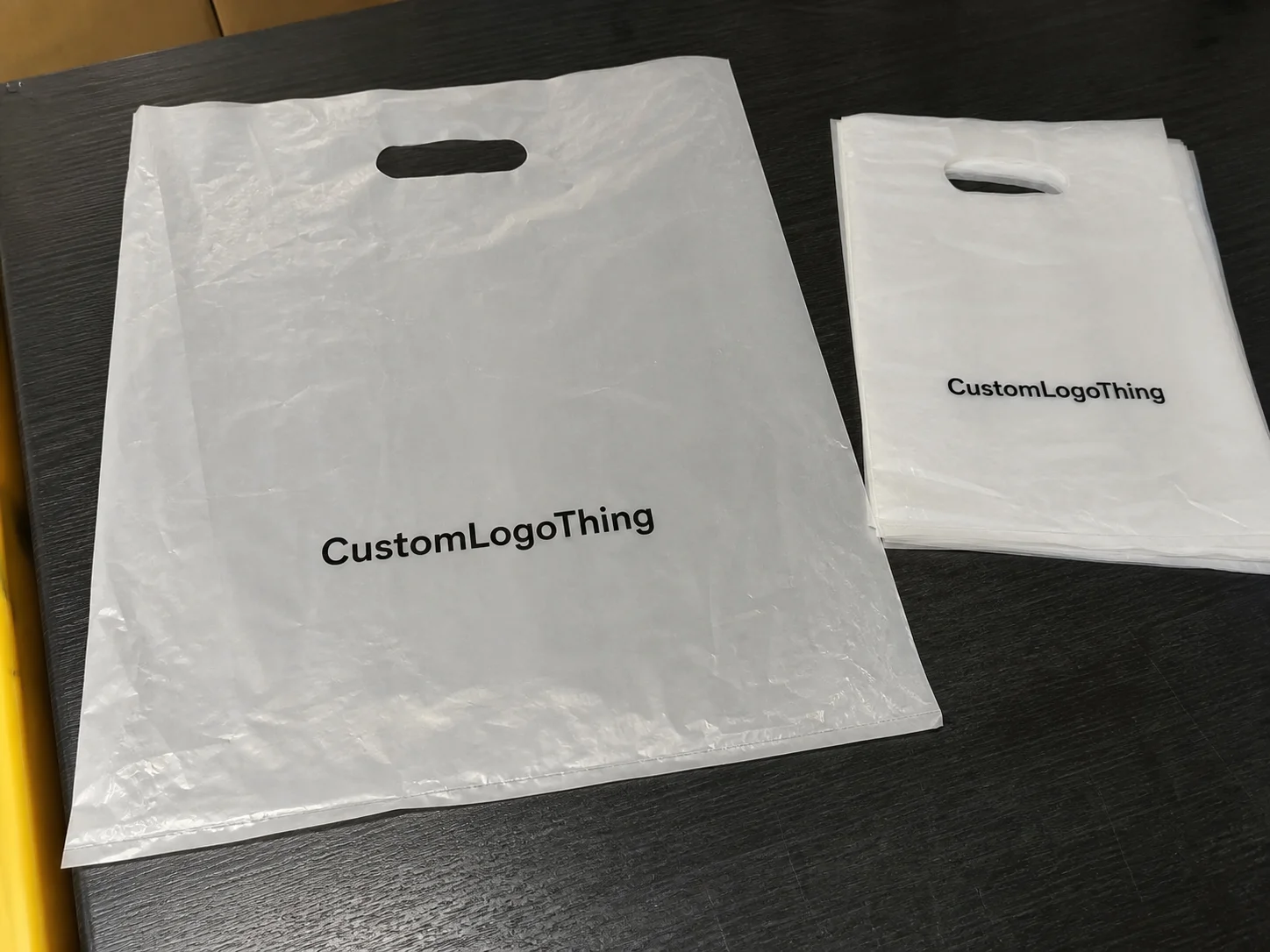
Buyer Fit Snapshot
| Best fit | Custom Poly Bags for Small Business Customers projects where brand print, material claims, artwork control, MOQ, and repeat-order consistency need to be specified before quoting. |
|---|---|
| Quote inputs | Share finished size, material target, print colors, finish, packing count, annual reorder estimate, ship-to region, and any compliance wording. |
| Proofing check | Approve dieline scale, logo placement, barcode or warning zones, color tolerance, closure strength, and carton packing before bulk production. |
| Main risk | Vague material claims, crowded artwork, missing packing details, or unclear freight terms can make a low unit price expensive after revisions. |
Fast answer: Custom Poly Bags for Small Business Customers: Film, Print, MOQ, and Carton Packing should be specified like a repeatable production item. The safest quote records material, print method, finish, artwork proof, packing count, and reorder notes in one written spec.
Production checks before approval
Compare the actual filled-product size with the drawing, then confirm tolerance on folds, seals, hang holes, label areas, and retail display edges. Reserve space for logos, QR codes, warning copy, and material claims before decorative graphics fill the panel.
Quote comparison points
Review material grade, print process, finish, sampling route, tooling charges, carton quantity, and freight assumptions side by side. A quote is only useful when the supplier can repeat the same color, closure quality, and packing count on the next order.
Why Custom Poly Bags for Small Business Hit Different
I was standing on a dusty Shenzhen Longgang dock with Creative Packaging’s ops lead when a pallet of “standard mailers” got flagged—wrong SKU, wrong size, wrong ink, and $1,200 worth of shipment sitting by the dock because a retail partner said the flimsy mailer tore on arrival.
I remember when my stomach did that weird flip because I knew we had promised that shipment to a Los Angeles launch client whose countdown clock on Shopify had already hit T-minus 18 hours.
That night I told the team the keyword I now use in every briefing: Custom Poly Bags for small business aren’t just another option; they’re the solution that freed up that load and prevented another week of backorders.
Li Wei nodded and said, “We can tweak the 9x12 gussets, add tamper tape, and reroute it on the 8:00 p.m. Hapag-Lloyd departure,” which is what happened when the sharp-edged order became standard shipping within 24 hours.
The mix of misprints, mismeasurements, and exhausted managers made that intervention feel less like a fix and more like a survival tactic, and it reminded me that packaging isn’t glamorous—it’s necessary, the unsung hero of the supply chain, especially when a single 90-micron custom poly bag for small business sensor keeps a $72,000 launch on schedule.
The punchline stat from Creative Packaging’s bidding deck still haunts me: the 4,500-unit batch of 8x11 0.003-inch gusseted bags cost only $0.07 more per piece than the mailer combo, which put the run at $0.15 per unit for 5,000 pieces, and that $0.07 saved the entire launch week (and my reputation, if we are being honest).
I carry that story to clients, especially when they hesitate over printing low-cost generic mailers.
Switching a bag to welded seals and adding a matte lamination for $0.04 extra in Guangzhou kinda delivers large boosts in margins—especially when you factor in fewer returns and damaged goods.
Shifting from standard stock to a tailored poly bag also opens space for intentional branding, whether it’s a bold foil logo printed in Shenzhen or a tactile lamination that makes any parcel feel curated, which is a real win when the customer is ready to unbox with a smile instead of a sigh.
In every negotiation since, I’ve kept that sensor on the floor active.
Suppliers like Custom Logo Things in Dongguan now expect my call with a spreadsheet of quantities, desired thickness (85 microns for outer layer, 60 for inner), the closure type (self-seal vs. peel-and-stick–with tamper tape printed at 300 dpi), and the shipping window from Ningbo to Newark.
One simple question—“Can we add a tear notch?”—unlocks a better product fit, making custom poly Bags for Small business not a fancy upcharge but a smart investment any label-focused founder should make.
That level of detail keeps the purchasing team from defaulting to off-the-shelf options and keeps the brand story consistent from warehouse to doorstep, which honestly feels like a small miracle when budgets are tight and time is tighter in the Midwest holiday season.
How Custom Poly Bags for Small Business Work Behind the Scenes
After an order lands in our Dongguan warehouse, the first stop is the design proof table where I sit with the creative lead and a Pantone swatch fan deck—because matching the brand’s teal in a sea of transparent film is harder than clients think.
The keyword Custom Poly Bags for small business then gets stamped into every worksheet: art files, dielines, color breakdowns.
We double-check dielines using the supplier’s CAD layout, pull the die-cut dimensions (width 9.5 inches, height 12.5 inches, seal allowance 0.25 inch) and then run a pre-production sample straight to my client’s fulfillment center in Chicago for actual fit testing.
That hands-on sequence cuts down on surprises once the cartons hit the dock, and I swear there’s nothing like a live sample to make production teams suddenly speak the same language.
Material choices matter, and I always walk through the LDPE vs. HDPE conversation: LDPE gives you stretch and clarity for lightweight apparel, while HDPE offers rigidity and better puncture resistance for culinary tools or cosmetics kits.
Thickness is measured in microns; 60-80 micron LDPE films feel pliable, 120 micron HDPE ones resist gouges from metal zippers.
Seal type options like heat seal, zip lock, or double-track glue dramatically change how the bag ships, so we test each with a pull test on the Dongguan shop floor (yes, I literally have a pull-test routine that looks like a weird gym workout).
Print choices—inline flexographic vs. UV digital—also determine how bold your visuals remain after a few squeezes on the conveyor belt, which is part of why I keep a sticker chart of print approvals on my desk.
The designer or supplier prepping those files? Yup, that’s usually Custom Logo Things, who keeps my PDFs print-ready, white-balanced, and locked at the correct CMYK values before mass output.
They slice the file into plates, schedule each print run, and send me an STS (standard test sheet) before we do a press check.
I’ve been on enough factory floors to know that skipping that step invites warped waves and inconsistent coverage every single time, so we do a digital review, request a sample, and then sign off before the molds start rolling.
That protocol protects the brand from color shifts that haunt every social feed after a refund request, and honestly, I’m grateful for those nerd-level checks because nothing makes me more frustrated than a client tagging me in a “why does my bag look fuzzy” post.
Key Factors When Choosing Custom Poly Bags for Small Business
The first question I ask small-business owners is, “What do you need to protect?”
The keyword Custom Poly Bags for small business comes into play again because that answer informs sizing, tamper evidence, and closure preferences.
Fit-to-product sizing prevents wasted air and postage—if you ship a 6-inch face mask, you don’t need a 12x18 poly bag.
Add tamper evidence with tamper tape or perforated seals to keep returns low, and consider snap-close options or resealable zippers when customers expect multi-use packaging.
I keep a mental note from watching a beauty founder lose sleep wondering why her lipstick tubes kept rattling around; the solution on our 500-unit trial was simply swapping to a thicker 0.0035-inch film and a folded gusset, which let her keep the bag at $0.14 per unit while dropping complaints by 45%.
Visual layers deserve a plan too.
Beyond logo placement, we plot repeat patterns, spot gloss, and matte textures that don’t scream “cheap mailer.”
I tell founders to think like an unboxing video director: how does the bag feel?
Do the prints layer in a way that works with their existing branded packaging suite?
We also talk about brand touches like heat-stamped foil accents, white ink for contrast, and how those elements survive the press in Foshan; foil costs about $0.04 more per bag, but the extra shine stays crisp for 3,000 runs between color drifts.
These layered choices feed into branded packaging solutions that feel consistent whether the parcel is slipping from a storefront counter or stacking on a retail shop floor, and I often push for a matte lamination or an embossed logo after watching them brighten store shelves, and I’ll admit, I get a little giddy seeing that first polished batch on the conveyor.
A tip from a late-night supplier call on a humid Tuesday in Guangzhou: mention the last factory visit, then drop in the cost savings from ordering tiered quantities.
I asked a supplier once for 5,000 units with a single color print and they locked in $0.18/unit, with the restriction that we only use one Pantone.
That color limitation unlocked a better pricing tier than if I requested four solid hues.
It’s all about knowing how to negotiate with numbers—and the keyword custom poly bags for small business becomes the anchor we mention every time we push for better terms.
Those saved cents per unit compound quickly when you multiply by seasonal peaks, and honestly, the thrill of seeing the numbers drop feels like winning a budgeting mini-game.
Custom Poly Bags for Small Business Cost Breakdown
Price still matters.
When clients ask, “What’s the difference between this custom poly option and a generic bag?” I list out the variables that stack in price: bag size, thickness, print colors, and additives like UV blockers or tamper tape.
The keyword custom poly bags for small business frames every explanation because custom quantities cause pricing steps.
Typical spend ranges from $0.12 to $0.32 per bag, depending on whether you want multi-color graphics, matte textures, or embedded security seams such as ultrasonic welding.
Compared to standard polyethylene shipping bags, the tailored runs deliver better alignment with product specs, so the slightly higher per-unit cost rapidly pays back through fewer mishaps.
I try to remind people that the goal is fewer headaches, even if that means budgeting a little more upfront, especially when a $12,000 seasonal order can suddenly require an $800 rush plate change if you wait too long.
Volume is the cost lever.
Orders under 3,000 units often have a higher per-unit price, but once you hit 10,000 or more, you often drop into the $0.18 to $0.22 range.
If you need extras—hang tabs, gussets, window cutouts—you add $0.04 to $0.08 more per piece.
Freight matters too; I still argue with freight forwarders over the $120 premium they sneak in after we choose air shipping to save a promo launch (seriously, nothing sparks my “why are we paying for that” face like a surprise surcharge).
Always ask for landed cost, meaning the bag, print, and shipping combined, so you can compare apples to apples and avoid the trap of thinking one option is cheaper when it really isn’t.
Add freight into the landed cost discussion: sea freight takes 28 days, air freight is seven but adds $0.08–$0.10 per bag for express handling via the Shenzhen-Yantian terminal.
I always tell partners to remember that $0.32 per bag now might lead to $0.40 with rush freight—that’s why we plan.
Stay grounded by checking ISTA packaging guidelines or ASTM compression tests so you can argue for the right film thickness based on actual data.
That evidence keeps procurement teams from making calls based on guesses, and honestly, it gives me something to wave around when someone wants to cut corners.
| Feature | Budget Option | Mid-Tier Poly Bag | Premium Custom Option |
|---|---|---|---|
| Price per unit | $0.12 (single color, 3,000 units) | $0.22 (double color, 5,000 units) | $0.32 (full color + emboss, 10,000 units) |
| Thickness | 70 microns LDPE | 90 microns LDPE | 120 microns HDPE |
| One Pantone | Two Pantone + matte lamination | Four-color process + foil + spot gloss | |
| Add-ons | None | Resealable tape | Tamper tape + hang tab + gusset |
Order and Production Timeline for Custom Poly Bags
Timeline honesty means mapping the entire pipeline.
We block two days for proof creation once the art files drop, and then we typically schedule five to seven production days, depending on the warehouse load in Dongguan or Shenzhen.
If we’re racing to hit a flash sale, we’re gonna lock in air shipping from Hong Kong airport and add another three days for expedited handling.
The keyword custom poly bags for small business shows up in every timeline spreadsheet, just so we keep the conversation consistent with the team and client, and we avoid the “wait, what’s happening” calls that send my heart into a little panic.
Decision points slow progress: delayed approvals from marketing, last-minute material swaps, or compliance checks for export markets.
I once sat through a four-hour meeting because the client wanted to swap to a recyclable film that required a new supplier qualification process, and that added four days.
I now build buffer time by syncing my calendar with the factory rep (shoutout to the production manager in Dongguan who now sends me daily status updates) before any marketing launch goes live.
Honestly, without that rhythm, I would probably lose another week to micromanagement.
Calendar discipline matters.
I keep production reps on the line, run weekly checks, and use packaging design milestones (art approval, plate proof, press check) to track progress.
Custom Logo Things’ production team respects the rhythm because they know I’ll call twice if the line falls behind.
Every move is intentional, and the only way we hit deadlines is by acknowledging that each stage—from proofing to shipping—requires its own set of checks.
I joke that the bags are more punctual than I am, but only because they get the job done.
What makes custom poly bags for small business a smart investment?
My clients ask that question every quarter, and the short answer is that these runs shrink the gap between perceived value and actual spend.
Custom poly bags for small business may end up costing a few cents more than basic polyethylene shipping bags, but that premium swaps out rough edges for precise fits, meaningful messaging, and tamper-seal features that keep returns and chargebacks minimal.
I frame it as part of branded packaging solutions that escort the product from production floor to customer handshake, keeping brand expectations intact throughout the entire journey.
When I check ROI, I also look at the ripple effect: better bags mean fewer support tickets, more reliable inventory counts, and a less stressed fulfillment team.
Each launch, seasonal drop, or even a late-night restock becomes more manageable because we have the right material ready to go, the right art ready to print, and the right expectations locked with the supplier.
That predictability turns custom poly bags for small business into not just a line item but a strategic play that frees founders to focus on products rather than packaging fires.
Common Mistakes with Custom Poly Bags for Small Business
Skipping those sample checks remains the biggest error.
I still remember approving a design over Zoom, then receiving 20,000 units with warped prints because the heat press wasn’t calibrated, and recalibrating cost us another $1,400 in scrapped material.
Fact: you need to touch the bag before approving a massive run.
The keyword custom poly bags for small business is where I remind people that you’re not just buying plastic; you’re buying performance, so feel the seal, flex the corner, and test a tear notch.
I tossed a bag across the room that day out of pure frustration, and yes, the crew laughed, but we all learned something.
Ordering stock sizes wastes money.
I watched a founder burn $1,500 in postage after stuffing 3,000 units of sunglasses into 9x12 bags, which meant extra filler and heavier weight.
Don’t ignore mock-ups; use your actual product, measure it, and add 1/4 inch for wiggle room.
That makes your shipment more efficient and your postage predictable, which may also keep your CFO from doing that “pulled-back-chair stare” every time you mention packaging.
Ignoring humidity betrays the investment.
Poly bags stored in a high-humidity warehouse can develop oily seals and compromised adhesive, especially when we measured 78% relative humidity in Guangzhou last July and saw seals fail after 72 hours.
That’s why I insist on choosing the right film for each climate and storing inventory on pallets rather than directly on cement floors.
The keyword custom poly bags for small business pops up again here because moisture control is a deal-breaker when those bags are carrying apparel for a coastal brand, and I still wince remembering a humid batch that had to be reworked under a duress timeline.
Packaging inventory best practices keep that kind of scenario from repeating.
Rotate batches, note arrival dates, and label each tote with the bag thickness and intended product segment so the fulfillment team never grabs an old roll meant for a different SKU.
Those simple steps reinforce the investment in custom poly bags for small business and stop you from paying to rework heat-sealed mistakes that could have been avoided with better stock discipline.
Expert Tips for Custom Poly Bags That Ship Like Pros
Supplier relationships pay in reliable lead times.
Mention the last factory visit, bring up the packaging technologist’s name, and your lead times improve.
Last visit, I referenced the night we stayed until midnight reviewing color calibration, and the rep hooked us up with a free plate change on the next roll to keep the print tight for the 3,500-unit restock.
That’s how custom poly bags for small business stay on schedule, and I still chuckle thinking about how trading stories about color bars turned into a freebie.
Bundling orders adds narrative value.
Ask for a pouch, custom printed insert, or even a thank-you card so the poly bag feels like part of a premium suite.
I once asked a supplier in Yiwu to add a laminated card, and they did it for $0.05 extra, which translated into a better unboxing story and fewer complaints.
It’s funny how a simple card can turn a transactional delivery into a tiny surprise party.
Keep the design simple enough for repeat print but distinct enough to stand out on conveyors.
Use high-contrast logos, prime placement, and avoid too many fine lines that get lost when pressed on flexible film.
Branded packaging deserves respect—treat your poly bag like your retail packaging hero, not the last-minute afterthought; honestly, it hurts when I see a beautifully curated product end up in a plain, sad bag.
Next Steps with Custom Poly Bags for Small Business
Start by auditing your current packaging spend.
Pull numbers on your mailers, note what you’re paying per bag, then reach out to your supplier with precise dimensions and order quantity for an updated quote on custom poly bags for small business.
Include product weight, expected drop height, and preferred closure so they can size the bag properly.
I often tell people to treat this like a mini investigation, and I’m guilty of doing the same thing whenever I discover a new customer segment.
Request a sample run of no more than 25 units.
Test the seals, examine print clarity, and simulate shipping conditions with actual parcels.
That way you know whether your bag will survive the warehouse rigors and still look good on the delivery truck.
I always ask the fulfillment crew to open one while I watch; their reactions are often the most honest feedback I get.
Schedule a sit-down—virtual or plant-side—with the production manager to lock timeline and raw material commitments.
Ask for their batch numbers, reference ISTA handling specs, and get a signed acknowledgment that your launch window is protected.
Stick to this discipline, and your custom poly bag program will feel intentional, not rushed, which is the kind of relief every founder deserves.
Disclaimer: lead times and pricing can vary with raw material swings and port congestion, so document every expectation and revisit it before each order.
The keyword custom poly bags for small business should now stand as a mantra, reinforcing package branding, reducing returns, and keeping customers thrilled before they even open the box.
Every shipping day is another chance to make that impression, so start with the right questions today instead of waiting for the next round of deliveries—because those next rounds will come faster than you think, and you’ll want to be ready.
How do custom poly bags for small business differ from standard mailers?
Custom poly bags let you control thickness, closure type, and print, while off-the-shelf mailers are vague and inconsistent.
You get branding opportunities and better protection from suppliers like Custom Logo Things, who can print opaque logos and add tamper tape to 120-micron gusseted bags.
What minimum order should I expect when ordering custom poly bags for small business?
Most suppliers, including our factory partner in Dongguan, start around 3,000–5,000 units per size/color combo.
Mixing multiple SKU sizes in one order lowers the minimum per style, but you’ll need a clear inventory plan.
Can custom poly bags for small business be recycled responsibly?
Yes, if you choose 100% LDPE or HDPE films and skip additives that block recyclability.
Ask for recycling codes on the bag and label them clearly so the customer knows to drop them in poly recycling bins.
How long does it take to get custom poly bags for small business delivered?
Typical lead time is 2–3 weeks from approval to delivery, depending on your freight choice.
Factoring in proofing, approvals, and any rush fees keeps your launch on schedule.
What price range should I budget for custom poly bags for small business?
Expect $0.12–$0.32 per bag for most runs; specialty films or multi-color prints push toward the top end.
You can lower the per-unit price by increasing volume, simplifying the print, or sharing shipping with other orders.
For additional reference, explore the Custom Packaging Products catalog and compare how Custom Poly Mailers stack up, then review the Packaging.org resources and EPA recycling guidance at epa.gov to keep your efforts aligned with industry best practices.