A shopper walks out carrying the purchase like it belongs with the outfit. That is the quiet advantage of Boutique Paper Bags with logo patches: they turn a paper carrier into a tactile brand object before anyone checks the receipt or sees the product tag.
Flat printing can still look excellent. But a raised patch changes the evidence. It adds shadow, texture, and a focal point that feels closer to a garment label, luggage tag, or luxury badge than ordinary retail packaging. For fashion, beauty, jewelry, gifting, and boutique lifestyle goods, that small change can influence perceived value in the first few seconds.
The effect is not magic. It is material logic. A logo that sits above the surface catches light differently, survives photography better, and gives the buyer something to touch. That matters because packaging is judged twice now: once in person, once on a phone screen.
Why Boutique Paper Bags with Logo Patches Read as More Premium Than Printed Bags
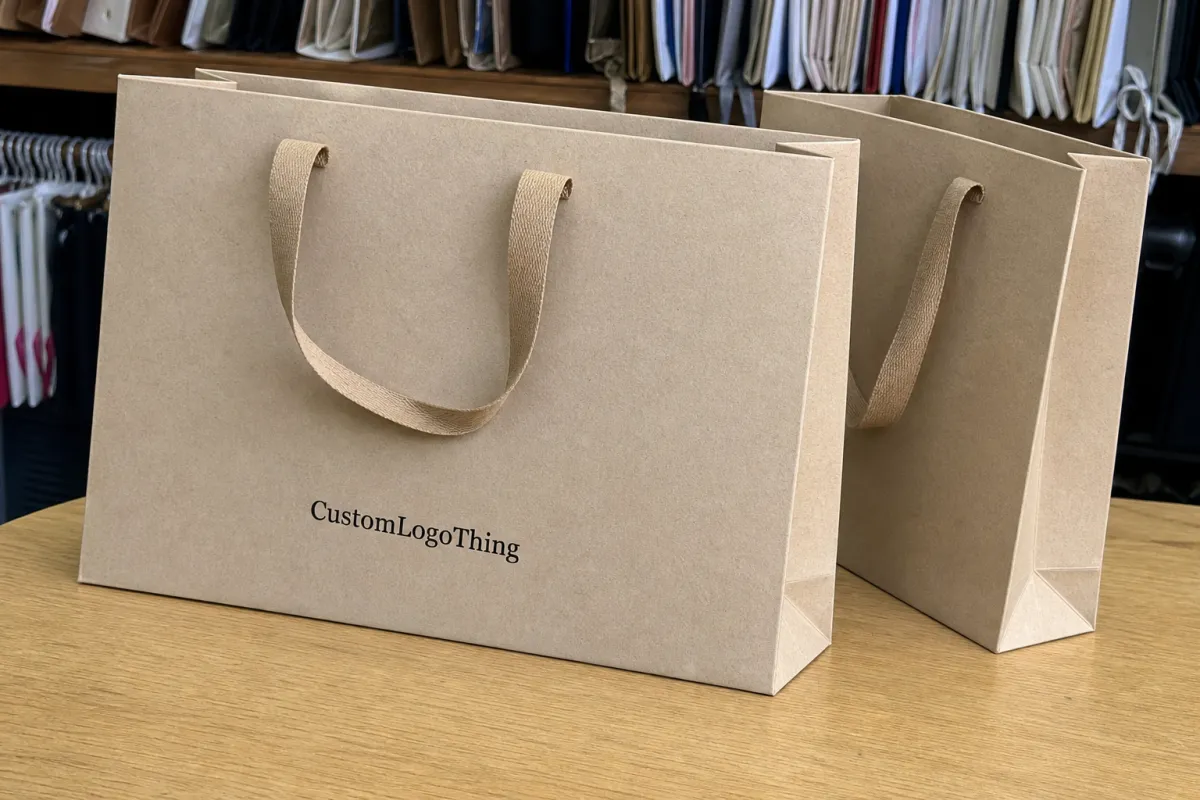
Printed logos sit on the bag. Patches sit above it. The difference sounds minor until the bag is handled, reused, or placed beside tissue paper, a receipt envelope, and the product itself. Texture slows people down. That pause is part of the premium signal.
From a packaging buyer's point of view, the question is not only decoration. It is how much authority the logo gets. A patch can make a simple 250gsm carrier feel intentional, while the wrong patch can make a heavy 350gsm bag look confused. The material language has to match the brand promise.
Most buyers compare patch bags with Printed Paper Bags by asking which one looks more expensive. A sharper question is which one gets kept. Reuse is never guaranteed, but it is a practical indicator. If the bag survives a second trip to lunch, a gift handoff, or a quick store return, the brand earns another impression without paying for another one.
Patch materials vary widely. Printed paper patches are usually the most controlled and cost-efficient. Woven labels bring apparel cues. Faux leather can suggest accessories or gifting. Embossed stock keeps the look quieter, which often suits jewelry or skincare brands that prefer restraint over loud decoration.
Packaging reality check: Boutique Paper Bags with logo patches sell the idea of care. They do not fix weak structure, poor artwork, or a bag that cannot carry the product safely.
That is the useful trail to follow: construction, specifications, price logic, timeline, failure points, and the quote details that separate a usable supplier response from vague sales copy.
How Logo Patch Paper Bags Are Built
The build is straightforward in concept. The paper bag body is produced first, then a separate branded patch is made and applied to the selected face of the bag. The result is layered branding rather than a flat graphic.
A typical specification includes paper stock, coating or lamination, handle type, patch material, adhesive method, logo treatment, patch position, and final inspection criteria. Skip any of those, and the final bag can drift away from the sample that was approved on screen.
Patch styles tend to follow brand category. A printed paper patch works well for boutiques that want clarity at a controlled cost. An embossed patch gives a quieter luxury cue. A woven badge suits fashion and streetwear because it borrows from apparel labeling. Faux leather patches can work for belts, wallets, fragrance sets, and accessories. Foil-stamped patches are common for beauty and gifting because metallic detail shows clearly under store lighting and in phone photos.
Attachment methods matter more than they sound. Industrial adhesive is common. Heat bonding may be used with compatible materials. Some designs add stitched-look borders or rivet-style accents, but those details increase cost and demand cleaner alignment. The right method depends on the patch substrate, the bag coating, expected handling, humidity exposure, and carton compression during freight.
Placement needs stricter control than ordinary printing. A patch that is 3 mm off-center may look charming on a rustic kraft bag. On a minimal black carrier with cotton rope handles, the same shift can read as a defect. Handle knots, gusset expansion, fold lines, and bag curvature all affect the visual center.
Good suppliers check for corner lift, rub resistance, compression marks, and how the bag looks when loaded with realistic weight. If the bag is for boxed candles, test it with boxed candles. If it is for scarves and cards, test it with soft fill. Boutique paper Bags with Logo patches should be judged in use, not only flat on a proof.
Key Specs That Change the Look, Strength, and Brand Signal
The most important choices are rarely cosmetic in isolation. Paper weight, handle style, coating, patch thickness, and logo scale interact. A beautiful patch on a weak bag feels like a luxury badge glued to a discount carrier.
For small cosmetics, jewelry cards, silk scarves, or lightweight gifts, 180gsm to 250gsm paper may be enough depending on bag size and handle construction. Folded apparel, boxed gift sets, candles, and premium retail items often need 250gsm to 350gsm board or reinforced construction. Heavier is not always better. A small bag in overly rigid stock can feel stiff and awkward.
Handles send their own message. Twisted paper handles feel practical and more eco-forward. Cotton rope feels more elevated, especially on laminated bags. Ribbon handles create a gift-ready mood. Die-cut handles can look modern and clean, although they are better for lighter contents unless reinforced.
Surface finish matters because patches need contrast and compatibility. Matte lamination can make boutique paper Bags with Logo patches feel refined. Gloss gives more visual punch, but it can cheapen the feel if the patch is also shiny. Soft-touch coating gives the hand a reason to pause. Uncoated kraft supports a natural or artisanal position, but adhesives and color matching need extra attention because porous papers behave differently.
| Specification Choice | Typical Use | Buyer Watch-Out |
|---|---|---|
| 180gsm-250gsm paper | Cosmetics, scarves, cards, small accessories | May feel flimsy if the patch is thick or the product is boxed |
| 250gsm-350gsm board | Apparel, candles, boxed gifts, premium retail | Higher cost and carton weight can affect freight |
| Cotton rope handles | Luxury boutique and gifting bags | Handle color, knot position, and pull strength need checking |
| Paper patch | Clean branding with controlled cost | Edges can lift if adhesive and coating are mismatched |
| Woven or faux leather patch | Fashion, streetwear, accessories | Usually higher setup cost and longer sampling cycle |
Patch size changes the signal too. Oversized patches create a fashion-label effect. Small centered patches behave more like a seal of authenticity. Bigger is not automatically more premium; luxury packaging often uses negative space as a pricing cue.
Color contrast is another trap. Tone-on-tone branding can look expensive in person but disappear in ecommerce photos. High contrast improves visibility, yet a bright synthetic patch on muted kraft may feel mismatched unless that tension is deliberate. Place the sample bag beside tissue paper, tags, hangtags, product boxes, and receipt folders. The bag has to belong to the full retail system.
Cost, MOQ, and Unit Pricing Factors Buyers Should Check
Patch bags usually cost more than standard Printed Paper Bags because two production systems are involved: the bag and the separate patch. Even if the bag size is identical, the patch adds material, setup, application labor, and inspection time.
Main cost drivers include bag size, paper thickness, handle type, print coverage, lamination, patch material, patch finishing, quantity, sample requirements, packing method, and freight. For a medium boutique bag with a printed paper patch, buyers may see broad landed ranges around $0.70-$1.80 per unit at moderate volumes, depending on size, finish, and shipping. Woven or faux leather patch constructions can push higher, especially at lower quantities. Use ranges for planning, not promises.
MOQ logic is blunt. Small quantities are possible for some paper patch configurations, but custom patch economics usually improve as volume rises because die cutting, foil dies, embossing plates, weaving setup, and color matching costs spread across more units. A run of 500 pieces may carry painful setup allocation. A run of 5,000 pieces often looks more rational on a unit basis.
A printed paper patch is generally more budget-friendly than woven or faux leather. Foil stamping adds visibility but may require a die. Embossing can look excellent, although it needs enough material thickness to hold detail. Fine serif logos, hairline marks, and gradients should be simplified before production if the patch is small.
| Patch Option | Typical Cost Position | Best Fit | Key Risk |
|---|---|---|---|
| Printed paper patch | Lower to mid | Clean retail branding, seasonal bags, larger runs | Edge lift and scuffing if coating is poorly matched |
| Embossed paper patch | Mid | Jewelry, skincare, quiet luxury | Low contrast may vanish in photos |
| Woven patch | Mid to high | Fashion, streetwear, lifestyle boutiques | Fine logo details may not weave cleanly |
| Faux leather patch | Mid to high | Accessories, apparel, gifting | Flexibility and adhesion must be tested |
| Foil-stamped patch | Mid to high | Beauty, bridal, premium gift packaging | Die cost and color consistency can affect budget |
The cheapest unit cost may be the most expensive decision if the patch curls, peels, or lands crooked. A plain bag can disappear into the background. A failed premium detail calls attention to itself.
Before asking for a quote, prepare quantity, bag size, target product weight, paper preference, handle preference, patch material idea, logo file, number of colors, delivery location, and in-hands date. Ask suppliers to separate setup costs, sample costs, freight, and unit pricing. That breakdown makes comparison cleaner than one low headline number.
Process and Timeline From Artwork to Finished Bags
Lead time is a sequence of approvals, not just manufacturing days. Many delays happen before production starts because the logo file is low resolution, the patch dimensions are vague, or the color target has never been defined.
The usual path looks like this: project brief, specification review, dieline or mockup, material recommendation, quote, artwork proof, sample or pre-production photo, production, quality inspection, packing, and shipping. A simple paper patch order may move faster. A woven, embossed, faux leather, or foil patch order needs more checkpoints.
Vector logo files are preferred because patches need clean edges and production boundaries. AI, EPS, or editable PDF files are easier to adapt for die cuts, stitch paths, embossing zones, and foil areas. A PNG copied from a website is not enough for precise patch work.
Digital mockups help with layout, but physical samples reveal the truth: thickness, color, handfeel, edge behavior, and whether the corners stay flat. For boutique paper Bags with Logo patches, sampling is not a vanity step. It is risk control.
Timeline variables include specialty patch material, custom-dyed handles, foil dies, high-volume orders, retail rush periods, freight method, and revision cycles after proofing. In practical terms, buyers often plan several weeks from specification approval to finished goods, then add shipping time. Complex patch bags can require longer, especially if the first sample exposes a material conflict.
Work backward from the launch date, market event, store opening, or holiday selling window. Add buffer for proof review, sample transit, internal approvals, and freight uncertainty. The International Safe Transit Association publishes testing resources at ista.org, and while retail bags are not always tested like parcels, the same logic applies: packaging has to survive the route it actually travels.
Step-by-Step Guide to Planning Your Patch Bag Order
Start with the product, not the bag. Measure the item or box that will go inside, then estimate packed weight. Decide whether the bag must hold tissue, cards, hangtags, samples, or secondary packaging. A 9 x 4 x 7 inch bag may be right for a boxed candle but wrong for a folded knitwear item that needs a wider gusset.
- Define the brand signal. Write one sentence: minimal luxury, handmade boutique, bold streetwear, clean skincare, bridal gifting, or eco-conscious retail. That sentence should steer the material choices.
- Choose the bag structure. Confirm size, gusset, paper weight, finish, and handle type before patch placement. Handles and fold lines change the visual center.
- Select the patch style. Compare printed paper, embossed label, woven badge, faux leather tab, foil-stamped patch, or a mixed-material application. Limit competing finishes.
- Prepare production artwork. Send vector art, Pantone or CMYK targets if available, and notes about simplified logo versions for small patches.
- Request an accurate proof. Ask for front view, patch size, distance from edges, handle relationship, and approximate scale on the finished bag.
- Review like a customer. Hold the bag, photograph it, place products inside, check patch adhesion, inspect edges, and compare it with store lighting or ecommerce imagery.
Approval should happen only after confirming quantity, carton packing, shipping address, freight method, and latest acceptable arrival date. That sounds administrative. It prevents real pain. A perfect sample arriving after the selling window is still a failed order.
Sustainability claims need the same discipline. Recyclable paper, paper-based patches, water-based inks, and minimal lamination can help. Mixed materials can complicate recycling. The Forest Stewardship Council is a useful reference if certified paper sourcing matters to your brand or retail partners.
Common Mistakes That Make Patch Bags Look Cheap
The first mistake is choosing a patch material that fights the paper. A glossy synthetic patch on raw kraft can look accidental unless the contrast is deliberate and supported by the rest of the brand system.
Oversized logos are another problem. Boutique buyers want visibility, understandably. But a patch that overwhelms the bag can turn premium packaging into a billboard. Restraint often looks more expensive because it suggests confidence.
Alignment problems deserve more attention. Patch placement has to account for folds, handles, gussets, and how the bag expands when filled. A centered patch on a flat dieline may not look centered once the bag is standing with a product inside.
Weak adhesion is worse than weak artwork. If corners lift after shipping, if the patch scuffs against neighboring bags in the carton, or if humidity softens the bond, the customer sees failure before craft. Ask how adhesion is tested. Ask whether samples are checked after compression, rubbing, and realistic handling.
Color surprises are common too. Screens, PDFs, ink, paper, fabric, and faux leather all interpret color differently. Beige can turn warm on one stock and gray on another. Black can look rich on coated paper and dusty on fabric. Physical swatches reduce guessing.
Ignoring product weight creates a mixed message: expensive look, cheap performance. If rope handles strain, if the bottom sags, or if the gusset buckles, the logo patch cannot save the experience. For larger or heavier retail uses, paper strength and adhesive behavior deserve the same attention as graphics.
Overcomplication is the quiet budget killer. Foil, embossing, textured paper, rope handles, custom color, and a patch can work together. Not automatically. Too many signals compete, and every added process brings cost, proofing time, and another failure point.
- Check patch straightness across random samples, not only the top bag.
- Inspect adhesion at corners and edges after carton compression.
- Rub the patch surface lightly to check scuffing and ink transfer.
- Test handle strength with the actual packed product weight.
- Compare logo clarity at arm's length and in phone photos.
- Confirm carton protection so patches do not scrape during shipment.
What to Prepare Before Requesting a Custom Bag Quote
A better quote starts before the supplier sees your logo. Gather product dimensions, packed weight, preferred quantity, target budget range, deadline, shipping destination, and vector artwork. That information can cut days from the early back-and-forth.
Create a small visual reference board with three to five examples: one for bag shape, one for patch texture, one for handle style, one for color mood, and one example of what you dislike. The negative example is surprisingly useful. It tells the manufacturer where not to spend your money.
Choose two specification tiers before quoting. One practical version might use 250gsm paper, matte finish, twisted paper handles, and a printed patch. A premium version might use 300gsm or 350gsm board, cotton rope handles, soft-touch lamination, and an embossed or woven patch. Side-by-side options expose the tradeoffs more clearly than asking for one perfect bag with no cost context.
Ask targeted questions. Which patch materials fit this paper? What MOQ changes the unit cost most? Can the patch be sampled? How is adhesion checked? What is the realistic lead time after artwork approval? Can setup, sampling, freight, and unit price be shown separately?
Request a proof showing patch dimensions in actual scale, not only a polished mockup. A 2.5 inch patch and a 4 inch patch can tell completely different stories on the same bag. Actual scale catches expensive mistakes early.
Boutique paper bags with logo patches work best when the bag, patch, handle, and product all support the same brand promise. Turn that promise into specifications a manufacturer can price, sample, and produce, and the bag has a much better chance of feeling like part of the purchase rather than packaging headed for the bin.
FAQs
Are custom boutique bags with logo patches more expensive than printed paper bags?
Usually, yes. The patch is produced separately and then applied to the bag, so the order includes extra material, setup, labor, and quality control. The biggest pricing variables are patch material, finishing method, bag size, order quantity, and application labor. A printed paper patch can help control cost, while woven, faux leather, foil, or embossed patches typically raise the unit price.
What is the best patch material for boutique paper shopping bags?
Printed paper patches work well for clean retail branding and lower-cost premium effects. Woven patches suit fashion, lifestyle, and streetwear brands that want label-like texture. Faux leather or embossed patches can create a stronger luxury signal, but they should be tested for adhesion, flexibility, scuffing, and compatibility with the selected paper stock.
How long does it take to produce paper bags with logo patch branding?
Timing depends on artwork readiness, sampling, patch complexity, order volume, and shipping method. Simple constructions generally move faster than custom woven, embossed, or specialty-material patches. The safest planning method is to work backward from the needed arrival date and leave buffer for proof review, sample approval, and freight delays.
Can boutique paper bags with logo patches be eco-friendly?
They can be, especially with recyclable paper stocks, paper-based patches, water-based inks, and minimal lamination. Mixed materials may complicate recyclability, so buyers should ask how the patch affects disposal or reuse. A durable reusable bag can still support sustainability goals if customers are likely to keep and reuse it.
What files do I need to order logo patch paper bags?
Vector logo files such as AI, EPS, or editable PDF are preferred because they keep patch edges, embossing boundaries, foil areas, and die-cut shapes clean. Include color references, patch size preferences, bag dimensions, quantity, handle choice, and delivery deadline. If the logo has fine lines or gradients, ask whether it needs simplification for embossing, weaving, foil stamping, or small patch production.