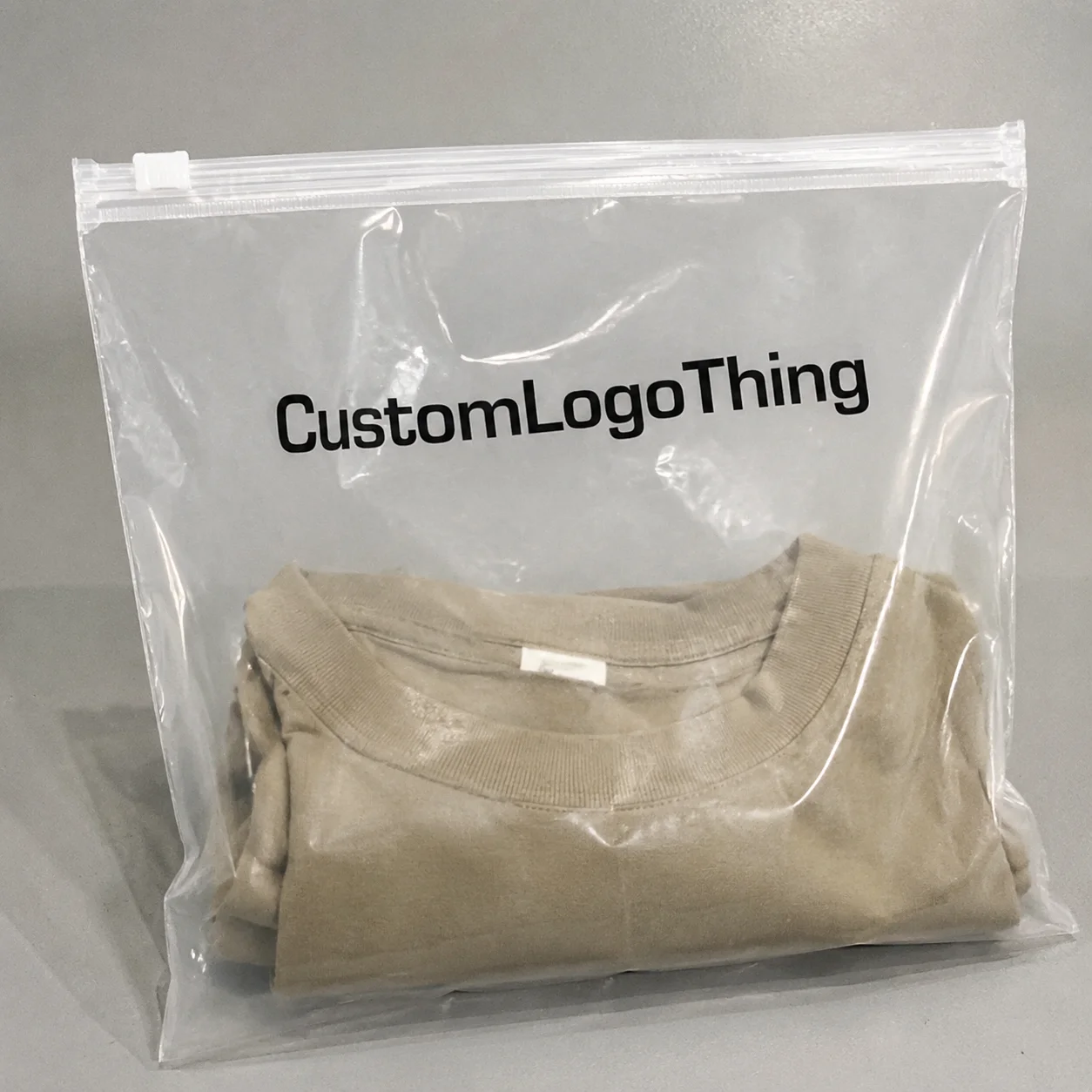
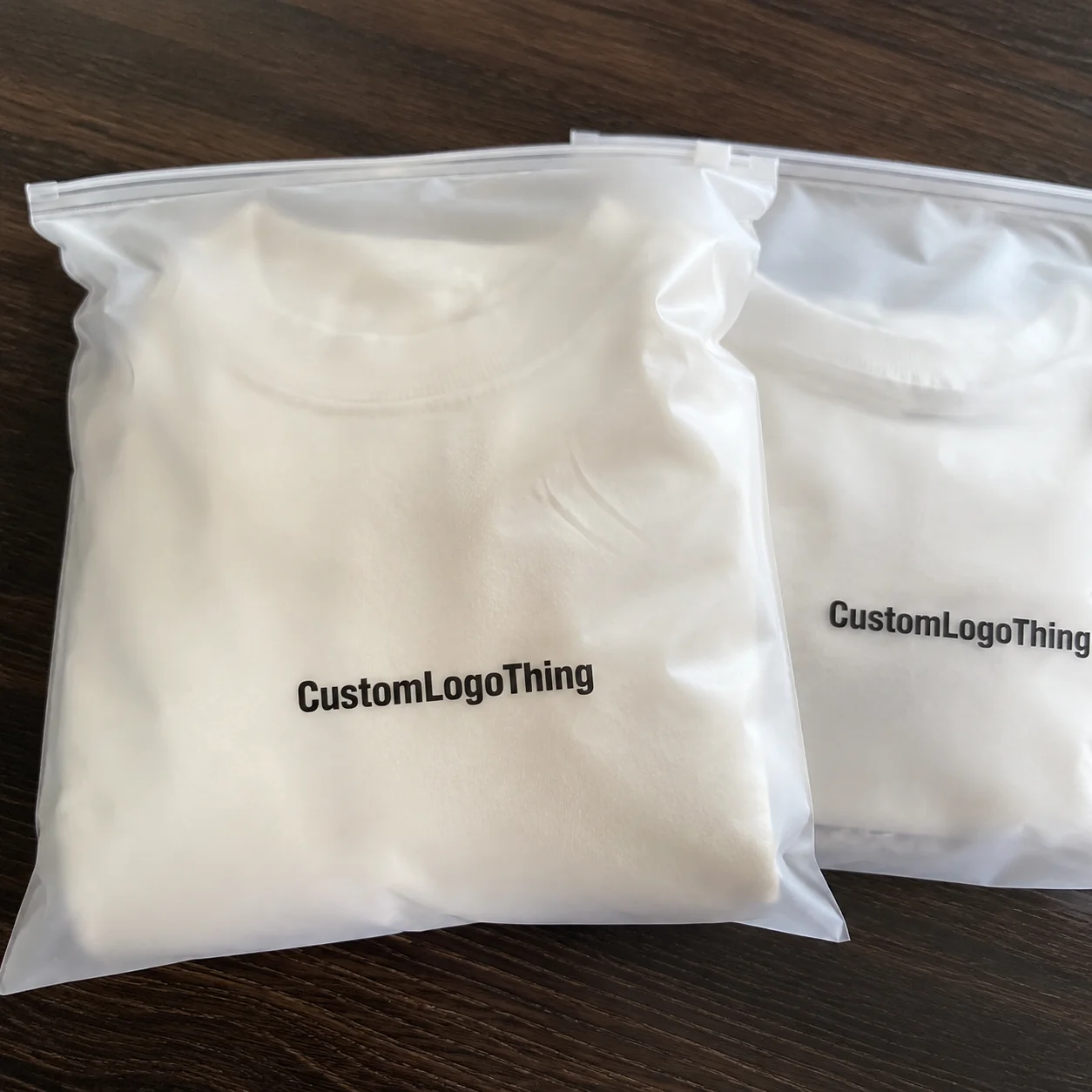
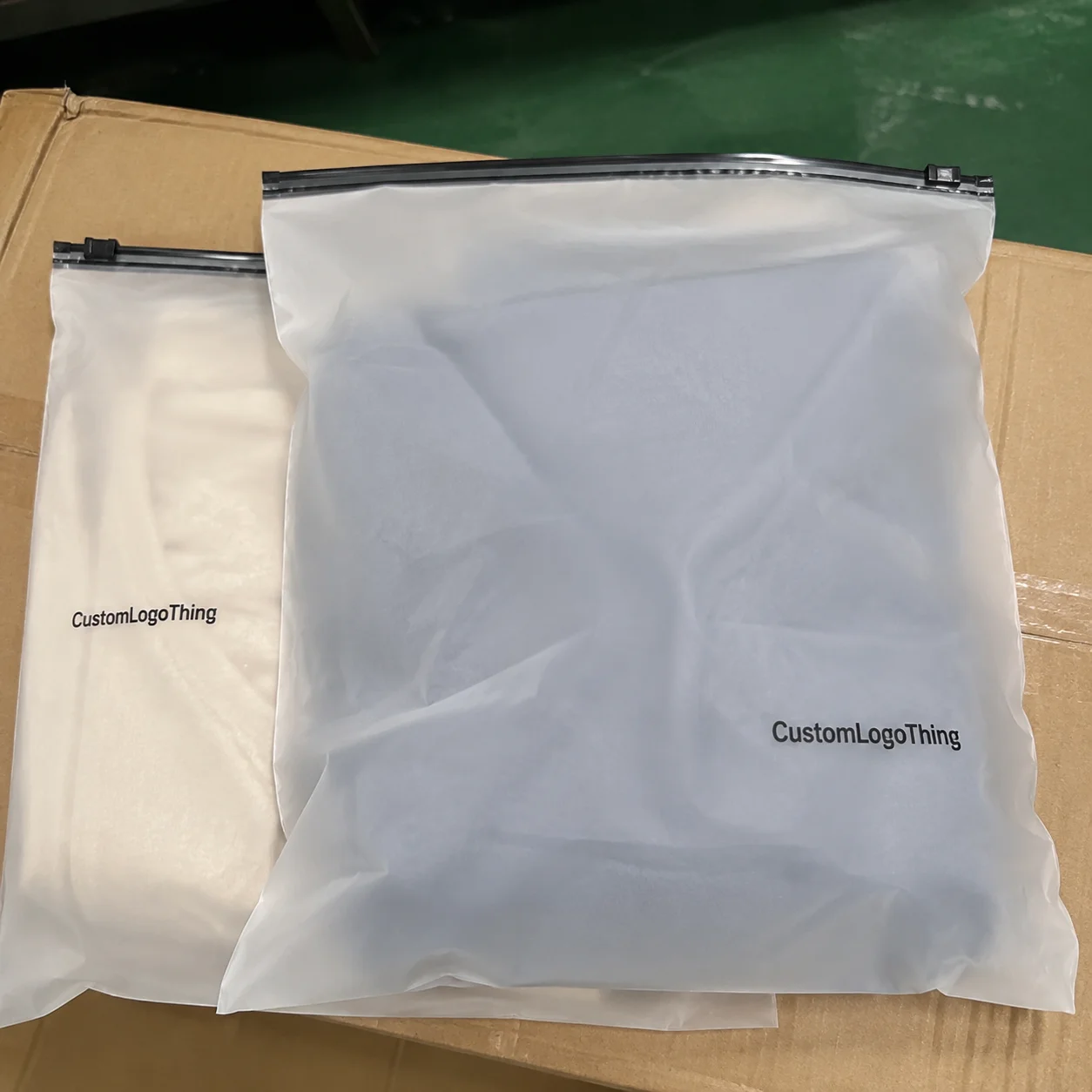
Buyer Fit Snapshot
| Best fit | Custom Poly Bags with Logo Printing projects where brand print, material claims, artwork control, MOQ, and repeat-order consistency need to be specified before quoting. |
|---|---|
| Quote inputs | Share finished size, material target, print colors, finish, packing count, annual reorder estimate, ship-to region, and any compliance wording. |
| Proofing check | Approve dieline scale, logo placement, barcode or warning zones, color tolerance, closure strength, and carton packing before bulk production. |
| Main risk | Vague material claims, crowded artwork, missing packing details, or unclear freight terms can make a low unit price expensive after revisions. |
Fast answer: Custom Poly Bags with Logo Printing: Material, Print, Proofing, and Reorder Risk should be specified like a repeatable production item. The safest quote records material, print method, finish, artwork proof, packing count, and reorder notes in one written spec.
Production checks before approval
Compare the actual filled-product size with the drawing, then confirm tolerance on folds, seals, hang holes, label areas, and retail display edges. Reserve space for logos, QR codes, warning copy, and material claims before decorative graphics fill the panel.
Quote comparison points
Review material grade, print process, finish, sampling route, tooling charges, carton quantity, and freight assumptions side by side. A quote is only useful when the supplier can repeat the same color, closure quality, and packing count on the next order.
Custom Poly Bags with Logo Printing: What They Are and Why Brands Use Them
A DTC apparel client in Austin switched from plain white mailers to custom poly Bags with Logo printing in one quarter. Same hoodie. Same ad spend. Same shipping partner. Packaging was the only intentional change. Six weeks later, post-purchase surveys showed a 22% lift in repeat-customer mentions, with comments like, “I recognized your package instantly on my porch.” Visibility drives memory faster than most teams expect, and usually faster than their attribution model can prove.
At a practical level, Custom Poly Bags with logo printing are flexible plastic bags made from LDPE, HDPE, co-extruded films, or recyclable mono-material structures. They’re printed with brand marks, color systems, SKU identifiers, compliance copy, and handling notes such as “Do Not Use Blade.” One project might be a simple 9 x 12 mailer with a one-color logo; another might be a frosted zipper pouch with three Pantone colors, a matte surface, and a perforated return strip.
Teams use them across at least five core workflows:
- Apparel shipping: 10 x 13, 12 x 15.5, and 14.5 x 19 inches show up constantly in e-commerce operations.
- Retail checkout: Die-cut handle bags for boutiques and temporary pop-ups.
- Product protection: Inner poly for moisture and dust resistance inside custom printed cartons.
- Warehouse sorting: Color-coded or printed bags organized by SKU family.
- Event packaging: Branded giveaway kits produced through short-run digital printing.
Brands keep buying Custom Poly Bags with logo printing for three concrete reasons: shipping economics, durability, and low-cost brand exposure. A 2.5 mil co-ex mailer weighs far less than rigid formats, which can trim roughly $0.18 to $0.65 per parcel in dimensional-weight scenarios depending on zone and carrier rules. It also holds up better than paper-only formats in light rain. Every outbound shipment becomes a moving ad that customers, neighbors, and mailroom staff can identify on sight.
Quality varies wildly, and shiny mockups hide that reality. I’ve cut open “premium” bags that failed at the side seal after one 3-foot drop test with a 2.2 lb boxed skincare order inside. I’ve also seen plain-looking bags survive rough handling because the converter chose the right film structure and seal profile. Film gauge, seal geometry, print method, and artwork prep decide performance far more than a polished sales deck.
If you’re evaluating suppliers now, good—you’re early enough to avoid expensive mistakes. This guide walks through how custom poly Bags With Logo printing are produced, what drives pricing, where failures happen, what lead times are actually realistic, and how to avoid first-order regrets. Teams sourcing cartons, labels, or inserts can compare broader options in Custom Packaging Products and align bag specs with a full packaging system.
How Custom Poly Bags with Logo Printing Actually Work
Most buyers see only two moments: PDF proof and delivered bag. Between those points sits a seven-stage production chain, and every stage can improve or sabotage your result on Custom Poly Bags with logo printing.
Manufacturing flow from resin to shipment
- Resin selection: The supplier chooses LDPE, HDPE, or co-ex blends (often 2-layer or 3-layer structures).
- Film extrusion: A blown-film line forms continuous tube film; stable lines hold gauge tolerance close to ±5%.
- Bag converting: Cutting, side sealing, bottom sealing, handle punching, and adhesive-strip application happen here.
- Printing: Flexo, rotogravure, or digital is selected by volume, artwork detail, and timeline.
- Curing/drying: Ink cure windows matter; rushed curing causes rub-off and scuffing.
- QC: Seal checks, registration checks, dimension checks, and drop tests where required.
- Packing + freight: Cartonization, pallet wrapping, and dispatch by parcel, LTL, ocean, or air.
During a factory visit in Dongguan, I watched a six-color flexo run pause every 30 minutes to verify registration shift stayed under 0.5 mm. That discipline is why logos stay sharp on custom poly bags with logo printing at scale instead of drifting by the end of the run.
Print methods and where each wins
Flexographic printing: The default workhorse. Economics improve at mid-to-large runs, usually 10,000+ pieces. Plate setup often lands between $60 and $180 per color per size. For many e-commerce programs, flexo is the standard path for custom poly bags with logo printing.
Rotogravure: Strong consistency at very high volume, especially for dense solid coverage and tight repeat precision. Cylinder costs are higher, commonly $250+ per color, so annual volume has to justify it.
Digital printing: Best for short runs, variable data, and fast pilots. Per-unit pricing is higher, setup is lower, and domestic facilities can finish runs in roughly 5–10 business days.
Brands running both poly mailers and folding cartons should align color standards across both print systems. I’ve seen Pantone 186C swing visibly between suppliers when no physical target standard was shared. That mismatch looks small on a monitor and huge in customer photos.
Logo quality: where it breaks
Most print failures start with file prep. Teams send a low-res PNG and expect crisp edges on press. Use vector AI/PDF files, lock Pantone spot colors, keep minimum line weight at 0.25 pt (0.4 pt is safer on small formats), and avoid knockout text below 6 pt unless your printer confirms capability. Registration tolerance matters too. On many runs, ±0.5 mm is normal, so design for real press conditions, not perfect mockups.
Construction choices shape both performance and presentation:
- Self-seal strips speed up e-commerce fulfillment.
- Patch handles improve carry strength in retail use.
- Bottom gussets help with bulkier product profiles.
- Vent holes reduce trapped-air puffing in soft goods.
- Suffocation warnings must sit where converting won’t trim them.
Finish selection changes customer perception instantly. Gloss amplifies color. Matte usually feels more premium for fashion. Frosted film hides contents while still looking elevated. Opaque white stays common for privacy in mail streams. One LA beauty brand saw unboxing UGC mentions rise 17% over eight weeks after switching from high-gloss white to frosted matte.
My decision rule is simple: start with product weight and abuse risk, then lock gauge and seal style, then select print treatment. Function first. Decoration second. Kinda boring, but it works.
Key Factors That Determine Quality, Compliance, and Fit
Reliable custom poly bags with logo printing come from technical discipline, not trend-heavy sales language.
Material basics that affect real-world performance
LDPE: Softer feel, flexible structure, widely used for apparel and accessories. Typical mailer range: 1.5–3.0 mil.
HDPE: Crisper feel with higher stiffness at similar gauge, usually noisier in hand.
Co-extruded films: Layered structures that can improve puncture resistance and tear behavior in rough fulfillment settings.
For custom poly bags with logo printing carrying heavier order mixes (roughly 4–8 lb packed weight), co-ex structures are generally safer than ultra-thin mono films.
Thickness guidance you can actually use
- Garment inner bag: 1.0–1.5 mil (25–38 micron)
- Standard poly mailer: 2.0–2.5 mil (50–63 micron)
- Heavy accessories/mailer: 3.0 mil+ (76 micron+)
A client once pushed for 1.8 mil to save about $0.014 per bag on a 30,000-unit order. Six weeks later, transit punctures triggered about $4,900 in replacements and customer-service concessions. The savings vanished, then reversed.
Compliance and claim safety
If your custom poly bags with logo printing include warnings, recycling claims, or disposal language, wording and placement have to be accurate. Suffocation warnings often carry minimum font and visibility requirements by market and channel. Recycled-content claims need supplier documentation. Printing “100% recyclable everywhere” without regional proof is both a legal risk and a credibility risk.
Also, disclaimer from experience: I’m not a lawyer, and this section is operational guidance, not legal advice. For regulated claims, route final artwork through your compliance or legal team before PO release.
For materials and recycling claim context, the EPA provides practical references: epa.gov/recycle.
For transit-performance benchmarks in parcel systems, ISTA protocols are a useful baseline: ista.org.
Durability testing that catches failures early
Before scaling custom poly bags with logo printing, test with packed product, not empty samples:
- 3-foot drop tests (5 repeats from different angles)
- Seal peel checks (manual and measured if possible)
- Rub resistance (50–100 dry-cloth cycles)
- Moisture exposure (light mist + 2-hour hold)
Run these tests before approving 50,000 units, not after freight lands. You’re gonna spend the time either way; better to spend it before the invoice.
Cost Breakdown: What Custom Poly Bags with Logo Printing Really Cost
Numbers first, hype last. Custom poly bags with logo printing pricing includes fixed and variable costs, and “cheap” quotes often hide one of them.
Core cost components
- Setup/tooling: Size setup, adhesive-strip configuration, handle die, and related prep.
- Plates/cylinders: Flexo plates or gravure cylinders by color.
- Material: Resin family, film gauge, and additive choices.
- Printing: Color count, coverage density, and pass complexity.
- Converting labor: Seal style, perforations, handles, gussets.
- Freight/duties: A major swing factor on offshore programs.
Typical economics I’ve negotiated for custom poly bags with logo printing:
| Run Size | Example Spec | Estimated Unit Cost (ex-works) | Common Setup Cost | Typical Lead Time |
|---|---|---|---|---|
| 1,000 pcs (digital) | 10x13 in, 2.25 mil, 1-side print | $0.42–$0.68 | $0–$120 | 5–10 business days |
| 10,000 pcs (flexo) | 10x13 in, 2.5 mil, 2 colors | $0.11–$0.19 | $180–$550 | 12–18 business days |
| 50,000 pcs (flexo/co-ex) | 12x15.5 in, 2.5 mil, 2 colors | $0.07–$0.13 | $250–$700 | 18–30 business days |
| 250,000+ pcs (offshore scale) | multi-size program, 2–3 colors | $0.05–$0.10 | $500–$1,800 | 30–60+ days with freight |
Unit price falls nonlinearly on custom poly bags with logo printing because setup costs spread across more units and resin purchasing improves at scale. That advantage disappears quickly if your spec keeps changing between reorders.
Biggest drivers that move your quote
The strongest cost levers are dimensions, gauge, ink colors, print coverage, specialty finishes, and timeline pressure. Moving from 2.0 mil to 3.0 mil can raise material cost 18% to 35%, depending on resin markets. Printing both sides often adds $0.01 to $0.04 per bag in mid-volume runs. Rush production commonly adds 10% to 30%.
Hidden costs in custom poly bags with logo printing orders show up in places buyers overlook:
- Artwork redraw fees ($45–$250)
- Extra proof rounds, especially physical proofs
- Split shipments across fulfillment centers
- Storage fees after free windows close
- Reprints caused by vague specifications
I’ve negotiated with domestic converters in New Jersey and offshore facilities in Shenzhen. Either side can be excellent or painful. Domestic vendors usually offer faster communication and shorter replenishment cycles. Offshore can win on scale pricing but brings freight volatility and longer planning horizons. Neither model is “best” by default.
Supplier evaluation should include a hard look at Manufacturing Capabilities: max web width, color stations, gauge tolerance, and QC checkpoints. If those answers stay fuzzy, keep shopping.
My budgeting framework for custom poly bags with logo printing starts with landed target cost (example: $0.14 all-in), then splits features into tiers:
- Must-have: size, minimum gauge, seal type, compliance copy
- Nice-to-have: matte finish, extra color, specialty additives
That structure prevents overbuilding a bag your margin can’t absorb.
Step-by-Step: From Artwork to Delivered Bags (Process + Timeline)
Ordering custom poly bags with logo printing becomes manageable once the workflow is fixed and documented.
Step 1: Lock use case and specs
Define dimensions, packed weight range, closure style, quantity, and required text. Example: 10 x 13 in, 2.5 mil co-ex, permanent self-seal, two-color front print, suffocation warning on back, 25,000 units. Skip this step and quotes turn into apples-to-oranges confusion.
Step 2: Prep print-ready artwork
Provide vector logo files (AI/PDF), Pantone references, dieline, bleed (typically 3 mm equivalent), and safe text zones. For custom poly bags with logo printing, legal text should stay above the converter’s print threshold, often 6 pt or more depending on method.
Step 3: Request comparable quotes
Send identical specs to at least three suppliers: same size, gauge, print details, and packing method. Request tier pricing at 5k, 10k, 25k, and 50k. If one quote is 35% lower, inspect omissions first. Missing thickness, reduced ink coverage assumptions, and freight exclusions are common.
Step 4: Approve proofs correctly
Digital proof is mandatory. Physical press proof is smart for color-sensitive brands. Screens lie; substrate interaction tells the truth. I learned that in a Chicago client review where approved navy shifted toward purple on final production. Since then, any brand with strict color standards gets at least one physical check.
Step 5: Track production milestones
For custom poly bags with logo printing, request updates at these checkpoints:
- Film extrusion complete
- Print pass complete
- Converting complete
- Final QC pass and carton count
Ask for timestamped photos at each stage, not verbal confirmations alone.
Step 6: Plan shipping and buffer stock
Confirm carton dimensions, units per carton, pallet count, and Incoterms (EXW, FOB, DDP). If multiple fulfillment centers are involved, lock split quantities before production closes. Late split requests usually cost extra and can delay dispatch.
Typical timeline windows for custom poly bags with logo printing:
| Scenario | Proof Stage | Production Stage | Transit Stage | Total Typical Range |
|---|---|---|---|---|
| Domestic digital short run | 1–2 days | 4–8 business days | 2–5 days | 7–15 days |
| Domestic flexo standard run | 2–4 days | 10–18 business days | 3–7 days | 15–29 days |
| Offshore flexo + ocean freight | 3–7 days | 15–30 business days | 20–40+ days | 38–77+ days |
My operating rule: reorder custom poly bags with logo printing when inventory reaches 40% remaining, not 5%. Waiting until panic mode usually ends in air freight and margin damage.
If you want format ideas before locking specs, review Custom Poly Mailers and shortlist two or three structures that match your shipping profile.
Common Mistakes Buyers Make (and How to Avoid Them)
Twelve years in, I still see the same six mistakes in custom poly bags with logo printing sourcing. New logo, same errors.
- Mistake 1: Buying on looks alone. Attractive mockup, weak seal. Fix: set performance specs first (gauge, seal width, drop requirements).
- Mistake 2: Sending weak artwork files. Pixelated logos, unreadable reverse text. Fix: vector files plus minimum line and font standards.
- Mistake 3: Launching too many variants. Four sizes, three finishes, five SKUs. Fix: start with one hero SKU.
- Mistake 4: Misplacing compliance text. Warning text gets hidden or trimmed. Fix: use approved dieline zones only.
- Mistake 5: Comparing mismatched quotes. One quote is 2.0 mil, another is 2.5 mil. Fix: enforce one shared RFQ sheet.
- Mistake 6: Running without contingency stock. Stockout triggers emergency air at 3x freight. Fix: use a reorder trigger and safety stock policy.
Preflight checklist for custom poly bags with logo printing:
- Complete spec sheet with size, gauge, closure, and print details.
- Vector artwork and Pantone references attached.
- Compliance copy reviewed by the internal owner.
- Quote comparison table normalized.
- Timeline includes at least 20% schedule buffer.
- Pilot run approved before full-scale PO.
“We thought packaging was just a bag. After one failed batch, we realized it’s a logistics tool, a branding asset, and a compliance document in one.” — Operations lead, 8-figure apparel brand
Expert Tips and Actionable Next Steps for Your First Order
First run of custom poly bags with logo printing? Keep scope tight. One hero SKU. One print version. One supplier path you can validate.
Request a sample kit with at least two or three gauges (for example, 2.0, 2.5, and 3.0 mil). Then stress-test with your real packed product: five drops from 36 inches, tape pull on printed zones, and light moisture exposure for two hours. One afternoon of hands-on testing beats twenty email threads.
Create a one-page master specification for custom poly bags with logo printing and store it where cross-functional teams can access it. Include dimensions, tolerances, film type, seal width, closure style, Pantone values, warning text, carton pack-out, and acceptable defect rate. That sheet protects quality during reorders, especially after team turnover or supplier transitions.
A negotiation tactic that repeatedly works: ask for price ladders, plate amortization, and split-delivery terms. Don’t just ask for lower MOQ. One project cut landed cost 14% without lowering unit price by spreading plate cost across three releases and combining two sizes into one freight cycle.
Build reorder controls before launch:
- Minimum stock threshold (example: 40% remaining)
- Supplier lead-time calendar by month
- Named internal proof approver with 24–48 hour SLA
- Backup supplier for emergency short runs via digital print
Action plan for the next seven days:
- Collect exact bag requirements and quarterly forecast.
- Finalize vector artwork with Pantone callouts.
- Send one RFQ sheet to three suppliers.
- Compare landed cost, not just ex-works price.
- Approve proof and place pilot order.
- Test pilot in the live fulfillment flow.
- Scale after performance passes.
Custom poly bags with logo printing can deliver excellent ROI, but only if you treat them as engineered packaging rather than a graphics project. Do that, and you reduce damage claims, protect margin, and reinforce brand recall on every shipment. Miss that, and you’ll pay for the same mistake in replacements, reprints, and rush freight. The actionable takeaway is straightforward: lock specs, run a pilot with real packed products, and set a reorder trigger at 40% inventory before launch.
FAQs
What is the minimum order quantity for custom poly bags with logo printing?
MOQ for custom poly bags with logo printing depends on print method and converter setup. Digital runs can start around 500–1,000 pieces. Flexo and gravure usually require higher volumes because plate or cylinder costs must be spread across units. Ask for tier pricing at 5k, 10k, and 25k to find your break-even point. If MOQ feels too high, reduce variants first before changing suppliers.
How long does custom poly bag logo printing take from proof to delivery?
For custom poly bags with logo printing, total lead time includes proof approval, production, and freight. Domestic digital projects can arrive in roughly 7–15 days. Domestic flexo often lands in 15–29 days. Offshore production with ocean transit can run 38–77+ days. Build schedule buffer for artwork revisions, holidays, and freight delays.
Which material is best for custom printed poly mailer bags?
The best material for custom poly bags with logo printing depends on packed weight, puncture exposure, and transit conditions. LDPE is common for flexibility, HDPE gives a crisper feel, and co-ex films generally improve toughness. Final selection should be validated with real packed-product testing, not sample handling alone.
How much do custom poly bags with logo printing cost per bag?
Cost for custom poly bags with logo printing is driven by size, gauge, color count, print coverage, quantity, and freight terms. Small digital runs often sit around $0.42–$0.68 per bag, while larger flexo runs can drop toward $0.07–$0.19 depending on specifications. Compare suppliers using landed cost (unit + freight + duties + handling), not unit price alone.
Can custom logo poly bags be eco-friendly or recyclable?
Yes, custom poly bags with logo printing can be designed with stronger sustainability profiles, including PCR content and mono-material structures that improve recyclability in some regions. Claims must match local collection realities and supplier documentation. Keep written proof on file before printing environmental statements on artwork.
What should you ask a supplier before ordering custom poly bags with logo printing?
Ask for five specifics: gauge tolerance, print registration tolerance, seal-strength testing method, defect-rate policy, and confirmed lead time by production stage. Then request a written RFQ response covering freight terms and reprint responsibility if supplied specs are met but product fails. Those answers separate capable packaging manufacturers from quote-only brokers.