Custom Prescription Labels: How to Order the Right Run
Custom prescription labels look small on the spec sheet, but they act like control points in the packaging system. If the copy is cramped, the adhesive is wrong, or the stock does not match the way the garment is packed, the problem shows up later as rework, wasted labor, or a package that feels unfinished.
In apparel and soft goods, these labels usually carry care notes, size details, fiber content, SKU data, handling instructions, or packing information. They are functional first. Branding matters, but only after the label has proven it can stay attached, remain legible, and fit the packout process without creating friction.
A label that saves two cents but forces a reprint is not a saving. Once labor, delay, and scrap are included, the real cost moves the other way quickly.
What These Labels Do on a Finished Garment
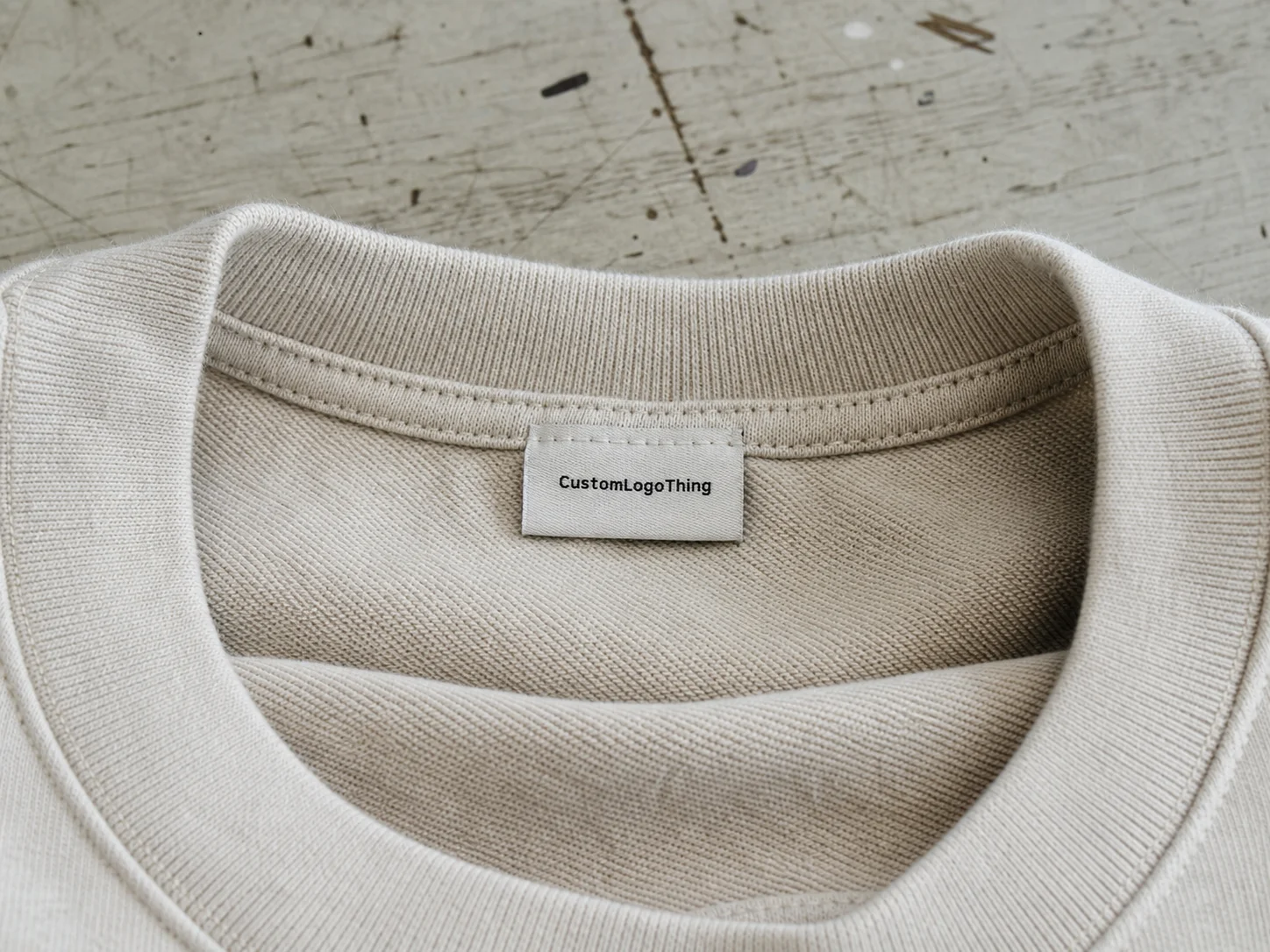
In a clothing workflow, custom prescription labels are the printed pieces that keep a finished garment moving correctly through packing, storage, shipping, and retail handling. They may sit inside a folded shirt, on a poly bag, on a carton, or alongside a hang tag. Their job is practical: make the product easier to identify, route, and open without confusion.
Format matters because a functional label has to hold up under pressure, friction, stacking, and occasional moisture. If it will travel from warehouse to shelf, it needs to keep its shape and contrast long enough to do its job cleanly.
Material selection changes the outcome more than many buyers expect. Plain paper can work for short-life applications or dry environments. Coated paper improves print sharpness and is often a better fit for retail-facing labels. Synthetic films such as BOPP usually cost more, but they are better when the label may face abrasion, humidity, or longer transit time.
There is also an image issue. A premium jacket or knit can lose some finish if the accompanying label curls, smears, or reflects badly under light. The mismatch is subtle, but packaging is full of these small mismatches and they add up quickly.
- Care labels communicate washing, drying, and ironing instructions.
- Content labels show fiber composition or product details.
- Handling labels carry folding, boxing, or routing instructions.
- Identification labels support SKU control, batch tracking, or fulfillment accuracy.
For some lines, a label is also part of a compliance chain. That means the buyer is not just buying print. They are buying consistency, readability, and a material spec that will not fail when the product enters the real world.
Production Process and Timeline from Proof to Delivery
Most clean orders move through the same sequence: artwork intake, proofing, material selection, print production, finishing, and shipment. Delays usually start with incomplete artwork or with a material decision made for appearance rather than performance.
A good proof should show final dimensions, text placement, color treatment, barcode or batch information if needed, and any compliance language tied to the item. If the label is part of a broader system that includes Custom Labels & Tags or other Custom Packaging Products, the proof should also show how the piece fits beside the rest of the packout. A label that works in isolation can still fail when it is folded, bagged, boxed, and shipped with everything else.
Timeline depends on readiness. Simple repeat work can often move in 5 to 8 business days after proof approval. New specs, custom shapes, variable data, or material testing can stretch that to 10 to 15 business days, and samples can add more time if the team wants to verify the stock before the full run starts. Shipping time sits on top of that, so buyers who are tight on launch dates need to think in totals, not just production days.
Color matching, barcode validation, and adhesive testing are worth scheduling early if the label will face handling stress or travel through multiple facilities. A short delay during proofing is usually less expensive than scrapping a run after it has already been printed and packed.
For a practical benchmark, buyers who request only a visual proof and skip material verification tend to discover issues later. Buyers who ask for a physical sample or a short run often spend more upfront, but they reduce the odds of a costly correction.
Cost, Pricing, and MOQ Factors That Change the Quote
Pricing for custom prescription labels is driven by a small group of variables that interact more than buyers usually expect. Quantity is the largest one. After that come size, print coverage, material, finish, and whether the order includes variable data, sequential numbering, or special inspection steps.
Minimum order quantity changes unit cost in a real way. At 500 pieces, setup and prep are spread across a small run, so the per-label price stays higher. At 5,000 or 10,000 pieces, those same setup costs are distributed across more units, which lowers the price per label. In broad terms, a simple paper label might land around $0.08 to $0.18 per unit at lower volumes and drop to roughly $0.03 to $0.08 at larger quantities. Those are not exact quotes; they are the kind of ranges buyers should expect once the spec changes.
| Label Option | Typical Use | Approx. Unit Price | Tradeoff |
|---|---|---|---|
| Paper face stock | Dry, short-life garment inserts or carton labels | $0.03-$0.08 at higher quantities | Lower cost, less resistance to moisture and rubbing |
| Coated paper | Cleaner print quality for retail packaging and SKU labels | $0.05-$0.11 | Better image sharpness, still not ideal for harsh handling |
| BOPP or synthetic film | Moisture-prone or high-touch applications | $0.07-$0.15 | More durable, usually higher material cost |
| Variable data or sequential numbering | Batch control, fulfillment, or traceability | +$0.01-$0.05 add-on | More setup and inspection time |
Adhesive choice affects price and performance as well. A removable adhesive is often enough for temporary use, while a permanent acrylic adhesive is better when the label has to stay put through shipping vibration or repeated handling. If the label must survive transit, it is worth asking whether the spec has been tested against principles used in ISTA methods. If paper sourcing is part of the program, FSC certification remains a useful reference point.
The most useful quote is itemized. Ask for separate pricing on stock, print method, finish, and quantity. That makes the tradeoffs visible. A single bottom-line number hides the reasons the cost moved, and that makes procurement slower rather than faster.
Once a buyer adds heat resistance, moisture resistance, or tighter inspection, the price rises modestly, but the failure risk drops much more sharply. That trade is usually worth it when the label is tied to fulfillment accuracy or the customer-facing presentation of the product.
Step-by-Step Ordering Checklist for a Clean Launch
The cleanest orders start with the workflow, not the artwork. Where will the label live? What happens to it after printing? Does it stay inside a folded garment, ride on a poly bag, or attach to a carton? Those details determine the spec more accurately than a design file does.
Start with size, then copy length, then attachment method. Those three choices drive most of the job. A label that holds four lines of text can look reasonable on screen and still become unreadable at actual print size. If the smallest line matters, set it based on the finished dimensions, not on a zoomed-in mockup.
Vector artwork is the cleanest starting point whenever possible. It keeps edges crisp and gives the printer a better chance of holding type, icons, and line work consistently. If the label includes care symbols, barcodes, or routing marks, verify that every element is used consistently across the line.
- Define the use case: garment, carton, insert, or retail fulfillment.
- Choose the attachment method: adhesive, card insertion, or hang-tag pairing.
- Confirm the finished size at true print scale.
- Check copy, SKU, compliance text, and barcode placement.
- Ask for a material recommendation based on friction, moisture, or heat.
- Approve only after verifying quantity, finish, and timeline.
It helps to store the approved artwork, the final spec, and the production notes in one place. That habit reduces reorder mistakes and prevents the common problem of rebuilding a label from memory six months later, when everyone remembers the launch but nobody remembers the exact stock or adhesive.
For brands managing package branding across several product lines, standardization pays off. Repeating the same label sizes or the same paper-and-adhesive combinations across multiple SKUs usually lowers error rates and shortens approval cycles.
Common Mistakes That Create Reprints or Waste
The most common mistake is spec drift. A label looks good in the mockup, but the finished packaging workflow is different. A glossy stock may photograph well and still scuff badly in a carton. A fragile adhesive may hold in a calm test but start lifting once the carton hits a distribution line.
Another problem is trying to fit too much information into one label. Small text can work, but only up to a point. Once the copy becomes crowded, the label becomes harder to read, harder to scan, and easier to reject. Buyers often want one label to do the work of three. That usually creates compromises that show up in production.
Skipping material testing is a quiet way to waste money. A label can pass the visual proof and still fail under pressure, moisture, or repeated contact. That is why short test runs matter if the application is high-touch or exposed to humidity.
Proof approval causes avoidable damage when the team rushes. A SKU digit is off. A fold direction is wrong. The quantity does not match the purchase order. None of those errors are glamorous, but each one can stop a run or force a correction after production has already started.
There is also a coordination issue that has nothing to do with file quality. Design, purchasing, operations, and production sometimes assume different things about the same label. One team sees a decorative piece, another sees a control label, and a third assumes it can be revised later. That mismatch slows everything down even when the artwork is technically correct.
Good label buying is process discipline. If everyone agrees on the use, material, size, and timing, the job usually moves cleanly.
Buyers also lose time when they ask for a custom shape without a real reason. Unusual die lines can look distinctive, but they can also add tooling cost, lead time, and trimming waste. A standard rectangle or square is often the better choice unless the shape does something concrete for the user or the packout process.
Expert Tips for Durable, Legible Label Specs
Spec the label for the harshest condition it will face, not the easiest one. If it will be packed tightly, exposed to friction, or stored in a warm distribution space, build for that reality. The monitor version is not the environment. The carton line is.
Legibility should come first. High contrast, clean type, and enough white space usually outperform decorative styling. In apparel, the label may sit inside a wider branding system, but it still has to do a job quickly. If the reader has to strain to decode it, the spec is too clever.
Standardizing label sizes across multiple SKUs can save real time. It simplifies approvals, reduces part variation, and makes reorder management easier. A brand that uses one or two repeat sizes usually sees fewer mistakes than a brand that invents a new dimension for every style.
For durability, ask how the stock behaves under abrasion and moisture. Ask whether the adhesive has been tested for peel strength. Ask whether a coating or laminate can improve finish without making the label too rigid. In some warehouse settings, matte prints read better under fluorescent light than glossy ones because glare can interfere with quick scanning.
Keep the approved spec in one place. Save the artwork, the dimensions, the stock name, the adhesive type, the proof date, and any machine notes. That record becomes more valuable with every reorder, especially when the line changes seasonally or the product mix shifts.
If the label is critical to fulfillment or retail routing, spending a little more on the right stock is usually smarter than saving a few cents on a label that fails in use. The cheapest line item is not the best line item if it interrupts packout or undermines presentation.
How to Order the Right Label Spec for Your Line
Start with the workflow, not the design. Define where the label will be used, how it will be attached, and what information has to stay visible through handling and delivery. Then choose the size and material that fit that job. If the label needs to pair with Custom Labels & Tags or the rest of your Custom Packaging Products, keep the whole system aligned from the start.
Request at least two material options. One can be the lower-cost spec. The other can be the more durable one. That comparison makes the buying decision clearer because it frames cost against failure risk, which is the real tradeoff behind most label orders.
Before you commit, verify minimum order quantity, proof rules, and production timeline. Those details shape the launch schedule more than the artwork does. If the label will be exposed to moisture, heat, or frequent handling, ask for a small test run before scaling up. That step is especially useful when the packaging program is new and the production path is still being tuned.
Save the approved artwork, the final quote, and the material notes together. That small habit shortens reorders and gives procurement and production the same reference point. It also helps when the line expands and the team needs to replicate a label spec without guessing.
Custom prescription labels work best when they are treated as part of the packaging architecture rather than a last-minute add-on. If the spec matches the way the garment is packed, moved, and opened, the label stays invisible in the best possible way: it does its job, and nobody has to think about it again.
Frequently Asked Questions
What are custom prescription labels used for on clothing items?
They are used to communicate garment information such as care instructions, size details, handling notes, product identifiers, or fulfillment data. The best versions are readable, durable, and matched to the way the item is packed and shipped.
How long does it take to produce custom prescription labels?
Lead time depends on artwork readiness, proof approval, material selection, and order size. Simple repeat orders often ship faster, while new specs, sample requests, or special finishes add time before production can begin.
What affects the price of custom prescription labels the most?
Quantity has the biggest effect, followed by size, material, print method, finish, and any variable data requirements. Smaller runs cost more per label because setup is spread over fewer units.
What should I check before approving the proof?
Check spelling, layout, size, quantity, barcode placement, and any compliance or SKU details tied to the product line. If the label must handle heat, moisture, or abrasion, confirm the material spec before sign-off.
How do I choose the right material for custom prescription labels?
Choose the stock based on how the label will be handled, attached, and used after production. If durability matters, ask for material options that match the expected wear, shipping, or storage conditions before placing the order.

