Buyer Fit Snapshot
| Best fit | Custom Printed Compostable Mailer Bags projects where brand print, material claims, artwork control, MOQ, and repeat-order consistency need to be specified before quoting. |
|---|---|
| Quote inputs | Share finished size, material target, print colors, finish, packing count, annual reorder estimate, ship-to region, and any compliance wording. |
| Proofing check | Approve dieline scale, logo placement, barcode or warning zones, color tolerance, closure strength, and carton packing before bulk production. |
| Main risk | Vague material claims, crowded artwork, missing packing details, or unclear freight terms can make a low unit price expensive after revisions. |
Fast answer: Custom Printed Compostable Mailer Bags: Artwork Proof, Packing Count, and Landed Cost should be specified like a repeatable production item. The safest quote records material, print method, finish, artwork proof, packing count, and reorder notes in one written spec.
Production checks before approval
Compare the actual filled-product size with the drawing, then confirm tolerance on folds, seals, hang holes, label areas, and retail display edges. Reserve space for logos, QR codes, warning copy, and material claims before decorative graphics fill the panel.
Quote comparison points
Review material grade, print process, finish, sampling route, tooling charges, carton quantity, and freight assumptions side by side. A quote is only useful when the supplier can repeat the same color, closure quality, and packing count on the next order.
The first time I held custom printed Compostable Mailer Bags in a Shenzhen sampling room, I turned the bag over twice because it felt like plastic. Then I checked the spec sheet, because the material was PBAT and PLA, not the usual poly film I’d been negotiating over for years. The sample was 60 microns thick, the print was one-color black, and the factory quoted $0.18 per unit for 5,000 pieces before freight. That little surprise is exactly why custom printed compostable mailer bags confuse so many buyers: they look simple, but the material science, print method, certification, and lead time behind them can get messy fast.
I’ve spent enough time on factory floors to know this: a nice-looking sample is not proof of shipping performance. I once watched a brand approve a gorgeous compostable mailer at 60 microns, then call me two weeks later because their folded knitwear was punching through the corners during parcel sorting in Dongguan. Pretty packaging does not pay the freight bill. Custom printed Compostable Mailer Bags have to survive real handling first, then do their job at end of life. Honestly, I think that basic truth gets ignored because a lot of people fall in love with the sustainability story before they’ve tested the bag like a courier would.
What Are Custom Printed Compostable Mailer Bags?
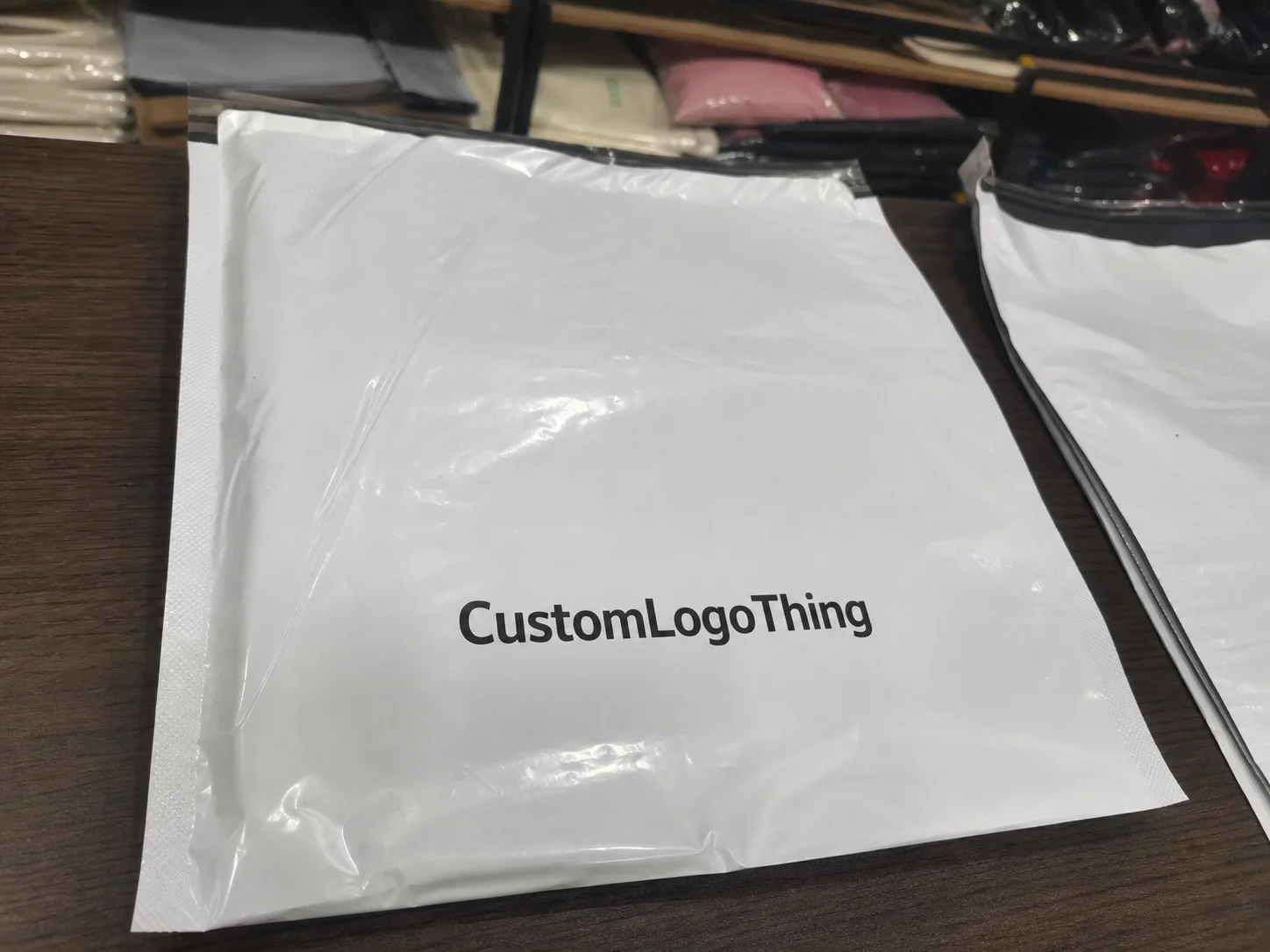
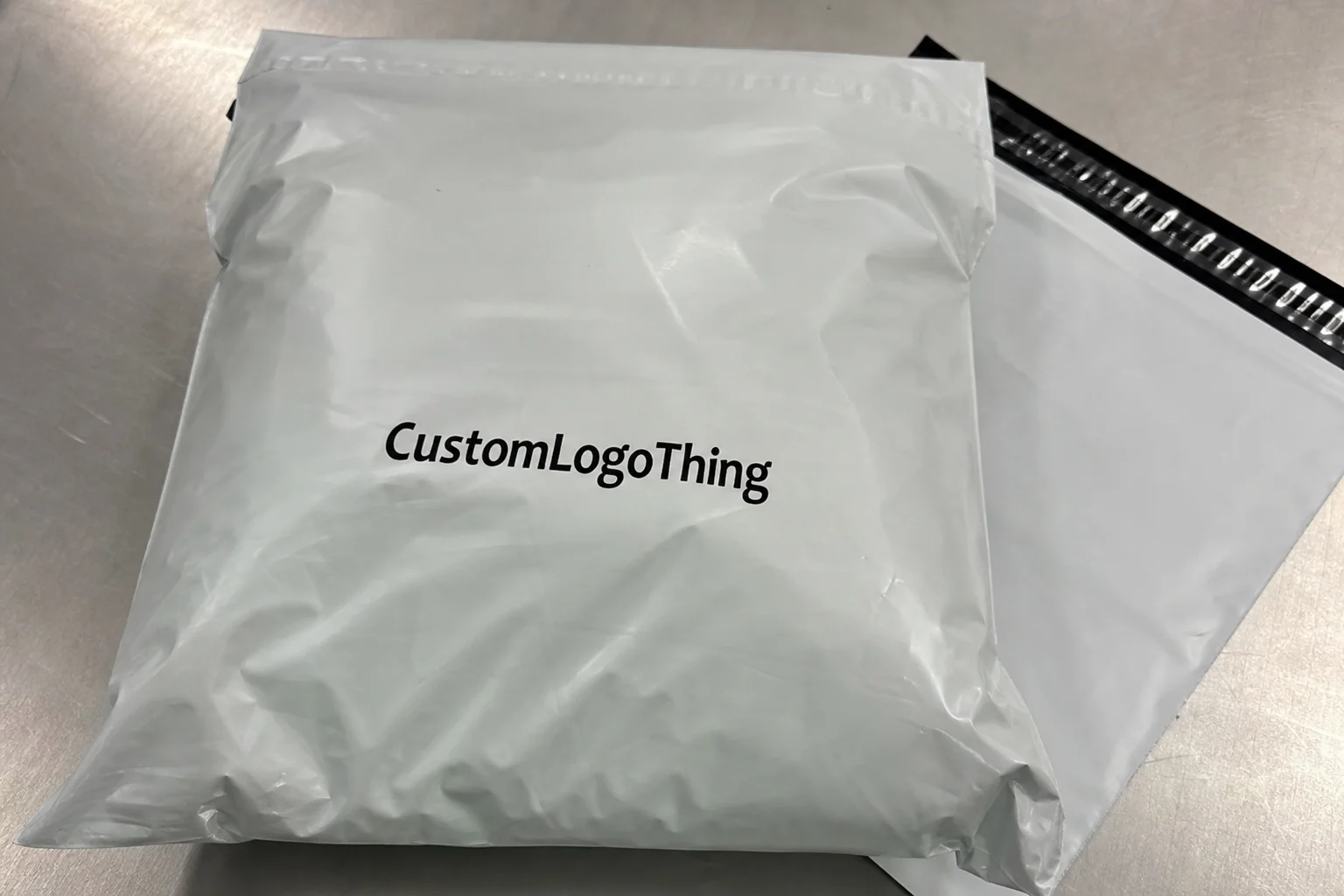
Custom printed compostable mailer bags are shipping bags made from compostable materials and printed with your logo, artwork, or brand message. In plain English, they are mailers for lightweight, dry products like apparel, socks, accessories, swimwear, and soft goods. They are not meant for glassware, tools, or anything with sharp edges unless you add extra protection inside. I’ve seen brands try to use them for metal parts in a Guangzhou sourcing meeting. Bad idea. The bag loses that fight every time, especially if the parcel is bouncing through a 1,200 km courier lane and stacked 20 cartons high.
Most buyers are really shopping for three things at once: product packaging, branded packaging, and a lower visible carbon footprint. That’s the appeal. If you sell DTC apparel or boutique goods, custom printed compostable mailer bags can make the shipment feel cleaner and more intentional than a plain white poly mailer. A standard 250 mm x 350 mm compostable mailer with a crisp logo can look far better on arrival than a generic plastic bag, and it supports eco-friendly packaging claims better than random green ink on a stock mailer, assuming the certification is real and current.
Compostable is not the same as biodegradable, and biodegradable is not the same as recyclable. Compostable means the material is designed to break down under a defined composting condition and standard, usually industrial composting at around 58°C under controlled moisture and oxygen levels. Biodegradable is a vague word unless there’s a specific test behind it. Recyclable means the local waste stream actually accepts it, which is a whole different headache. I’ve had buyers wave a supplier brochure at me and say, “It says eco-friendly.” Great. So does a salad spinner. That tells me almost nothing, and neither does a leaf icon printed in Pantone 361.
“Custom printed” can mean a few different printing setups. For smaller runs, digital printing may be used if the supplier has the right equipment. For larger runs, flexographic printing is more common because it lowers unit cost once the plates are made. A simple one-color logo on custom printed compostable mailer bags is cheaper and cleaner than full-coverage branding with fine gradients. If you want rich edge-to-edge artwork, you’ll need to budget for setup, plates, and more careful color control. On a 10,000-piece order, a one-color design can be around $0.14 to $0.17 per unit, while a two- to three-color design often moves closer to $0.18 to $0.24 per unit. That’s just reality, not supplier drama.
These bags are for normal parcel shipping, not industrial abuse. If your warehouse is stuffing them into cartons with pointy accessory boxes, or if your product includes hard corners, I’d consider an insert, a tissue wrap, or even a different outer format. If you need alternatives, Custom Packaging Products and Custom Poly Mailers are worth comparing against compostable options before you lock the order. A 70 micron compostable mailer in a 300 mm x 400 mm size can work well for folded tees and soft knitwear, but it still has limits.
“The bag has to win the shipping battle first. Composting is the second act, not the opening scene.” — A line I’ve said more than once on a factory visit after watching a sales sample fail a simple drop test in Shenzhen.
How Custom Printed Compostable Mailer Bags Work
The basic structure of custom printed compostable mailer bags usually starts with a blend of materials such as PBAT, PLA, and cornstarch-based components. PBAT gives flexibility. PLA adds a compostable polymer backbone. Cornstarch-based content can help with formulation and feel. The exact recipe varies by factory, and yes, that matters. I’ve seen two samples with the same advertised 60 micron thickness behave very differently in cold storage because one film had better elasticity and the other turned brittle after a week near a loading dock door in Suzhou. That kind of thing is why I trust a sample run more than a shiny brochure, every single time.
Certification is the part that separates real supply from marketing fog. If a supplier says their custom printed compostable mailer bags are compostable, ask which standard they meet. ASTM D6400 and EN 13432 are widely recognized benchmarks. For brand trust, that matters more than a green leaf icon on the bag. If you want to understand how these standards fit into packaging claims, the EPA and PMMI/Packaging Machinery Manufacturers Institute are useful starting points for broader packaging context, and ISTA is a good reference for shipping test thinking. I also keep FSC in mind when brands mix mailers with paper inserts or outer cartons, especially if the carton board is 350gsm C1S artboard or similar.
Printing usually happens after the film is extruded and converted into bag form. The film may be surface treated so ink can bond better. Then the factory prints the graphics, cures the ink, and seals the mailer into the final shape. If print adhesion is weak, the artwork scuffs during transit or rubs off in warehouse stacking. That is not a “minor issue.” That is brand damage in a corrugated carton. On a 20,000-piece run, even a 2% scuff rate means 400 unhappy customers or 400 bags headed for rework.
Real-world logistics are where custom printed compostable mailer bags get tested. Heat, moisture, long warehouse dwell times, and pressure from stacked cartons all affect them. Compostable film can be softer than virgin poly, which sounds nice until a pallet wrap is too tight or a box corner digs in. I visited a facility in Dongguan where the team kept the sample rack in a humid room by mistake. Two days later, the bags had a different hand feel and one batch of seals showed slight waviness. That was enough for me to tell the buyer to demand a production sample from the actual line, not the sales office drawer. Because yes, the sales office drawer always seems to contain the “best” sample. Funny how that works.
The simplest analogy I use is this: the mailer needs to survive shipping first and compost later. A noble environmental story is useless if the parcel arrives split open and the customer has to fish a sweater out of a courier cage. Custom printed compostable mailer bags only work when the material, print, seal, and warehouse conditions all line up. If the supplier cannot explain seal width, film gauge, and compostability standard in one call, keep your wallet closed.
Key Factors That Affect Quality, Cost, and Price
If you want predictable pricing on custom printed compostable mailer bags, start with the variables that actually move the number. Size, thickness, gusset style, seal type, and print coverage are the big ones. A 250 mm x 350 mm bag at 50 microns with a one-color logo is a different animal from a 300 mm x 400 mm bag at 70 microns with full-coverage print and a matte finish. One looks “simple” to a buyer. The quote says otherwise, especially if the factory is in Shenzhen and the resin source is coming through a separate procurement channel in Jiangsu.
Minimum order quantity matters too, and I wish this weren’t true, but factory changeovers cost money. On a small run, you may pay more per bag because plates, setup time, and production loss get spread over fewer units. I’ve seen pricing around $0.22 to $0.35 per unit for 5,000 pieces on simple custom printed compostable mailer bags, depending on size and certification. At 10,000 to 20,000 pieces, that can drop closer to $0.14 to $0.24 per unit if the design is clean and the supplier already runs the right material. If the art is complicated, expect the number to climb again. A two-color print on a 70 micron bag with EN 13432 paperwork may land around $0.19 per unit for 10,000 pieces. Magic is not a factory process. I’ve watched buyers act surprised by that more times than I can count, which is adorable for about five seconds.
| Option | Typical Use | Relative Cost | Notes |
|---|---|---|---|
| One-color logo print | Small apparel brands, simple package branding | Lower | Fast to set up, cleaner visual result, fewer plate costs; often around $0.14 to $0.17 per unit at 10,000 pieces |
| Two- to three-color print | Mid-size DTC brands, stronger retail packaging look | Medium | Better shelf presence, more setup and color matching; commonly around $0.18 to $0.24 per unit depending on size |
| Full-coverage custom print | Premium branding, high-impact product packaging | Higher | More ink, tighter registration, more print control required; can rise to $0.26+ per unit on smaller runs |
| Premium certified film with custom artwork | Markets needing stricter compliance proof | Highest | Certification, testing, and QC documentation add cost; factory documentation often adds $50 to $200 in admin and test charges |
Shipping and storage can quietly eat margin too. Custom printed compostable mailer bags should be stored in a dry warehouse, away from heat and direct sunlight. Some materials can be more sensitive to humidity than regular poly. If your receiving dock is damp or your inventory sits near an open bay door, that’s a real risk. I once saw a buyer save $600 on unit price and then spend $1,400 on rework because the first pallet was packed too tightly and the seals took a set. Cheap is expensive when the warehouse gets involved.
Supplier variables make the quote swing too. A factory in Shenzhen may quote differently than one in Vietnam or Jiangsu because labor, resin access, testing, and print capacity differ. Ask whether the supplier includes freight or bills it separately. Ask whether the quote includes printing plates, compliance documents, and sample fees. I’ve seen quotes that looked 18% lower until the buyer discovered $180 in plate charges, $120 in revised proof fees, and freight billed at the back end. That is not a bargain. That is a spreadsheet prank.
For brands balancing branded packaging with budget, I tell them to compare custom printed compostable mailer bags against other formats like Custom Printed Boxes or regular poly mailers with paper-based wraps. A 350gsm C1S artboard mailer box may cost more upfront, but it can protect higher-value goods better than a thin mailer. The right choice depends on shipping method, product value, and how much of your package branding needs to happen before the box gets to the customer’s door.
How to Order Custom Printed Compostable Mailer Bags
Ordering custom printed compostable mailer bags gets much easier when you work in a clean sequence. I’ve done enough buyer-supplier calls to know that half the delays come from incomplete specs, not the factory. So I use the same five-step approach every time, whether the client is buying 3,000 bags or 80,000. A good supplier in Shenzhen, Dongguan, or Jiangsu can usually respond within 24 hours if the brief is clear and the artwork is ready.
- Choose the size based on packed product dimensions. Measure the folded, tissue-wrapped, or inserted product, not the bare item. Leave room for tape, closure, and a little give. A hoodie that measures 280 mm wide flat may need a 320 mm or 340 mm mailer once folded.
- Select material and certifications. Decide whether your market needs ASTM D6400, EN 13432, or a home-compostable claim. Do not assume the supplier knows your legal position. Some do. Many do not. Ask for the certificate number, issue date, and the testing lab name.
- Prepare artwork correctly. Use print-safe colors, clear logo placement, and bleed allowances. A sharp 1-color logo often prints cleaner than a busy gradient on custom printed compostable mailer bags. If your brand uses Pantone 186 C or matte black, confirm the exact print process before approval.
- Request samples and test them. Put the real product inside, drop the bag from waist height, and check seal performance, scuffing, and static cling. If it fails in your office, it will fail harder in a courier hub. I like a minimum of 10 packed-drop tests before I green-light a production run.
- Confirm proofing, production, and delivery. Get a written approval workflow, timeline, packing method, and shipping terms before payment. That one document saves headaches later. On a standard order, production is often 12 to 15 business days from proof approval, with air freight adding 3 to 7 transit days and sea freight adding 18 to 30 days depending on port.
Let me give you a real factory-floor example. In our Shenzhen facility, a buyer once ordered custom printed compostable mailer bags for small folded tees but measured the shirts flat, not folded with a sleeve card. The result was a bag that fit by 6 mm on paper and pinched at the seal in real use. We caught it during sample review. That mistake would have turned into a 20,000-unit embarrassment. A five-minute sample test saved them a reprint. Boring. Effective. And yes, the buyer thanked us later, which is rare enough to mention.
Timeline matters too. For simple designs, artwork proofing may take 1 to 3 business days. Sample approval can take another 3 to 7 business days if revisions are needed. Production lead time for custom printed compostable mailer bags often lands around 12 to 15 business days from proof approval, though larger runs or complex print jobs can push longer. Air freight may add just a few days transit time, but it can add a painful amount to the landed cost. Sea freight is cheaper per unit, slower overall, and better for larger replenishment orders if your inventory planning is solid.
If you’re comparing print methods, here’s the short version. Digital printing can be useful for lower quantities or highly variable designs. Flexographic printing is usually the workhorse for medium to high volume custom printed compostable mailer bags. It is cheaper at scale, but you pay for plates and setup. I’ve seen buyers fall in love with a digital sample and then complain when the flexo quote is different. Different process. Different economics. Same bag shape, not the same production reality.
Always ask for a landed-cost breakdown. I want to see unit price, setup or plate charges, sample fees, freight, and any testing costs in writing. If a supplier refuses that level of clarity, I’d be cautious. Good suppliers know that transparency helps close deals. The others hope you stop asking questions before the invoice arrives. On a 5,000-piece order, that landed-cost sheet might show $0.15 per unit plus $85 in plates and $120 in freight to Los Angeles. That kind of detail saves arguments later.
Common Mistakes Buyers Make With Compostable Mailers
The first mistake is assuming all custom printed compostable mailer bags are basically the same. They are not. Certification, film blend, thickness, seal strength, and print durability can vary a lot. A supplier may show you one certified sample and ship a different batch later if you didn’t lock the specs tightly. That’s why I always ask for the film spec, not just the marketing sheet. I want the micron count, the material blend, the seal width, and the test standard in writing.
The second mistake is sizing the bag to the product, not the packed product. That mistake costs money twice. First, the bag is too tight. Second, you pay to replace bags or ship orders in secondary packaging. It happens constantly with apparel brands that forget about folded depth, inserts, and tape closure. If you sell products with tissue, cards, or returns inserts, measure the final packed unit. Not the shirt. The packed unit. A 280 mm tee becomes a 320 mm packed parcel fast once you add a 1.5 mm insert card and a folded tissue wrap.
The third mistake is making claims on the bag that legal or sustainability teams can’t back up. If your custom printed compostable mailer bags say “home compostable,” you need the standard and proof for that specific claim. If the certification only covers industrial composting, then that’s what you say. Over-claiming can create compliance problems, and no one wants a packaging decision turning into a customer-service issue or a regulatory headache in the UK, California, or the EU.
The fourth mistake is skipping sample testing because the bag “looks fine.” I’ve seen weak seals, poor print clarity, and static cling show up only after a small test run. One client had a beautiful black-on-beige mailer, but the print rubbed off when cartons were stacked for three days in a warm warehouse in Foshan. That was a $9,600 lesson in friction, heat, and impatience. Nobody enjoys explaining that to finance. I can promise you that.
The fifth mistake is choosing the cheapest quote without checking thickness, ink quality, or consistency. I get it. Procurement loves a low number. But the cheapest supplier often removes something you can’t see in the quote: stronger film, proper QC, or reliable packing. In one negotiation, a factory quoted $0.16 per unit on custom printed compostable mailer bags, then added charges for revised artwork, freight to port, and outside testing. The real landed number was closer to $0.23. I told the buyer the quote wasn’t low. It was just incomplete.
There’s also a packaging design trap. If the artwork is too busy, too small, or too low contrast, the bags can look cheap even when the material is good. Good package branding is usually simpler than people want to admit. Bold logo. Strong contrast. Enough empty space. That’s the kind of visual discipline that also works well across custom printed boxes, hang tags, and retail packaging systems.
Expert Tips for Better Results and Lower Risk
My first tip is simple: order a test batch before you scale. Even 500 to 1,000 custom printed compostable mailer bags can reveal problems that a photo never will. You’ll learn whether the seal holds, whether the logo scuffs, and whether your fulfillment team can pack them quickly without tearing the gusset. Test batches are cheap insurance. The invoice for a failed full run is much less fun.
Second, keep the artwork clean. High-contrast logos, fewer tiny text elements, and one or two print colors usually produce better results. I’ve sat in enough press checks to know that a complicated design can look expensive on screen and fuzzy on film. If you want a premium feel, focus on spacing and ink coverage, not just decorative complexity. That advice applies whether you’re ordering custom printed compostable mailer bags, custom printed boxes, or retail packaging for a launch collection.
Third, ask for documentation before you pay. I want to see certification copies, recent QC photos, film thickness details, and if possible, testing references tied to recognized standards. Ask for migration or material test documentation where relevant, and get a written confirmation of what the supplier is actually certifying. I’ve had factories hand over a certificate for a material family that didn’t match the exact bag construction. That’s not the same thing, and suppliers know buyers miss it when they’re moving fast. In one case, the certificate was for a PLA film from a facility in Jiangsu, but the bags were converted in Guangdong. That mismatch matters.
Fourth, confirm storage conditions and shelf life. Compostable materials are not immortal. If you’re buying a larger quantity of custom printed compostable mailer bags, ask how they should be stored, whether humidity matters, and how long the supplier recommends before use. I’d rather hear a conservative answer than a salesman insisting the bags are “fine forever.” Nothing organic, even in packaging form, loves hot warehouses. A 12-month shelf life in a climate-controlled room is very different from 12 months in a warehouse near the loading bay.
Here’s another factory-floor observation. The prettiest sample is not always the best bag. In one visit, a supplier showed me a glossy, perfect-looking mailer that photographed beautifully. Then we ran a drop test and the seal corner split on the second impact. The less glamorous sample, with slightly thicker film and a duller finish, passed the handling test. Guess which one I recommended. Exactly. A 70 micron bag with a plain one-color logo often outperforms a flashy 55 micron version that looks better in a sales meeting.
“If the bag can’t survive the courier belt, I don’t care how nice it looks on a mood board.”
For brands building out broader eco-friendly packaging programs, I like to treat custom printed compostable mailer bags as one piece of a bigger system. Pair them with smart inserts, honest sustainability language, and materials that match the rest of your shipping stack. A solid packaging design system beats random green gestures every time. That’s true whether you’re buying compostable mailers, tissue, cartons, or custom printed boxes. If your outer carton is a 350gsm C1S artboard mailer box, make sure the mailer, insert, and artwork all feel like they belong together.
What to Do Next Before You Place an Order
Before you place an order for custom printed compostable mailer bags, create a one-page spec sheet. Keep it boring and specific. Size in millimeters. Thickness in microns. Print colors. Quantity. Target market. Shipping destination. Certification required. If you can’t summarize the order on one page, the supplier probably can’t quote it cleanly either. Add the factory city, too, if you already know whether you want Shenzhen, Dongguan, or Vietnam production.
Then compare at least two suppliers on the exact same spec. No improvising. No “this one seems nicer.” I want apples-to-apples quotes with the same dimensions, same artwork, same certification requirement, and same freight terms. If one supplier is quoting $0.19 per unit and another is quoting $0.27 per unit, the difference should be explainable in writing. Maybe one uses a thicker film. Maybe one includes freight. Maybe one has better QC. If nobody can explain the gap, keep digging. I’d rather see a real factory explanation than a polished sales pitch from an office in Hong Kong that never saw the production line.
Request samples and a written quote with every cost line item exposed: unit price, plates, freight, and any testing fees. I know that sounds basic. It is basic. Yet I still see buyers approve orders before they understand the landed cost. That’s how a clean packaging project turns into a finance meeting with bad music. On a 10,000-piece order, the difference between $0.17 and $0.23 per unit is $600, which is real money when you’re managing launch budgets.
Prepare your artwork and confirm approved claims before production starts. If your sustainability team wants specific wording, get it signed off. If your legal team hates “degradable” because it’s vague, remove it. If your branding team wants a black logo on kraft-style film, make sure the print method can handle it cleanly. Custom printed compostable mailer bags are not the place to freestyle compliance language. A 1 mm typo on a compostability claim can cost more than the whole print setup.
If you keep the specs tight, the sample testing real, and the supplier conversations honest, custom printed compostable mailer bags can be a smart fit for apparel, accessories, and lightweight goods. They can support better branded packaging, clearer package branding, and a lower visible carbon footprint without pretending to solve every sustainability problem on the planet. That’s the sane way to buy them. Measure the packed product, verify the certification, test the sample under real handling, and lock the quote line by line before you sign.
FAQs
What are the best uses for custom printed compostable mailer bags?
Custom printed compostable mailer bags work best for lightweight, dry products such as apparel, socks, accessories, swimwear, and soft goods. They are a solid fit for DTC shipping and branded packaging where you want the outside of the parcel to carry your logo and sustainability message. They are not ideal for sharp-edged or heavy products unless you add extra inner protection.
How much do custom printed compostable mailer bags cost per unit?
Pricing usually depends on size, thickness, print colors, quantity, and certification requirements. For small runs of custom printed compostable mailer bags, I often see numbers around $0.22 to $0.35 per unit for 5,000 pieces, while larger volumes can come down closer to $0.14 to $0.24 per unit if the artwork is simple and the supplier already runs the right material. A clean one-color 10,000-piece order may land near $0.15 per unit, plus setup and freight. Ask for a quote that separates unit price, plates or setup, freight, and sample fees so you can compare suppliers accurately.
Are custom printed compostable mailer bags really compostable at home?
Not always. Many custom printed compostable mailer bags are certified for industrial composting, not backyard compost piles. Check the supplier’s certification and disposal guidance before making any compostability claims. If your audience needs home-compostable packaging, ask specifically for that standard in writing and do not accept vague language. A bag certified to EN 13432 is not automatically home compostable.
What is the best size for custom printed compostable mailer bags?
Choose based on the packed product, not the product alone. Allow room for fold depth, inserts, tissue, and easy sealing. I always recommend a sample pack test with the actual contents before you place a full order of custom printed compostable mailer bags, because overstuffed bags and split seams are usually a sizing mistake, not a material defect. A 280 mm flat tee can easily need a 320 mm or 340 mm bag once it’s folded and sleeved.
How long does production take for custom printed compostable mailer bags?
Timeline depends on artwork approval, sample confirmation, print method, and order size. A simple order of custom printed compostable mailer bags usually takes 12 to 15 business days from proof approval, and shipping time adds more depending on whether you use air freight or sea freight. The fastest orders are usually simple designs with approved artwork and a ready factory slot in Shenzhen or Dongguan.
What should I ask a supplier before ordering custom printed compostable mailer bags?
Ask for certification documents, film thickness, print method, sample photos, and full landed cost. Confirm storage conditions and shelf life so the bags do not degrade before use. Request a written proof approval process to avoid expensive mistakes, and get every cost line item in writing before you approve custom printed compostable mailer bags. If the supplier can’t give you a clear answer on price, timeline, and compliance, move on.