A custom printed makeup bag tends to outlast the product inside it. That is the whole point. A sample set gets used up, a promo card gets tossed, but a good pouch stays in rotation because it has a job after the first unboxing. It holds small items, travels well, and keeps a logo visible without shouting.
That makes the bag more than a cosmetic accessory. It sits somewhere between product packaging and reusable retail gear. The spec matters. Size, material, print method, zipper quality, and even the way the bag folds all affect whether it reads as useful branded packaging or as a cheap throw-in that people immediately forget.
Buyers usually get better results when they treat the pouch like packaging design, not merchandise. That means lining up the spec early, comparing quotes on the same basis, and not assuming every pouch is interchangeable with Custom Printed Boxes or other presentation formats. It is a different format with different constraints. Ignore those, and the price comparison becomes fiction.
What a custom printed makeup bag really does
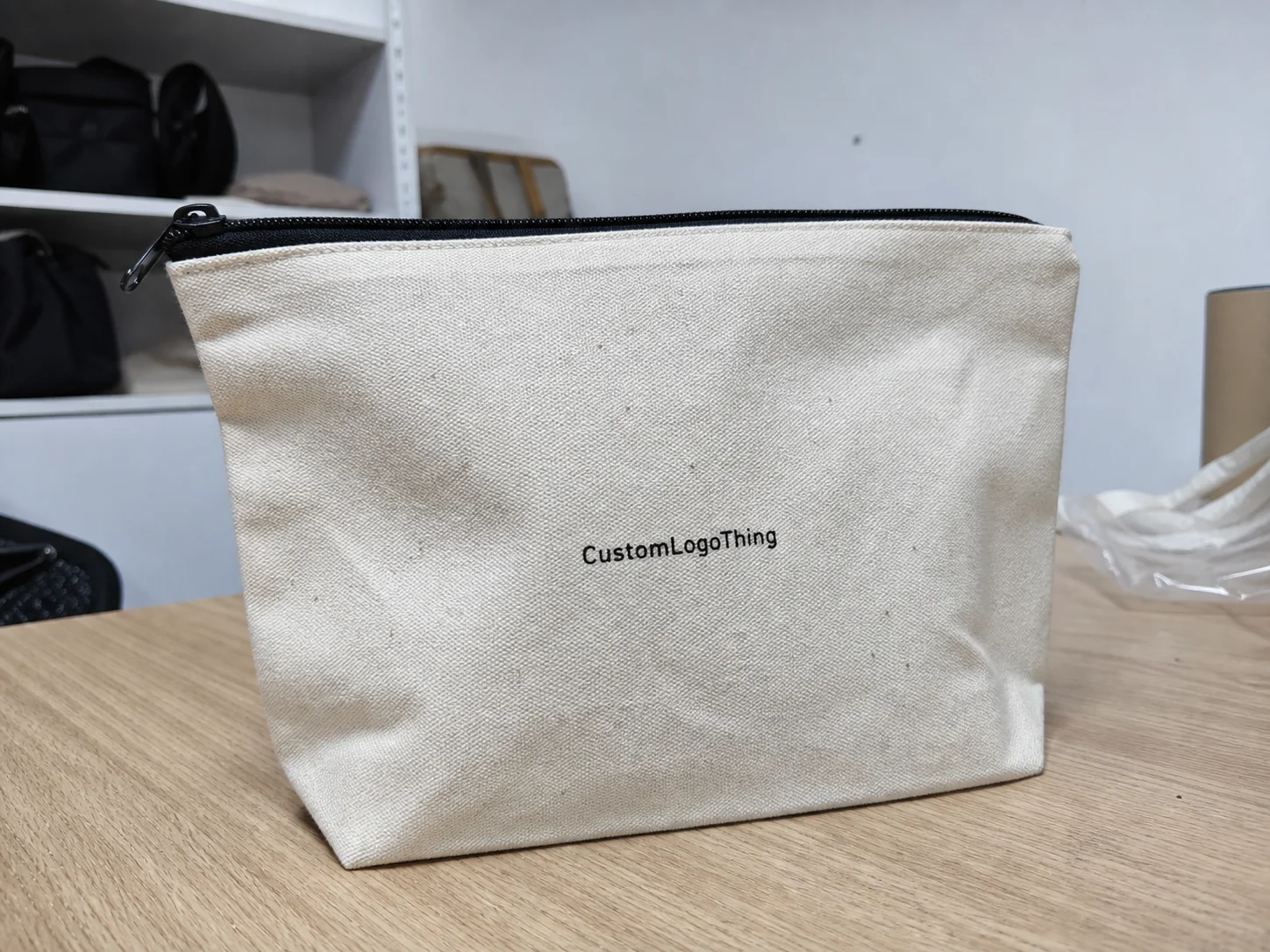
A custom printed makeup bag is a printable pouch, usually made from plastic, coated fabric, or a lined textile, designed to store cosmetics and small travel items while keeping a brand visible. Buyers use it for retail bundles, influencer mailers, subscription inserts, travel kits, and event giveaways because it does two jobs at once: it protects the contents and carries the brand.
The useful part is not subtle. A pouch can be handed out in seconds and then stay in someone’s bathroom drawer, carry-on, or handbag for months. That is a lot of impressions for a low-cost item. If the pouch looks decent, opens cleanly, and survives repeated use, it keeps working long after the promotion is over.
Appearance matters because the same artwork can feel completely different on different substrates. A clear PVC pouch with a single-color logo feels practical and direct. A frosted TPU pouch looks cleaner and more premium. A soft textile cosmetic bag can feel closer to lifestyle retail packaging. A rigid or semi-rigid pouch leans more toward structure and display. Same logo, different message.
The right choice depends on use case. If the bag lives inside a subscription box, the finish can be simpler and the print coverage lighter. If it sits on a shelf with skincare or color cosmetics, the structure and surface finish need to earn attention. The bag is not just a carrier. It is part of the product story and part of the perceived value.
A pouch that feels flimsy in the hand usually looks flimsy on the shelf, even if the artwork is sharp.
How the decoration and production process works
The production path is straightforward on paper and annoying in practice if the inputs are sloppy. A normal order moves through briefing, artwork intake, material selection, proofing, sampling, production, inspection, and packing. If the files are ready and the spec is clear, the order moves fast. If the buyer changes the size three times or sends a logo in the wrong format, the schedule stretches.
Suppliers usually need a few things up front: final or near-final artwork, target dimensions, closure type, color references, intended use, and quantity. If the buyer knows whether the pouch is for retail packaging, a gift set, or a travel accessory, the supplier can recommend a better construction immediately. That is worth more than a long brand essay full of adjectives.
Print method changes the result. Screen printing works well for simple logos and solid color on some plastic surfaces, but it can look flat on glossy materials. UV printing handles detail better, though scratch resistance and adhesion depend on the substrate and curing quality. Heat transfer can suit coated fabrics. Gravure and other high-volume methods are more relevant when the run is large enough to justify the setup. There is no single best method. Only a method that fits the bag, the artwork, and the wear pattern.
Timeline is where expectations usually break. A clean order can move quickly, but there are real steps that do not shrink much:
- Artwork and proofing: 1 to 3 business days if files are clean.
- Sampling: 5 to 10 business days for a standard sample, longer if the closure or size is new.
- Production: 12 to 20 business days after sample approval for a normal run.
- Inspection and packing: 1 to 3 business days depending on order size and carton plan.
- Freight: separate from production and often the biggest schedule variable.
For transit planning and package integrity, buyers who want a cleaner spec conversation should look at resources from ISTA. If the broader packaging program includes paper inserts or outer cartons, FSC certification may matter for the paper side of the order, even if the pouch itself is not paper-based.
Cost, pricing, and MOQ drivers buyers should watch
Pricing for a custom printed makeup bag is driven by material thickness, bag size, print coverage, number of colors, closure style, and any secondary finishing. If two quotes do not match on those points, they are not really competing against each other. They are two different products with the same broad label.
MOQ affects unit cost more than first-time buyers expect. A small run spreads setup, color matching, proofing, and prep work across fewer pieces, so the unit price rises fast. At higher volume, those same costs get diluted. That is why a 300-piece order and a 5,000-piece order can live in different price bands even if the pouch looks identical from ten feet away.
For practical planning, a simple stock-size pouch in a larger run may land around $0.28 to $0.75 per unit. A smaller custom run often sits between $1.10 and $2.40 per unit, depending on the material and decoration. Thicker film, custom tooling, branded zipper pulls, full-color artwork, and tighter tolerances all push the number up. Freight, duties, and insert costs can change the landed total more than the factory quote suggests.
Use the comparison below as a planning tool, not a promise:
| Order profile | Typical spec | Approx. unit price | MOQ notes | Best use |
|---|---|---|---|---|
| Stock-size PVC zipper pouch | 0.20 mm to 0.25 mm clear or frosted PVC, one-color print | $0.28-$0.75 at 5,000 pcs | Usually the lowest entry point | Promos, event kits, simple retail inserts |
| Semi-custom TPU pouch | Frosted TPU, custom size, zipper closure, spot or full-color print | $0.65-$1.45 at 1,000 pcs | Moderate setup, better presentation | Beauty bundles, subscription boxes, premium giveaways |
| Fully custom printed makeup bag | Custom dimensions, thicker wall, branded zipper pull, high-coverage decoration | $1.10-$2.40 at 300-500 pcs | Higher MOQ pressure because of tooling and proofing | Retail packaging, launch programs, higher perceived value |
Ask what the quote includes. Sample fees, tooling, freight assumptions, carton charges, and rush fees can make a low headline number vanish. A good comparison is landed cost per acceptable unit, not the first number in the email. That is where bad surprises hide.
If the pouch needs to coordinate with outer cartons or mailers, align it with the rest of the Custom Packaging Products range early. Otherwise the final kit can look like it was assembled from separate projects that never met each other.
Material, size, and closure choices that change performance
Material drives almost everything: clarity, flexibility, durability, print feel, and how the bag ages after repeated use. PVC is still common because it is cost-effective and easy to source, but thickness and compliance matter. TPU usually feels cleaner and more premium, especially in frosted finishes. Coated textile pouches sit in a different lane entirely and tend to read more like lifestyle retail packaging than a utility pouch.
For plastic pouches, thickness is often discussed in millimeters or microns. A thin film folds neatly and ships efficiently, but it can feel cheap in hand. A thicker wall improves perceived quality and protects contents better, though it raises cost and reduces pack density. If the bag has to fit into a tight mailer or a pre-sized gift carton, that tradeoff matters fast.
Size is just as important. A 6 x 8 inch pouch may work for lipstick, sample jars, or small tools. A 9 x 6 x 2 inch gusseted format handles bottles and brushes more comfortably. Gusset depth changes usable space more than people expect. A flat bag can look sleek, then bulge badly once it is filled. That hurts both presentation and the brand surface.
Closure choice should follow function. A zipper is the default for cosmetics and travel use because it is familiar and reusable. A press-seal or slide closure can work for some lightweight promotional packs. Heat-sealed formats are efficient in specific controlled applications, but they are not the answer for every beauty item. If the pouch will be opened often, zipper smoothness and track quality deserve real scrutiny during sampling.
From a packaging design standpoint, the best spec is the one that matches the contents and the distribution channel. A prestige bundle should not be overbuilt to the point that it feels stiff and awkward. A giveaway should not be so thin that it tears on the first trip. The right balance sits between perceived value and practical durability, not on either extreme.
A practical step-by-step buying workflow
Start with use case. That sounds basic because it is basic, and skipping it causes half the problems. A retail launch, a travel kit, a subscription insert, and an event giveaway may all need a custom printed makeup bag, but they do not need the same wall thickness, closure strength, or decoration coverage. If you do not define the end use first, every later quote becomes harder to judge.
Build a request package that is short and specific. Include target size, material preference, closure type, logo placement, color targets, quantity, use case, and any special packaging requirements. If the pouch needs to match labels, inserts, or retail packaging formats, say so. Suppliers usually respond better to a clean spec sheet than to a paragraph of brand adjectives.
- Write the end use in one sentence.
- List the dimensions, closure, and material preference.
- Attach logo files and color references.
- Ask for a digital proof before sample production.
- Review the sample for print clarity, seam quality, and closure function.
- Approve final art only after the sample passes.
- Lock the production schedule and inspection plan.
Ask for both a digital mockup and a physical sample if the order is tied to a launch or retail rollout. A mockup shows placement. A sample shows whether the zipper tracks cleanly, whether the print looks sharp at arm’s length, and whether the bag feels right in the hand. Those are separate checks. One does not replace the other.
If the pouch is part of a larger branded set, align it with the rest of the package early. It may need to work alongside labels, inserts, and custom printed boxes. That coordination lowers the risk of mismatched colors, awkward proportions, or a presentation that feels assembled instead of designed.
For recurring promotions, reorder planning matters. Keep the final approved spec in one place, note the finished dimensions and print files, and store photos of the accepted sample. That makes future reorders faster and reduces the odds of accidental changes creeping in. Small discipline. Big payoff.
Common mistakes that cause delays or weak branding
The biggest mistake is treating the pouch as a generic accessory. It is not. It has print limits, size limits, folding behavior, and material-specific risks. If the artwork is too dense or too small, it can disappear on a glossy or frosted surface. Tiny type is especially fragile on plastic because contrast and edge sharpness are harder to hold than on paperboard.
Another common issue is comparing quotes without matching the spec. Buyers will look at two numbers and assume they are comparable, then discover the material, dimensions, print area, zipper style, carton pack-out, or shipping terms were different. That is not a bargain. It is a category error with a nice email attached.
Artwork can also create avoidable problems. Highly detailed gradients, hairline rules, low-contrast logos, and text below legibility thresholds tend to reproduce poorly on flexible surfaces. If the bag has to survive daily handling, less detail often performs better. Strong logo placement and a restrained palette usually beat overdesigned art in this format.
Skipping sample approval is another avoidable risk. It is tempting when the calendar is tight, but the sample is where seam issues, off-center printing, weak closure action, and color drift show up. If the pouch is part of a retail launch, a digital proof alone is not enough. A delayed sample is cheaper than a failed rollout.
If the pouch is supposed to support premium branding, the sample is not a formality. It is the last gate before a public mistake.
Buyers should also ask about material content, recyclability claims, and carton sourcing. Not every pouch belongs in curbside recycling, so vague sustainability language is risky. If the broader program includes paper cartons or hangtags, confirm whether those components can be sourced under FSC or another recognized chain-of-custody program. For transport-oriented programs, transit testing may also need to align with ISTA or similar methods depending on route and load.
Expert tips and next steps for a cleaner order
Ask for one sample that actually matches the production spec. Same material. Same closure. Same print method. Same size. A sample made from a different film or zipper can hide problems that only show up in the real run. Buyers sometimes save two days on sampling and lose a week fixing avoidable mistakes.
Compare landed cost, not unit price alone. Freight, duty, inspection fees, repackaging, and warehousing can change the economics a lot. A pouch that is a few cents cheaper at the factory can end up more expensive after shipping if the pack-out is inefficient. That matters especially for higher-volume branded packaging programs where carton density and palletization affect the total.
If the pouch will be reused across seasonal promos or subscription kits, plan the reorder path before the first run closes. Keep the approved die line, artwork, color standard, and sample photos in one file. That simple habit makes the next order easier and protects consistency across launches. It also keeps the product packaging story from drifting over time.
For buyers who want a cleaner presentation, the pouch should work as part of the wider brand system, not by itself. That can mean matching the bag to inserts, labels, or Custom Packaging Products already in the line. It can also mean adjusting the print area so the logo reads well against the bag color and the closure does not interrupt the layout. Small layout decisions matter more than people admit.
My practical view is simple: gather the specs, ask every supplier the same questions, approve a sample that matches production, and keep the finish line clear. A custom printed makeup bag looks simple. The orders that go smoothly are the ones where the buyer treated it like packaging, not decoration. That is what keeps the result aligned with the brand and worth reordering.
What is the minimum order for a custom makeup bag?
MOQ depends on the material, print method, and whether the pouch is stock-sized or fully custom. Smaller runs usually cost more per piece because setup and prep are spread across fewer units. Ask the supplier whether they offer a sample run, short run, or production MOQ so you can match budget to volume.
Which print method lasts longest on a printed cosmetic pouch?
Durability depends on the substrate and whether the artwork sits on top of the surface or is integrated into the material. For plastic bags, ask how the print resists rubbing, moisture, and repeated handling. Request a sample or wear test if the pouch will be carried daily or cleaned often.
How long does a custom printed makeup bag order take?
The timeline usually includes proofing, sampling, production, inspection, and shipping. Artwork revisions and sample approval are the most common schedule risks. Rush orders can shorten the calendar, but they often raise cost and reduce flexibility.
How do I compare quotes for custom makeup bags?
Compare the same size, material, print area, color count, and closure style across every quote. Check whether the quote includes samples, tooling, packaging, and freight. Focus on landed unit cost, not just the headline price.
Can I order a small batch for a promo or retail test?
Yes, but expect a higher unit price than a larger production run. Use a standard size and a simple print layout to keep setup costs under control. Confirm whether the smaller batch changes turnaround time or proof requirements.


