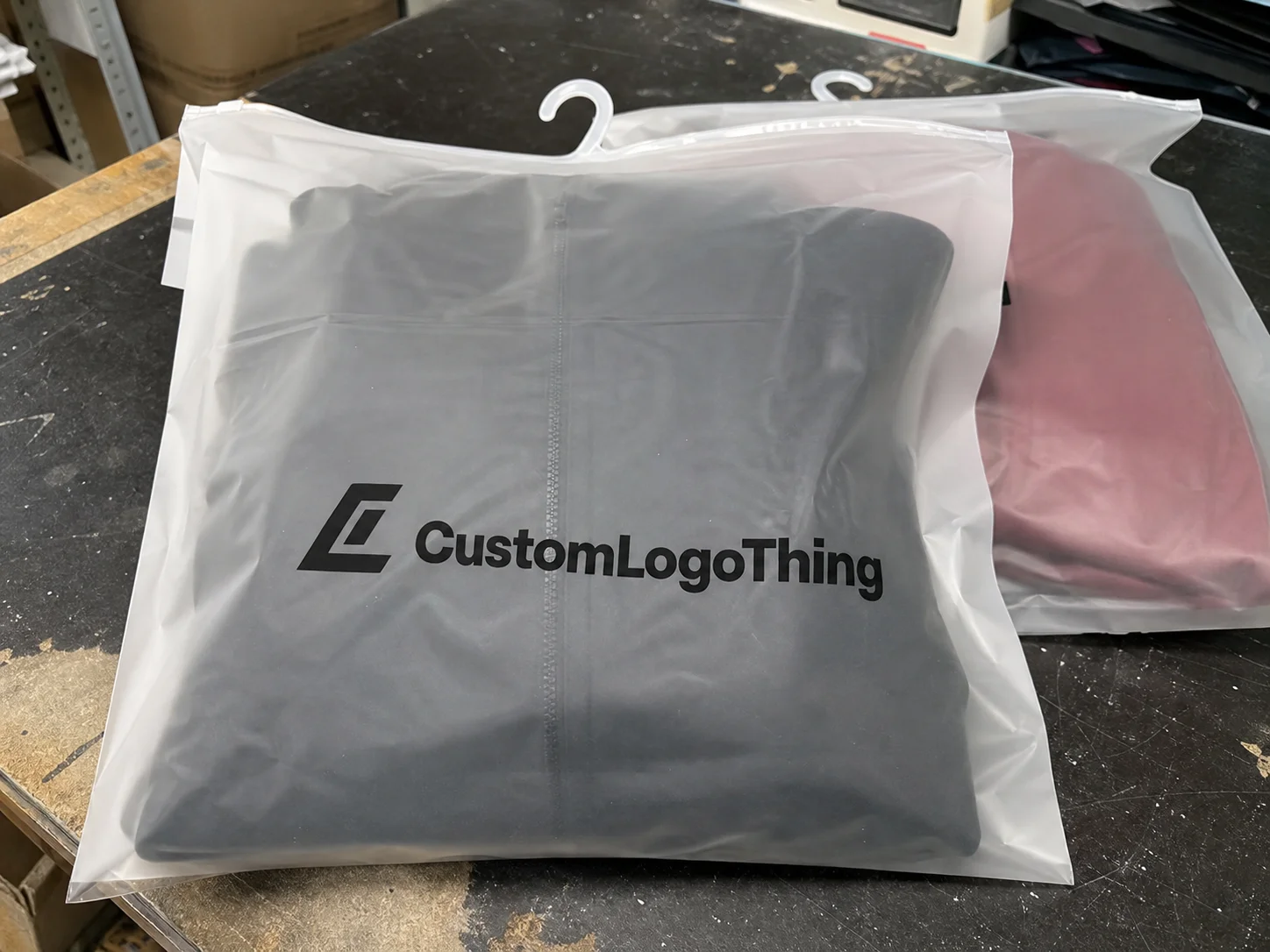
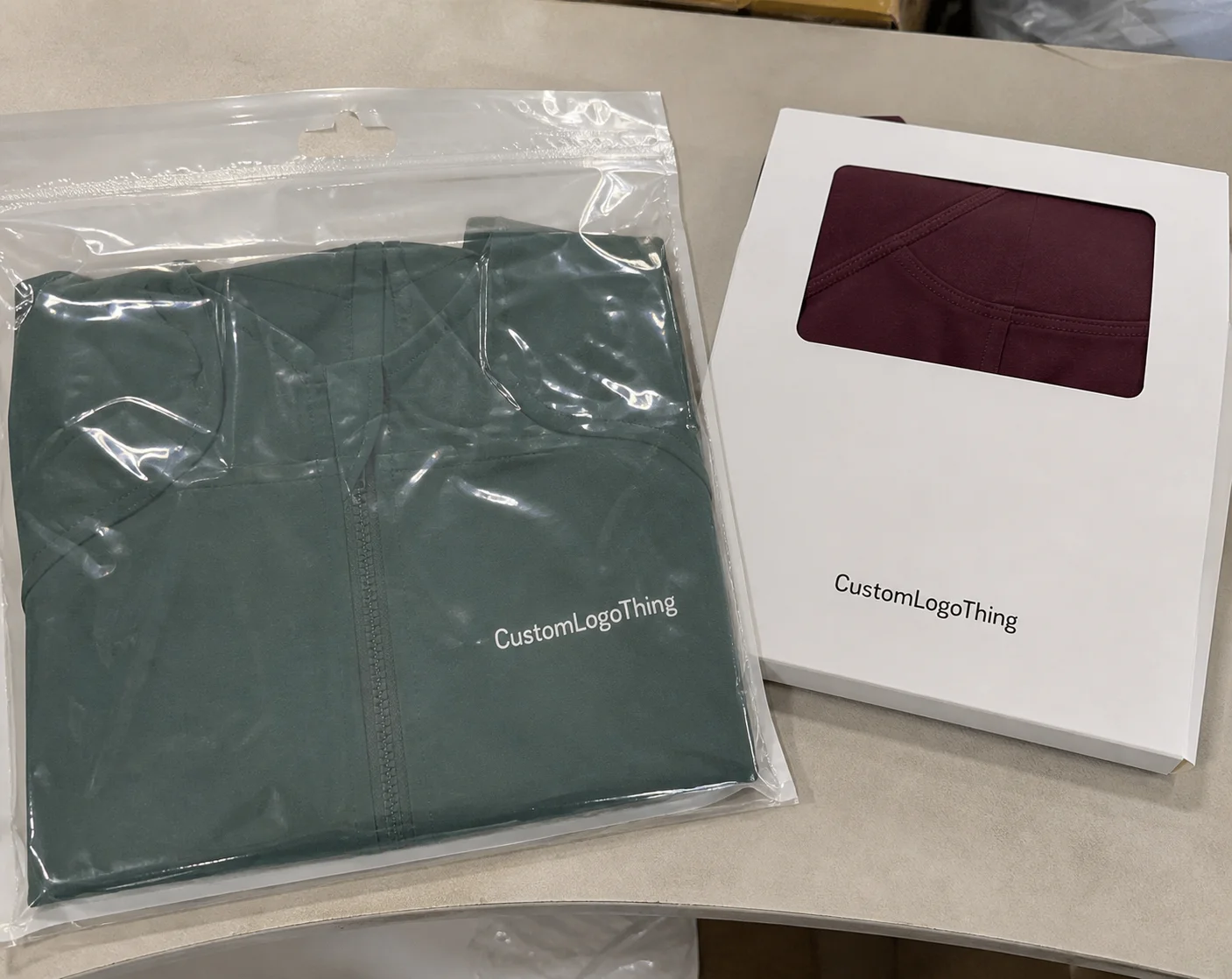
Buyer Fit Snapshot
| Best fit | Custom Printed Poly Bags Wholesale projects where brand print, material claims, artwork control, MOQ, and repeat-order consistency need to be specified before quoting. |
|---|---|
| Quote inputs | Share finished size, material target, print colors, finish, packing count, annual reorder estimate, ship-to region, and any compliance wording. |
| Proofing check | Approve dieline scale, logo placement, barcode or warning zones, color tolerance, closure strength, and carton packing before bulk production. |
| Main risk | Vague material claims, crowded artwork, missing packing details, or unclear freight terms can make a low unit price expensive after revisions. |
Fast answer: Custom Printed Poly Bags Wholesale: Specs, Pricing & More should be specified like a repeatable production item. The safest quote records material, print method, finish, artwork proof, packing count, and reorder notes in one written spec.
Production checks before approval
Compare the actual filled-product size with the drawing, then confirm tolerance on folds, seals, hang holes, label areas, and retail display edges. Reserve space for logos, QR codes, warning copy, and material claims before decorative graphics fill the panel.
Quote comparison points
Review material grade, print process, finish, sampling route, tooling charges, carton quantity, and freight assumptions side by side. A quote is only useful when the supplier can repeat the same color, closure quality, and packing count on the next order.
Custom printed poly bags wholesale orders look simple from the outside. Pick a logo, choose a bag, approve the proof, and wait for cartons to arrive. Easy, right? Except it usually is not. The decisions that actually affect cost and performance are film gauge, seal style, print method, and the product’s handling conditions. I’ve sat in enough buyer meetings and factory-floor walkthroughs to know that the first question is often the wrong one; people ask about artwork before they ask whether a 2 mil LDPE bag will survive a box corner or a warehouse conveyor in Atlanta, Dallas, or Los Angeles. That’s why custom printed poly bags wholesale deserves a practical lens, especially for teams comparing branded packaging, product packaging, and retail packaging options across multiple SKUs.
Most packaging mistakes happen before the quote is even requested. A sourcing manager sends a logo file, a sales rep quotes the cheapest film, and suddenly the bags fail in transit or the print rubs off after two weeks in storage. Fun little disaster. That failure is not a design problem; it’s a spec problem. If you Buy Custom Printed poly bags wholesale with the right material and the right seal, you get lower unit cost, consistent package branding, and fewer complaints from fulfillment, receiving, and store operations. I’ve seen it with apparel in Vietnam, hardware from Shenzhen, food-safe secondary packaging in Qingdao, and parts kits shipped through Chicago. The same logic applies whether you’re comparing custom printed boxes, Custom Poly Mailers, or a straightforward bag with a warning label.
Custom Printed Poly Bags Wholesale: What Buyers Miss First
The biggest blind spot is simple: buyers focus on the print panel first, but the bag body does the real work. Gauge, seal style, and film type usually influence performance and cost more than the logo itself. A 1.5 mil bag with a weak side seal may look fine on a screen proof, then split at the seam after a pallet lands in a cold dock in Minneapolis. A 3 mil bag can solve that, but it will raise resin use and freight weight by enough to matter on a 10,000-piece order. That’s the tradeoff. Custom printed poly bags wholesale works best when the spec is built around the product, not around the artwork file.
I remember a client in apparel who wanted the lowest possible quote on custom printed poly bags wholesale for folded hoodies. Their team had approved a 1.25 mil LDPE film because the bags felt “light and clean.” On the line, the corners of polybagged garments caught during insertion, and the operator rate dropped by roughly 18% because the film stretched too much and folded unevenly. We moved them to 1.75 mil with a better fold profile, and the line stabilized within two days. The unit cost rose by a fraction of a cent, but the real savings showed up in labor and fewer damaged returns. That’s the part most spreadsheets miss, especially when the factory is in Guangdong and the warehouse is in New Jersey.
The business case is strong when the packaging spec is matched correctly. Custom printed poly bags wholesale lowers per-unit spend at volume, keeps branding consistent across replenishment cycles, and protects products in transit and on shelves. For Brands That Ship through fulfillment centers, a printed bag can do three jobs at once: identification, protection, and presentation. That matters in apparel, accessories, components, food-safe secondary packaging, retail kits, and contract packing. If your operations team is trying to streamline SKUs, custom printed poly bags wholesale can do more than a plain sleeve ever will.
“We thought we were buying printing. What we were really buying was packaging performance.” That was the line a purchasing manager in Dallas used after a bulk order of thin bags failed ASTM drop testing on packed accessories. She was right. The replacement spec was 2 mil LDPE, 12 x 16 inches, with a 1.5 inch side seal and a one-color black logo.
Cheap film brings a hidden cost too: poor ink adhesion. When the surface treatment is wrong, flexo inks can scuff, smear, or look dull under warehouse lighting. I’ve seen bags come back from transit with the logo intact but barely legible because the film and ink system were mismatched. For custom printed poly bags wholesale, that means a lower actual brand impression, even if the printed quote looked great on paper. Good suppliers will talk about corona treatment, film chemistry, and print coverage before they talk about “cheap.” In one case, a supplier in Ningbo recommended 38 dynes of surface treatment for a matte LDPE film, and the difference showed up immediately in rub testing after 72 hours.
Not every bag application needs the same level of finish. A garment bag for folding and retail display is not the same as a parts bag with sharp edges, and neither is the same as a food-safe secondary bag or a carton liner. Custom printed poly bags wholesale is a category, not a single product. The right format depends on the product weight, the shipping path, and how often the bag gets handled after packing. That distinction saves money fast, whether the bags are packed in Shenzhen, Ho Chi Minh City, or Monterrey.
If you’re comparing options across Wholesale Programs and Custom Packaging Products, start with function first. Print second. Decoration third. That order is usually the difference between a bag that performs and a bag that merely looks acceptable in a mockup.
Custom Printed Poly Bags Wholesale Product Options
Custom printed poly bags wholesale covers several bag styles, and each one solves a different handling problem. Flat poly bags are the simplest. They are often used for apparel, inserts, or lightweight components because they are easy to fill, easy to stack, and cost-efficient at scale. Gusseted bags add depth, which matters when the product has volume but still needs a clean presentation. Resealable bags, often with a zipper or press-to-close feature, are common for items that may be accessed more than once. Header bags are useful when hanging display is required, and mailer-style options are better when the bag must survive shipment on its own. For a 5,000-piece run in Guangzhou, a flat bag can be as low as $0.09 to $0.14 per unit, while a zipper style can sit closer to $0.18 to $0.32 depending on size and gauge.
Material choice changes everything. LDPE, or low-density polyethylene, is flexible, soft, and often chosen for clarity and seal integrity. It tends to drape well around apparel and has a more forgiving feel in hand. HDPE, or high-density polyethylene, usually has a crisper, thinner appearance and can be lighter for a given gauge, though it has a different tear profile. Co-extruded films combine layers to balance strength, clarity, and barrier performance. In a supplier negotiation I handled last spring, the buyer kept asking for “the clearest film possible” for custom printed poly bags wholesale, but their product had sharp internal tabs. We moved to a co-ex film with a stronger outer layer and a better seal window. Clarity stayed high enough for shelf presentation, and punctures dropped sharply. The final build used a 2.25 mil co-ex LDPE film sourced through a plant in Dongguan.
Print method matters just as much as film. Flexographic printing is typically the workhorse for larger custom printed poly bags wholesale runs. It makes sense when you have repeat artwork, straightforward spot colors, and enough volume to amortize plate and setup charges. Digital printing is often better for shorter runs, faster artwork changes, or more complex graphics with gradients and multiple color shifts. It usually carries a different cost structure, and not every supplier offers the same color fidelity or film compatibility. The right choice depends on volume, artwork complexity, and whether the bag is meant for internal packing or customer-facing retail packaging. A 1-color flexo bag at 10,000 pieces may land around $0.07 to $0.12 per unit, while a 4-color digital run of 1,000 pieces can be closer to $0.28 to $0.55 per unit.
Here’s a practical comparison buyers can use before requesting quotes:
| Bag Type | Best For | Typical Strength | Common Cost Driver |
|---|---|---|---|
| Flat poly bag | Apparel, inserts, light parts | Simple, economical | Size and print colors |
| Gusseted bag | Bulky garments, kits, folded products | More volume capacity | Gusset depth and film gauge |
| Resealable bag | Multi-use items, sample sets | Moderate to high | Closure feature and material quality |
| Header bag | Retail display, hanging merch | Display-focused | Header card area and hang hole |
| Mailer-style poly bag | Direct-to-consumer shipments | Shipping-oriented | Thickness, seal, and print coverage |
Add-on features can be decisive. Hang holes help retail teams. Tear notches improve opening. Suffocation warnings may be required for apparel packaging depending on size and market. Venting can matter for certain products that trap air. Anti-static protection is relevant for electronics or sensitive components. If you are sourcing custom printed poly bags wholesale for warehouse use, ask whether the supplier can add these features without pushing the order into a more expensive production category. Sometimes they can. Sometimes they can’t. That depends on film stock, machine capability, and the print layout. A hang hole punch added in Suzhou may be pennies per unit; a custom vent pattern can add two to four cents on a 20,000-piece run.
For brand owners comparing branded packaging choices, I often suggest looking at the whole system. A printed bag may replace a plain polybag plus a separate label, or it may work alongside a carton and insert card. That matters in packaging design because the bag is not always the hero; sometimes it is a functional layer inside a broader product packaging strategy. If your line also uses custom printed boxes or Custom Poly Mailers, keep the visual system aligned so the branding reads consistently across channels. A 350gsm C1S artboard insert inside a clear bag, for example, can carry the same Pantone 186C red used on the carton.
Specifications That Matter in Custom Printed Poly Bags Wholesale
Spec sheets decide whether an order runs smoothly. For custom printed poly bags wholesale, the main measurements are width, length, gusset depth, film thickness, seal type, and print coverage. Width and length sound obvious, but buyers often forget to specify whether those numbers are internal or external dimensions. That creates avoidable revisions. A 12 x 16 inch bag with a 2 inch gusset does not behave the same as a flat 12 x 16 bag. The product needs room to sit correctly without wrinkling the print area or stressing the seal. A buyer in Toronto once sent a flat size when the product needed a 1.75 inch bottom gusset; the correction delayed production by six business days.
Thickness is usually measured in mils, and that small number can carry a big price effect. One mil is one-thousandth of an inch. A jump from 1.5 mil to 2.0 mil may seem minor, but across tens of thousands of bags it changes resin consumption, stiffness, and puncture resistance. Heavier gauges improve durability, yet they also increase cost and can make the bag harder to fold or fill automatically. I’ve watched operations teams choose a thicker film only to discover that their semi-automatic packing machine needed a minor adjustment because the stiffer bag would not open cleanly. That kind of issue is common in custom printed poly bags wholesale, and it is entirely preventable with a quick line review. On a 25,000-piece order, that 0.5 mil shift can add roughly $0.01 to $0.03 per unit depending on width and resin market pricing.
Seal style deserves more attention than it gets. Bottom seals, side seals, and gusseted constructions all behave differently under load. A stronger seal can save you from returns, but if the product has corners or sharp edges, film selection still matters. Some buyers assume that “more seal” automatically means “better bag.” Not always. The real answer is better system design: the right gauge, the right seal geometry, and the right print placement. That is especially true in custom printed poly bags wholesale for parts, kits, and apparel shipped across multiple distribution centers in Nashville, Phoenix, and Seattle.
Artwork requirements are another source of delay. Flexo files typically need clean spot colors, correct trapping, and a layout that respects the print cylinder dimensions. Digital files may accept more complex graphics, but they still need bleed and safe zones. A practical file checklist should include vector artwork, approved Pantone references if exact brand matching matters, font outlines, and a high-resolution reference proof. If the artwork includes product claims, recycling marks, or warning language, those need legal review before the proof is signed. Packaging.org has good industry references on print and material standards, and I often point teams there when they want a neutral technical baseline: Packaging.org. A clean file on day one can shave 2 to 3 business days off the approval loop.
Compliance can vary by market and product type. Food-contact applications may require a different material declaration than apparel secondary packaging. Warning statements such as suffocation language may be expected depending on bag dimensions and intended use. Some retail programs also require barcode visibility, SKU codes, or country-of-origin marks. The buyer should not assume the printer will catch every legal requirement. In my experience, the safest move is to create a spec checklist before quoting, then have the brand, legal, and operations teams sign off on it together. If the bags are going into California retail stores, for example, the warning language and sizing should be reviewed before any production slot is booked.
Here is the checklist I recommend for custom printed poly bags wholesale quotes:
- Internal or external dimensions clearly marked in inches or millimeters.
- Product weight and shape, including any sharp edges or rigid corners.
- Film material request: LDPE, HDPE, or co-ex film.
- Thickness in mils or microns.
- Seal type and whether the bag must be machine-fill compatible.
- Print colors with Pantone references if needed.
- Artwork files in vector format, plus a reference PDF.
- Special features such as hang holes, tear notches, or warnings.
- Destination market and any compliance text required.
- Target usage: retail packaging, fulfillment, internal packing, or transit protection.
I’ve seen procurement teams save a full week by sending that list up front. No back-and-forth. No “we assumed you meant 10 x 14 flat, not with gusset.” And no costly redraw after the first proof. That alone is worth the five minutes it takes to fill out correctly. On a 15,000-piece program, that five-minute checklist can prevent a three-day shipping slip and a rush freight invoice from Shenzhen to Chicago.
If your operation is tied to shipping performance, it may also help to review transport testing standards with your logistics team. The ISTA organization is a useful reference point for shipment integrity testing, especially when packaging must survive distribution abuse: ISTA. That is not marketing. It is practical risk control. A bag that passes a simple drop test on paper but fails after a 36-inch carton drop is a problem, not a win.
Custom Printed Poly Bags Wholesale Pricing and MOQ
Pricing for custom printed poly bags wholesale is driven by a few repeat variables, and the smartest buyers learn to isolate them. Bag size matters because larger bags use more film. Thickness matters because heavier gauges consume more resin. Print colors matter because each additional color can add setup complexity, registration demands, and sometimes plate cost. Quantity matters because the fixed costs spread out over more units. Special finishes or extras, like resealable closures, can add labor and material cost. None of this is mysterious. It just needs to be spelled out. For example, a 14 x 18 inch 2 mil bag in one-color flexo will not price like a 9 x 12 inch 1.25 mil flat sleeve.
MOQ, or minimum order quantity, varies widely by supplier and print method. Flexographic production often rewards higher quantities because the setup is spread across a longer run. Digital production can offer a lower barrier to entry, which is useful when testing new product packaging or seasonal brand packaging programs. For a buyer launching a limited-line apparel drop, a lower MOQ can reduce risk. For a stable replenishment item, a larger run usually lowers the unit price enough to justify inventory carry. That is the classic tradeoff in custom printed Poly Bags Wholesale: test small, scale large, or go straight to the volume that fits your forecast. In some factories around Dongguan and Wenzhou, flexo MOQ starts near 5,000 pieces, while digital may begin at 1,000 to 3,000 pieces depending on size.
Let’s talk real numbers. A straightforward 10 x 14 inch LDPE bag in 1.5 mil with one-color flexo print might land around $0.11 to $0.18 per unit at 5,000 pieces, depending on film market conditions, print coverage, and whether the supplier includes freight. Increase the gauge to 2.5 mil, add a second color, and the price can move meaningfully. A resealable version with a zipper closure may add several cents more. These are not fixed promises; resin markets shift, freight fluctuates, and supplier capacity changes. But if someone quotes dramatically below that range for a custom printed poly bags wholesale order with normal specifications, I would ask exactly what got removed from the build. A quote at $0.15 per unit for 5,000 pieces on a standard one-color 2 mil bag is plausible; a $0.06 quote usually has a story behind it.
Setup charges deserve attention because they can distort smaller runs. Plate fees for flexo can be material, especially if the design uses multiple colors. A buyer ordering 2,000 bags may find the unit price looks high because the setup cost is amortized over fewer pieces. That does not mean the quote is bad; it just means the economics are different. On repeat orders, those setup costs often shrink in importance, which is why repeat-order savings should be confirmed during the first quote. I always tell clients to request the cost of the first run and the cost of the reorder separately. That comparison reveals whether custom printed poly bags wholesale is actually cost-effective for the program or only for the launch. In a Shanghai plant, the difference between first-run and repeat-run pricing can be $180 to $450 in plate and setup charges alone.
Below is a practical pricing comparison I use in buyer discussions. These are indicative ranges, not promises, because final pricing depends on dimensions, printing, and delivery terms.
| Order Profile | Typical Setup | Indicative Unit Cost | Best Use Case |
|---|---|---|---|
| Short-run digital | Lower MOQ, faster artwork changes | $0.22–$0.45/unit | Testing, seasonal drops, small brands |
| Standard flexo | Mid to high quantity | $0.08–$0.18/unit | Repeat replenishment, apparel, kits |
| Heavier gauge or specialty film | Stronger material, more resin | $0.12–$0.30/unit | Parts, higher-risk transit, premium feel |
| Resealable or feature-rich | Closure, vents, warnings | $0.18–$0.40/unit | Reusable packs, retail display, controlled access |
Ask for the landed cost, not just the bag price. Freight can change a quote by a surprising amount, especially on large volumes or bulky cartons. Also ask about sample charges, because a supplier may waive them on larger projects but not on small trials. If you plan to reorder, ask whether plate storage or art retention is included. Those details can shave time off the next production cycle for custom printed poly bags wholesale. A carton rate of $68 to Los Angeles from Shenzhen can change the true unit cost by more than the bag itself on a small order.
There is a temptation to chase the lowest price. I get it. Procurement is under pressure, and everyone wants a clean comparison. But I’ve seen the “cheapest” bag become the most expensive packaging line item after rejected shipments, extra hand packing, and a week of customer service complaints. A bag with slightly better film performance often pays for itself. That’s not optimism. That’s math. One damaged pallet in Newark can erase the savings from 8,000 cheaper bags in a hurry.
For buyers who want to compare related options, it helps to look at the broader category of package branding. Sometimes custom printed poly bags wholesale is the right answer. Sometimes a printed carton or a combination of bag plus insert performs better. The right choice depends on whether the packaging needs display value, shipping strength, or internal handling efficiency. If you are already buying branded packaging across a portfolio, a single supplier can often help standardize specs and cut variation. A coordinated program across poly bags, inserts, and cartons can also reduce art corrections by one or two rounds.
How the Custom Printed Poly Bags Wholesale Process Works
The order process is straightforward, but every step matters. It usually begins with an inquiry that includes dimensions, material preference, print color count, target quantity, and delivery date. A good supplier will review the specs and flag risks before quoting. Then comes artwork submission, proofing, sample approval if needed, production, and shipping. Each stage has its own delay points. Custom printed poly bags wholesale moves fastest when the buyer arrives with complete information and a real decision timeline. For a standard run, the whole cycle can fit into 12 to 15 business days from proof approval if the art is final and the factory has film in stock.
The slowest step is usually proof approval, not production. Teams send a proof to marketing, marketing wants a font change, legal wants a warning statement adjusted, and the packaging spec drifts for days. On one fulfillment project, we lost five business days because a buyer was unsure whether a recycling line should appear on the front or back panel. The factory wasn’t late. The approval chain was. If your target delivery date is fixed, that internal review window has to be built into the schedule from day one. I’ve seen a warehouse in Baltimore wait on bags that were done in four days because nobody on the brand side approved the final proof until Thursday night.
Physical samples are often worth the extra time when fit, seal strength, or print accuracy matters. A digital proof tells you what the art should look like. A physical sample tells you how the bag behaves under real handling. Does the zipper close cleanly? Does the film wrinkle around the corner? Does the print stay readable after rubbing? Those are the questions that only a sample can answer. For custom printed poly bags wholesale projects tied to fragile goods, I strongly recommend a sample before mass production. A sample run usually adds 2 to 7 business days, which is far cheaper than scrapping 20,000 units in Guangzhou.
Here is a typical timeline for a standard custom printed poly bags wholesale order:
- Inquiry and quote review: 1 to 2 business days if the spec sheet is complete.
- Artwork checking: 1 to 3 business days, depending on file quality and color complexity.
- Proof revisions: 1 to 5 business days, often longer if legal or brand teams are involved.
- Sample approval: 2 to 7 business days when a physical sample is required.
- Production: commonly 10 to 20 business days after approval, depending on order size and queue.
- Shipping: varies by destination and freight mode.
There are a few easy ways to shorten the cycle. Submit final artwork in vector format. Confirm whether the dimensions are internal or external. Approve the exact film before proofing begins. Share the product weight and usage context, not just the logo. A bag for folded T-shirts is not the same as a bag for metal accessories or parts with sharp edges. When suppliers know how the bag will be used, they can steer the spec correctly the first time. That can shave 2 to 4 days off the front end, especially if the printer is in Yiwu or Ningbo and the customer is in the United States or Europe.
In one supplier negotiation at a Shenzhen facility, the buyer wanted to rush custom printed poly bags wholesale into production without a sample because “the screen proof looked fine.” We insisted on a test run. Good thing. The first sample showed that the intended product had a sharper corner than expected, and the seam needed a slight reinforcement to avoid stress whitening. The client saved a full pallet of potential scrap. That kind of intervention is where a knowledgeable packaging partner earns its keep.
Keep the shipping plan in view as well. If the bags are going to a fulfillment center, palletization and carton count matter. If they are going direct to a brand’s warehouse, receiving hours and dock constraints matter. Production can be fast and still miss the business need if the freight arrives on the wrong day. I’ve watched “on time” deliveries sit for 48 hours because the warehouse only received inbound goods on Tuesdays and Thursdays. Custom printed poly bags wholesale works best when the logistics plan is discussed early, not after production starts. A 120-carton order can be technically on schedule and still miss the launch if the dock closes at 3 p.m. in Newark.
Why Choose Us for Custom Printed Poly Bags Wholesale
We take a data-first approach to custom printed poly bags wholesale. That sounds plain, and that is the point. Buyers do not need a speech about packaging magic. They need a supplier that can balance cost, appearance, and performance without overselling any one feature. I’ve seen too many packaging offers built on glossy promises and too little detail. Our approach is different: clear specs, honest material guidance, and production planning that respects the realities of print, film, and freight. If the order needs a 2 mil film and one-color black print, that is what we quote. If the budget only supports 1.5 mil, we say so.
Consistency matters. In a production environment, a bag that matches the approved sample on run one and run four is worth more than a flashy one-off. That is why print quality control, film selection, and proof management are central to the process. If you are buying custom printed poly bags wholesale for repeated replenishment, variation is the enemy. A half-mill difference in gauge, or a slightly off-color logo, can ripple through retail packaging and warehouse operations faster than people expect. We work to minimize that risk at the source. On repeat production in Suzhou, we keep reference swatches, approved dielines, and photo records from the first run so the second run doesn’t drift.
We also help buyers avoid spec mistakes that cost real money. A thin film chosen for the wrong application can puncture. A print area too close to the seal can distort. A bag without a hang hole can disappoint retail teams who planned a display wall. These are small decisions with large consequences. Our role is to flag them before they become chargebacks or rework. That is especially useful for brands balancing custom printed poly bags wholesale with custom printed boxes or other custom packaging products across a product line. A 3 mm shift in print placement is the kind of tiny mistake that can irritate a retail buyer for an entire quarter.
Support matters just as much as manufacturing. We provide clear quoting, file checks, and straightforward communication on timelines and revisions. If the spec says 2,500 units and the supplier can only quote efficiently at 5,000, that should be explained directly. If the print method changes the lead time, that should be in writing. If a lower-MOQ digital option is possible for a test run, we will say so. That kind of clarity helps buyers compare options without getting trapped in hidden assumptions. A buyer in Portland once told me the cleanest quote they had received in months included freight, plate storage, and a sample charge all in the first email. That’s how it should be.
At our Shenzhen facility, I’ve watched operators inspect print registration under bright inspection lights, checking line alignment down to a few millimeters. That level of detail may sound excessive until you compare a clean bag run to one with drifting logos. A bag is a simple product only if the process is disciplined. Custom printed poly bags wholesale works well when the factory, artwork team, and procurement team are speaking the same technical language. We’ve also coordinated production with partner plants in Dongguan and Quanzhou when timing or specialty film stock demanded it.
We also think about the broader packaging system. If your product line needs branded packaging that extends beyond bags, we can help you coordinate the look and function across related formats. A consistent package branding system makes a catalog look intentional. It also reduces confusion in warehouse picking and retail handling. In that sense, custom printed poly bags wholesale is not an isolated purchase; it is one building block in the customer’s total product packaging strategy. A bag, a carton, and a 350gsm C1S insert can work together without looking like they were designed by three different committees. Miracles happen.
Next Steps for Ordering Custom Printed Poly Bags Wholesale
If you are ready to request a quote, gather three things first: bag dimensions, product weight or size, and artwork files or brand assets. Those three inputs let a supplier judge film gauge, bag style, and print suitability quickly. Without them, every quote becomes an estimate built on guesswork. And guesswork is how budgets drift. A complete request for a 12 x 15 inch bag, 2 mil LDPE, one-color print, and 8,000 units can usually get a reliable quote in 1 to 2 business days.
If the product is fragile, high-value, or dimension-sensitive, ask for a sample or prototype. That extra step can save weeks later. I’ve seen a sample prevent a costly mismatch on a retail accessory line where the closure sat too high and interfered with folding. A three-day delay on a sample was better than a three-week delay caused by a bad run. For custom printed poly bags wholesale, a sample is often cheap insurance. On a 6,000-piece launch, spending an extra $35 to $80 on samples is usually easier than explaining a failed shipment to finance.
Compare quotes on the same spec sheet. That sounds basic, but it is where many buyers get misled. One quote may include a thicker film, another may not include freight, and a third may use a different print process entirely. Apples-to-apples comparison means the same dimensions, same gauge, same print colors, same destination, and same service assumptions. Otherwise, the lowest price can be a false win. I’ve watched a $0.12 unit price turn into $0.19 after freight, customs fees, and a surprise sample charge from a supplier in East Asia.
Before approving production, confirm MOQ, production timeline, shipping method, and reorder policy. If you know you will reorder every quarter, ask whether art retention or plate storage is included. If the order needs to land by a fixed date, get the schedule in writing. If your warehouse has receiving restrictions, share them early. Those small logistics details matter almost as much as the bag itself in custom printed poly bags wholesale. A factory in Shenzhen can hit a 12-business-day turnaround after proof approval, but only if the dock date, carton count, and freight mode are known upfront.
Here is the action plan I give buyers:
- Define the bag dimensions and product profile.
- Select the material and thickness based on handling risk.
- Send artwork in a usable file format.
- Request a quote with landed cost included.
- Review the proof carefully and request a sample if needed.
- Approve production only after confirming timing and freight terms.
If you follow that sequence, custom printed poly bags wholesale becomes much easier to manage. The quote is cleaner. The proof stage is shorter. The production run is less likely to surprise anyone. That is exactly what operations teams, procurement managers, and brand owners want: fewer surprises, tighter control, and packaging that holds up in the real world, not just in a presentation slide. On a good project, the factory in Dongguan, the buyer in Chicago, and the warehouse in Atlanta all know the same schedule.
For buyers comparing packaging formats across a broader range of options, I’d also recommend reviewing whether Custom Poly Mailers or another branded format might better fit a shipping-heavy use case. The right decision depends on the product and the route to market, not on habit. Still, for many apparel, parts, and retail programs, custom printed poly bags wholesale remains the most efficient combination of cost, presentation, and protection. A 10 x 14 inch printed bag at $0.15 per unit for 5,000 pieces can be a much better move than a heavier mailer that adds 9 cents and 30 grams of freight weight.
Custom printed poly bags wholesale is a buying decision, not just a print order. Treat the film, gauge, seal, and print method as carefully as the artwork, and the bags will do their job quietly and consistently. That is the goal. Not drama. Not hype. Just reliable custom printed poly bags wholesale that fits the product, the budget, and the schedule.
Frequently Asked Questions
What is the typical MOQ for custom printed poly bags wholesale?
MOQ varies by bag size, print method, and the number of colors in the design. Larger, more complex custom printed poly bags wholesale runs usually require higher minimums because the setup cost needs to be spread across more units. If you are testing a product line or launching a seasonal program, ask whether a lower-MOQ digital option is available. That can be a smart way to validate demand before committing to a larger production run. In many Shenzhen and Dongguan factories, flexo starts around 5,000 pieces, while digital can begin around 1,000 to 3,000 pieces depending on the bag size.
How do I choose the right material for custom printed poly bags wholesale?
Match the film to the product’s weight, shape, and storage conditions. LDPE is commonly used when flexibility and clarity matter, while HDPE can offer a lighter feel and a different strength profile. If the product has sharp edges, static sensitivity, odor concerns, or moisture exposure, ask whether a specialty film or co-extruded structure is better. A material choice that looks small on paper can have a large effect on performance in custom printed poly bags wholesale. For example, 2 mil LDPE can be enough for folded apparel, while 2.5 mil co-ex film is often safer for rigid parts.
What affects the price of custom printed poly bags wholesale the most?
Bag size, film thickness, print colors, and order quantity usually have the biggest impact on cost. Setup fees and plate charges can matter even more on smaller orders because they are spread across fewer units. Special features like resealable closures, hang holes, warning labels, or anti-static properties can also increase the price of custom printed poly bags wholesale. The best quotes are the ones that break these components out clearly. A standard 10 x 14 inch, 1.5 mil, one-color bag at 5,000 pieces may price around $0.11 to $0.18 per unit, while a feature-rich zipper style can climb several cents higher.
How long does production usually take for custom printed poly bags wholesale?
Timeline depends on artwork approval, proof revisions, material availability, and the factory queue. Simple custom printed poly bags wholesale orders usually move faster than complex jobs with multiple colors or custom features. Approving final specs quickly is one of the best ways to keep the order on schedule. If you have a fixed launch date, share it early so the production and shipping plan can be aligned from the start. A typical run is often 12 to 15 business days from proof approval, with shipping added on top depending on destination.
Can I request a sample before placing a wholesale order?
Yes, and it is often the safest step when fit, seal strength, or print accuracy matters. A sample helps verify dimensions, material feel, and branding alignment before full production. Some custom printed poly bags wholesale projects use a digital proof first, then a physical sample for final approval. If the product is fragile, expensive, or tightly dimensioned, I strongly recommend taking that extra step. A sample from a Shenzhen or Guangzhou supplier usually takes 2 to 7 business days, which is a small price for avoiding a bad run.