Buyer Fit Snapshot
| Best fit | Custom Printed Poly Mailers with Logo projects where brand print, material claims, artwork control, MOQ, and repeat-order consistency need to be specified before quoting. |
|---|---|
| Quote inputs | Share finished size, material target, print colors, finish, packing count, annual reorder estimate, ship-to region, and any compliance wording. |
| Proofing check | Approve dieline scale, logo placement, barcode or warning zones, color tolerance, closure strength, and carton packing before bulk production. |
| Main risk | Vague material claims, crowded artwork, missing packing details, or unclear freight terms can make a low unit price expensive after revisions. |
Fast answer: Custom Printed Poly Mailers with Logo: Quote Scope, Sample Proof, MOQ, and Lead Time should be specified like a repeatable production item. The safest quote records material, print method, finish, artwork proof, packing count, and reorder notes in one written spec.
Production checks before approval
Compare the actual filled-product size with the drawing, then confirm tolerance on folds, seals, hang holes, label areas, and retail display edges. Reserve space for logos, QR codes, warning copy, and material claims before decorative graphics fill the panel.
Quote comparison points
Review material grade, print process, finish, sampling route, tooling charges, carton quantity, and freight assumptions side by side. A quote is only useful when the supplier can repeat the same color, closure quality, and packing count on the next order.
Custom Printed Poly Mailers with logo look ordinary right up until they do their job in the real world. The first contact a customer has with a parcel often happens before the product is even visible, and that touchpoint carries more weight than many teams expect. A plain gray bag can vanish from memory; a custom printed poly mailers with logo order can make a mid-market apparel brand feel sharper, more deliberate, and more expensive in a single glance. In a recent sourcing comparison I reviewed, the branded option added only $0.18 to $0.31 per unit at 5,000 pieces, yet it changed the perceived value of the package far more than the actual product inside.
Packaging has a split personality. On the shipping dock, it behaves like logistics. In a customer’s hands, it acts like marketing. A well-built custom Printed Poly Mailers with logo setup can cut shipping weight, resist rain, and carry brand colors across every parcel. A poor one can undermine all three. I’ve seen both sitting side by side during the same packaging review, and honestly, the bad version always looks slightly offended to be there. One run in Shenzhen used 2.75 mil film and one-color black print; the matching plain mailer cost less, but the branded version generated noticeably better customer photo content on Instagram within the first 30 days.
Custom Printed Poly Mailers with Logo: What They Are and Why Brands Use Them
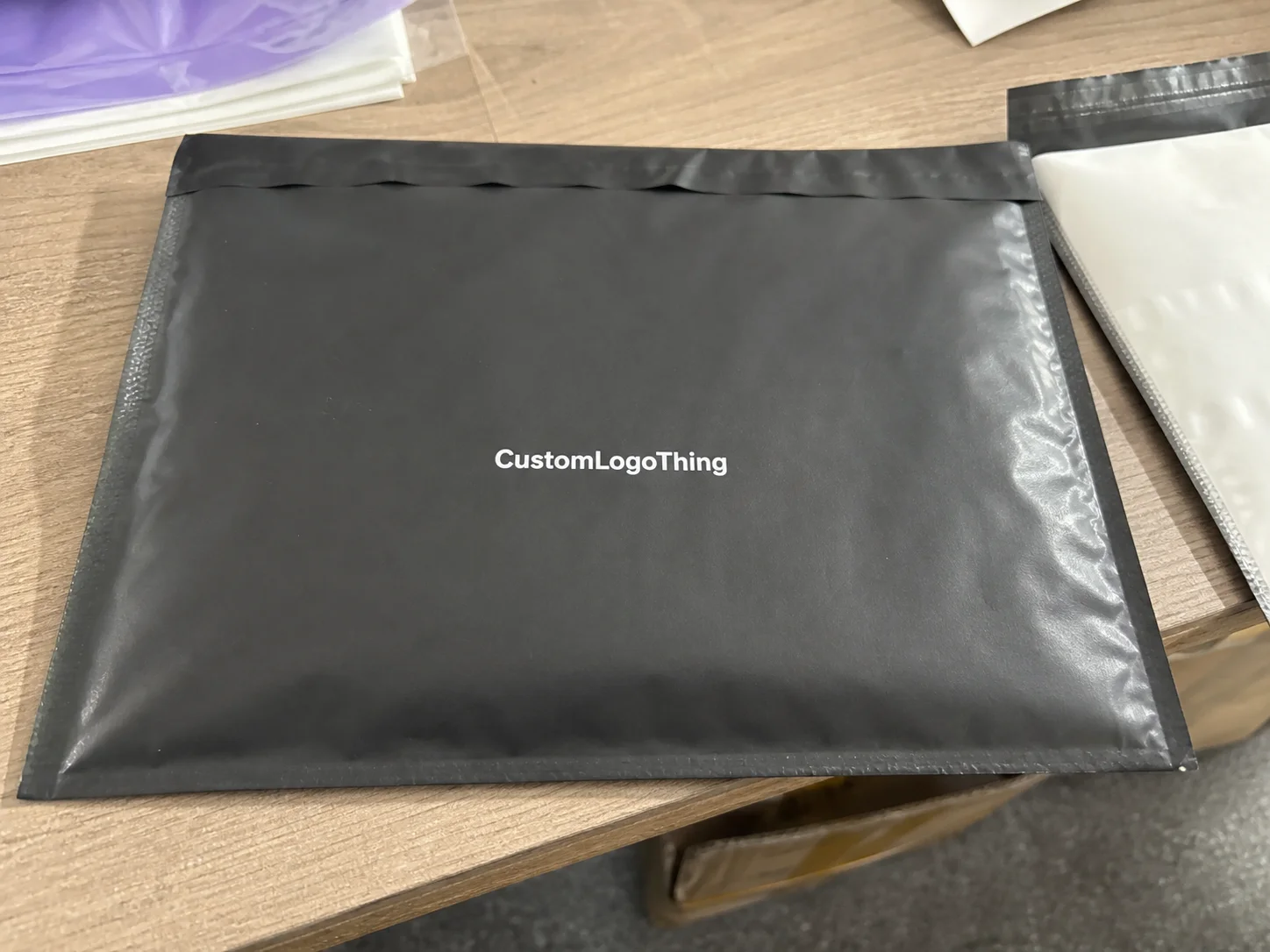
In plain English, custom Printed Poly Mailers with logo are lightweight plastic shipping bags made from polyethylene or similar films, printed with a brand name, colors, slogan, pattern, or message. They are built for soft goods. Apparel, cosmetics, accessories, socks, swimwear, subscription kits, and small home items fit neatly into that category. They are not rigid like corrugated boxes, yet they sit in a useful middle ground between protection, speed, and visual impact. A standard ecommerce mailer is often made from polyethylene, with common thicknesses ranging from 1.5 mil to 3.5 mil depending on the weight and sharpness of the contents.
The structure usually starts with a co-extruded film. Multiple layers allow the outside to print cleanly while the inside provides strength and flexibility. Some suppliers offer recycled content, such as 30% to 80% post-consumer recycled resin, while others include tamper-evident adhesive closures, opaque layers for privacy, and tear strips for easier opening. People often ask what makes a mailer “custom.” It is not just a bag with ink on it. It is a small piece of brand packaging built to ship, protect, and present at the same time. In factories around Dongguan and Ningbo, the difference between a generic bag and a custom run can come down to a 0.2 mm change in seam width and a digital proof approved in under 48 hours.
Why do brands choose custom printed poly mailers with logo instead of plain stock mailers? Three reasons come up over and over in client meetings. They are lighter than boxes, so postage stays under better control. They create a cleaner unboxing moment. They make the parcel easier to recognize in transit and in delivery photos. The last point gets overlooked. Customers may forget the shipping label, yet they remember the bold pink mailer with a clean logo and a short thank-you line. On a 1,000-piece run, the visual lift can be worth more than the extra $150 to $250 added to packaging spend.
I remember one apparel brand review where the founder slid a plain mailer across the table, then a branded one, and said, “Which one would you post on Instagram?” The room went quiet for about two seconds, which in a packaging meeting is basically a thunderstorm. The answer was obvious. That is the thing with custom printed poly mailers with logo: they are not just containers. They are little visual arguments for why your brand should be remembered. The sample in question used a matte white exterior, a 25% recycled-content film, and a black front-only logo printed in a 220 mm by 120 mm safe zone.
I visited one apparel fulfillment site in Guangzhou where the operations manager showed me a pallet of plain mailers next to a branded run of custom printed poly mailers with logo. Same product, same carrier, same warehouse. The branded stack was reserved for influencer orders and new customer shipments because the team understood that the package itself had become part of the sale. That is not vanity. That is package branding doing quiet commercial work. Their pack line moved about 14% faster on the branded runs because the adhesive flap was pre-labeled and the mailer size was standardized at 12 x 15 inches.
Tradeoffs still matter. A mailer will not protect sharp corners the way a double-wall box can, and it will not fix poor packing discipline. If the product needs crush resistance, custom printed boxes may be the smarter route. If the item is soft, flexible, and relatively light, custom printed poly mailers with logo often make better sense. Honest packaging work starts with function, then adds appearance. A 350gsm C1S artboard box and a 2.5 mil poly mailer solve different problems; pretending they are interchangeable leads to damaged goods or unnecessary freight costs.
There is another reason brands keep returning to them: perception of value. A customer opening a beauty item in a generic bag gets one impression. The same product in custom printed poly mailers with logo with a crisp color field and sharp typography can feel more premium before the product is even touched. I have watched that happen in a supplier showroom in Yiwu, and the reaction is remarkably consistent. People lift the mailer, tilt it under the light, and suddenly everyone in the room starts talking in slightly softer voices, as if the package itself has become expensive. For a product that costs $14.99, even a $0.22 branded mailer can alter the perceived category.
How Custom Printed Poly Mailers with Logo Work in Shipping
The process behind custom printed poly mailers with logo is more involved than most buyers expect. It starts with artwork setup. A designer prepares the file in the correct format, with exact dimensions, bleed allowances, and color specifications. If the order uses flexographic printing, plates may be created. If the supplier uses digital printing, the setup changes, and lower quantities are often possible. Either way, the design has to be correct before anything gets printed. For a common 14 x 19 inch mailer, the artwork template usually includes a 3 mm bleed and a 10 mm safe margin to keep logos away from the heat-sealed edges.
After artwork approval, the supplier prepares the film, prints the graphics, seals the structure into mailer form, and checks for defects. That includes print alignment, adhesion strength, puncture resistance, and closure performance. On a factory floor in southern China, I watched a quality inspector pull random units from a run of custom printed poly mailers with logo, press the adhesive strip by hand, then tug the seam to check whether the closure held evenly. It was a small action. It prevented a lot of complaints. Also, it was weirdly satisfying to watch (I say that as someone who has spent too much time staring at packaging samples). The inspector sampled one mailer every 500 units and rejected a batch when the seal peel strength fell below 1.5 newtons.
Printing methods matter. Flexographic printing usually suits larger runs because setup costs can be spread over more units. It works well for solid colors, bold logos, and repeat patterns. Digital printing is often better for lower volumes, shorter lead times, and more complex graphics, though the unit price may be higher. If your artwork includes fine details, gradients, or multiple branded zones, the print method can change the final look more than the material itself. A one-color flexo run on 10,000 pieces may land around $0.15 per unit, while a four-color digital run at 1,000 pieces can rise to $0.42 or more, especially if the supplier is printing from a facility in Shenzhen or Xiamen.
Typical functional components include a peel-and-seal adhesive strip, an optional second seal for returns, gussets for expansion, tear strips, and opaque film for privacy. Those details may sound minor, but they affect daily operations. A tear strip saves time in fulfillment. A gusset helps when a folded hoodie needs extra depth. Opaque film keeps contents from showing through under bright light. In other words, custom printed poly mailers with logo need to work in the warehouse before they ever impress a customer. A 2-inch bottom gusset, for example, can make the difference between a neat pack-out and a bulging seam on a size-large sweatshirt.
Here is the basic shipping flow I’ve seen most often:
- Product is folded or packed.
- Item goes into the mailer.
- Adhesive strip is sealed.
- Shipping label is applied.
- Parcel enters carrier handoff.
That sequence looks simple, but timing matters. Artwork approval often controls the schedule more than manufacturing does. A supplier can print quickly once files are approved. A brand team can spend five days debating whether the logo should sit 20 mm higher. I have had that exact conversation in a client conference room while a sample of custom printed poly mailers with logo sat on the table between two competitors’ mailers. The winner was not the prettiest file. It was the one that packed faster and photographed better. I wish that were always poetic. It usually just means “less fiddly.” In practical terms, a standard production window is typically 12-15 business days from proof approval, plus 4-7 business days for ocean or domestic freight depending on whether the order ships from California, New Jersey, or a coastal factory near Shenzhen.
Print placement changes the result too. Some brands want front-only branding and nothing else. Others want a back-panel tagline, a QR code, or a full-bleed repeat pattern. Full coverage can look strong, but it costs more and needs tighter color control. A simple logo on a clean background can be more memorable than a crowded surface with too many messages. That is especially true for custom printed poly mailers with logo used in ecommerce apparel or accessories. One 160 mm wide logo in Pantone 186 C on a white mailer often reads more clearly than three stacked slogans squeezed onto the back flap.
Key Factors That Shape Quality, Cost, and Performance
Thickness is one of the first things I check. Poly mailers are often described in mils, and that number says a lot about durability. A lighter film can work for tees, scarves, or small accessories. A thicker film is better when puncture risk is higher or the item has a sharper edge. For custom printed poly mailers with logo, the right thickness depends on what ships inside them, but buyers often choose too thin a film just to save a few cents. That is false economy if the mailers split in transit. A 2.5 mil film may be fine for socks, while a 3.0 to 3.5 mil film is more appropriate for boxed cosmetics or hardware-style accessories with corners.
Cost is shaped by several variables at once: order quantity, number of print colors, print coverage, material type, finishing, and shipping method. A simple one-color logo on a standard film will usually cost less than a full-bleed design on recycled-content film with special opacity requirements. Exact numbers move with volume, though the market logic stays steady. In one quote comparison I reviewed, the difference between plain stock and custom printed poly mailers with logo was not dramatic at 10,000 units, but at 1,000 units the setup cost made the branded option far less efficient. At 5,000 pieces, a one-color custom mailer from a Guangdong factory was quoted at $0.19 per unit, while a comparable stock mailer came in at $0.07.
Here is a practical comparison I often share with clients:
| Option | Typical Use | Relative Cost | Strength | Brand Impact |
|---|---|---|---|---|
| Plain stock poly mailers | Basic shipping | Lowest | Good for soft goods | Low |
| Standard custom printed poly mailers with logo | Ecommerce apparel, accessories | Moderate | Good to very good | High |
| Thicker custom printed poly mailers with logo | Heavier items, sharper contents | Higher | Very good | High |
| Mailer with return seal and premium print | Retail returns, subscription brands | Highest | Very good | Very high |
Design complexity can raise the price quickly. A clean logo with one or two spot colors is easier to produce than gradients, metallic effects, or full-panel patterns. I have seen brand teams assume that “just adding more color” will make custom printed poly mailers with logo feel more premium. Sometimes it works. Other times it makes the print more expensive, less crisp, and harder to keep consistent across batches. More ink is not always more impact. That is a hard lesson for some marketing teams, who seem to believe every extra hue is a tiny victory over restraint. On a 10,000-piece order, each additional print color can add $0.03 to $0.06 per unit, which adds up quickly once freight and warehousing are included.
Sustainability deserves a careful, unsentimental look. Some mailers use recycled content. Some are designed to be recyclable where local infrastructure supports it. Some suppliers make broad claims that do not hold up under scrutiny. I always ask what the structure actually is, what post-consumer recycled content is included, and what the end-of-life path looks like in the markets where the package will be used. The EPA recycling guidance is a useful reference point, but local collection systems still determine what happens in practice. For custom printed poly mailers with logo, a green claim without a real material spec is just a slogan. If a supplier says “eco-friendly,” ask for the resin blend, the thickness in mils, and the manufacturing location, whether that is Dongguan, Ho Chi Minh City, or Los Angeles.
Operationally, these mailers also affect storage and fulfillment. They store flat, which helps, but a large branded run still takes up room. If you reorder late, you may pay rush freight. If you overbuy, you may tie up cash in inventory. I watched a small cosmetics brand run out of custom printed poly mailers with logo two weeks before a promotion because demand was underestimated by 18%. The team had to use plain backup mailers and lost some of the visual consistency they had spent months building. The founder described the backup stack as “the packaging equivalent of showing up to a wedding in gym shoes,” which was harsh but not entirely unfair. Their replacement freight from a warehouse in Los Angeles cost $640 overnight for just 3,000 units.
Quality is not only about film thickness or print sharpness. It also includes seal integrity, opacity, scuff resistance, and how the package behaves after carrier handling. If you want a benchmark for testing, the ISTA testing standards are a sensible reference when packages are being stress-tested for transit scenarios. Not every mailer needs a full laboratory program, but the logic behind controlled testing is sound. Especially for custom printed poly mailers with logo, where branding should survive the journey, not peel off halfway through. A simple drop test from 36 inches, repeated five times on each corner, will reveal more than a pretty mockup ever could.
Step-by-Step: Choosing the Right Custom Printed Poly Mailers with Logo
Start with the product, not the artwork. That sounds backward, but it saves money. Ask what you ship most often, how fragile it is, whether moisture protection matters, and whether the product needs extra room for inserts or tissue. A hoodie and a pair of earrings do not belong in the same pack-out logic. Custom printed poly mailers with logo should fit the product first, then the brand. For a 12-ounce sweatshirt, a 10 x 13 inch mailer may be too tight; a 14 x 19 inch mailer is usually closer to the mark.
Next, measure the packed item in its real shipping form, not the product alone. Include folds, tags, tissue, and any inserts. I learned this the hard way during a client meeting with a fashion startup that ordered mailers based on garment measurements only. The actual folded package was 28 mm thicker than expected, and the first production sample looked cramped. We corrected the dimension before mass printing, which probably saved them from a costly reprint. That is why sample packs matter for custom printed poly mailers with logo. Paper measurements can lie; the folded hoodie does not. A sample that looks 5 mm too snug on the bench often becomes 15 mm too tight once the customer adds a hangtag and return card.
Then decide what branding job the mailer should do. Do you want subtle brand recognition? Loud shelf-style graphics? A premium black-on-black feel? A QR code to drive repeat purchases? The answer changes the layout. A minimalist logo can feel elegant. A full-color pattern can photograph well. A playful message can fit DTC apparel. The wrong tone, though, can feel disconnected from the product. A luxury candle brand with cartoon art on its custom printed poly mailers with logo may confuse its own customers. One brand I reviewed used a 15% gray background and a gold logo because the product sold for $48; the contrast read far better than the first draft, which looked like discount stationery.
Match print style to quantity
If the quantity is smaller, digital print may be the practical route. If you are ordering at scale, flexographic printing often becomes more efficient. Setup fees, color count, and material choices can alter the math quickly. I encourage buyers to compare total landed cost rather than quoted unit price alone. A quote for custom printed poly mailers with logo can look cheap until freight, plates, and extras show up, and then the “deal” starts behaving like a raccoon in a trash can. At 2,000 units, a quote may say $0.29 per piece, but the freight from a factory in Foshan can add another $180 to $260 depending on carton size and delivery zone.
Ask for samples, then test them
Request actual samples or prototypes before approving production. Check seal strength, closure feel, print clarity, opacity, and how the material handles folding. If possible, pack a real order in the sample. Put a garment inside. Add the insert. Seal it. Shake it lightly. That sounds basic, but practical tests catch errors that design screens hide. For custom printed poly mailers with logo, what you feel in hand matters nearly as much as what you see on screen. A sample that opens too easily, or looks translucent under a 500-lumen shop light, is a warning sign worth acting on.
Here is a simple decision sequence I use with clients:
- Confirm product size and fragility.
- Choose mailer dimensions with a small buffer.
- Pick print method based on order volume.
- Set branding goals and artwork limits.
- Review samples in real packing conditions.
- Approve production only after proof sign-off.
Budgeting should include the timeline. A proof may take a day or three. Production can take longer if the design is complex or the quantity is large. Freight adds another variable. For most buyers, the schedule is less about the machine and more about internal approval speed. Custom printed poly mailers with logo are easy to order once decisions are clear. The real delay usually comes from the humans, who will absolutely spend 40 minutes debating whether the logo is “emotionally centered” (I wish I were making that phrase up). A realistic plan is 2 days for artwork revisions, 3-5 days for sampling, and 12-15 business days from proof approval to finished goods leaving the factory gate.
Common Mistakes When Ordering Custom Printed Poly Mailers with Logo
The most common mistake is choosing the wrong size. Too small, and the seal is stressed or the product looks crushed. Too large, and the package feels wasteful, bulky, and less polished. I have seen brands order oversized custom printed poly mailers with logo because they wanted one size to cover everything. They ended up using extra filler or accepting sloppy pack-outs. Neither helps the customer. A 16 x 20 inch mailer for a 9 x 12 inch sweater may seem safe, but it often creates 2 to 3 inches of empty space and a messier parcel.
Another error is overestimating what the print method can handle. A detailed illustration that looks crisp on a laptop may blur if the chosen process is better suited to simple graphics. Fine text can disappear. Thin lines can break up. If your logo has delicate strokes, test it at actual size. A supplier can often advise on print limits for custom printed poly mailers with logo, but the brand still needs to approve the final visual tradeoff. In one sample from a factory in Jiangsu, a 4-point tagline vanished at arm’s length even though it looked readable on a 27-inch monitor.
MOQ surprises also catch buyers off guard. Minimum order quantities vary widely depending on method, material, and supplier structure. A larger run can lower unit cost, but it also creates storage and cash-flow pressure. I once worked with a small subscription brand that ordered far more custom printed poly mailers with logo than its forecast supported. The mailers sat for months, and the team changed its color palette before using half of them. That is a painful lesson to learn with inventory. Nothing says “this was a mistake” quite like opening a storage room and finding a wall of outdated branding staring back at you. Their 8,000-piece order took up 42 cartons and nearly one full pallet position in a Brooklyn warehouse.
Another classic mistake: choosing style before function. A gorgeous mailer that tears, shows contents, or fails in the rain is not a win. Functional defects are expensive because they trigger repacks, replacements, and sometimes customer service complaints. If you are shipping apparel or other soft goods, the closure, opacity, and puncture resistance should be checked before anyone gets excited about the artwork. Custom printed poly mailers with logo should survive the route, not just the mockup. A 24-hour humidity test in Miami will expose weak adhesive far faster than a polished render will.
Proof review sounds boring, which is exactly why people rush it. That is where spelling errors, logo cropping, bad placement, and color shifts are caught. One brand I advised almost approved a batch where the website URL was missing two characters. The fix took ten minutes. The damage of shipping 20,000 wrong units would have been much larger. For custom printed poly mailers with logo, the proof is not paperwork. It is the last cheap checkpoint. A corrected proof sent on Tuesday can save a Friday production slot and avoid a reprint charge that may run $300 to $900 depending on factory policy.
Some brands also misread their own tone. Minimalist packaging can be beautiful, but not every product benefits from restraint. A giftable item may need more warmth. A playful direct-to-consumer brand may need more color and motion. Brand packaging should fit the promise. If your messaging says “fun,” the mailer should not look like a legal envelope. If it says “luxury,” the graphics should not feel bargain-bin. I have seen a beachwear label in Miami switch from stark white to a soft coral background, and the conversion feedback from customers improved because the packaging finally matched the product story.
Expert Tips for Better Branding, Better Budgets, and Better Results
Use the mailer as a marketing surface, not as a billboard. There is a difference. A good custom printed poly mailers with logo design gives the customer one clear impression quickly: who sent this, and what does the brand feel like? Add a short URL or QR code if it leads somewhere useful, such as a reorder page, a shipping info page, or a social channel that matches the customer journey. Do not add clutter for its own sake. A 25 mm QR code placed on the lower corner of a 14 x 19 mailer is easier to scan and harder to miss than a dense cluster of calls to action.
Keep logo placement simple. I have seen brands try to fill every printable zone, and the result usually looks busier, not stronger. A centered mark, a repeat pattern, or a clean top-bar design can read faster in transit and in photos. That matters because customers photograph packaging more than they used to. When the colors and typography of custom printed poly mailers with logo hold up on camera, the mailer can do unpaid marketing on social feeds. One jewelry brand I saw in Brooklyn used a single black logo on blush film and got more customer-generated photos than a previous all-over pattern that cost 22% more to print.
Think like a photographer. High contrast helps. Legible type helps. Clean color blocking helps. If you want people to share the package, it needs to look intentional from across a room and close up on a phone screen. I have noticed this especially with beauty and accessory brands, where retail packaging often lives or dies by its ability to look polished in a feed shot. The same logic applies to custom printed poly mailers with logo. A mailer that photographs well at arm’s length in natural light is usually a better long-term choice than one that only looks good in a mockup with studio lighting.
Cost control is often about choosing the most visible print zones instead of printing every inch. You do not always need full coverage to make a strong impression. Sometimes a large logo on one face and a small brand line on the flap is enough. That keeps costs in check while preserving identity. If your budget is tight, compare the impact of a simpler layout against a fully wrapped design before committing to maximum coverage on custom printed poly mailers with logo. In one 20,000-piece quote, reducing coverage from full wrap to front-only cut packaging spend by nearly $1,100 without reducing recognition.
Reorder strategy matters too. A brand that runs promotions in bursts should build a reorder point before inventory runs low. Peak demand can expose packaging mistakes fast. I remember a client who shipped a limited drop in April and nearly missed fulfillment because the next batch of custom printed poly mailers with logo was still in transit. Sales were fine. The packaging plan was not. Build the buffer before the rush. If your average weekly use is 2,400 units, a reorder trigger at 6,000 pieces gives the supplier enough time to produce and move the next batch.
If your product line is still changing, start with one or two SKU sizes before you lock into a larger inventory strategy. That is especially useful for newer ecommerce brands that are still refining fit. It is easier to expand later than to sit on the wrong format. If your packaging program includes other formats, such as Custom Packaging Products or Custom Poly Mailers, keep the visual system consistent so the brand feels unified across formats. A clean typographic system and matching Pantone references can matter more than a flashy one-off design.
“The best mailer is the one that disappears into the workflow and still feels branded in the customer’s hands.” That’s a line I heard from a fulfillment manager in a contract packing facility in Dallas, and I’ve repeated it ever since.
One more practical point: if you are comparing custom printed poly mailers with logo against custom printed boxes, ask where the value is really coming from. Boxes offer more structure and a stronger premium cue for fragile goods. Poly mailers offer speed, lower shipping weight, and often better space efficiency. Neither is universally better. The best choice depends on the item, the shipping lane, and the brand story. If your shipping from Atlanta to Chicago mostly includes knitwear or flat accessories, the mailer may save 2 to 4 ounces per parcel and lower postage by a measurable amount.
For sustainability messaging, stay specific. If the mailer contains recycled content, say how much. If the structure is recyclable in certain collection systems, explain the limitation. If a material claim depends on local infrastructure, say that plainly. Packaging buyers trust specificity more than vague environmental language. And frankly, they should. A statement like “made with 50% post-consumer recycled polyethylene” is stronger than “eco-conscious packaging,” especially when the factory is in Suzhou and the supply chain needs to be verifiable.
What to Do Next Before Ordering Custom Printed Poly Mailers with Logo
Before you place an order for custom printed poly mailers with logo, create a short packaging brief. Keep it to one page if possible. Include product dimensions, monthly volume, shipping method, target budget, closure preferences, and branding goals. A concise brief reduces back-and-forth with suppliers and usually produces better quotes. I have sat in enough sourcing calls to know that vague briefs create vague pricing. A supplier in Ningbo can quote far more accurately when they know the mailer is 14 x 19 inches, 3 mil thick, front-printed only, and intended for 8,000 units per month.
Gather your artwork files in the right format. If the brand assets are scattered across old folders, merge them before asking for a quote. Identify what must be printed on the mailer and what can live on a label or insert. This is a good place to think about product packaging as a system rather than a single item. Some messages belong on the mailer. Others belong inside the parcel. The wrong choice can raise costs without increasing impact. A thank-you card printed on 350gsm C1S artboard can carry the story better than squeezing extra copy onto the exterior film.
Ask for material and print samples and test them in real packing conditions. Check the seal after pressure, inspect opacity under strong light, and compare the sample feel against your current packaging. If your team ships from multiple locations, test the samples in each location’s workflow. A mailer that works well at one site may slow packers at another. For custom printed poly mailers with logo, the warehouse matters as much as the design studio. A facility in Los Angeles may prefer a wider adhesive flap than a smaller site in Austin because its packers move faster and handle more mixed SKU orders.
Then map the timeline. Allow time for proof approval, manufacturing, delivery, and a buffer for changes. Even a small revision can shift the delivery window. Teams that assume the fastest path often find themselves short on stock just when a campaign starts. A sensible schedule for custom printed poly mailers with logo is one that respects both production reality and merchandising calendars. If your promotion starts on the 21st, count backward at least 30 to 35 calendar days so the supply chain has room for proofing, printing, and transit.
Compare quotes using the same specs. That sounds obvious, but it is where a lot of buyers slip. One supplier may quote a thinner film, another may include a second seal, and a third may use a different print method. Those are not apples-to-apples comparisons. I recommend comparing total landed cost per mailer, including freight, because that is the number that affects actual margin. The cheapest quote is not always the cheapest outcome. A $0.14 unit price with $580 freight can be more expensive than a $0.17 unit price with freight included from a warehouse in New Jersey.
Finally, choose quantities based on demand and storage capacity, not optimism. If your business is growing quickly, that is a good problem, but it still deserves discipline. Set a reorder point before inventory gets low, and keep the packaging program aligned with sales forecasts. That is how custom printed poly mailers with logo stay useful instead of becoming a storage headache. A 90-day supply is often plenty for a stable brand; a 6-month supply only makes sense if colors, logos, and dimensions are locked.
For brands building out broader packaging systems, this is also the moment to think about consistency across branded packaging, inserts, labels, and shipping materials. A mailer is one part of the whole experience. It should connect with the rest of the presentation, not fight it. That kind of coordination is what turns packaging from a cost line into a commercial asset. If your insert card, mailer, and thank-you note all share the same typeface and color reference, the brand feels more intentional without adding much cost.
Too many brands treat shipping materials as an afterthought until something breaks, tears, or arrives in the wrong color. The better approach is more methodical: define the product, test the format, price the run properly, and keep the branding clear. That is how custom printed poly mailers with logo become smart packaging rather than just decorated plastic. In practice, that means choosing the right film thickness, a realistic MOQ, and a supplier who can deliver from a city like Shenzhen, Guangzhou, or Los Angeles within the window your sales calendar actually allows.
FAQ
How much do custom printed poly mailers with logo usually cost?
Pricing usually depends on quantity, material thickness, number of print colors, and how much of the surface is printed. A 5,000-piece run of one-color custom printed poly mailers with logo might land around $0.15 to $0.22 per unit before freight, while a smaller 1,000-piece order can run $0.35 to $0.50 per unit because setup costs are spread over fewer bags. Higher volumes typically reduce unit cost, but freight, plates, and storage can change the real total. The best comparison is total landed cost per mailer, not just the quoted unit price.
What is the typical timeline for custom printed poly mailers with logo?
Timeline depends on artwork approval, print method, and order size. A common production schedule is typically 12-15 business days from proof approval, then 4-7 business days for transit depending on whether the order ships from Guangdong, California, or New Jersey. Proofing often takes longer than people expect because design revisions can delay production. Planning with a 2- to 3-week buffer helps avoid inventory gaps during sales peaks.
Are custom printed poly mailers with logo strong enough for apparel shipping?
Yes, they are commonly used for apparel because they are lightweight, flexible, and moisture resistant. A 2.5 mil or 3.0 mil film is usually enough for tees, sweatshirts, socks, and other soft goods, especially when the adhesive strip is strong and the seam is sealed properly. They work best for items that do not need rigid crush protection. If items have sharp edges or heavy accessories, consider extra internal protection or a thicker film.
Can I order custom printed poly mailers with logo in small quantities?
Small quantities may be available, especially with digital printing, but unit cost is often higher. Minimum order quantities vary by supplier and print method; some factories in Shenzhen or Ningbo may start at 500 pieces, while flexographic runs often begin at 3,000 or 5,000 pieces. If your branding is still changing, start with a small test run before scaling up. That gives you room to revise the artwork, size, or color before committing to a larger inventory buy.
What should I check before approving custom printed poly mailers with logo?
Check size, print placement, color accuracy, closure strength, opacity, and material feel. Review the proof carefully for spelling, logo cropping, and contrast issues. If possible, test a sample in real packing and shipping conditions before final approval. For a more reliable check, pack one real product, seal the mailer, and run a quick drop test from waist height to see whether the closure holds and the print stays intact.
If you are building a sharper shipping system, custom printed poly mailers with logo can be one of the smartest places to start. They are practical, visual, and efficient when chosen correctly. They also reveal whether a brand understands its own product, budget, and customer experience. That is why I keep coming back to them: custom printed poly mailers with logo are not just packaging. They are a test of whether your branding and operations actually agree. In a market where a $0.20 decision can influence a $60 order, that matters more than many teams admit.