Custom Prosecco Labels: How to Order Bottles That Sell
Custom prosecco labels affect more than appearance. They influence how quickly a bottle is understood, whether it feels giftable or retail-ready, and how well it holds up once it is chilled, shipped, or handled at an event. A plain bottle can disappear fast; a well-sized label gives it a clear point of view.
The practical job matters just as much. The label has to carry branding, event copy, legal text, barcodes, batch details, and sometimes a short message, all without turning into crowded microtype. Good label design is part of the product spec, not a decorative add-on.
For buyers building broader retail packaging or branded packaging programs, the label is often the most efficient place to improve perceived value. That said, the bottle, stock, adhesive, finish, and application method all affect the result. If the label is part of a larger pack, Custom Packaging Products and Custom Labels & Tags are better starting points than guessing from a generic form.
What custom prosecco labels actually change on the shelf
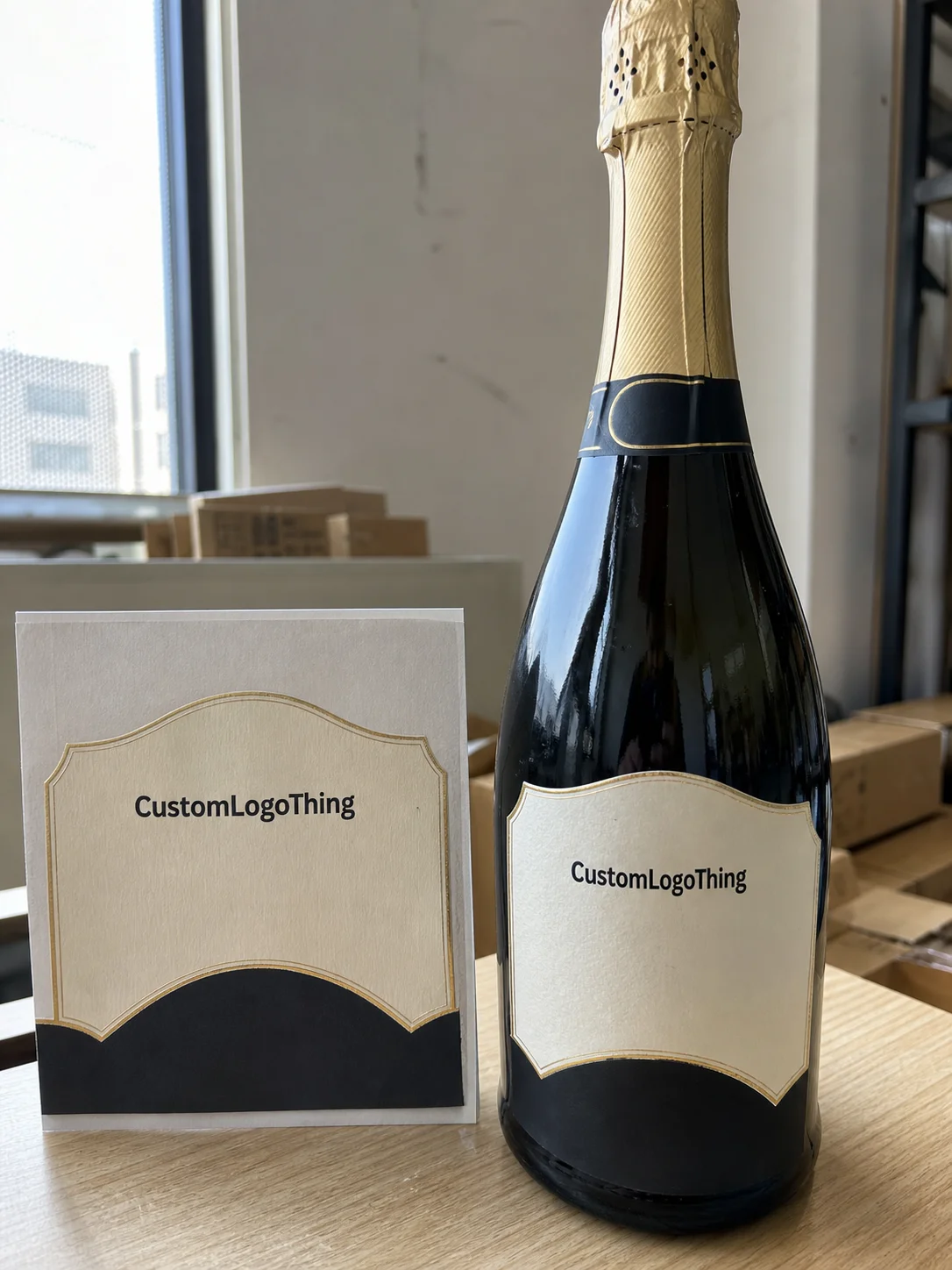
On shelf, a label is a signal. Buyers do not inspect a bottle like a spec sheet; they register contrast, shape, and finish in a second or two. If the label reads clearly from a distance, the bottle feels more considered. If it looks cramped, overly glossy, or awkwardly wrapped, the product can feel lower-value even when the liquid is strong.
That is why labels are common for weddings, hospitality, seasonal promotions, and private-label launches. They let the same base bottle serve very different purposes. A couple needs names and a date. A brand needs a logo and a short line of copy. A retailer needs a bottle that can sit beside candles or chocolate without feeling disconnected.
The best labels do three things at once: fit the bottle, survive the real environment, and support the sale. Miss one, and the issue usually shows up later as peeling edges, unreadable small type, or a bottle that looks improvised instead of premium.
A label cannot rescue weak branding. It can only make the problem visible sooner, and at print cost rather than draft cost.
For private-label work, the front panel also has to carry required information without dominating the bottle. That means enough room for the product name, any regulatory copy, and possibly a barcode or vintage note. Cramming all of that into a tiny area is one of the fastest ways to make a bottle look cheap.
How bottle shape, label stock, and adhesive work together
Prosecco bottles vary more than many buyers expect. Some have a broad body and generous label panel. Others taper quickly, curve sharply at the shoulder, or leave less flat surface than the mockup suggests. A clean digital proof can hide those differences. The glass will not.
That is why the bottle has to drive the label size, not the other way around. Measure the usable front area, not just the full circumference. Leave room for curvature, seams, and any overlap if the label wraps. If a label crosses a curve, the print zone becomes less forgiving, especially with small text or border-heavy artwork.
Label stock changes both appearance and performance:
- Paper labels suit dry, short-term use and lower-cost runs.
- BOPP or film labels handle moisture better and hold up under refrigeration.
- Textured stocks add tactile character and read more premium on close inspection.
- Clear labels create a minimal look but expose application flaws more easily.
Adhesive choice matters more than many buyers realize. A label that performs well in a room-temperature sample may fail once the bottle is chilled. Condensation changes the bond instantly. If the bottles will sit in ice buckets, coolers, or cold retail displays, ask for an adhesive designed for chilled application and test it on the actual bottle.
Finish changes how the label is read. Matte usually feels quieter and more restrained. Gloss throws more light and can make color feel more vivid. Foil can add contrast and a premium note, but it can also crowd the design if the artwork already carries a lot of visual weight. Clear stock keeps the look minimal, yet it also exposes bubbles, dust, and small misalignments that opaque stock hides.
For cold service, choose the material for the worst-case scenario, not the best-case mockup. If the bottle will be handled repeatedly, shipped in cartons, or pulled from refrigeration before service, the label needs to survive all of that. A sample that looks perfect on a desk tells you very little.
Labels sit inside a wider packaging system, so some buyers also check how transit and sourcing standards affect the rest of the order. ISTA testing methods are a useful reference for thinking about handling and shipping stress, while FSC sourcing is often part of a broader materials discussion for packaging teams that care about fiber origin. Those details do not change label design, but they do change the standard a project team should apply before approving the run.
Cost, MOQ, and quote drivers that move your unit price
Quantity usually drives unit price more than any other factor. Setup costs exist whether the run is 250 pieces or 5,000. The difference is how many labels absorb those costs. That is why small runs often look expensive on a per-label basis.
After quantity, the biggest price drivers are stock, finish, shape, and print complexity. A simple rectangular paper label is usually less expensive than a custom contour-cut film label with foil and a special adhesive. More setup, more material control, and more inspection all push the price up.
MOQ, or minimum order quantity, is not just a sales tactic. It is tied to production efficiency. Some suppliers set minimums by size, some by material, and some by print method. A low MOQ with a high unit price usually means the setup is being spread across too few pieces.
| Label option | Typical use | Common unit cost range | Budget impact |
|---|---|---|---|
| Paper label, simple shape | Short runs, dry display, event favors | $0.12-$0.22 | Lowest entry point, but limited moisture resistance |
| BOPP film, standard finish | Chilled bottles, gift sets, general retail packaging | $0.18-$0.35 | Better durability, usually the safer choice for cold storage |
| Textured stock with matte finish | Premium gifting, boutique shelves | $0.24-$0.42 | Improves tactile feel, but does not solve moisture problems by itself |
| Clear or specialty film with foil | High-end launches, seasonal promotions | $0.30-$0.55 | Strong shelf impact, highest setup and finishing cost |
Those ranges are not a quote. They move with artwork coverage, number of colors, die requirements, adhesive type, and shipping method. Rush production often adds a surcharge. Proof revisions also cost time, which becomes money when the delivery date is fixed.
When comparing suppliers, ask what the unit price includes. Some quotes bundle proofing, die-cutting, finish, and packing. Others do not. A low headline number that hides extra fees is not a better price.
Production steps, proofing, and turnaround timing
The production sequence is usually straightforward: artwork review, digital proof, approval, print, finishing, inspection, and shipment. Most delays do not come from the process itself. They come from missing details at the start or last-minute changes once the job is already moving.
Simple digital label runs can often be produced faster than specialty work. Foil, clear film, custom shapes, and complex finishing add time because each step needs setup and inspection. A realistic planning window for many custom label orders is 7-15 business days after proof approval, with longer lead time for specialty materials, large runs, or multiple revision rounds. Shipping is separate and should be treated as a real production step.
Proofing is where spelling mistakes, barcode issues, low contrast, and poor spacing are cheapest to catch. On small event labels, even one character out of place can matter. That applies to names, dates, batch copy, and any short legal text that has to be right the first time.
Good suppliers usually provide a template or dieline before final approval. Use it. A dieline shows where the safe area ends, how much bleed is needed, and where the label will sit on the bottle. Without it, the design is being judged in the wrong context.
Specifying size, artwork, and application without guesswork
Start with the bottle. Measure the flat front panel, the area that remains legible after curvature, and any wrap zone that can accept text without falling into a shoulder or seam. If you only measure bottle circumference, you will overestimate usable space. Flat geometry and curved glass are not the same thing.
Artwork prep still hinges on a few basics: bleed, safe area, and resolution. Vector logos are preferable. Raster images need to be print quality, not web quality. Color also needs to be handled early, because screen color and print color diverge faster than most buyers expect. CMYK is standard, but the final appearance shifts with stock, finish, and ink coverage.
Application method changes the tolerance. Hand-applied labels can absorb minor variance, but they are not immune to misalignment. Machine-applied labels need tighter dimensional control. If the order will run through a labeler, the printer should know the application method before the dieline is finalized.
A spec sheet keeps the quote process efficient. It should include the bottle brand and size, label dimensions, quantity, finish, adhesive preference, application method, deadline, and final artwork files. If the labels are part of a larger run that includes cartons or inserts, note that too.
- Bottle brand and exact size
- Label dimensions or a photo with measurements
- Quantity and required ship date
- Material preference: paper, film, textured, or clear
- Finish: matte, gloss, foil, or soft-touch
- Cold storage or room-temperature use
- Artwork files and proof approval contact
That list is basic because it works. It reduces avoidable back-and-forth and usually produces a cleaner quote. Buyers who send a complete spec tend to get fewer revisions and a lower chance of finding a fit problem after print.
Common mistakes that wreck fit, finish, or budget
The first mistake is buying on price alone. A label that curls in condensation or peels after chilling is not inexpensive. It is a reprint waiting to happen, and reprints cost more because the mistake has already moved downstream.
Temperature is the second trap. A bottle that looks perfect on a table can behave differently in a cooler, on ice, or in a retail display case. Cold glass and moisture are a hostile environment for weak adhesive. If the labels are going anywhere near refrigeration, test them there before full production.
Artwork mistakes are equally common. Small type vanishes on a curved surface. Thin borders can look uneven if the labels are hand-applied. Low-contrast colors flatten on textured stock. Designs placed too close to the edge are vulnerable to trimming drift.
Over-specifying finishes is another expensive habit. Foil, texture, and spot effects can all be useful, but stacked together they may add cost without improving the buyer's experience proportionally. If the bottle will be seen briefly at an event table, the label does not need every premium feature available.
Do not treat every bottle the same. Different bottle sizes and shapes usually need different label dimensions. A design that fits one format can sit too low on another or wrap awkwardly around a slimmer body. The label should fit the container cleanly.
Finally, do not ignore storage and shipping. Labels can scuff in transit. Matte finishes show handling differently from gloss. Clear labels can pick up dust and bubbles. If the bottles are part of a gift pack or retail set, the label has to survive the journey, not just the product photo.
Actionable next steps before you place the order
Before requesting quotes for custom prosecco labels, measure the bottle and identify the exact label area. Then decide on the material based on how the bottle will actually be used: dry event, chilled service, retail shelf, or gift packaging. That one decision removes a large share of bad quotes before they happen.
Next, gather the items a printer really needs. Send the logo in vector format, the final copy, quantity, preferred finish, adhesive expectation, and deadline. If the labels are going into a broader packaging program with cartons or inserts, say so early. It keeps the label aligned with the rest of the presentation.
If the bottle shape is unfamiliar or the bottles will be chilled, order a small test run first. A pilot is cheaper than discovering a fit problem after a full production run. It also gives a real-world read on whether matte, gloss, or clear stock works best under the lighting where the bottles will actually be seen.
How do I choose the right size for prosecco bottle labels?
Measure the usable flat area on the bottle rather than relying on the full circumference. Leave room for curvature, seams, and any overlap if the label wraps. A template or dieline is the safest way to confirm the final size before artwork is approved.
Will prosecco bottle labels stick to cold or wet bottles?
They can, but only if the stock and adhesive are designed for chilled application. Standard paper labels are more likely to fail on condensation-prone glass. If the bottles will be served cold, test the label on the actual bottle after refrigeration.
What affects the price of custom prosecco labels the most?
Quantity usually has the biggest effect because setup costs are spread across more labels. Finish, die-cut complexity, and specialty stock can raise the unit price quickly. Rush production and very small runs usually cost more per label.
How far in advance should I order labels for an event or launch?
Allow time for proofing, revisions, print production, and shipping. Simple runs can move quickly, but specialty finishes and custom shapes need more lead time. Build in extra margin if the delivery date is fixed.
Can I use the same design on different prosecco bottle sizes?
Sometimes, but only if the label area and curve are close enough. A design that works on one bottle may wrap badly or cover too much on another. Check dimensions separately and ask for different templates if the bottle formats are meaningfully different.


