Buyer Fit Snapshot
| Best fit | molded pulp bottle insert orders where fit testing and drop protection decide quality where brand print, material, artwork control, and repeat-order consistency matter. |
|---|---|
| Quote inputs | Share finished size, material target, print colors, finish, packing count, annual reorder estimate, and delivery region. |
| Proofing check | Approve dieline scale, logo placement, barcode or warning zones, color tolerance, and any recyclable or compostable wording before bulk production. |
| Main risk | Vague material claims, crowded artwork, or missing packing details can create delays even when the unit price looks attractive. |
Fast answer: Molded Pulp Bottle Inserts: Fit Testing, Drop Protection, and Bulk Quote Specs should be specified like a repeatable production item. The safest quote includes material, print method, finish, artwork proof, carton packing, and reorder notes in one written spec.
What to confirm before approving the packaging proof
Check the product dimensions against the actual filled item, not only the sales mockup. Ask for tolerance on folds, seals, hang holes, label areas, and retail display edges. If the package carries a logo, QR code, warning copy, or legal claim, reserve that space before decorative graphics fill the panel.
How to compare quotes without losing quality
Compare board or film grade, print process, finish, sampling route, tooling charges, carton quantity, and freight assumptions side by side. A lower quote is only useful if the supplier can repeat the same color, closure quality, and packing count on the next order.
Molded Pulp Bottle Inserts: Fit Testing, Drop Protection, and Bulk Quote Specs
A bottle can survive the outer carton and still fail inside it. A few millimeters of movement is enough to start the chain: label scuffing, neck stress, a hard corner strike, then breakage. That is the problem custom pulp bottle inserts are built to solve. They hold the bottle steady, spread impact over a wider area, and give fragile glass a far better chance of arriving in one piece.
For packaging buyers, the value goes beyond damage reduction. Custom pulp bottle inserts can clean up the unboxing, cut down on plastic void fill, and make a brand look considered rather than overpacked. The best packouts do not feel stuffed. They feel engineered, almost quiet in the way they fit together.
I have seen launches lose momentum because a bottle rattled just enough to scuff a label or chip a neck finish before the product ever reached retail. In one project, the fix was not a stronger carton. It was a 3 mm adjustment in the insert cavity and a small change to the shoulder support. The difference between those two outcomes was expensive, and it was visible only after the first round of testing.
Buyer Fit Snapshot
Use this page when glass or plastic bottles need molded pulp inserts that protect shipments without relying on generic void fill.
| Decision point | What to specify before quoting |
|---|---|
| Material and construction | Substrate, thickness, coating, print coverage, finish, and tolerance requirements. |
| Order economics | MOQ, unit tiers, sample run, lead time, packing method, and freight assumptions. |
| Production control | Dieline, artwork proof, barcode or warning copy, QC checks, carton marks, and reorder plan. |
What custom pulp bottle inserts are and why they work
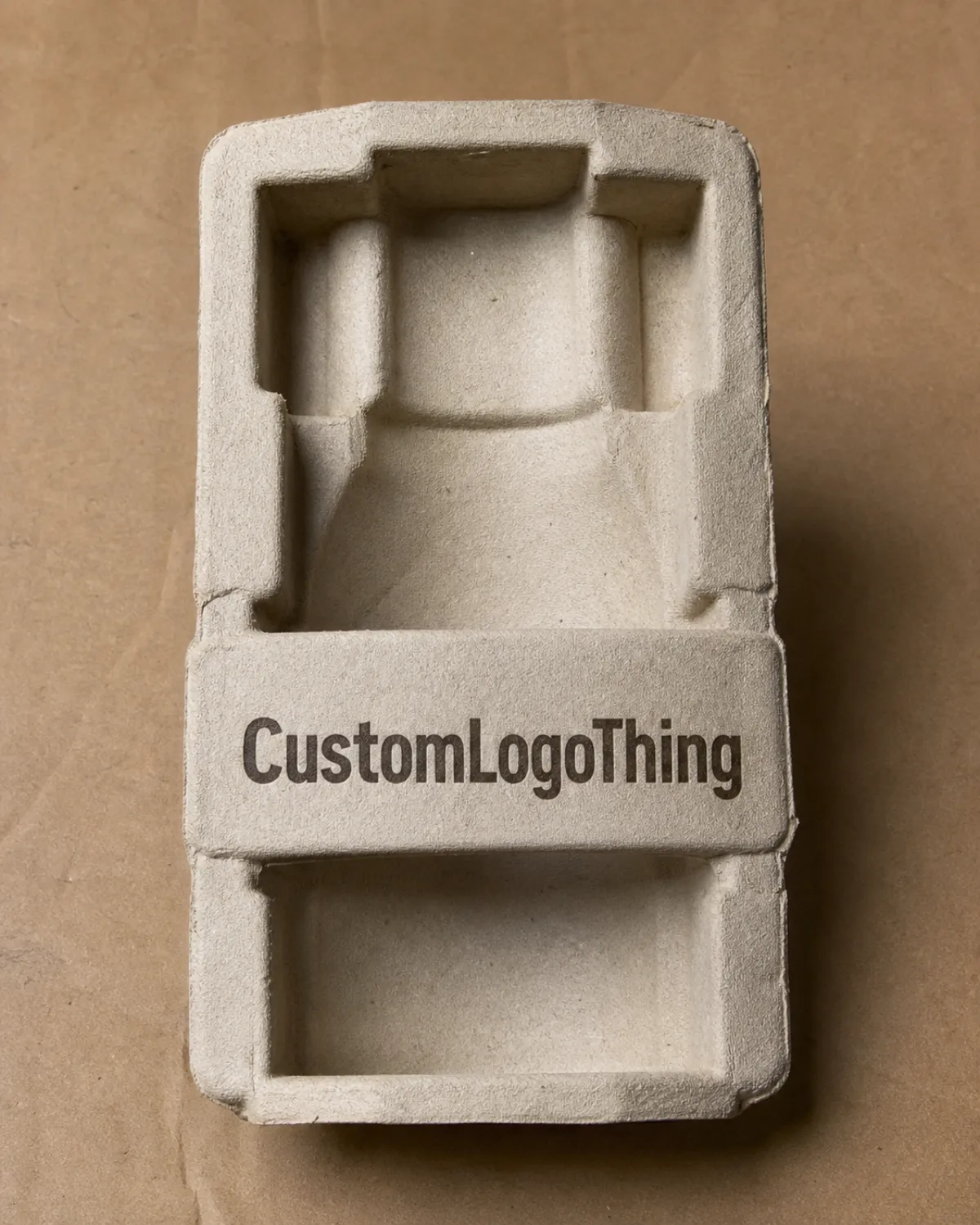
Custom pulp bottle inserts are molded fiber parts designed to cradle a bottle in a fixed position inside a shipper. The raw material is usually recycled paper fiber and water, formed into a wet pulp, shaped in a mold, pressed, then dried until it becomes a rigid protective form. The process sounds plain. The result is not. A properly formed insert can support the neck, shoulder, and base of a bottle without foam, loose-fill, or a maze of folded paper around it.
The reason they work is simple enough to explain and easy to underestimate. A bottle rarely fails because the carton disappears. It fails because it moves, rattles, shifts into a corner, or takes a direct hit while it is still inside the pack. Custom pulp bottle inserts reduce that movement through shape, not bulk. The cavity keeps the product centered, while the fiber structure spreads force across a wider footprint instead of letting one point take the full load.
Glass wine bottles, spirits, sauces, specialty oils, and cosmetics all benefit from the same principle. Their shapes differ, but the weak spots repeat: a neck that should not wobble, a shoulder that needs support, and a base that should not drive into the bottom panel when the box drops. Good custom pulp bottle inserts handle all three. They do more than cushion. They control motion.
The sustainability case is just as practical. Brands want paper-forward packaging That Feels Premium without falling back on plastic trays or oversized cartons. Molded fiber gives them a path toward a cleaner packout and often pairs well with custom printed boxes or other branded packaging elements. The exterior can stay crisp and graphic while the interior does the hard work. For a neutral reference on paper and paperboard recovery, the EPA’s recycling guidance is useful: EPA recycling information.
That is part of the reason custom pulp bottle inserts show up so often in beverage and personal care packaging. They solve shipping trouble and presentation trouble in the same move. The box opens, the bottle sits centered, and the whole pack feels deliberate rather than padded out.
"If the bottle can move, the pack can fail. The insert's first job is motion control; cushioning comes after."
The idea is uncomplicated. The execution is where packaging gets interesting.
How custom pulp bottle inserts work inside the shipper
The protection logic behind custom pulp bottle inserts becomes clearer once you look at the kind of damage that happens in transit. Drops create shock. Vibration creates repeated micro-movement and abrasion. Compression from stacking can distort the carton enough to shift the load toward one edge. Molded pulp helps with all three because it defines where the bottle touches and how much freedom it has to move.
A good insert spreads impact across the curved sections of the bottle rather than concentrating force on one tiny contact point. That matters because point loading is often where cracks begin. The insert also keeps the bottle from buzzing around during vibration, and vibration does more damage than many buyers expect. A pack that seems only slightly loose can still work itself apart over hundreds of truck miles. Custom pulp bottle inserts stop that slow wear by keeping the product centered.
Three fit styles show up most often. A friction fit uses tight contact to hold the bottle in place. A cradle support carries the load on shaped ledges or shoulders, which helps with heavier glass. A suspended placement leaves a small buffer so the insert takes the hit before the glass does. Each approach has a role, and the right one depends on bottle weight, carton strength, and the route the pack will travel.
That route detail gets ignored more often than it should. Custom pulp bottle inserts do not protect in isolation. They work with the outer carton, the board grade, the tape pattern, pallet stacking, and the handling conditions in parcel or freight networks. A weak carton can ruin a strong insert. A rigid insert inside a thin box can crush the corners before the bottle sees the impact. Good packaging treats the whole system as one structure.
For validation, many teams use an ISTA test plan or a similar drop-and-vibration method. That makes sense. A carton that fits perfectly in the lab can still fail under real distribution stress. Bench fit and transit performance are not the same thing.
These inserts also improve retail packaging and product packaging because they keep the bottle visually centered and tidy. A clean reveal inside the box can do as much for package branding as a printed sleeve, especially when the customer opens the carton and sees a bottle seated precisely instead of buried in loose material.
For teams comparing material formats, this is where custom pulp bottle inserts start to feel unusually practical. They protect, organize, and present the product at the same time, which is exactly what a shipping component should do.
A few fit details deserve attention:
- The neck should stay quiet even if the bottle is tall and narrow.
- The shoulder should be supported without crushing labels or embossing.
- The base should rest on a load-bearing surface, not a thin decorative lip.
- The carton should close without forcing the insert into a bent or stressed position.
That is the difference between an insert that merely looks correct and one that survives actual distribution.
Key factors that affect fit, protection, and sustainability
The starting point for custom pulp bottle inserts is measurement. Not just bottle height, either. Maximum body diameter, shoulder angle, closure height, label thickness, and the actual headspace inside the carton all matter. A bottle with a narrow neck and a broad shoulder behaves differently from a straight-sided bottle, and a few millimeters can change the cavity enough to alter pack stability.
Weight matters just as much. A heavy glass bottle needs a more confident cradle than a light bottle with the same footprint. That usually means a thicker wall, a broader base support, or a geometry that pushes load farther into the fiber. A tall closure may need extra clearance so the top panel does not press on the cap during compression. Custom pulp bottle inserts should be sized for the real pack, not the idealized drawing that got approved three meetings ago.
Material choice changes performance too. Recycled fiber is common, but blend, fiber length, and finish still influence how the part behaves. A smoother surface can improve presentation. A more textured surface can help grip. Wall thickness often lands in a range that balances stiffness, weight, and material use, while moisture resistance starts to matter if the product is stored in humid warehouses, warm trucks, or refrigerated distribution. Those conditions do not always break molded fiber, but they can change how much support it holds over time.
Sustainability should be judged honestly. If custom pulp bottle inserts let you remove plastic sleeves, reduce void fill, and shrink the carton, that is a real materials reduction. If the insert is overbuilt and pushes the outer box larger, the environmental benefit weakens fast. The best designs use only as much fiber as the route demands, then stop. Paper recovery, fiber content, and lower shipping volume can all move in the same direction when the geometry is disciplined.
FSC sourcing may matter for brands that want stronger documentation around responsible fiber supply. The rules are not identical across every application, and recycled content versus certified virgin fiber should be reviewed case by case, but the sourcing story becomes easier to defend when the material spec is written clearly.
These are the main inputs most buyers should gather before requesting custom pulp bottle inserts:
- Bottle drawing or physical sample with accurate dimensions.
- Carton internal dimensions and board grade.
- Target distribution method: parcel, LTL, or palletized freight.
- Label height, embossing, and closure style.
- Expected storage conditions, including humidity and stacking.
The more complete the brief, the less guesswork gets baked into the mold. That usually saves time later and improves the odds of getting the fit right on the first sampling round.
Custom pulp bottle inserts also suit branded packaging because they let the outer carton stay clean and graphic while the interior provides protection. A premium launch does not need to look fragile or overworked. It can look calm, ordered, and materially sensible, which is often the stronger signal.
One useful way to think about it is this: a carton is a promise, but the insert is the proof. If the proof is vague, the promise starts to look expensive rather than thoughtful.
Custom pulp bottle inserts process and timeline: from sample to production
The process for custom pulp bottle inserts usually starts with a technical brief: what bottle needs protection, what carton is being used, how many units are required, and what kind of shipping abuse the pack has to survive. That sounds basic, yet it is the stage where later rework is either prevented or invited. Leave out closure height or inside carton depth, and the first sample can miss the target before it leaves the tool room.
After the brief, the design team builds the cavity logic. They map body diameter, shoulder angle, and support points, then decide whether the insert should be a single piece, a two-piece nest, or a tray-and-lid arrangement. For many bottles, custom pulp bottle inserts are designed as a pair so the top and bottom each serve a separate role. That can improve stack control and make packout easier on the line.
Sampling comes next, and this is where the physical part starts telling the truth. A prototype can be checked for fit, carton closure, assembly speed, and presentation. The real bottle, the real carton, and the real packout sequence should be used whenever possible. CAD may show a perfect cavity. Operators may still struggle if the bottle has to be twisted awkwardly during insertion.
Many teams run a basic drop test, vibration review, and compression check at this stage. Some use ISTA 3A, some use a custom route-based procedure, and some combine internal standards with outside methods. That is sound practice. Custom pulp bottle inserts should prove themselves in the environment they will actually face, not just in a neat static fit check on a bench.
There is usually a revision loop before production tooling is approved. A shoulder pocket may need extra clearance. A base pocket may need more draft so the bottle releases cleanly. The carton may need a slightly larger internal dimension so the insert does not bow the side panels. None of those changes sound dramatic, but each one can affect final fit. The first sample is a learning tool, not a ceremonial approval step.
Timeline depends on tooling, complexity, and approval speed. If tooling already exists for a close geometry, some projects move quickly. If the cavity shape is new, expect more time for design, sample production, and sign-off. For a typical first run, tooling and sample approval usually take longer than the forming process itself. Once the design is locked, production can move fast, but the approval chain tends to decide the schedule.
As a planning reference, many teams assume:
- 2 to 4 weeks for tooling or mold preparation, depending on complexity.
- Several business days for prototype samples once tooling is ready.
- About 12 to 18 business days for production after final approval, though volume and plant load can shift this.
Those are not guarantees, and they should not be treated like universal promises. Still, they are useful for launch planning, especially if print production, fill-line scheduling, and freight booking are already on the calendar. Custom pulp bottle inserts are only one part of the launch, but they can become the part that delays everything if they are left too late.
For complex bottles, I usually recommend treating the first sample as a question, not an answer. If the bottle loads too tightly, the design needs more release draft. If the closure kisses the top panel, the shipper height is wrong. If the bottle sits still but the carton bows, the carton spec needs another look. Those small corrections are the work.
Cost, pricing, MOQ, and quote considerations for custom pulp bottle inserts
Pricing for custom pulp bottle inserts depends on geometry, thickness, cavity count, finish quality, and order volume. A simple single-bottle design with forgiving dimensions can be economical. A high-gloss bottle with a tall closure, deep shoulder, and tight carton clearance may require more tooling precision and more fiber per piece. Those details are not cosmetic; they change how much material and process control the insert needs.
Separate the upfront tooling cost from the per-piece price. Tooling is fixed. Piece price moves with volume. A buyer who only looks at unit cost may think one quote is better, then discover the tooling is higher or the minimum run is much larger. With custom pulp bottle inserts, the full quote has to be read as a system.
MOQ is another practical issue. Small quantities can work for premium launches, seasonal sets, or limited editions, but the per-unit cost usually improves as volume rises. In many cases, a larger annual commitment brings the unit price down enough to justify the custom route instead of a generic divider. That is especially true if the insert replaces several other packing materials or reduces damage claims.
Here is a simple comparison buyers often use when evaluating insert options for beverage, cosmetic, or specialty product packaging.
| Option | Typical use | Estimated unit price at 5,000 pcs | Protection level | Sustainability notes |
|---|---|---|---|---|
| Custom pulp bottle inserts | Glass wine, spirits, sauces, cosmetics | $0.18-$0.45 | High, when properly fitted | Paper-fiber based, often recyclable where accepted |
| Corrugated dividers | Lower-cost cartons, manual packouts | $0.10-$0.28 | Moderate | Good paper recovery, but may use more assembly time |
| Foam insert | Specialized protection, legacy packs | $0.22-$0.60 | High, depending on design | Less favorable recovery profile in many programs |
| Paperboard folded tray | Lightweight retail packaging, display sets | $0.12-$0.30 | Moderate to high | Usually easy to recycle, but less motion control than molded fiber |
That table is a working guide, not a quote. Even so, it shows why custom pulp bottle inserts often make sense for brands that want better protection without drifting into foam-heavy packaging. The real decision is not always lowest unit price. It is lowest total cost once damage, labor, freight, and presentation are counted together.
Compare quotes only after confirming the assumptions match. Otherwise, the numbers do not mean much. Common mismatches include carton size, sample inclusion, freight basis, and test requirements. A lower quote may simply have left one of those items out.
Use this checklist when comparing custom pulp bottle inserts:
- Confirm the bottle dimensions and carton internal dimensions are identical across quotes.
- Ask whether tooling, samples, and freight are included or charged separately.
- Check whether the supplier is quoting recycled fiber content or a specific finish grade.
- Review the stated MOQ and whether it applies per design or per order.
- Ask what test method, if any, the design was built around.
For teams building a launch around Custom Packaging Products, this is usually the point where the broader packaging plan becomes visible. The insert, the outer carton, and the print finish should feel like one package, not three unrelated purchases.
Price matters. So does labor. So does the cost of a broken bottle. If a cheaper option adds packout time or creates even one extra damaged unit per case cycle, it is not actually cheaper. Custom pulp bottle inserts are most valuable when they reduce the hidden costs that never appear cleanly in a simple quote.
There is another layer here that finance teams sometimes miss: a small reduction in damage rate can pay for a better insert faster than a modest unit-price increase ever can. On a run of 50,000 bottles, even a 1% reduction in breakage means 500 fewer units to replace, reship, or write off. That math changes conversations quickly.
Common mistakes to avoid with custom pulp bottle inserts
The first mistake is sloppy measurement. A bottle is never just a height and a diameter. The closure adds height, the label adds bulk, the shoulder angle changes how the bottle seats, and embossed glass can create unexpected high points. Miss one of those details and custom pulp bottle inserts can look correct on paper while being wrong in the carton.
The second mistake is designing for the bottle without designing for the box. If the insert is too large, it can crush the side panels or force the carton to bulge, which weakens the shipper. If it is too small, the bottle moves and the insert loses much of its value. Good custom pulp bottle inserts are always judged in the full packaging context, not as isolated parts.
Testing is the third place projects go off course. A bench fit check tells you whether the bottle fits the cavity. It does not tell you whether the pack survives a corner drop from conveyor height, a week of truck vibration, or a stacked pallet under mixed load pressure. Those conditions expose weak geometry quickly. That is why many experienced buyers keep an approved sample on file so future reorders do not drift away from the version that was actually validated.
Another common problem is over-optimizing for the lowest quote. If the insert wall is too thin or the cavity is too loose, the savings vanish the first time breakage shows up. A shipping claim, a reship, or a damaged retail launch costs more than the difference between an underbuilt insert and a properly engineered one. Custom pulp bottle inserts should be judged on performance per shipped unit, not purchase price alone.
Presentation mistakes happen too. A strong insert inside a weak or unattractive carton sends mixed signals. The bottle looks secure, but the outside looks generic or cheap, and package branding loses force. That shows up fast in premium beverage and personal care lines. Good custom pulp bottle inserts should support the story your outer print, your unboxing sequence, and your retail packaging are already trying to tell.
A few warning signs are easy to spot:
- The bottle rocks when the carton is gently shaken.
- The closure touches the top panel before the carton fully closes.
- The insert needs force to load, which usually means operators will struggle on the line.
- The carton looks bloated or distorted after packout.
- Multiple materials are being used to solve one fit problem that should have been handled in the insert geometry.
Those issues are fixable. They are just easier to fix during sampling than after production starts. That is why the early rounds of custom pulp bottle inserts development deserve patience.
Another trap is assuming the first sample must be close enough to approve. In my experience, the fastest projects are often the ones that pause long enough to make one more revision. A small delay during sampling usually beats a costly correction after cartons are printed and inventory is already moving.
Expert tips and next steps for custom pulp bottle inserts
The cleanest starting point is a bottle sample, a dimensioned carton spec, and a clear description of the distribution environment. That gives the supplier enough information to build custom pulp bottle inserts around actual risk instead of a generic protective shape. The stronger the brief, the less time gets spent correcting avoidable geometry problems later.
Ask for two versions when the project allows it: one performance-focused sample and one cost-optimized sample. The stronger version shows where the safety margin sits. The leaner version shows how much fiber can be removed before the pack starts to feel fragile. Side-by-side comparison helps purchasing, operations, and brand teams make a more grounded decision.
Once the design is approved, document everything. Keep the bottle revision, carton revision, insert orientation, approved material description, and packing method in one file. That way, a reorder six months later does not depend on memory. With custom pulp bottle inserts, reorder drift is a real risk because the difference between “same product” and “same shape” can be only a few millimeters.
A simple rollout checklist can prevent a lot of trouble:
- Validate fit with the final bottle, not a pre-production sample unless that is all you have.
- Confirm the outer box, tape pattern, and insert orientation with the production line.
- Verify freight assumptions against the real distribution route and stacking pattern.
- Train packout staff on the intended load sequence.
- Archive one approved sample for future quality checks.
That last point is underrated. A good approved sample is a reference, not a display object. It gives everyone involved a physical standard when questions come up about fit, finish, or material substitution.
From the buyer side, custom pulp bottle inserts tend to perform best when a project needs three things at once: dependable bottle protection, a cleaner paper-based material story, and a premium presentation that does not fight the rest of the package. That combination is hard to get from generic dividers or loose-fill systems.
If the work involves a new launch, a relaunch, or a premium gift set, the strongest move is usually to build the protective system around the bottle first and the branding second, then make sure both hold together. That is where custom pulp bottle inserts earn their place in packaging design.
They are not flashy. They are not technical for the sake of looking technical. They solve the part that matters: keeping a fragile bottle still, protected, and ready to impress the customer the moment the carton opens. The most practical next step is to define the bottle, carton, route, and acceptance test together before tooling starts. Once those four pieces line up, the insert stops being a guess and becomes a specification.
What bottles work best with custom pulp bottle inserts?
Bottles with a clear shoulder, a stable base, and a consistent body diameter are usually the easiest to secure with custom pulp bottle inserts. Very narrow shapes, highly irregular silhouettes, or heavily embossed bottles may need a modified cavity or a two-piece insert design. A physical sample or a dimensioned drawing helps confirm closure height, label clearance, and overall fit before tooling starts.
Are custom pulp bottle inserts recyclable or compostable?
Most molded fiber inserts are recyclable where paper fiber recovery is accepted locally, and many can be made with recycled content without plastic coatings. That said, actual compostability depends on the fiber blend, additives, surface treatments, and local composting rules. For custom pulp bottle inserts, the end-of-life claim should be verified case by case rather than assumed.
How do custom pulp bottle inserts compare with corrugated dividers?
Custom pulp bottle inserts usually control movement better because they nest the bottle instead of simply separating it from neighboring items. Corrugated dividers can work well for lower-cost or manual packouts, but they often need more assembly and may allow more vibration. Pulp also tends to create a cleaner premium presentation and can reduce the need for plastic or extra void fill.
What lead time should I expect for custom pulp bottle inserts?
Lead time depends on whether tooling already exists, how fast samples are approved, and how complex the bottle geometry is. The first order usually takes longer because design, testing, and sign-off all happen before production begins. If a launch date is fixed, build in extra time for revisions so custom pulp bottle inserts are not rushed into a compromised fit.
How much do custom pulp bottle inserts cost per unit?
Unit cost is driven by shape complexity, wall thickness, cavity count, finish quality, and order volume. A custom mold or tooling setup may add upfront expense, but that cost can be spread across larger runs, which improves the per-unit number. Ask for a quote that clearly separates tooling, samples, unit price, and freight so you can compare custom pulp bottle inserts fairly across suppliers.