Buyer Fit Snapshot
| Best fit | Custom Recycled Cardboard Boxes Wholesale for Brands projects where brand print, material claims, artwork control, MOQ, and repeat-order consistency need to be specified before quoting. |
|---|---|
| Quote inputs | Share finished size, material target, print colors, finish, packing count, annual reorder estimate, ship-to region, and any compliance wording. |
| Proofing check | Approve dieline scale, logo placement, barcode or warning zones, color tolerance, closure strength, and carton packing before bulk production. |
| Main risk | Vague material claims, crowded artwork, missing packing details, or unclear freight terms can make a low unit price expensive after revisions. |
Fast answer: Custom Recycled Cardboard Boxes Wholesale for Brands should be specified like a repeatable production item. The safest quote records material, print method, finish, artwork proof, packing count, and reorder notes in one written spec.
Production checks before approval
Compare the actual filled-product size with the drawing, then confirm tolerance on folds, seals, hang holes, label areas, and retail display edges. Reserve space for logos, QR codes, warning copy, and material claims before decorative graphics fill the panel.
Quote comparison points
Review material grade, print process, finish, sampling route, tooling charges, carton quantity, and freight assumptions side by side. A quote is only useful when the supplier can repeat the same color, closure quality, and packing count on the next order.
Custom recycled cardBoard Boxes Wholesale works when packaging has to do the real work, not just pass a design review. You can print a killer logo all day long, but if the carton collapses in transit or the panel warps on a truck, your brand just paid for a disaster. The core truth is simple: recycled content is a material choice, not a performance promise. Board structure, flute type, closure method, and print conditions decide whether you get a reliable box or a fragile prop.
In practice, this matters most in ecommerce, replenishment, and retail programs where every week has mixed shipment loads and a few thousand moving parts. That is where Custom Recycled Cardboard boxes wholesale pays off, because it lets you lock a spec that can scale across repeats instead of improvising every month. Nobody likes surprises on the dock, especially if they come in the shape of damaged cartons and rushed reorders.
What should you know before ordering custom recycled cardboard boxes wholesale?
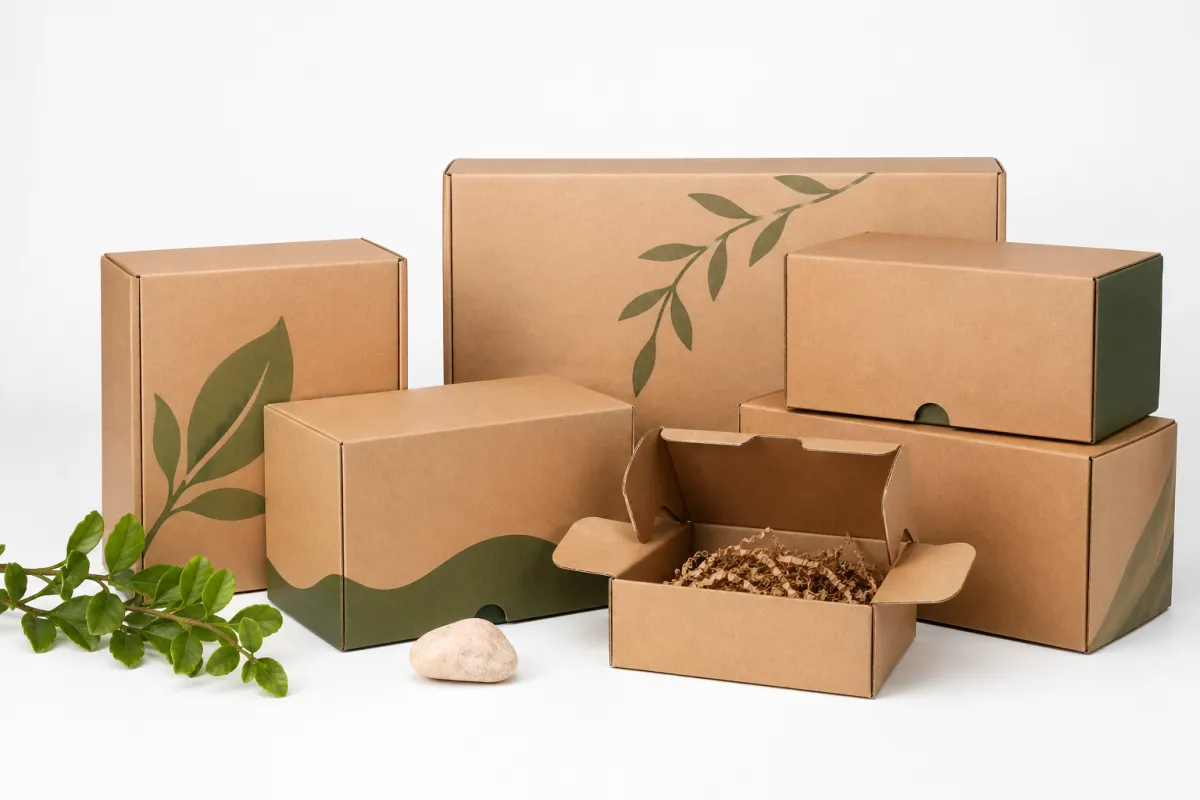
Start with the product journey, not the mood board. Is it a lightweight bottle insert, a multi-item retail set, or a heavy replacement part that rides in a dense parcel network? If the package path changes from pickup to fulfillment to storage to shelf, the box spec needs to follow that path too. The common failure is treating one box design as “good enough” for every channel.
For Custom Recycled Cardboard Boxes wholesale, the first call is function first, style second. Define whether the carton is carrying shock load, stack load, or mostly static shelf load. I keep seeing teams design around print first and then discover the fold line tears at the carton opening. That usually turns into a late engineering sprint and a budget squeeze nobody warned their finance team about.
Material choice comes next. Corrugated structure is usually the safer pick for shipping and compression-heavy routes. Paperboard is efficient for lighter retail and folded cartons where footprint and clean print face matter more than forklift handling. If there is any chance of compression, stacking, or rougher handling, paperboard too often becomes a risk without reinforcement changes.
When your brand has a sourcing policy, lock it early. Decide now if FSC certification is required, whether post-consumer content has a minimum ratio, and what end-of-life promises are real versus marketing blur. A recycled package is not automatically “good enough” for every compliance expectation. Curbsides, coating compatibility, and recycle messaging all need to match actual recovery systems in the target market.
Map where this exact box enters the workflow. A direct-to-consumer mailer has different priorities than a display carton that lives in stores for weeks. A mailer is judged on closure strength, assembly speed, and shipping survival. A display carton is judged on brand impact, face quality, and shelf readability. You should decide this before the quote conversation starts, or you’ll spend a lot of time chasing corrections.
Why custom recycled cardboard boxes wholesale makes sense
Packaging teams get judged on two things: consistency and cost. Custom Recycled Cardboard boxes wholesale helps on both when it is managed like a system, not a design contest. Same structure. Same approved tolerances. Same print assumptions. That consistency is boring, and that is exactly why it saves money.
The performance argument is where recycled options become really competitive. Many buyers still assume recycled board is only for light, low-risk packaging, and that mindset leads to either overbuilding with expensive alternatives or underbuilding and breaking on the road. In real operations, recycled-grade corrugated can be tuned with stronger liners, targeted flute profile, and proper closure design to handle real transit stress without looking bargain-bin cheap.
Reordering behavior also changes. If you run monthly replenishments, promo spikes, or subscription batches, your biggest hidden cost is administrative variance: new dimensions every quarter, new artwork instructions every campaign, small setup tweaks nobody tracks. Custom Recycled Cardboard boxes wholesale can reduce that noise by setting standards once and repeating with controlled deviations. That reduces quote friction and speeds procurement decisions when launch windows are tight.
Don’t mistake sustainability for softness in finish or character. A professional look and recycled content can coexist. With sensible prepress specs and stable board stock, your packaging can still look premium and not feel like a test run prototype. The result is practical: better brand consistency in transit photos, cleaner shelf presence, fewer support tickets from ops. I like this combo because it’s straightforward and doesn’t require overpromising.
Practical rule: design around the real use case first, then tune visual details around that structure. If it has to survive handling, build strength and fit first; branding can be sharpened once the box already works.
Another advantage is operational simplicity. Teams often assume this is only for huge volume programs, but smaller brands frequently get the best ROI. If you stabilize a few reusable structures across SKUs, warehouse training goes up fast and error handling goes down fast. Less variation means fewer “why does this one bend at the lock tab?” questions on packing night.
To be candid, no packaging route is perfect for every use case, and that’s the point. One-size-fits-all is the opposite of what works; one-spec family across related use cases is the sweet spot. That distinction is what custom recycled cardboard boxes wholesale should do for you.
Product details for custom recycled cardboard boxes wholesale
Most clients start with a format question, and that is smart. Common formats in custom recycled cardboard boxes wholesale programs include mailer boxes, shipping cartons, folding cartons, tuck-end cartons, and full display-ready formats. You should tie each format to a clear path: ecommerce flow, retail shelf needs, or internal distribution.
Mailer boxes are a workhorse for ecommerce and subscription operations because they offer a straightforward open-and-close profile. Shipping cartons carry better under impact and stacking conditions, so they’re usually better for heavy or high-velocity freight. Folding cartons are usually lighter and cleaner, especially when the outer appearance dominates and the product itself sits in a protected retail system.
Material definitions matter more than people realize. Corrugated uses fluted medium between liners, gives depth, and generally performs better for strength and stacking. Paperboard runs flatter and can look sharper on shelf, which is why it’s common in secondary retail packaging. Recycled kraft gives a natural, textured tone. Recycled white-top supports brighter graphics and tighter ink consistency, as long as the print workflow is dialed. Same keyword, different outcomes.
Recycled content percentages can vary in practical ways. A stronger recycled liner and medium setup can preserve print quality while meeting sustainability targets. It is possible to run either matte tactile cartons or brighter print surfaces if the chemistry and coating are chosen with intent. For custom-printed cartons, artwork and color calibration need to happen after stock selection, not before. Fine line text, high-lift gradients, and dense coverage all behave differently on different recycled bases.
Finish decisions can be practical or expensive mistakes. One-color flexo is often cost-efficient and dependable for simple branding where delivery speed and consistency matter. Litho or film-backed laminates can improve visual depth for premium retail, but they may increase setup time and drying constraints. Water-based coatings and selective varnish can raise scuff resistance without killing recyclability claims too early, but every extra process step changes conversion behavior at the assembly station.
- Mailer boxes: ideal for ecommerce, subscriptions, and direct-to-consumer unboxing.
- Corrugated shipping boxes: best for transit stress, pallet stacking, and heavier SKUs.
- Folding cartons: strong fit for lighter retail goods and shelf-facing campaigns.
- Tuck-end cartons: frequently used in beauty, supplements, and compact consumer packs.
- Display packaging: for brands where the carton must also function as a sales surface.
Industry context changes priorities quickly. Apparel teams usually care about clean geometry and minimal visual clutter. Health and beauty buyers often demand strict color consistency and reliable replication. Hardware and parts teams usually prioritize edge stability and drop behavior. Food-adjacent secondary packaging has another layer of regulatory awareness, often around coatings and food-contact handling. In all of those, custom recycled cardboard boxes wholesale should follow the supply chain flow, not just a design direction memo.
Specifications that affect strength, print, and fit
Fit begins at internal measurements, plain and simple. Internal length, width, and height should be planned from the actual packed product and insert profile, not from CAD screenshots. A half-centimeter offset looks harmless in mockups and can become a logistics headache in a high-speed pack line. If inserts, corner protectors, or foam are part of the pack, include those thicknesses before artwork starts.
Flute choice is not decoration. It changes compression behavior, thickness, and printing surface. E-flute is popular for retail-facing cartons that need print clarity and lower depth. B- and C-flute generally give stronger cushioning for stacked or longer-haul shipments. Single-wall corrugated handles many moderate-load SKUs, but heavy loads or long dwell times might require multi-wall solutions or reinforced structure. A practical floor target might start around 32 ECT for lighter to medium parcels, but it is never a universal number.
Construction behavior can make or break a program. Crash-lock bottoms are fast but need strict fold control. Self-locking mailers reduce tape requirements and speed fulfillment, but only when closure geometry is aligned with item density. Freight cartons often need reinforced seams, and sometimes adhesive strategy is the difference between passing and splitting at the corner. If distribution includes parcel networks, testing is not optional. ISTA-style checks and your own line simulation keep hidden weak points from surfacing after launch.
Print preparation is where most teams burn time. Dielines should reflect fold mechanics, not only layout aesthetics. Bleed and kill areas need room for slight movement. Barcode size and orientation must remain scannable after compression and varnish. Small legal text or ingredient statements should be kept away from fold points unless pre-checked. I still see avoidable rework from files that looked clean in design software but failed factory tolerances by a hair.
Sustainability requirements are technical requirements, not a final paragraph. If buyers require a minimum recycled-content threshold, define it in the initial spec sheet. If the carton should stay recyclable in a specific market, include that constraint before sample approval. Adhesives, coatings, and laminates can all change end-of-life outcomes even when the raw stock looks compliant on paper.
Prototype review is one of the best risk controls for custom recycled cardboard boxes wholesale. Pre-production samples reveal rigidity, tolerance, and user handling before a full run, and they uncover the difference between a CAD-perfect file and a physically stable carton. For multi-SKU runs, one bad sample can save you from repeating that error dozens of times. The old rule still stands: sample early, especially when closures and inserts are involved.
Think of the package as three equations tied together: strength plus print plus fit. Ignore one, and the whole package drifts. A loose cavity equals vibration. A weak edge spec equals corner crush. Oversaturated artwork in the fold zone equals unreadable labeling. Keep those tradeoffs visible, review them together, and move in order.
Custom recycled cardboard boxes wholesale pricing and MOQ
There is no “always cheap” promise in custom recycled cardboard boxes wholesale, and pretending there is only creates bad conversations later. Price is pulled by board grade, dimensions, print process, color count, finish complexity, inserts, and lot size. Some items stay simple and predictable, and others escalate quickly because of setup density or material constraints.
For realistic planning, the right mindset is to isolate cost drivers. A basic recycled mailer at moderate volume is usually much cheaper than a full-color, reinforced, high-gloss package with inserts and specialty coatings. That does not mean “always cheaper”; it means different specs create different curves. Transparency here avoids the classic end-of-cycle price surprise.
Directional cost benchmarks can help teams budget, but use them as planning signals, not promises: a simple recycled corrugated mailer can land around $0.48-$0.95 per unit at moderate volume, while full-color options can move to $0.95-$2.10 per unit depending on size, finish, and printing process. Recycled folding cartons can sit lower in many applications, often near $0.18-$0.55 per unit, although substrate, color depth, and packaging complexity shift that range quickly. Freight, waste, and region-specific paper pricing remain major variables, so final quotes need full lane assumptions.
MOQ is typically about manufacturing practicality. Standard structures with straightforward printing often support lower minimums. Complex die-lines, multi-color jobs, coated interiors, inserts, and unusual finishes usually push minimums higher because of setup time and risk. Ask what is driving the MOQ every time: tooling, color sequencing, press lead-time, or board availability. That one question can prevent a painful procurement gap two cycles later.
| Option | Typical Use | Indicative Unit Cost | Relative MOQ Pressure |
|---|---|---|---|
| One-color recycled mailer | Ecommerce, subscriptions | $0.48-$0.95 | Lower |
| Full-color litho-lam mailer | Premium branded packaging | $0.95-$2.10 | Medium to higher |
| Recycled folding carton | Retail packaging, small goods | $0.18-$0.55 | Moderate |
| Corrugated shipping box | Transit, stacking, parts shipping | $0.72-$1.65 | Moderate |
Cost control gets better when teams standardize what can be standardized. Keep package size families consistent, avoid unnecessary color expansions, and match board choice to actual load rather than design preferences. You’ll usually get better total economics than trying to force a premium look onto every SKU. I see this repeatedly: a boring spec done consistently beats a fancy one done inconsistently.
Freight can erase unit savings fast. If carton dimensions reduce pallet density, your landed cost jumps even if unit quote looks great. Include counts per layer, route assumptions, and destination into the first cost model. Multi-location distribution magnifies this, because the most expensive quote can become the wrong quote once freight and handling are added.
Trust-wise, include a caveat in planning notes: quotes are directional and move with market resin pricing, paper pulp volatility, and press capacity. If you need hard commitments, ask for locked pricing windows and written assumptions. That small discipline saves disputes and keeps the operations team focused on execution.
Process and timeline for custom recycled cardboard boxes wholesale
Process is where many teams lose real money by accident. The sequence should stay tight: inquiry, scope, material and structure decision, quote, dieline, artwork, proof, sample, production, then dispatch. If one step slides without clear ownership, the next two steps inherit that mess. I’m not interested in blame games; I’m interested in clean handoffs.
In my experience, the fastest and most reliable runs happen when all critical files are complete before proof. A typical timeline target is roughly 12-15 business days after proof approval for straightforward jobs, assuming material is available and artwork is final. Special coatings, unusual inserts, and non-standard board profiles push that timeline, as they should.
There is no substitute for readiness on the buyer side. Final artwork, final dimensions, accurate counts, and destination details should be locked before review cycles begin. Legal text, shipping marks, barcode placement, and brand rule constraints should be part of the initial package. This cuts revision cycles and protects your launch date from slipping into “guess and patch.”
Quality checks should be sequenced like a mini production run. Proof review first: copy accuracy, fold and cut safety, barcode size, and compliance language. Sampling follows: fit, stiffness, opening feel, assembly time, and handling behavior. Before shipping, run a short final check for quantity, label clarity, and palletization logic. It sounds procedural, but that’s exactly what prevents a truck arriving physically right and operationally unusable.
For teams running staggered launches, split decisions by certainty level. If your art is still changing, keep the structure fixed. If your product architecture is already stable, lock the structure and finish around it. This keeps teams from reworking fundamentals while marketing is still iterating variants.
One line that stuck with me was from a product manager after a late sample approval: “The sample told us more than the CAD ever did.” That is exactly how it is. When you hold a prototype, you see where the panel flexes, where the top edge drags on assembly, and where text sits on real folds. That is the gap between a technically printable file and a workable carton.
Another practical pointer: use links to adjacent packaging categories only when they make sense operationally. If loads are heavier and transit-critical, our Custom Shipping Boxes may be the better fit than a decorative carton style. For repeaters with multiple programs, moving through Wholesale Programs can reduce admin churn, but only if each program keeps one clean spec architecture.
Why choose us for custom recycled cardboard boxes wholesale
Most suppliers talk about sustainability in broad terms. Our job is less about slogans and more about execution. We focus on material recommendations that match handling reality, structural checks that protect operations, and production sequencing that keeps delivery dates believable. That combination keeps custom recycled cardboard boxes wholesale practical, not aspirational.
We don’t chase hype. We ask where the box enters the workflow, what happens at the dock, how many times it’s rehandled, and who opens it on the floor. If that sounds basic, it should. Packaging complexity usually comes from logistics, not design software.
Different channels need different priorities, and that is where many programs fail. Retail carton teams usually push visual clarity and shelf consistency. Ecommerce teams push opening speed, strength, and fold reliability. Internal transfer cartons prioritize handling efficiency. Good custom recycled cardboard boxes wholesale planning connects those priorities to one set of reusable standards so your teams are not reinventing the wheel each quarter.
Trust matters. If a supplier can explain why a material choice is stronger or why a finish is not appropriate for your line speed, you get confidence. If they can’t, you get delays and excuses. We keep the conversation practical: structure rationale, print implications, and logistics impact. That is how we preserve trust while staying flexible in real-world conditions.
You do not always need complex construction. Sometimes a simpler kraft exterior with disciplined single-color printing outperforms a fully ornate option that slows packaging and inflates cost. The goal for custom recycled cardboard boxes wholesale is performance with repeatability, then brand polish as a controlled layer. That sounds less exciting, but operations love it and customers notice less stress.
To be fair, recycled cartons are not identical across suppliers, and performance still depends on execution discipline. Ask for evidence: sample data, handling assumptions, and finish limitations. If your quality bar includes sustainability, brand consistency, and stable lead times, that evidence is what separates serious sourcing from “best effort” sourcing.
How to order custom recycled cardboard boxes wholesale
Good quotes are built on good input, and this is where many teams still lose momentum. Start with internal dimensions (not rough guesses), projected annual or quarterly volume, and print expectations. If the item is dense, fragile, or odd-shaped, send photos or a sample part. This one step usually saves the most revision loops.
Before you email your purchase order, line up this checklist:
- Measure the product dimensions and every protective layer, from tape voids to cushion depth.
- Pick the format based on use: shipping, retail display, or ecommerce fulfillment.
- Set print colors, finish level, and placement priorities clearly.
- Share volume, destination lanes, and target ship date up front.
- Decide whether you need pre-production samples before scaling.
If the box has functional requirements beyond basic holding, samples are not optional—they’re your first live quality gate. Unboxing feel, fold stability, corner stiffness, and insert clearance reveal themselves fast in physical form. In that case, a model is almost always not enough.
Deadlines should be part of the initial brief, not the final paragraph. If there is a launch date or campaign window, include it before design starts. That allows proof cycles, sample windows, and shipping schedules to align. I’ve seen too many programs stall because the date was “suggested” during proof, then treated as fixed after materials were already in motion.
When you are ready to decide, compare full economics, not just unit pricing. Structure, print, and freight are one equation. Sometimes a higher per-unit option is cheaper after freight, because it packs better and runs faster on the line. The real win is repeatability: the option that performs for your operation is the right one, not the one that just looks prettier in a spreadsheet.
Actionable takeaway: finalize use case, material, dimensions, print, and timeline in one front-loaded spec, then validate with one physical sample before production. Do that, and custom recycled cardboard boxes wholesale becomes less risky, more repeatable, and actually easier to defend at quarter-end reviews.
What is the best board type for custom recycled cardboard boxes wholesale?
Pick board by stress profile, not branding preference. Lightweight retail packs often perform better on paperboard, while shipping applications usually need corrugated with a suitable flute and liner setup. Heavier loads typically need stronger compression targets plus a recycled liner that still supports your print finish and handling requirements.
How do I estimate MOQ for custom recycled cardboard boxes wholesale?
MOQ is usually driven by structure, print complexity, and setup requirements rather than recycled content percentage alone. Single-color jobs with standard structures are often easier to start lower, while multicolor, specialty finishes, and inserts usually raise the minimum. Ask for the exact constraint factor early.
Can custom recycled cardboard boxes wholesale still look premium?
Yes, when material, prepress, and finish are chosen to match the stock behavior. Premium appearance comes from accurate die-cutting, controlled color, and clean execution, not from overcomplicated graphics alone. Recycled board can look sharp and professional if the engineering is right.
How long does production usually take for custom recycled cardboard boxes wholesale?
It depends on proof cycle, artwork readiness, sample needs, and printer load. In straightforward cases, momentum is strongest when all required data is complete from the start. Missing dimensions, unresolved dielines, or late logo changes are the usual timeline killers.
What details should I send to get an accurate quote for custom recycled cardboard boxes wholesale?
Share internal dimensions, structure preference, artwork status, quantity, destination, finish needs, and any inserts or cushioning strategy. Add photos, product measurements, and launch timing. Better data means fewer revision rounds and a much tighter quote.

