Custom Reusable Tote Bags do a strange thing in branding: they keep working after the campaign has stopped being discussed. A launch graphic fades from memory. A tote does not. It moves through checkout counters, trains, office lobbies, grocery aisles, and trunk space, carrying the logo into places a poster never reaches.
That is why tote specifications deserve more scrutiny than they usually get. A bag is not just a carrier; it is a piece of packaging with a second life. If the handle digs into the hand, the print cracks, or the seams give way, the brand takes the hit every time the bag is used again. If the bag feels sturdy and useful, it becomes a recurring impression rather than a one-time handoff.
Some brands pair totes with Custom Packaging Products such as printed cartons, mailers, or inserts. The tote often ends up with the longest shelf life of the group. That changes the buying logic. The cheapest bag is rarely the best value if it gets discarded after one event.
A tote is a utility item first. The branding works best when the bag earns reuse on its own terms.
What Custom Reusable Tote Bags Change for Brands
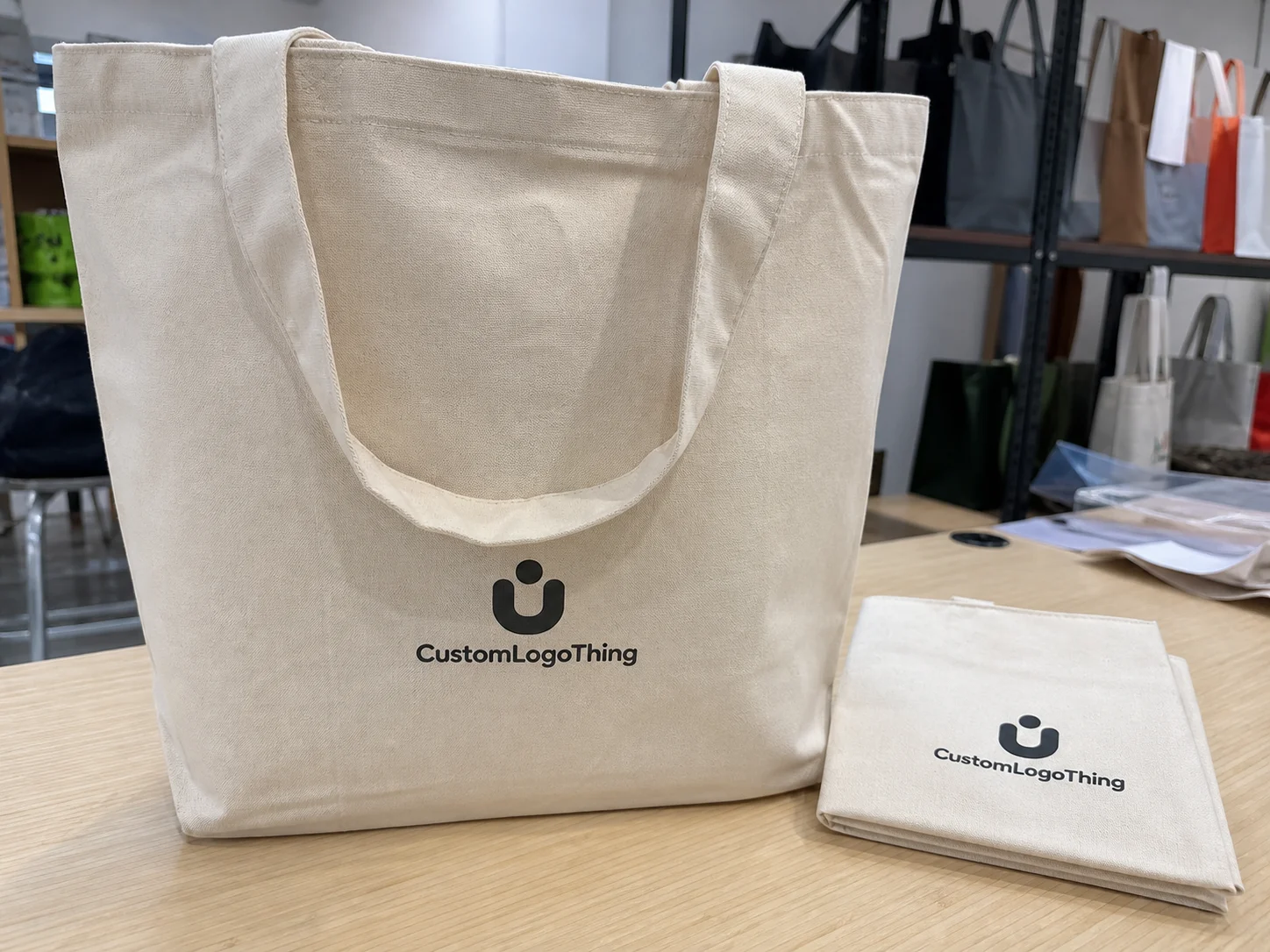
Reusable bags change the economics of visibility. A flyer is seen once. A rigid carton is seen at the moment of unboxing. A tote can be seen hundreds of times if it survives daily use. That is a large spread for a small object, which is why tote programs often outperform more obvious promotional items in long-tail impressions.
For buyers, the value sits in three places: utility, perception, and frequency. Utility keeps the tote in circulation. Perception shapes how the recipient judges the brand. Frequency determines how often the logo is seen by other people. A well-made tote behaves like moving shelf space, especially in retail and hospitality programs where the bag travels with the customer after purchase.
The difference between a basic event bag and a purpose-built tote is more than material choice. A thin nonwoven bag with narrow handles is fine for brochures and light samples. A cotton or canvas tote with a wider gusset, reinforced seams, and a cleaner finish can hold heavier goods and still look intentional in public. That is a production decision, not a decorative one.
The most reliable tote programs start with the use case, not the logo. A trade show handout bag needs a different body depth than a retail purchase bag. A welcome kit tote should be sized around the contents, not the artwork. A grocery-style carrier needs handle strength and seam reinforcement before anyone starts debating ink coverage. When the use case is unclear, the spec sheet gets padded with features that look good in a mockup and underperform in the field.
There is also a perception issue that often gets ignored. A tote that collapses, wrinkles badly, or prints poorly can make a premium product feel cheaper. That is a material mismatch, not a marketing problem. Buyers who think in packaging terms usually see it faster than teams that only compare logo placement.
How Materials, Print Methods, and Construction Work Together
Most custom tote programs fall into a few material families: nonwoven polypropylene, cotton, canvas, recycled blends, and coated or laminated constructions. Each comes with tradeoffs in hand feel, durability, appearance, and cost. The right choice depends on how long the bag needs to last and what it needs to carry.
Nonwoven polypropylene is the budget-friendly workhorse for lighter programs. It is common for events, giveaways, and short-life retail use. Cotton feels softer and reads more natural, which helps when the brand wants a casual or eco-minded presentation. Canvas is the sturdier option, with a heavier hand and better structure. Coated or laminated surfaces are useful when wipeability, shape retention, or higher visual impact matter more than a fabric-like feel.
Print method should match the artwork and the material, not just the budget. Screen printing remains the most practical route for bold logos, solid spot colors, and repeat orders. It holds up well, and the setup cost is usually predictable. Heat transfer is better when the artwork needs fine detail, gradients, or a limited run with multiple colors. Digital print can handle complexity, but it is not always the cheapest path once coverage grows. Embroidery adds texture and a premium finish, though it works best on heavier fabrics and smaller decoration areas.
Construction details determine whether the tote feels like a commodity bag or a branded product. Reinforced handle stitching reduces stress points. A gusset adds volume and improves the bag’s shape under load. Turned hems and clean top edges improve the finished appearance. Inner binding, bottom reinforcement, and well-finished side seams matter more than many first-time buyers expect because they control both durability and presentation.
There is a practical rule here: substrate, decoration, and reinforcement should point to the same job. If the bag is meant to be carried once, a light construction may be enough. If it needs to survive frequent reuse, the seam structure and fabric weight need to keep up. When those choices conflict, the order usually ends up either underbuilt or overpriced.
One buyer mistake is assuming that a pretty mockup translates directly into a good finished tote. It does not. A design can look sharp on screen and still fail on a textured weave, at a narrow print zone, or across a seam. The material surface changes how color reads. The stitching changes how flat the print area stays. Even the bag’s fold pattern affects whether the logo lands cleanly in the center of the front panel.
| Material / Build | Typical Use | Typical Decoration | Indicative Unit Cost at Mid-Size Quantity |
|---|---|---|---|
| Nonwoven polypropylene | Events, handouts, lighter retail items | 1-color or 2-color screen print | $0.45-$1.10 |
| Cotton tote | Welcome kits, retail carry, daily reuse | Screen print or heat transfer | $1.20-$2.80 |
| Canvas with reinforced handles | Premium retail, gifting, heavier carry | Screen print or embroidery | $1.75-$4.50 |
| Laminated or coated tote | Wipeable retail use, higher perceived value | Screen print, full-bleed graphics | $2.10-$5.00 |
Those price bands are only useful if they are read as starting points. A small run with custom sizing, heavy decoration, or special finishing can move the number quickly. A larger run with a standard base bag and a simple imprint can come in much lower on a per-unit basis. That spread is normal. The quote is mostly a reflection of labor, setup, and how much variability the order introduces.
If you are comparing options inside Custom Packaging Products, ask for construction details, not just the material label. Two canvas totes can look similar in a catalog and behave very differently once loaded. Fabric weight, seam reinforcement, and handle width tell you more than the product name does.
Cost, Pricing, and MOQ Factors That Move the Quote
Five variables drive most tote pricing: material, size, decoration coverage, quantity, and finishing. Material is usually the biggest jump because moving from nonwoven to cotton or canvas changes the base cost before any printing begins. Size matters because more fabric means more cutting, more sewing, and more waste in the cutting room. Decoration coverage matters because a small one-color mark is far simpler than a large multi-color print that wraps across the panel.
Minimum order quantity has a strong effect on unit cost. A 250-piece run spreads setup labor, screen prep, and artwork handling across fewer bags than a 5,000-piece run, so the price per unit climbs. That is production math, not a tactic. Buyers who only need bags for a single event may accept the premium. Buyers planning a retail program usually benefit from a larger order because the fixed costs get diluted.
Artwork complexity can change the number more than people expect. One-color artwork on one side is the easiest case. A two-sided imprint, metallic ink, exact PMS matching, or very fine text on textured fabric adds risk and labor. That does not automatically mean the order becomes expensive, but it narrows the margin for error and often slows the run.
Hidden costs are where many tote orders get misread. Rush fees appear when the delivery window shrinks. Sample charges apply if a physical preproduction sample is required. Freight changes with carton count, cubic volume, and destination. Polybagging, insert cards, woven labels, and special packing can all add small line items that matter once the order scales. If the artwork changes after proof approval, schedule and cost both tend to move.
The real comparison is not unit price alone. It is cost per usable impression. A slightly higher-spec tote that stays in circulation for a year is usually better value than a cheaper bag that pills, fades, or tears after a handful of uses. That is the same reason packaging teams care about substrate quality in printed cartons: the item represents the brand long after the invoice has been paid.
For sustainability-led programs, ask for documentation rather than broad claims. Fiber content should be stated clearly. Recycled content needs support, not just a marketing line. If the tote is part of a larger kit with paper inserts or boxed components, look at whether those pieces carry FSC documentation or other relevant sourcing records. Claims only help when they can be verified.
Freight and transit are worth checking early, especially on larger or bulkier tote runs. Bags pack differently from rigid boxes, and the final shipping cost depends heavily on how efficiently the cartons stack. A tote order that looks inexpensive at the unit level can shift upward once volume and destination are added. That is not a surprise if you ask for landed cost from the start.
Production Steps and Lead Time: From Art File to Delivery
The production path is usually simple on paper and messy in practice when information is missing. The normal sequence is quote request, spec confirmation, artwork setup, proof approval, production, finishing, packing, and shipment. Every step depends on the one before it. If the dimensions are vague or the artwork file is not print-ready, the schedule stops moving.
Stock-base customization is the fastest route. The supplier already has a standard tote body in a fixed size, fabric, and color, so the variable is decoration. Those orders can often move in roughly 7-12 business days after proof approval, depending on quantity and freight conditions. A more customized build, such as a special gusset depth, nonstandard handle length, or unusual closure, usually needs more time because the cutting and sewing steps are less standardized.
Sampling is one of the few places where a small delay can prevent a much larger one. A digital proof is adequate when the artwork is straightforward and the tote type is familiar. A physical sample is worth requesting when the project depends on print placement, handle feel, seam strength, or any structural feature that has not been approved before. If the order supports a launch, opening, or high-visibility retail moment, the sample is insurance against bad assumptions.
Artwork files deserve more care than they often get. Vector art is the safest starting point. Low-resolution logos, tiny type, and overly complex line work can cause trouble on fabric, especially when the weave texture competes with the print. The cleaner the file, the easier it is to hold color and placement across the run. A file that looks acceptable on a laptop may still be a poor candidate for screen printing.
Lead time should be counted backward from the hard date, not forward from the quote date. That sounds obvious until a trade show or product drop compresses the timeline and the order starts depending on same-week approvals. Build in room for proof revisions, production variance, and freight. Tote orders are not difficult, but they do not tolerate last-minute indecision very well.
If the tote is part of a broader packaging program, keep the artwork handoff aligned across all items. When the box, insert, and bag are handled by different teams, the risk of mismatch goes up quickly. Color drift, inconsistent logo placement, and contradictory copy are all avoidable if the files are organized before production starts.
How to Specify Size, Weight, Handles, and Closure
Dimensions do more work than buyers usually expect. A narrow tote can look neat, but it may not fit a boxed gift, catalog, or folded apparel item. An oversized tote can feel generous and still be awkward if the contents are light. Width, height, and gusset size determine whether the bag works in daily use or only on a display table.
Fabric weight needs to be described in plain terms during the spec stage. Thin nonwoven material is fine for brochures and light handouts, but it will not behave like a heavy canvas bag carrying beverages or books. Heavier woven fabric holds shape better and usually feels more durable in hand. If the tote is intended for groceries, product kits, or retail purchases, the seam strength and fabric weight should reflect that load.
Handles are not a minor detail. Short handles can feel compact and retail-friendly. Shoulder-length handles improve comfort for heavier loads and longer carries. Wider handles distribute weight more evenly and reduce the sharp, digging sensation that makes people stop using a bag. Reinforced handle stitching is worth the extra cost whenever the tote may be loaded beyond a light promo weight.
Closures and pockets should be chosen carefully. A bottom gusset increases capacity and helps the tote stand more naturally on flat surfaces. Interior pockets are useful when the bag is carrying event items or employee welcome materials. Zippers and snaps improve security, but they add cost and time. Lamination can improve wipeability and structure, though it also changes the hand feel and can make the tote read more like a carrier than a fabric bag.
The right specification depends on the job. Trade show giveaways usually need a balance of cost and volume. Retail bags need sturdier construction and a cleaner finish. Grocery-style use benefits from broader handles and a broader base. A welcome kit can justify a more refined finish because the tote becomes part of the first impression and not just packaging around it.
A useful way to think about the order is simple: the tote is both the carrier and the message. If the bag is flimsy, the message is weak. If the bag feels designed for actual use, the branding has room to work.
Common Mistakes That Inflate Tote Bag Orders
The first mistake is buying on unit price alone. A low quote can hide thin fabric, weak seams, narrow handles, or a print that looks acceptable in the proof but dulls on the actual substrate. If the bag fails early, the initial savings disappear quickly. A better-built tote often lowers waste and avoids replacement orders.
The second mistake is sending artwork that is not production-ready. Low-resolution files, tiny text, bad color separation, and unclear placement instructions all create delays. So does changing the design after proofing has already begun. Every revision can trigger another round of artwork work, another proof, or a new color match. The result is usually a longer lead time and a higher chance of inconsistency.
The third mistake is underspecifying the use case. A tote for paper handouts is not the same as a tote for boxed merchandise. A tote for a conference notebook is not the same as a tote for a six-pound purchase. If the bag is too small, too shallow, or too weak, the customer notices immediately and the branded experience collapses with it.
Shipping and packing are the fourth blind spot. Buyers often choose fabric and print first, then discover that carton count, pallet pattern, or polybag requirements affect the landed cost. In retail programs, the way the bags are packed can matter almost as much as the decoration. A simple line-item quote rarely shows that clearly, which is why it helps to ask for a fully broken-out estimate before approving the order.
The fifth mistake is assuming every tote should do everything. That is how costs rise without improving the outcome. If the bag is only carrying flyers, do not pay for heavy reinforcement. If the bag is expected to carry products, samples, or a boxed set, do not build it like a giveaway. Fit the construction to the carry load and the keep rate to the business goal.
One good spec sheet usually solves most of these problems. List the dimensions, material, handle style, print locations, quantity, and delivery window before requesting pricing. That keeps the conversation focused on the actual order rather than a series of guesses.
What to Lock Before You Request Pricing
Before asking for a quote, lock five details: use case, quantity, material, decoration, and timeline. Those five items shape the rest of the response. If the supplier has to guess whether the tote is for retail, events, gifting, or internal use, the first price will be more speculative than useful.
Artwork should be cleaned up at the same time. A vector logo, clear color references, and a simple placement brief save time immediately. If the program includes sustainability claims, ask for fiber content, recycled percentages, and any documentation needed to support the language before the order is approved. Claims are only as good as the paperwork behind them.
It helps to compare two constructions side by side. Put a lighter event tote next to a heavier retail tote and judge them against the same carrying job. The right answer usually becomes obvious once the bag is tied to a real scenario rather than a mockup. Bags that hold paper do not need the same seam structure as bags that hold product. The difference shows up in cost, durability, and how often the tote gets reused.
Ask for sample photos, decoration examples, and a line-item breakdown. That tells you more than a single unit price ever will. A quote that separates decoration, setup, freight, and finishing is easier to compare with another offer and less likely to hide a surprise later.
For most buyers, the best tote order is not the one with the most features. It is the one that matches the load, holds up in use, and stays visually clear after the first few trips. That is the level at which custom reusable tote bags start behaving like brand assets instead of promotional spend.
FAQ
What are custom reusable tote bags best used for?
They work well for retail purchases, trade shows, welcome kits, grocery carry, and branded giveaways that need repeat use. The best use case is any setting where the bag will be seen often enough to justify the material and decoration investment.
How do I compare pricing for custom reusable tote bags?
Compare material, size, print coverage, construction details, and MOQ first, because those factors drive the unit price more than the logo itself. Ask for landed cost, not just factory price, so freight, setup, and packing are included in the comparison.
What affects the lead time for custom reusable tote bags?
Lead time depends on stock availability, artwork readiness, print complexity, sample approval, and shipping method. Faster orders usually use a standard base tote with a simple imprint and no revisions after proof approval.
Which material is most durable for custom reusable tote bags?
Canvas and heavier woven options usually offer strong durability and a premium feel. Nonwoven polypropylene can be cost-effective for lighter-use programs, but the right choice depends on carrying weight and expected reuse.
How can I keep custom reusable tote bags within budget?
Use one or two print colors, choose a standard size, and avoid last-minute changes after proofing. Align the bag spec with the real use case so you are not paying for features the recipient will never use.
Custom reusable tote bags work best when the brief is specific. Match the material to the load, the print to the surface, and the construction to the amount of reuse you expect. If those parts line up, the bag keeps doing its job long after the first handoff.

