Personalized reusable tote bags do a simple job well, which is exactly why they get underestimated. They carry product out the door, then keep carrying the brand long after the sale, the event, or the conference badge is forgotten. That repeat exposure is the point. A disposable bag gets one trip. A reusable tote can rack up dozens.
The catch is obvious: the bag has to fit the use. A lightweight giveaway tote for a trade show booth is not the same product as a heavy cotton bag for a retail shelf or a grocery program. If the construction, print method, and sizing are wrong, the bag becomes clutter with handles. If they are right, the bag keeps paying for itself in visibility.
Bulk buyers usually get the best outcome by treating the tote as a working product first and a print surface second. That means defining load, reuse frequency, storage space, and delivery timeline before anyone starts talking about artwork. Pretty graphics are nice. Broken seams are not.
Why Personalized Reusable Tote Bags Punch Above Their Weight
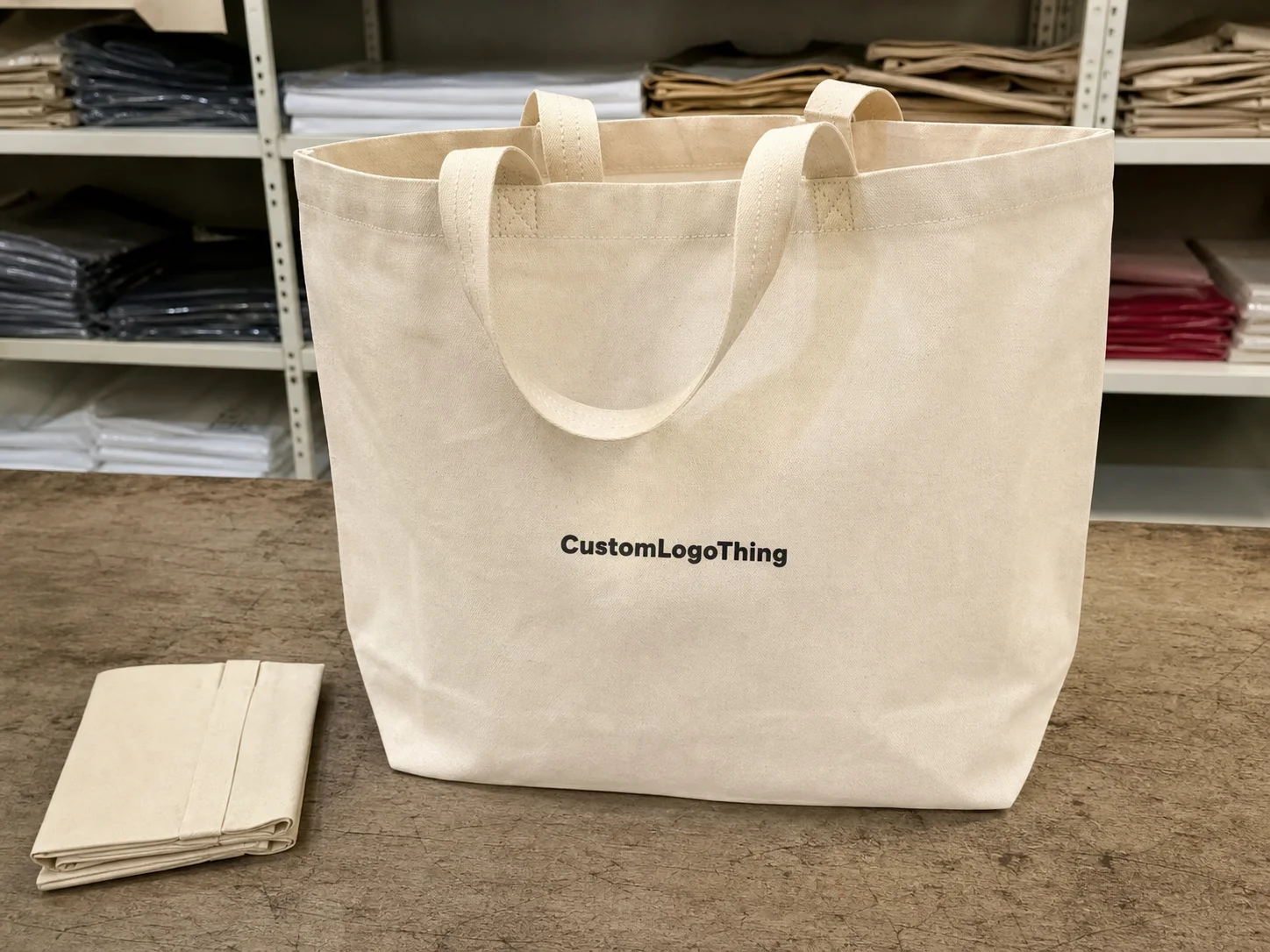
A tote is not just packaging at the point of handoff. It is a moving ad that customers actually use. The bag goes from checkout to car, then maybe to office, kitchen, gym, or a weekend market. Each trip puts the logo back in front of someone. That kind of repeated exposure is hard to buy cheaply in other channels.
That is why personalized reusable tote bags work so well for retail programs, trade shows, employee kits, grocery promotions, and subscription inserts. The format is familiar. The branding is visible. And the utility is easy to understand in half a second, which helps adoption. People use bags that make sense. They toss bad ones in the nearest drawer.
A reusable tote is usually defined by a few basic choices: material, size, handle style, closure, print method, and whether the bag needs structure or a gusset. Those details sound minor on paper. They are not minor in production. A 10 oz cotton tote, a 140 gsm nonwoven bag, and a laminated woven polypropylene carryall may all hold a logo, but they behave very differently once packed, shipped, and used.
"The bag is the media. If it feels flimsy, the brand feels flimsy too."
That does not mean every order should be premium. It means the build should match the promise. A simple promo tote can be the right answer for high-volume distribution. A heavier cotton or canvas bag makes sense when the brand wants the tote to stay in circulation for months. There is no prize for over-specifying a giveaway or underbuilding a retail bag.
One more practical point: tote bags are usually judged in motion, not on a table. A logo that looks clean in a proof can blur across a wrinkled panel, and a handle that feels fine in hand can fail after a few grocery runs. That is why sample review matters. Static art is not enough.
How Material, Size, and Print Method Shape the Result
The three biggest levers are material, size, and decoration method. Change one, and the others often shift with it. Larger bags need more fabric and stitching. Heavier fabric increases weight and freight. More detailed artwork can force a different print process. The mockup matters, but the spec sheet drives the actual result.
Common materials include nonwoven polypropylene, woven polypropylene, cotton, canvas, and recycled blends. Nonwoven bags are usually the most economical and work well for promotions and events. Woven polypropylene is tougher and usually better for repeated carry, grocery use, and retail programs. Cotton and canvas feel more premium and can support heavier loads, but they add cost and shipping weight. Recycled blends are useful for sustainability-led programs, but the claim should be backed by documentation, not just green copy on the sales page.
For buyers who care about sourcing, ask for proof instead of slogans. If a supplier is making fiber-source claims or chain-of-custody claims, look for third-party support where applicable. FSC certification is relevant in paper-based packaging programs and chain-of-custody systems, while recycled-content claims should be supported by product documentation and test data when possible. Sustainability claims are easy to print. They are harder to defend.
| Material | Typical feel | Common use | Illustrative unit range at bulk volume |
|---|---|---|---|
| Nonwoven polypropylene | Light, practical, basic | Events, promotions, giveaways | $0.35-$0.85 |
| Woven polypropylene | Stiffer, more durable | Retail, grocery, repeated carry | $0.45-$1.10 |
| Cotton | Soft, natural, familiar | Retail, gifting, branded resale | $0.90-$2.50 |
| Canvas | Heavier, premium, structured | High-end retail, corporate gifting | $1.60-$4.50 |
| Recycled blend | Varies by construction | Sustainability-led programs | $1.10-$3.00 |
Size changes both function and cost. A compact retail tote needs less fabric and shorter handles than a grocery-style bag. An oversized event tote can carry more, but it also uses more material, occupies more carton space, and costs more to ship. Bigger is not automatically better. A bag that is too large for the handoff feels wasteful. A bag that is too small gets ignored.
Handle design is worth more attention than most buyers give it. Short handles are fine for handheld use and shopping counters. Longer shoulder straps make sense for heavier loads or longer walking distances. Handle drop affects comfort more than people expect. If the bag is intended to be reused, that comfort detail matters because it changes whether the bag stays in rotation or gets retired early.
Print method determines what the art can survive. Screen printing is still the workhorse for simple logos and solid colors, especially on larger runs. Heat transfer handles more detail and smaller text, but the finish depends on the substrate and how the tote is handled after printing. Embroidery adds texture and a premium feel, though it works best on thicker fabrics and simpler marks. Digital decoration can support gradients and full color, but it is not always the cleanest answer on textured fabric or stretch-prone material.
Quality control should cover more than the print. Ask for the exact logo placement in inches, not just a visual proof. Confirm seam strength, handle attachment, gusset depth, stitch density, and color match before approval. If the order is large enough to matter, request a pre-production sample or production sample. Pull on the handles. Fold the bag. Check the print at the creases. That tells you more than a flat proof ever will.
Cost, Pricing, and MOQ Factors That Change the Quote
Pricing for personalized reusable tote bags usually comes down to six variables: material, size, print complexity, number of colors, number of decoration locations, and packing method. Once those are defined, the quote becomes much easier to read. Without them, every price comparison is partly fiction.
Minimum order quantity, or MOQ, changes the math quickly. Lower quantities usually cost more per unit because the setup burden is spread across fewer bags. Screens, plates, artwork cleanup, sampling, and labor do not scale down neatly. A 250-piece order and a 5,000-piece order are not priced by the same logic. That is normal.
At higher volumes, the unit price often falls faster than new buyers expect. Moving from 1,000 to 3,000 pieces can materially change the effective cost because fixed steps get diluted. The reverse is true too. Add a second logo location, a more complex imprint, or special folding, and the price rises even if the bag itself stays the same.
Quotes get messy when suppliers do not price the same spec. One may include a lighter fabric, one-color print, and bulk carton packing. Another may include heavier fabric, a second imprint, and individual polybagging. Both are valid offers, but they are not the same product. Compare like with like or the numbers are useless.
Typical hidden costs include freight, rush charges, sample fees, art cleanup, and special packing. Freight is the one that surprises people most often. Tote bags are light, but they are not small once packed. Carton count and dimensional weight can change the landed cost enough to erase a cheap unit price. If the project has a real budget, landed cost matters more than the quoted line item.
For a cleaner comparison, ask suppliers to break out each piece of the quote.
- Unit cost: the bag itself and the basic decoration.
- Setup cost: screens, plates, digitizing, or art prep.
- Freight: carton, pallet, and shipping charges to the destination.
- Extras: rush service, sampling, inserts, or special packing.
That breakdown usually makes the real tradeoff obvious. The cheapest quote is not always the lowest-cost order. Once freight, setup, and rework enter the picture, the math changes fast.
Production Process and Timeline From Proof to Delivery
The production flow is usually straightforward: request, spec review, artwork proof, sample or pre-production approval, manufacturing, inspection, packing, and shipment. Straightforward does not mean fast. Every handoff can introduce delay if the details are vague or the approvals move slowly.
Artwork is often the first bottleneck. Clean vector files, final copy, and defined color references reduce revision cycles. Low-resolution logos, unclear fonts, and mixed-color files create back-and-forth before production even starts. If brand color matters, specify it in Pantone or another agreed system instead of relying on screen appearance. Monitors lie. Fabric does not care.
Typical turnaround depends on material availability, print method, quantity, and shipping mode. A simple run may take about 10 to 15 business days after proof approval. More complex jobs, seasonal demand, or specialty finishes can stretch that window. Shipping time sits on top of production time, not inside it. If the bags are needed for a launch, conference, or store opening, the order should be scheduled backward from the in-hand date with buffer for transit and corrections.
Inspection should not be a formality. Check color consistency, logo position, stitch quality, handle reinforcement, and fold behavior. If the bags are going into another package, confirm they pack flat enough. If they are going to be distributed at multiple locations, confirm carton labels and counts are clear. If they are going to sit in storage, ask about stacking and carton strength. Tote bags are simple until they are not.
For programs that will travel far or get handled hard, packaging validation is worth asking about. ISTA publishes transport packaging test procedures that suppliers use as a reference for vibration, drop, and compression testing. That matters more than people think. A tote is a soft good, but the shipping carton still needs to survive the route.
Most delays happen in predictable places: waiting for approval, changing the artwork after proofing, or revising quantity midstream. Each change can force the job back into a queue or require new setup. The cleanest timeline is the one that avoids unnecessary revisions after the proof is issued.
Step-by-Step Buying Checklist for a Cleaner Order
Start with the use case. Is the bag for grocery carry, retail checkout, a trade show giveaway, a subscription insert, or an employee kit? That answer drives everything else. A retail store handing out bags at point of sale needs a different spec than a premium brand placing folded totes inside a gift box. Same category. Different job.
Before asking for quotes, lock the spec sheet. Include quantity, material, dimensions, handle style, handle drop, print locations, number of colors, gusset depth, and any closure requirement. If any of those are missing, the quote will be noisy and the final product more likely to drift away from the brief.
Artwork should be prepared in vector format whenever possible. That keeps edges sharp and scales cleanly. If the logo uses specific brand colors, send the references in writing. If the design includes fine text, define the minimum readable size. Flexible fabric can swallow small type, especially after the bag folds or wrinkles in transit.
A simple checklist keeps the order from getting sloppy:
- Confirm the end use and expected load.
- Set the spec sheet before requesting pricing.
- Provide final artwork in vector format.
- Request a sample or mockup for higher-value orders.
- Confirm the storage plan, delivery window, and distribution method.
A sample is especially useful for higher-volume runs or any bag that needs to feel premium. A proof can show placement, but it cannot show hand feel, seam behavior, or how the print sits on the fabric. Once the order is large enough to matter, that extra checkpoint is usually cheaper than fixing the whole run.
Distribution planning matters too. If the bag is going inside another package, confirm the folded size fits. If the bags are shipping to multiple locations, make sure cartons are easy to identify and split. If they are sitting in a back room before launch, check how much space the inventory will actually take. Totes are light. Inventory still fills shelves.
If the tote is part of a larger packaging system, align it with inserts, cartons, printed collateral, or shelf signage. The goal is not perfect visual matching. The goal is a handoff that feels intentional. A well-chosen bag can make the whole package feel tighter.
Common Mistakes That Increase Cost or Weaken Branding
The first mistake is choosing the cheapest fabric without checking how it behaves in use. Thin material may save money up front, but it can make the brand look temporary and disposable. If the bag tears, pills, or stretches out quickly, the customer remembers that, not the logo.
The second mistake is trying to cram too much into the design. Too much copy, too many marks, or tiny tagline text can disappear once the tote folds. Fabric is not a poster. It moves, bends, and creases. What looks readable on a screen can turn into clutter in the hand.
Color mismatch is another repeat offender. A digital file can look fine on a monitor and still print differently on fabric, especially on textured or off-white material. If the brand color is important, specify it precisely and ask for a physical reference when possible. That is especially true for logos where hue is part of the identity.
Shipping dimensions are easy to ignore and expensive to ignore. A low unit price can be misleading if the tote packs into a bulky carton or ships inefficiently. Freight can erase savings faster than a slightly higher bag price. Buyers who watch only the unit cost often miss the line that actually moves the budget.
Another common error is approving proofs casually. One small change after approval can reset the queue, force another round of setup, or push the job into a later production slot. That is not a rare edge case. It is one of the most common reasons a schedule slips after everyone thinks the order is safe.
"The cheapest quote is not always the lowest-cost order. Once freight, setup, and rework enter the picture, the math changes quickly."
Finally, do not assume every reusable bag should be branded the same way. A tote for a resale wall wants cleaner graphics and better fabric. A tote for mass distribution needs durability, easy packing, and a simpler mark that prints reliably. The same rule does not fit both.
Expert Tips and Next Steps for a Better Tote Bag Order
Start with a spec sheet before you contact suppliers. Put quantity, material, size, print method, color count, and delivery date in one place. That document cuts out a lot of noise because every supplier is quoting against the same instructions instead of guessing.
Ask for two versions of the quote if the supplier can provide them: one optimized for price and one optimized for durability or presentation. That comparison is usually more useful than a single number because it shows the tradeoff instead of hiding it. A buyer can then decide whether the program needs a practical workhorse or a more premium presentation piece.
Request a Quote that separates unit cost, setup, freight, and rush charges. Otherwise, the quote can look attractive while hiding the actual budget pressure points. If you are comparing multiple suppliers, use the same wording for all of them. That is the only way the numbers stay honest.
If the tote is part of a larger packaging system, coordinate it with the rest of the kit. Inserts, outer cartons, shelf signage, and printed collateral do not have to match exactly. They do need to feel like they belong to the same brand moment. That is where personalized reusable tote bags stop being a giveaway and start acting like durable branded media.
My practical view is simple: match the bag to the distribution reality first, then decide how much premium finish the brand can justify. That approach protects both the budget and the customer experience. It also makes reorders easier because the spec is grounded in actual use, not just a nice-looking proof.
For most bulk buyers, the smartest option is the version that will be reused often, packed efficiently, and printed clearly. That is where personalized reusable tote bags earn their keep. Not by trying to be everything. By doing one job well, over and over.
What is the minimum order for personalized reusable tote bags?
MOQ depends on the Material and Print method, but lower quantities usually carry a higher unit price because setup costs are spread across fewer bags. Simple one-color runs often allow smaller orders than full-color or specialty finish jobs, especially when the artwork is clean and the construction is standard.
Which material is best for custom reusable tote bags?
Cotton and canvas usually feel more premium, while nonwoven and woven polypropylene often win on cost and light-duty utility. The right choice depends on how often the bag will be reused, how much it needs to carry, and what the brand wants it to signal at handoff.
How long does turnaround take for branded tote bags?
Turnaround depends on proof approval speed, material availability, print method, and shipping distance. A straightforward order may take about 10 to 15 business days after approval, but more complex specs, peak-season factory load, or rush freight can extend the schedule.
What affects the price of personalized tote bags the most?
Quantity, fabric weight, print complexity, and the number of decoration locations have the biggest effect on unit cost. Freight, packing requirements, and artwork cleanup can also move the total quote more than buyers expect, especially on smaller runs where setup costs are less diluted.
Can reusable tote bags be printed with a detailed logo?
Yes, but the best method depends on line thickness, color count, and bag material. If the logo has fine detail or gradients, ask which print process will preserve the art without distortion. In many cases, personalized reusable tote bags work best when the artwork is simplified just enough to survive real use without losing the brand mark.

