If you need custom roll stickers cheap, the lowest quote is not always the lowest total cost. Price is driven by size, stock, adhesive, finish, color coverage, roll setup, and quantity. “Custom” does not have to mean expensive, but vague specs often lead to bad material choices, relabeling, or wasted inventory.
Roll format is usually the practical choice once packaging volume increases. It works for hand application, tabletop dispensers, and many machine-fed setups, and it is generally faster to handle than sheets. That labor savings matters just as much as the unit price.
Why custom roll stickers cheap can still look premium on the shelf
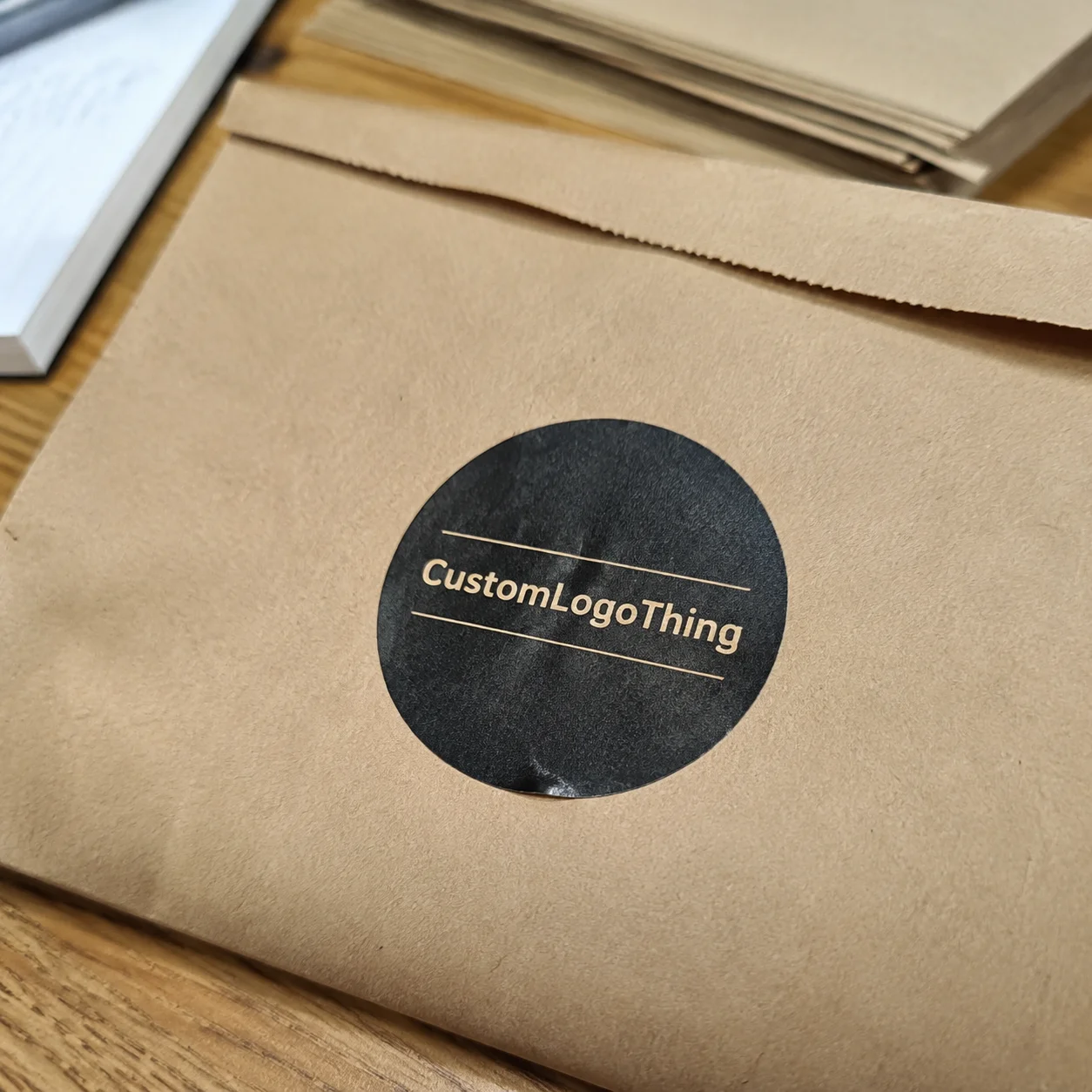
Low-cost roll stickers can still look polished if the basics are right: clean print, crisp die cutting, color that suits the package, and a label that lies flat without bubbling or edge lift. Those results usually come from standardization, not expensive upgrades.
A common size, standard shape, and stock matched to the package often lower cost without hurting appearance. Matte paper on a dry carton can look refined. Gloss BOPP on a bottle can look bright and durable. Problems start when the material does not match the surface or use conditions.
Common buying mistakes are predictable. Paper may look fine in a sample photo, then wrinkle or scuff on a refrigerated jar. Clear film may sound premium, but pale artwork can disappear if no white ink or contrast planning is built in. A weak adhesive may hold during testing and fail on textured board during production.
Roll labels also save time during packing. That matters if a team is labeling thousands of jars, mailers, or pouches. In practice, the best cheap label is the one that applies cleanly, stays put, and does not slow the line.
If you are also sourcing Custom Labels & Tags or broader Custom Packaging Products, the label should still fit the rest of the packaging system. A low-cost sticker can look fully appropriate if the finish, color, and material feel consistent with the box, bottle, pouch, or insert it goes on.
Custom roll sticker options that keep unit cost down
Material choice does most of the pricing work. For dry indoor use, paper labels are usually the lowest-cost option. They make sense for cartons, inserts, mailer seals, and other packaging that will not face moisture, oil, or heavy abrasion.
When conditions get rough, paper can become a false economy. If the label needs to handle condensation, repeated handling, or rubbing during transport, spending more on the right stock can prevent reprints and labor costs.
BOPP labels are a common step up. They cost more than paper but offer much better resistance to water, oils, and scuffing, which is why they are widely used on bottles, food containers, pouches, and bath products. For many buyers, BOPP is the practical balance between price and durability.
Clear film can look excellent on glass or colored packaging, but it is rarely the cheapest route. It also puts more pressure on the artwork because weak contrast can vanish once the package shows through. Many clear-label designs need white underprinting, which can add cost.
Finish also affects both appearance and usability. Matte reduces glare and often feels quieter. Gloss tends to make color pop more under retail lighting. Choose the finish that suits the product and viewing conditions rather than assuming one is always better.
Shape matters too. Standard circles, rectangles, squares, and ovals are usually cheaper than intricate custom contours. If the brand works in a simple shape, that is one of the easiest ways to control cost.
| Option | Typical cost level | Best use | Tradeoff |
|---|---|---|---|
| Paper, matte | Lowest | Dry goods, inserts, cartons | Limited moisture resistance |
| Paper, gloss | Low | Retail packaging, mailers | More surface glare |
| BOPP, matte or gloss | Mid | Bottles, pouches, refrigerated items | Higher unit cost than paper |
| Clear film | Mid to higher | Glass, premium presentation | Needs stronger artwork contrast |
Adhesive deserves equal attention. Permanent adhesive works for most packaging. Removable adhesive fits temporary seals or promotions. High-tack adhesive is better for textured cartons, rough plastics, recycled board, or other difficult surfaces. Freezer-grade and other specialty adhesives are useful when needed, but waste money when they are not.
Artwork structure can influence cost as much as stock. Multiple versions, many SKUs, and unique layouts increase setup time and error risk. A shared template with a few changing elements is often more efficient than rebuilding every label. Standardized sizes also simplify repeat orders.
Roll setup is critical, especially for dispensers and labeling machines. Confirm core size, outside roll diameter if equipment has a limit, and wind direction before approval. A wrong setup is inconvenient for hand application and a real production problem for machine application.
What specifications do you need before requesting a quote?
Accurate pricing starts with a complete specification. Requests like “around two inches” or “something glossy” usually produce rough estimates, not dependable quotes. That makes supplier comparison harder and increases the chance of change charges later.
At minimum, provide the following:
- Dimensions — finished width and height
- Shape — circle, rectangle, oval, square, or custom die cut
- Material — paper, BOPP, clear film, or another stock
- Finish — matte, gloss, or uncoated
- Adhesive — permanent, removable, high-tack, freezer-grade
- Quantity — total labels or total rolls
- Core size — commonly 1" or 3"
- Roll direction — top first, bottom first, left first, or right first
If the labels will be machine-applied, say so immediately. Machine application often requires tighter control over spacing, liner stability, roll diameter, and unwind orientation. A label can be printed correctly and still be wrong for the equipment.
Artwork quality also affects price and timing. Vector files such as AI, EPS, or press-ready PDF are typically preferred. Raster files should be high resolution. Bleed must be included correctly, and small type should stay inside a safe area so minor trim variation does not crowd it.
Use CMYK artwork unless the printer specifies something else. If color match is important, discuss expectations early. Substrate, print process, and white ink can all affect how color appears, especially on clear materials or heavy solid areas.
Other details that may affect the quote include perforations, barcodes, sequential numbering, versioning, carton labeling requirements, proof format, and whether you need a physical sample before the full run.
When comparing suppliers, make sure every quote uses the same assumptions for material, finish, adhesive, quantity, lead time, and shipping method. One quote may look cheaper simply because the stock is thinner, the adhesive is lighter, or the delivery window is slower.
Pricing, MOQ, and what drives the quote
Price is usually driven by quantity, label size, material, finish, adhesive, color coverage, and shape complexity. Setup cost is real, so larger runs generally lower the per-label price by spreading that setup across more units.
MOQ depends on the print method and construction. Digital printing is often a better fit for short runs, especially if you are testing a product, managing several versions, or ordering moderate quantities. Higher-volume methods become more economical once quantities rise and the design is stable.
The right MOQ is not just the lowest unit price. It depends on reorder frequency, storage space, artwork stability, and how much cash you want tied up in packaging. Cheap labels are not a good value if they become obsolete after a compliance update or redesign.
| Run size | Typical unit cost trend | Best for | Main caution |
|---|---|---|---|
| Small test run | Highest | New products, seasonal items, first samples | Setup cost is spread across fewer labels |
| Mid-volume | Moderate | Growing brands, recurring orders | Needs better forecasting |
| High-volume | Lowest | Stable SKUs, ongoing retail packaging | Storage and cash commitment increase |
For budgeting, ask for pricing per roll, per thousand labels, and total landed cost. The landed figure matters most because it captures shipping, cartons, proof charges, rush fees, and finishing costs that may not be obvious in the unit price.
As a broad market reference, straightforward paper roll labels at mid-volume often land around $0.02 to $0.08 per label, depending on size, quantity, and ink coverage. BOPP, specialty adhesives, white ink, heavy solids, and Custom Die Cuts can push that higher. Very short runs can cost several times more per piece.
If a quote seems unusually low, check the assumptions. Lighter adhesive, downgraded stock, fewer labels per roll, or slower production often explains the gap. Compare the actual construction, not just the top-line number.
A sample is usually worth requesting before a large run, especially for glass, textured board, low-energy plastic, refrigerated packaging, or oily containers. A digital proof confirms copy and layout; a physical sample confirms how the label behaves on the real surface.
For teams with broader packaging requirements, outside references such as the International Safe Transit Association and the Forest Stewardship Council may matter as part of a larger sourcing program.
Production process and turnaround: from artwork to shipped rolls
Most roll label jobs follow a standard path: quote, file review, proofing, approval, printing, finishing, slitting, packing, and shipping. Clean specs and press-ready artwork shorten the process. Missing information and late revisions usually cause delays.
For standard jobs using common materials, turnaround is often around 7 to 12 business days after proof approval. More involved work with specialty adhesives, Custom Die Cuts, white ink, tight color expectations, or unusual roll requirements may move closer to 12 to 18 business days. Shipping time is separate and should be planned against your actual launch or restock date.
Repeat orders are usually faster because the construction and roll setup are already proven. First-time jobs take longer because the supplier still has to confirm whether the artwork and material are right for the application.
A few factors usually speed production:
- Print-ready artwork
- Standard sizes and shapes
- Common materials and adhesives
- Clear roll direction and core size
- Fast proof approval with no late revisions
Factors that often slow production include custom die lines, white ink layers, color revisions, many SKU versions, and machine-application testing.
Packing details matter as well. Ask how many rolls go in each carton, whether cartons are labeled clearly by SKU, and how multiple versions are separated. Warehouse teams should not have to open boxes and recount rolls to identify the right item.
For quality control, inspect the first shipment for quantity, copy accuracy, clean die cutting, correct winding, and adhesion on the real package surface. For machine-applied jobs, run a test before committing the labels to a full production shift.
How to choose a supplier that actually delivers cheap labels on time
The best supplier is not simply the one with the lowest first quote. It is the one that can recommend the correct stock, explain the adhesive choice, set up the rolls properly, print cleanly, and ship on a timeline that works with your packing schedule.
Watch for early warning signs such as vague material descriptions, no confirmation of core size or unwind direction, unrealistic color claims without proofing, or fuzzy lead times. Those gaps often become expensive problems later.
- No clear material specification
- Lead times described vaguely rather than stated
- No sample support for uncertain applications
- Unclear answers about roll direction or core size
- Color promises without a proofing process
A capable supplier will ask practical questions about the package itself: glass or board, hand or machine application, condensation or freezer exposure, oil, abrasion, or rough shipping. Those questions are part of good production planning, not sales friction.
Ask for the construction in writing: material, finish, adhesive, core size, roll direction, labels per roll, and estimated lead time. Also ask what is standard, what adds cost, and what they would change if the priority were lower price versus higher durability.
Reliable reordering matters too. A supplier that can hold a stable spec, deliver organized cartons, and make repeat orders simple can save more time than a slightly cheaper quote that creates recurring operational headaches.
For broader packaging teams, resources such as the Institute of Packaging Professionals can provide additional material and handling context.
Next steps to order the right roll stickers without overspending
Ordering gets simpler once you narrow the choice to what affects performance. Send a quote request with finished size, quantity, artwork, material, finish, adhesive, application method, core size, roll direction, and target ship date. That gives suppliers enough information to quote the real job rather than a placeholder version.
It often helps to compare two or three constructions side by side: a budget option, a standard recommendation, and a durability upgrade if needed. Seeing paper versus BOPP or matte versus gloss on the actual package is usually more useful than comparing spreadsheet line items.
If the surface is new or the product will face cold, oil, or abrasion, start with a sample or short run. Label performance is affected by texture, surface energy, storage temperature, and handling in ways that are not always obvious from a spec sheet.
Before approval, double-check the details that cause the most avoidable trouble:
- Adhesive matches the actual surface and storage condition
- Roll direction and core size fit the dispenser or machine
- Ship timing aligns with your launch or restock date
That is usually the difference between a smooth order and an expensive distraction. Keep the spec tight, test where needed, and low-cost roll labels can support strong branding without wasting budget.
FAQ
What is the cheapest way to order custom roll stickers cheap without losing quality?
Use standard shapes, common materials, and a quantity large enough to spread setup cost sensibly. For dry indoor packaging, paper is usually the lowest-cost stock. The material still has to match the surface and handling conditions, or the savings disappear later.
What MOQ should I expect for custom roll stickers?
MOQ varies by print method, material, and setup. Digital printing can often handle shorter runs, while higher-volume methods become more efficient as quantities rise. Ask for several quantity tiers so you can see where unit pricing improves.
Which material is best for low-cost roll labels?
Paper is usually the cheapest option for cartons, inserts, dry goods, and other indoor uses without moisture exposure. BOPP costs more but is often the better value for bottles, refrigerated items, or products handled frequently because it resists water and scuffing much better.
How fast can custom roll stickers be produced?
Standard jobs with clean artwork and common materials often ship in about 7 to 12 business days after proof approval. Specialty adhesives, Custom Die Cuts, color revisions, or machine-format requirements can extend that timeline. Shipping time should be planned separately.
What should I send to get an accurate quote for roll stickers?
Send finished size, shape, quantity, artwork, material preference, finish, adhesive needs, core size, roll direction, application method, and target ship date. If the labels will be machine-applied or used in cold, damp, oily, or rough conditions, mention that up front.


