custom shampoo labels have to survive moisture, heat, soap residue, and repeated handling. A label can look clean in a mockup and still fail fast once it is on a bathroom shelf.
That is why the real decision is not just artwork. Buyers need to match substrate, adhesive, finish, and bottle shape to the actual use environment, then confirm the spec before production starts. Most costly reprints come from that mismatch, not from the design itself.
What Custom Shampoo Labels Need to Survive
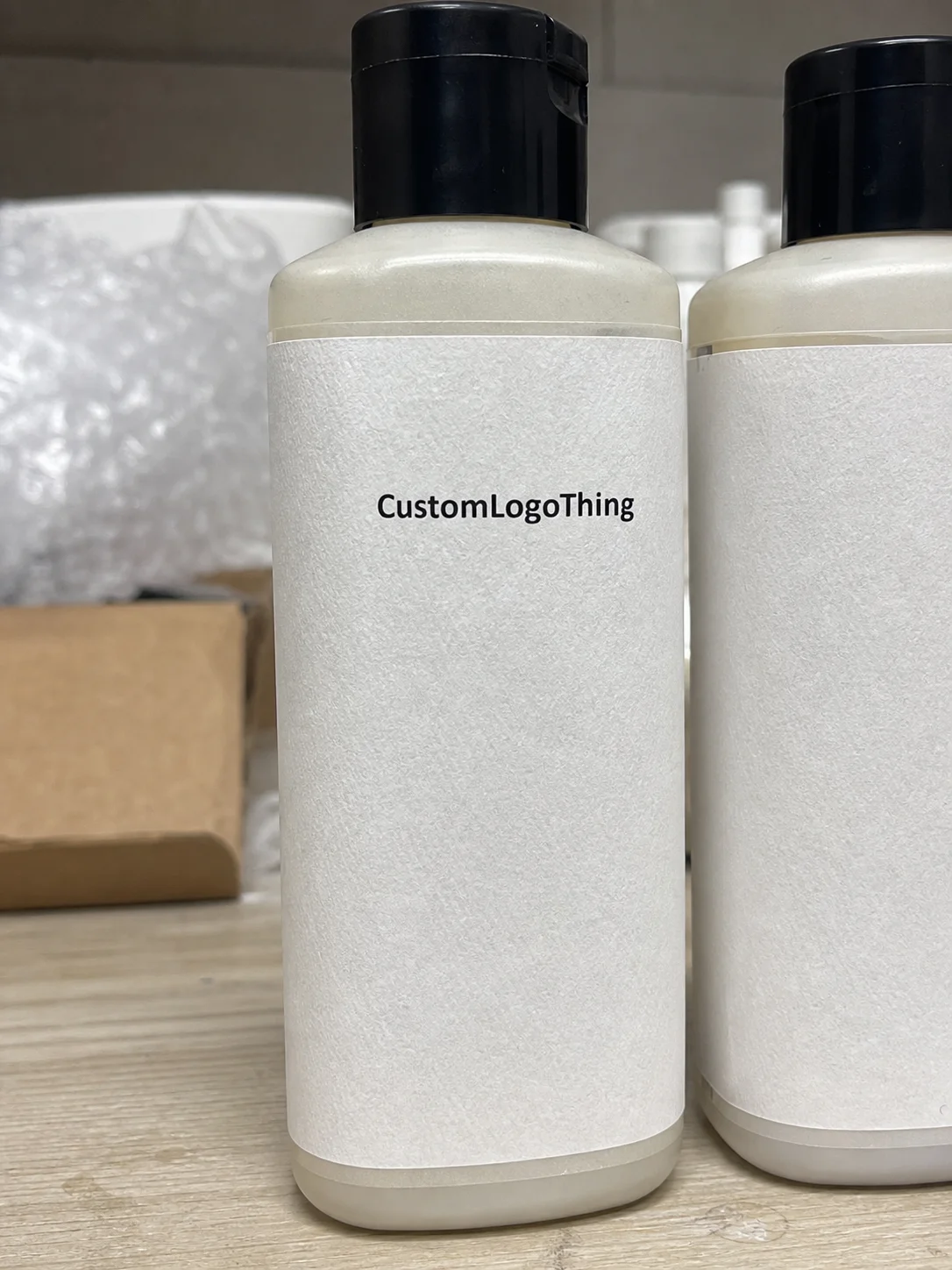
Shower conditions create constant stress: steam, condensation, wet hands, friction, and occasional product buildup. A bottle gets picked up, set down on a damp ledge, handled again, and exposed to the same cycle every day.
Edge lift is usually the first failure. Once a corner opens, water gets under the label and the problem grows. Curved bottles, seams, shoulders, and recessed panels make that more likely, especially on squeeze bottles that change shape as product is used.
Smearing and scuffing come next if the print is not protected. Uncoated inks can wear where fingers rub the package, and paper stocks can wrinkle or blur when exposed to moisture. Adhesive problems often show up when bottles are cold, damp, or contaminated by oils, lotion, or residue from filling.
The bottle geometry matters as much as the print file. A smooth cylinder is straightforward; a tapered or flexible bottle needs a label that tolerates movement and surface change. The practical standard is simple:
- Clear branding at a glance.
- Readable copy after moisture exposure.
- Consistent application on the production line.
- Enough durability to keep the package looking intentional after repeated use.
That is the baseline worth using for custom shampoo labels. If the label cannot handle the environment, the package will show wear before the product is finished.
A label can pass a design review and still fail in a bathroom if the curve, adhesive, or finish does not match the bottle and the use case.
Materials, Adhesives, and Finishes That Actually Hold
For wet-use packaging, film is usually the first material to consider. BOPP is common because it resists moisture, stays dimensionally stable, and handles steam better than paper. Typical pressure-sensitive film labels often fall around 2 to 3 mil, though the exact spec depends on the printer and application. Paper can still work for short-term or low-exposure uses, but it is much more vulnerable to wrinkling and edge failure in a shower environment.
The adhesive matters just as much as the face stock. A permanent acrylic adhesive is usually the safest choice for retail shampoo packaging because the label has to stay put after repeated handling. Removable adhesive is better for temporary promotions or refill systems, not for a product that needs long-term durability. If bottles are packed cold or arrive slightly damp, the adhesive spec deserves close attention.
Finishes affect both appearance and wear resistance. Gloss generally boosts color and makes wipe-downs easier. Matte can look quieter and more premium, but it may show scuffing sooner unless it is protected. Soft-touch usually looks good in hand, yet it is a weak choice for a steamy shower. Clear overlamination or a protective coating helps the print survive soap film, fingers, and repeated contact.
Transparent bottles add another challenge. If the product inside is dark or visually busy, light text on clear film may disappear faster than expected. A white underlay or opaque panel often solves that, but it changes the look and the cost. Buyers should test this on a real sample, not just a render.
The safest baseline for most shower-use shampoo packaging is film plus permanent adhesive plus a protective finish. If the bottle is highly curved, flexible, or heavily handled, the spec usually needs to move up rather than down.
| Label Material | Moisture Resistance | Best Use Case | Typical Tradeoff |
|---|---|---|---|
| BOPP film | High | Daily-use shampoo, shower bottles, salon products | Higher cost than standard paper |
| Vinyl-like film | High | Extra-handled bottles or harsher conditions | Can push unit cost up on smaller runs |
| Coated paper | Low to moderate | Dry storage, short-term launches, limited exposure | More vulnerable to wrinkling and edge failure |
When comparing suppliers, ask what is included in the quote. Does it include lamination or only print? Is the adhesive intended for damp application? Has the stock been tested on a similar bottle shape? Those answers matter more than a generic promise of quality.
For process standards, industry durability testing is still worth understanding. Organizations like ISTA are useful references for package performance thinking, and FSC is relevant when paper components and certified sourcing matter. The point is to know which part of the build is carrying the load.
How the Process and Timeline Usually Work
The workflow usually starts with the dieline, artwork, and bottle measurements, then moves into proofing, print, finishing, inspection, and shipping. Most delays come from details that were left vague at the start.
Measure the bottle carefully before anything else. Diameter, label panel height, taper, recessed areas, and corner radius all matter. A label that is only a few millimeters too wide can force the seam into the wrong place, and one that is too tall can buckle near the shoulder or base.
Application format affects the production plan. Roll labels are the normal choice for automated application and higher throughput. Sheets can make sense for short runs or manual labeling. The format changes packing, storage, and line speed, so it should be decided early.
Timeline depends on artwork readiness and job complexity. Simple repeat orders with approved files move faster. New jobs usually need more back-and-forth. Custom Die Cuts, special finishes, and extra proof cycles add time, and even a small correction to legal text or barcode placement can slow the order by a day or more.
For planning, many buyers should expect roughly 10 to 15 business days after proof approval for a straightforward order. Larger quantities, custom shapes, or specialty finishing can extend that window. If the labels are part of a broader rollout, the spec should be locked early so the rest of the materials do not sit idle.
A short timeline is useful only if the approved spec is accurate enough to survive production without a second pass.
Cost, Pricing, and MOQ Factors Buyers Should Compare
Price is driven by a few variables that are easy to compare once they are named clearly. Material choice is first. Film costs more than paper, and protective finishes add more cost again. Larger labels also use more raw stock, which matters when comparing several container sizes across a line.
Shape has a real effect too. A simple rectangle is cheaper to cut than a custom contour. A custom shape can be worth it if the brand needs a stronger shelf profile, but the buyer should treat die cost and setup time as part of the decision, not an afterthought.
MOQ, or minimum order quantity, varies by printer and process. Some vendors can handle short runs comfortably; others need higher quantities to absorb setup costs. That is why the lowest unit price is not always the best deal for a seasonal launch or a product with modest demand.
When you compare quotes, compare the same thing. Size, quantity, substrate, finish, adhesive, proofing, and shipping all have to match. One supplier may quote a lower number because lamination is excluded. Another may include a better adhesive but charge more up front. If the comparison is not normalized, the cheapest quote can be the most misleading.
| What Affects Price | Why It Matters | What to Ask |
|---|---|---|
| Substrate | Film and specialty stocks cost more than standard paper | Is this BOPP, coated paper, or another film? |
| Adhesive | Wet-use and permanent adhesives improve performance and cost more | Is the adhesive rated for moisture and cold surfaces? |
| Finish | Lamination and coatings add wear resistance | Does the quote include gloss, matte, or overlamination? |
| Quantity | Higher quantities usually lower the unit price | What happens at 1,000, 5,000, and 10,000 pieces? |
| Setup | Short runs carry more setup cost per label | Are there plate, die, or setup charges? |
A rough budget range for smaller film-label runs might land around $0.18 to $0.30 per label at 5,000 pieces, depending on size, coverage, and finishing. More complex labels can climb above that. The bigger cost risk is usually not the quote itself; it is the reprint caused by the wrong spec, poor fit, or a label that fails during use.
Step-by-Step: Specifying Labels for Real Bottles
Start with the container, not the artwork. Measure the bottle diameter, label panel height, taper, seam area, and any recessed sections. If the label is going on a flexible squeeze bottle, account for how the material moves under pressure. The goal is a label that sits correctly on the physical package after it is filled, handled, and used.
Then choose the application method. Roll labels are usually better for automation and higher volume. Sheets work for short runs, tests, or hand application. The format changes how the order is packed and how the line handles the labels, so it should be decided early rather than treated as a minor preference.
Build the information hierarchy carefully. Brand name, variant, net contents, ingredients, warnings, barcode, and any regulatory copy all need space. If the front panel is crowded, the package becomes harder to read and less convincing on shelf.
Match the spec to the environment:
- For shower use, start with a moisture-resistant film and permanent adhesive.
- For salon handling, add a protective finish or overlamination to resist scuffing.
- For travel sizes or short-lived promotions, verify that a lighter spec still survives the intended exposure.
- For cold or damp filling, confirm that the adhesive still bonds at the actual application temperature.
Sample testing is the most practical step many teams skip. A flat proof can hide seam placement issues, curvature problems, edge lift, print abrasion, and barcode readability problems. A short production test costs time, but it usually saves more than it costs if the product is going into a real retail or salon environment.
Common Mistakes That Cause Peeling, Smearing, or Reprints
The first mistake is choosing standard paper for a bottle that lives in water. Paper can work in dry retail packaging, but shower use exposes every weakness quickly. Humidity, condensation, and repeated touching shorten the life of the label and make the package look older than it is.
The second mistake is designing only for the screen. A flat rendering can hide the effects of curve and seam placement. Logos can split, text can distort, and the edge can land where it is most likely to peel.
Adhesive mismatch is another common problem. Some bottles arrive cold. Some carry residue. Some have a surface that does not grab adhesive well on the first pass. If the bottle is damp during application, the failure rate rises quickly. That is why application temperature and surface condition belong in the spec.
Readability problems are just as costly. Tiny ingredient text on clear film may disappear against the product color. Low-contrast art can look elegant on screen and weak under retail lighting. Artwork placed too close to the trim line can nick during handling or get clipped during finishing.
Skipping sample testing is the last mistake worth calling out. A label can pass a visual check and still fail after steam exposure or repeated handling. If the product will be used in a wet environment, test it there.
Next Steps for Ordering Labels That Ship Ready to Apply
Start with a short spec sheet. Include bottle dimensions, desired label size, application method, quantity, finish, and artwork files. If you already have a dieline, include it. If not, the bottle measurements are enough for the label structure to be built correctly.
Be direct about the environment. Will the bottle live in a shower? Will it be touched with wet hands? Will it be stored cold or shipped warm? Will the surface be smooth, curved, or textured? Those answers drive the material and adhesive choice far more than brand preference alone.
If the bottle is new, or if the line has never been labeled before, request a sample or a short production test. That is especially useful when the order is part of a wider packaging update across multiple SKUs. One weak assumption in the label spec can spread into the rest of the launch.
Once the label works, record the approved version clearly. Keep the substrate, adhesive, dimensions, finish, and roll format in one place so future reorders do not drift. For custom shampoo labels, the right result is not the prettiest proof. It is the label that applies cleanly, stays readable in moisture, and keeps the package credible after real use.
FAQ
What material is best for custom shampoo labels in the shower?
BOPP film is usually the safest choice because it resists moisture better than standard paper. A permanent adhesive and a protective finish improve durability further, especially on bottles that are handled often.
Should custom shampoo labels be gloss or matte?
Gloss usually gives stronger color and better wipe resistance. Matte can feel quieter and more premium, but it may show scuffs sooner unless the label is protected with a coating or laminate.
How much do custom shampoo labels usually cost?
Pricing depends on size, quantity, material, adhesive, finish, and whether the label has a custom shape. Small film-label runs often fall around $0.18 to $0.30 per label at moderate quantities, with more complex jobs costing more.
What should I send for a custom shampoo label quote?
Send bottle dimensions, desired label size, quantity, application method, finish preference, and any artwork or dieline you already have. Include storage conditions and whether the bottle will be used in wet environments so the supplier can recommend the right spec.
How long does it take to produce custom shampoo labels?
For a straightforward order, 10 to 15 business days after proof approval is a practical planning range. Custom shapes, special finishes, larger quantities, and sample testing can extend that timeline.

