Custom shirt tag labels do a lot of work for such a small object. They identify the product, set the tone for the brand, and tell a buyer whether the garment feels finished or merely assembled. People usually notice that before they notice the stitching. A shirt can be technically well made and still feel cheap if the tag is flimsy, crooked, or visually disconnected from the rest of the presentation.
The best label systems behave like the rest of the package: the shirt tag, the carton, the insert card, and the outer wrapping should feel like they belong to the same brand. That consistency matters more than many buyers expect. It is the difference between a shirt that looks sold and one that looks stored.
If you are building a broader product presentation system, the same spec discipline applies to Custom Labels & Tags and Custom Packaging Products. The details change, but the production logic does not.
A buyer may never say the tag sold them, but they will notice a label that looks off. That reaction is quick, and it affects how the rest of the product is read.
Why custom shirt tag labels change first impressions
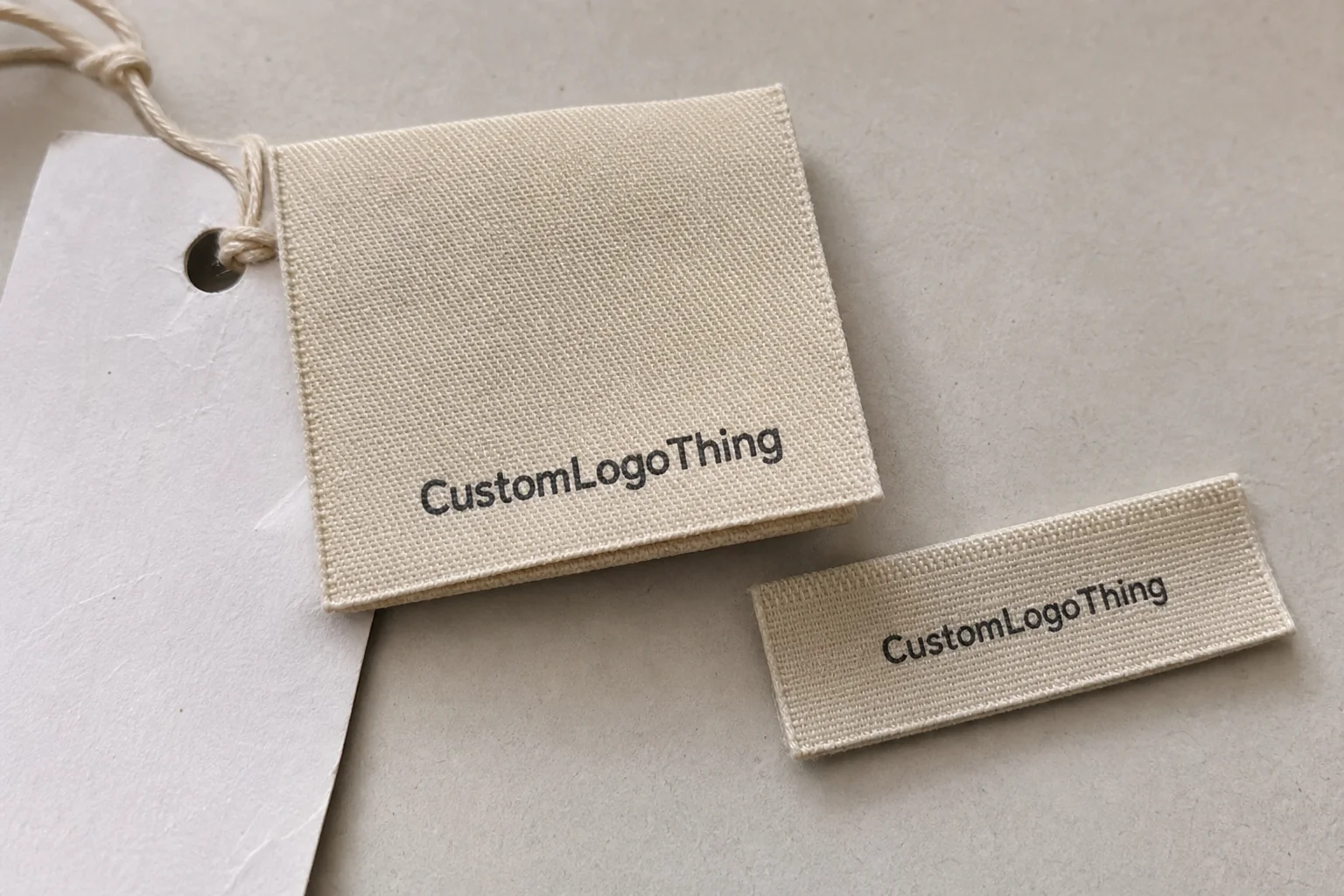
Retail buyers and end customers do not inspect apparel in a vacuum. They see the hang tag, the neckline, the fold, the carton, and the printed message on the insert as one sequence. If the shirt tag looks deliberate, the garment feels more credible. If it looks generic, the shirt has to work harder to justify its price.
That first impression is partly visual and partly practical. A clean label tells the shopper the brand pays attention to detail. A label that carries size, SKU, and brand information in a clear hierarchy makes the item easier to stock, reorder, and display. Even in a simple tee program, the tag often carries more influence than the customer realizes.
It helps to separate terms before ordering. A hang tag is usually a removable piece attached with string, pin, or fastener. A sewn-in neck label stays inside the garment and is meant to remain after purchase. A care label carries textile and washing information. Some orders include only one of these; others use a combination. That distinction affects the quote, the file setup, and the final finish.
For a buyer, the real question is not “Do I need a tag?” It is “What job does the tag need to do?” If the answer is shelf appeal, the design can be more expressive. If the answer is inventory control, the information architecture matters more than decorative effects. If the shirt is a gift item, tactile finish and perceived value become more important. A useful label spec starts there, not with the artwork.
There is also a pricing effect that gets overlooked. When the label looks coordinated with the packaging, the garment can support a stronger retail price without changing the shirt itself. That is not magic. It is presentation logic. Buyers trust products that appear consistent.
How custom shirt tag labels are produced and attached
Most custom shirt tag labels begin with artwork, then move into prepress. The file gets checked for size, bleed, resolution, fold lines, and any special marks needed for cutting or attachment. A missing hole position or a wrong fold direction can create a production problem even when the artwork looks fine on screen. That is why a proof is not paperwork. It is a control point.
From there, the shop chooses the print method, cuts the label to size, adds finishing if needed, and prepares the attachment. The method depends on the garment, the target price point, and the volume. A small boutique run can tolerate more hand work. A larger apparel line usually needs something faster and more repeatable.
Common attachment options include hang-stringed tags, stapled tags, adhesive labels, sewn-in labels, and folded inserts.
- Hang-stringed tags are the most familiar for retail apparel and work well when presentation matters.
- Stapled tags are efficient, but the look is more utilitarian.
- Adhesive labels are useful for cartons, poly bags, and temporary identification, though they are not ideal for every textile surface.
- Sewn-in labels are the right choice for permanent branding or care information inside the garment.
- Folded inserts give more room for copy, barcodes, or product details when the layout needs breathing room.
Each method has a production cost that is not just about materials. Manual stringing slows assembly. Sewn-in labels require a different sewing step. Adhesive formats may be cheaper at first glance, but they do not solve the same problem as a neck label. The right construction depends on how the shirt will be sold, handled, and received.
That is why a proof should show more than artwork. It should show final dimensions, fold orientation, hole-punch placement, and the intended attachment method. If the label needs to hang straight on a rack or fold a certain way inside packaging, that requirement belongs in the spec sheet before approval, not after the first production run.
Materials and finish choices that affect durability
Material choice changes how the label looks, how it feels, and how it survives handling. Most hang tags still start with paper because it prints cleanly and keeps unit cost under control. Coated paper gives sharper color and cleaner photographic detail. Uncoated stock feels softer and accepts handwriting better if batch numbers or handwritten notes are part of the workflow. Synthetic stocks cost more, but they resist moisture, scuffing, and bending better than basic paper.
Thickness matters too. A common apparel hang tag often lands in the 14pt to 18pt range, though that depends on the desired hand feel and the production setup. A thicker stock feels more substantial, but it also changes how easily the label folds, strings, or stacks. On a manual packing line, a heavy label can slow throughput. On a premium retail line, that same weight may be exactly what the brand needs.
Finishes can increase perceived value quickly, but they need discipline. Matte lamination keeps the surface subdued and controlled. Soft-touch lamination adds a smooth tactile layer that buyers tend to associate with premium goods. Gloss sharpens contrast and can make saturated color feel brighter. Foil stamping, embossing, and spot UV can highlight a logo or a specific detail, but they should never overcrowd the label.
A useful rule: if the label must also carry size, barcode, or compliance text, keep the decorative effects from swallowing the functional copy. A shirt tag should not become hard to read in order to look expensive.
For durability under shipping stress, think about real handling, not just a studio sample. Labels get rubbed in cartons, compressed in stacks, and touched multiple times during packing and receiving. A coating that looks perfect in a proof can still curl if the stock is too light or if the label sits under pressure too long. Transit testing references such as ISTA are useful when packaging has to survive distribution, and paper sourcing standards like FSC matter if sustainability claims are part of the brand story.
There is a practical tradeoff here. Premium finish options can lift the perceived value of the product, but they also increase setup complexity and lead time. Not every shirt needs foil. Some products look better with a simple matte tag and clean typography. That restraint can read as confidence rather than compromise.
Cost, MOQ, and quote factors for custom shirt tag labels
Pricing is usually driven by quantity, stock, finishing, print complexity, and the number of versions in the order. Custom shirt tag labels are especially sensitive to setup time. One clean design in one size is straightforward. Three versions, two finishes, and a special stringing method are a different job entirely.
MOQ, or minimum order quantity, is where many first-time buyers get surprised. Small runs cost more per piece because the setup work does not shrink in the same proportion as the quantity. A 500-piece order can make perfect sense for a test drop, but the unit cost will usually be much higher than a 5,000-piece reorder using the same spec.
Reorders usually go more smoothly when the artwork and construction stay fixed. If the file is already approved and the production parameters are known, the quote is easier to keep stable. That does not mean every repeat order gets a lower rate, but it does reduce avoidable work.
| Option | Typical Use | Typical Unit Cost at 5,000 | Notes |
|---|---|---|---|
| Basic paper hang tag | Tees, casual apparel, entry-level retail | $0.08-$0.18 | Good for simple branding and size information |
| Coated tag with matte lamination | Mid-market shirts, boutique lines | $0.14-$0.26 | Better surface durability and cleaner color |
| Soft-touch with foil or embossing | Premium retail, gifting, limited releases | $0.22-$0.48 | Higher perceived value, more setup complexity |
| Sewn-in woven or printed label | Permanent branding, neck labels, care labels | $0.10-$0.30 | Depends on weave, print count, and fold style |
Those ranges are broad for a reason. A quote changes once you add special die cuts, extra color passes, custom fasteners, or multiple SKUs. A label that looks simple on a mood board can still be expensive if the construction is unusual.
The easiest way to save money is usually not to strip the brand down to nothing. It is to remove unnecessary complexity. Consolidate versions where possible. Avoid special finishes unless they support the price point. Choose a stock that already matches the tone of the garment instead of forcing a luxury finish onto a basic product. A restrained label often works better than an overworked one.
Complete specs make quotes more accurate. At minimum, the vendor needs quantity, size, print sides, stock preference, attachment method, and required text. If the label must match a packaging system, include the relevant color references or sample files. That prevents a lot of back-and-forth later.
Process, timeline, and turnaround from proof to delivery
The usual workflow is artwork submission, prepress review, proofing, approval, production, finishing, packing, and shipping. Most delays happen before production starts. Missing dieline information, tiny legal text, unclear fold instructions, and low-resolution logo files all create revisions. Once the file is clean, the rest moves faster.
Special finishes add time. Foil, embossing, spot UV, Custom Die Cuts, and special stringing steps all require additional setup or handling. Larger orders also take more calendar time because print, cut, finish, and pack stages all have to be completed accurately. A high volume order is not automatically harder creatively, but it still takes longer on the floor.
It helps to separate production time from transit time. A two-week quote is not actually two weeks if shipping, receiving, and internal inspection are included. When the labels need to arrive before a garment launch, leave room for proof review and a correction cycle. That buffer is especially valuable if the shirts are part of a coordinated rollout with custom printed boxes or other launch materials.
Typical schedule risk breaks down like this:
- Fastest: final artwork, clear specs, one version, standard finish.
- Moderate: a few revisions, moderate quantity, one special effect.
- Slower: multiple SKUs, premium materials, custom folds, or print-and-attach work.
Small errors in timing are easy to underestimate because a label seems minor. In practice, it can sit on the critical path for the whole release. If the shirts are ready but the tags are not, the shipment is still not ready. That is a common planning mistake and an expensive one.
For seasonal product drops, timing matters even more. A delayed label run can force a late launch, or worse, a launch with mismatched materials. The order should be treated as part of the production calendar, not as a final add-on.
Common mistakes that weaken shirt tag labels
The most common mistake is overcrowding. Tiny type, weak contrast, and too many messages on one face make the tag harder to read and less convincing as a branded element. A shirt tag usually has one job: present the product cleanly and communicate the essentials. If it tries to say everything, it says less.
Attachment problems cause another class of failures. A label may look fine in the file but hang crooked, twist in the string, or interfere with packing. If the punch hole is too close to the edge, the tag can tear during assembly or at retail. That is not a design flourish. It is a defect.
Color shifts are also common. Screen color is not printed color. A logo that looks precise on a monitor can come out dull, muddy, or too dark if the proof is not checked carefully. Thin fonts deserve extra attention because they can close up at small sizes. Anything that depends on precision should be reviewed at final dimensions, not just in the original art file.
Compliance errors can be costly. If the tag carries fiber content, care instructions, country of origin, or other regulated information, that text needs to be correct for the target market. A polished label that leaves out required text creates problems downstream. For many apparel programs, the better solution is a split system: one piece for branding, another for mandatory information.
Another mistake is aesthetic mismatch. A heavily foiled tag on a low-priced basic tee can feel disconnected from the product. A minimalist matte label may be the better fit. The label should match the shirt’s actual position in the market, not an imagined premium tier.
From a packaging standpoint, consistency matters more than drama. When the shirt tag, carton, and insert card all use the same visual language, the product feels intentional. That kind of consistency is hard to fake and easy to undermine.
Next steps for a cleaner shirt tag label order
The cleanest quotes come from clean specs. Before requesting pricing for custom shirt tag labels, confirm the purpose of the label, final size, quantity, artwork format, attachment method, and any required copy. If you already know whether the piece is a hang tag, sewn-in label, adhesive label, or folded insert, the quote will be faster and more accurate.
Reference samples help too. They do not need to be exact matches. One example can show the desired tone, another can show the kind of finish you want to avoid, and a third can clarify the level of restraint or detail you are after. That is more useful than telling a printer to “make it clean” and hoping the result lines up with the brand.
Before approval, check spelling, SKU data, color callouts, and placement one more time. Small errors are cheap to catch before production and expensive to fix after it. If the order is for a new style or a test market, a phased run can be smarter than committing to a full quantity immediately. Start smaller, review sell-through, then scale the next order based on real data.
Practical checklist:
- Define the label’s job before asking for a quote.
- Choose the attachment method early.
- Keep the layout readable at the actual finished size.
- Match the finish to the garment’s price point.
- Build time for proof review and receiving.
Custom shirt tag labels should support the garment, not compete with it. If the spec is clear, the quote is easier to understand, the production path is cleaner, and the final piece feels like it belongs with the rest of the brand system. That discipline matters whether you are ordering a small run for a boutique line or building a repeatable label format for a larger apparel program.
What are custom shirt tag labels used for on apparel?
They identify the brand and product in a polished way for retail display, gifting, or unboxing. Depending on the format, they can also carry size, SKU, barcode, pricing, or care information.
Are custom shirt tag labels the same as hang tags?
Not always. Hang tags are one common format, but the term can also include sewn-in labels, adhesive labels, and insert-style labels depending on the garment and the presentation goal.
What affects the price of custom shirt tag labels most?
Quantity, material, finish, print complexity, and attachment style usually drive the biggest changes in unit cost. Special effects and multiple versions also raise setup effort.
How long does it usually take to produce custom shirt tag labels?
Simple jobs can move quickly after proof approval, while specialty materials or finishes take longer. The real schedule depends on artwork readiness, approval speed, production queue, and shipping time.
What should I prepare before requesting a quote for custom shirt tag labels?
Have your artwork, size, quantity, label purpose, material preference, attachment method, and any required text ready. A tighter spec usually gets you a faster and more accurate quote.

