Custom Shoe Bags do more than keep a pair together. They protect the finish, reduce dust exposure, and set a tone before the customer ever reaches the box. If the bag is cloudy, oversized, or flimsy, that first impression can weaken an otherwise well-made product.
For a packaging buyer, the bag is part of the product system, not a loose accessory. It affects retail presentation, ecommerce unboxing, storage, returns handling, and brand consistency. It also gives you a controlled surface for branding without committing to a full printed carton. If you are comparing other packaging formats as well, our Custom Packaging Products page is a useful reference point.
The spec is not complicated, but it does reward discipline. Fit, resin choice, seal style, clarity, print coverage, and handling method all influence how the bag performs and how premium it feels in the hand.
Why a shoe bag changes the first impression of the product
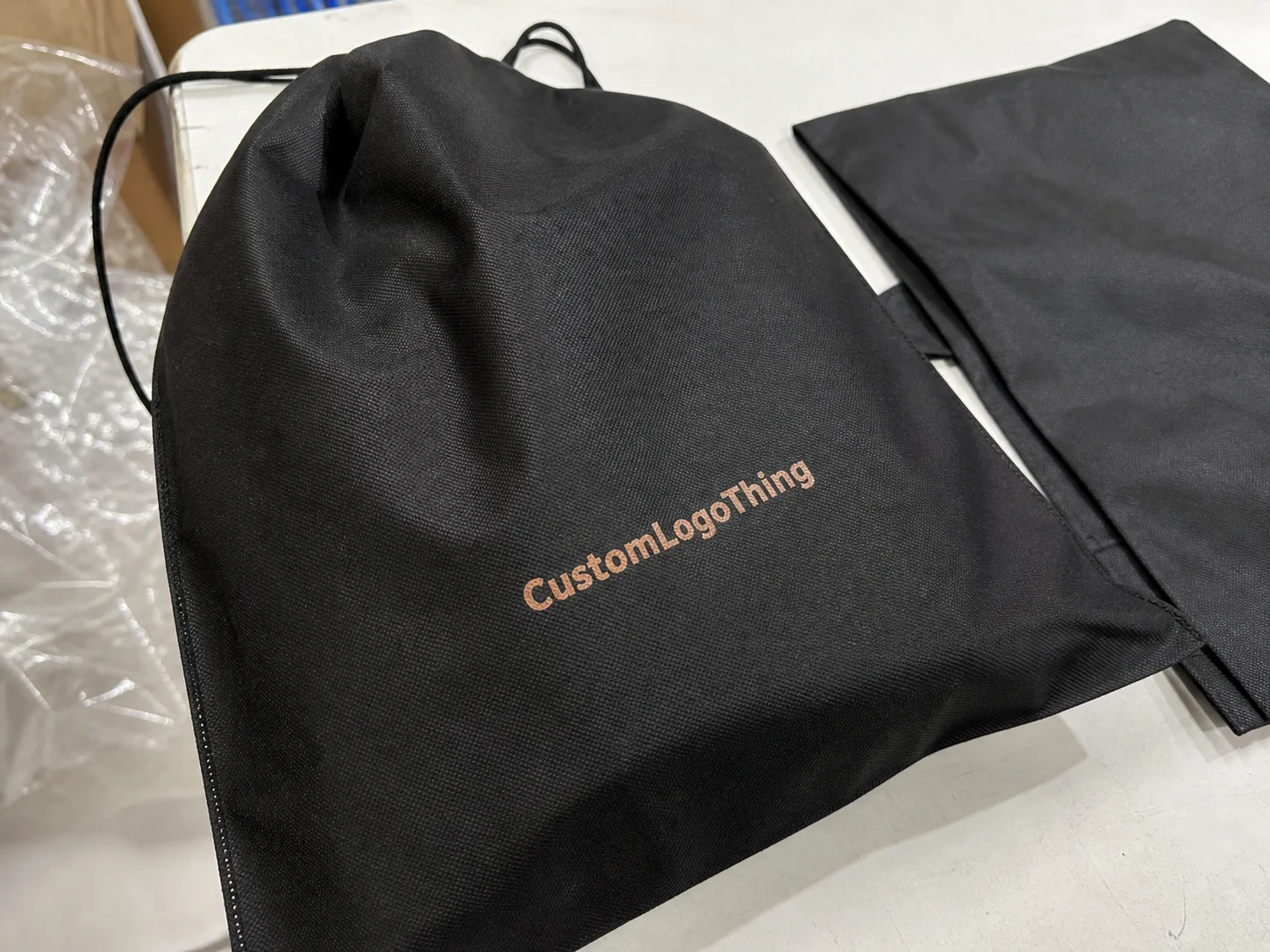
A pair of shoes can arrive in perfect condition and still feel less valuable if the packaging looks careless. A wrinkled bag, a yellow tint, or a pouch that hangs too loosely around the product suggests that the packaging was chosen too quickly. In retail settings, that matters because the customer often sees the bag before they touch the shoe.
The practical job is straightforward: keep dust off the surface, reduce scuffing during transport, separate left and right pairs when needed, and make storage easier for the retailer or end user. In ecommerce fulfillment, the bag also keeps tissue, inserts, and accessories together so the carton opens in a cleaner sequence. For seasonal footwear, it can double as a storage sleeve that keeps pairs identifiable in a closet or warehouse.
You will see these bags with sneakers, loafers, dress shoes, sandals, and boot accessories. They also appear in promotional bundles, travel sets, and returns workflows. A good bag disappears into the experience. A weak one becomes the experience.
“If the bag looks like it was chosen in a hurry, the product feels that way too.” That is the kind of packaging truth buyers usually learn after one or two disappointing runs.
The rest of the discussion should stay on the packaging side: materials, fit, print setup, lead time, and cost drivers. That matters because the cheapest-looking version is not always the cheapest order, and the neatest-looking version is not always the one that survives handling.
Custom shoe bags and the material choices that change performance
Most custom shoe bags are made from LDPE, PP, or CPP film, and each behaves differently. LDPE is soft and forgiving, with good flex and a less brittle feel. It is often chosen when the bag needs to fold easily around a shoe and survive repeated handling. PP is clearer and stiffer, so it can look sharper on shelf, though it tends to feel crisper. CPP sits between the two for many buyers, offering good clarity and a smoother presentation than a soft polyethylene bag.
Closure style matters just as much as film choice. A flap seal is simple and economical for display bags. A zipper seal or drawstring closure makes more sense for storage and travel, where the user may reopen the bag often. Heat seals work well for a cleaner retail finish, while a hang hole is useful when the bag needs to be displayed on peg hooks. If the shoes are delicate or should not sit in a fully sealed environment for long periods, a venting option may be worth asking about.
Thickness should match the actual footwear, not just the budget target. A compact flat in a lighter film can work at a lower gauge because the stress on the corners is modest. A boot with hardware, sharp eyelets, or a heavy heel is a different story. Thin packaging can fail fast there, usually at the seam line or the corner stress points. In real use, puncture resistance and slip are not abstract specs; they decide whether the bag still looks presentable after warehouse movement and retail handling.
Finish changes the perception too. Glossy film often reads cleaner under retail lighting, while a matte or frosted finish can hide scuffs and fingerprints better. If branding is minimal, a matte look may feel more premium because it reduces glare and gives the logo a quieter presence. If the product needs to stand out from across the shelf, clearer film with controlled print coverage can work better.
Sustainability choices should be handled with a practical lens. Recycled content, downgauged film, and recyclable resin claims can help, but the tradeoff is real: lower resin use may reduce material cost and environmental impact, yet it can also reduce stiffness or seal margin if the spec is pushed too far. On the documentation side, it helps to ask for evidence and align with recognized sourcing expectations such as FSC when paper components are involved, or with broader packaging sustainability guidance from the EPA when end-of-life claims are part of the brief.
In practice, the best material choice is the one that fits the shoe, the shelf, and the handling route. You do not need the heaviest film in the catalog. You need the film that holds its shape long enough to do the job well.
Sizing, gauge, and print setup for a clean fit
Fit starts with measurement, and not just the shoe itself. Measure the finished shoe or boxed pair, then add room for any tissue, inserts, dust protection, and the closure style. Skip that step and the bag either squeezes the product or hangs loose enough to suggest a mismatch. With custom shoe bags, a few millimeters can change how the product sits, especially around heels, toe boxes, and stacked pairs.
Gauge selection should follow the profile of the footwear. A lightweight flat may work in a thinner film because there is less stress on the corners. A heavier boot or a shoe with hardware usually needs more gauge to avoid seam fatigue and to keep the bag from tearing where the product presses against it. The goal is not bulk for its own sake. The goal is enough structure that the bag still looks intentional after packing, transit, and shelf handling.
Artwork setup is where many otherwise good orders slow down. Large logos usually behave better than tiny fine-line copy, because thin text is more likely to blur or disappear depending on the film finish and print process. Dark backgrounds need more careful proofing because coverage, registration, and opacity all affect the final result. A clean dieline, clear bleed, and a realistic understanding of registration tolerance will save time and reduce revision loops.
Brand placement should also reflect how the bag is used, not just how it looks flat on a screen. If the bag is folded into a carton, stacked in a warehouse, or hung on a retail hook, the logo needs to stay visible in those conditions. Leave room for size labels, barcodes, care icons, and any handling marks needed for fulfillment. That small planning step keeps packaging design from fighting with operations.
Here is the simple logic buyers usually rely on:
- Too tight means stress on seams, corners, and closures.
- Too loose means wasted material and a sloppy presentation.
- Right-sized means the shoe sits cleanly, the logo stays visible, and packing moves quickly.
A sample or mock-up is not optional if the footwear profile is unusual. One physical check can catch a bag that looks elegant on paper but awkward in the hand. That is especially true for boots, high heels, and larger size runs where the shape changes more than the nominal dimensions suggest.
Production steps and timeline from artwork to packed cartons
The cleanest projects follow the same sequence: request for quote, size confirmation, artwork review, proof approval, sample if needed, production, quality check, packing, and freight booking. Skip or rush one step and the schedule usually pays for it later. That is especially true when the buyer is ordering custom shoe bags for multiple shoe styles at once.
The biggest timeline drivers are print complexity, material availability, closure style, sample revisions, and the number of SKUs being launched together. A single-size run with simple one-color branding is straightforward. A multi-SKU rollout with varied dimensions, multiple print areas, and special closures takes longer because more variables need to be checked before the line can run confidently.
Lead time is often lost in avoidable ways. Incomplete specs, fuzzy logo files, missing ship-to details, and late changes after sample approval are the usual culprits. From a production point of view, the fastest job is not the one with the shortest promised timeline. It is the one with the least ambiguity.
If you want a shorter turnaround, send final dimensions, define the shoe type, confirm quantity, and supply artwork in the correct format before asking for a quote. A supplier can move faster when they are not spending two days reverse-engineering the order. That matters even more when the bags need to ship with other custom printed boxes or broader branded packaging items.
A standard production run and a rush order are not the same thing. A rush can sometimes accelerate artwork review, sampling, or line scheduling, but it cannot erase material lead times, machine availability, or transit constraints. If the spec is complex, the rush premium may buy less than expected. That is why the first approval cycle should be as clean as possible.
For buyers who want to keep the process disciplined, simple manufacturing checks and transit testing help. Organizations such as ISTA provide useful context for shipment testing, especially if the bags are part of a larger packaging system that has to survive the last mile.
Cost, pricing, and MOQ: what drives the quote
Price is mostly a function of material, size, print complexity, and quantity. Larger bags consume more film. Thicker gauge raises resin cost. More print colors or more coverage increases setup and production time. Added features like zippers, drawstrings, hang holes, or special surface finishes push the quote higher because they change the conversion process.
MOQ exists because setup work has to be spread across enough units to keep the unit cost workable. That includes print preparation, machine setup, and often packaging configuration. A small run is possible in many cases, but the unit price will usually rise because the fixed work does not shrink in proportion to the order. Buyers sometimes focus only on the bag cost and ignore those setup mechanics, which is where budget surprises start.
Ask about hidden line items early. Artwork setup, cylinders or plates if applicable, sampling, carton configuration, and freight can all shift the final number. For imported goods, customs and duty exposure may also matter depending on origin and destination. If a quote looks unusually low, compare the actual specification before you compare the number. A cheaper bag with thinner film, lower print coverage, or a smaller closure may not be equivalent at all.
| Spec option | Typical use | Tradeoff | Indicative unit cost at 5,000 pcs |
|---|---|---|---|
| LDPE, simpler one-color print | Everyday retail or storage bags | Soft feel, good value, less rigid presentation | $0.12-$0.20 |
| PP or CPP with clearer finish | Premium shelf presentation | Sharper look, can cost more and may show scuffs more easily | $0.16-$0.28 |
| Heavier gauge with zipper or drawstring | Travel, returns, repeat use | Better handling, higher material and conversion cost | $0.24-$0.42 |
| Special finish or higher print coverage | Gift sets, premium package branding | Stronger visual impact, longer proofing and setup | $0.20-$0.38 |
Those figures are directional, not promises. The actual quote depends on dimensions, resin market conditions, print method, and shipping terms, and it can move if the artwork or structure changes after sampling. Still, the ranges are useful because they show how quickly a small change in spec can move the order from value-friendly to premium-priced.
A practical budgeting tactic is to simplify first. Choose the smallest bag that still fits correctly, keep the print count tight, and add premium features only where they improve shelf appeal, durability, or warehouse efficiency. That approach usually beats trying to build the most elaborate version on the first pass.
Mistakes that make shoe packaging look cheap or fail in use
The most common mistake is poor sizing. A bag that is too small will strain at the seams and distort the shoe shape, while one that is too large looks improvised and wastes material. Neither result supports premium product packaging. Buyers sometimes accept the larger bag because it is easier to pack, but that convenience comes at a visual cost customers notice immediately.
Material mismatch is another frequent problem. A film that is too soft can look foggy or clingy, while one that is too stiff may crack or crease unattractively. Weak seals, static cling, and corner scuffing often trace back to the wrong combination of gauge and resin type. If the bag tears during handling, the issue is usually not the logo. It is the structure.
Real retail and fulfillment environments are rougher than a proof image. Bags get stacked, dropped into cartons, rubbed against tissue, and handled by people who are moving quickly. Dust, friction, and pressure expose weak packaging faster than a showroom sample ever will. That is why shoe bags should be evaluated with the actual route in mind, not only on a white background.
Artwork mistakes can make a good bag look careless. Low-contrast logos disappear. Text placed too close to the seal line gets cropped or distorted. Size marks that are readable on screen may vanish on film if the line weight is too light. Dark backgrounds may also hide detail if the print coverage is not tested carefully. The fix is simple: proof the bag at actual size and look at it from the distance at which it will be seen in use.
Barcode placement deserves more attention than it usually gets. If the code sits where the bag folds or curls, scanning becomes frustrating. If carton count or packing method is not defined early, fulfillment can slow down even when the finished bag looks good. A bag that photographs well but creates rework at packing is not a good order.
The strongest brands pay attention to the small operational details because those details shape customer trust. That is as true for shoe packaging as it is for any other retail packaging format.
Next steps for a cleaner brief and a faster approval
The fastest way to get a sensible quote is to build a one-page spec sheet. Include the shoe type, finished dimensions, film choice, closure style, print requirements, quantity, and ship-to destination. If the supplier has those details up front, they can quote accurately instead of guessing that the bag should fit everything loosely enough to be usable.
Send a physical sample, product photo, or boxed pair if you can. That one reference point tells the supplier much more than a verbal description. A picture is useful; a sample is better. When the shape is unusual, that extra step can save a full revision cycle and keep production from drifting.
It also helps to request one or two alternates in the quote. Compare a lighter film against a slightly heavier one, or a simpler print layout against a higher-coverage version. That gives you a practical way to weigh cost against appearance before you lock the spec. Sometimes the middle option is the right one, not the cheapest or the most elaborate.
During proof review, confirm color, readability, seal quality, and handling behavior. Check how the bag folds, how the logo lands when stacked, and whether the closure feels natural in the packer’s hands. Then stop changing the spec. Revisions after approval are where schedules and budgets usually drift.
The best custom shoe bags order starts with a clear brief, a realistic budget, and one clean approval cycle. That is how you get a bag that protects the footwear, supports the brand, and moves through production without unnecessary trial and error.
What are custom shoe bags usually made from?
Most are made from LDPE, PP, or CPP film. The right choice depends on whether the bag needs more softness, more clarity, or a stiffer retail presentation, and whether it will be used for display, storage, travel, or shipping protection.
How do I size custom shoe bags for different shoe types?
Measure the shoe or boxed pair first, then add room for the closure style, any inserts, and the handling margin needed on the line. Sneakers, heels, and boots usually need different dimensions because their profile and pressure points are not the same.
What affects custom shoe bag pricing the most?
Size, film thickness, print colors, closure style, finish, and quantity are the biggest drivers. Setup charges, samples, and freight can also change the total, so quotes should be compared using the exact same spec.
How long does production usually take for custom shoe bags?
Timeline depends on artwork readiness, proof approvals, sample needs, material availability, and the complexity of the structure. A clean spec package usually moves faster because there are fewer revision loops before production starts.
Do custom shoe bags need a minimum order quantity?
Yes, most suppliers use an MOQ because setup, printing, and machine time have to be spread across enough units to keep the unit cost workable. Higher quantities usually lower the unit price, while smaller runs can be possible but less economical.
Can shoe bags be used for more than footwear?
They can, but the fit and closure style should still be matched to the product. A bag that works for a pair of dress shoes may also handle accessories or travel items, but the spec should be checked so the package does not look improvised.
Done well, custom shoe bags protect the footwear, support the sale, and make the brand look more deliberate from the first touch. That is a small format with a lot of influence, and it pays to spec it with the same care you would give any other packaging decision.

