Custom Size Labels look simple on a screen. Then they meet a real garment. That’s usually where the trouble starts.
A label has to fit a specific space, survive sewing, hold up in washing, and still read cleanly after all of that. Too wide, and it bunches. Too stiff, and it irritates the skin. Too much text, and the whole thing turns into a tiny wall of regret.
For apparel brands, labels are not filler. They affect perceived quality, product consistency, and how finished the garment feels when a customer first picks it up. A well-sized label supports the garment. A bad one makes even decent production look careless.
That matters whether you’re building tees, hoodies, kidswear, activewear, or a small private-label line. The right spec saves time later, especially when reorders, packaging, and different product tiers all need to stay aligned.
Custom size labels: what they are and why fit matters
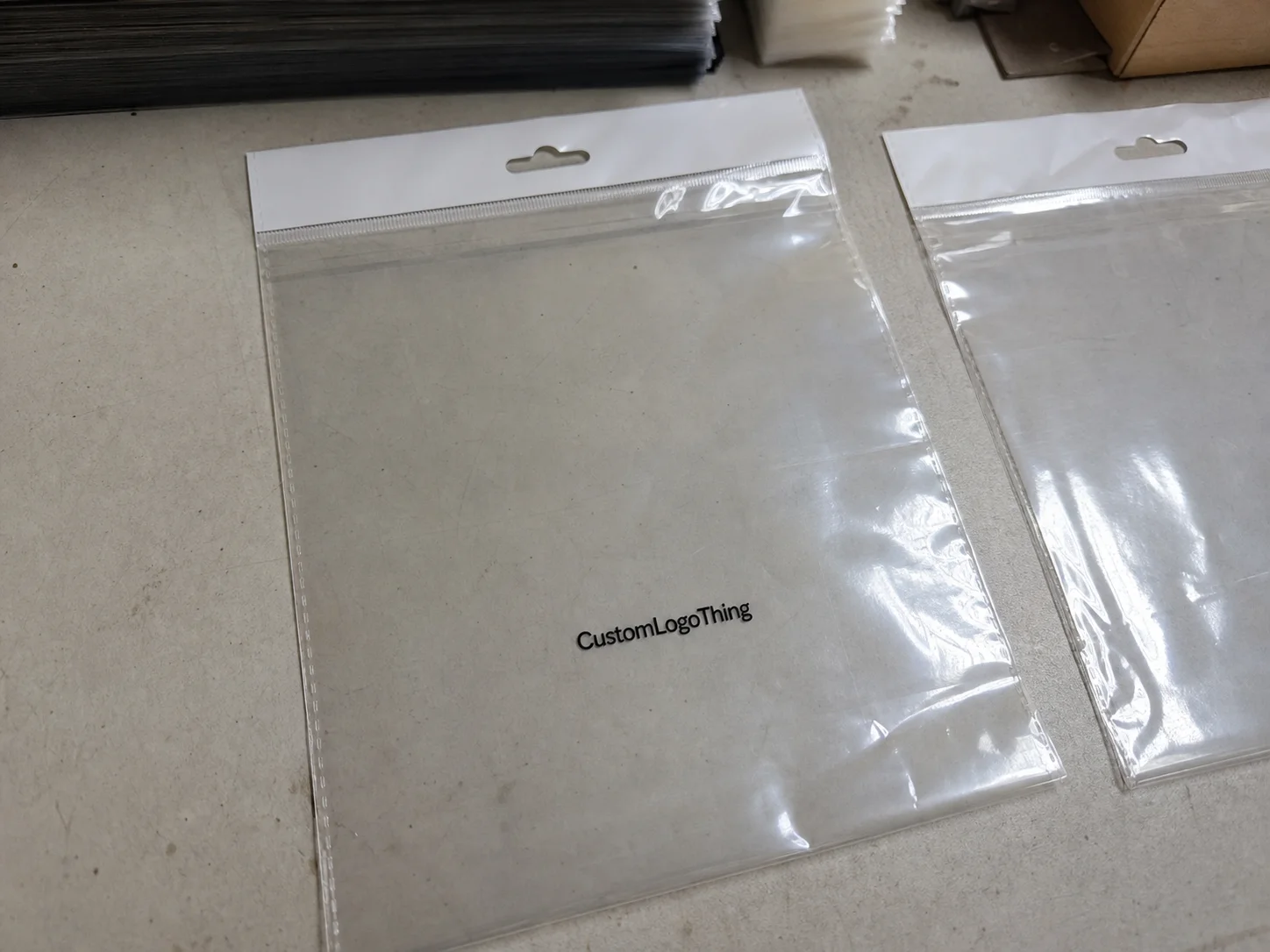
Custom Size Labels are made to your exact dimensions and finishing requirements instead of a stock dimension. That includes the width and height, but also fold style, artwork placement, material, trim, and whether the label is woven, printed, satin, cotton, or heat transferred.
The practical job is obvious: fit the garment without looking forced. The brand job is a little less obvious: make the product feel intentional. A label that suits the neckline and fabric weight can make a garment look more expensive even when the rest of the build is straightforward.
Stock sizes can work for basic programs. Once your line gets more specific, they start to feel generic. They also limit how much content you can include without compressing the text or crowding the layout. That’s not a great trade if your brand already puts effort into Custom Labels & Tags or packaging presentation.
The wrong size can create a few different problems at once. A label that is too large may pucker at the seam. A label that is too small may force the type down to an unreadable size. A rough backing can be fine on a heavyweight hoodie and miserable on a light tee. Buyers usually notice the issue after samples arrive, which is a little late and a little expensive. Very on brand for production, honestly.
A label is part of the product, not an extra. If it feels wrong, customers notice before they can explain why.
For premium apparel, the label spec should match the garment tier. A simple woven size mark works on many basics. A softer printed or satin label may be better for a lightweight line where comfort matters more than texture. The point is fit: physical fit, visual fit, and brand fit.
How custom size labels work from artwork to garment
The process usually starts with a spec request. You provide artwork, size information, dimensions, placement, material preference, and quantity. The supplier checks the details, sends a proof, and production begins after approval.
That sounds straightforward. It mostly is. The issues show up in the gaps between “what looked fine in design” and “what actually fits on fabric.”
Woven labels are common for brand marks because they feel finished and hold up well. Printed labels handle fine detail and small text better, especially when the label includes care instructions or dense size information. Satin is smoother and often used for neck labels. Cotton can suit softer or more natural product lines. Heat transfer is popular when the brand wants a tagless feel and no sewn-in bulk.
Each construction behaves differently once it’s cut, folded, and sewn. A center-fold woven label loses visible space because part of the label disappears into the seam. A flat-cut label shows more area, but it may need a different sew position. A heat transfer may look clean on paper and still fail if the garment fabric, temperature, or press time is wrong. The label spec and the application method need to work together. Magical thinking does not help here.
Mockups are useful, but only if they’re treated as tools, not proof of success. A digital file can catch spelling, spacing, and color issues. It can also hide the fact that your size mark is too close to the edge or your care text becomes microscopic at actual size. If the proof looks crowded, it will not magically improve on the garment.
For broader Custom Packaging Products planning, the same principle applies to inserts, cartons, and hang tags. The graphic file matters, sure. But the physical item is what customers touch.
Key factors that change label size, look, and readability
Size alone does not determine whether a label works. Layout, material, fold, and garment type can change the finished result quite a lot.
Dimensions and content load come first. A label with only a size mark and small logo needs very little space. Add brand name, care text, fiber content, and country-of-origin details, and the layout needs breathing room. Trying to fit too much into a narrow label usually forces the type smaller than it should be. That becomes a problem after a few wash cycles and a few hundred sales.
Material choice affects both comfort and durability. Woven labels are durable and often feel more premium, but they are not always the softest option. Printed labels can carry finer lines and more text, which helps when readability matters more than texture. Satin feels smoother against the skin. Cotton can suit softer branding. Heat transfer removes sewn-in bulk, which is a plus for tagless comfort, though application has to be controlled carefully.
Fold style changes the visible area more than new buyers expect. A center fold hides part of the label inside the seam. End folds suit some hem placements. Loop folds work well for brand marks on seams or outer edges. Flat cut labels give you the most visible surface, but they also need more careful sewing. The fold should be decided before final artwork layout, not after.
Garment type changes the tolerance for thickness and stiffness. Stretch fabrics can pucker if the label is too rigid. Lightweight tees usually need a softer hand feel. Heavy fleece can hide more structure, but that does not mean any label will do. Kidswear usually needs a softer finish and smaller footprint because comfort complaints show up fast. Activewear often needs the cleanest, lightest construction possible because bulk is more noticeable on technical fabrics.
If your label program sits next to custom printed boxes or other retail packaging, the visual tone should stay consistent. Premium outer packaging with a rough, oversized label inside feels off. Customers may not name the mismatch, but they notice it.
| Label style | Best for | Typical strengths | Common tradeoff |
|---|---|---|---|
| Woven | Brand marks, premium apparel | Durable, polished, clean branding | Less ideal for very small text |
| Printed | Care info, tiny text, soft feel | High readability, low bulk | Can feel less textured |
| Satin | Neck labels, fashion basics | Smooth hand-feel, comfortable | May show wear sooner than woven |
| Heat transfer | Tagless apparel, performance wear | Clean finish, no sewn label bulk | Needs correct application conditions |
For handling and transit, basic test standards help when labels are packed with garments or inserted into shipping cartons. ISTA protocols are useful if you want to understand shipping stress better. If your packaging strategy involves recycling or waste reduction goals, EPA recycling guidance is a practical reference. Not exciting. Useful anyway.
Custom size labels pricing, MOQ, and unit cost
custom size labels pricing depends on quantity, dimensions, material, number of colors, folding, finishing, and whether the order needs special handling. Small runs cost more per piece. Larger runs usually bring the unit price down. That is the normal structure of setup-based manufacturing, and no one has invented a better way to pay for tooling yet.
For many apparel label orders, simple woven or printed pieces at higher volumes may land around $0.08 to $0.20 per label. More complex versions, special finishes, or lower quantities can push that to $0.20 to $0.45+ per label. Very small orders tend to look expensive because setup costs are spread across fewer pieces. If you’re ordering 250 units, you are not buying at the same economics as 5,000.
MOQ means minimum order quantity, and it changes with the spec. Basic labels may have a lower MOQ. Exact Pantone matching, unusual dimensions, special folds, or more detailed construction usually raise it. If a supplier quotes one quantity only, ask for pricing at multiple breakpoints. The difference between 500 and 1,000 can be enough to change the decision.
| Quantity | Typical per-label range | What usually happens | Best use case |
|---|---|---|---|
| 250 | $0.18-$0.45 | Higher setup share, more expensive per piece | Testing a new label design |
| 500 | $0.12-$0.30 | Better balance of cost and flexibility | Small brand launches |
| 1,000 | $0.08-$0.22 | Common breakpoint for real savings | Core product lines |
| 5,000 | $0.05-$0.15 | Lower unit cost, more efficient setup | Repeatable best-sellers |
Watch for hidden cost drivers: rush fees, artwork cleanup, reproofing, color matching, special adhesive or backing, and packaging changes that affect labor. Those items are rarely dramatic on their own. Together, they can move the order enough to matter.
Budget for samples and a little waste if you are launching a new line. A rejected prototype costs less than a full production run that looks right in a spreadsheet and wrong on the garment.
For premium collections, label cost should be considered alongside branded packaging and other finishings. A slightly higher unit price can be justified if the label supports the overall presentation and product tier. That’s a business decision, not a cosmetic one.
Production steps and turnaround: from proof to delivery
The production flow usually follows a familiar pattern: quote request, spec confirmation, digital proof, approval, production, quality check, and shipment.
For standard orders, turnaround is often 12 to 15 business days after proof approval. Simple runs can move faster. More customized work can take longer. If the order needs exact color matching, special finishing, or a new die line, allow extra time. Revisions can add days. So can unclear artwork, and that one is painfully common.
Most delays come from avoidable problems. The file is low resolution. The size changed after proofing. Someone forgot to confirm placement on the garment. The care text was added late. The customer realized the visible area was smaller than expected after the first sample arrived. None of this is mysterious.
If the labels have to arrive before a launch, trade show, or seasonal drop, add a buffer. “On time” is a great plan until one proof revision turns into three. Production schedules do not care about your calendar.
If labels are being sewn in by a contract factory, application requirements matter. Some factories need specific fold types or trim methods to keep the line moving. If you apply labels in-house, your team may need a heat press setting, stitch guideline, or placement jig. A label that looks good in mockup can still slow production if the handling is awkward.
Step-by-step guide to ordering the right label size
If you want the right label size, start with the garment instead of the artwork. That saves more time than most people think.
- Identify the placement. Neckline, waistband, side seam, hem, or inside back panel each have different space limits.
- Measure the usable area. Measure the actual stitched space, not the empty patch before seam allowances and folds are considered.
- List the required content. Size only, or size plus brand, care details, and compliance text. Every extra line needs space.
- Choose the material and finish. Match the label to comfort, wash durability, and the garment’s price point.
- Request a mockup or sample. A screen preview is not enough when you need real dimensions.
- Check readability at actual size. Zooming in on a laptop makes everything look better than it will in real life. Convenient, if the goal is disappointment later.
For neck labels, the big question is how much content can fit before the label feels crowded. For hoodies, there is often a bit more room because the construction tolerates a larger label. For activewear, softness and stretch tolerance matter more than decoration. For kidswear, keep the footprint modest and the backing soft. Comfort complaints are faster than email replies.
A solid spec sheet should include the following:
- Exact finished size in inches or millimeters
- Material type and thickness
- Fold style and trim method
- Artwork version and Pantone references if needed
- Placement on garment
- Quantity and reorder code
That level of detail reduces back-and-forth and keeps reorders consistent. It also helps the label stay aligned with the rest of your packaging design system, which matters if your product packaging and garment presentation are meant to feel connected.
Common mistakes when ordering custom size labels
The most common mistake is trying to cram too much into too little space. If the dimensions cannot support the content, the label will look compressed once sewn in. It may technically be correct. It still won’t look good.
Material choice is another weak spot. A label can pass a digital proof and still feel rough, thick, or scratchy on the body. That issue shows up often with neck labels and performance apparel. Buyers tend to focus on artwork and forget that the customer wears the label against skin.
Fold style gets ignored more often than it should. A center fold hides part of the label. A loop fold changes the orientation. A flat cut label can require more seam space than expected. If you don’t account for those changes early, the final visible area may not match the mockup.
Screen previews are useful, but they can create false confidence. Everything looks larger and cleaner on a monitor than it does on a garment. That’s why sample approval matters, especially if the label is tied to a launch or a premium line.
Skipping samples to save a few days usually costs more later. The label gets revised. The order gets delayed. Someone has to explain why the size mark is suddenly half-hidden. Productivity, apparently, is optional until the mistake shows up.
Expert tips and next steps for a cleaner label order
Use one master spec sheet for every label order. Keep the size, material, fold, placement, color references, and artwork version in one place. It sounds dull because it is dull. That’s the point. Dull documents prevent expensive mistakes.
If you’re choosing between two label sizes, ask for samples. The better option is usually obvious once the label is in hand and placed on the actual garment. Flat measurements do not tell the whole story after stitching and folding.
Match the construction to the product tier. Basic pieces do not need premium label treatment everywhere. Higher-end lines usually justify softer materials, cleaner finishing, and more precise detailing. The label should feel appropriate for the garment and the price point.
Keep approved files archived. Reorders drift when someone edits the artwork without tracking the original dimensions. One revision can change the visible size enough to throw off the entire production spec. That is how “just a small update” becomes another round of proofing.
Before ordering, do the following:
- Measure the garment area
- List every content requirement
- Choose a material based on comfort and durability
- Request a quote with exact specs
- Compare a sample before full production
If you want clean results, build custom size labels around the garment first and the artwork second. That approach avoids wasted stock, awkward reprints, and the classic “why does this look bigger on paper?” problem.
FAQ
What size should custom size labels be for shirts and hoodies?
Most shirt neck labels only need enough space for the size mark and a short brand element, often around 1 inch by 1 inch to 1 inch by 1.5 inches depending on fold style. Hoodies usually allow slightly more room because the neckline and fleece construction can handle a larger label. The right size depends on seam allowance, visible area, and how much content you need to fit.
Are custom size labels better woven or printed?
Woven labels usually look more premium and work well for simple branding. Printed labels are better when you need very small text, care instructions, or a softer feel against the skin. The best choice depends on fabric type, comfort, and how detailed your size label needs to be.
How much do custom size labels cost per piece?
Unit cost depends on quantity, material, size, colors, and finishing. Higher quantities usually lower the per-piece price, while very small orders cost more each because setup costs get spread over fewer pieces. Ask for pricing at multiple quantity tiers so you can see the real break points.
How long does it take to produce custom size labels?
Standard production often takes about 12-15 business days after proof approval, though simple orders may move faster and more customized orders may take longer. Delays usually come from artwork revisions, color matching, or spec changes. Build extra time into your schedule if the labels must arrive before a launch or seasonal drop.
Can I order custom size labels in small quantities?
Yes, but small runs usually have a higher unit price because setup costs are spread over fewer pieces. Small quantities are useful for testing a new apparel line or validating a design before scaling. If you expect repeat orders, ask about volume pricing and reordering consistency.


