Custom Stickers Logo Basics: Small Labels That Carry Big Brand Weight
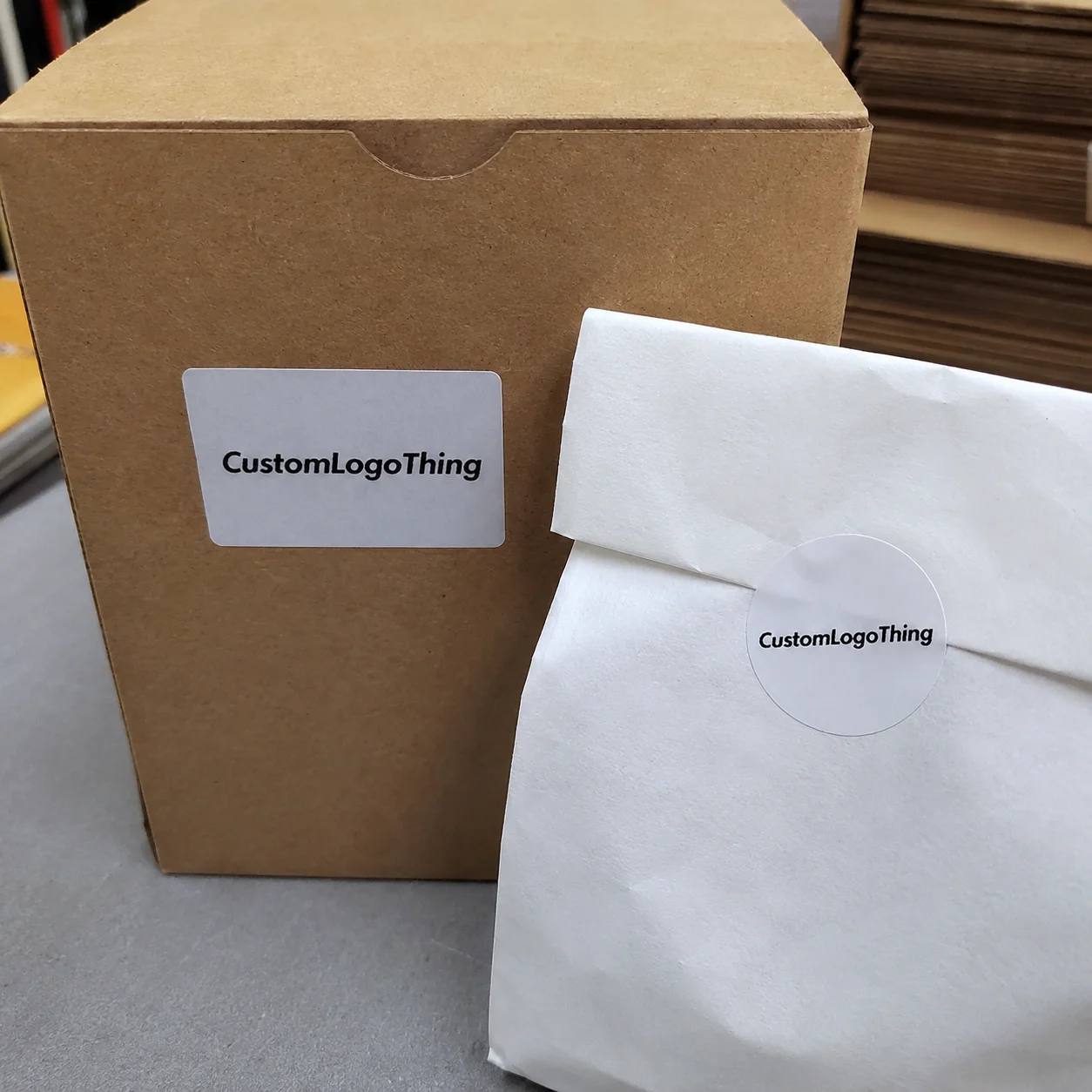
A sticker may be the first branded object a buyer touches, keeps, photographs, or peels away from a package. That is why a custom stickers logo order needs more attention than “put the mark on adhesive paper.” The piece is small, but it can seal a box, identify a flavor, dress up plain packaging, support a launch campaign, or turn a shipping insert into something worth saving.
In packaging terms, logo stickers are branded adhesive components made with a company mark, color system, message, product identifier, or promotional graphic. They show up on retail boxes, mailers, jars, bakery cartons, shopping bags, tissue wrap, sample kits, event giveaways, and branded inserts. Some are decoration. Others are doing real operational work.
That distinction changes the specification. A decorative sticker on a gift bag may only need to look polished for a few days. A product label may need ingredients, a barcode, batch information, or regulatory copy that stays readable. A packaging seal has to bridge a closure, bend over a flap, and resist edge lift. A giveaway decal should peel cleanly from the liner and survive on a laptop, bottle, notebook, or tool case.
The correct build depends on surface, handling, temperature, moisture, shelf life, and removal requirement. Glass behaves differently from kraft paper. A matte pouch is not a coated folding carton. A sticker for a refrigerated beverage faces condensation; one for a candle jar may face oil, heat, and repeated handling.
Shop-floor rule: start with the real package, then make the artwork fit that job. Adhesive, face stock, ink, coating, and cut shape all affect whether the finished sticker still looks sharp after shipping, stocking, and customer handling.
How Logo Stickers Are Made From Artwork to Finished Roll or Sheet
A clean sticker order follows a predictable path: artwork review, file preparation, material selection, proofing, printing, coating or laminating, die cutting, waste stripping, finishing, counting, packing, and shipping. None of those steps is exotic. Missed details at the front end, however, can multiply quickly once 5,000 or 50,000 labels are on press.
Artwork should usually be supplied as vector art. AI, EPS, or editable PDF files keep edges crisp, especially on marks under 2 inches wide. Fonts should be outlined, linked images embedded, raster images kept high resolution, and Pantone or CMYK guidance stated clearly. If the sticker uses a custom cut line, white ink on clear stock, foil, spot UV, or embossing, those areas should be labeled on separate layers.
Output format matters early. Rolls suit fulfillment teams, packing benches, and automatic label applicators. They can be wound to a required direction with a specified core, often 3 inches for machine use. Sheets are practical for office use, hand application, retail packing, and short organized batches. Individually cut stickers fit events, mailer inserts, and promotional handouts because each piece feels like a finished item rather than a production label.
Most small and mid-size logo sticker jobs are produced digitally because setup is fast, version changes are easier, and short runs make financial sense. Digital printing fits quantities like 250, 500, 1,000, or several thousand pieces, especially when multiple designs share a campaign. Flexographic printing tends to suit larger repeat roll-label programs where the same size, material, and artwork run again and again. Setup is heavier, but running speed and roll efficiency can lower unit cost at volume.
Cut style affects both the look and the labor. A die cut sticker follows the outside shape of the design. A kiss cut sticker cuts through the face material but leaves the backing liner intact, making peeling easier. Squares, rectangles, circles, and ovals are usually the most efficient. Custom silhouettes can cost more when they require complex tooling, slower cutting, or extra waste removal.
Proofing is the buyer’s checkpoint. A digital proof should confirm size, logo placement, bleed, safe area, cut line, color callouts, spelling, version names, and barcode readability if a code is included. A physical sample gives better information about material feel, adhesive bite, opacity, and finish, though it can add several business days. For a new packaging launch, that time is often cheaper than a reprint.
Material, Adhesive, Finish, and Shape Choices That Change Performance
Paper stickers are economical and attractive for indoor, dry, short-term use. They suit bakery boxes, retail bags, mailer inserts, envelope seals, thank-you labels, and promotional sheets. A typical paper label might use semi-gloss or matte face stock with a permanent adhesive, printed in CMYK, then finished on rolls or sheets. For dry retail packaging, that may be enough.
Film materials raise durability. BOPP, vinyl, and polyester offer better water resistance, tear resistance, and dimensional stability than paper. BOPP is common for cosmetics, beverage labels, food jars, and curved containers. Vinyl is flexible and useful for decals or outdoor-style applications. Polyester is tougher and more stable, often selected for industrial labels, durable product IDs, or applications involving heat, abrasion, or chemical exposure.
Adhesive is the part buyers underestimate most. Permanent adhesive is a general-purpose choice for cartons, bottles, jars, and bags. Removable adhesive is used when the sticker should come off without tearing the surface or leaving heavy residue. Repositionable adhesive gives a short adjustment window during application. Freezer-grade adhesive is designed to bond at low temperatures. High-tack adhesive helps on rough corrugated board, textured paper, or harder-to-stick plastics. Low-tack adhesive suits temporary promotions, reusable surfaces, and delicate packaging.
| Sticker Component | Common Options | Best Fit | Buyer Watch-Out |
|---|---|---|---|
| Face material | Paper, BOPP, vinyl, polyester | Indoor retail, bottles, outdoor decals, durable IDs | Paper can wrinkle or tear when exposed to moisture |
| Adhesive | Permanent, removable, freezer, high-tack, low-tack | Cartons, reusable containers, cold goods, textured surfaces | Wrong adhesive can cause lift, residue, or package damage |
| Finish | Gloss, matte, soft-touch, clear, metallic, spot UV | Brand styling, shelf impact, premium retail presentation | Decorative finishes are not always protective finishes |
| Cut format | Circle, square, kiss cut, die cut, custom shape | Seals, labels, decals, giveaways, product identifiers | Fine shapes can slow production and make peeling harder |
Finishes change appearance and performance. Gloss makes colors pop and wipes clean more easily than uncoated paper. Matte reduces glare and gives a softer look. Soft-touch lamination feels premium but can show scuffs on heavily handled items. Clear stickers can look printed-on, but many designs need a white ink layer behind the color to prevent dull printing on glass or dark packaging. Metallic, holographic, spot UV, and embossing are mainly decorative; lamination, by contrast, can add real rub and moisture protection.
Surface energy is a real packaging issue, not a lab-only phrase. Stickers grip well to clean glass and many coated paperboards. Textured kraft, dusty corrugated, waxy surfaces, flexible pouches, and certain plastics can challenge adhesion. If a jar has oil on the rim or a pouch has a powdery matte coating, a standard adhesive may not bond the way it did on a proof sheet.
Test before committing. Apply samples to the actual package, wait at least 24 hours, then check edge lift, rub resistance, condensation response, and peel behavior. For refrigerated goods, test cold and wet. For candles or cosmetics, test against oils and handling. For shipping cartons, rub the label against corrugated and packing materials to see whether the print scuffs.
Pricing, MOQ, and Unit Cost: What Drives a Sticker Quote
Sticker pricing is shaped by size, material, adhesive, print colors, finish, cut complexity, quantity, roll or sheet format, and packing requirements. A 1.5-inch circle on matte paper is a very different job from a 4-inch die cut clear BOPP sticker with white ink, lamination, and individual trimming.
Minimum order quantity, or MOQ, is practical more than mysterious. Digital equipment can handle smaller runs, but very low quantities still carry setup, proofing, material waste, cutting, and packing labor. That is why 100 pieces may feel expensive per sticker while 1,000 pieces look more reasonable. The press still has to be prepared, the file checked, and the material run through finishing.
As quantity rises, unit cost usually drops because fixed work is spread across more pieces. For simple paper logo stickers, a short digital run might land around $0.18–$0.45 per piece at 500 units, while 5,000 pieces might fall closer to $0.04–$0.12 depending on size and finish. Film stickers, clear stocks, specialty adhesives, and custom shapes can push those ranges higher. These are planning ranges, not guaranteed quotes.
Cost adders include specialty films, metallic stocks, clear materials with white ink, custom dies, multiple artwork versions, tight color matching, variable data, special roll direction, shrink-wrapped bundles, and individually cut pieces. A buyer ordering ten flavor versions at 500 each may pay more than a buyer ordering one version at 5,000 because file handling, proofing, and changeover time increase.
| Order Scenario | Typical Format | Common Price Behavior | Good Buying Move |
|---|---|---|---|
| Launch test | 250–500 sheeted stickers | Higher unit cost, lower total spend | Use it to verify size, color, and adhesion |
| Small retail run | 1,000–2,500 roll labels | Better unit cost, practical for hand application | Ask for one or two larger quantity breaks |
| Repeat production | 5,000–25,000 roll labels | Unit cost often improves significantly | Keep size, material, and artwork consistent |
| Premium promotion | Die cut individual decals | Higher finishing and packing cost | Reserve specialty effects for high-visibility use |
Quote around real usage. If monthly packing volume is 2,000 orders, buying 500 stickers every week may waste money and create avoidable reorder pressure. If the sticker supports a seasonal campaign, plan overage for damaged pieces, events, influencer kits, or fulfillment mistakes. A 3% to 8% overage is often sensible for hand-applied labels, depending on the team and application speed.
Ask suppliers for two or three quantity breaks and a plain-language explanation of where cost efficiency begins. If 2,500 pieces cost only slightly more than 1,000, that is useful to know. For broader packaging design programs, compare stickers against printed sleeves, belly bands, or Custom Labels & Tags so the spend matches the job.
Production Steps, Timeline, and Turnaround Expectations
A normal ordering sequence looks like this: request quote, submit artwork, choose specifications, receive proof, approve proof, enter production, complete quality checks, pack, and ship. Turnaround usually starts after proof approval, not after the first inquiry. That point causes more schedule confusion than almost anything else in custom stickers logo buying.
If artwork arrives without dimensions, if the material is undecided, or if the buyer still needs internal approval, the job is not production-ready. Simple digitally printed stickers may often produce in about 5–10 business days after proof approval. More involved runs with specialty finishes, physical samples, custom tooling, or multiple SKUs may need 12–20 business days or more, especially if material must be sourced.
Timeline variables include material availability, lamination, foil, spot UV, embossing, custom dies, color matching, variable data, roll direction, inspection requirements, and shipping distance. For packaging programs tied to custom printed boxes, inserts, or other Custom Packaging Products, coordinate all components early so stickers do not arrive after the boxes are already packed.
Buyers can prevent delays by providing the finished size, final logo file, exact quantity, intended surface, application environment, deadline, and any roll specifications. If the sticker will be machine-applied, roll direction and core size matter. A label wound the wrong way may not feed through the applicator, which can stop a line even if the artwork is perfect.
For roll labels, state whether the copy needs to unwind top first, bottom first, right edge first, or left edge first. Confirm roll outside diameter limits if the applicator has tight clearance. Many production lines use 3-inch cores, while some hand-applied rolls use smaller cores. These details sound minor until a team is standing at a packing station with labels facing the wrong direction.
Build in time for sample testing if the sticker must survive refrigeration, moisture, abrasion, outdoor handling, or premium retail presentation. For transport-related packaging validation, standards from groups such as ISTA can help teams think through distribution stress, even though a sticker itself is only one part of the full package system.
Common Sticker Ordering Mistakes That Cause Reprints or Waste
The first mistake is choosing material based only on appearance. A beautiful uncoated paper sticker can fail quickly on a cold bottle, oily jar, or damp shipping environment. A glossy film label may look too slick for a natural kraft brand. Match the material to the use, then tune the appearance.
Low-resolution artwork is another common problem. A logo copied from a website may be only 72 or 96 dpi, which can create fuzzy edges, weak small type, and uneven curves. Fine rules, small registered marks, and thin type are especially vulnerable. For small sticker designs under 1.5 inches, clean vector art makes a visible difference.
Sizing errors are easy to miss on screen. A sticker may be too small for readability, too large for the panel, or placed too close to a fold, seam, handle, zipper, or closure area. Before ordering, print a paper mockup at 100% scale, cut it out, and place it on the actual package. That five-minute check can save a full reprint.
Color surprises happen for several reasons. RGB artwork can shift when converted to CMYK. Screens glow; ink sits on a surface. Kraft paper darkens colors. Transparent stock can make colors appear weak without white ink behind them. Pantone matching can help, but it still depends on material, coating, and print method. ASTM test methods are used throughout the packaging field for material and performance evaluation; buyers do not need to memorize every standard, but they should respect that ink, substrate, and adhesive behavior are measurable, not just visual.
Adhesive mismatch can create edge lifting on textured paper, residue on reusable surfaces, or an overly aggressive bond on delicate packaging. A high-tack sticker may grip a rough corrugated shipper beautifully but tear a premium paperboard gift box if the customer tries to remove it. A removable adhesive may peel cleanly from glass yet fail on a flexible matte pouch.
Skipping proof review is risky. Small errors in cut line, bleed, spelling, version names, nutrition callouts, QR codes, or barcode placement can multiply across hundreds or thousands of pieces. Scan codes from the proof if they are included. Check every version name against the order list. Confirm that the die line is not printed unless it is meant to be visible.
Next Steps Before You Order Branded Stickers for Packaging or Promotions
Before requesting a quote, gather the core details: finished size, quantity, artwork file, material preference, surface type, indoor or outdoor use, moisture exposure, finish, delivery deadline, and application method. If the best material is not clear yet, share the conditions honestly so the manufacturer can recommend a practical build.
Measure the actual package or surface before choosing sticker size. Mark the placement area with tape or a paper mockup. On a folding carton, avoid score lines and flap edges. On a jar, check the curve and taper. On a pouch, avoid zippers, gussets, and heavy flex zones. On corrugated, apply to the flattest possible panel and avoid dusty or crushed areas.
Decide what the sticker is supposed to do. Is it decorating, sealing, informing, promoting, or meeting a product labeling need? A seal may need a stronger adhesive and flexible shape. A promotional decal may need a pleasant peel and durable film. A product ID label may need barcode contrast and smudge resistance. A premium package branding sticker may need matte film, soft-touch lamination, or metallic detail.
- For glass: test clear or white BOPP, and check whether white ink is needed behind the logo.
- For kraft paper: test adhesive strength and color contrast because the surface can be textured and absorbent.
- For refrigerated goods: use film and freezer or cold-temperature adhesive when condensation is expected.
- For cosmetics: consider oil resistance, rub resistance, and curved container performance.
- For shipping cartons: prioritize high-tack adhesive, legibility, and abrasion resistance.
Request samples or a small test run for new materials, especially if the sticker goes on glass, plastic, kraft, refrigerated items, candles, cosmetics, or shipping cartons. For sustainability claims or fiber-based packaging programs, buyers can also review sourcing standards from organizations such as FSC when paper materials and certified supply chains are part of the brand requirement.
Brief the manufacturer with use conditions, not just the logo. Mention the package material, fill temperature if relevant, storage temperature, expected shelf life, whether the sticker must remove cleanly, and how it will be applied. Clear information reduces proof cycles and helps the production team recommend material, adhesive, finish, and format with fewer revisions.
A custom stickers logo project comes out cleaner, faster, and more cost-effective when artwork, surface, quantity, and timeline are defined before quoting. The sticker is small, but on real product packaging it has to print cleanly, stick properly, survive handling, and support the brand every time a customer sees it.
FAQ
What file type is best for a custom logo sticker order?
Vector files such as AI, EPS, or editable PDF are usually best because they keep logo edges sharp at any sticker size. High-resolution PNG or TIFF files may work for simple artwork, but small type, thin lines, and detailed marks reproduce better from vector art. Fonts should be outlined, linked images should be embedded, and cut lines or special finish areas should be clearly labeled.
How much do custom stickers with a logo usually cost?
Cost depends on size, quantity, material, adhesive, finish, cut shape, roll or sheet format, and whether specialty effects are needed. Unit cost usually falls as quantity increases because setup and finishing time are spread across more pieces. For an accurate quote, provide the finished size, quantity, surface type, intended use, artwork, and deadline.
Are waterproof logo stickers the same as weatherproof stickers?
Not always. Waterproof usually refers to moisture resistance, while weatherproof may also involve UV exposure, temperature swings, abrasion, and outdoor durability. Film materials with protective lamination are often better for bottles, coolers, outdoor gear, or products handled in wet environments. Testing on the real surface is important because adhesive performance can change with condensation, texture, and temperature.
What is the typical lead time for custom logo stickers?
Lead time varies by artwork readiness, proof approval, material availability, finish complexity, order quantity, and shipping method. Simple digital sticker orders can move faster than specialty finishes, Custom Die Cuts, color-matched runs, or large roll label projects. Turnaround should be counted from proof approval, so buyers should submit complete files and specifications early.
Should I order logo stickers on rolls, sheets, or individually cut pieces?
Rolls are efficient for production teams, fulfillment stations, and label applicators, especially when stickers are applied in volume. Sheets are convenient for hand application, office use, retail packing benches, and smaller organized batches. Individually cut stickers work well for giveaways, event handouts, package inserts, and promotional mailers.


