A premium product can survive freight without a scratch and still feel cheap in the first five seconds if it rattles inside the box. That little shake tells the buyer, fairly or not, that the packaging was treated as an afterthought. Custom Die Cut foam inserts solve that problem by holding each product, accessory, sample vial, tool, or gift component in a defined position, with the right balance of grip, visibility, and protection.
The job is not just cushioning. Good foam insert design controls movement, reduces scuffing, protects corners and edges, and gives packers a repeatable way to load every kit the same way. For branded packaging, that matters because the insert is often the first thing a buyer sees after opening the lid.
Custom Die Cut Foam Inserts: What They Are and Why Fit Matters
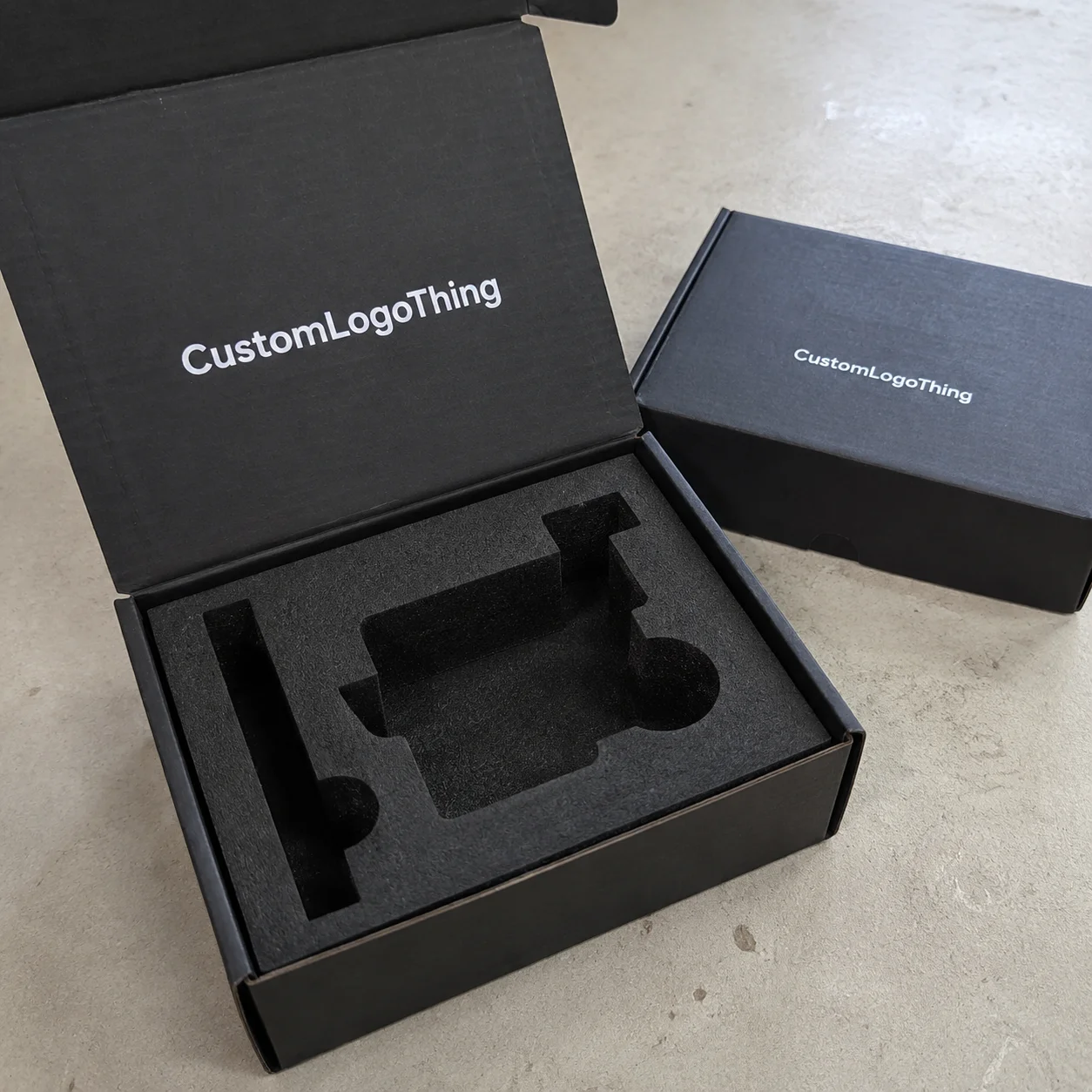
Custom die cut foam inserts are foam components cut to the profile of a product or kit, usually made to fit inside a rigid box, corrugated mailer, folding carton, presentation case, tray, or shipper. The cutouts may hold one hero item, a complete accessory set, a medical sample kit, glassware, electronics, tools, awards, replacement parts, or a promotional gift bundle. In practical terms, the insert turns empty air inside a box into controlled space.
Fit matters because products rarely fail in only one way. A glass award may need edge protection. A soft-touch cosmetic compact may need a non-abrasive surface that will not polish, rub, or leave a mark. A small electronics kit may need anti-static foam, cord management, and enough finger access so the user does not pry the item out with a pen. A heavy tool needs firm support, not a sponge that collapses under load.
From a packaging buyer’s point of view, the insert also affects speed on the packing line. If the cavity is too tight, operators slow down and push harder. If the cavity is too loose, the product shifts, looks crooked, and may need extra inspection. A well-made insert should let a packer load the product in a few seconds, close the box cleanly, and know the lid is not pressing too hard on the tallest component.
Packaging floor rule: if a sample looks beautiful on a desk but takes two hands and too much force to pack, it is not production-ready yet.
For retail packaging and sales kits, the visual order of the layout carries real weight. The product that should be lifted first needs the best access. The accessory that explains the product should not be hidden under a cable. These choices look small on a drawing. In a finished kit, they decide whether the package feels engineered or improvised.
How Foam Insert Cutting Works From Artwork to Finished Cavities
The basic workflow starts with dimensions. Product sizes, box inside dimensions, weights, fragility notes, and preferred presentation are translated into a cutting layout. From there, the foam sheet or block is selected, cavities are drawn, and the designer decides how deep each pocket needs to be. That layout is not the same thing as a print file. Foam has thickness, compression, recovery, grain, surface texture, and edge behavior.
Several cutting methods are common. Steel rule die cutting uses a formed cutting die and is efficient for repeat shapes, especially thinner sheets and larger production runs. CNC routing is often used for thicker foam, deeper pockets, stepped cavities, and profiles that need more control through the depth of the material. Laser cutting can create clean shapes in certain foam types, though material compatibility matters because some foams discolor, melt, smell, or are not appropriate for laser processing.
A product outline is only the starting point. Insert designers also consider finger notches, pull tabs, cavity depth, compression tolerance, lid clearance, and the direction a customer removes the item. A 100 mm wide product may not need a 100 mm wide hole. Depending on the foam, finish, and desired grip, the cavity may need slight clearance or slight compression. Two millimeters can change the user experience more than most buyers expect.
Common cavity styles
- Full-depth cavity: the product sits down into one continuous cutout, useful for simple shapes and stable items.
- Stepped cavity: different depths support uneven shapes, such as a device with buttons, feet, lenses, or handles.
- Layered build-up: multiple foam layers are laminated or stacked, often used for deeper inserts or more complex profiles.
- Top pad: a foam layer above the product reduces movement against the lid and helps protect taller or fragile surfaces.
Prototypes matter because foam inserts have to be judged by hand, not just by screen. A CAD drawing can show cavity position. It cannot fully show whether a packer can load 500 units without frustration, whether the item twists during removal, or whether a glossy surface drags across the foam face.
Foam Type, Density, Thickness, and Finish Choices That Change Performance
Foam selection changes both protection and presentation. EVA foam has a firm, premium feel and is common in presentation kits, tools, electronics, and branded gift packaging. Polyethylene foam is durable, resilient, and often chosen for protective packaging and shipping support. Polyurethane foam is softer and more open-cell, useful for light cushioning and gentle contact, though it may not give the crispest presentation face. Cross-linked foam usually has a finer surface and cleaner appearance, which can look sharper in retail packaging. Anti-static foam is used for electronics where electrostatic discharge is a concern.
Density and firmness are not just catalog numbers. Soft foam absorbs light contact and can protect delicate surfaces, but it may look less structured around a premium item. Firmer foam holds shape better and gives a cleaner reveal, but too much compression can make packing difficult or leave marks on coatings, painted parts, polished metal, or glossy plastic. A buyer may ask for “thick black foam.” The better question is: how heavy is the product, how fragile is the finish, and what should the customer feel when they lift it?
Thickness selection depends on product height, weight, fragility, and the outer package. A 3 mm or 5 mm pad may be enough as a liner or separator. Many presentation inserts land closer to 10 mm, 20 mm, 30 mm, or more, depending on cavity depth. Heavy products may need a base layer plus a top pad, while shallow accessories such as cards, cables, and instruction booklets may only need partial-depth pockets.
Color and finish choices also matter. Black foam gives strong contrast and hides dust better than white in many environments. White foam can create a clinical, clean look for medical, wellness, and lab-adjacent kits, but it shows handling marks quickly. Custom colors can support package branding, though minimums and lead times may rise. Laminated top layers can create a cleaner face, especially when the raw foam edge or surface texture does not match the desired presentation.
| Foam Type | Typical Feel | Best Uses | Buyer Watchouts |
|---|---|---|---|
| EVA foam | Firm, dense, premium | Gift sets, tools, electronics, presentation boxes | Can cost more and may need careful tolerance control |
| Polyethylene foam | Resilient, protective, structured | Shipping support, heavier products, parts kits | Surface may look industrial unless finished well |
| Polyurethane foam | Soft, compressible, cushion-like | Light cushioning, pads, delicate contact areas | Less crisp for high-end presentation cavities |
| Cross-linked foam | Smooth, fine-cell, clean | Retail packaging, sample kits, premium displays | Material cost and color availability can vary |
| Anti-static foam | Varies by grade | Circuit boards, small electronics, sensitive components | Confirm ESD requirements before choosing by color |
For electronics and other fragile goods, ASTM D4169 and ISTA transport testing principles can help frame the conversation around distribution hazards, even if the final test protocol depends on the product and sales channel. General package performance testing resources are available through ISTA. For paper-based outer cartons or sleeves, buyers may also ask about responsibly sourced board and chain-of-custody claims through groups such as FSC.
Process and Timeline: What Happens Before Production Starts
A clean foam insert project usually follows a practical sequence: share product dimensions or samples, confirm the outer box or case, choose foam material, create a cavity layout, make a prototype or pre-production sample, revise the fit, and then move into the production run. Skipping steps can save a few days upfront and cost much more later if 2,000 inserts arrive with a cavity that grips the product in the wrong place.
The fastest quotes usually include accurate product dimensions, weight, photos, drawings or CAD files if available, number of items per kit, box inside dimensions, target quantity, desired foam color, and notes about fragile surfaces. If the insert needs to fit inside Custom Packaging Products such as rigid boxes, mailers, sleeves, or custom printed boxes, the foam and outer package should be engineered together. Lid pressure, wall thickness, board caliper, and inside depth all affect the final insert height.
Timeline depends on material availability, tooling, prototype rounds, SKU count, complexity, and whether the project includes a matching box. A simple single-cavity insert in a common foam may move from approved layout to sample in roughly 5 to 10 business days. Production may take another 10 to 20 business days depending on quantity and shop load. A multi-layer kit with specialty color foam, tight tolerance cavities, and assembled packaging can take longer because every layer has to line up and every component has to pack consistently.
There are two approval checkpoints buyers should treat differently. A digital layout approval confirms cavity positions, item orientation, and overall geometry. A physical sample confirms hand-feel, grip, release, depth, lid clearance, and presentation. One is the map. The other is the real-world fit.
Practical approval tip: test the sample the way production will pack it, not gently and slowly like a desk review. Load it, close it, reopen it, remove the product, and repeat the motion several times.
For complex kitting, a simple item map should come before engineering begins. Number each component, mark the hero item, show which item should be lifted first, and note any surfaces that cannot rub. That small document can prevent three rounds of “almost right” samples.
Cost, Pricing, MOQ, and Unit Cost Drivers Buyers Should Know
Pricing for custom die cut foam inserts is shaped by foam type, sheet thickness, insert footprint, number of cavities, cutting method, tooling, waste percentage, order quantity, assembly labor, packing requirements, and inspection needs. Two inserts can look nearly identical in a product photo and still price very differently. A 30 mm EVA insert with tight cavities, laminated face, and hand assembly is not in the same cost lane as a 10 mm polyethylene separator with simple straight cuts.
Tooling and setup deserve a plain explanation. Steel rule die cutting may involve an upfront cutting tool, which can make sense when the shape repeats across hundreds or thousands of units. Digital cutting, CNC routing, or other tool-less methods can reduce hard tooling but may carry more machine time per piece. Neither path is automatically cheaper; the right method depends on quantity, thickness, tolerance, and profile complexity.
MOQ affects unit cost because setup, programming, sampling, material procurement, press time, and labor are spread across the run. As a rough planning range, a very simple thin foam insert at several thousand pieces may land well under a dollar per unit, while a thicker premium EVA insert with multiple cavities may run several dollars per unit or more. Prototypes may be billed separately, commonly from about $75 to $300+ depending on complexity and whether the sample requires routing, lamination, or assembly into a finished box. These are planning ranges, not promises, because material markets and project details move the number.
| Cost Driver | Lower-Cost Direction | Higher-Cost Direction | Why It Matters |
|---|---|---|---|
| Foam thickness | Thin pad or shallow insert | Deep cavity or multi-layer build | More material and more cutting time |
| Cavity count | One or two simple cutouts | Many shaped pockets and finger notches | More programming, cuts, waste, and inspection |
| Order quantity | Larger repeat run | Small prototype or short run | Setup costs spread across fewer units |
| Material grade | Standard PE or PU foam | EVA, cross-linked, anti-static, custom color | Material cost and availability change quickly |
| Assembly | Foam shipped loose | Foam packed into boxes or full kits | Labor, handling, QC, and cartonization increase |
Ask for pricing at two or three quantities, such as 500, 1,000, and 2,500 units, so you can see where the setup cost starts to soften. Confirm whether the quote includes the foam only, the foam packed into the box, or a complete product packaging set. Also ask whether prototype revisions are included, especially if the project has fragile finishes, medical organization requirements, or multiple accessories.
Inspection requirements can move cost too. A basic insert may only need dimensional spot checks and a visual review for clean edges, missing plugs, adhesive alignment, or burn marks where laser cutting is used. A higher-risk kit may need sample packouts from each production batch, lid-closure checks, cavity depth checks, and rub testing against coated or polished parts. Those checks take time, but they are cheaper than discovering during fulfillment that every third unit needs hand adjustment.
Common Mistakes That Make Foam Inserts Look Good but Pack Poorly
The most common mistake is designing from a top-view photo only. A top outline ignores product height, curves, buttons, cords, lids, hinges, soft coatings, polished surfaces, and fragile edges. A cavity may look perfect from above and still press against the wrong feature once the product drops into the foam.
Another mistake is making the cavity too tight. Buyers often ask for a “snug fit,” which is reasonable, but snug should not mean forced. Too much compression can slow packing, distort foam edges, and leave marks on soft-touch coatings, plated parts, painted metal, or glossy plastic. In some cases, a tiny finger notch or controlled clearance solves the issue better than opening the entire cavity.
The opposite problem is too much clearance. If the product can shift during handling, it may arrive crooked even if it survives transit. That crooked first impression hurts perceived value, especially in branded packaging where the open-box view is part of the sale. A retail buyer, influencer, distributor, or internal sales team may judge the kit before they ever touch the product.
Poor accessory planning causes headaches too. Cables need bend radius. Cards need a flat place where corners will not curl. Sample vials need height control and sometimes top restraint. Chargers, tools, replacement tips, booklets, QR cards, and warranty sheets all need homes if the packout is supposed to be consistent. One missing accessory pocket can turn a tidy kit into a hand-packed compromise.
Ignoring the outer package is the larger issue behind many smaller problems. The foam insert, box walls, lid depth, closure style, shipping carton, and distribution environment work as one packaging system. If the box is too shallow, the lid presses on the product. If the corrugated mailer flexes heavily, the foam may need more structure. If the box uses a magnetic lid, the insert height should not fight the closure.
For sustainability-minded projects, foam is sometimes the right technical answer and sometimes not. It depends on product risk, reuse expectations, material availability, and disposal path. If recyclability claims are part of the package branding, align the foam choice, outer carton, and printed claims carefully. The EPA’s general guidance on sustainable materials management at epa.gov is a useful reference point for broader packaging conversations, though it will not replace project-specific material guidance.
Next Steps to Spec a Foam Insert With Fewer Revisions
Start with a prep list. Gather physical product samples if possible, or accurate dimensions if samples are not available yet. Include product weight, fragility concerns, surface finish notes, desired box size, quantity range, and brand presentation goals. If you already have outer packaging, measure the inside length, width, and depth, not just the outside of the box.
Next, create a simple item map. It does not need to be polished. A hand sketch can work if it shows every product and accessory in the kit, which item should be lifted first, where finger access is needed, and which parts should not touch each other. For multi-product layouts, mark the heavy items and tall items first. They usually control the structure.
Decide early what the insert is supposed to do. Is the priority shipping protection, retail presentation, sales samples, influencer kits, medical organization, reusable storage, or a premium unboxing moment? Different goals lead to different material choices. A sales sample kit may need a crisp black EVA face and clean finger notches. A parts shipment may need thicker polyethylene and stronger crush resistance. A medical kit may need clean visual organization, white or light foam, and clear separation between components.
- Send dimensions: length, width, height, weight, and tolerance-sensitive features for every item.
- Share photos: top, side, bottom, and any delicate surface or protruding feature.
- Confirm the box: inside dimensions, lid depth, board style, and whether custom printed boxes are part of the order.
- State the use case: shipping, retail display, sales kit, reusable storage, or presentation gift.
- Give quantity targets: ask for more than one price break if you are comparing launch and reorder volumes.
Ask for a material recommendation instead of choosing by color alone. Color affects the look, but density, thickness, compression, surface feel, and cutting method decide whether the insert works in production. If you are building a full packaging program, pairing the insert with Custom Packaging Products can help keep the foam, carton, print, and packout aligned from the beginning.
The strongest foam insert projects start with clear product details, a realistic quantity target, and honest notes about what the package must survive and how it should feel when opened. Send dimensions, photos, quantity targets, and box details early, and the quote can be built around fit, protection, and presentation instead of guesswork.
FAQ
What information do I need to quote custom foam inserts?
Provide product dimensions, product weight, photos or CAD files if available, the number of items per kit, box inside dimensions, target order quantity, foam color preference, and any fragile surfaces or shipping concerns. If the insert will be paired with a rigid box, corrugated mailer, tray, or sleeve, include those details too so the insert height and lid clearance can be checked correctly.
Are custom die cut inserts better than stock foam blocks?
Custom inserts are usually better when presentation, repeatable packing, and product-specific protection matter. Stock foam blocks can work for rough cushioning or temporary shipping needs, but they rarely create a clean branded fit, and they often require extra hand trimming, loose fill, or guesswork during packing.
How tight should the foam cavity be around my product?
The cavity should hold the item securely without forcing the packer or customer to fight the foam. Designers often allow controlled clearance, finger notches, and material compression based on product finish, foam density, cavity depth, and removal direction. A polished metal part and a rubberized tool handle should not be treated the same way.
Can foam inserts be made for multiple products in one box?
Yes, multi-product layouts are common for kits, samples, tools, accessories, and promotional sets. Each item should be mapped by priority, height, weight, removal direction, and how it affects neighboring cavities. Heavier items usually need more support, while smaller accessories need enough access so they do not disappear into the layout.
What affects the lead time for die cut foam packaging inserts?
Lead time depends on foam availability, cutting method, tooling, prototype approval, insert complexity, order volume, and whether the foam is produced alone or assembled into a custom box or full packaging set. Simple inserts can move quickly, while specialty foam, tight tolerances, multi-layer builds, or coordinated packaging design usually need more upfront engineering time.