If you are comparing Custom Stickers Made in usa, the main question is rarely just where they were printed. The real issue is whether the finished piece will Match Your Brand, arrive on time, and survive the way it will actually be used. A sticker seems simple until it has to hit the right color, peel cleanly, and stay put on a carton, bottle, pouch, or mailer without calling attention to itself for the wrong reasons.
For packaging teams, stickers do more than decorate. They seal cartons, identify products, support promotions, and fill gaps in product packaging or branded packaging when a full custom structure is unnecessary. Domestic production often becomes attractive because communication is faster, shipping is shorter, and reorders are easier to manage when the spec has already been proven.
“The cleanest sticker order is the one that matches the job it has to do, not the one with the flashiest quote.”
There is another practical point buyers should not overlook: “made in USA” can describe different stages of production. Sometimes it means printing, cutting, and finishing happen domestically, while certain base materials, liners, or packaging components may still come from elsewhere. If that distinction matters for procurement rules, internal sourcing policies, or brand claims, ask for the material and production details before you approve the job.
Why domestic sticker production matters for brand consistency
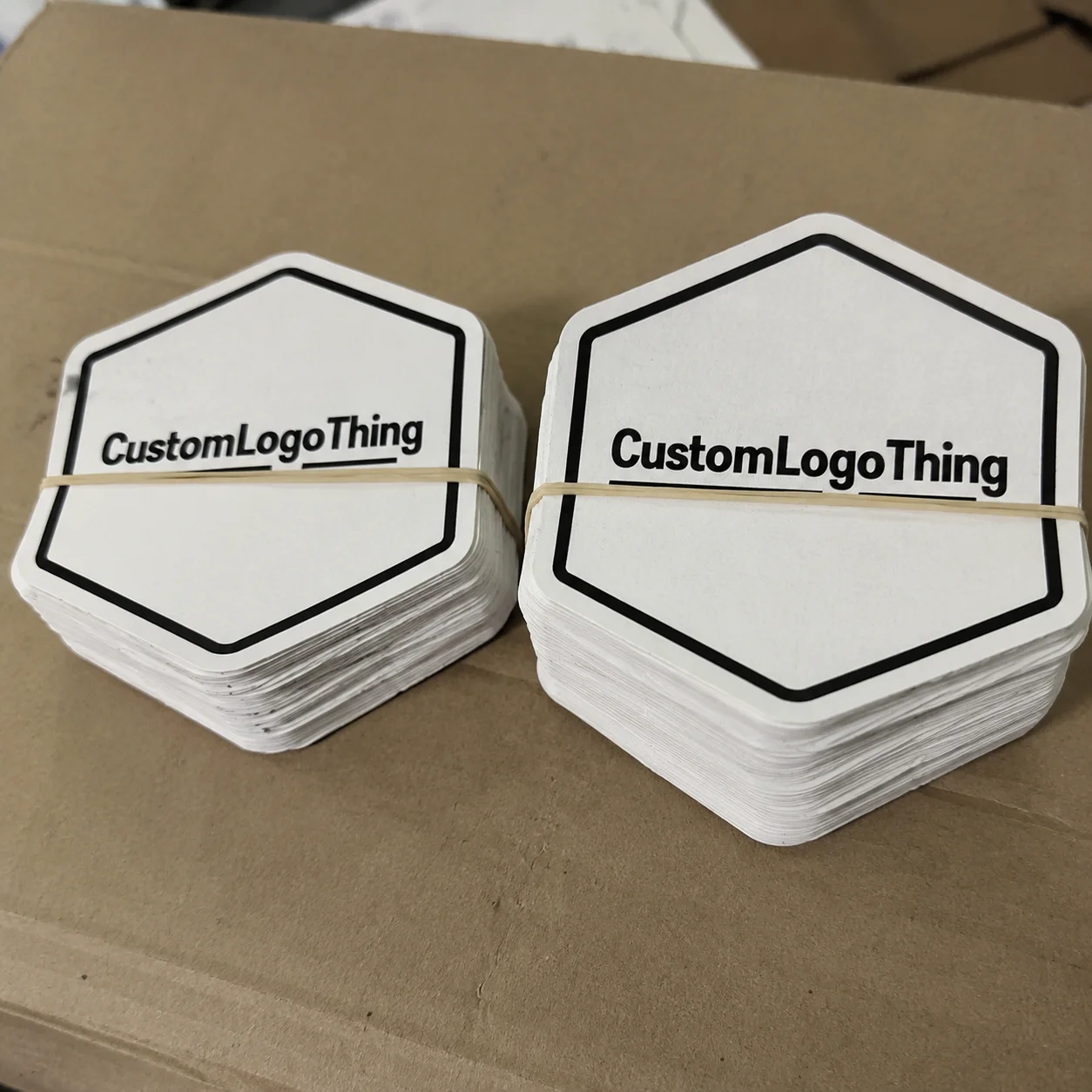
When a launch is close and the packaging has to line up with existing assets, domestic production can save time and reduce avoidable friction. Buyers looking for Custom Stickers Made in usa usually care about more than a patriotic label; they care that questions get answered quickly, proof revisions are manageable, and repeat orders stay close to the first approved sample.
That consistency matters most when the sticker is part of a larger packaging system. If your labels, cartons, mailers, and inserts all need to look like one family, the difference between “close enough” and “correct” shows up in small details: ink density, border thickness, die-cut accuracy, and the way matte or gloss finishes behave under store lighting.
Domestic suppliers also tend to be easier to coordinate with on reorders. Once the artwork is locked and the application surface has been tested, a second or third run usually moves faster because the variables are already known. That is useful for teams managing inventory across Custom Packaging Products or keeping Custom Labels & Tags aligned across several SKUs.
For companies that track sourcing standards, there is a compliance side to this too. Some buyers want FSC-aligned paper, recycled content, or documentation that supports sustainability goals. In those cases, the material spec matters more than the marketing phrase on the quote. For general recycling and material guidance, the EPA recycling resources are a useful baseline.
How the sticker production process works
The process starts with artwork review, and that step often determines how smooth the rest of the order will be. A printer checks resolution, bleed, cut lines, and whether the design includes thin borders or tiny text that could shift when trimmed. On screen, a file may look finished. On press, the weak spots show up fast.
Proofing comes next. For straightforward jobs, a digital proof may be enough to confirm size, shape, and placement. For tighter color work or more complex packaging applications, a printed proof or a more careful approval pass may be needed. Small type, QR codes, and narrow rules are the pieces most likely to cause trouble if they are not checked early.
Printing methods usually fall into a few practical categories. Digital printing works well for shorter runs, variable designs, and orders where speed matters more than the lowest possible unit price. Press-based methods such as flexographic printing make more sense for larger quantities, where setup cost can be spread across many stickers and the artwork stays consistent across the run.
After printing, the stickers may be laminated or coated. Gloss gives a brighter, more reflective finish. Matte softens the appearance and is often easier to photograph or read under harsh lighting. UV coating can add scuff resistance and a sharper surface feel. Then comes the cut style. Die-cut stickers are trimmed to the outline of the design, while kiss-cut stickers stay on a backing sheet, which is useful when the order needs easier peeling or multiple pieces per sheet.
For packaging use, finish is not just decoration. A gloss sticker on a premium jar can add shelf appeal, while a matte kiss-cut label on an inner carton may feel more restrained and deliberate. If the sticker is part of packaging design, the finish has to support the whole system rather than compete with it.
- File setup: vector art is preferred, with bleed and safe zone clearly marked.
- Proofing: confirms size, shape, and placement before production starts.
- Printing: digital for flexibility, press methods for volume efficiency.
- Finishing: lamination, coating, or no coating depending on use.
- Cutting and packing: die-cut, kiss-cut, or sheeted formats based on application.
Cost, pricing, and MOQ factors that change your quote
Sticker pricing comes down to a few concrete variables, and quantity is usually the biggest one. Smaller runs cost more per piece because setup, proofing, and press preparation are spread across fewer units. As the order grows, unit cost drops, sometimes sharply, especially when the artwork is simple and the design does not require extra handling.
Size and shape also affect price. A 2-inch round label is straightforward. A custom contour with tight curves, internal cutouts, or several design elements takes more setup time and usually creates more waste. Material choice adds another layer. Paper stock is generally less expensive than vinyl or other film-based constructions, while specialty adhesives, outdoor-rated materials, and textured finishes tend to raise the quote.
Print coverage matters more than many buyers expect. A sticker with heavy solid ink, metallic effects, or full-bleed color usually costs more than a light one-color design. The same is true for extra finishing steps like lamination, individual slitting, or hand sorting.
| Order choice | Typical impact on cost | Best fit |
|---|---|---|
| Standard shape, simple art | Lowest setup and material waste | Budget-sensitive branding and repeat runs |
| Custom contour, full-color print | Moderate increase in setup and production time | Retail packaging and branded packaging |
| Film material, laminate, specialty adhesive | Higher unit price, better durability | Moisture exposure, handling, long wear |
| Short run, urgent turnaround | Highest per-unit cost in most cases | Launches, events, and test orders |
As a working range, small digital runs can land around $0.20-$0.60 per sticker depending on size, finish, and quantity, while larger orders with simpler specs can move lower. That is only a practical estimate, not a promise. Buyers comparing Custom Stickers Made in USA with imported alternatives often find that domestic pricing is higher upfront, but the tradeoff can make sense when the risk of reprint, shipping delays, or communication issues is part of the calculation.
Do not evaluate the quote on unit price alone. Setup fees, proof charges, packing method, freight, and correction policies all change the real cost. A number that looks low at first can climb quickly once shipping, revisions, or a second run are included.
Process, timeline, and turnaround from proof to delivery
Most sticker orders begin with artwork review and proof approval. If the files are ready, that stage may move fast. If the artwork needs cleanup, the schedule expands. A clean job can often move from approval to production in about 5 to 10 business days, with shipping added afterward. More complex jobs, specialty materials, and heavier volumes can push that longer.
The delays are usually predictable. Missing bleed, low-resolution logos, unclear cut lines, and vague finish requests slow everything down. So does any confusion about border placement, color matching, or whether the stickers should be sheeted, die-cut, or packed individually.
Rush orders are possible in some cases, but they still depend on the same basics. The file has to be ready, the production calendar has to have room, and the proof still has to be approved. If a launch date is tied to a store opening, trade show, or subscription drop, give the vendor the actual deadline and ask what happens if approval slips by a day.
Domestic production helps most when the shipping window is tight. If the project cannot absorb long transit times, Custom Stickers Made in usa can reduce uncertainty, especially when repeat orders are part of the plan. For companies managing multiple retail packaging lines, that shorter and more predictable route is often worth the extra planning discipline.
Packaging buyers also benefit from understanding distribution stress. If a sticker has to survive warehouse handling or parcel movement, ask whether the supplier has experience working within transport expectations similar to ISTA test methods. Not every sticker needs formal testing, but the framing helps when the label has to stay intact through shipping abuse, temperature swings, or repeated contact.
Materials, durability, and finish choices that matter
Paper stickers are a strong fit for dry indoor use, low-cost branding, and straightforward promotions. They print cleanly, look sharp, and often make sense when the sticker will go on a carton, insert, or gift bag that will not face moisture or heavy handling. Vinyl and other film-based materials are better when the sticker may be rubbed, chilled, wiped, or exposed to humidity.
Durability depends on more than face stock. Adhesive strength has to match the surface. Smooth paperboard, coated cartons, glass, and refrigerated packaging behave differently. A sticker that works beautifully on a flat corrugated box may fail on a textured mailer or a cold, slightly damp bottle if the adhesive is not matched to the job.
Finish matters in the same practical way. Gloss can make color look richer, but it can also create glare under retail lighting. Matte softens the look and helps text stay readable. Soft-touch lamination adds a more tactile premium feel, although it increases cost and can make very small type less crisp if the artwork is not built carefully. For retail packaging, those small finish choices change how the brand is read before anyone picks up the product.
From a buyer’s perspective, the better question is not which material is “best” in a general sense. It is which material is right for this use case. Paper on a dry carton may be exactly correct. Vinyl on a humid kitchen product may be the only sensible option. That is why many teams request proofs or samples before committing to larger quantities of custom stickers made in usa.
Material selection also affects waste and reorder efficiency. Choosing a surface that suits the environment reduces failures in the field, but it can also avoid overengineering the job. A sticker does not need an outdoor-grade laminate if it will live on a shelf carton for two weeks. Matching the spec to the actual use keeps the budget honest.
Common ordering mistakes that create reprints
The most common problem is file quality. Low-resolution art, tiny text, and missing bleed are easy to miss on a laptop screen and obvious after trimming. If a logo was made for web use instead of print use, edges may soften or type may break apart when the design is scaled.
Shape confusion causes its own set of headaches. Buyers sometimes approve a good-looking proof without confirming whether the sticker is die-cut, kiss-cut, sheeted, or supplied on rolls. That sounds minor until the pack-out team receives the order and realizes the format is awkward for the actual application process.
Material mismatch is another expensive mistake. Paper stickers on moisture-prone packaging, or a light adhesive on a surface that needs more grab, can turn into a service problem later. The sticker may print correctly and still fail in the field.
Skipping sample checks is the last issue worth calling out. If color matching matters, or if the sticker acts like a small product label, ask for a proof and compare it against the packaging it will live on. A slight shift in screen color does not tell you how the final piece will sit next to a carton, pouch, or bottle.
“Most reprints start as small assumptions: the file was ready, the shape was obvious, the finish was obvious, and nobody asked one more practical question.”
Expert tips for getting better results on your next order
Start with vector artwork whenever possible. Then add the details a printer actually needs: final size, shape preference, quantity, intended surface, and whether you want gloss, matte, or no coating. Clear instructions reduce revision cycles and keep the proof stage moving.
If color matters, give a CMYK target or PMS reference instead of saying “make it pop.” That phrase does not tell anyone what to do. A specific target does. If the sticker has to match a carton, a mailer, or an insert, send that context with the artwork so the printer can judge the result against the rest of the package branding.
When the sticker is tied to a launch, sampling run, or event kit, a small test quantity is often the most practical first step. Not because the main order is likely to fail, but because real-world application reveals things the proof cannot show: how fast the liner peels, whether the adhesive grabs too aggressively, or whether the finish looks different under store lighting.
A short checklist helps separate a competent supplier from a merely responsive one:
- How quickly are proofs returned?
- What material and finish options are available?
- Is the communication specific and clear?
- What shipping method is used?
- How are reprints handled if something is off?
Next steps for choosing the right sticker spec
The easiest way to buy stickers is to define the job in order: use case, size, material, finish, quantity, and deadline. If you move through those pieces in a straight line, the quote becomes more accurate and the production risk drops. If you leave them vague, the order gets harder to price and harder to execute.
Before requesting pricing, gather the artwork, rough dimensions, application surface, and any packaging requirements tied to the product. A sticker going on a dry shipping carton is a very different job from one going on a chilled retail bottle or a textured mailer, and the printer needs that context to recommend the right adhesive and face stock.
When comparing quotes, look past the headline number. Check whether the setup fee is included, how proofs are handled, what shipping costs are added, and whether the supplier has a clear reprint policy. The better quote is the one that tells the truth about the whole job, not just the sticker itself.
That is why custom stickers made in usa are easiest to buy when the spec is clear and the timeline is realistic. Get those two things right, and the result is usually cleaner, faster, and easier to repeat.
What does custom stickers made in usa usually include?
It usually means the stickers are printed, cut, and finished by a U.S.-based manufacturer. Buyers should still ask whether materials, inks, and packaging are also domestically sourced if that matters for compliance or brand claims.
How much do custom stickers made in usa cost?
Price depends on size, quantity, material, finish, and shape complexity. Smaller runs and specialty finishes raise unit cost, while larger quantities usually lower it.
How fast can custom stickers made in usa be produced?
Turnaround depends on proof approval, material availability, and the complexity of the job. Domestic production often shortens shipping time, but rush orders still need print-ready art and quick approvals.
Which material is best for durable custom stickers?
Vinyl or other film-based materials are usually better for moisture, handling, and longer wear. Paper stickers can be a smart choice for dry indoor use or budget-sensitive packaging.
What file should I send for a sticker quote?
Vector artwork is ideal, along with the desired size, shape, quantity, and finish. It also helps to share where the sticker will be used so the printer can recommend the right adhesive and material.

