Custom Text Stickers Online for Smarter Label Orders
Custom Text Stickers Online Start With One Clear Message
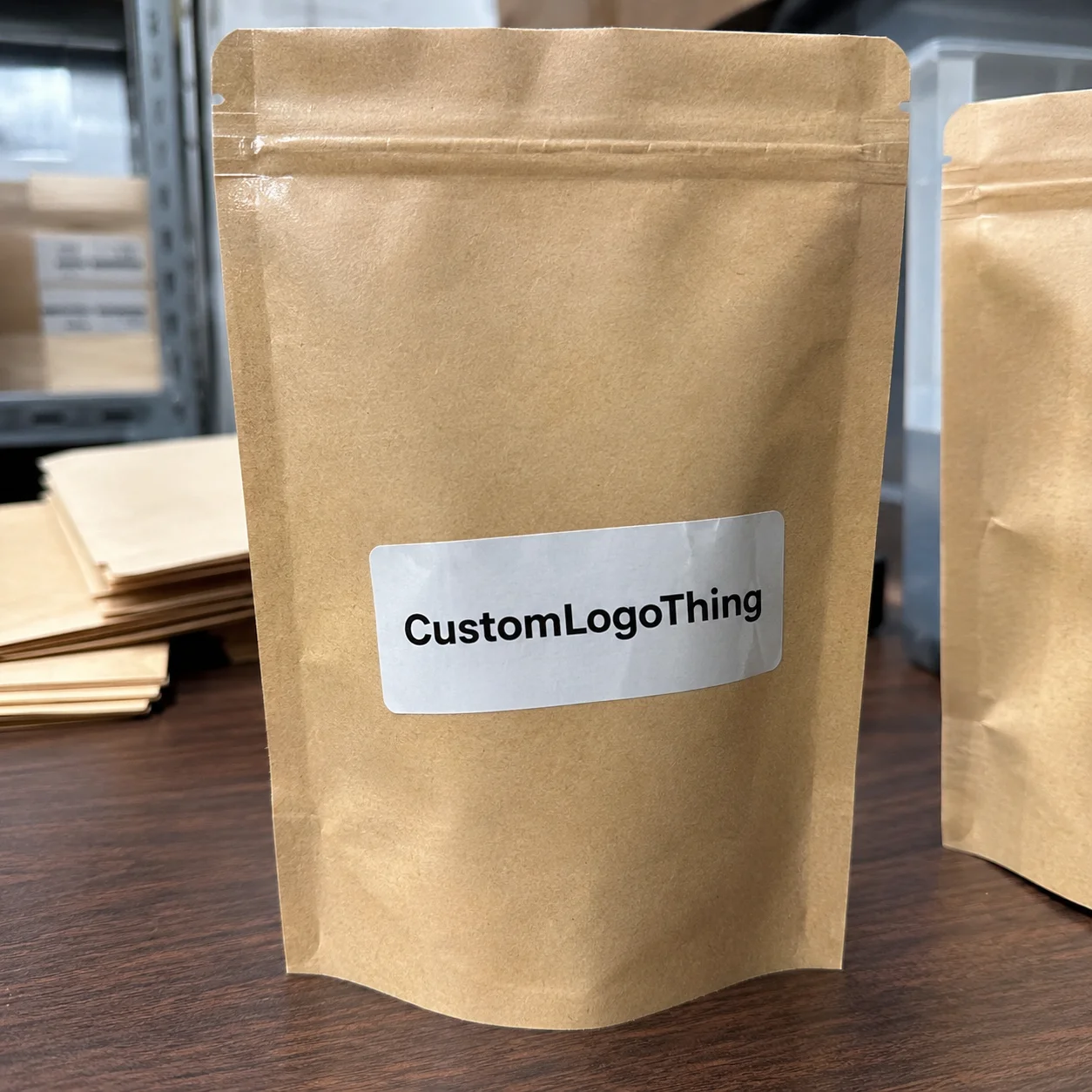
A small sticker can carry a surprising amount of responsibility. Ordered with care, custom text stickers online can work as a product identifier, instruction label, warning note, batch marker, tamper reminder, QR prompt, thank-you message, or quiet brand cue on packaging.
The danger is assuming that “text-only” means “easy.” A 1.5-inch round label that says “Made Fresh Today” still has to be readable, centered, trimmed cleanly, and matched to the surface underneath it. If the label curls on a pouch or smears after chilled handling, the clean copy no longer matters.
Common uses include product names, ingredient callouts, storage instructions, compliance notes, event tags, promotional messages, internal bin labels, retail shelf accents, and branded packaging seals. A candle maker may need a heat-warning label for the base. A food brand may need “Refrigerate After Opening” stickers that tolerate cold, condensation, and damp hands. A warehouse team may need text Labels That Scan quickly across rows of bins.
Most poor sticker orders fail for ordinary reasons: type that is too small, adhesive that does not suit the container, finish that glares under lighting, or copy that was approved before anyone checked it at actual size. The surface matters as much as the message. A label that performs well on paperboard can lift from a low-energy plastic tub. A sticker that looks sharp on a flat mailer can wrinkle on a squeezable tube.
The better way to buy is to treat the sticker as a small packaging component, not a decorative afterthought. That means deciding what the label must do, where it will be applied, how long it must last, and what handling it will face before choosing size, stock, adhesive, and finish.
The sections below explain how online ordering usually works, what affects pricing, where timelines stretch, and which artwork details tend to separate clean label runs from preventable reprints.
How Text Sticker Orders Move From File to Finished Roll
Most online text sticker orders follow a predictable sequence: choose shape and size, upload artwork or enter wording, select material and finish, confirm quantity, review the digital proof, approve production, then receive stickers packed as rolls, sheets, or individually cut pieces. It sounds linear. In practice, each step fixes a production choice that can affect cost, speed, and usability.
Proofing is the checkpoint worth slowing down for. A useful proof should show spelling, alignment, cut line, bleed, safe margin, color expectation, barcode or QR code placement, and small-type legibility after trimming. For text-heavy stickers, a safe margin of at least 0.0625 inch inside the cut line is a sensible starting point. Small shapes, hand-applied labels, and labels with critical wording often need more breathing room.
Format matters too. Roll labels are efficient for higher-volume application, dispensers, and production lines. They may also require specific unwind direction, core size, label gap, and maximum roll diameter. Sheet stickers suit office use, small batches, mixed designs, and low-volume product packaging. Individually cut stickers work better for giveaways, kits, event packets, inserts, and sample packs where each piece needs to feel finished on its own.
Many text-first stickers are digitally printed because digital production handles short runs, multiple versions, and fast proof-to-print cycles well. Larger repeat orders may move to different production methods depending on material, quantity, color control, finishing, and repeatability requirements. The right method depends on the job. A 250-piece promo label order and a 50,000-piece refrigerated product label program should not be specified the same way.
Production rule: a good sticker order form removes guesswork. The supplier should know the application surface, indoor or outdoor use, expected handling, exposure to water, oil, heat, or cold, and whether the label needs to remove cleanly or stay permanent.
For more complex packaging programs, it helps to compare text stickers with broader label and tag options. The Custom Labels & Tags category is a useful reference point for thinking through format, finish, and application before requesting a quote.
Material, Adhesive, and Finish Choices That Affect Performance
Paper stickers are the economical choice for dry indoor packaging. They work well on bakery boxes, paper shopping bags, mailers, thank-you labels, dry jars, envelopes, and short-term retail use where water and oil are not major concerns. A common paper label might use a 60 lb to 70 lb label stock with a general-purpose permanent adhesive, which is enough for many cartons and paperboard surfaces.
Film materials cost more, but they solve problems paper cannot. Vinyl, BOPP, polyester, and similar films tolerate damp hands, bathroom products, refrigerated goods, outdoor messaging, equipment labels, and containers that see more abrasion. White BOPP is common for food, beverage, and personal care labels because it resists moisture better than paper while still printing cleanly. Polyester is tougher and more dimensionally stable, so it is often used for durable warnings, equipment marking, and harsher handling.
Adhesive selection is where a simple label becomes packaging engineering. Permanent adhesive is for long-term hold. Removable adhesive is useful for temporary promotions, reusable containers, rental items, or surfaces that should not be damaged. Freezer-grade adhesive is designed for cold-chain work, especially where labels are applied before or during low-temperature storage. Specialty adhesives may be needed for textured containers, oily surfaces, flexible pouches, or low-energy plastics such as some polypropylene and polyethylene items.
Application temperature also deserves attention. Some adhesives perform well after curing but do not bond properly if applied to a cold, wet, dusty, or oily surface. Others need firm pressure and dwell time before reaching full bond strength. If a label will be applied in a warehouse, kitchen, packing line, freezer room, or fulfillment station, that environment should be part of the spec.
Finish changes both appearance and durability. Matte finishes reduce glare and give text a softer, more restrained look. Gloss finishes sharpen color and are easier to wipe. Clear film can create a “no-label” effect on glass or clear plastic, but contrast must be tested against the actual product color. Lamination or varnish can add scuff resistance, moisture protection, and a smoother hand feel. If the sticker carries instructions, compliance wording, or QR directions that must stay readable, a thin protective laminate is often a practical upgrade rather than a cosmetic one.
Typography needs the same discipline. Use strong contrast, enough font weight, clean spacing, and line lengths that can be read quickly. Avoid delicate script fonts for warnings, ingredients, QR instructions, dosage notes, or small product details. A script that looks elegant at 4 inches wide on a monitor can collapse into a gray thread at 0.9 inch on a jar lid.
| Sticker Material | Best Use | Typical Strength | Practical Watchout |
|---|---|---|---|
| Paper label stock | Dry boxes, mailers, bakery packaging, thank-you labels | Lower cost, easy printing, good indoor performance | Can wrinkle or stain with moisture and oil |
| White BOPP film | Jars, bottles, refrigerated goods, personal care products | Moisture resistance and clean print quality | Needs the right adhesive for curved or squeezable containers |
| Clear film | Glass, clear plastic, premium product packaging | No-label look and strong shelf appeal | Low-contrast text can disappear against dark or busy contents |
| Polyester film | Equipment labels, outdoor messages, durable warnings | High durability and dimensional stability | Higher cost and less forgiving on rough surfaces |
For sustainability-minded packaging, material sourcing may also matter. Programs such as the Forest Stewardship Council help buyers evaluate responsible paper sourcing, although certification availability depends on the exact stock, supplier, adhesive system, and production route.
Cost and Pricing Factors Behind a Sticker Quote
A sticker quote is usually driven by size, material, adhesive type, finish, quantity, number of versions, print colors, cutting complexity, packaging format, and special requirements such as lamination, variable data, sequential numbering, white ink, or barcode verification. A plain 2-inch paper circle is not the same job as a 3-inch clear film label with white ink, gloss laminate, and three copy versions.
Unit cost drops as quantity rises because setup, proofing, press preparation, cutting, inspection, and packing time are spread across more pieces. Very small orders carry proportionally higher handling costs. As a rough planning range, a 2-inch digitally printed paper sticker may land around $0.08 to $0.22 per piece at 1,000 units. A film label with lamination may run closer to $0.18 to $0.45 per piece depending on size, coverage, finish, and packing format. These are budgeting ranges, not fixed quotes.
Minimum order quantity depends on the configuration. Some custom text stickers online can be ordered in low quantities, especially digitally printed sheet stickers. Custom materials, specialty adhesives, exact color matching, white ink on clear film, or roll-label setups may require higher minimums because material, tooling, press time, and finishing have to be planned around the order.
Shape affects pricing more than many buyers expect. Standard circles, rectangles, squares, and ovals are efficient. Intricate die-cut shapes, narrow strokes, tiny corners, and complex outlines can slow cutting, create waste, or make weeding difficult. For text-first stickers, a clean standard shape often looks more professional than a fussy cut path that competes with the message.
Ask for two or three quantity breaks before placing an order. Compare 500, 1,000, and 2,500 pieces, or use quantities that match your sales cycle. The price difference often reveals the efficient order size without pushing you into obsolete inventory after a wording change, SKU update, ingredient revision, seasonal promotion, or compliance adjustment.
| Quote Factor | Lower-Cost Direction | Higher-Cost Direction | Buyer Tip |
|---|---|---|---|
| Size | Small standard dimensions | Large labels or unusual sizes | Measure the surface before choosing the design size |
| Material | Paper for dry indoor use | Film, polyester, or specialty stocks | Match material to handling and exposure |
| Finish | No laminate or basic varnish | Soft-touch, gloss laminate, heavy protection | Add protection when the label is handled often |
| Versions | One design and one text layout | Many SKUs, languages, or variable codes | Group versions clearly in the artwork file |
| Format | Sheets for small hand-use orders | Rolls with strict unwind direction or dispenser specs | Tell the supplier how labels will be applied |
If the sticker is part of a larger packaging system with printed boxes, inserts, sleeves, or mailers, review related Custom Packaging Products before finalizing size and color. A text sticker can look mismatched if it is specified separately from the package it is meant to support.
Production Timeline, Proofing, and Turnaround Expectations
A typical production sequence includes artwork submission, prepress review, proof creation, customer approval, printing, drying or curing if needed, cutting, quality inspection, packing, and shipping. Many simple digital sticker orders can move through production in about 5 to 10 business days after proof approval. More involved roll labels, specialty materials, exact color requests, or multi-version jobs may take 10 to 15 business days or longer. Transit time is separate.
The approval stage is often the biggest controllable delay. Production normally does not begin until the proof is approved, especially if the sticker includes compliance wording, pricing, product claims, QR codes, batch information, or retail-facing instructions. A one-day delay in proof approval can become a one-day delay in shipping.
Lead time also stretches when files are incomplete. Missing fonts, low-resolution logos, unclear finished size, specialty material sourcing, color matching requests, multiple design versions, complex die-cuts, or copy changes after proof approval all slow the order. QR codes should be tested at final size, not only on a large screen. Barcodes may need quiet zones, contrast, and verification depending on retail requirements.
Buyers can speed the process by supplying final copy, vector artwork when available, exact finished size, preferred material, use environment, quantity, delivery deadline, and required format: rolls, sheets, or individual cuts. If the labels will be machine-applied, include unwind direction, core size, roll outside diameter, and gap between labels. Those details sound minor until a roll arrives wound the wrong way for the applicator.
Rushing a sticker order is not only about printing faster. Time still has to be allowed for proof checks, adhesive compatibility, accurate cutting, inspection, and packing the order so labels arrive clean, flat, and usable. A rushed roll that telescopes during transit or a sheet stack with scuffed top labels creates a different problem at the receiving end.
For transport testing and distribution planning, especially when stickers are part of a kitted retail packaging program, organizations such as ISTA provide widely used package performance testing resources. Sticker adhesion is only one piece of the packaging journey, but it can affect how the finished pack looks after shipping, warehousing, and handling.
Step-by-Step Ordering Checklist for Text-First Stickers
Use this checklist before ordering custom text stickers online. It keeps the conversation grounded in production facts and helps the prepress team catch problems before material is printed.
- Define the sticker’s job. Decide whether it is labeling a product, giving instructions, sealing packaging, promoting a discount, organizing inventory, marking a batch, or adding a branded message. One sticker can do more than one job, but it should not try to do five.
- Measure the application area. Choose size based on viewing distance, text length, container curve, seam placement, and nearby packaging elements. A label on a flat corrugated mailer can be wider than a label wrapped around a 2-ounce bottle.
- Write the shortest clear message. Check spelling, punctuation, capitalization, legal wording, numbers, dates, SKUs, lot codes, and QR links. If a phrase is not final, do not approve it for print.
- Select material and adhesive for the real surface. A candle jar, corrugated mailer, freezer pouch, powder-coated bottle, and flexible tube may each need different specs. Appearance matters, but adhesion comes first.
- Review the proof at actual size. Print a paper mockup if the label is text-heavy. Check safe margins, contrast, alignment, trim, scannability, and whether the wording is comfortable to read quickly.
- Approve only after full signoff. Make sure marketing, operations, compliance, and purchasing have reviewed the final wording if they are involved. Changing copy after production starts can mean reprinting the full order.
One practical test is almost embarrassingly simple: print the sticker on paper at actual size, place it on the package with low-tack tape, and stand where a customer, packer, or inspector would stand. If the message cannot be understood in two or three seconds, the sticker is probably too crowded, too small, or trying to carry the wrong information.
Common Mistakes That Make Simple Stickers Look Unprofessional
The most common mistake is text that is too small. Curved containers, tiny seals, textured surfaces, and busy retail aisles all reduce readability. A 6-point font may pass on a flat proof and fail on a jar shoulder, especially under store lighting or while the container is moving through a packing station.
Weak contrast is another predictable failure. Light gray type on clear film can disappear. Metallic ink can glare under bright lighting. Thin white lettering over a dark, patterned, or product-colored background may look refined in a layout and become hard to read in use. For instructions and warnings, function should beat decoration.
Poor adhesive matching causes lifting edges, tunneling, wrinkling, flagging, or full label release. Standard paper labels are not a safe choice for cold, damp, oily, flexible, or rough surfaces. Low-energy plastic is especially difficult because many general-purpose adhesives do not wet out properly on that surface.
Artwork problems can delay orders before production even starts. Flattened low-resolution files, missing fonts, no bleed, no cut line, unclear finished size, and copy supplied in a screenshot instead of editable text all create friction. For text-only custom stickers, vector files such as AI, EPS, or print-ready PDF are usually best. If raster artwork is unavoidable, provide high-resolution files at final print size, commonly 300 dpi for standard print work.
Over-ordering without testing is risky. A small material sample or short pilot run can prevent thousands of labels from being produced with the wrong adhesive, finish, or size. This is especially true for refrigerated goods, bath products, flexible pouches, textured containers, and packages exposed to shipping abrasion.
Skipping proof review is the expensive version of moving too fast. Text stickers often contain the details customers notice first: spelling, instructions, pricing, ingredients, batch codes, QR links, and brand tone. A misspelled word on a 10,000-piece run is not a tiny mistake. It is inventory, labor, and production time tied up in a preventable reprint.
Next Steps Before You Place the Order
Before requesting pricing, create a simple spec sheet. Include sticker purpose, finished size, shape, quantity, material preference, adhesive need, finish, number of artwork versions, application surface, indoor or outdoor use, and desired delivery date. Even a half-page brief can save several rounds of emails.
Prepare the final text in a copyable format, not only embedded in an image. Editable text helps the prepress team verify wording, spacing, line breaks, and small-type concerns during proofing. If fonts are part of the brand, outline them in the print file or provide the font information clearly.
Collect photos or notes about the application surface, especially if it is curved, textured, squeezable, refrigerated, exposed to water, or handled heavily during shipping. A quick photo of the container and intended label area can prevent the wrong assumption about size, curve, or finish.
Ask for a proof every time. For demanding applications, ask for a material recommendation or sample before committing to the full run. No supplier can guarantee every adhesive on every surface without testing the real container and conditions, but a thoughtful recommendation narrows the risk.
Ordering custom text stickers online works best when the sticker is treated like a compact piece of packaging engineering: clear words, correct material, suitable adhesive, realistic timeline, and careful proof approval. Done well, a simple text label supports product packaging, retail presentation, and brand consistency without adding unnecessary complexity.
FAQ
What size should I choose when ordering custom text stickers online?
Start with the application area and reading distance, then leave enough white space around the wording so the sticker does not feel cramped. For instructions, warnings, or product details, print a paper mockup at actual size before approving the proof. Curved containers usually need narrower labels or flexible materials to reduce edge lift and distortion.
Are custom text labels better on rolls, sheets, or individual cuts?
Rolls are best for larger quantities, fast hand application, dispensers, or production lines. Sheets work well for office use, small batches, mixed designs, and easy storage. Individual cuts are useful for giveaways, kits, inserts, events, and premium unboxing moments.
How much do personalized text stickers usually cost?
Cost depends on size, quantity, material, adhesive, finish, shape, artwork versions, and packaging format. Unit cost usually drops at higher quantities because setup and finishing time are spread across more stickers. Ask for multiple quantity breaks so you can compare the most economical order size.
How long does it take to produce custom wording stickers?
The timeline usually includes proofing, approval, printing, cutting, inspection, packing, and shipping. Simple digital orders may take about 5 to 10 business days after proof approval, while specialty materials, color matching, complex cuts, or proof revisions can add time.
What artwork file is best for text-only custom stickers?
Vector files such as AI, EPS, or print-ready PDF are usually best because text and cut lines stay sharp. If using raster artwork, provide high-resolution files at the final print size. Outline fonts or include editable text instructions so spelling, alignment, and small type can be checked accurately.


